⚡ FLASH SALE: Get 60% OFF All Premium 3D & STL Models! ⚡

The automotive industry has always been at the forefront of design and engineering innovation, and today, 3D technology plays a pivotal role in every stage, from concept development to marketing. High-quality 3D car models are no longer just eye candy; they are indispensable tools for visualization, simulation, game development, AR/VR experiences, and even advanced manufacturing processes like 3D printing. Creating truly professional and versatile 3D car models, however, is a blend of artistic skill and deep technical understanding. It demands meticulous attention to detail, a grasp of complex software, and an unwavering commitment to industry best practices.
This comprehensive guide delves into the intricate world of 3D automotive modeling, providing a deep dive into the technical workflows and expert strategies required to produce stunning, functional, and optimized car models. We’ll explore everything from the foundational principles of topology and UV mapping to advanced rendering techniques, game engine optimization, and preparing models for diverse applications like AR/VR and 3D printing. Whether you’re an aspiring 3D artist, a game developer, an automotive designer, or a visualization professional, understanding these concepts is crucial for elevating your projects. Let’s unlock the secrets behind crafting truly exceptional 3D car models that stand out in any digital landscape.
The quality of a 3D car model begins and ends with its topology. Clean, efficient, and well-structured topology is the bedrock upon which all other aspects – texturing, rigging, animation, and rendering – are built. For automotive models, where smooth reflections and complex curves are paramount, topology dictates how light interacts with surfaces and how the model subdivides without pinching or distortion. A poorly constructed mesh, no matter how detailed its textures, will always betray its flaws under scrutiny, especially in photorealistic rendering scenarios. Professionals focus on creating an all-quad mesh, meticulously guiding edge loops to define the car’s intricate forms and maintaining an even polygon distribution across its surfaces. This approach ensures predictable subdivision behavior and seamless deformations, which is critical for realistic animations or complex design iterations.
The importance of good topology extends beyond aesthetics. It directly impacts performance in real-time applications like games or AR/VR. Optimized models balance visual fidelity with polygon count, ensuring smooth frame rates. For high-fidelity visualizations, higher polygon counts are acceptable, often utilizing subdivision surfaces to achieve perfectly smooth curvatures. Regardless of the target application, understanding how to manage mesh density, avoid common pitfalls like N-gons (polygons with more than four sides) or triangles in flat, deforming areas, and maintaining consistent edge flow is non-negotiable for anyone serious about professional 3D car modeling.
Polygon flow, often referred to as edge flow, is the strategic arrangement of edges on a mesh to define its surface contours and direct how subdivision algorithms will smooth the model. For vehicles, this means ensuring that edge loops accurately trace along critical design lines such as body panel seams, wheel wells, window frames, and character lines. Good edge flow ensures that when a subdivision surface modifier (like MeshSmooth in 3ds Max, Subdivision Surface in Blender, or Smooth Mesh in Maya) is applied, the car’s curves remain perfectly smooth and retain their intended shape, without unsightly bumps or flat spots. Reflections on a car’s surface are extremely sensitive to minor imperfections; even a slight deviation in edge flow can lead to noticeable wobbles or distortions in the reflection, instantly breaking realism. Key areas like fenders, doors, and the hood require careful attention to maintain large, flowing quads that follow the natural curvature of the design.
The ideal polygon count for a 3D car model is highly dependent on its intended use. For **high-resolution offline rendering** and detailed product visualizations, models can range from several hundred thousand polygons to several million, especially when subdivision surfaces are extensively used. Here, the emphasis is on capturing every minute detail and achieving absolute photorealism. Software like 3ds Max or Maya, paired with renderers like Corona or V-Ray, excel in handling such dense meshes. In contrast, **real-time applications** like video games or AR/VR experiences demand significantly lower polygon counts to maintain high frame rates. A game-ready car model might have a polycount ranging from 50,000 to 200,000 triangles for a hero asset, with even lower counts for background vehicles. This optimization often involves careful decimation, baking high-polygon details into normal maps, and implementing Level of Detail (LOD) systems, which we’ll discuss later. When sourcing models from marketplaces such as 88cars3d.com, it’s crucial to check the polygon count and topology to ensure it aligns with your project’s specific requirements, whether it’s for cinematic renders or mobile AR.
Once your 3D car model’s topology is solid, the next critical step is UV mapping. UV mapping is the process of flattening the 3D surface of your model into a 2D space, allowing you to apply textures accurately without distortion or stretching. For complex, multi-component models like cars, meticulous UV mapping is essential for realistic texturing, especially when dealing with intricate details such as headlights, grilles, intricate emblems, and diverse materials like paint, glass, rubber, and chrome. Poor UVs can lead to blurry textures, misaligned patterns, or seams that break the illusion of realism, no matter how high-resolution your texture maps are. It’s a skill that combines technical precision with an artistic eye, ensuring every pixel on your texture map corresponds correctly to a point on your 3D model.
Effective UV mapping is also crucial for optimizing texture memory. By intelligently packing UV islands, artists can make the most efficient use of texture space, leading to better performance in real-time applications and reducing overall file sizes. This becomes particularly important when dealing with multiple material types that often require their own unique texture sets. Understanding various unwrapping strategies and employing advanced techniques like UDIMs can make a significant difference in the final visual quality and operational efficiency of your 3D car models.
The key to successful UV unwrapping for automotive models lies in strategic seam placement and maintaining uniform texel density. Seams should be placed in inconspicuous areas or along natural breaks in the geometry, such as panel lines, edges of components, or hidden surfaces, to minimize their visibility. For example, on a car body, seams might run along the bottom edges of panels or inside wheel wells. Tools like 3ds Max’s Unwrap UVW modifier, Blender’s UV Editor, or Maya’s UV Toolkit provide robust functionalities to project UVs (e.g., planar, cylindrical, spherical), cut seams, and then unwrap them into a flat layout. After unwrapping, it’s vital to ensure consistent texel density across all UV islands. Texel density refers to the number of pixels per unit of 3D space. A uniform texel density prevents some areas from appearing blurry (too few pixels) while others are unnecessarily sharp (too many pixels). Using a checker map as a temporary texture during unwrapping helps visualize and correct stretching or density inconsistencies. For parts that use tiling textures (like tire treads), overlapping UVs can be used to save texture space, while unique parts like logos or custom decals require non-overlapping UVs.
Modern 3D car models often feature a wide array of materials – metallic paint, clear coat, various types of glass, rubber, chrome, carbon fiber, and interior fabrics. Each of these materials typically requires its own set of PBR textures (albedo, metallic, roughness, normal, etc.). To manage this complexity, artists often use multi-material workflows where different parts of the car (e.g., body, wheels, interior) are assigned separate material IDs and corresponding UV sets. For extremely high-resolution assets, particularly those intended for close-up cinematic renders, **UDIMs (U-Dimension)** are invaluable. UDIMs allow artists to use multiple UV tiles (each with its own texture map) for a single mesh, effectively breaking down a massive texture into manageable, individual files. For example, a car’s body might be split across several UDIM tiles, each covering a specific section (hood, roof, doors), enabling incredibly high-resolution paint details without exceeding the limits of a single texture map. This approach is widely supported by professional texturing software like Substance Painter and 3D Coat, and renderers like Corona, V-Ray, Cycles, and Arnold, providing unparalleled detail and flexibility for complex automotive surfaces.
The visual realism of a 3D car model hinges critically on its materials and shaders. Physically Based Rendering (PBR) has become the industry standard for creating materials that accurately simulate how light interacts with real-world surfaces. PBR workflows ensure that your materials look consistent and realistic under various lighting conditions, making them ideal for everything from game engines to high-end cinematic rendering. Crafting PBR materials for an automotive model is a complex process that involves creating and assigning multiple texture maps – such as albedo (color), metallic, roughness, and normal maps – to define the surface properties. Each map plays a vital role in dictating how light is absorbed, reflected, and scattered, ultimately determining the material’s perceived shine, dullness, transparency, or bumpiness.
Beyond the fundamental PBR maps, advanced shader networks allow artists to add intricate layers of detail and realism. Car paint, for example, is not a simple metallic surface; it’s a multi-layered material with a base coat, a metallic flake layer, and a clear coat, all contributing to its unique appearance. Understanding how to construct these complex shaders using node-based systems in your chosen rendering software is key to achieving truly photorealistic results. This involves manipulating parameters like Index of Refraction (IOR) for glass, subsurface scattering for plastics, and fine-tuning metallic and roughness values to mimic various metals.
Creating a convincing car paint shader is one of the most challenging yet rewarding aspects of automotive rendering. A realistic car paint shader typically goes beyond a simple PBR setup and incorporates multiple layers to accurately mimic real-world automotive finishes.
The interplay of these layers, along with environmental lighting, generates the characteristic deep reflections and shifting highlights of automotive paint.
While car paint steals the show, the realism of supporting materials is equally important for a cohesive final image.
Utilizing node-based shader editors in software like Blender (Cycles), 3ds Max (Corona/V-Ray), or Maya (Arnold) allows for complex layering and precise control over each material’s properties, enabling artists to create highly detailed and physically accurate shaders for every component of a 3D car model.
Achieving truly photorealistic renders of 3D car models is the ultimate goal for many artists and visualization professionals. This process involves more than just a well-modeled and textured asset; it requires a deep understanding of lighting, camera principles, and the capabilities of advanced rendering engines. Modern renderers like Chaos Group’s V-Ray, Autodesk’s Arnold, Maxon’s Corona Renderer, and Blender’s Cycles engine employ physically accurate algorithms to simulate how light behaves in the real world, producing incredibly lifelike results. However, simply pressing the render button isn’t enough. A strategic approach to scene setup, lighting, and render optimization is essential to extract the maximum quality and efficiency from these powerful tools.
From crafting realistic studio environments with virtual light sources to leveraging High Dynamic Range Images (HDRIs) for natural outdoor scenes, every element contributes to the final image’s credibility. Furthermore, understanding render settings, global illumination techniques, and the art of compositing render passes in post-production can elevate a good render to an exceptional one. This section will guide you through the critical steps and professional insights needed to produce breathtaking automotive renders that truly stand out, making your 3D car models shine in their best light.
Lighting is the single most important factor in a photorealistic render. For **studio shots**, a common technique is to use a virtual three-point lighting setup (key, fill, back) supplemented by large, softbox-like area lights to create appealing reflections on the car’s reflective surfaces. Emissive geometry or plane lights can mimic studio softboxes and strip lights, which are essential for creating long, unbroken highlights across the car’s body panels, crucial for showcasing its form and curves. Often, artists will create a simple infinity backdrop or a seamless cyclorama within the 3D scene.
For **outdoor or environmental renders**, High Dynamic Range Images (HDRIs) are indispensable. An HDRI captures the full range of light information from a real-world location, providing both realistic lighting and detailed reflections. Loading an HDRI into your renderer’s environment slot will instantly provide a rich, complex lighting setup that perfectly illuminates your 3D car model and provides accurate reflections, immersing it naturally into the scene. Many artists will combine an HDRI with additional targeted area lights to emphasize certain features or introduce a stronger key light. Experimenting with HDRI rotations is crucial to find the most flattering lighting and reflection angles for the vehicle. Renderers like Corona, V-Ray, and Cycles offer dedicated HDRI environment options with precise controls for intensity and rotation.
Optimizing render settings is a balance between quality and render time. Modern physically-based renderers primarily rely on **sampling** to resolve noise. Increasing samples (e.g., Cycles’ samples, Corona’s passes, V-Ray’s noise threshold) reduces graininess but increases render time. **Denoising** algorithms (such as NVIDIA OptiX or Intel Open Image Denoise) integrated into renderers are powerful tools that can drastically reduce render times by cleaning up noise in the final image or specific render passes, allowing for lower sample counts.
**Global Illumination (GI)** methods are also vital. Brute Force (path tracing) provides the most accurate GI but can be slower. Irradiance Map (V-Ray) or Light Cache (V-Ray) can offer faster, albeit less accurate, solutions for certain scene types. For optimal flexibility in post-production, rendering out **render elements or passes** (e.g., diffuse, specular, reflection, refraction, shadows, Z-depth, object ID, material ID) is standard practice. These passes allow for non-destructive adjustments to lighting, color, and effects in compositing software like Adobe Photoshop or Foundry Nuke, providing immense control over the final look without re-rendering the entire image. Features like depth of field and motion blur, while enhancing realism, should be applied judiciously, either through the renderer or in post-production, to avoid excessive render times.
While photorealistic offline renders are stunning, the world of real-time applications presents a unique set of challenges and requirements for 3D car models. Game engines like Unity and Unreal Engine, along with AR/VR platforms, demand extremely efficient models that can render smoothly at high frame rates. This means going beyond clean topology and PBR materials; it involves strategic optimization techniques to manage polygon counts, texture memory, and draw calls, all while maintaining visual fidelity. A raw, high-polygon model designed for offline rendering will typically cripple real-time performance, necessitating a dedicated workflow to prepare assets for interactive environments.
The goal is to deliver compelling visuals within strict performance budgets. This often involves creating multiple versions of a model, consolidating textures, and employing clever tricks to simulate detail without adding unnecessary geometry. For AR/VR experiences, the optimization stakes are even higher, as maintaining a stable frame rate is crucial for user comfort and immersion. Understanding these optimization strategies is paramount for any artist or developer looking to integrate 3D car models into interactive projects, ensuring they perform flawlessly across a range of hardware and platforms.
Level of Detail (LODs) are crucial for optimizing 3D car models in real-time applications. Instead of rendering a single, high-polygon model at all distances, LODs involve creating multiple versions of the same asset, each with a progressively lower polygon count. For example, a “hero” car model might have an LOD0 with 150,000 triangles for close-up views, an LOD1 with 50,000 triangles for mid-distance, and an LOD2 with 15,000 triangles for far-away shots. Game engines automatically swap between these LODs based on the camera’s distance, saving significant GPU processing power without a noticeable drop in visual quality. Manually creating LODs involves carefully decimating the mesh while preserving key silhouette and shape, or using automated tools within game engines or 3D software.
Instancing is another powerful optimization technique. When multiple identical objects (like a fleet of identical cars) are present in a scene, GPU instancing allows the engine to render all instances using a single draw call. This drastically reduces the CPU overhead associated with telling the GPU what to render, leading to significant performance gains, especially in scenes with many duplicate assets. Properly prepared 3D car models that utilize shared materials and meshes can leverage instancing effectively.
Texture atlasing involves combining multiple smaller textures into one larger texture sheet, known as a texture atlas. For a car model with various components (body, interior, wheels, undercarriage), instead of having separate PBR texture sets for each, you would unwrap all UVs into a single UV space and bake them onto one texture atlas. This reduces the number of texture lookups the GPU needs to perform, which is a major performance boost.
The primary benefit of texture atlasing is the reduction of draw calls. A draw call is a command from the CPU to the GPU to draw a specific set of polygons using a specific material. Each unique material on a 3D model generates at least one draw call. A complex car model with dozens of separate materials (paint, glass, chrome, plastic, rubber, fabric, etc.) can generate a high number of draw calls, which can quickly become a bottleneck. By combining textures into atlases and merging materials where possible, you can significantly reduce the total number of draw calls, thus improving real-time performance. This optimization is especially critical for mobile games and AR/VR, where CPU resources are limited.
Augmented Reality (AR) and Virtual Reality (VR) environments impose even stricter performance budgets than traditional video games, primarily due to the need for very high, stable frame rates (e.g., 72-90 FPS per eye) to prevent motion sickness.
These combined strategies ensure that 3D car models deliver immersive experiences without compromising performance in the demanding AR/VR landscape.
In the diverse ecosystem of 3D production, a high-quality 3D car model must be versatile and compatible across various software, platforms, and end-use applications. This versatility is largely defined by the file formats it supports and how well it can be prepared for entirely different mediums, such as physical 3D printing. The choice of file format isn’t merely about opening a model; it’s about preserving critical data – such as mesh topology, UV mapping, PBR material assignments, and even animation data – as it moves through different pipelines. A single 3D car model might begin in 3ds Max, be textured in Substance Painter, rendered in Unreal Engine, and then prepared for a client’s AR app, each step potentially requiring a different export or import strategy.
Furthermore, extending the life of a digital asset into the physical realm through 3D printing introduces a whole new set of technical considerations. Converting a model designed for screen-based rendering into a print-ready mesh requires specific preparation steps, including ensuring watertight geometry, correct scale, and appropriate wall thickness. Understanding these aspects of file compatibility and physical preparation is crucial for maximizing the utility and reach of your 3D car models.
The 3D industry uses a multitude of file formats, each with its strengths and weaknesses:
When acquiring 3D car models, always consider the formats provided and how they align with your project’s workflow.
Transforming a 3D car model from a digital render to a physical object via 3D printing requires specific preparation steps to ensure printability and structural integrity.
Proper preparation ensures a smooth transition from your digital 3D car model to a successful physical print, opening up new avenues for prototyping and bespoke manufacturing.
The journey through the creation, optimization, and application of high-quality 3D car models reveals a fascinating intersection of art, engineering, and digital wizardry. From the foundational principles of clean topology and precise UV mapping to the intricate details of PBR material creation and advanced rendering, every step demands meticulous attention and technical expertise. We’ve explored how to craft stunning photorealistic renders, optimize models for the demanding environments of game engines and AR/VR, and even prepare them for the tangible world of 3D printing. The ever-evolving landscape of 3D technology means that continuous learning and adaptation are key to staying at the forefront of this dynamic field.
Whether you’re aiming for cinematic realism, interactive experiences, or functional prototypes, the quality of your 3D car models will ultimately define the success and impact of your projects. By understanding and applying the advanced workflows and industry best practices discussed in this guide, you equip yourself with the knowledge to tackle any automotive visualization challenge. Elevate your projects and bring your automotive visions to life with unparalleled detail and performance. When you’re ready to jumpstart your next project or seek inspiration, explore the curated collection of high-quality, pre-optimized 3D car models available on 88cars3d.com, designed to meet the rigorous demands of professionals across all these diverse applications.
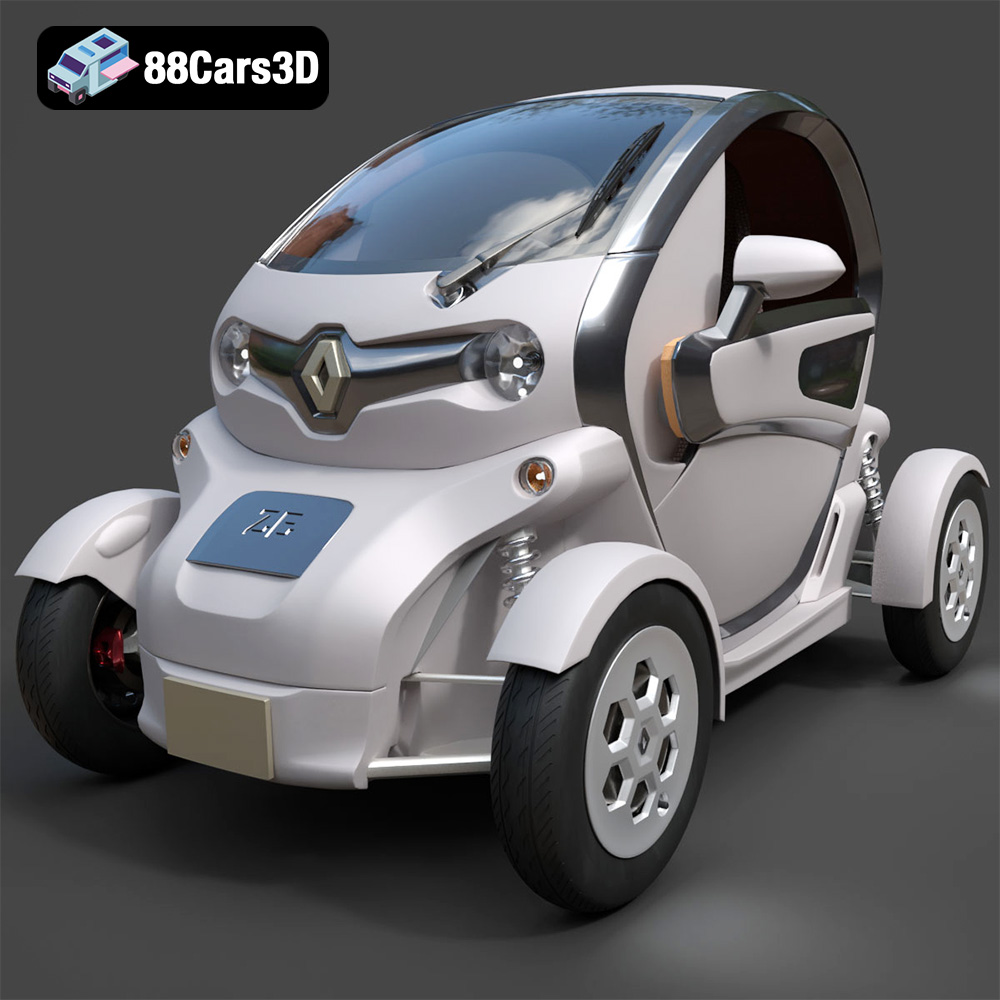
Texture: Yes
Material: Yes
Download the Renault Twizy ZE 3D Model featuring clean geometry, realistic detailing, and a fully modeled interior. Includes .blend, .fbx, .obj, .glb, .stl, .ply, .unreal, and .max formats for rendering, simulation, and game development.
Price: $4.99
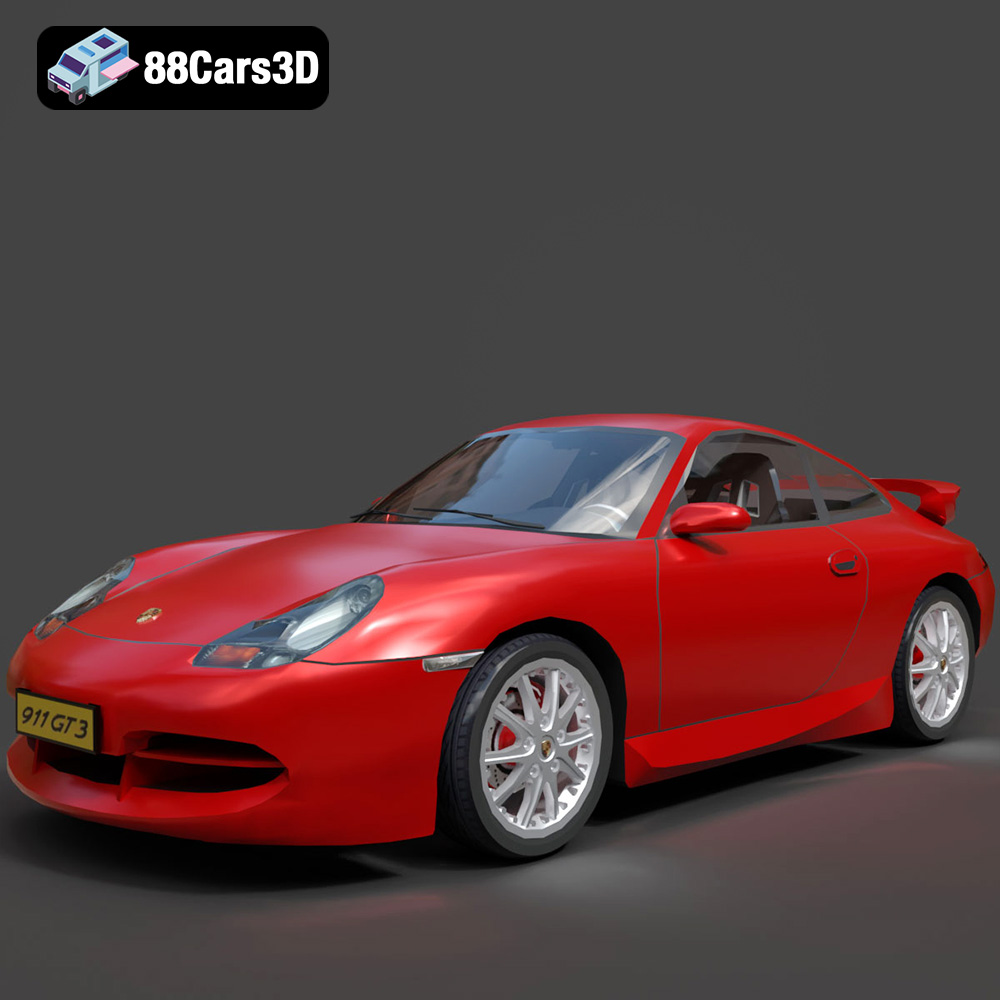
Texture: Yes
Material: Yes
Download the Porsche 911 GT3 3D Model featuring clean geometry, realistic detailing, and a fully modeled interior. Includes .blend, .fbx, .obj, .glb, .stl, .ply, .unreal, and .max formats for rendering, simulation, and game development.
Price: $4.99
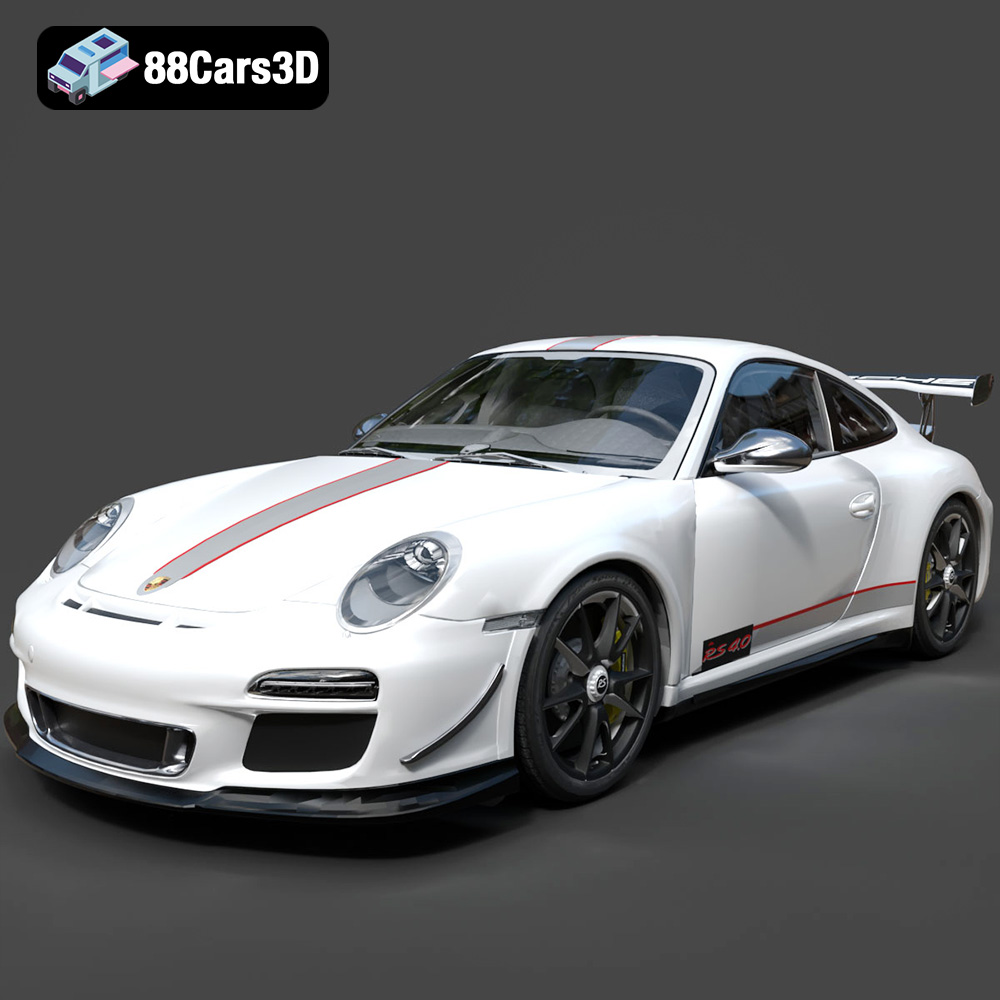
Texture: Yes
Material: Yes
Download the Porsche 911 997 GT3 RS 4.0 2011 3D Model featuring clean geometry, realistic detailing, and a fully modeled interior. Includes .blend, .fbx, .obj, .glb, .stl, .ply, .unreal, and .max formats for rendering, simulation, and game development.
Price: $4.99
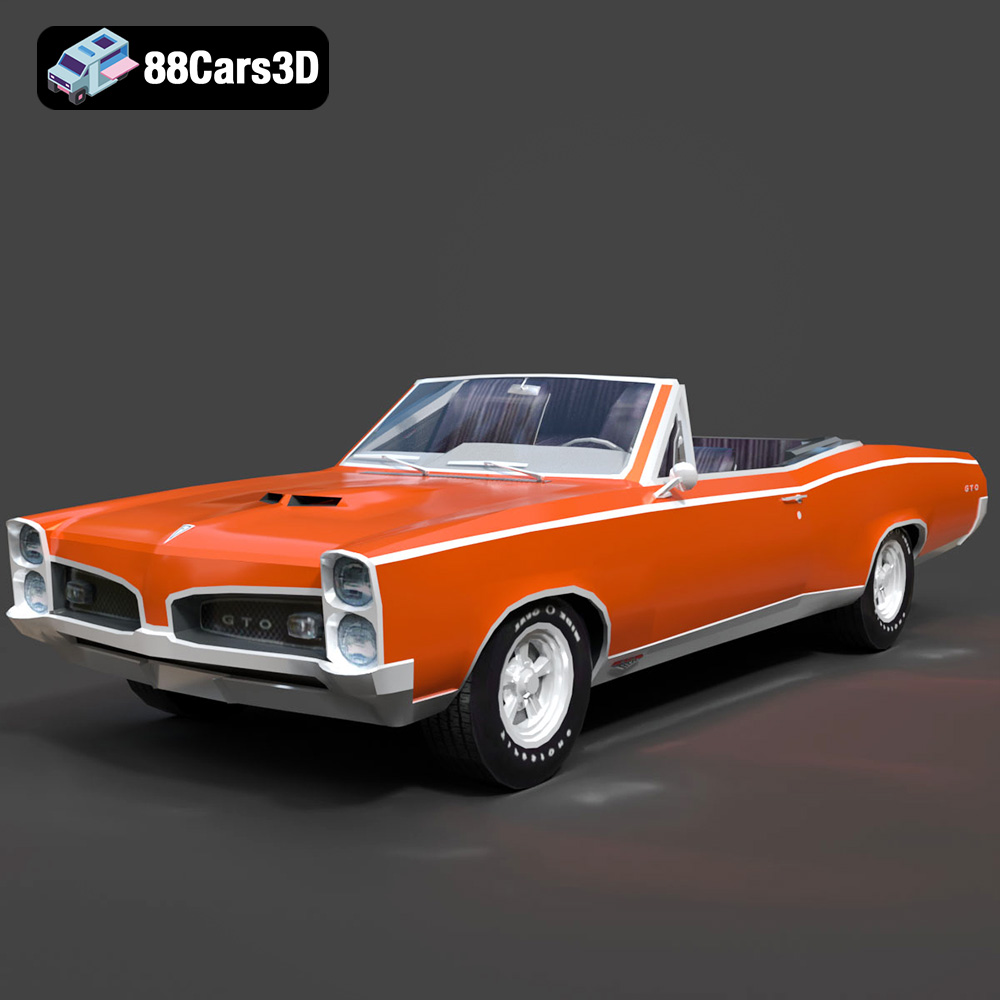
Texture: Yes
Material: Yes
Download the Pontiac GTO Cabrio 1967 3D Model featuring clean geometry, realistic detailing, and a fully modeled interior. Includes .blend, .fbx, .obj, .glb, .stl, .ply, .unreal, and .max formats for rendering, simulation, and game development.
Price: $4.99
Texture: Yes
Material: Yes
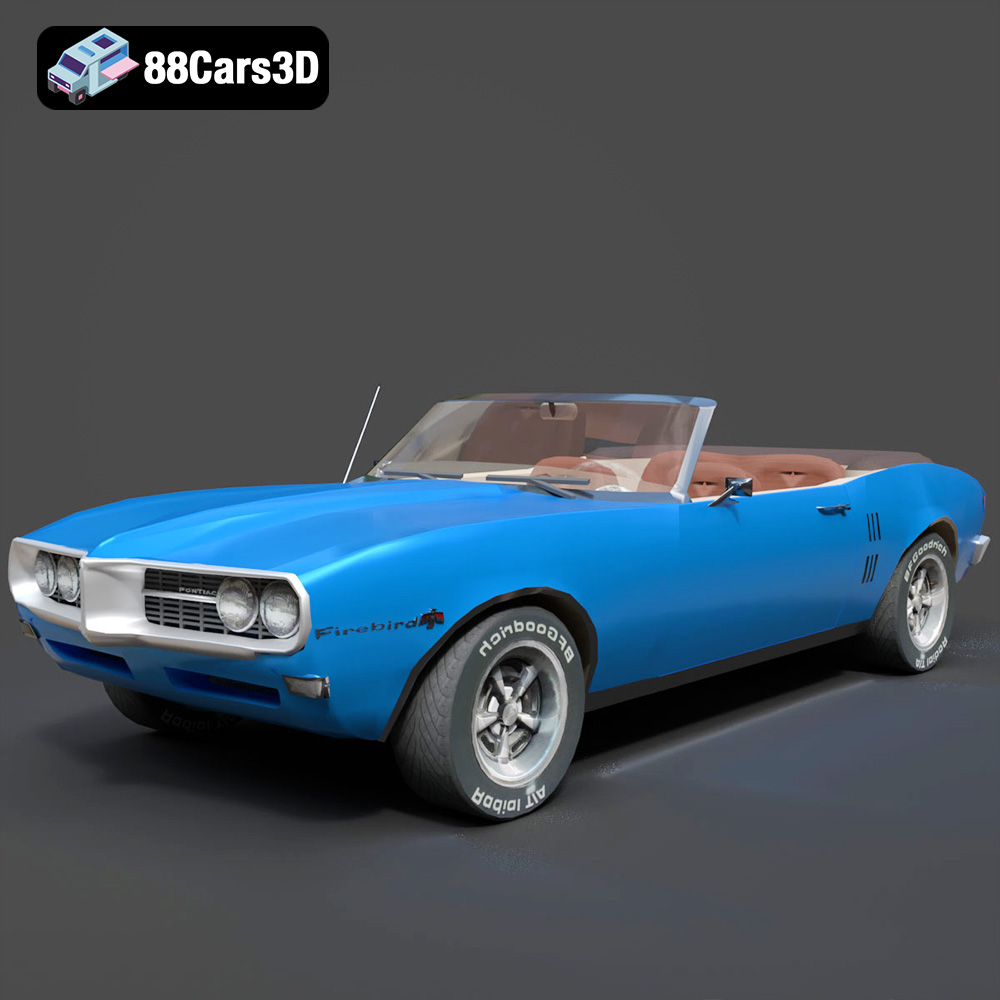
Download the Pontiac Firebird Convertible 1968 3D Model featuring clean geometry, realistic detailing, and a fully modeled interior. Includes .blend, .fbx, .obj, .glb, .stl, .ply, .unreal, and .max formats for rendering, simulation, and game development.
Price: $4.99

Texture: Yes
Material: Yes
Download the Peugeot 508 2011 3D Model featuring clean geometry, realistic detailing, and a fully modeled interior. Includes .blend, .fbx, .obj, .glb, .stl, .ply, .unreal, and .max formats for rendering, simulation, and game development.
Price: $4.99
Texture: Yes
Material: Yes
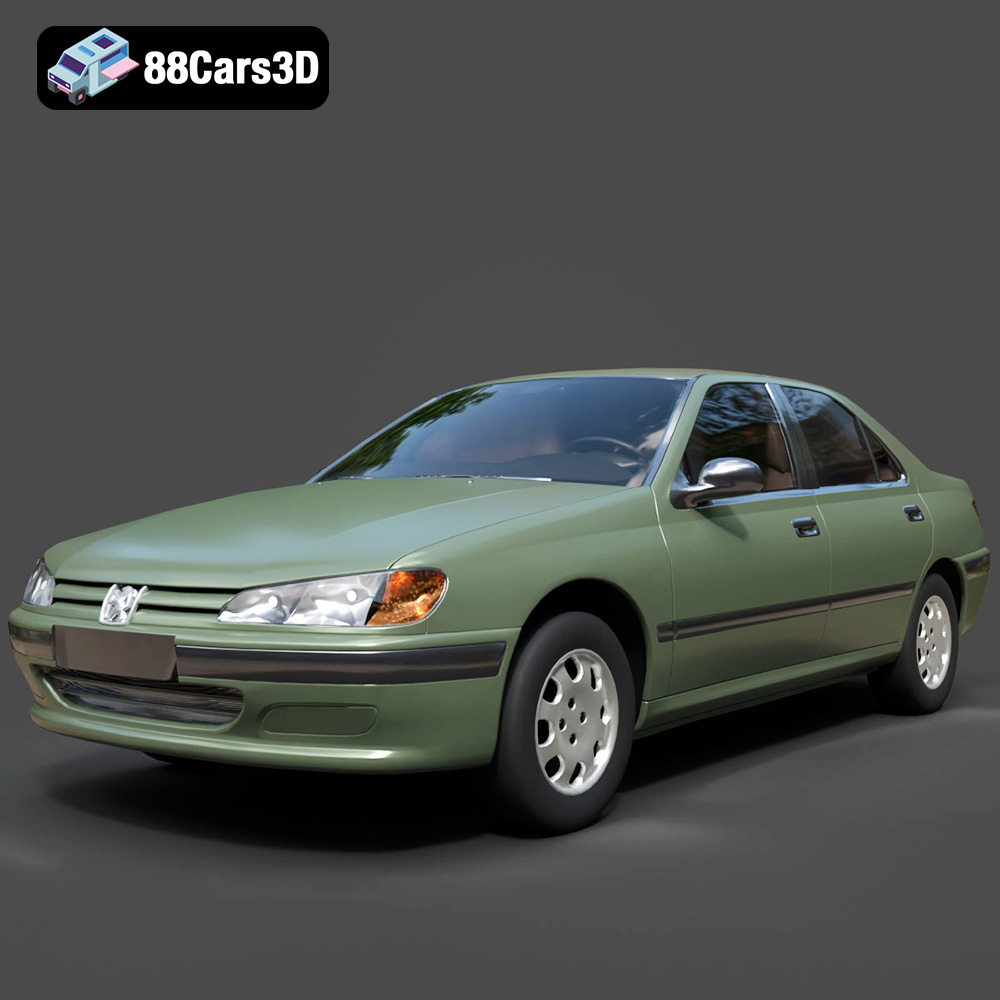
Download the Peugeot 406 1996 3D Model featuring clean geometry, realistic detailing, and a fully modeled interior. Includes .blend, .fbx, .obj, .glb, .stl, .ply, .unreal, and .max formats for rendering, simulation, and game development.
Price: $10
Texture: Yes
Material: Yes
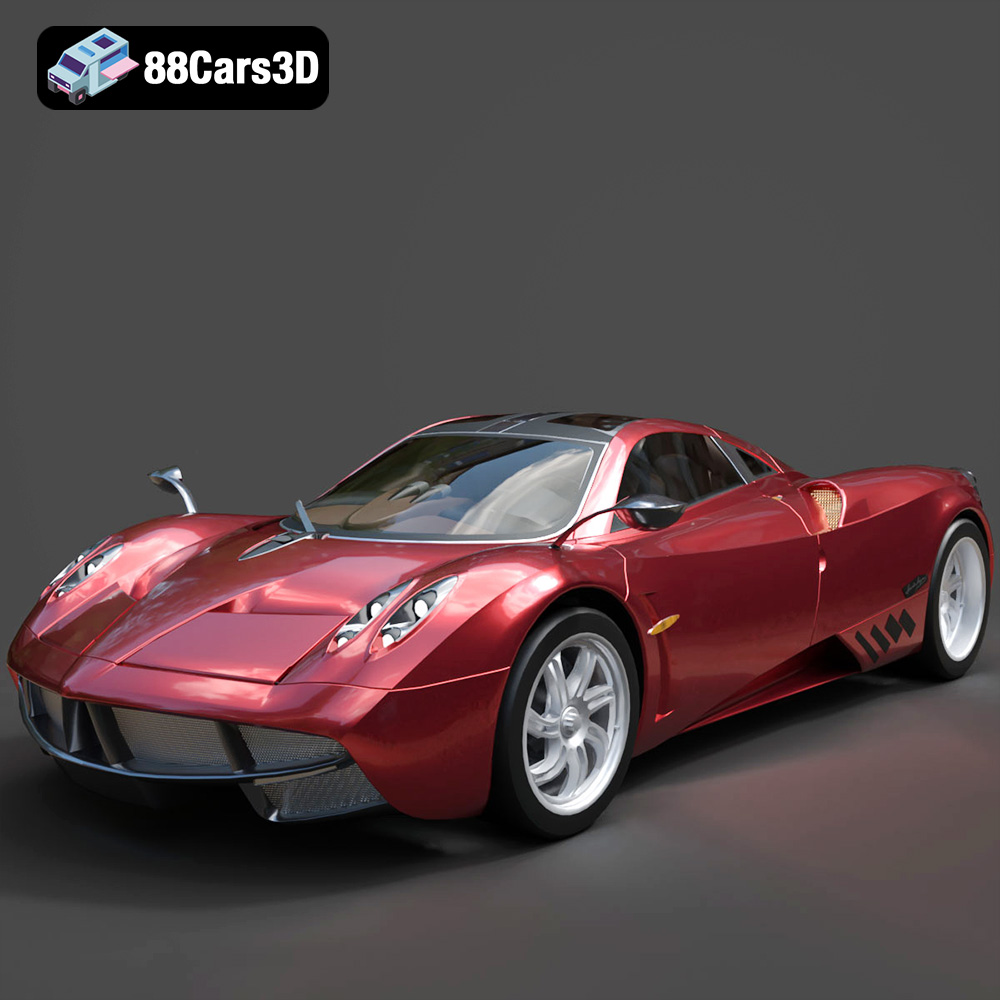
Download the Pagani Huayra 2012 3D Model featuring clean geometry, realistic detailing, and a fully modeled interior. Includes .blend, .fbx, .obj, .glb, .stl, .ply, .unreal, and .max formats for rendering, simulation, and game development.
Price: $10
Texture: Yes
Material: Yes
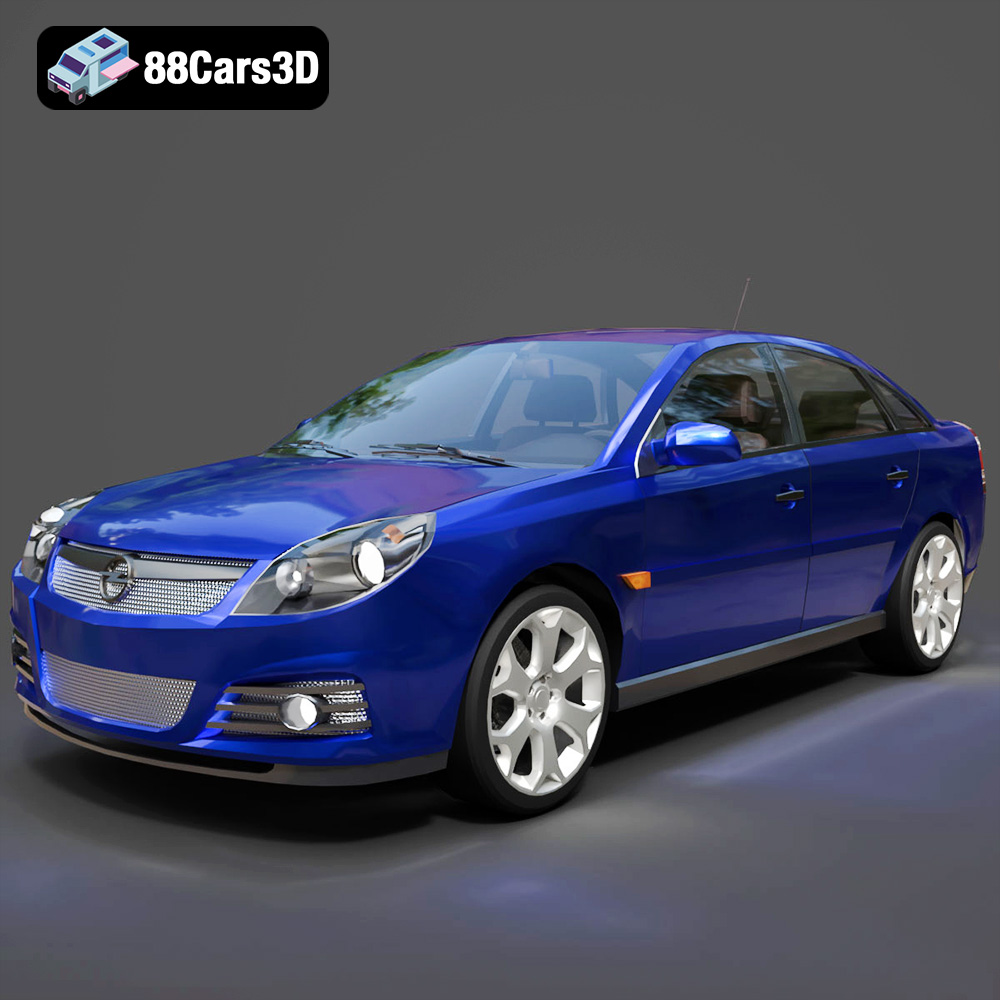
Download the Opel Vectra C 2005 3D Model featuring clean geometry, realistic detailing, and a fully modeled interior. Includes .blend, .fbx, .obj, .glb, .stl, .ply, .unreal, and .max formats for rendering, simulation, and game development.
Price: $10

Texture: Yes
Material: Yes
Download the Opel Insignia OPC 3D Model featuring clean geometry, realistic detailing, and a fully modeled interior. Includes .blend, .fbx, .obj, .glb, .stl, .ply, .unreal, and .max formats for rendering, simulation, and game development.
Price: $10

