⚡ FLASH SALE: Get 60% OFF All Premium 3D & STL Models! ⚡

The sleek lines, intricate details, and powerful presence of a car have captivated designers, engineers, and enthusiasts for over a century. In the digital realm, capturing this essence requires a profound understanding of 3D modeling, texturing, rendering, and optimization. Whether you’re a seasoned 3D artist aiming for photorealistic renders, a game developer crafting immersive virtual worlds, an automotive designer visualizing future concepts, or an AR/VR enthusiast building interactive experiences, the quality of your 3D car models is paramount. This comprehensive guide delves deep into the technical workflows and industry best practices essential for creating and utilizing stunning automotive 3D assets. We’ll explore everything from the foundational principles of topology and UV mapping to advanced rendering techniques, game engine optimization, and even preparation for 3D printing and augmented reality. Prepare to unlock the secrets behind professional-grade 3D car models and elevate your projects to the next level.
The quality of a 3D car model begins long before textures or lights are applied; it starts with its underlying mesh structure, known as topology, and the way its edges flow. For automotive models, which are defined by their smooth, reflective surfaces and precise panel gaps, impeccable topology is non-negotiable. Poor topology can lead to artifacts like pinching, uneven reflections, and difficulties in animation or deformation, directly undermining the model’s realism. The goal is to create an efficient, quad-based mesh that accurately represents the car’s form while allowing for seamless manipulation and subdivision. Every polygon and edge needs to serve a purpose, contributing to the overall integrity and aesthetic of the vehicle. This meticulous approach ensures that the model behaves predictably under various operations, from high-fidelity rendering to real-time game engine deployment.
At the heart of professional automotive 3D modeling is the adherence to quad-based geometry. While triangles and N-gons (polygons with more than four sides) have their specific uses, a predominantly quad mesh is ideal for subdivision surface modifiers (like TurboSmooth in 3ds Max or Subdivision Surface in Blender). These modifiers smoothly subdivide the mesh, transforming a relatively low-polygon base into a high-resolution, flowing surface. With cars, this is crucial for achieving the characteristic smooth curves and complex curvatures of body panels. Maintaining consistent edge loops is another fundamental principle. Edge loops are continuous rings of edges that flow around the contours of the model, defining key features such as wheel arches, door lines, and the separation between panels. These loops are essential for creating controlled creasing and for selecting specific areas for texture application or further modeling. For example, a tight edge loop around a sharp body line will preserve its crispness even after subdivision, while a wider loop will result in a softer curve. Avoiding poles (vertices where more than five edges meet) in flat or critical reflective areas is also crucial, as they can cause visible pinching or distortion in reflections.
Edge flow dictates how the polygons are distributed and how the mesh deforms and reflects light. For cars, achieving both sharp creases and smooth, flowing surfaces simultaneously is an art. Supporting edge loops play a vital role here. These are extra edge loops placed close to a hard edge or crease, effectively “tightening” the surface when subdivision is applied, without adding unnecessary geometry to flat areas. This technique allows artists to define the exact sharpness of panel gaps, fender edges, or window frames. For instance, creating a sharp seam between a car door and its frame involves placing two parallel edge loops very close to each other along the seam. When subdivided, the area between these loops remains flat and sharp, while the surrounding surfaces become smooth. Conversely, to create a gentle, sweeping curve, edge loops should be more evenly spaced, allowing the subdivision modifier to interpolate smoothly. Common challenges include managing the polygon density, ensuring it’s higher in areas of high curvature and lower in flat regions to optimize performance without sacrificing detail. Using techniques like “edge sliding” (e.g., in Blender and 3ds Max) allows artists to reposition edges along existing loops, fine-tuning the surface without changing the overall topology. This meticulous attention to edge flow directly translates to the realistic specular highlights and clean reflections that are so critical for convincing automotive renders.
Once the underlying geometry is perfected, the next critical step is to imbue the 3D car model with lifelike surface characteristics. This involves two closely related processes: UV mapping, which dictates how 2D textures are applied to the 3D model, and the creation of Physically Based Rendering (PBR) materials, which define how light interacts with the surface. Together, these elements transform a gray mesh into a vibrant, realistic representation of a vehicle. Without meticulous UVs, even the highest resolution textures will appear distorted or pixelated. Similarly, without accurately calibrated PBR materials, the most expertly modeled car will lack the visual fidelity and convincing physical properties necessary for photorealistic renders or immersive real-time experiences.
UV mapping is essentially the process of unfolding your 3D model into a 2D space, allowing you to paint or apply 2D images (textures) onto it without distortion. For complex objects like cars, efficient and clean UVs are crucial for achieving seamless textures, decals, and liveries. A common strategy involves breaking down the car into logical components—body panels, interior, wheels, glass, lights, and trim—and unwrapping each piece individually. This modular approach helps minimize texture distortion and allows for optimized texture density. For large, relatively flat panels, planar or box mapping can be a good starting point, followed by careful seam placement to minimize their visibility. For curved surfaces like fenders, cylindrical or spherical projections, or even manual pelt mapping, might be more effective. The goal is to create UV islands (the individual unwrapped pieces) that are as straightened and evenly spaced as possible to prevent stretching and allow for efficient texture packing. Tools in software like Blender, 3ds Max, and Maya offer advanced unwrapping capabilities, including “UV packing” algorithms that automatically arrange UV islands into the most efficient layout within the 0-1 UV space, maximizing texture resolution and minimizing wasted space. Careful consideration of symmetry also helps, allowing one side of the car to be mapped and mirrored, saving texture memory and workflow time.
Physically Based Rendering (PBR) has revolutionized how materials are created in 3D, aiming for physically accurate light interaction regardless of the lighting environment. PBR workflows typically use a set of textures (maps) to define various surface properties. The two most common PBR workflows are Metallic/Roughness and Specular/Glossiness. The Metallic/Roughness workflow, widely adopted in game engines and modern renderers, uses an Albedo (Base Color) map, a Metallic map (0 for dielectric, 1 for metal), and a Roughness map (0 for perfectly smooth, 1 for perfectly rough). Additional maps include Normal maps for surface detail, Ambient Occlusion (AO) for contact shadows, and Displacement maps for true geometric detail.
Creating car paint shaders is a complex art form. A realistic car paint often involves multiple layers: a base metallic flake coat, a clear coat for reflection and gloss, and sometimes a separate layer for scratches or dirt. In renderers like Corona, V-Ray, Cycles, or Arnold, this is achieved through sophisticated shader networks, layering materials or using specific car paint shaders that simulate metallic flakes and clear coat effects. Glass materials require accurate refraction and reflection properties, often with subtle tinting. Tire rubber needs a distinct roughness and normal map detail for its tread. Chrome and other metallic trims are typically pure metallic (Metallic value close to 1) with varying degrees of roughness. By meticulously crafting these PBR materials and assembling them within shader networks, artists can achieve an incredible level of realism, making the 3D car model visually indistinguishable from its real-world counterpart. High-quality PBR textures often require resolutions of 4K or even 8K for primary surfaces to capture every nuance of the material.
The culmination of meticulous modeling and texturing is the render—the final image or animation that brings the 3D car model to life. Achieving photorealistic automotive renders is a highly specialized skill, demanding an understanding of lighting, camera principles, and advanced renderer settings. It’s about more than just pressing a button; it’s an artistic process of guiding the viewer’s eye, emphasizing design features, and creating a mood. From studio setups to environmental integration, every aspect contributes to the final impact of the visualization. High-quality automotive rendering is often used for marketing, design validation, and cinematic sequences, requiring uncompromising attention to detail and a command over powerful rendering software.
Lighting is arguably the most critical element in automotive rendering. A well-lit scene can make even a moderately detailed model shine, while poor lighting can obscure the finest craftsmanship. High Dynamic Range Images (HDRIs) are the industry standard for realistic lighting and reflections. An HDRI captures light information from a real-world environment, providing accurate global illumination, sharp reflections, and realistic sky light. For studio renders, a combination of HDRIs and traditional studio lights (area lights, softboxes, and spotlights) is often used. The goal is to highlight the car’s form, emphasize its reflections, and create appealing specular highlights along its curves. Three-point lighting (key, fill, and back lights) is a good starting point, but specialized automotive studios often employ complex arrays of softboxes to create long, elegant reflections that accentuate the vehicle’s shape. Physical sky models, available in renderers like Corona and V-Ray, offer dynamic day-night cycles and realistic atmospheric effects. The environment itself, whether it’s a sterile studio, an urban street, or a scenic landscape, must be carefully chosen and lit to complement the car, rather than detract from it. Subtle ambient occlusion, achieved through careful lighting or baked textures, can add depth and realism by simulating soft contact shadows.
Each renderer—be it Corona, V-Ray, Cycles, or Arnold—has its unique set of parameters that need fine-tuning for optimal automotive renders. Key settings include sample counts (for noise reduction), ray depth (for accurate reflections and refractions), and global illumination (which simulates how light bounces around the scene). Denoising algorithms, often integrated directly into modern renderers, are crucial for reducing render times while maintaining image quality. Professional workflows frequently utilize render passes (or render elements) during the rendering process. These passes separate different components of the image—such as diffuse color, reflections, refractions, ambient occlusion, normals, and Z-depth (depth information)—allowing for incredible flexibility during post-processing. Compositing these passes in software like Adobe Photoshop, Affinity Photo, or GIMP provides precise control over various aspects of the final image. Post-processing is where the image truly comes alive: color grading can set the mood, lens effects like bloom and glare add photographic realism, and subtle sharpening can make details pop. Depth of field (bokeh effects) can isolate the car and draw the viewer’s focus. It’s an iterative process, involving rendering, analyzing, adjusting settings, and refining in post-production until the desired photorealistic result is achieved. Platforms like 88cars3d.com offer high-quality 3D car models that are already optimized for various rendering engines, streamlining this process significantly for artists.
While high-fidelity rendering aims for photographic realism in static images or pre-rendered animations, interactive experiences like video games, virtual reality (VR), and augmented reality (AR) demand a different approach. Here, performance is paramount, and every polygon, texture, and draw call must be carefully managed to ensure smooth frame rates and a responsive user experience. The challenge lies in translating the detailed models suitable for rendering into lightweight, efficient assets that still maintain visual quality within real-time constraints. This optimization process involves a series of strategic compromises and technical wizardry to balance visual fidelity with computational efficiency, making 3D car models suitable for a broad spectrum of real-time applications, from high-end PCs to mobile devices.
When preparing 3D car models for game engines like Unity or Unreal Engine, polygon count management is the primary concern. While a high-poly model might have millions of polygons for a cinematic render, a game-ready model often needs to be significantly reduced, potentially down to tens or hundreds of thousands of polygons, depending on the target platform and desired visual quality. This reduction is typically achieved through careful retopology or automated decimation tools, ensuring that essential details are preserved through normal maps baked from the high-poly version. Level of Detail (LODs) are crucial for performance. This technique involves creating multiple versions of the same car model, each with progressively fewer polygons, which are swapped out dynamically by the game engine based on the camera’s distance from the object. For instance, a detailed interior might only be present in LOD0 (closest view), while LOD3 (farthest view) might be a simple block-out.
Another critical optimization is reducing draw calls, which are instructions sent from the CPU to the GPU. Each unique material or mesh component typically incurs a draw call. Texture atlasing, where multiple smaller textures are combined into a single, larger texture, and combining meshes into fewer objects can drastically reduce draw calls. Creating efficient collision meshes, which are simplified proxy geometries used for physics interactions, is also vital. Exporting models as FBX files is the industry standard for game engines, allowing for embedding textures, animations, and correct transformations. Finally, for static objects, baking lighting and ambient occlusion directly into vertex colors or lightmaps can provide realistic illumination without the runtime cost of dynamic lighting.
Augmented Reality (AR) and Virtual Reality (VR) environments present unique optimization challenges beyond traditional game development. The need for consistently high frame rates (typically 90fps or higher for VR to prevent motion sickness) and the often lower computational power of mobile AR devices necessitate even more aggressive optimization. For AR/VR 3D car models, polygon counts need to be extremely lean, often in the range of 30,000 to 100,000 polygons for an entire vehicle, depending on the specific application and target device. Texture resolutions must also be carefully managed, often using 2K textures instead of 4K or 8K.
The choice of file format is also crucial for AR/VR, especially for web-based or mobile applications. GLB (GL Transmission Format Binary) is an increasingly popular format for web and AR applications due to its efficiency and ability to embed all model data (geometry, materials, textures, animations) into a single file. Similarly, USDZ, developed by Apple, is the standard for AR experiences on iOS devices. These formats are optimized for quick loading and efficient rendering in real-time environments. Correct real-world scale and pivot points are also critical for AR, ensuring the virtual car appears correctly sized and positioned in the physical environment. When sourcing high-quality 3D car models for such demanding applications, marketplaces such as 88cars3d.com offer assets that are often already optimized for various real-time platforms, including specific formats like GLB and USDZ, saving significant development time.
The versatility of 3D car models extends far beyond screen-based visualizations. With the advent of accessible 3D printing technologies, these digital assets can now materialize into physical objects, ranging from scale models for collectors to functional prototypes for automotive design. However, preparing a model for 3D printing introduces a distinct set of requirements and technical considerations. Concurrently, the landscape of 3D software and applications necessitates a thorough understanding of various file formats and the intricacies of converting between them, ensuring that your valuable 3D assets remain compatible and intact across different platforms and workflows.
Converting a 3D car model from a digital asset to a physical print requires a different kind of optimization. The primary concern for 3D printing is mesh integrity. Unlike rendering, where minor mesh issues might go unnoticed, a 3D printer requires a “watertight” or “manifold” mesh – meaning every edge must be connected to exactly two faces, ensuring there are no holes, internal geometry, or flipped normals. These issues can cause printing errors or failed prints. Software like Meshmixer, Netfabb, or even dedicated 3D printing tools within Blender and 3ds Max offer mesh repair functionalities to identify and fix these problems.
Wall thickness is another critical factor. Every part of the model must have a minimum wall thickness (typically 1-2mm depending on the printing technology and material) to be structurally sound. Very thin details or unsupported overhangs might require adjustment or the addition of support structures during the slicing process. The level of detail in the digital model should also match the resolution capabilities of the 3D printer. Extremely high-polygon details that are smaller than the printer’s nozzle size will not be accurately reproduced. Finally, ensuring the model is scaled correctly to real-world units is essential before exporting it in formats commonly used for 3D printing, such as STL (Stereolithography) or OBJ. Complex parts, like wheels or interiors, might need to be separated into individual printable components.
The 3D industry uses a multitude of file formats, each with its strengths and weaknesses, and designed for specific purposes. Understanding these formats and how to convert between them without losing crucial data is a vital skill.
* FBX (Filmbox): Developed by Autodesk, FBX is arguably the most common interchange format, especially for animation and game development. It supports geometry, materials, textures, animations, and camera data. It’s the go-to for transferring models between software like 3ds Max, Maya, Blender, Unity, and Unreal Engine.
* OBJ (Wavefront OBJ): A universal exchange format, OBJ is highly compatible across virtually all 3D software. It stores geometry (vertices, faces, UVs) and references material files (MTL). While robust, it doesn’t support animations or scene data.
* STL (Stereolithography): This is the standard format for 3D printing. It represents surfaces using tessellated triangles and contains no color or material information, focusing solely on geometry for manufacturing.
* GLB / glTF (GL Transmission Format): These are modern, efficient formats optimized for web-based 3D, AR/VR, and real-time applications. glTF (JSON-based) is human-readable, while GLB is its binary equivalent, embedding all assets (geometry, textures, materials) into a single file for faster loading.
* USDZ (Universal Scene Description Zip): Developed by Apple in collaboration with Pixar, USDZ is specifically designed for AR experiences on iOS devices. It’s a packed, non-editable format that supports geometry, materials, and animations, optimized for mobile AR viewing.
When exporting, it’s critical to verify settings like embedding textures, preserving transformations, and material conversions. For example, exporting an FBX for Unity might require specific scale settings or material options. Always double-check the imported model in the target software to ensure fidelity. High-quality 3D asset marketplaces, like 88cars3d.com, typically offer their 3D car models in a variety of these essential formats, ensuring maximum compatibility for diverse artistic and development workflows.
The journey through the creation and utilization of professional-grade 3D car models is a testament to the intricate blend of art and science within the 3D industry. From the foundational precision of topology and edge flow that defines a vehicle’s form, to the intricate dance of UV mapping and PBR materials that breathe life into its surfaces, every step requires meticulous attention to detail and a deep understanding of technical principles. We’ve explored the workflows for achieving breathtaking photorealistic renders with advanced lighting and post-processing, and delved into the rigorous optimization required for seamless integration into game engines and the burgeoning worlds of AR/VR. Finally, we’ve touched upon the unique considerations for transforming digital assets into tangible objects through 3D printing, and navigated the diverse landscape of 3D file formats that facilitate these varied applications.
Mastering these areas empowers artists, developers, and designers to not only create visually stunning automotive assets but also to deploy them across an ever-expanding array of platforms and experiences. The demand for high-quality 3D car models continues to grow across industries, from film and advertising to interactive simulations and product design. By applying the techniques and best practices outlined in this guide, you can significantly enhance the realism, performance, and versatility of your 3D automotive projects. Remember that continuous learning and experimentation are key in this rapidly evolving field. Whether you choose to build your models from scratch or leverage the expertly crafted assets available from platforms like 88cars3d.com, a solid understanding of these technical foundations will be your most valuable tool. Embrace the challenge, push the boundaries of what’s possible, and continue to drive innovation in the world of 3D automotive visualization.

Texture: Yes
Material: Yes
Download the Nissan Fuga 2003 3D Model featuring clean geometry, realistic detailing, and a fully modeled interior. Includes .blend, .fbx, .obj, .glb, .stl, .ply, .unreal, and .max formats for rendering, simulation, and game development.
Price: $4.99
Texture: Yes
Material: Yes
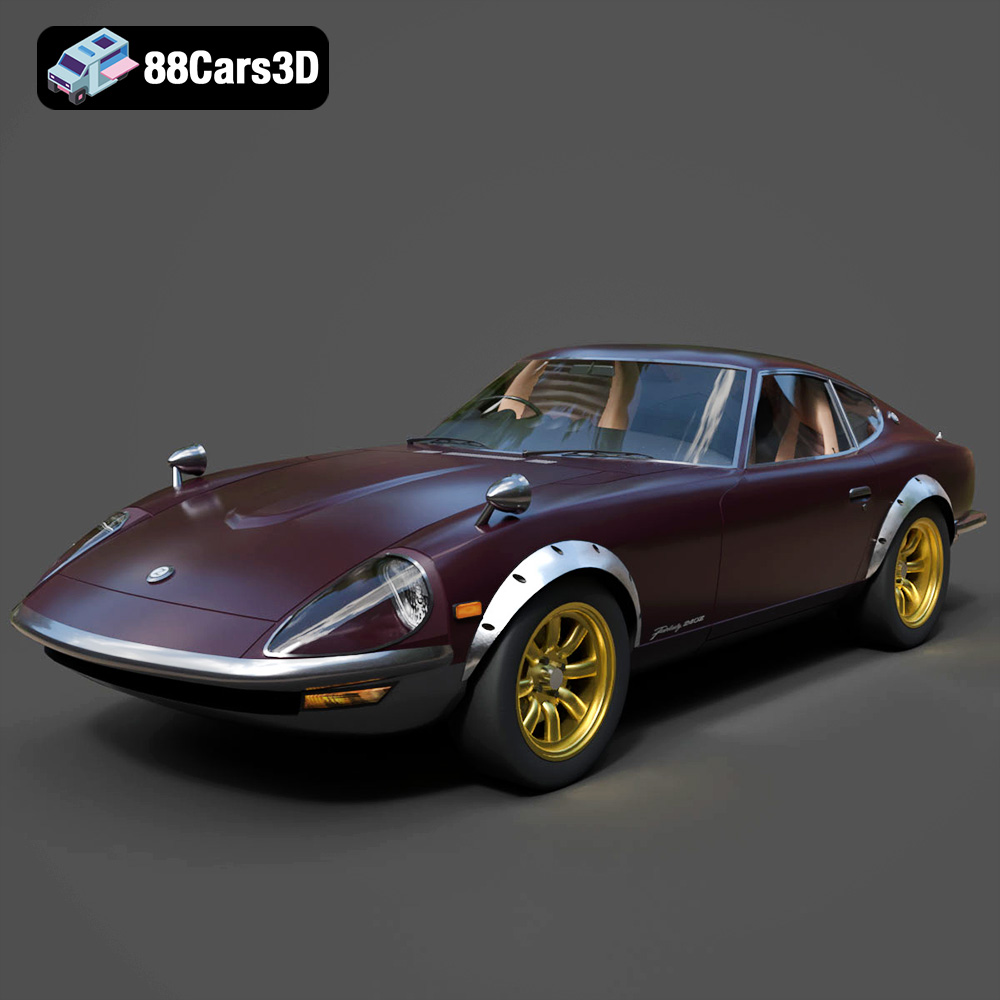
Download the Nissan FairLady 240ZG 3D Model featuring clean geometry, realistic detailing, and a fully modeled interior. Includes .blend, .fbx, .obj, .glb, .stl, .ply, .unreal, and .max formats for rendering, simulation, and game development.
Price: $4.99
Texture: Yes
Material: Yes
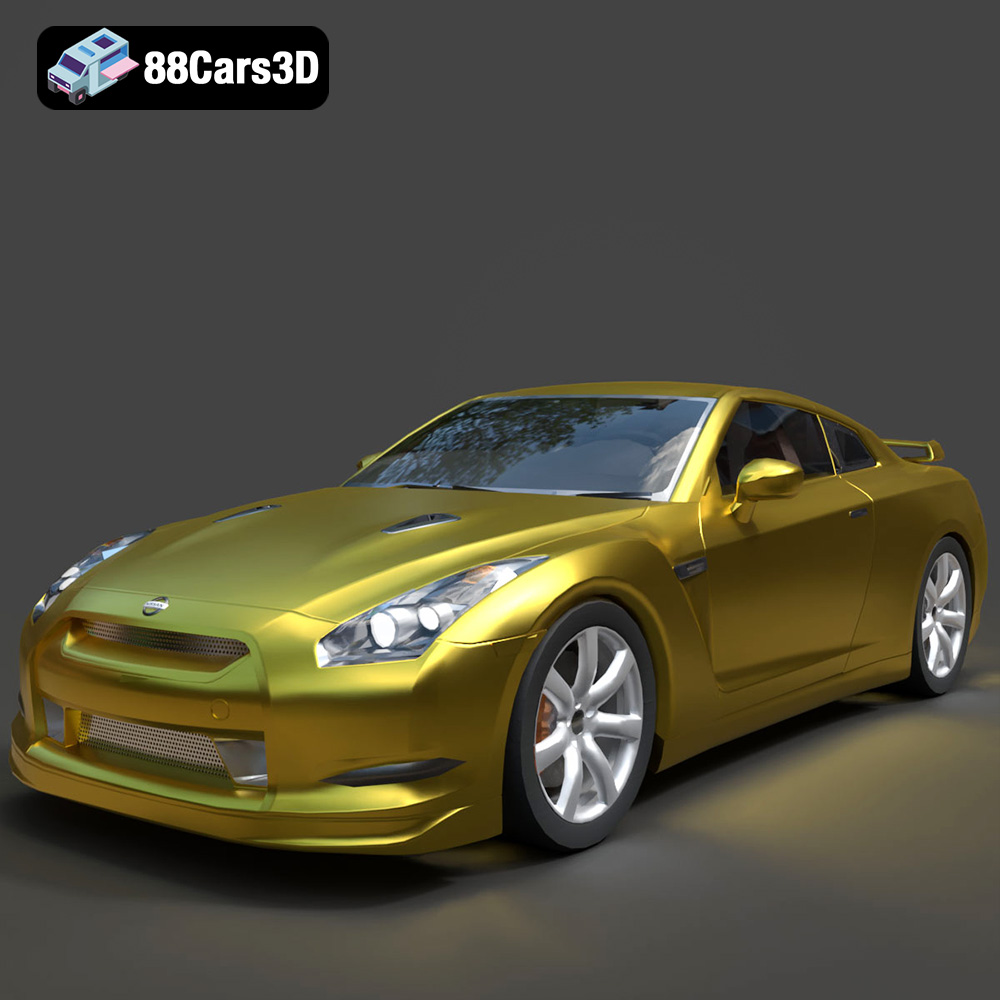
Download the Nissan GT-R 2008 3D Model featuring clean geometry, realistic detailing, and a fully modeled interior. Includes .blend, .fbx, .obj, .glb, .stl, .ply, .unreal, and .max formats for rendering, simulation, and game development.
Price: $4.99

Texture: Yes
Material: Yes
Download the Nissan Cube 3D Model featuring clean geometry, realistic detailing, and a fully modeled interior. Includes .blend, .fbx, .obj, .glb, .stl, .ply, .unreal, and .max formats for rendering, simulation, and game development.
Price: $4.99

Texture: Yes
Material: Yes
Download the Nissan Cedric Y32 3D Model featuring clean geometry, realistic detailing, and a fully modeled interior. Includes .blend, .fbx, .obj, .glb, .stl, .ply, .unreal, and .max formats for rendering, simulation, and game development.
Price: $4.99

Texture: Yes
Material: Yes
Download the Nissan Cima Infiniti Q45 2007 3D Model featuring clean geometry, realistic detailing, and a fully modeled interior. Includes .blend, .fbx, .obj, .glb, .stl, .ply, .unreal, and .max formats for rendering, simulation, and game development.
Price: $4.99

Texture: Yes
Material: Yes
Download the Nissan Juke 2025 3D Model featuring clean geometry, realistic detailing, and a fully modeled interior. Includes .blend, .fbx, .obj, .glb, .stl, .ply, .unreal, and .max formats for rendering, simulation, and game development.
Price: $4.99
Texture: Yes
Material: Yes
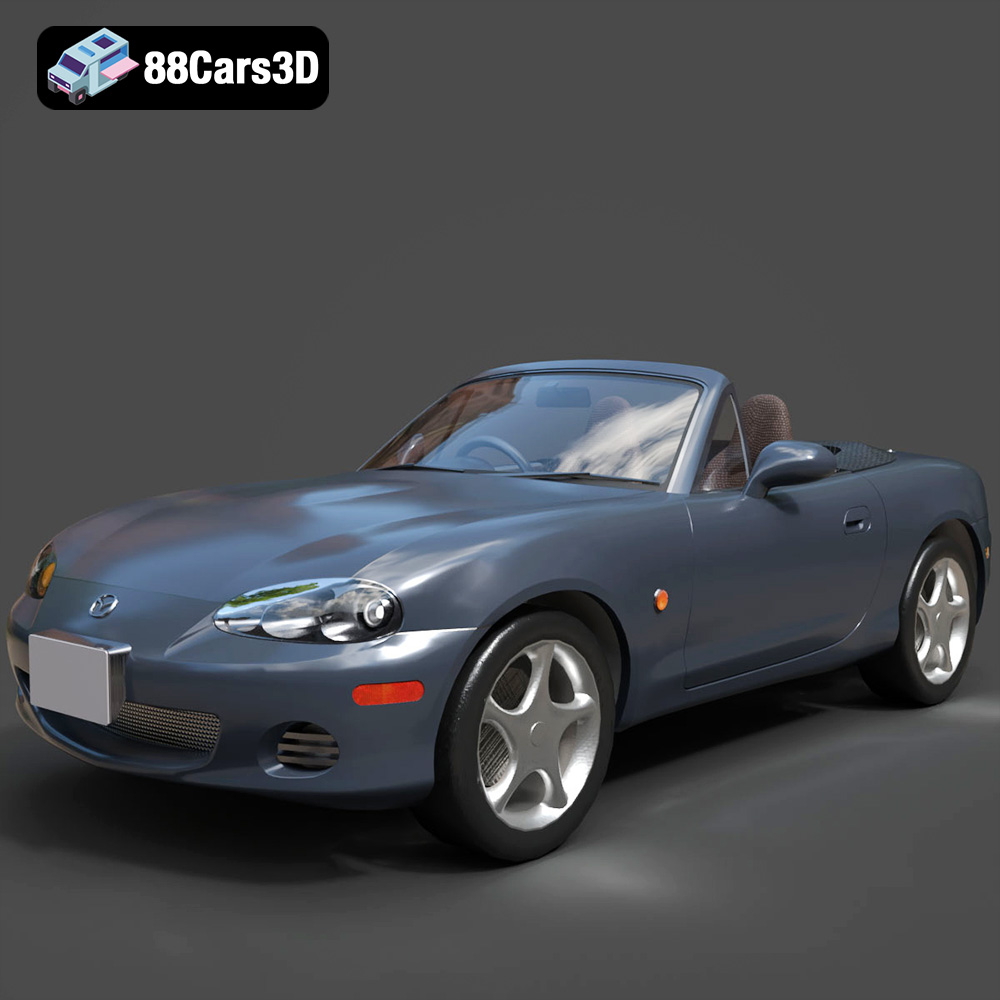
Download the Mazda MX-5 2025 3D Model featuring clean geometry, realistic detailing, and a fully modeled interior. Includes .blend, .fbx, .obj, .glb, .stl, .ply, .unreal, and .max formats for rendering, simulation, and game development.
Price: $4.99

Texture: Yes
Material: Yes
Download the Nissan Maxima 2009 3D Model featuring clean geometry, realistic detailing, and a fully modeled interior. Includes .blend, .fbx, .obj, .glb, .stl, .ply, .unreal, and .max formats for rendering, simulation, and game development.
Price: $4.99
Texture: Yes
Material: Yes
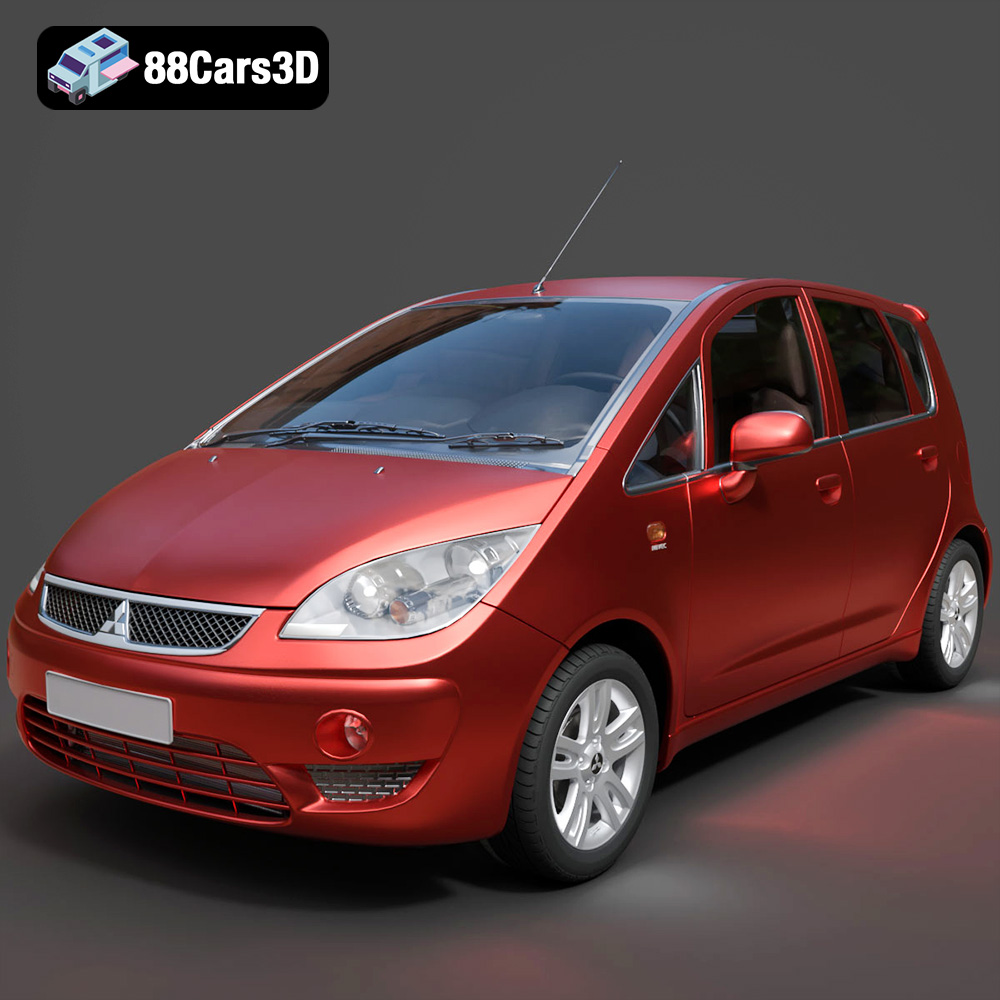
Download the Mitsubishi Colt 2025 3D Model featuring clean geometry, realistic detailing, and a fully modeled interior. Includes .blend, .fbx, .obj, .glb, .stl, .ply, .unreal, and .max formats for rendering, simulation, and game development.
Price: $4.99

