⚡ FLASH SALE: Get 60% OFF All Premium 3D & STL Models! ⚡

In the vibrant world of 3D, few subjects captivate with the same blend of engineering precision and artistic flair as automotive design. High-quality 3D car models are the bedrock for breathtaking visualizations, immersive game experiences, cutting-edge AR/VR applications, and even tangible 3D prints. Yet, crafting or utilizing these complex assets effectively requires a deep understanding of intricate workflows, technical specifications, and industry best practices. It’s a journey from raw polygons to photorealistic renders and optimized interactive environments, demanding meticulous attention to detail at every stage.
This comprehensive guide is engineered for 3D artists, game developers, automotive designers, and visualization professionals alike. We’ll navigate the essential techniques required to achieve excellence with 3D car models, dissecting everything from foundational topology and UV mapping to advanced PBR material creation, render optimization, game engine integration, and preparing models for emerging technologies like AR/VR and 3D printing. Whether you’re building a hyper-realistic scene or optimizing for real-time performance, understanding these principles will elevate your work. And for those seeking a head start, platforms like 88cars3d.com provide a curated collection of production-ready 3D car models, meticulously crafted to these very standards, offering a solid foundation for your projects.
The success of any high-quality 3D car model begins with its topology – the underlying structure of its mesh. For automotive assets, clean, quad-dominant topology isn’t just a preference; it’s a necessity for achieving smooth subdivision surfaces, accurate reflections, and efficient deformation. A poorly constructed mesh can lead to artifacts, pinching, and an inability to adapt the model for different uses, regardless of how detailed its textures are.
At its core, professional 3D car modeling relies almost exclusively on quadrilaterals (quads). Quads allow for predictable subdivision and smooth deformation, which is critical for the flowing, often complex, surfaces of a car body. Triangles (tris) are generally avoided on curved surfaces because they create stiff areas that can pinch or distort when subdivided, leading to visible seams or bumps. While triangles might be acceptable in perfectly flat, non-deforming areas, their use should be minimized, especially on a car’s exterior. N-gons (polygons with more than four sides) are almost always problematic, causing unpredictable shading and rendering issues.
A typical high-fidelity 3D car model designed for rendering might have a polygon count ranging from 150,000 to 500,000 polygons for the base mesh, which can then be smoothed using subdivision surface modifiers (like TurboSmooth in 3ds Max or Subdivision Surface in Blender/Maya) to millions of polygons for final rendering. For game development, this range would be significantly lower for the base LODs, often starting at 30,000-80,000 polygons for the highest detail LOD0, gradually decreasing for lower LODs. When evaluating models from marketplaces such as 88cars3d.com, always inspect the wireframe for clean, evenly distributed quads and minimal use of triangles in critical areas.
Beyond just using quads, the ‘edge flow’ – how edges run across the surface – is paramount for automotive models. Good edge flow follows the natural curvature and contours of the car, defining panel lines, creases, and hard edges with precision. This is crucial for two main reasons: firstly, it ensures that subdivision modifiers create perfectly smooth, continuous surfaces without ripples or wobbles. Secondly, it dictates how light will reflect off the car body, which is essential for showcasing the design and material properties. Reflecting environments correctly is a hallmark of photorealism, and clean edge flow is the unsung hero behind it.
For sharp details like panel gaps, headlights, or vents, ‘support loops’ or ‘control loops’ are used. These are extra edge loops placed close to the edges that need to remain sharp, effectively tightening the mesh in those areas when subdivided. This technique allows the rest of the surface to remain smooth while preserving crisp details. Creating accurate panel gaps often involves duplicating and slightly offsetting parts of the mesh, or using boolean operations followed by careful cleanup and re-topology to maintain a clean edge flow around the resulting cut. Maintaining a consistent gap width, usually around 1-2mm in real-world scale, is vital for realism. Mastering edge flow is an art form that significantly impacts the perceived quality and realism of any 3D car model, making it a critical skill for automotive visualization.
Once the geometry is solid, the next step is to prepare it for textures and materials. This involves UV mapping, which essentially unwraps the 3D surface into a 2D plane, and then creating Physically Based Rendering (PBR) materials that accurately simulate how light interacts with different surfaces. These two stages are interdependent and critical for achieving photorealistic results.
UV mapping is often considered one of the less glamorous but most crucial steps in 3D modeling. For complex automotive surfaces, strategic UV unwrapping is key to preventing texture stretching, optimizing texture usage, and simplifying the texturing process. Seam placement is paramount; ideally, seams should be hidden in less visible areas, such as along natural panel lines, under the car, or within crevices. For car bodies, large, contiguous UV islands are preferred to minimize texture distortion and allow for seamless application of materials like paint, decals, and weathering effects.
Modern workflows often involve multiple UV sets. A primary UV set (UV Map 0 or Channel 1) is typically used for diffuse, normal, and other PBR maps. A secondary UV set (UV Map 1 or Channel 2) might be reserved for lightmaps in game engines, ensuring that baked lighting doesn’t interfere with the primary texture details. For a detailed car, texture resolutions are often high: 4K (4096×4096 pixels) or 8K (8192×8192 pixels) for the main body and large components, 2K (2048×2048) for interior details, wheels, and smaller parts, and 1K (1024×1024) for very small or repeating elements. Efficient UV packing, where UV islands are arranged to maximize space within the 0-1 UV space, is also vital for optimizing texture memory and reducing draw calls in real-time applications.
Physically Based Rendering (PBR) has revolutionized material creation, enabling artists to achieve incredibly realistic surfaces by accurately simulating the physics of light. PBR materials rely on a set of maps—Albedo (or Base Color), Metallic, Roughness, Normal, and Ambient Occlusion (AO)—to define how a surface looks. The Albedo map provides the base color (or diffuse reflectance for non-metals and specular color for metals). The Metallic map differentiates between dielectric (non-metal) and conductive (metal) materials, dictating how much light is reflected as specular vs. absorbed. The Roughness map controls the micro-surface detail, influencing how sharp or blurry reflections appear.
For automotive paint, a complex shader network is often employed. This typically involves a clear coat layer, which simulates the transparent, glossy top layer of paint. This clear coat has its own roughness, normal, and even thickness parameters, interacting with the underlying metallic flake or solid color base layer. Understanding Fresnel reflectance—how light reflects more strongly at grazing angles—is also critical for car paint and glass, adding to the realism. In software like 3ds Max with Corona Renderer, the Corona Physical Material allows for extensive customization of these layers, while Blender’s Principled BSDF shader and V-Ray’s VRayMtl (with its coat layer options) offer similar capabilities. Crafting these materials meticulously is what transforms a well-modeled car into a visually stunning piece.
Even the most perfectly modeled and textured 3D car model will fall flat without compelling lighting and a robust rendering workflow. Lighting defines the mood, highlights the car’s design, and brings out the nuances of its materials. Coupled with optimized rendering settings, it’s where a scene truly comes alive.
Automotive rendering typically employs two primary lighting strategies: studio lighting and environment lighting. Studio lighting uses a controlled setup of virtual lights (e.g., area lights, photometric lights) to sculpt the car’s form and highlight specific features, much like a real-world photo studio. Common techniques include three-point lighting (key, fill, back light) for overall illumination and strategically placed long, narrow light emitters to create appealing reflections along the car’s curves. A soft dome light or large area light positioned above can provide ambient fill and subtle reflections. The goal here is complete control over reflections and shadows, emphasizing design elements.
Environment lighting, on the other hand, leverages High Dynamic Range Images (HDRIs) to simulate real-world lighting conditions. An HDRI encapsulates full spherical photographic data of light intensity and color, casting incredibly realistic reflections and illumination. Placing a car in an HDRI of a sunny outdoor scene or a dimly lit garage immediately imbues it with a sense of place. Often, a hybrid approach is used: an HDRI provides the overall ambient light and reflections, while targeted studio lights are added to emphasize details or to add specific highlights that the HDRI alone might not provide. Crucially, in real-time engines like Unity and Unreal, reflection probes are used to capture and apply environment reflections to objects, making HDRI-based lighting equally effective.
Rendering a high-quality 3D car model demands careful calibration of render settings to balance visual fidelity with computational efficiency. Core settings typically include sampling rates, ray depth, and the use of denoisers. Sampling refers to the number of light rays or samples cast per pixel, directly impacting noise levels. Higher samples yield cleaner images but take longer. Modern renderers like Corona, V-Ray, Cycles (Blender), and Arnold all offer adaptive sampling, which intelligently focuses computational power on noisy areas, improving efficiency.
Ray depth (or bounce depth) determines how many times light rays bounce off surfaces before terminating. For highly reflective and refractive materials like car paint, glass, and chrome, increasing reflection/refraction depth is crucial for realistic inter-reflections and light transmission, though this comes at a computational cost. Modern denoisers, often AI-powered, can dramatically reduce render times by cleaning up noise in the final stages of rendering, allowing artists to use lower sample counts. Render passes are also indispensable, providing separate layers for diffuse, reflection, refraction, shadows, Z-depth, and object IDs. These passes offer immense flexibility in post-processing, allowing artists to tweak specific aspects of the image without re-rendering the entire scene, streamlining the workflow significantly.
Translating a meticulously detailed 3D car model from a high-fidelity rendering pipeline into a game engine requires a rigorous optimization process. Real-time environments have strict performance budgets, demanding efficient geometry, textures, and material setups to maintain smooth frame rates. This is where the artistry meets technical expertise.
One of the most critical optimization techniques for game assets is the implementation of Levels of Detail (LODs). Instead of rendering the full-detail model at all distances, LODs provide progressively simpler versions of the mesh as the camera moves further away from the object. A common setup might include LOD0 (highest detail, for close-ups, e.g., 30,000-80,000 polygons), LOD1 (medium detail, 10,000-25,000 polygons), LOD2 (low detail, 3,000-8,000 polygons), and perhaps a very low-poly billboard or impostor for extreme distances. Each LOD is carefully designed to maintain the visual silhouette of the car while drastically reducing polygon count. The transition between LODs is typically handled automatically by game engines based on screen space or distance, ensuring a seamless experience.
Alongside visual LODs, collision geometry is essential for physical interactions within the game world. Highly detailed visual meshes are too complex for physics calculations. Instead, simpler, custom collision meshes are created. These are often convex hulls or combinations of primitive shapes (boxes, spheres, capsules) that approximate the car’s shape. For wheels, simple cylinders are sufficient. For the main body, a simplified, watertight mesh is often ideal, ensuring accurate physics responses without bogging down the simulation. Correctly implemented collision meshes are vital for realistic driving physics, impacts, and environmental interactions.
Game engine performance is heavily influenced by ‘draw calls’ – the instructions sent from the CPU to the GPU to draw objects. Each unique material, mesh, and shader typically results in a draw call. Reducing draw calls is paramount for optimizing car models, especially when many vehicles are present in a scene. One effective strategy is texture atlasing, where multiple smaller textures (e.g., textures for the wheels, interior, and lights) are combined into a single, larger texture map. This allows different parts of the car to share a single material and draw call, leading to significant performance gains.
Another technique is to use material instances. In engines like Unreal Engine, a master material can be created with various parameters (color, roughness, normal map inputs). Then, multiple instances of this master material can be generated, each with different parameter values (e.g., different paint colors), all while sharing the underlying shader code. This significantly reduces shader complexity and memory usage compared to having entirely separate materials for each variation. When importing models into Unity or Unreal Engine, careful attention to import settings (mesh compression, LOD setup, material assignments) and the use of efficient PBR workflows will ensure the car model performs optimally without sacrificing visual quality, making high-quality game assets from platforms like 88cars3d.com a valuable resource.
The utility of high-quality 3D car models extends far beyond traditional static renders and desktop games. With the rise of augmented reality (AR), virtual reality (VR), and accessible 3D printing, these models are finding new applications that demand specific preparation and optimization techniques.
AR and VR environments present unique challenges due to their real-time, often mobile-first nature. The primary constraint is performance: maintaining high frame rates (e.g., 60-90 FPS per eye for VR) to prevent motion sickness and ensure a smooth user experience. This necessitates extremely aggressive optimization. Poly counts for AR/VR car models are typically much lower than for desktop games or cinematic renders, often ranging from 15,000 to 50,000 triangles for an entire car, depending on the target platform (high-end PC VR vs. mobile AR).
Shaders must also be simplified, opting for mobile-friendly PBR shaders that minimize computational cost. Real-time lighting solutions, such as baked lightmaps for static elements and carefully optimized real-time lights for dynamic components, are preferred over highly complex global illumination systems. Texture resolutions may also be reduced, for example, 2K or 1K for the main body. Specific file formats like GLB (GL Transmission Format) and USDZ (Universal Scene Description Zip) have emerged as industry standards for AR/VR and web-based 3D. These formats are highly optimized, often embedding textures and animations within a single file, making them ideal for quick loading and interactive experiences on platforms like Apple ARKit and Google ARCore. Optimizing a car model for AR/VR requires a balanced approach, stripping away unnecessary detail while preserving the essential visual integrity and branding.
3D printing offers the exciting possibility of transforming a digital 3D car model into a physical object. However, this transition requires a completely different set of considerations and preparation steps. The most critical requirement for 3D printing is a “watertight” or “manifold” mesh. This means the model must have no holes, inverted normals, or self-intersecting geometry. Every edge must connect exactly two faces, forming a continuous, sealed surface. Unlike rendering, where minor mesh imperfections might be overlooked, 3D printers interpret any non-manifold geometry as a fault, leading to errors or failed prints.
Another crucial factor is wall thickness. Thin features in a digital model might be too fragile or simply unprintable in the physical world. Designers must ensure that all parts of the car model, from body panels to small details like mirrors or spoilers, meet the minimum wall thickness requirements specified by the chosen 3D printing technology and material (e.g., typically 0.8mm to 2mm). Mesh repair tools available in software like Blender (3D Print Toolbox add-on), MeshMixer, or specialized services like Netfabb are invaluable for automatically or manually fixing non-manifold edges, filling holes, and simplifying topology for printability. Finally, the model needs to be scaled correctly to the desired physical dimensions and exported in common 3D printing formats like STL or OBJ, ensuring all geometry is triangulated for robust output.
The journey of a 3D car model doesn’t end with a raw render or an optimized game asset. Post-production can elevate a good image to a great one, while understanding various file formats is essential for interoperability and specific applications.
Post-production is where the final artistic touches are applied, transforming raw render outputs into polished, impactful images. This process typically involves compositing multiple render passes (e.g., beauty, reflection, refraction, Z-depth, object IDs) in software like Adobe Photoshop, Nuke, or After Effects. Compositing allows artists to have granular control over each element of the image. For instance, reflections can be subtly enhanced, glass refractions can be adjusted, and shadows can be deepened or softened without needing to re-render the entire scene.
Color grading is equally vital, setting the mood and visual tone of the image. This involves adjusting hue, saturation, and luminance, applying color balance, curves, and levels to achieve a desired aesthetic – perhaps a cool, sophisticated look for a luxury car or a warm, vibrant feel for a sports car. Further enhancements include adding subtle lens effects like chromatic aberration, bloom, or vignette, and applying depth of field to draw the viewer’s eye. Even subtle paint corrections or the integration of background photography can be perfected in post-production. This stage is where many of the “happy accidents” and stylistic choices that define a truly professional automotive rendering are made, bringing the initial vision to its ultimate realization.
The 3D landscape is diverse, with a multitude of file formats, each designed for specific purposes and software ecosystems. Understanding their strengths and weaknesses is critical for smooth workflows and ensuring compatibility across different platforms and applications. The most common formats for 3D car models include:
Often, converting between formats is necessary, and tools within 3D software or dedicated converters are used. When sourcing models from marketplaces such as 88cars3d.com, you’ll find models often provided in multiple popular formats like FBX, OBJ, and often native software formats like .max, ensuring maximum flexibility for integration into your chosen workflow. Always verify that the chosen format retains all necessary data (UVs, materials, hierarchies) during conversion to avoid losing valuable information.
Creating and utilizing high-quality 3D car models is a multifaceted discipline, demanding a blend of artistic vision and technical prowess. From the foundational principles of clean topology and precise edge flow to the intricate details of PBR material creation, the artistry of lighting, and the rigorous demands of game engine optimization, every step contributes to the final impact of your work. We’ve journeyed through the complexities of UV mapping, explored advanced rendering techniques, dissected the nuances of AR/VR preparation, and even touched upon the specifics of preparing models for physical 3D printing.
The landscape of 3D technology is ever-evolving, but the core principles of quality remain constant. By understanding and applying these techniques, you’re not just creating digital assets; you’re crafting experiences that captivate and communicate. Continue to practice, experiment, and refine your skills. Embrace the iterative nature of 3D creation, and don’t hesitate to leverage high-quality resources. For those looking to jumpstart their projects with assets built to these professional standards, exploring platforms like 88cars3d.com can provide an invaluable foundation, allowing you to focus your expertise on customization and integration, driving your creative visions to unparalleled levels of realism and performance.

Texture: Yes
Material: Yes
Download the Nissan Fuga 2003 3D Model featuring clean geometry, realistic detailing, and a fully modeled interior. Includes .blend, .fbx, .obj, .glb, .stl, .ply, .unreal, and .max formats for rendering, simulation, and game development.
Price: $4.99
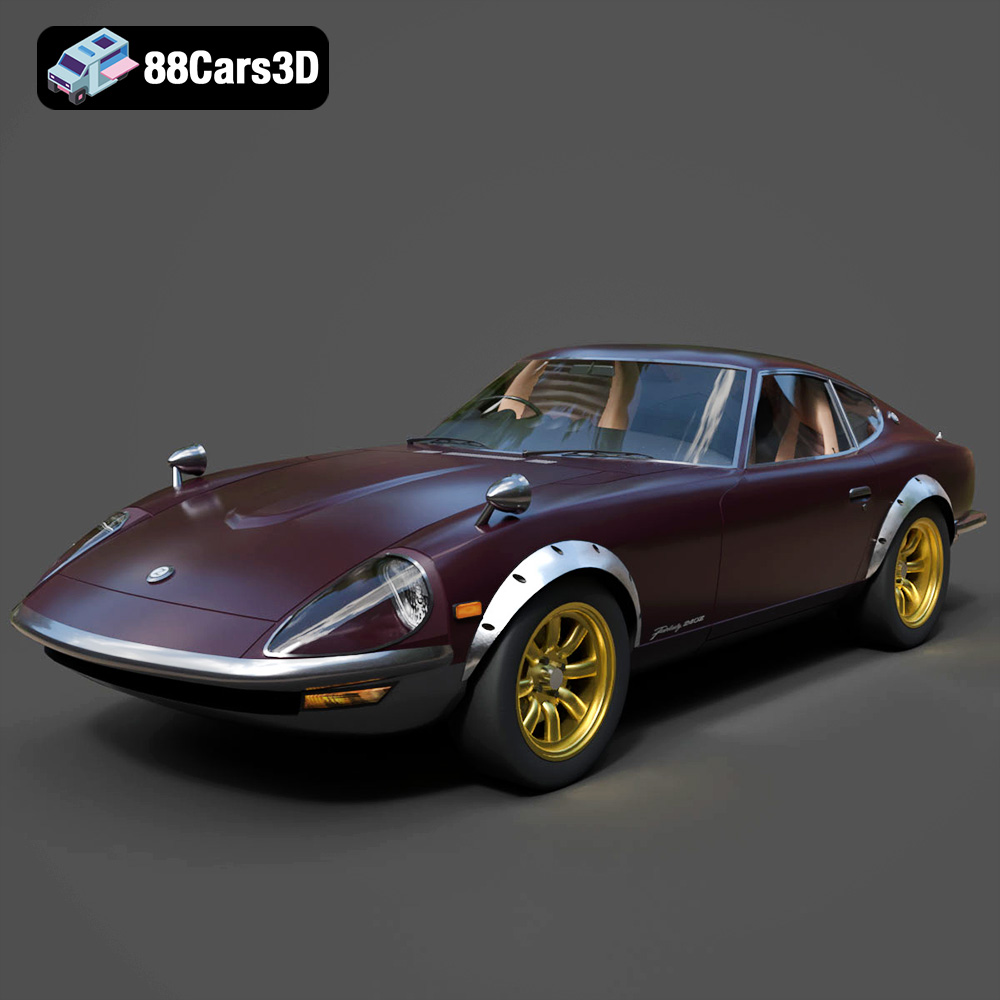
Texture: Yes
Material: Yes
Download the Nissan FairLady 240ZG 3D Model featuring clean geometry, realistic detailing, and a fully modeled interior. Includes .blend, .fbx, .obj, .glb, .stl, .ply, .unreal, and .max formats for rendering, simulation, and game development.
Price: $4.99
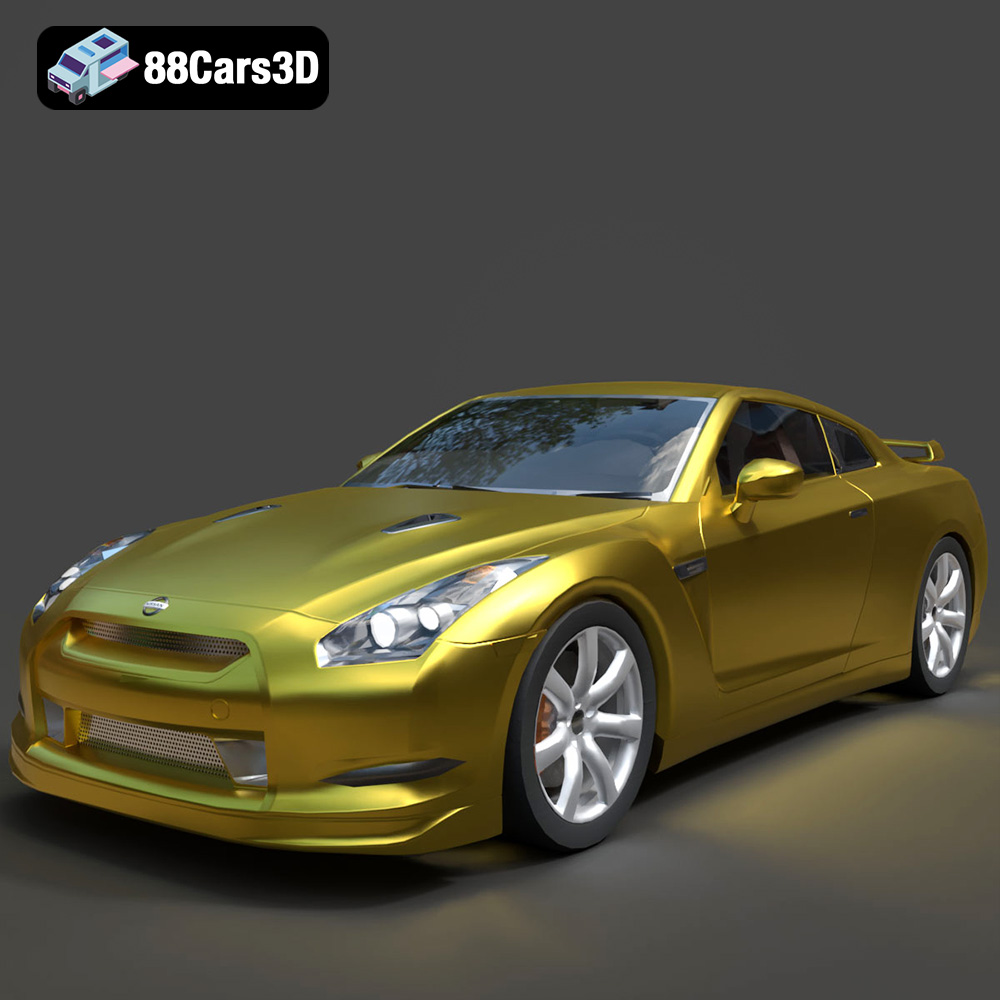
Texture: Yes
Material: Yes
Download the Nissan GT-R 2008 3D Model featuring clean geometry, realistic detailing, and a fully modeled interior. Includes .blend, .fbx, .obj, .glb, .stl, .ply, .unreal, and .max formats for rendering, simulation, and game development.
Price: $4.99

Texture: Yes
Material: Yes
Download the Nissan Cube 3D Model featuring clean geometry, realistic detailing, and a fully modeled interior. Includes .blend, .fbx, .obj, .glb, .stl, .ply, .unreal, and .max formats for rendering, simulation, and game development.
Price: $4.99

Texture: Yes
Material: Yes
Download the Nissan Cedric Y32 3D Model featuring clean geometry, realistic detailing, and a fully modeled interior. Includes .blend, .fbx, .obj, .glb, .stl, .ply, .unreal, and .max formats for rendering, simulation, and game development.
Price: $4.99

Texture: Yes
Material: Yes
Download the Nissan Cima Infiniti Q45 2007 3D Model featuring clean geometry, realistic detailing, and a fully modeled interior. Includes .blend, .fbx, .obj, .glb, .stl, .ply, .unreal, and .max formats for rendering, simulation, and game development.
Price: $4.99

Texture: Yes
Material: Yes
Download the Nissan Juke 2025 3D Model featuring clean geometry, realistic detailing, and a fully modeled interior. Includes .blend, .fbx, .obj, .glb, .stl, .ply, .unreal, and .max formats for rendering, simulation, and game development.
Price: $4.99
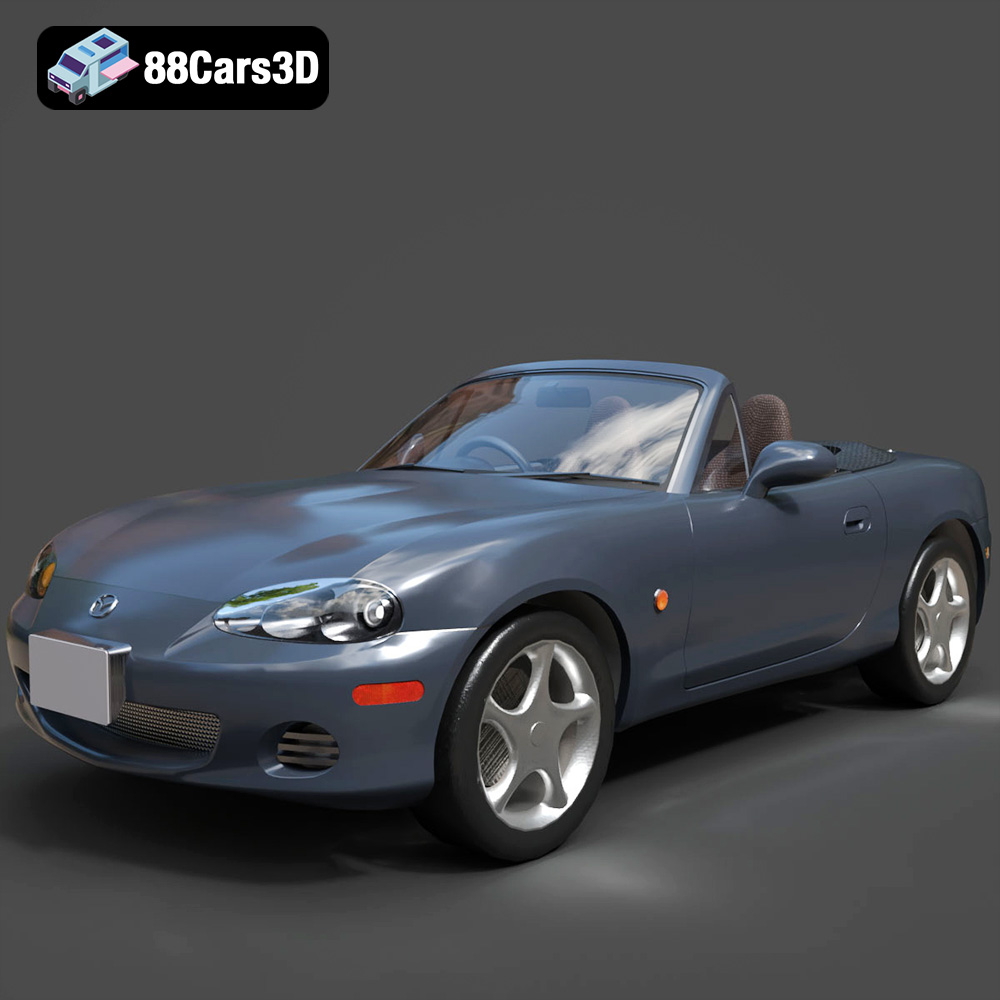
Texture: Yes
Material: Yes
Download the Mazda MX-5 2025 3D Model featuring clean geometry, realistic detailing, and a fully modeled interior. Includes .blend, .fbx, .obj, .glb, .stl, .ply, .unreal, and .max formats for rendering, simulation, and game development.
Price: $4.99

Texture: Yes
Material: Yes
Download the Nissan Maxima 2009 3D Model featuring clean geometry, realistic detailing, and a fully modeled interior. Includes .blend, .fbx, .obj, .glb, .stl, .ply, .unreal, and .max formats for rendering, simulation, and game development.
Price: $4.99
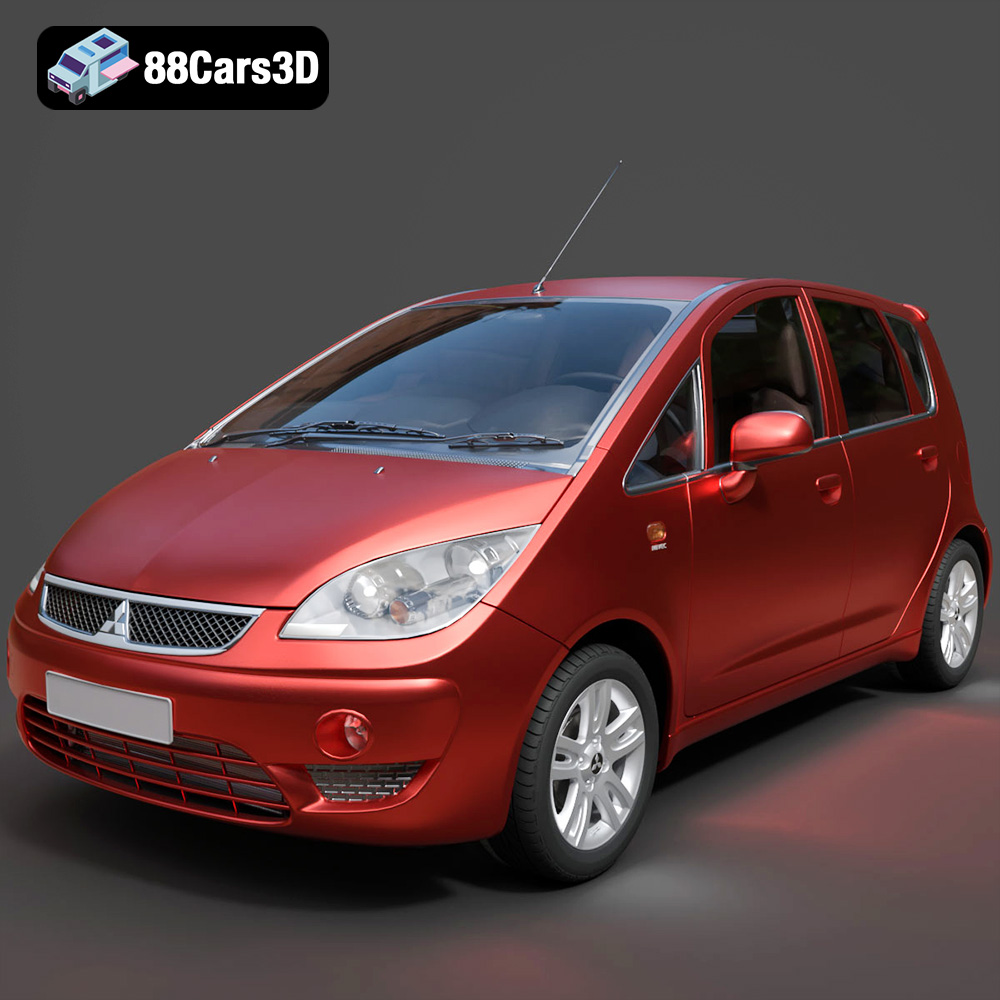
Texture: Yes
Material: Yes
Download the Mitsubishi Colt 2025 3D Model featuring clean geometry, realistic detailing, and a fully modeled interior. Includes .blend, .fbx, .obj, .glb, .stl, .ply, .unreal, and .max formats for rendering, simulation, and game development.
Price: $4.99

