⚡ FLASH SALE: Get 60% OFF All Premium 3D & STL Models! ⚡

The sleek lines, intricate details, and powerful presence of an automobile have captivated designers and enthusiasts for over a century. In the digital realm, recreating this complexity in three dimensions is an art form and a highly technical discipline. From photorealistic renders that blur the line between virtual and reality to optimized game assets that drive immersive interactive experiences, 3D car models are a cornerstone of modern visualization. But what goes into crafting these digital masterpieces? It’s far more than just pushing polygons; it involves a deep understanding of topology, materials, rendering, and optimization.
This comprehensive guide delves into the multifaceted world of creating and utilizing high-quality 3D car models. Whether you’re a seasoned 3D artist aiming to refine your automotive workflows, a game developer seeking performance-optimized assets, an automotive designer visualizing future concepts, or a student embarking on your 3D journey, this article will equip you with the advanced knowledge and practical insights needed to excel. We’ll explore the foundational principles of clean modeling, the nuances of realistic material creation, advanced rendering techniques, and critical optimization strategies for various applications, including game development, AR/VR, and even 3D printing. Prepare to accelerate your understanding of digital automotive excellence.
At the heart of any high-quality 3D car model lies impeccable topology. Topology refers to the arrangement of polygons (typically quads) that make up a model’s surface. For automotive models, clean, efficient, and deliberate topology is paramount. It dictates how the model deforms, how subdivision surfaces smooth out, and how light reflects across its intricate curves and sharp edges. Poor topology can lead to pinching, artifacts, and significant headaches down the line, regardless of how good your materials or rendering skills are.
The golden rule for automotive modeling is to primarily use quads (four-sided polygons). While triangles (three-sided) are inevitable in some areas or for game engine tessellation, a base mesh composed of quads allows for predictable subdivision, cleaner deformations, and easier manipulation. Edge loops, which are continuous rings of edges, are crucial for defining shape, controlling curvature, and creating hard edges. For instance, an edge loop running along the perimeter of a wheel arch helps maintain its perfect curve even after subdivision. Proper edge flow ensures that these loops follow the natural contours and design lines of the car, guiding the eye and allowing for easy detail addition or modification. Avoiding N-gons (polygons with more than four sides) is critical as they don’t subdivide predictably and can cause shading errors. The density of your polygons should also be carefully managed; areas requiring more detail, like a headlight assembly or a complex body panel intersection, will naturally require higher polygon density than a flat, simple surface. Aim for consistent quad size where possible to ensure even smoothing.
Achieving realistic panel gaps is one of the most challenging aspects of automotive modeling. These tiny crevices define the separation between body panels and are crucial for the model’s perceived realism. A common technique involves modeling separate panels with slight overlaps or negative extrusions to create the gap. The challenge lies in maintaining consistent gap width and smooth, flowing curves across complex surfaces. Many artists use a “subdivision surface” workflow where a low-polygon base mesh is smoothed at render time or exported with subdivisions. This method requires control loops—additional edge loops placed near a hard edge to “tighten” the subdivision and maintain sharpness. For example, two or three closely spaced edge loops around a door frame will create a crisp, defined edge when subdivided, whereas a single loop would result in a soft, rounded bevel. The goal is to make the surface appear as one continuous, perfectly manufactured piece, free from unsightly pinches or distortions that might catch the light incorrectly.
Different 3D software packages offer varied approaches to automotive modeling. In 3ds Max, polygon modeling with tools like Editable Poly, followed by turbosmooth modifiers, is a prevalent workflow. Artists often begin with splines to define the car’s silhouette and then use surface tools or manual polygon extrusion to build out the mesh. Blender users often leverage its powerful subdivision surface modifier combined with modeling tools like inset, loop cut, and slide. Its robust suite of modeling brushes also allows for more organic shaping. Maya, known for its strong NURBS modeling capabilities, can be used to create highly precise, mathematically defined surfaces, which can then be converted to polygons. While NURBS offer unparalleled curvature control, polygon modeling remains dominant for its flexibility and ease of use across different applications, especially for game assets. Regardless of the software, maintaining good reference images (blueprints, side, front, top views) and regularly checking reflections in a material preview are indispensable practices to ensure surface accuracy.
Once your 3D car model’s geometry is perfected, the next crucial step is UV mapping. UV mapping is the process of unwrapping the 3D surface of your model into a 2D space, allowing you to apply 2D textures (like paint, dirt, or scratches) accurately onto its surface. For the intricate and often curved surfaces of an automobile, strategic UV mapping is essential for high-quality texturing and efficient rendering.
The goal of UV mapping for automotive models is to minimize visible seams, prevent stretching, and maintain uniform texel density across all surfaces. Texel density refers to the number of texture pixels per unit of 3D space. Achieving consistent texel density ensures that details appear equally sharp everywhere, preventing blurry spots or over-pixelated areas. For car bodies, which are often large, continuous surfaces, strategic placement of seams is critical. Ideally, seams should be hidden in discreet locations like underneath the vehicle, along panel gaps, or at hard edges where they are less noticeable. For complex parts like wheels, headlights, or engine components, it’s often necessary to break them down into multiple UV shells. For instance, a tire might have separate UV shells for the sidewall, tread, and inner rim to accommodate distinct textures. Interior components also require meticulous unwrapping, often demanding their own dedicated UV space due to the variety of materials (leather, fabric, plastic, metal) and intricate shapes involved. Careful planning here saves countless hours during the texturing phase.
For ultra-high-resolution automotive models used in cinematic rendering or visualization, a single 0-1 UV space often isn’t enough to capture the required detail. This is where UDIM (U-Dimension) workflows come into play. UDIMs allow you to spread UV shells across multiple UV tiles (e.g., 1001, 1002, 1003…), each representing a separate texture map. This means a single car body panel could have its own 4K or 8K texture map, offering unparalleled detail without overwhelming a single texture file. This is common in film and high-end advertising. Conversely, for game development and real-time applications, texture atlasing is often preferred. A texture atlas combines multiple smaller textures (e.g., for various bolts, interior buttons, or engine parts) into a single, larger texture map. This reduces the number of draw calls an engine has to make, significantly improving performance. You would arrange different UV shells for various small parts into a single 0-1 UV space, then create one combined texture for them. Understanding when to use UDIMs for extreme detail versus texture atlasing for performance is a key skill for a 3D artist.
Modern 3D software offers powerful tools to streamline the UV unwrapping process. In 3ds Max, the Unwrap UVW modifier provides a comprehensive suite of tools for projection, peeling, packing, and relaxation. Blender’s UV editor is equally robust, with features like Smart UV Project, Follow Active Quads, and advanced packing algorithms. Maya’s UV Editor offers similar functionality, including various projection types (planar, cylindrical, spherical) and powerful layout tools. Many artists also utilize dedicated third-party software like RizomUV or Marmoset Toolbag for their specialized, highly efficient UV tools. The typical workflow involves:
For those seeking ready-to-use, professionally UV-mapped assets, platforms like 88cars3d.com offer a wide selection of high-quality 3D car models that come pre-configured with meticulous UV layouts, saving valuable production time and ensuring a solid foundation for texturing.
The visual impact of a 3D car model is largely determined by its materials and shaders. Physically Based Rendering (PBR) has become the industry standard for creating realistic materials because it simulates how light interacts with surfaces in a physically accurate way. Understanding PBR principles is essential for making your 3D cars truly come alive, from the glossy sheen of the paint to the subtle reflections in the chrome and the textured grip of the tires.
PBR relies on a set of maps that describe a material’s properties rather than simply its color. The two primary workflows are Metallic/Roughness and Specular/Glossiness, though Metallic/Roughness is more common today due to its intuitive nature.
These maps work in conjunction to accurately represent how light scatters, absorbs, and reflects off a surface, creating convincing realism. The values in these maps are based on real-world physics, making PBR materials look consistent under various lighting conditions.
Automotive paint is notoriously complex, often involving multiple layers. A common approach is a layered shader setup:
Modern PBR shaders in renderers like Corona Renderer or V-Ray often have dedicated car paint materials or allow for flexible layered material systems to achieve this. For glass, accuracy is key. Car windows are usually clear dielectric materials with a specific IOR (around 1.5-1.7) and some tint. Factors like thickness, absorption, and dispersion (refractive chromatic aberration) can be added for extra realism, especially for headlights and taillights. Tire rubber typically involves a lower reflectivity, higher roughness, and a detailed normal map for the tread pattern. Chrome and other polished metals are simply metallic PBR materials with very low roughness values and high reflectivity.
Most modern 3D software and renderers use node-based material editors, offering immense flexibility. In Blender’s Cycles/Eevee, the Principled BSDF shader is a universal PBR shader where you connect your texture maps directly to the corresponding inputs (Base Color, Metallic, Roughness, Normal). For layered car paint, you might use mix shaders or create custom node groups. In Corona Renderer, the Corona Physical Material is the go-to PBR shader. To create a complex car paint, you might layer a Base Material (your paint color with flakes) under a Clearcoat layer, adjusting roughness and IOR for each. V-Ray has its own VRayMtl and VRayCarPaintMtl. Maya’s Arnold renderer uses the Standard Surface shader, which is also PBR-compliant. The key across all these systems is understanding how each PBR map influences the final look and utilizing masks (grayscale textures) to blend different materials on a single surface, such as rust on metal or dirt on paint. When sourcing high-quality 3D car models from marketplaces such as 88cars3d.com, you often get models with pre-configured PBR materials, saving you the intensive setup time and ensuring a strong foundation for your renders.
Once your 3D car model is meticulously textured, the final step in creating breathtaking visuals is rendering. This involves setting up lighting, environments, camera angles, and fine-tuning renderer settings to achieve photorealistic results. The right rendering workflow can transform a good model into a stunning image.
Effective lighting is the soul of a render. For automotive photography, two primary setups are common:
Combining HDRI with subtle physical area lights can give you the best of both worlds—realistic global illumination from the HDRI and artistic control over highlights and shadows with individual lights. Volumetric effects, such as fog or god rays, can add depth and atmosphere, especially in moody, dramatic renders.
Each renderer has its own approach to achieving realism and managing render times.
Regardless of the renderer, using render regions, optimizing geometry (LODs), and ensuring efficient material setups are universal strategies to reduce render times. For complex car scenes, it’s not uncommon for a high-resolution render to take several hours or even days on a powerful workstation or render farm.
The raw render output is rarely the final image. Post-processing and compositing in software like Adobe Photoshop or After Effects are crucial for adding the finishing touches that elevate a render from good to spectacular.
By rendering out various passes (e.g., beauty, alpha, Z-depth, normal, reflection, refraction, AO), artists gain maximum control in post-production, allowing for non-destructive adjustments and highly refined final images. This final stage is where the artistic vision truly comes to fruition, creating images that are indistinguishable from professional photography.
While cinematic renders prioritize absolute visual fidelity, real-time applications like video games and AR/VR experiences demand a delicate balance between visual quality and performance. Optimizing 3D car models for these interactive environments is a specialized skill, focusing on efficiency without sacrificing too much detail.
One of the most critical optimization techniques is the creation of Level of Detail (LOD) models. LODs are simplified versions of your original high-polygon model, used when the object is further away from the camera.
Game engines like Unity and Unreal Engine have built-in LOD systems that automatically swap between these models based on screen distance or pixel coverage. Beyond LODs, asset streamlining involves:
The goal is to minimize the total polygon count rendered onscreen at any given time, ensuring smooth frame rates.
Textures are a significant contributor to memory usage and performance in real-time applications. Efficient texture management is vital:
A typical game asset might have a 4K texture set for the body, a 2K set for the interior, a 1K set for wheels, and a combined atlas for various smaller details.
Choosing the right file format is crucial for seamless integration into game engines and AR/VR platforms.
When preparing a 3D car model for game engines, ensure all transformations are reset, scales are correct (e.g., 1 unit = 1 meter), and the model’s pivot point is at its base center for easy placement. For real-time applications, platforms like 88cars3d.com often provide models specifically optimized for game engines, complete with LODs and efficient texture atlases, directly in formats like FBX or GLB, ready for immediate use.
The utility of high-quality 3D car models extends far beyond static renders or interactive games. They are integral to advanced visualization techniques like AR/VR experiences, form the basis for physical prototypes through 3D printing, and drive innovative applications in automotive design and marketing.
Transforming a digital 3D car model into a physical object via 3D printing requires specific considerations:
Common export formats for 3D printing include STL (Standard Tessellation Language) and OBJ. While most visualization models prioritize smooth surfaces and high-poly counts for rendering, 3D printing requires a solid, manifold mesh, which sometimes means sacrificing very fine details if they become too thin to print.
AR/VR environments impose even stricter performance budgets than traditional games due to the high frame rate (90 FPS+) and dual-eye rendering requirements.
The goal is a seamless, low-latency experience that avoids simulator sickness while providing a compelling visual representation of the vehicle. USDZ for ARKit and GLB for ARCore/web-based AR are the go-to formats here.
High-quality 3D car models drive innovation across numerous industries:
The demand for high-fidelity, versatile 3D car models is continually growing, fueling a dynamic industry where technical expertise and artistic vision converge. This makes sourcing professional-grade assets, like those readily available on 88cars3d.com, an invaluable resource for professionals and studios alike.
The journey from concept to a fully realized, high-quality 3D car model is a testament to the blend of technical skill, artistic vision, and meticulous attention to detail. We’ve traversed the intricate landscape of automotive 3D modeling, from establishing pristine topology and executing precise UV mapping to crafting visually stunning PBR materials and orchestrating photorealistic rendering workflows. We’ve also explored the critical optimizations required for interactive experiences in game engines and AR/VR, and even touched upon the unique considerations for transforming digital assets into tangible objects through 3D printing. Each stage presents its own challenges and opportunities, demanding a comprehensive understanding of the tools, techniques, and underlying principles.
Mastering these aspects empowers you to create breathtaking automotive visualizations for any medium, from cinematic masterpieces to immersive real-time applications. The continuous evolution of software and hardware means there’s always something new to learn, but the fundamental principles of clean artistry and technical precision remain constant. For those looking to accelerate their projects with assets built on these very principles, exploring reputable marketplaces like 88cars3d.com offers immediate access to a library of high-quality 3D car models, ready to integrate into your next ambitious venture. Embrace the complexity, hone your craft, and drive your digital automotive creations to unparalleled levels of realism and performance.

Texture: Yes
Material: Yes
Download the Nissan Fuga 2003 3D Model featuring clean geometry, realistic detailing, and a fully modeled interior. Includes .blend, .fbx, .obj, .glb, .stl, .ply, .unreal, and .max formats for rendering, simulation, and game development.
Price: $4.99
Texture: Yes
Material: Yes
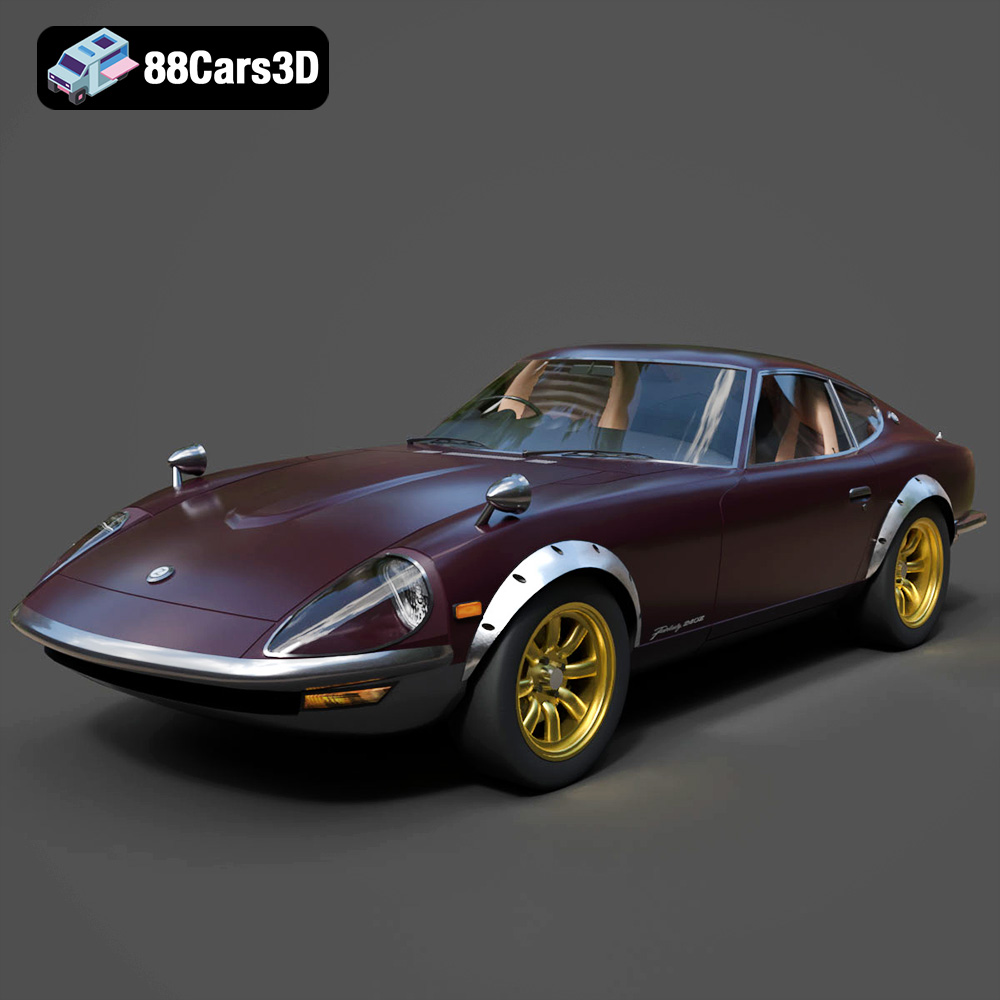
Download the Nissan FairLady 240ZG 3D Model featuring clean geometry, realistic detailing, and a fully modeled interior. Includes .blend, .fbx, .obj, .glb, .stl, .ply, .unreal, and .max formats for rendering, simulation, and game development.
Price: $4.99
Texture: Yes
Material: Yes
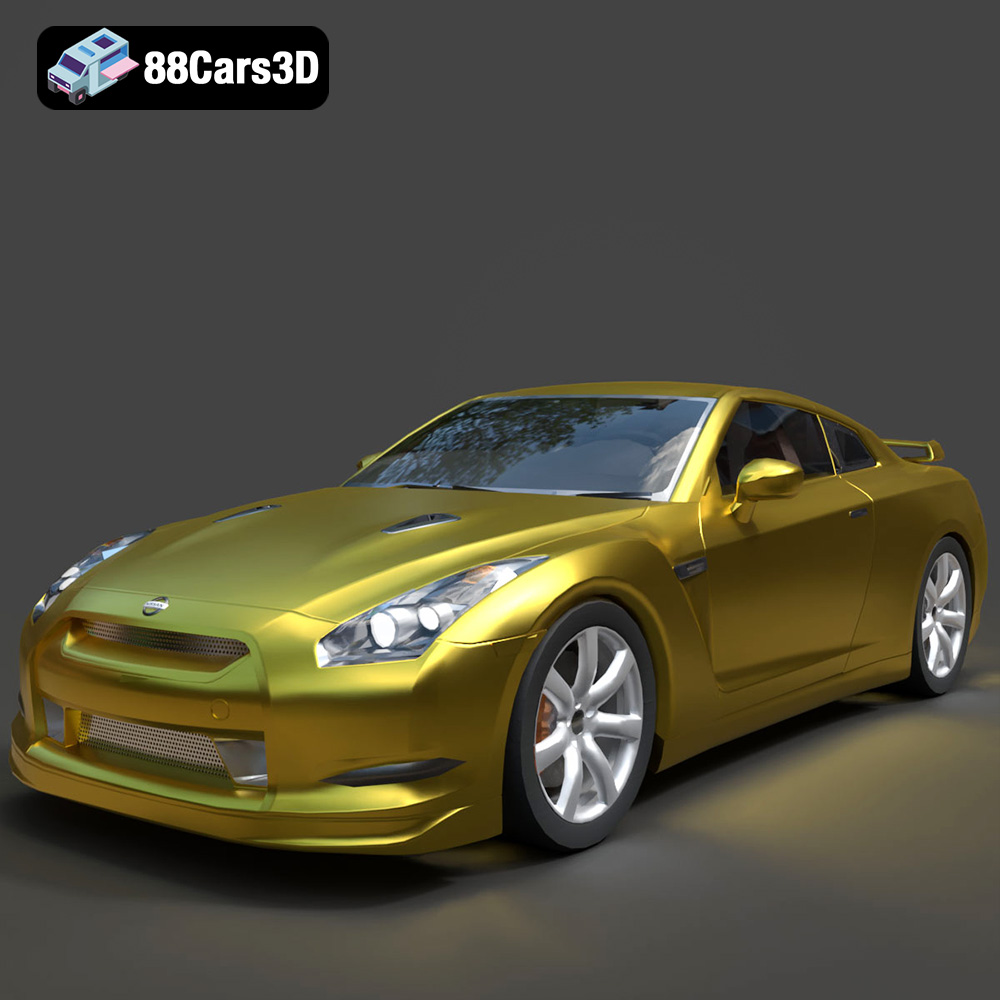
Download the Nissan GT-R 2008 3D Model featuring clean geometry, realistic detailing, and a fully modeled interior. Includes .blend, .fbx, .obj, .glb, .stl, .ply, .unreal, and .max formats for rendering, simulation, and game development.
Price: $4.99

Texture: Yes
Material: Yes
Download the Nissan Cube 3D Model featuring clean geometry, realistic detailing, and a fully modeled interior. Includes .blend, .fbx, .obj, .glb, .stl, .ply, .unreal, and .max formats for rendering, simulation, and game development.
Price: $4.99

Texture: Yes
Material: Yes
Download the Nissan Cedric Y32 3D Model featuring clean geometry, realistic detailing, and a fully modeled interior. Includes .blend, .fbx, .obj, .glb, .stl, .ply, .unreal, and .max formats for rendering, simulation, and game development.
Price: $4.99

Texture: Yes
Material: Yes
Download the Nissan Cima Infiniti Q45 2007 3D Model featuring clean geometry, realistic detailing, and a fully modeled interior. Includes .blend, .fbx, .obj, .glb, .stl, .ply, .unreal, and .max formats for rendering, simulation, and game development.
Price: $4.99

Texture: Yes
Material: Yes
Download the Nissan Juke 2025 3D Model featuring clean geometry, realistic detailing, and a fully modeled interior. Includes .blend, .fbx, .obj, .glb, .stl, .ply, .unreal, and .max formats for rendering, simulation, and game development.
Price: $4.99
Texture: Yes
Material: Yes
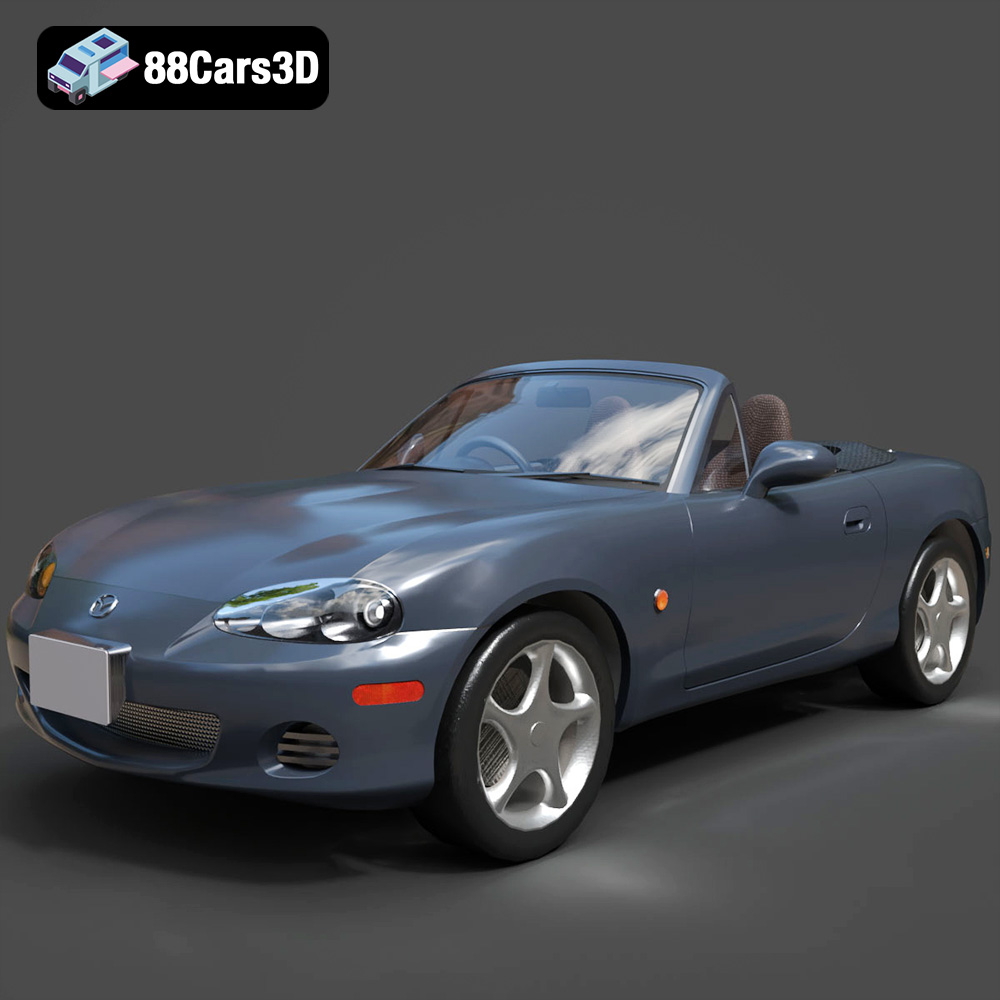
Download the Mazda MX-5 2025 3D Model featuring clean geometry, realistic detailing, and a fully modeled interior. Includes .blend, .fbx, .obj, .glb, .stl, .ply, .unreal, and .max formats for rendering, simulation, and game development.
Price: $4.99

Texture: Yes
Material: Yes
Download the Nissan Maxima 2009 3D Model featuring clean geometry, realistic detailing, and a fully modeled interior. Includes .blend, .fbx, .obj, .glb, .stl, .ply, .unreal, and .max formats for rendering, simulation, and game development.
Price: $4.99
Texture: Yes
Material: Yes
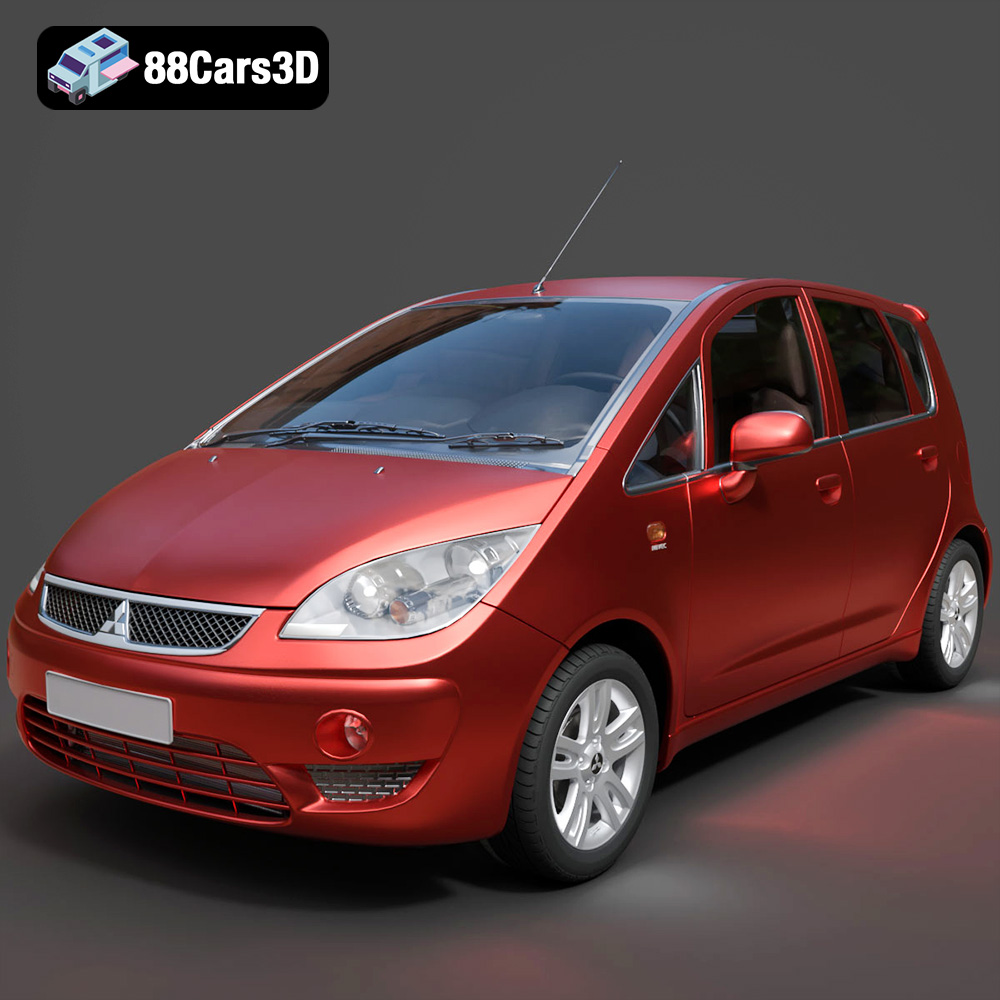
Download the Mitsubishi Colt 2025 3D Model featuring clean geometry, realistic detailing, and a fully modeled interior. Includes .blend, .fbx, .obj, .glb, .stl, .ply, .unreal, and .max formats for rendering, simulation, and game development.
Price: $4.99

