⚡ FLASH SALE: Get 60% OFF All Premium 3D & STL Models! ⚡

In the rapidly evolving world of digital visualization, high-quality 3D car models are the indispensable backbone for everything from cinematic animations and immersive video games to cutting-edge automotive design and virtual reality experiences. The demand for accurate, visually stunning, and performance-optimized vehicle assets has never been greater. Whether you’re a seasoned 3D artist striving for photorealism, a game developer pushing the boundaries of interactive environments, or an automotive designer visualizing future concepts, understanding the intricacies of creating and utilizing these complex digital assets is paramount.
This comprehensive guide delves deep into the technical workflows, best practices, and optimization strategies essential for working with premium 3D car models. We’ll explore the foundational principles of topology and UV mapping, unravel the secrets of physically based rendering (PBR) materials, and guide you through advanced rendering and game engine integration techniques. Furthermore, we’ll touch upon niche applications like AR/VR optimization and 3D printing preparation, ensuring your assets are ready for any challenge. By the end of this article, you’ll possess a robust understanding of what goes into a truly exceptional 3D vehicle model and how to leverage it across diverse platforms, much like the meticulously crafted assets found on marketplaces such as 88cars3d.com.
The quality of a 3D car model begins and ends with its topology – the arrangement of vertices, edges, and faces that form the mesh. For complex, curvature-heavy objects like vehicles, impeccable topology is not just about aesthetics; it’s crucial for smooth subdivision, realistic deformations, and efficient rendering. Poor topology can lead to pinching, artifacts, and unwieldy UV layouts, undermining even the most impressive textures and lighting. Professional automotive models demand a clean, quad-dominant mesh, meticulously following the contours of the car’s body, ensuring excellent edge flow and predictable behavior.
When modeling a car, particularly high-poly versions for cinematics or detailed visualization, aim for consistent polygon density in areas of high curvature. This allows for smooth reflections and accurate shading without resorting to excessive subdivision, which can bloat file sizes and rendering times. Crucial areas like wheel wells, door seams, and panel gaps require precise edge loops to maintain their shape, even after subdivision. For those starting with CAD data, a retopology pass is almost always necessary to convert the often triangulated and dense NURBS-converted meshes into a cleaner, animation-friendly quad mesh. This process can be painstaking but is indispensable for a professional-grade asset.
Achieving a smooth, production-ready surface relies heavily on thoughtful edge flow. For an automotive model, this means guiding edge loops along natural creases, panel lines, and curvature changes. Imagine the flow of water over the car’s surface; your edges should mimic this, allowing for smooth, continuous reflections that are free from ripples or bumps. Software like 3ds Max, Maya, and Blender offer powerful modeling tools to achieve this, from precise poly modeling to advanced sculpting and retopology tools. Techniques like using subdivision surfaces (e.g., Turbosmooth in 3ds Max, Subdivision Surface in Blender) necessitate a quad-based mesh with well-placed supporting edge loops to control sharpness and maintain volume. A common professional practice is to model the car in a low-poly cage that can be smoothly subdivided for rendering, providing flexibility for different levels of detail.
Not all 3D car models require the same polygon count. A model destined for an offline render in a marketing campaign might comfortably sit at 500,000 to 2 million polygons (or even higher for extremely detailed interiors), while a game-ready asset for a real-time engine needs to be significantly more optimized. This is where Levels of Detail (LODs) become critical. An LOD system involves creating multiple versions of the same model, each with a progressively lower polygon count. For example, an LOD0 might be 80,000 polygons for close-up views, LOD1 at 20,000 polygons for mid-distance, and LOD2 at 5,000 polygons for far-away shots.
The transition between LODs should be imperceptible to the viewer. This is typically managed by the game engine based on the camera’s distance to the object. When creating LODs, it’s vital to maintain the visual silhouette and key details as much as possible, even with significant poly reduction. Tools like Blender’s Decimate modifier, 3ds Max’s ProOptimizer, or dedicated third-party solutions can help automate this process, but manual cleanup is often required to ensure mesh integrity. For high-fidelity models, like those offered by 88cars3d.com, multiple LODs might already be included, making integration into various projects seamless.
Once the geometry is solid, the next step is to prepare it for texturing – a process heavily reliant on efficient UV mapping and robust PBR material creation. UV mapping essentially flattens the 3D surface into a 2D space, allowing 2D textures to be wrapped accurately around the model. For complex surfaces like a car body, this requires careful planning to minimize stretching, maintain consistent texel density, and avoid seams in prominent areas. PBR materials, on the other hand, define how light interacts with the surface, mimicking real-world properties to achieve unparalleled realism.
The combination of well-laid-out UVs and meticulously crafted PBR maps (Albedo, Normal, Roughness, Metallic, Ambient Occlusion) is what truly elevates a 3D car model from a mere wireframe into a visually compelling asset. This stage often involves dedicated texture painting software like Substance Painter or Mari, which streamline the creation of complex wear, dirt, and material variations, ensuring every scratch and reflection contributes to the overall authenticity of the vehicle.
UV mapping for a car requires a strategic approach. The goal is to create UV islands that are as un-stretched as possible, utilize the UV space efficiently, and place seams in less visible areas. For the main body, a common technique is to separate panels and unwrap them individually, or to use projection mapping techniques for large, smooth surfaces, followed by careful packing. Windows, tires, and interior elements will each have their own UV layouts, often grouped into texture atlases to reduce draw calls in game engines.
Physically Based Rendering (PBR) has become the industry standard for realistic materials. PBR materials simulate how light interacts with surfaces based on real-world physics, resulting in more consistent and believable renders across different lighting conditions. Key PBR texture maps for a car model include:
In software like 3ds Max (with Corona or V-Ray), Blender (Cycles or Eevee), or Maya (Arnold), these maps are plugged into a sophisticated shader network. Creating a convincing car paint shader involves layering multiple effects: a base metallic layer, a clear coat with subtle orange peel effect, and reflections that react dynamically to the environment. Understanding the nuances of each map and how they interact is crucial for achieving truly photorealistic results. High-resolution textures (e.g., 4K, 8K) are often required for close-up shots of vehicle paint and intricate details.
Even the most perfectly modeled and textured 3D car model will fall flat without compelling lighting and a well-composed shot. Automotive rendering is an art form that blends technical proficiency with an eye for photography, aiming to showcase the vehicle’s design, form, and material properties in the most appealing way possible. This involves careful consideration of light sources, environment setup, camera angles, and post-processing techniques.
The goal is to emphasize the car’s curves, reflections, and paint finish, often highlighting design features that might be overlooked in real life. Whether you’re aiming for a sleek studio look, a dynamic outdoor scene, or a gritty urban environment, the lighting choices will dictate the mood and impact of your final image. Mastering rendering workflows in engines like Corona Renderer, V-Ray, Cycles, or Arnold is key to transforming your digital assets into breathtaking visual content for marketing, advertising, and conceptual visualization.
Effective lighting is paramount for showcasing a car’s unique character. Most photorealistic renders combine a variety of light sources:
Experiment with light intensity, color temperature, and position to sculpt the car’s form. Pay close attention to how reflections behave on the paintwork and chrome, as these are critical for conveying realism. In 3ds Max, for example, using Corona or V-Ray’s light mixing capabilities allows for non-destructive adjustments to individual lights during or after rendering, providing immense control over the final look.
The camera’s role in automotive rendering is as important as in photography. Choosing the right focal length, depth of field, and angle can dramatically alter the perception of the car. A wide-angle lens might emphasize speed and aggression, while a longer lens creates a more cinematic, compressed perspective. Rendering engines like Corona Renderer, V-Ray, Blender Cycles, and Arnold all excel at physically accurate light simulation, offering features such as ray tracing, global illumination, and sophisticated material interpretation.
After the render is complete, post-processing and compositing in software like Adobe Photoshop or Affinity Photo are crucial steps. This is where you fine-tune the image, adjusting:
Many rendering engines generate multiple render passes (AO, Z-Depth, World Normals, Reflective, Specular) which can be layered and manipulated in compositing software to achieve a polished, high-impact final image. A professional 3D car model, like those found on 88cars3d.com, often comes with pre-calibrated materials, making it easier to jump straight into rendering and focus on lighting and composition.
While offline renders prioritize visual fidelity above all else, integrating 3D car models into game engines like Unity or Unreal Engine introduces a new set of challenges focused on performance. Real-time rendering demands incredibly efficient assets to maintain high frame rates, especially when dealing with multiple vehicles, complex environments, and dynamic lighting. Optimization isn’t just about reducing polygon counts; it’s about minimizing draw calls, efficient texture usage, and smart asset management.
A well-optimized game asset ensures smooth gameplay without sacrificing visual quality unnecessarily. This often means a distinct workflow compared to high-fidelity visualization, requiring a deep understanding of engine limitations and best practices. Developers need to strike a delicate balance between visual detail and performance budget, ensuring that the players experience a fluid and engaging interactive environment.
Beyond the polygon counts discussed earlier, several key strategies are employed for game engine optimization:
Both Unity and Unreal Engine offer powerful tools and best practices for integrating and optimizing 3D car models:
When sourcing game assets from marketplaces like 88cars3d.com, always check if they include optimized LODs, atlased textures, and material setups specifically tailored for real-time engines. This significantly reduces development time and ensures a smooth integration process.
The utility of high-quality 3D car models extends far beyond traditional rendering and gaming. With the rise of immersive technologies, these digital assets are now at the forefront of Augmented Reality (AR), Virtual Reality (VR), and even tangible applications like 3D printing. Each of these fields presents its own unique set of technical requirements and optimization challenges, demanding specific preparation workflows to ensure functionality and quality.
For AR/VR, the emphasis shifts to ultra-efficient real-time performance and seamless integration into interactive environments, often with mobile hardware constraints. For 3D printing, the digital model must be transformed into a physically viable object, necessitating watertight meshes and precise dimensional accuracy. Understanding these distinct pipelines allows artists and developers to unlock the full potential of their 3D car models across an ever-expanding spectrum of applications.
AR/VR experiences demand incredibly high frame rates (typically 90 FPS or more per eye for VR) to prevent motion sickness and ensure immersion. This means models must be even more aggressively optimized than for traditional games. Key considerations for AR/VR optimization include:
The goal is to provide a rich visual experience while maintaining peak performance, making every polygon and texture byte count.
Transforming a digital 3D car model into a physical object via 3D printing requires a different kind of preparation. The primary concern is creating a watertight, manifold mesh without any holes, inverted normals, or self-intersections. Unlike rendering, where these issues might be masked, they will cause errors during slicing and printing.
Thorough inspection and repair of the mesh are crucial for successful 3D printing, turning your digital design into a tangible miniature or prototype.
In a diverse creative pipeline, a 3D car model rarely stays within a single software environment. It might be modeled in Maya, textured in Substance Painter, rendered in 3ds Max with Corona, and then integrated into Unreal Engine. This necessitates a deep understanding of various file formats and their implications for compatibility, data integrity, and efficiency. Each format has its strengths and weaknesses, dictating how geometry, materials, animations, and other scene data are preserved or translated.
Choosing the right format for export and import can prevent countless headaches, from lost textures and broken hierarchies to incorrect scaling and missing animations. Professional workflows demand meticulous attention to these details to ensure seamless transitions between different software applications and project requirements.
A few file formats dominate the 3D asset landscape:
When you acquire 3D car models from a professional marketplace, such as 88cars3d.com, they often provide assets in multiple key formats (e.g., FBX, OBJ, GLB) to ensure maximum compatibility for diverse project needs.
To maintain a seamless workflow, consider these best practices:
Mastering these formats and their respective export/import settings will save you significant time and effort, allowing you to focus on the creative aspects of your automotive rendering or game development project.
The journey from a digital concept to a photorealistic render or a performance-ready game asset is paved with intricate technical challenges and rewarding creative opportunities. Mastering the craft of working with 3D car models, from understanding the nuances of clean topology and precise UV mapping to crafting believable PBR materials and optimizing for diverse platforms, is an essential skill set for anyone operating in today’s demanding visualization and interactive media industries.
We’ve traversed the critical aspects of model creation, explored the art of lighting and rendering, delved into the specifics of game engine optimization, and examined the unique requirements for AR/VR and 3D printing. The common thread throughout these workflows is the absolute necessity for high-quality, meticulously prepared 3D car models. These are not merely digital objects; they are complex data packages designed for precision, realism, and efficiency.
As technology continues to advance, the demand for ever more sophisticated and versatile 3D assets will only grow. By applying the technical insights and best practices outlined in this guide, you are well-equipped to tackle any project, ensuring your automotive rendering, game development, or visualization efforts stand out. Remember, investing in premium assets from reputable sources, like the expertly crafted models available on 88cars3d.com, can significantly accelerate your workflow and elevate the quality of your final output. Start exploring and bring your vision to life today!

Texture: Yes
Material: Yes
Download the Nissan Fuga 2003 3D Model featuring clean geometry, realistic detailing, and a fully modeled interior. Includes .blend, .fbx, .obj, .glb, .stl, .ply, .unreal, and .max formats for rendering, simulation, and game development.
Price: $4.99
Texture: Yes
Material: Yes
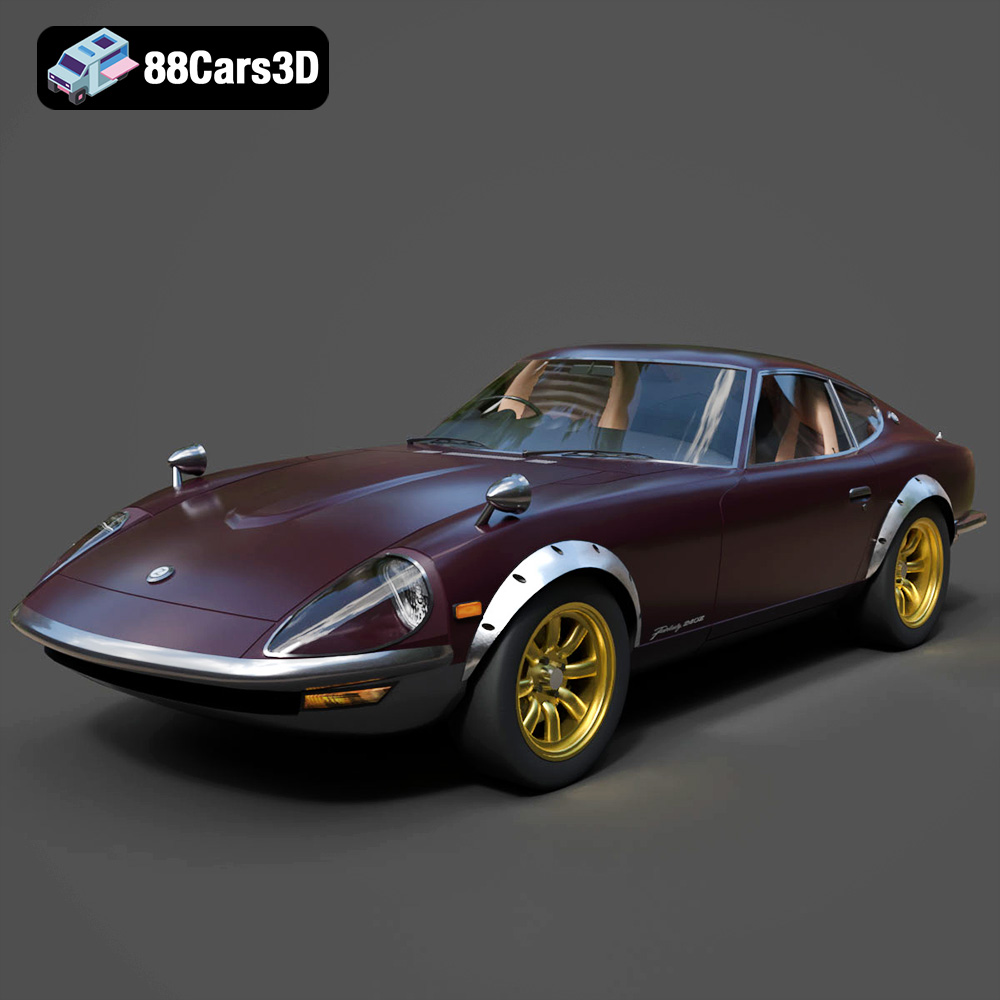
Download the Nissan FairLady 240ZG 3D Model featuring clean geometry, realistic detailing, and a fully modeled interior. Includes .blend, .fbx, .obj, .glb, .stl, .ply, .unreal, and .max formats for rendering, simulation, and game development.
Price: $4.99
Texture: Yes
Material: Yes
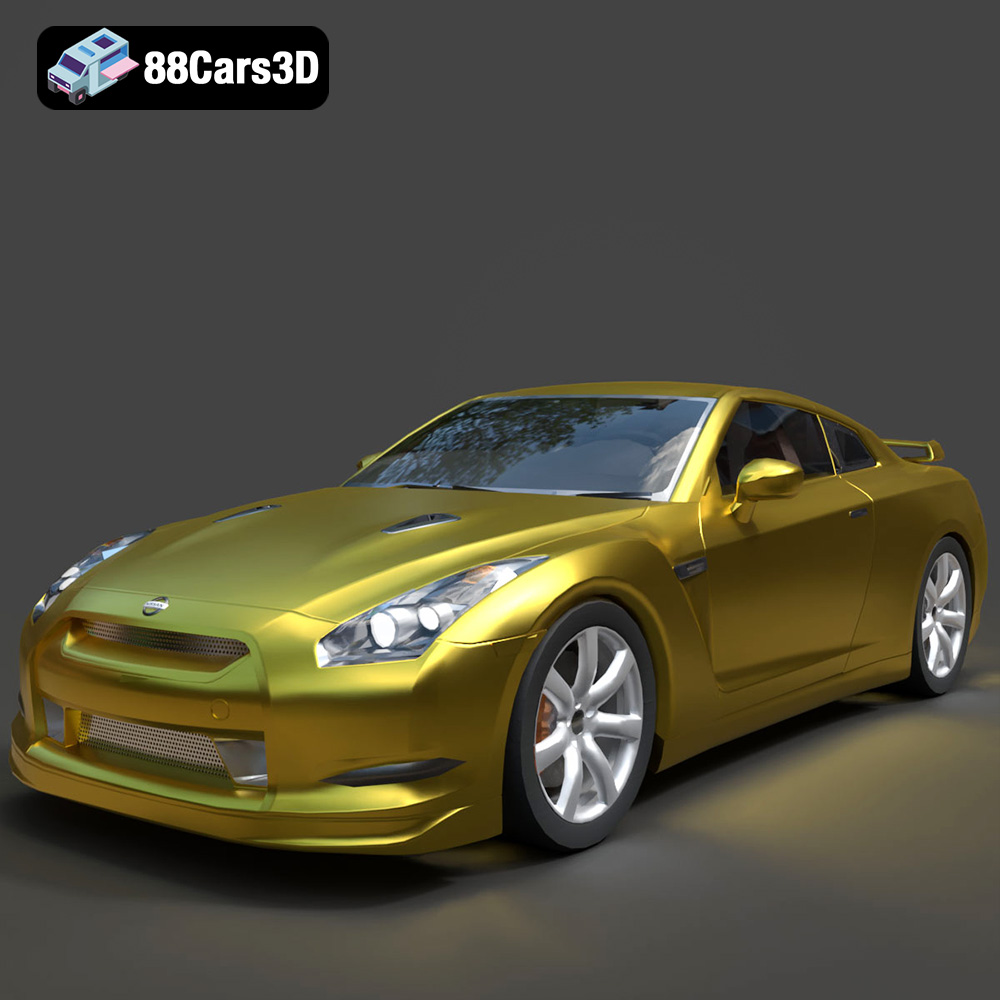
Download the Nissan GT-R 2008 3D Model featuring clean geometry, realistic detailing, and a fully modeled interior. Includes .blend, .fbx, .obj, .glb, .stl, .ply, .unreal, and .max formats for rendering, simulation, and game development.
Price: $4.99

Texture: Yes
Material: Yes
Download the Nissan Cube 3D Model featuring clean geometry, realistic detailing, and a fully modeled interior. Includes .blend, .fbx, .obj, .glb, .stl, .ply, .unreal, and .max formats for rendering, simulation, and game development.
Price: $4.99

Texture: Yes
Material: Yes
Download the Nissan Cedric Y32 3D Model featuring clean geometry, realistic detailing, and a fully modeled interior. Includes .blend, .fbx, .obj, .glb, .stl, .ply, .unreal, and .max formats for rendering, simulation, and game development.
Price: $4.99

Texture: Yes
Material: Yes
Download the Nissan Cima Infiniti Q45 2007 3D Model featuring clean geometry, realistic detailing, and a fully modeled interior. Includes .blend, .fbx, .obj, .glb, .stl, .ply, .unreal, and .max formats for rendering, simulation, and game development.
Price: $4.99

Texture: Yes
Material: Yes
Download the Nissan Juke 2025 3D Model featuring clean geometry, realistic detailing, and a fully modeled interior. Includes .blend, .fbx, .obj, .glb, .stl, .ply, .unreal, and .max formats for rendering, simulation, and game development.
Price: $4.99
Texture: Yes
Material: Yes
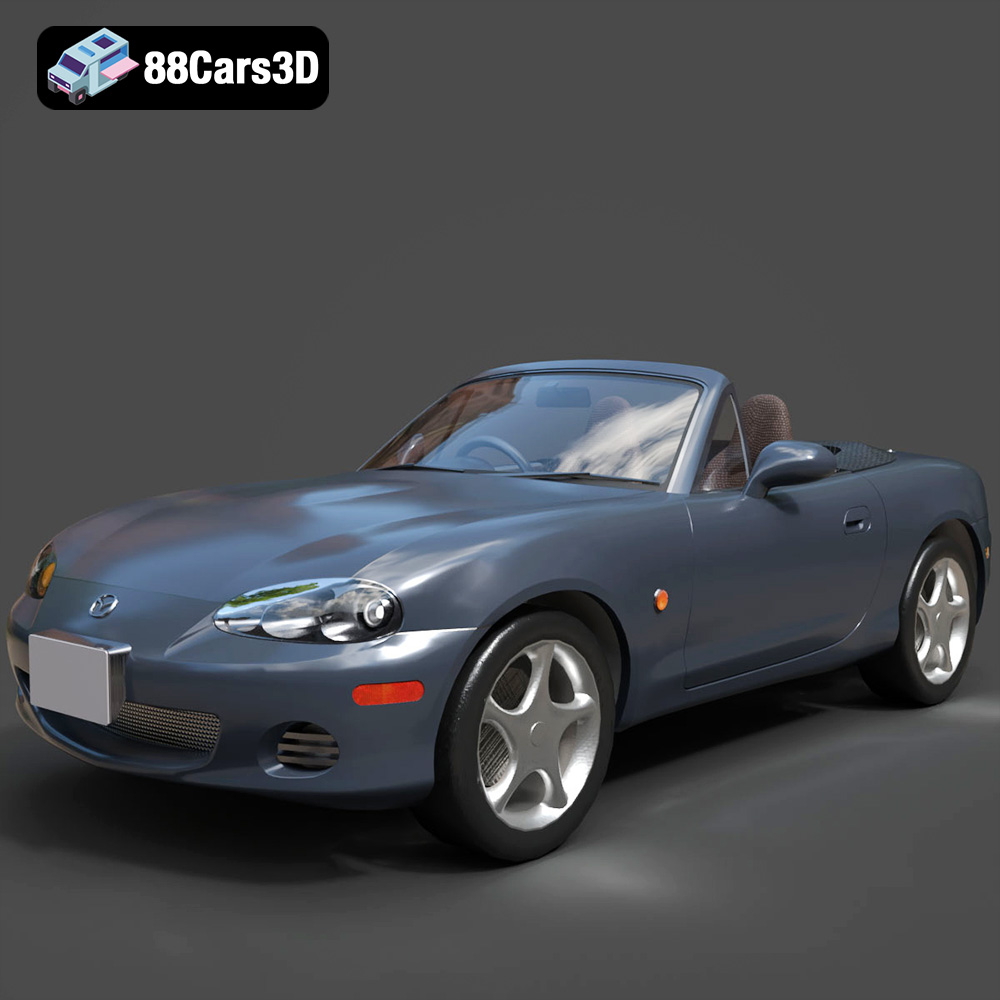
Download the Mazda MX-5 2025 3D Model featuring clean geometry, realistic detailing, and a fully modeled interior. Includes .blend, .fbx, .obj, .glb, .stl, .ply, .unreal, and .max formats for rendering, simulation, and game development.
Price: $4.99

Texture: Yes
Material: Yes
Download the Nissan Maxima 2009 3D Model featuring clean geometry, realistic detailing, and a fully modeled interior. Includes .blend, .fbx, .obj, .glb, .stl, .ply, .unreal, and .max formats for rendering, simulation, and game development.
Price: $4.99
Texture: Yes
Material: Yes
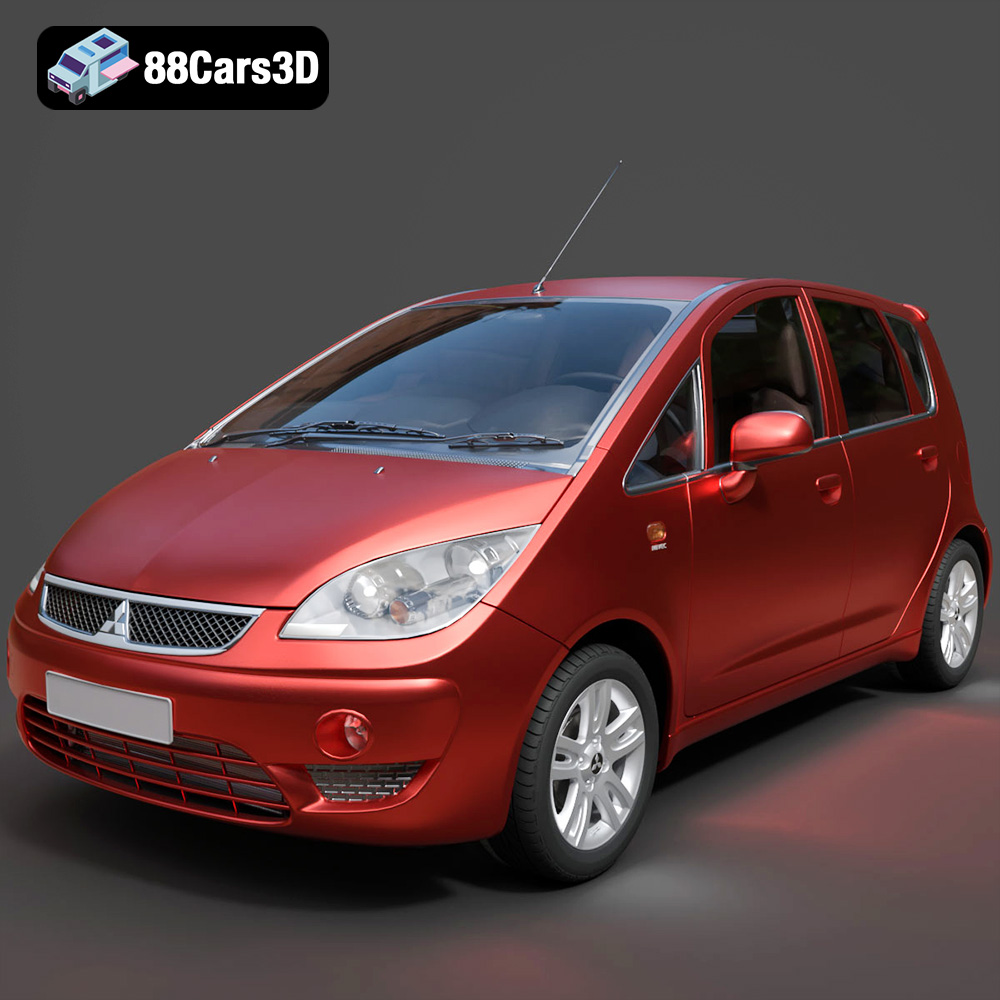
Download the Mitsubishi Colt 2025 3D Model featuring clean geometry, realistic detailing, and a fully modeled interior. Includes .blend, .fbx, .obj, .glb, .stl, .ply, .unreal, and .max formats for rendering, simulation, and game development.
Price: $4.99

