⚡ FLASH SALE: Get 60% OFF All Premium 3D & STL Models! ⚡

The automotive industry has always been at the forefront of design and engineering innovation. In the digital realm, this translates to an ever-growing demand for high-quality, realistic 3D car models. Whether you’re a seasoned 3D artist, an aspiring game developer, an automotive designer pushing virtual boundaries, or a visualization professional crafting immersive experiences, the mastery of 3D car model creation and deployment is paramount. From the intricate curves of a supercar to the rugged utility of an off-roader, bringing these vehicles to life in a digital space requires a blend of artistic vision and technical prowess.
This comprehensive guide delves deep into the essential workflows and advanced techniques required to work with automotive 3D assets. We’ll explore everything from foundational modeling principles like topology and UV mapping to the intricacies of PBR material creation, photorealistic automotive rendering, and meticulous game asset optimization. Beyond traditional visualization, we’ll also touch upon preparing models for emerging technologies such as AR/VR and 3D printing. By the end of this journey, you’ll possess a robust understanding of the best practices and critical considerations that elevate a good 3D car model to an exceptional one, ready for any application. If you’re looking to source professional-grade models, platforms like 88cars3d.com offer a curated selection built with these very principles in mind.
At the heart of any exceptional 3D car model lies impeccable topology. This isn’t just about aesthetics; it directly impacts how a model deforms, how subdivision surfaces smooth, and how efficiently it renders and performs in real-time applications. For automotive models, which are characterized by complex, smooth, and often reflective surfaces, clean topology is non-negotiable. The goal is to create a mesh that accurately captures the vehicle’s form with the fewest polygons necessary, while maintaining excellent edge flow that follows the natural contours and creases of the car body.
The industry standard for organic and hard-surface modeling, especially for subdivision surfaces, is to work with quads (four-sided polygons). While triangles are permissible in very specific, non-deforming areas or for final game meshes, a primary modeling pipeline should strive for an all-quad mesh. This ensures predictable smoothing when subdivision modifiers (like Turbosmooth in 3ds Max, Subdivision Surface in Blender, or Smooth Mesh in Maya) are applied. Good edge flow means that edges run along areas of natural curvature and critical creases. For instance, the edges on a car body should follow the lines where panels meet, the contours around wheel wells, and the sharp creases that define styling elements. This allows for precise control over the shape when subdividing, preventing pinching or undesirable bumps. Avoid N-gons (polygons with more than four sides) at all costs in your base mesh, as they lead to unpredictable subdivision and shading artifacts. Focus on keeping polygon distribution as even as possible across the surface to prevent stretching or compression during subdivision.
Achieving realistic curvature on a car body requires a strategic approach to edge placement. Edges should be denser in areas of tighter curvature or sharper creases and can be sparser on flatter, broader panels. This optimizes polygon count without sacrificing detail where it matters most. For instance, around a headlight opening or a sharp body line, you might have several closely spaced edge loops to hold that detail, while a large, flat door panel might use fewer. The concept of “support loops” is critical here: these are additional edge loops placed very close to a sharp edge or corner to ensure it remains crisp after subdivision, rather than becoming overly soft. Without proper support loops, sharp details will “melt” away. Furthermore, always ensure that your model’s scale is correct to real-world units. This impacts everything from physics simulations to material scaling and lighting calculations, and is a fundamental aspect of creating accurate 3D car models for any professional application.
The topology strategy often varies significantly depending on the target application. For high-end cinematic renders or detailed visualizations, a high-polygon model (often 200,000 to 1 million+ polygons for a car, with subdivision levels applied) is desirable for maximum fidelity. This allows for smooth reflections and intricate surface details. However, for game assets or real-time AR/VR experiences, a much lower polygon count is required (e.g., 50,000-150,000 triangles for a hero car, further reduced for LODs). This often involves creating a clean, high-poly “master” model and then retopologizing it to a lower polygon count, baking details like normal maps and ambient occlusion from the high-poly version onto the low-poly mesh. This workflow effectively transfers complex surface information without the heavy poly count, a cornerstone of efficient game asset development and real-time visualization.
Once your 3D car model boasts impeccable topology, the next crucial step for achieving photorealism is expert UV mapping. UV mapping is the process of flattening the 3D surface of your model into a 2D space, allowing you to apply 2D textures. For a car, with its diverse array of materials—from the subtle metallic flakes of the paint to the intricate tread of the tires and the precise labeling of interior components—efficient and clean UVs are essential for high-quality texturing and seamless rendering.
Automotive models present unique challenges due to their complex, often organic curves intersecting with sharp edges and distinct panel lines. Effective unwrapping involves segmenting the model into logical, manageable UV islands that minimize distortion and allow for precise texture placement. For large, relatively flat panels like doors or hoods, planar projection is often suitable. For more curved sections like fenders or parts of the roof, cylindrical or spherical projections might offer a better starting point, followed by manual adjustment and relaxation of the UVs. The key is to strategically place UV seams in less visible areas, such as along natural panel gaps, underneath the vehicle, or on interior surfaces that won’t be seen up close. Tools in 3ds Max (UVW Unwrap), Blender (UV Editor), and Maya (UV Toolkit) offer robust functionalities for projection, cutting, stitching, and relaxing UVs. Remember to keep the UV islands oriented as logically as possible to make texturing easier and to avoid confusion for texture artists.
Texel density refers to the number of pixels per unit of 3D space on your model. Maintaining a consistent texel density across all major components of your car model is vital for visual uniformity and preventing noticeable resolution differences in textures. For example, if the car body has a texel density of 10.24 pixels/cm, the wheels, windows, and interior should aim for a similar density. This ensures that a texture applied to the door doesn’t look blurry next to a crisp texture on the fender. Strategically placed seams are equally important. While you want to minimize visible seams, sometimes they are unavoidable, especially on complex curved surfaces. Placing them where they align with existing panel lines, under trim pieces, or in areas of high occlusion can help mask them. For highly detailed assets or those using PBR workflows, dedicating a significant portion of UV space (e.g., a large UV island) to the car body paint is common, allowing for high-resolution paint textures, decal placement, and weathering effects.
For game assets and real-time applications, UV atlasing is a critical optimization technique. Instead of using multiple small texture maps for different parts of the car, an atlas combines many smaller textures onto a single, larger texture sheet. This means multiple materials can share a single texture map, significantly reducing the number of draw calls an engine needs to make. Each draw call taxes the GPU, so minimizing them is paramount for performance. For instance, all the interior components (dashboard, seats, steering wheel) might share one UV atlas and one material, while the exterior body might have its own. This workflow directly impacts the smoothness of gameplay and responsiveness in AR/VR experiences. When purchasing 3D car models from marketplaces like 88cars3d.com, check if they provide optimized UV layouts or atlases, as this can save considerable time in your game development pipeline.
The visual fidelity of a 3D car model hinges not just on its geometry, but crucially on its materials. Physically Based Rendering (PBR) materials have become the industry standard for achieving photorealistic results, accurately simulating how light interacts with surfaces in the real world. Understanding and mastering PBR workflows is essential for anyone creating realistic automotive renders, game assets, or visualizations.
PBR materials rely on a set of core texture maps that define a surface’s properties. The Albedo (or Base Color) map defines the color of the surface without any lighting information, representing its inherent color. The Roughness map controls how light reflects off a surface, ranging from perfectly smooth (like polished chrome) to very rough (like matte plastic). A low roughness value results in sharp reflections, while a high value leads to diffused, blurry reflections. The Metalness map specifies whether a surface is a metallic conductor (value of 1) or a dielectric insulator (value of 0). This is a binary property; there are no “partially metallic” materials in the PBR definition. Metallic materials use their albedo color for reflections, while dielectrics use the albedo for diffuse color and a fixed specular color. Finally, Normal maps are vital for adding fine surface detail, like panel lines, scratches, or subtle imperfections, without increasing the actual polygon count. These maps encode surface normal data, tricking the renderer into perceiving intricate detail that doesn’t exist in the geometry. Other common maps include Ambient Occlusion (AO) for baked self-shadowing and Height/Displacement maps for actual geometric deformation.
Automotive paint is notoriously complex to simulate due to its multi-layered structure. A standard PBR setup often needs extensions for car paint. A clear coat shader is essential, mimicking the glossy, transparent top layer over the colored base coat. This creates two distinct specular reflections: one sharp from the clear coat and one slightly rougher from the base coat underneath. Many renderers like Corona Renderer, V-Ray, Cycles, and Arnold offer dedicated clear coat parameters within their material nodes. Anisotropy is another crucial property, particularly for brushed metals or specific types of car paint. It causes reflections to stretch along a particular direction, giving that characteristic “brushed” look. Think of the concentric circles seen on brake discs or the stretched reflections on brushed aluminum trim. Furthermore, realistic car paint often includes metallic flakes, tiny particles embedded in the base coat that shimmer at certain angles. This effect is usually achieved with specialized texture maps or procedural noise patterns within the shader, controlled by parameters for density, size, and sparkle intensity. Mastering these advanced techniques elevates a material from merely ‘good’ to truly ‘photorealistic’.
Each major renderer offers its own suite of tools and material systems for PBR. In 3ds Max, users often leverage Corona Renderer or V-Ray. Corona’s physical material and V-Ray’s VRayMtl are highly capable, with dedicated clear coat options and parameters for anisotropy. Blender’s Cycles and Eevee renderers use the Principled BSDF shader, which natively supports most PBR channels and can be extended with nodes for clear coat and anisotropy. Maya’s Arnold renderer similarly uses its Standard Surface shader, a highly versatile node supporting a vast array of PBR and advanced features. Regardless of the software, the core principles of PBR remain consistent. It’s about understanding how light interacts with surfaces and translating those real-world observations into digital material parameters. High-quality 3D car models from marketplaces like 88cars3d.com are typically provided with well-calibrated PBR materials, ready to be dropped into your chosen renderer with minimal adjustments.
Having a perfectly modeled and textured 3D car model is only half the battle; the other half is bringing it to life through stunning automotive rendering. This involves a delicate interplay of lighting, camera work, and environment setup to create images that are indistinguishable from reality. Whether you’re aiming for a sleek studio aesthetic or a dynamic outdoor scene, the principles of photorealistic rendering remain constant.
Effective lighting is the single most critical factor in achieving photorealism for car renders. Cars are highly reflective, and their surfaces beautifully showcase the environment they are in. The industry standard for outdoor or complex interior lighting is using High Dynamic Range Images (HDRIs). An HDRI captures the full range of light information from a real-world location and can be used to light your scene, providing accurate color, intensity, and reflections. Pairing an HDRI with a dome light or sky light in your renderer (e.g., CoronaSky, V-Ray Dome Light, Cycles World environment) provides a natural, immersive lighting solution. For studio shots, a combination of HDRIs (often studio-specific ones) and virtual studio lights (area lights, mesh lights) is employed. Think of traditional photography studio setups: key lights, fill lights, rim lights, and overhead softboxes. These lights are strategically placed to highlight the car’s contours, create appealing reflections, and separate the vehicle from its background. Precise control over light intensity, color temperature, and softness (via softbox size) is crucial for a professional look.
Just like in real-world photography, the camera plays a pivotal role. Using a physical camera model within your renderer (e.g., Corona Camera, V-Ray Physical Camera, Blender’s Camera with Cycles) is essential. Pay attention to parameters like f-stop (aperture) for controlling depth of field (DoF), shutter speed for motion blur, and ISO for overall image brightness. A shallow depth of field can help draw attention to specific details of the car, while subtle motion blur adds dynamism to action shots. Composition principles from photography apply directly to 3D rendering: rule of thirds, leading lines, framing, and negative space all contribute to a compelling image. Experiment with different focal lengths; a longer lens (e.g., 85mm-120mm equivalent) often provides a more flattering perspective for cars, minimizing distortion, while wider lenses can create dramatic, dynamic shots. Consider the angle, height, and distance of your camera to emphasize the car’s design elements and create a visually engaging story.
Each render engine (Corona, V-Ray, Cycles, Arnold) has its unique strengths and optimization strategies. Regardless of your choice, the goal is to achieve a high-quality, noise-free image efficiently. Global Illumination (GI) is fundamental for realistic light bounces; understanding GI methods like Brute Force, Irradiance Map, and Light Cache (in V-Ray/Corona) or Path Tracing (in Cycles/Arnold) helps in balancing quality and render time. For complex scenes with many reflective surfaces like cars, noise can be a challenge. Leveraging built-in denoisers (e.g., NVIDIA OptiX Denoiser, Intel Open Image Denoise, V-Ray/Corona Denoiser) can significantly reduce render times by cleaning up noisy images without sacrificing detail. Progressive rendering, common in modern renderers, allows you to see the image refine over time, enabling you to stop the render once acceptable quality is achieved. For production environments, render farms are often utilized to distribute the workload, allowing for faster iterations and high-resolution output for large-scale visualization projects.
While photorealistic renders are crucial for marketing and design, a significant application for 3D car models is in interactive experiences like video games, simulators, and real-time configurators. Integrating these models into game engines like Unity or Unreal Engine requires a different set of considerations, primarily focused on performance optimization without compromising visual quality.
One of the most critical optimizations for game assets is the implementation of Levels of Detail (LODs). Instead of rendering a single, high-polygon model at all distances, LODs involve creating multiple versions of the same model, each with progressively lower polygon counts. For instance, a hero car might have LOD0 (100,000-150,000 triangles) for close-ups, LOD1 (30,000-50,000 triangles) for medium distances, LOD2 (5,000-10,000 triangles) for far distances, and perhaps a simple billboard or impostor for extreme distances. The game engine automatically switches between these LODs based on the camera’s distance to the object, drastically reducing the poly count processed by the GPU. In Unity, the LOD Group component facilitates this, while Unreal Engine has built-in LOD generation tools and specific settings for static meshes. Coupled with LODs is culling, where objects outside the camera’s view frustum or beyond a certain distance are not rendered at all. Effective culling, especially occlusion culling, further enhances real-time performance by ensuring only visible geometry is processed.
In game development, a draw call is an instruction from the CPU to the GPU to draw an object. Each time the GPU has to switch materials, textures, or shaders, it incurs another draw call, which can be a significant performance bottleneck. Reducing draw calls is paramount. This is where texture atlasing, as discussed in UV mapping, becomes crucial. By combining multiple textures onto a single atlas and ensuring different parts of the car use the same material, you can significantly reduce the number of draw calls. For example, instead of separate materials for the car body, wheels, windows, and interior, an optimized game asset might consolidate these into just a few materials, each referencing a texture atlas. Furthermore, static batching (combining multiple static meshes into one draw call) and dynamic batching (combining small dynamic meshes) are engine-specific optimizations that automatically handle draw call reduction. When importing 3D car models for game development, inspect their material count and UV layouts to assess their inherent optimization for real-time applications.
For cars to interact realistically with the game world, they need collision meshes. These are simplified, invisible meshes that represent the car’s physical bounds, used by the physics engine for collision detection. Unlike the render mesh, collision meshes should be as low-poly as possible to minimize physics calculations, while still accurately representing the car’s major shapes. Common collision mesh types include simple primitive shapes (boxes, spheres, capsules) for basic collisions, or convex hull meshes (a tight-fitting, simplified mesh of the object’s exterior) for more complex interactions. For destructible cars or vehicles with suspensions, a more intricate setup using a physics asset (Unreal Engine) or multiple colliders with joints (Unity) is required. This involves creating a skeletal structure with simplified collision geometry attached to each bone, allowing for realistic deformation, suspension movement, and wheel physics. Building these physics assets correctly is key to a believable driving experience, a critical aspect when developing game assets for driving simulators or open-world games.
The utility of high-quality 3D car models extends far beyond traditional rendering and game development. Emerging technologies like Augmented Reality (AR), Virtual Reality (VR), and 3D printing are opening up new avenues for visualization, interaction, and even physical prototyping. Each of these applications comes with its own set of technical requirements and best practices.
AR and VR experiences demand extremely high performance to maintain smooth frame rates and prevent motion sickness. This means even stricter optimization compared to traditional game development. Polycount budgets for AR/VR are often significantly lower, especially for mobile AR, where a single hero car might need to be below 50,000 triangles, sometimes even 20,000-30,000. Textures should be optimized for memory, often using smaller resolutions (e.g., 1K or 2K for main textures) and efficient compression formats. Draw call budgets are also critical; ideally, a complex object like a car should be rendered with as few draw calls as possible, often aiming for less than 10-15 draw calls per vehicle. This necessitates aggressive texture atlasing and material consolidation. Baked lighting, where ambient occlusion and static shadows are pre-rendered into texture maps, is often preferred over real-time lighting to save performance. When sourcing models from marketplaces such as 88cars3d.com for AR/VR projects, prioritize models explicitly marked as “game-ready” or “optimized for real-time” and scrutinize their polygon count and material setup.
Transforming a digital 3D car model into a physical object via 3D printing introduces a unique set of challenges. The primary requirement for 3D printing is a watertight (manifold) mesh. This means the model must be a completely closed volume, with no holes, inverted normals, or self-intersecting geometry. Any gaps in the mesh will confuse the slicer software, leading to printing errors. Tools like Blender’s 3D Print Toolbox, Netfabb, or Meshmixer are invaluable for analyzing and repairing mesh issues. Beyond being watertight, consider the wall thickness of your model; thin features might not print or could be fragile. Complex overhangs will require support structures during printing, which need to be designed to be easily removable without damaging the final print. The scale of the model is also crucial, ensuring it fits within the printer’s build volume and maintains desired detail. For highly detailed car models, resin (SLA/DLP) printers often yield better results than FDM printers due to their ability to capture finer details. Always perform a printability check in your slicer software before sending the model to the printer.
The digital landscape of 3D assets is characterized by a multitude of file formats, each with its strengths and specific uses. Understanding these is crucial for seamless workflows and compatibility across different software and platforms.
When acquiring 3D car models, especially for diverse applications, ensure they are available in the necessary formats or can be reliably converted. Quality marketplaces often provide models in multiple formats to accommodate varied workflows.
The journey through the intricate world of 3D car models, from their foundational topology to their deployment in cutting-edge applications, underscores the blend of technical skill and artistic vision required in the modern 3D industry. We’ve explored the critical importance of clean topology and efficient UV mapping for high-fidelity surfaces, delved into the science of PBR materials for stunning realism, and demystified the art of automotive rendering to capture that perfect shot.
Furthermore, we’ve navigated the complex landscape of game asset optimization, emphasizing LODs, draw call reduction, and robust collision setups for seamless real-time experiences. Finally, we’ve touched upon the specific demands of AR/VR optimization, the unique considerations for successful 3D printing, and the crucial role of selecting the right file formats for broad compatibility. Each step in this comprehensive workflow is vital for transforming a concept into a tangible, interactive, or visually stunning digital reality.
Whether you’re crafting a cinematic masterpiece, developing the next hit racing game, or building an immersive configurator, mastering these principles will elevate your work significantly. For those seeking a head start or a reliable source of high-quality, pre-optimized 3D car models built with these best practices in mind, exploring platforms like 88cars3d.com can provide the professional assets you need to bring your vision to life. Continue to experiment, learn, and push the boundaries of what’s possible in the exciting world of 3D automotive design and visualization.

Texture: Yes
Material: Yes
Download the Nissan Fuga 2003 3D Model featuring clean geometry, realistic detailing, and a fully modeled interior. Includes .blend, .fbx, .obj, .glb, .stl, .ply, .unreal, and .max formats for rendering, simulation, and game development.
Price: $4.99
Texture: Yes
Material: Yes
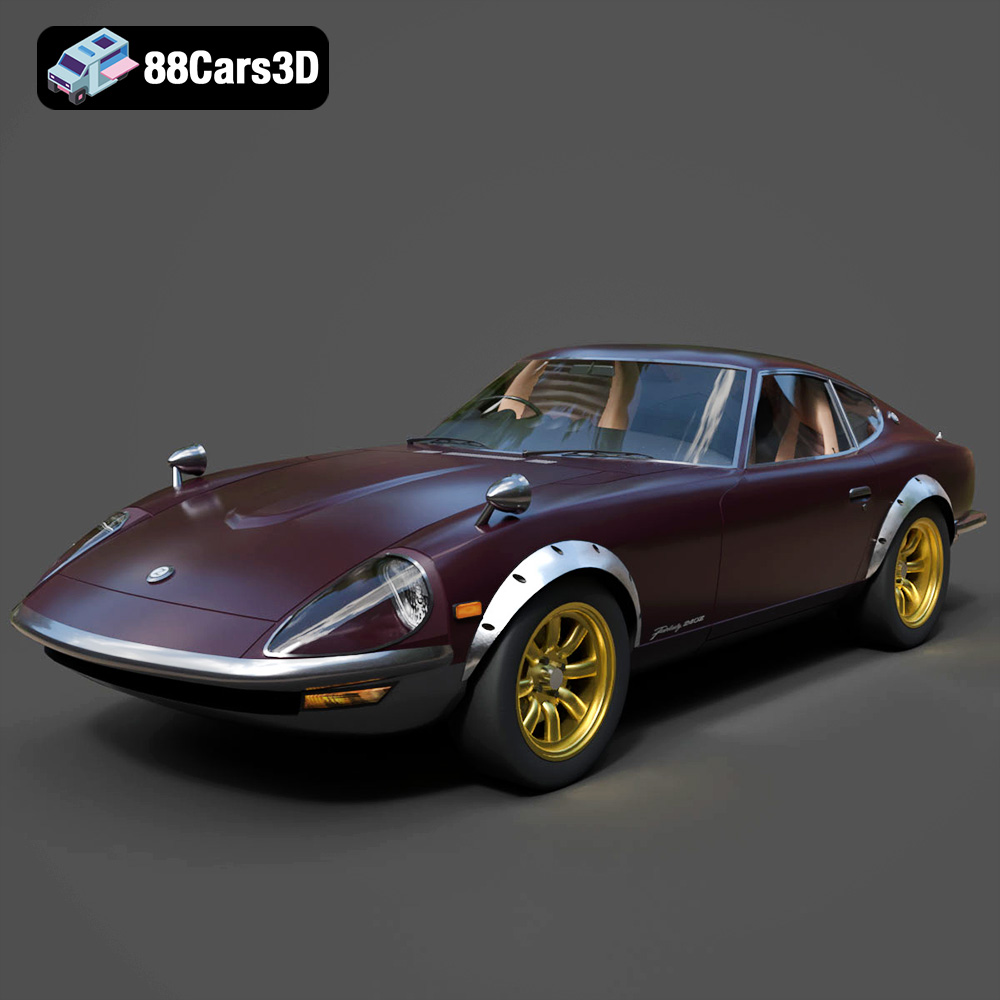
Download the Nissan FairLady 240ZG 3D Model featuring clean geometry, realistic detailing, and a fully modeled interior. Includes .blend, .fbx, .obj, .glb, .stl, .ply, .unreal, and .max formats for rendering, simulation, and game development.
Price: $4.99
Texture: Yes
Material: Yes
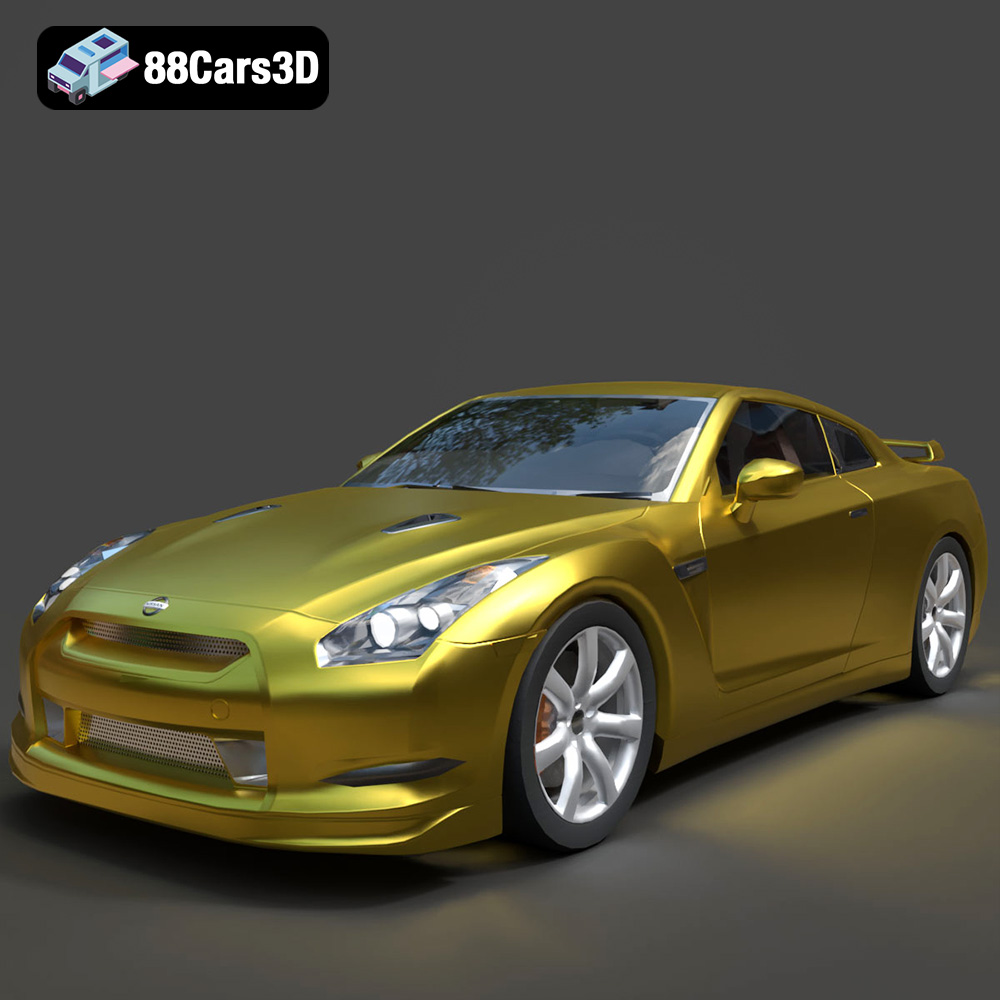
Download the Nissan GT-R 2008 3D Model featuring clean geometry, realistic detailing, and a fully modeled interior. Includes .blend, .fbx, .obj, .glb, .stl, .ply, .unreal, and .max formats for rendering, simulation, and game development.
Price: $4.99

Texture: Yes
Material: Yes
Download the Nissan Cube 3D Model featuring clean geometry, realistic detailing, and a fully modeled interior. Includes .blend, .fbx, .obj, .glb, .stl, .ply, .unreal, and .max formats for rendering, simulation, and game development.
Price: $4.99

Texture: Yes
Material: Yes
Download the Nissan Cedric Y32 3D Model featuring clean geometry, realistic detailing, and a fully modeled interior. Includes .blend, .fbx, .obj, .glb, .stl, .ply, .unreal, and .max formats for rendering, simulation, and game development.
Price: $4.99

Texture: Yes
Material: Yes
Download the Nissan Cima Infiniti Q45 2007 3D Model featuring clean geometry, realistic detailing, and a fully modeled interior. Includes .blend, .fbx, .obj, .glb, .stl, .ply, .unreal, and .max formats for rendering, simulation, and game development.
Price: $4.99

Texture: Yes
Material: Yes
Download the Nissan Juke 2025 3D Model featuring clean geometry, realistic detailing, and a fully modeled interior. Includes .blend, .fbx, .obj, .glb, .stl, .ply, .unreal, and .max formats for rendering, simulation, and game development.
Price: $4.99
Texture: Yes
Material: Yes
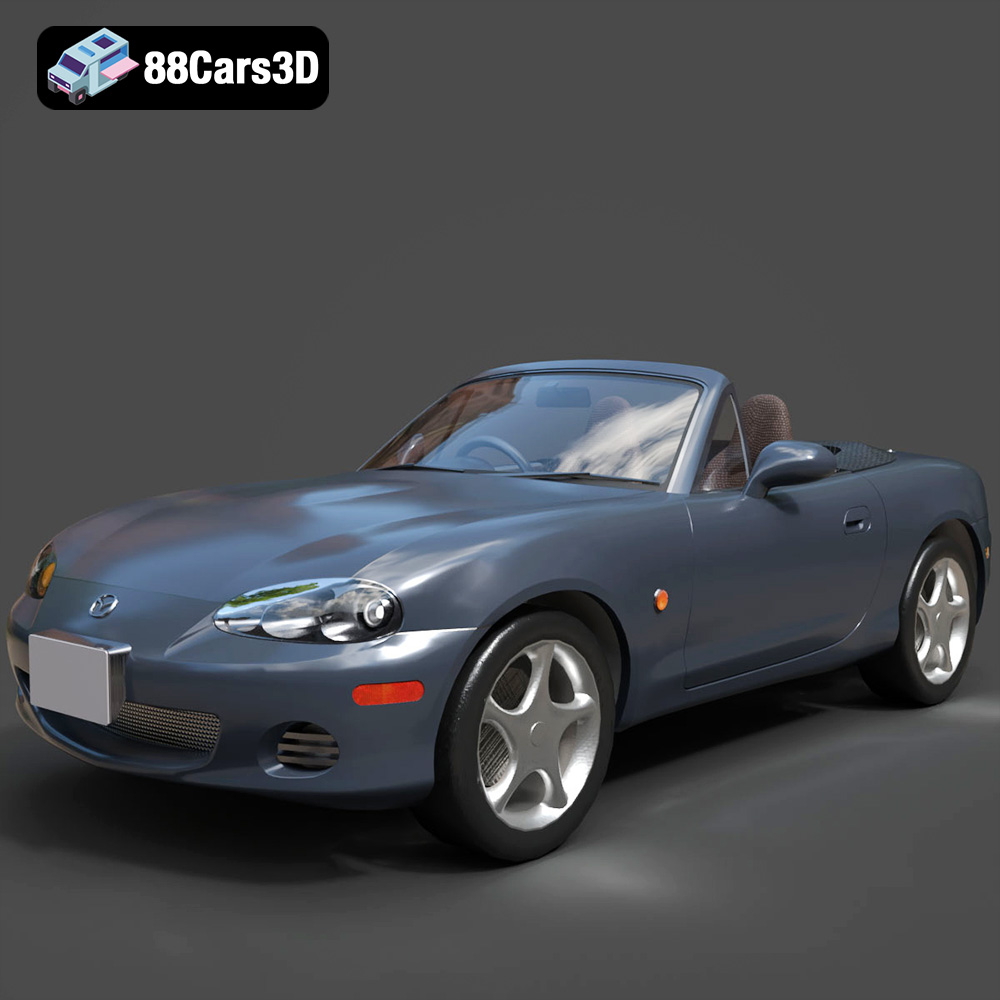
Download the Mazda MX-5 2025 3D Model featuring clean geometry, realistic detailing, and a fully modeled interior. Includes .blend, .fbx, .obj, .glb, .stl, .ply, .unreal, and .max formats for rendering, simulation, and game development.
Price: $4.99

Texture: Yes
Material: Yes
Download the Nissan Maxima 2009 3D Model featuring clean geometry, realistic detailing, and a fully modeled interior. Includes .blend, .fbx, .obj, .glb, .stl, .ply, .unreal, and .max formats for rendering, simulation, and game development.
Price: $4.99
Texture: Yes
Material: Yes
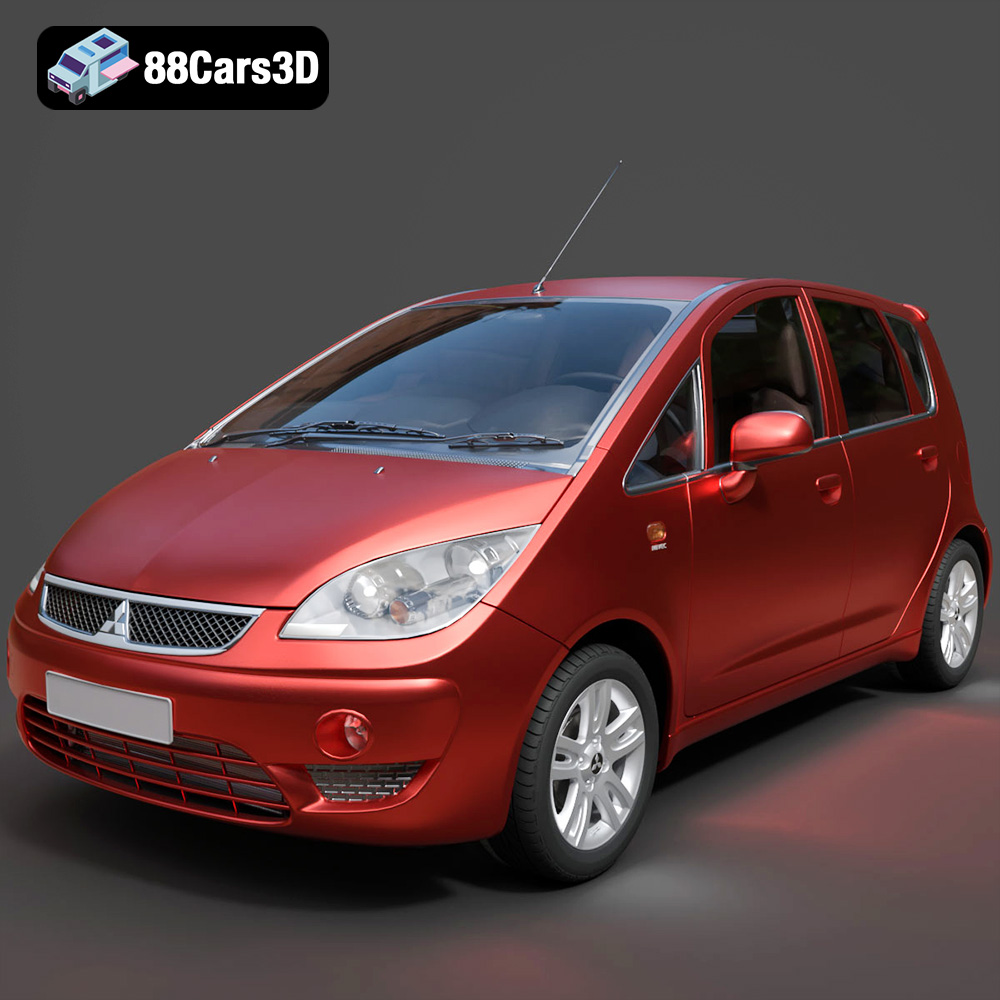
Download the Mitsubishi Colt 2025 3D Model featuring clean geometry, realistic detailing, and a fully modeled interior. Includes .blend, .fbx, .obj, .glb, .stl, .ply, .unreal, and .max formats for rendering, simulation, and game development.
Price: $4.99

