⚡ FLASH SALE: Get 60% OFF All Premium 3D & STL Models! ⚡

The sleek lines, intricate details, and raw power of a high-performance vehicle are captivating, not just in the real world, but increasingly in the digital realm. From hyper-realistic automotive configurators and cinematic advertising to immersive game environments and groundbreaking AR/VR experiences, 3D car models are at the heart of modern visualization. Yet, transforming a vehicle concept into a truly photorealistic, production-ready digital asset is a complex art form, demanding a deep understanding of technical workflows, artistic sensibilities, and optimization strategies.
This comprehensive guide delves into the intricate world of creating and utilizing high-quality 3D car models. We’ll navigate the entire lifecycle, from the foundational principles of clean topology and precise UV mapping to advanced PBR material creation and sophisticated rendering techniques. Whether you’re a seasoned 3D artist aiming to refine your automotive craft, a game developer seeking to optimize your vehicle assets, an automotive designer envisioning future concepts, or simply curious about the magic behind digital cars, you’ll gain invaluable insights into industry best practices. Prepare to unlock the secrets behind breathtaking automotive renders, performant game assets, and seamless integration into various digital platforms, ensuring your 3D car models stand out in an increasingly competitive landscape.
The genesis of any high-quality 3D car model lies in its topology – the underlying structure of polygons that defines the mesh. For complex organic shapes like vehicles, meticulous topology is paramount. It dictates how the model deforms, how smooth its surfaces appear under subdivision, and ultimately, its render quality and ease of manipulation. Automotive models, with their blend of intricate curves, sharp panel gaps, and subtle surface transitions, demand an exceptionally clean, all-quad topology. This ensures predictable subdivision behavior, minimizes pinching, and facilitates smooth shading across the vehicle’s body panels.
The bedrock of high-end automotive modeling is the exclusive use of quadrilateral (four-sided) polygons. While triangular polygons (tris) are sometimes unavoidable in highly optimized game meshes, they are generally avoided in primary modeling for subdivision surfaces due to their tendency to create pinching and undesirable creasing. Subdivision surface modifiers (like TurboSmooth in 3ds Max or Subdivision Surface in Blender/Maya) work by mathematically smoothing the mesh, and they perform best on quad-dominant geometry. Aim for an even distribution of quads, avoiding excessively stretched or squashed polygons, as these can introduce artifacts and make edge loops difficult to control. A typical high-poly automotive model prepared for subdivision might have an initial base mesh with 50,000 to 100,000 polygons, which then subdivides into millions of polygons at render time, ensuring unparalleled smoothness.
Precision begins long before polygons are laid down. Accurate blueprints or orthographic reference images (front, back, side, top views) are crucial for capturing the vehicle’s exact dimensions and proportions. These images are typically loaded into your 3D software’s viewports and aligned meticulously. Many artists also gather extensive photographic references, paying close attention to intricate details like headlight assemblies, wheel wells, and interior components. This multi-faceted reference strategy ensures that every curve and panel gap aligns perfectly with the real-world vehicle, providing a solid foundation for the modeling process and minimizing costly rework later on.
Edge flow refers to the direction and continuity of edges on your model. For automotive surfaces, optimal edge flow is critical for maintaining visual integrity. Edges should follow the natural contours of the car, guiding the eye smoothly across its body. Crucially, supporting edge loops are used to define sharp creases and panel gaps. These are edges run parallel and very close to the intended sharp line, effectively “holding” the edge when subdivision is applied. For example, around a door panel gap, you’d have several closely spaced edge loops on either side of the gap to create that crisp separation. Mastering the balance between dense edge loops for detail and sparser ones for large, flat surfaces is key to creating efficient, high-quality models that are both visually accurate and easy to edit.
Once the geometric foundation of your 3D car model is solid, the next crucial step is to give it a realistic surface appearance. This involves two closely related and highly technical processes: UV mapping and the creation of Physically Based Rendering (PBR) materials. These elements work in tandem to convey everything from the subtle metallic flake of the paint to the nuanced texture of the tires and interior fabrics, making the difference between a flat-looking model and a truly immersive digital vehicle.
UV mapping is the process of flattening the 3D surface of your model into a 2D space, allowing you to apply 2D textures. For complex automotive forms, this requires a strategic approach. The goal is to create UV islands (individual flattened pieces) that minimize distortion, maximize texture resolution, and allow for easy texture painting. Common strategies for cars include separating major panels (hood, doors, roof) into their own islands, as well as breaking out smaller, more detailed components like grilles, badges, and lights. Overlapping UVs can be used for mirrored parts (e.g., left and right wheels) to save texture space, but careful planning is needed to avoid issues with unique details or baked lighting. Many artists consolidate smaller, non-critical parts into a single texture atlas to optimize draw calls in real-time applications.
PBR materials represent a paradigm shift in shading, aiming to simulate how light interacts with surfaces in the real world. This approach uses a set of texture maps (albedo/base color, metallic, roughness, normal, ambient occlusion) to define a material’s properties accurately. For automotive models, the PBR workflow is critical for achieving photorealism. Car paint, for instance, involves complex shader networks that combine a base metallic material with clear coat layers, flake maps, and often a subtle Fresnel effect. Tire materials require detailed normal maps for tread patterns, combined with roughness and displacement maps to convey rubber texture. Understanding how each PBR map contributes to the final appearance – from the reflectivity of the metallic map to the micro-surface details captured by the roughness map – is essential for producing compelling results.
The quality of your textures directly impacts the final visual fidelity. For high-end automotive rendering, textures commonly range from 4K (4096×4096 pixels) to 8K (8192×8192 pixels) for primary body panels and large components, while smaller details might use 2K or 1K maps. Textures can be created using a variety of software like Substance Painter, Adobe Photoshop, or GIMP. Substance Painter is particularly powerful for its PBR workflow, allowing artists to paint directly onto the 3D model with layers and procedural generators. When creating textures, consistency in color space (e.g., sRGB for albedo, raw/linear for metallic/roughness/normal) is vital. For game engines and AR/VR, careful consideration of texture size and compression is necessary to balance visual quality with performance, often involving techniques like texture atlasing to pack multiple smaller textures into one larger sheet, reducing draw calls.
Even the most perfectly modeled and textured 3D car model can fall flat without the right lighting and rendering setup. Lighting is the invisible sculptor that defines shape, highlights details, and sets the mood of an entire scene. For automotive visualization, achieving a cinematic, studio-quality render requires a deep understanding of light physics, camera optics, and the capabilities of your chosen rendering engine. The goal is not just to illuminate the car but to reveal its form, reflect its material properties accurately, and place it within a believable context.
Automotive rendering often draws inspiration from real-world photography studios. Classic techniques like three-point lighting (key, fill, and back lights) are fundamental for establishing primary illumination, filling shadows, and separating the car from its background. Softbox lights, often emulated using large area lights or plane lights in 3D software, are invaluable for creating smooth, flattering reflections on polished car surfaces. Alternatively, Image-Based Lighting (IBL) using High Dynamic Range Images (HDRIs) is a powerful method for quickly creating realistic, complex lighting environments. An HDRI captures the full range of light information from a real-world location (e.g., a studio, a cityscape, a forest), which can then be used to light your 3D scene, providing accurate reflections and ambient illumination. Combining targeted studio lights with a background HDRI is a common and effective workflow, allowing for both precise control and environmental realism.
Different render engines offer unique strengths and workflows. Corona Renderer (often paired with 3ds Max) is known for its ease of use, physically accurate light transport, and exceptional photorealism with minimal setup, making it a favorite for architectural and product visualization, including cars. V-Ray, a long-standing industry workhorse, provides immense control and flexibility, with powerful production features for complex scenes across 3ds Max, Maya, and SketchUp. For Blender users, Cycles offers an integrated, powerful path-tracing renderer capable of stunning results, benefiting from Blender’s active community and open-source nature. Arnold, native to Maya and available for other DCCs, is another robust CPU/GPU path tracer, widely used in film and TV production for its stability and high-quality output. Each renderer has its own material system, light types, and optimization strategies, requiring artists to adapt their approach to maximize efficiency and visual fidelity. Understanding the nuances of sampling, denoising, and light path termination in your chosen renderer is key to faster, cleaner renders.
The raw render output is rarely the final image. Post-processing, typically performed in applications like Adobe Photoshop or Nuke, is where a good render becomes a great one. This stage involves adjustments to exposure, color grading, white balance, and contrast to enhance the overall mood and impact. Adding effects like subtle depth of field (if not rendered natively), lens flares, chromatic aberration, and vignette can significantly elevate the cinematic quality. Compositing multiple render passes (e.g., diffuse, reflection, shadows, ambient occlusion, object IDs) provides granular control over individual elements, allowing artists to fine-tune specific aspects of the image without re-rendering the entire scene. This final polish ensures that the 3D car model, lighting, and environment merge seamlessly into a cohesive and visually striking composition.
While high-fidelity renders aim for static photorealism, interactive experiences like video games, augmented reality (AR), and virtual reality (VR) demand a different kind of mastery: optimization. Here, the challenge is not just visual quality, but achieving smooth, real-time performance on a wide range of hardware. A stunning 3D car model designed for an offline render might bring a game engine to its knees without careful optimization. The goal is to strike a delicate balance between visual fidelity and computational efficiency, ensuring the model looks great while running flawlessly at target frame rates.
One of the most critical optimization techniques is Level of Detail (LOD). Instead of rendering a single, high-polygon model at all distances, LODs involve creating multiple versions of the same model, each with progressively fewer polygons. For example, a main car model (LOD0) might have 100,000 polygons, while LOD1 (for mid-distance) drops to 30,000, LOD2 (far distance) to 10,000, and LOD3 (very far) to a mere 2,000. Game engines like Unity and Unreal Engine automatically swap between these LODs based on the camera’s distance, dramatically reducing the computational load. Another major performance bottleneck is “draw calls” – instructions sent to the GPU to render objects. Each material, mesh, and texture can contribute to a draw call. Reducing these by combining meshes (e.g., attaching all car panels into one object), using texture atlases (packing multiple textures onto one sheet), and material instancing is crucial for maintaining high frame rates.
Textures, while essential for detail, can be memory hogs. In real-time environments, artists need to be strategic with texture resolution and compression. While 4K textures are common for hero assets like player cars, less critical elements might use 2K or 1K. Lossy compression formats (e.g., DXT for desktop, ASTC/PVRTC for mobile) are routinely employed to reduce file size without a noticeable drop in visual quality. Furthermore, careful material setup is vital. Complex shader networks suitable for offline rendering can be simplified for real-time. Baked lighting (pre-calculating global illumination and shadows into textures) is often used to add realism without the runtime cost of dynamic lighting. This reduces the number of real-time lights needed, further improving performance. When sourcing models from marketplaces such as 88cars3d.com, look for descriptions indicating “game-ready” or “optimized for real-time,” as these models often come pre-equipped with LODs and optimized textures.
AR and VR present unique optimization challenges due to their stringent performance requirements (e.g., 90+ frames per second for comfortable VR) and often limited mobile hardware. Polygon budgets are even tighter, with individual car models sometimes needing to be under 20,000 polygons for mobile AR/VR applications. Techniques like aggressive LODs, occlusion culling (not rendering objects blocked by others), and careful overdraw management are paramount. Additionally, AR/VR experiences demand exceptional immersion. This means ensuring proper scale and proportion, minimizing visual artifacts like aliasing, and providing intuitive interaction points. When designing 3D car models for AR, considerations for ground shadows and reflections that blend seamlessly with the real environment are vital. For VR, ensuring that the model maintains consistent detail from all viewing angles and preventing motion sickness-inducing visual glitches are key priorities.
The utility of high-quality 3D car models extends far beyond screen-based visualization. They serve as valuable assets for physical prototyping, collectible manufacturing, and even educational tools through 3D printing. However, preparing a model for physical fabrication introduces a unique set of technical requirements that differ significantly from those for rendering or game engines. Alongside this, navigating the diverse landscape of 3D file formats is crucial for seamless interoperability across various software and platforms.
For a 3D car model to be successfully printed, its mesh must be “watertight” or “manifold.” This means it must be a completely enclosed volume without any holes, inverted normals, or self-intersecting geometry. Unlike rendering, where minor mesh errors might go unnoticed, 3D printers interpret these flaws as instructions to print non-existent geometry, leading to print failures. Common issues include non-manifold edges, disconnected vertices, and zero-thickness walls. Artists often use specialized tools or features within their 3D software (e.g., 3ds Max’s STL Check, Blender’s 3D Print Toolbox, or dedicated mesh repair software like Netfabb) to identify and fix these problems. Furthermore, wall thickness is a critical consideration; areas that are too thin will be fragile or fail to print. Support structures must also be planned for overhangs, ensuring the model retains its shape during the printing process. Scaling the model correctly for the desired print size is also essential, often using millimeters as the unit of choice for precision.
The 3D industry utilizes a plethora of file formats, each with its own strengths and limitations, and understanding them is key to effective collaboration and workflow.
The choice of file format often depends on the project’s requirements. For example, if you’re transferring a detailed automotive model with PBR textures and basic animations from 3ds Max to Unreal Engine, FBX would be the go-to. If you’re publishing a car model for a web-based configurator or an AR experience, glTF or USDZ would be preferred for their efficiency and PBR support. When obtaining professional-grade 3D car models, platforms like 88cars3d.com often provide models in multiple common formats (FBX, OBJ, GLB, USDZ) to ensure maximum compatibility and ease of integration into various pipelines. Always check the file format specifications and ensure your target software supports the features embedded within the file (e.g., PBR metallic/roughness vs. specular/glossiness workflows).
The demand for high-quality 3D car models isn’t just growing; it’s evolving, driving innovation across a multitude of industries. These digital assets are no longer mere visual props; they are integral tools for design, engineering, marketing, and immersive experiences, pushing the boundaries of what’s possible in a digital-first world.
The automotive industry was an early adopter and remains a primary driver of advanced 3D modeling. Car manufacturers leverage highly accurate 3D models throughout the entire design and prototyping lifecycle. From initial concept ideation, where designers sketch and then sculpt in virtual reality to full-scale digital prototypes, 3D models allow for rapid iteration, aerodynamic testing, safety simulations, and virtual fit-and-finish reviews long before a physical part is ever manufactured. This streamlines the design process, reduces costs, and accelerates time to market. Engineers can simulate stress tests, crash scenarios, and thermal performance, while designers can experiment with endless permutations of colors, materials, and trim levels, all within a virtual environment. The precision and detail inherent in these models are critical for making informed design decisions.
In a competitive market, compelling visualization is key to capturing consumer attention. High-fidelity 3D car models are central to modern automotive marketing and advertising. They power breathtaking cinematic commercials where cars perform impossible stunts in fantastical environments. They drive interactive online configurators, allowing prospective buyers to customize their dream car with every imaginable option and view it from any angle, complete with realistic lighting and reflections. Virtual showrooms and online AR experiences let customers “place” a car in their driveway or explore its interior from the comfort of their home, creating a highly engaging and personalized purchasing journey. These applications reduce the need for expensive physical prototypes and photoshoots, offering unparalleled flexibility and scalability for marketing campaigns worldwide.
Looking ahead, the role of 3D car models is set to expand even further with the rise of the Metaverse and the concept of “digital twins.” High-quality car models will populate persistent virtual worlds, allowing users to own, customize, and even “drive” their digital vehicles in social and gaming contexts. The advent of digital twins, where a precise virtual replica of a physical car is created, opens doors for predictive maintenance, real-time performance monitoring, and advanced simulation in highly complex scenarios. Autonomous driving research heavily relies on virtual environments populated with realistic 3D vehicles for training and testing AI algorithms safely. Furthermore, advancements in real-time rendering and volumetric capture promise even more immersive and photorealistic experiences, blurring the lines between the digital and physical. The expertise in creating and optimizing these assets, as championed by resources and marketplaces like 88cars3d.com, will be increasingly vital as these future trends become reality.
The journey from concept to a cutting-edge 3D car model is a testament to the intricate blend of technical skill, artistic vision, and meticulous attention to detail. We’ve explored the fundamental importance of impeccable topology and edge flow, which forms the invisible skeleton of a high-quality model, ensuring smooth surfaces and predictable behavior under subdivision. We’ve delved into the art of bringing surfaces to life through strategic UV mapping and the creation of physically accurate PBR materials, where every metallic flake and rubber grain contributes to stunning realism.
Our exploration continued into the realm of illumination, highlighting how advanced rendering techniques—whether through dedicated renderers like Corona and V-Ray or integrated solutions like Cycles and Arnold—sculpt light and shadow to create cinematic automotive visuals. We then shifted gears to the critical domain of optimization, understanding how LODs, efficient texture management, and smart material usage are paramount for delivering smooth, high-performance interactive experiences in game engines, AR, and VR. Finally, we touched upon the unique demands of 3D printing and the importance of mastering various file formats for seamless interoperability across diverse applications, from physical prototyping to virtual showrooms.
Mastering these disciplines not only elevates your craft but also positions you at the forefront of digital creation across industries. The demand for skilled artists and developers who can deliver professional-grade 3D car models is higher than ever, driving innovation in automotive design, entertainment, and immersive technologies. Embrace continuous learning, experiment with new tools and techniques, and leverage the vast resources available. Whether you’re building a vehicle from scratch or integrating pre-made assets, understanding these technical intricacies will empower you to create truly exceptional digital automotive experiences. For those looking to jumpstart their projects with industry-standard, high-quality assets, explore the diverse collection of 3D car models available on platforms like 88cars3d.com, meticulously crafted to meet these demanding standards.

Texture: Yes
Material: Yes
Download the Nissan Fuga 2003 3D Model featuring clean geometry, realistic detailing, and a fully modeled interior. Includes .blend, .fbx, .obj, .glb, .stl, .ply, .unreal, and .max formats for rendering, simulation, and game development.
Price: $4.99
Texture: Yes
Material: Yes
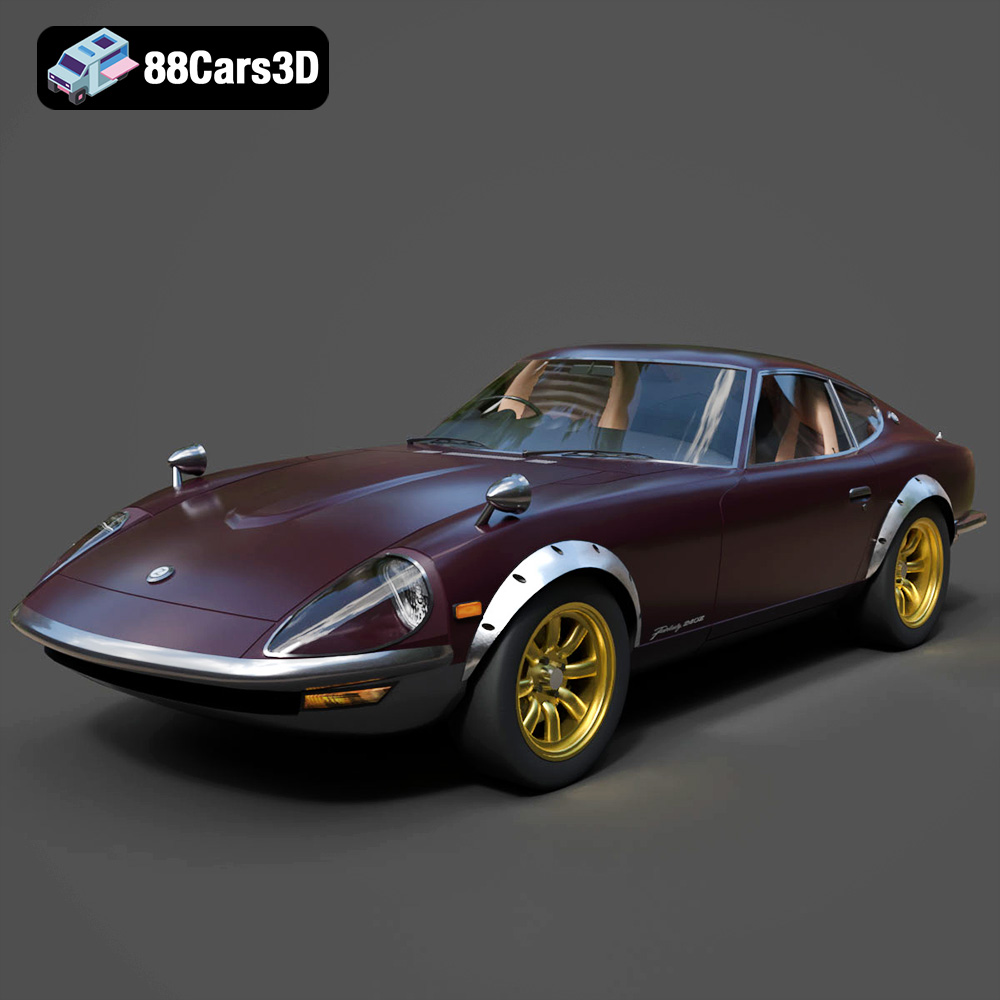
Download the Nissan FairLady 240ZG 3D Model featuring clean geometry, realistic detailing, and a fully modeled interior. Includes .blend, .fbx, .obj, .glb, .stl, .ply, .unreal, and .max formats for rendering, simulation, and game development.
Price: $4.99
Texture: Yes
Material: Yes
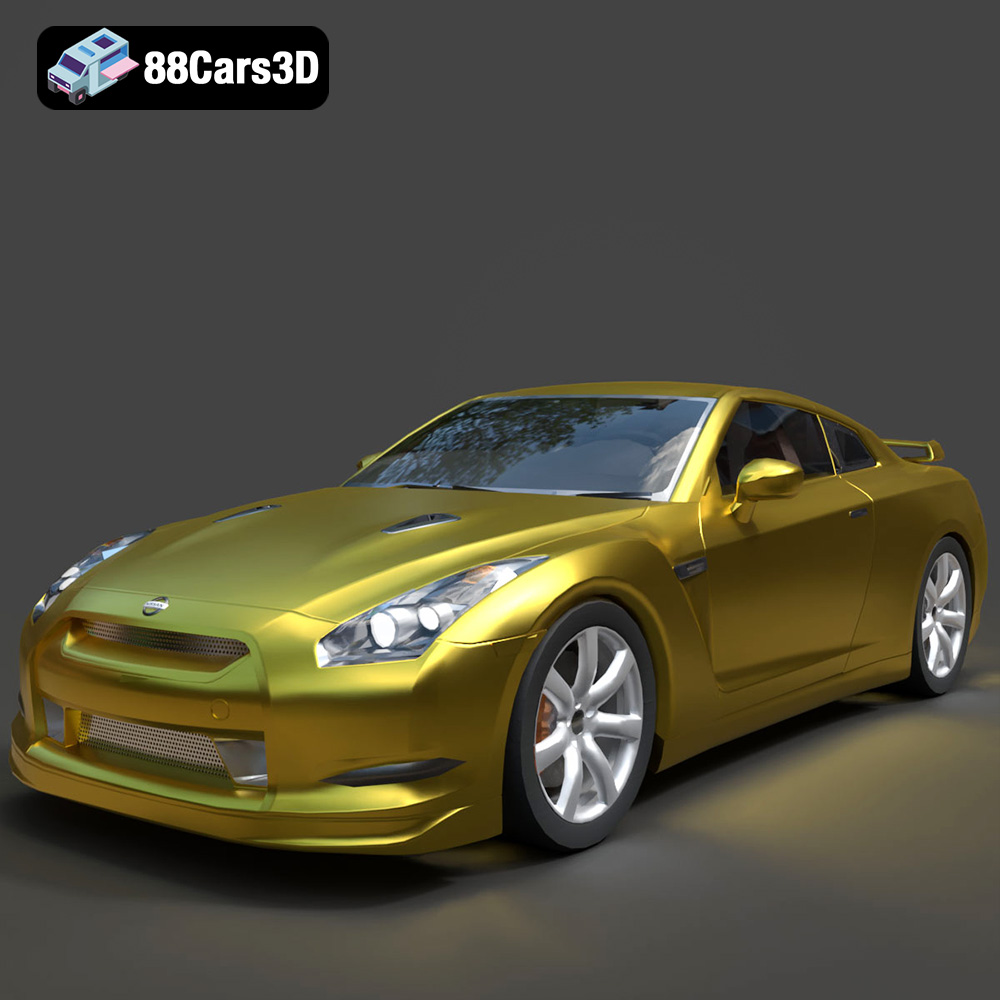
Download the Nissan GT-R 2008 3D Model featuring clean geometry, realistic detailing, and a fully modeled interior. Includes .blend, .fbx, .obj, .glb, .stl, .ply, .unreal, and .max formats for rendering, simulation, and game development.
Price: $4.99

Texture: Yes
Material: Yes
Download the Nissan Cube 3D Model featuring clean geometry, realistic detailing, and a fully modeled interior. Includes .blend, .fbx, .obj, .glb, .stl, .ply, .unreal, and .max formats for rendering, simulation, and game development.
Price: $4.99

Texture: Yes
Material: Yes
Download the Nissan Cedric Y32 3D Model featuring clean geometry, realistic detailing, and a fully modeled interior. Includes .blend, .fbx, .obj, .glb, .stl, .ply, .unreal, and .max formats for rendering, simulation, and game development.
Price: $4.99

Texture: Yes
Material: Yes
Download the Nissan Cima Infiniti Q45 2007 3D Model featuring clean geometry, realistic detailing, and a fully modeled interior. Includes .blend, .fbx, .obj, .glb, .stl, .ply, .unreal, and .max formats for rendering, simulation, and game development.
Price: $4.99

Texture: Yes
Material: Yes
Download the Nissan Juke 2025 3D Model featuring clean geometry, realistic detailing, and a fully modeled interior. Includes .blend, .fbx, .obj, .glb, .stl, .ply, .unreal, and .max formats for rendering, simulation, and game development.
Price: $4.99
Texture: Yes
Material: Yes
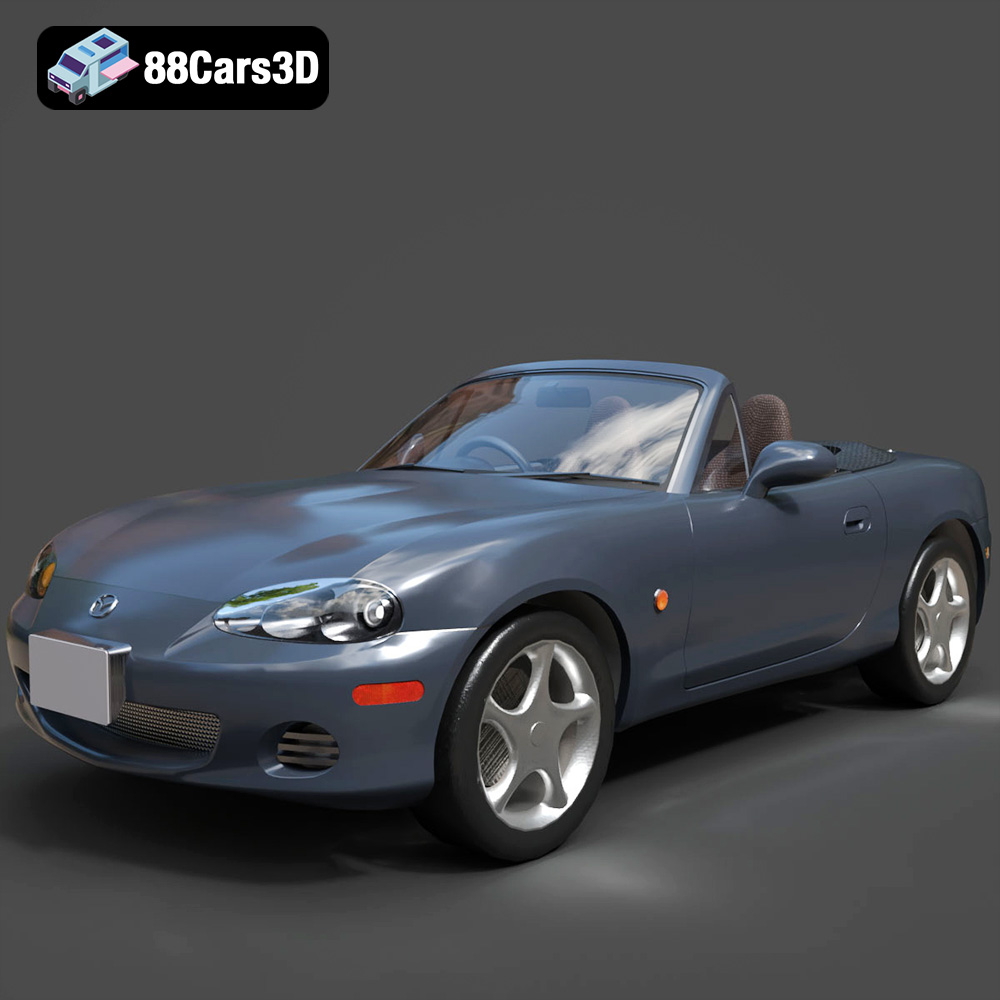
Download the Mazda MX-5 2025 3D Model featuring clean geometry, realistic detailing, and a fully modeled interior. Includes .blend, .fbx, .obj, .glb, .stl, .ply, .unreal, and .max formats for rendering, simulation, and game development.
Price: $4.99

Texture: Yes
Material: Yes
Download the Nissan Maxima 2009 3D Model featuring clean geometry, realistic detailing, and a fully modeled interior. Includes .blend, .fbx, .obj, .glb, .stl, .ply, .unreal, and .max formats for rendering, simulation, and game development.
Price: $4.99
Texture: Yes
Material: Yes
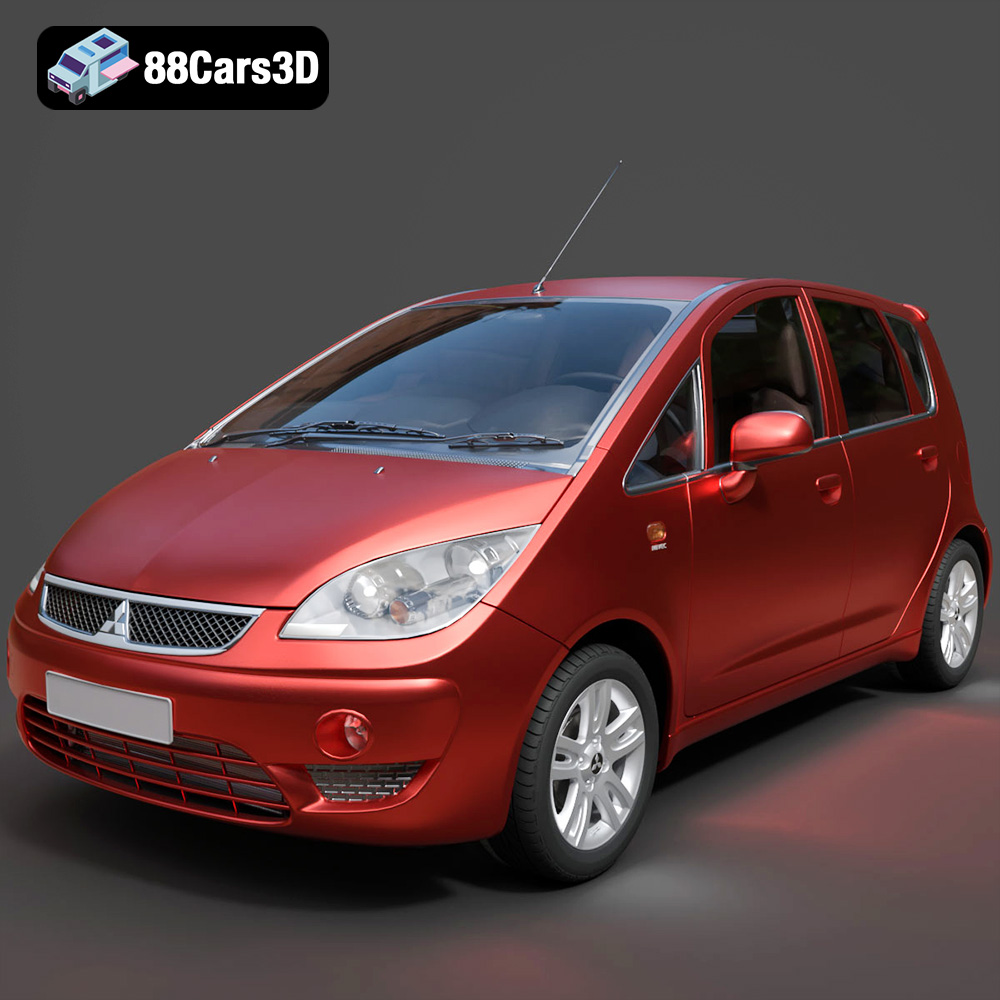
Download the Mitsubishi Colt 2025 3D Model featuring clean geometry, realistic detailing, and a fully modeled interior. Includes .blend, .fbx, .obj, .glb, .stl, .ply, .unreal, and .max formats for rendering, simulation, and game development.
Price: $4.99

