⚡ FLASH SALE: Get 60% OFF All Premium 3D & STL Models! ⚡

In the vast and ever-evolving landscape of 3D visualization, automotive models stand as a pinnacle of complexity, precision, and aesthetic appeal. From sleek concept cars destined for virtual showrooms to rugged off-road vehicles ready for the next-gen gaming adventure, the demand for high-quality 3D car models is constant and growing. Crafting these digital masterpieces requires a deep understanding of intricate workflows, cutting-edge software, and industry best practices. It’s a journey that spans meticulous modeling, precise UV mapping, sophisticated material creation, and intelligent optimization.
This comprehensive guide delves into the technical bedrock of professional automotive rendering and asset development. Whether you’re a seasoned 3D artist aiming to refine your craft, a game developer seeking to optimize vehicle assets, or an automotive designer pushing the boundaries of visualization, you’ll discover the essential techniques and insights needed to elevate your work. We’ll explore everything from the crucial role of topology in defining a car’s smooth surfaces to the nuances of Physically Based Rendering (PBR) materials, efficient game engine optimization, and preparing models for emerging technologies like AR/VR and 3D printing. By the end, you’ll have a holistic understanding of what it takes to produce truly exceptional 3D automotive assets, much like those found on specialized marketplaces such as 88cars3d.com.
The visual quality of any 3D car model begins with its topology – the underlying structure of polygons that defines its shape. For automotive models, which are characterized by their smooth, reflective surfaces and sharp, defined creases, clean topology is not merely a preference; it’s a critical requirement. Poor topology can lead to artifacts like pinching, undesirable shading, and difficulties in deformation, especially crucial for dynamic scenarios like animation or game physics. Professional 3D car models demand an all-quad mesh (using four-sided polygons), meticulously crafted to ensure optimal surface smoothness and flexibility for subdivision.
Effective edge flow dictates how polygons follow the natural curves and contours of the car body. For example, edge loops should run parallel to the sweeps of the body panels and loop around details like headlights, grilles, and door cut lines. This approach ensures that when the mesh is subdivided (e.g., using a TurboSmooth or Subdivision Surface modifier in 3ds Max or Blender), the surface remains perfectly smooth without introducing ripples or bumps. Sharp edges, such as those found on body panel lines or character lines, are typically defined by creating “support loops” – additional edge loops placed very close to the main edge – which sharpen the transition upon subdivision without increasing the base mesh density excessively. Avoiding N-gons (polygons with more than four sides) and T-junctions (where three edges meet at a single vertex) is crucial, as these can cause unpredictable shading and triangulation issues upon export or subdivision, leading to visual inconsistencies during automotive rendering or real-time display.
Once the geometric structure of a 3D car model is perfected, the next critical step is UV mapping. UVs are the 2D coordinates that tell your rendering engine or game engine how to project textures onto the 3D surface. For an automotive model, accurate and efficient UVs are indispensable for applying high-resolution textures, ensuring consistent lightmap baking, and preventing visual artifacts. Poor UV mapping can lead to stretched textures, visible seams, or inefficient texture memory usage, severely detracting from the realism of the final automotive rendering or real-time experience.
The goal of good UV mapping is to minimize distortion, prevent overlapping UV islands (unless intentionally for mirroring), and utilize the texture space as efficiently as possible. For complex car models, multiple UV sets are often employed. One set might be dedicated to the main body paint, another for interior details, a third for smaller trim pieces and decals, and a fourth for lightmaps in game engines. Strategic seam placement is key; seams should be hidden in areas that are less visible or where natural breaks occur, such as along panel lines, under the vehicle, or where different materials meet. Tools like 3ds Max’s Unwrap UVW modifier, Blender’s UV Editor, or Maya’s UV Toolkit provide robust functionalities for unwrapping, packing, and manipulating UV islands to achieve optimal results, often with features like automatic unwrapping followed by manual refinement for critical areas.
Platforms like 88cars3d.com often provide models with clean, pre-configured UVs, saving artists significant time and effort in this crucial stage.
The leap from a raw 3D model to a photorealistic vehicle is primarily driven by the quality of its materials and shaders. Physically Based Rendering (PBR) has become the industry standard for achieving consistent and accurate material representation across various lighting conditions and rendering engines. PBR workflows, typically either Metallic-Roughness or Specular-Glossiness, rely on physically accurate properties of surfaces to simulate how light interacts with them. This realism is paramount for high-end automotive rendering and for creating convincing game assets.
A typical PBR material for a car consists of several texture maps working in concert: an Albedo (or Base Color) map for the surface’s inherent color without lighting, a Normal map for adding fine surface detail without increasing polygon count, a Roughness map (or Glossiness) to define micro-surface imperfections influencing reflectivity, and a Metallic map to specify which parts of the surface are metallic. For car paint, this becomes even more complex, often requiring layered shaders to simulate the clear coat, metallic flakes, and base color accurately. This involves intricate shader networks, utilizing blend nodes, fresnel effects, and sometimes procedural textures to achieve nuanced effects like pearlescent finishes or subtle dirt accumulation. Software like Substance Painter and Designer are industry staples for creating these complex texture sets, allowing artists to paint directly onto the 3D model and generate all necessary PBR maps simultaneously.
After meticulously modeling and texturing a 3D car model, the final step in achieving breathtaking realism is the rendering process. This involves careful lighting, camera setup, and rendering engine configuration. The choice of rendering engine significantly impacts workflow and final output quality. Popular choices like Chaos V-Ray and Corona Renderer (for 3ds Max/Cinema 4D), Autodesk Arnold (for Maya/3ds Max), and Blender’s Cycles and Eevee engines each offer unique strengths, from physically accurate path tracing to real-time capabilities.
Effective lighting is arguably the most crucial element in automotive rendering. Cars, with their reflective surfaces and complex curvatures, react dramatically to light. High Dynamic Range Images (HDRIs) are a staple, providing realistic global illumination and reflections by capturing real-world lighting environments. Complementing HDRIs, artists often employ studio-style lighting setups with area lights or spotlights to highlight specific design features, create dramatic shadows, or add specular kickers that emphasize body lines. A typical setup might include a large softbox above, two smaller softboxes on the sides, and perhaps a rim light to separate the car from the background. Careful camera placement, aperture settings for depth of field, and focal length choices (often longer focal lengths like 85mm-120mm to minimize distortion) further enhance the visual appeal, mimicking professional automotive photography.
Developing 3D car models for real-time environments like game engines (Unity, Unreal Engine) or interactive configurators presents a unique set of challenges focused on performance. Unlike offline rendering where render times are less critical, game engines demand assets that can be rendered tens, hundreds, or even thousands of times per second. This necessitates a rigorous approach to optimization, balancing visual fidelity with processing power and memory constraints. A high-quality model sourced from platforms like 88cars3d.com might provide an excellent base, but further optimization is almost always required for specific game engine targets.
The primary strategies for game engine optimization revolve around reducing polygon count, minimizing draw calls, and optimizing texture usage.
Levels of Detail (LODs) are paramount. A single car model will typically have 3-5 LOD levels. LOD0 (highest detail) might have 150,000-300,000 polygons for close-up views, while LOD1 (medium detail) could be 50,000-100,000, LOD2 (low detail) 15,000-30,000, and LOD3 (very low) just a few thousand polygons. These LODs dynamically swap based on the camera’s distance, ensuring only necessary detail is rendered.
Draw calls, the instructions sent from the CPU to the GPU, can be a major bottleneck. Merging meshes (e.g., combining all the glass pieces into one mesh) and using texture atlases (combining multiple smaller textures into one larger texture sheet) significantly reduce draw calls. This allows the GPU to process more geometry in fewer batches, boosting performance. For example, instead of separate materials for each car component, a few master materials with texture masks or material IDs can drive many parts. Collision meshes, typically much simpler than the visual mesh, are also crucial for efficient physics simulations.
The utility of high-quality 3D car models extends far beyond traditional renders and game engines. Emerging technologies like Augmented Reality (AR), Virtual Reality (VR), and 3D printing are opening new frontiers for automotive design, visualization, and interaction. Each of these applications, however, demands specific preparation and optimization strategies to ensure a seamless and effective user experience.
For AR/VR applications, the primary concern remains real-time performance, often even more stringent than traditional game development due to the immersive and often mobile nature of these experiences. Lower polygon counts are crucial, typically aiming for 50,000-150,000 polygons for an entire vehicle (including interior) for mobile AR/VR, and perhaps up to 250,000 for high-end PC VR. Draw call minimization through aggressive mesh merging and texture atlasing is equally vital. File formats like glTF (GL Transmission Format) and USDZ (Universal Scene Description Zip) are becoming standard for AR/VR, as they efficiently package geometry, PBR materials, and animations for mobile and web-based AR experiences. These formats are optimized for real-time rendering and enable interactive viewing of 3D car models on devices like smartphones and standalone VR headsets, offering features like virtual car configurators or immersive showrooms.
3D printing, on the other hand, shifts the focus from visual fidelity to physical manufacturability. The requirements here are entirely different: a mesh must be “watertight” (manifold) with no gaps, holes, or inverted normals, as these would cause printing errors. Wall thickness is critical; parts must be thick enough to be physically robust but not so thick as to waste material or create structural issues during printing. Small, intricate details need to be simplified or scaled up to ensure they are printable at the chosen resolution. Before printing, models often need extensive mesh repair using tools like Meshmixer, ZBrush’s Dynamesh, or Netfabb to close holes, fix non-manifold geometry, and ensure proper scaling for the intended printer and material.
The journey of a 3D car model often involves multiple software packages and target platforms, necessitating a thorough understanding of various file formats and the challenges associated with conversions. Different formats are optimized for different purposes, and choosing the right one for your workflow is crucial for maintaining data integrity, quality, and compatibility. When sourcing high-quality 3D car models from marketplaces, understanding the provided file formats and their implications is key.
The most common exchange formats include FBX (Filmbox), OBJ (Object), and more recently, GLB/glTF (GL Transmission Format) and USDZ (Universal Scene Description Zip).
FBX is an Autodesk proprietary format widely used in the animation and game development industries. It supports geometry, materials, textures, animations, and skeletal data, making it a robust choice for complex assets. However, FBX can sometimes be overly complex, leading to compatibility issues between different software versions or vendors regarding material definitions.
OBJ is a simpler, universal format that primarily handles geometry (vertices, normals, UVs) and material assignments (via an associated .MTL file). It’s highly compatible but lacks support for advanced PBR materials, animations, or rigging, often requiring manual re-setup of shaders in the target application.
GLB/glTF and USDZ are modern, open-standard formats designed for real-time applications, AR/VR, and web delivery. They efficiently package geometry, PBR materials (Metallic-Roughness workflow), animations, and scene hierarchy, making them ideal for lightweight, interactive experiences.
Native formats like .MAX (3ds Max) and .BLEND (Blender) offer the most complete data integrity within their respective ecosystems but are less universally compatible.
The journey of creating and deploying high-quality 3D car models is a multifaceted discipline, demanding a blend of artistic vision, technical prowess, and a deep understanding of digital pipelines. We’ve explored the critical role of flawless topology and edge flow in defining a car’s surface integrity, delved into the intricacies of UV mapping for accurate texturing, and demystified the principles behind PBR materials that bring photorealism to life. From the art of illuminating a scene for stunning automotive rendering to the precise optimizations required for high-performance game assets, and the specialized preparations for emerging fields like AR/VR and 3D printing, each stage is vital in crafting truly exceptional automotive visualizations.
Mastering these workflows not only elevates the visual fidelity of your projects but also streamlines your production process, ensuring your 3D assets are versatile, efficient, and ready for any application. The continuous evolution of software and hardware means that staying informed about industry best practices and emerging technologies is an ongoing commitment. Whether you’re building a new car from scratch or optimizing existing models, the principles of clean data, intelligent design, and targeted optimization remain your guiding lights.
For those looking to accelerate their projects or seeking a robust foundation of pre-made, professionally crafted assets, platforms like 88cars3d.com offer an invaluable resource. By understanding the technical depth behind these models, you’re empowered to make informed decisions, enhance your workflow, and ultimately drive excellence in every aspect of your 3D automotive endeavors. Embrace these techniques, push the boundaries of your creativity, and let your automotive visions come to life with unparalleled realism and performance.

Texture: Yes
Material: Yes
Download the Nissan Fuga 2003 3D Model featuring clean geometry, realistic detailing, and a fully modeled interior. Includes .blend, .fbx, .obj, .glb, .stl, .ply, .unreal, and .max formats for rendering, simulation, and game development.
Price: $4.99

Texture: Yes
Material: Yes
Download the Nissan FairLady 240ZG 3D Model featuring clean geometry, realistic detailing, and a fully modeled interior. Includes .blend, .fbx, .obj, .glb, .stl, .ply, .unreal, and .max formats for rendering, simulation, and game development.
Price: $4.99
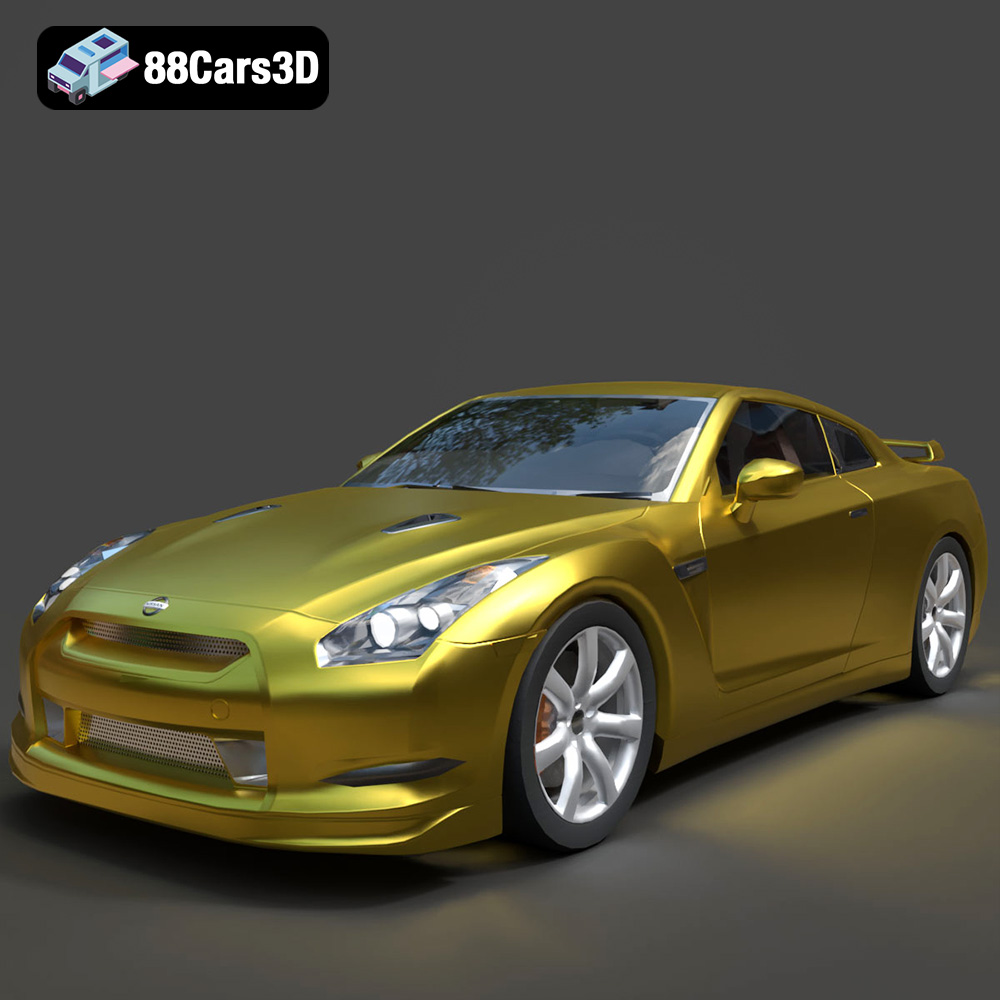
Texture: Yes
Material: Yes
Download the Nissan GT-R 2008 3D Model featuring clean geometry, realistic detailing, and a fully modeled interior. Includes .blend, .fbx, .obj, .glb, .stl, .ply, .unreal, and .max formats for rendering, simulation, and game development.
Price: $4.99

Texture: Yes
Material: Yes
Download the Nissan Cube 3D Model featuring clean geometry, realistic detailing, and a fully modeled interior. Includes .blend, .fbx, .obj, .glb, .stl, .ply, .unreal, and .max formats for rendering, simulation, and game development.
Price: $4.99

Texture: Yes
Material: Yes
Download the Nissan Cedric Y32 3D Model featuring clean geometry, realistic detailing, and a fully modeled interior. Includes .blend, .fbx, .obj, .glb, .stl, .ply, .unreal, and .max formats for rendering, simulation, and game development.
Price: $4.99

Texture: Yes
Material: Yes
Download the Nissan Cima Infiniti Q45 2007 3D Model featuring clean geometry, realistic detailing, and a fully modeled interior. Includes .blend, .fbx, .obj, .glb, .stl, .ply, .unreal, and .max formats for rendering, simulation, and game development.
Price: $4.99

Texture: Yes
Material: Yes
Download the Nissan Juke 2025 3D Model featuring clean geometry, realistic detailing, and a fully modeled interior. Includes .blend, .fbx, .obj, .glb, .stl, .ply, .unreal, and .max formats for rendering, simulation, and game development.
Price: $4.99
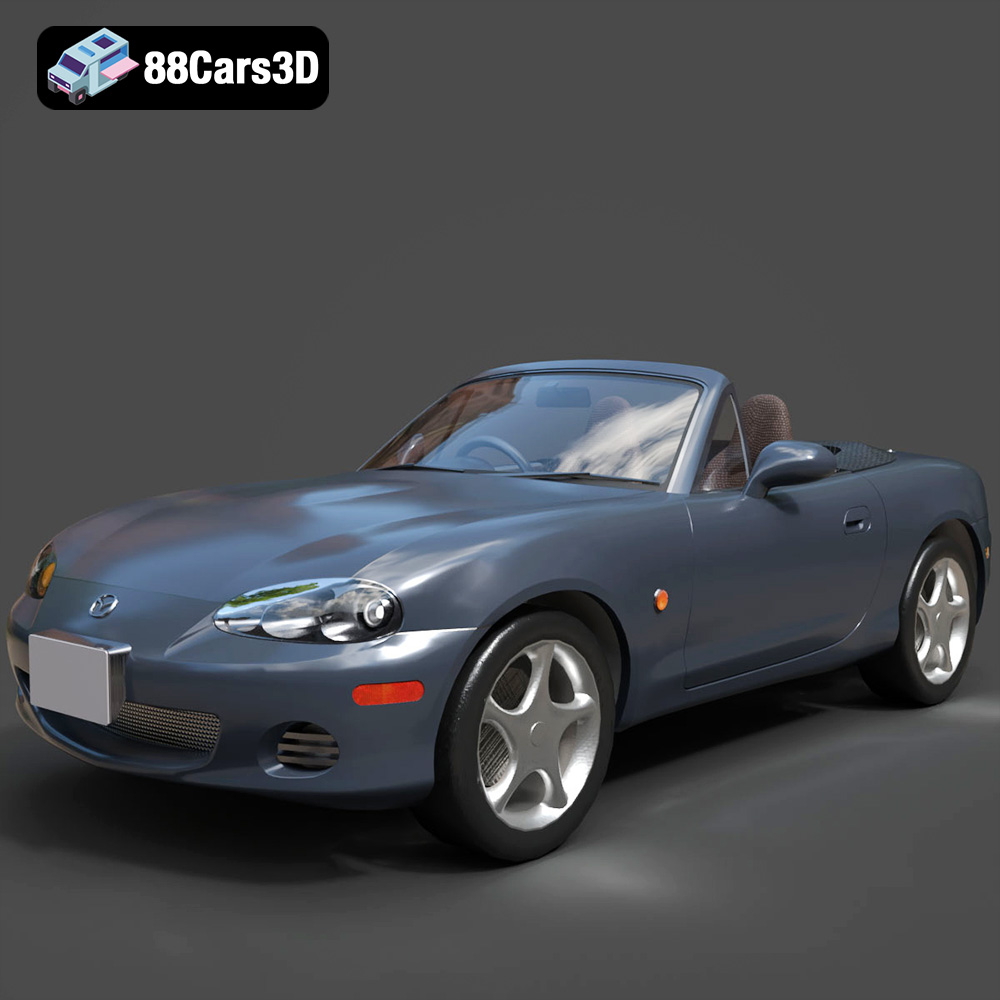
Texture: Yes
Material: Yes
Download the Mazda MX-5 2025 3D Model featuring clean geometry, realistic detailing, and a fully modeled interior. Includes .blend, .fbx, .obj, .glb, .stl, .ply, .unreal, and .max formats for rendering, simulation, and game development.
Price: $4.99

Texture: Yes
Material: Yes
Download the Nissan Maxima 2009 3D Model featuring clean geometry, realistic detailing, and a fully modeled interior. Includes .blend, .fbx, .obj, .glb, .stl, .ply, .unreal, and .max formats for rendering, simulation, and game development.
Price: $4.99
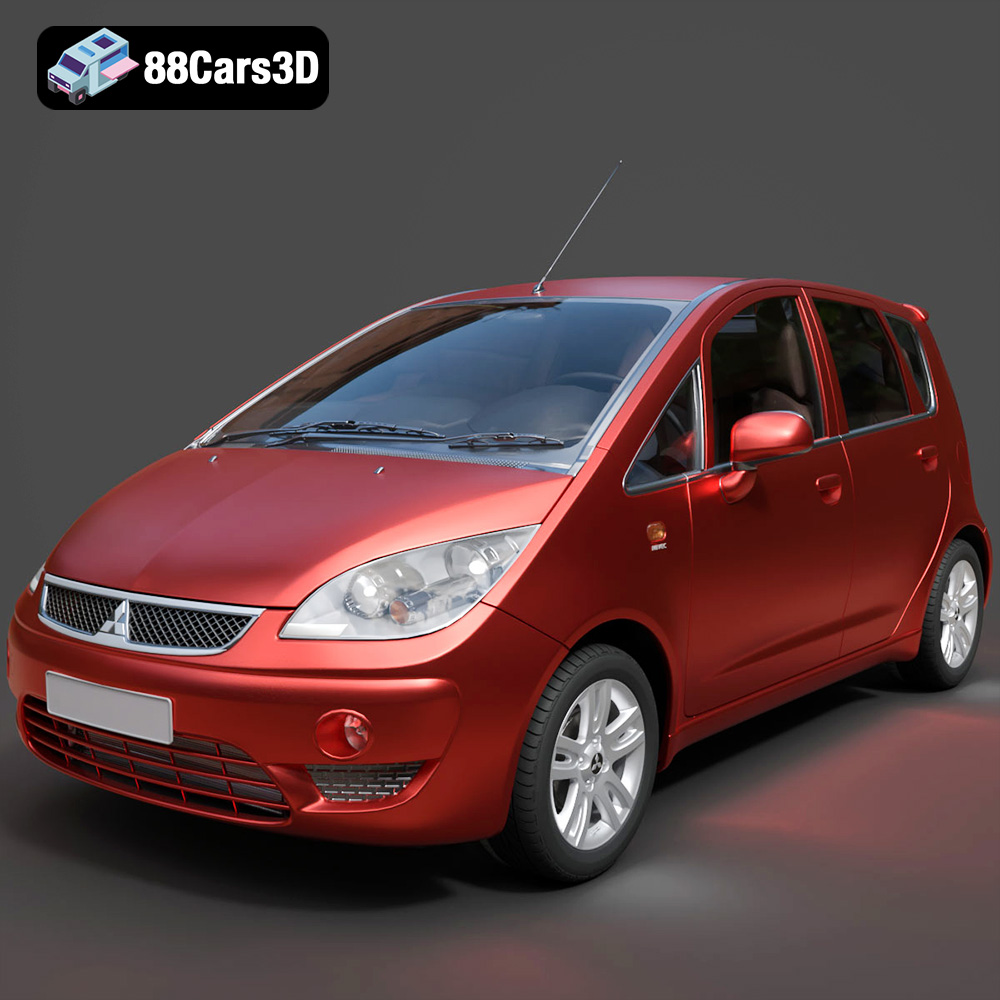
Texture: Yes
Material: Yes
Download the Mitsubishi Colt 2025 3D Model featuring clean geometry, realistic detailing, and a fully modeled interior. Includes .blend, .fbx, .obj, .glb, .stl, .ply, .unreal, and .max formats for rendering, simulation, and game development.
Price: $4.99

