⚡ FLASH SALE: Get 60% OFF All Premium 3D & STL Models! ⚡

The world of 3D visualization is a dynamic and ever-evolving landscape, and nowhere is this more evident than in the creation and application of high-quality 3D car models. From the sleek curves of an automotive design concept to the adrenaline-pumping races in a video game, or the immersive experience of an AR/VR showroom, realistic 3D vehicles are central to captivating audiences and communicating ideas with unparalleled clarity. However, achieving true fidelity and performance across such diverse platforms is no simple feat. It demands a deep technical understanding of modeling, texturing, rendering, and optimization workflows.
This comprehensive guide delves into the intricate technical details behind crafting, preparing, and utilizing 3D car models for a myriad of professional applications. We’ll navigate the foundational principles of clean topology, demystify advanced UV mapping and PBR material creation, explore the art of photorealistic rendering, and unlock the secrets to optimizing assets for real-time game engines and interactive AR/VR experiences. Whether you’re a seasoned 3D artist, an aspiring game developer, an automotive designer, or a visualization specialist, this article will equip you with the knowledge and actionable insights to elevate your projects and bring your automotive visions to life with stunning realism and efficiency.
At the heart of any high-quality 3D car model lies impeccable topology and edge flow. These are not merely aesthetic considerations; they are fundamental technical requirements that dictate how your model deforms, subdivides, and receives textures and lighting. For complex, curved surfaces like those found on a car body, good topology ensures smooth shading, prevents artifacts, and facilitates seamless modifications down the line. A clean, quad-based mesh is the gold standard, free from n-gons and excessive triangles, especially in areas destined for subdivision.
The strategic placement of edge loops is critical for defining sharp creases, maintaining volume, and guiding the flow of light across the car’s body. Consider the sharp lines around a car’s grille, the subtle curves of its fenders, or the precise cut lines for doors and windows. Each of these details requires dedicated edge loops to hold the form when subdivision surface modifiers (like TurboSmooth in 3ds Max or Subdivision Surface in Blender) are applied. Without proper edge flow, these areas will appear soft, pinched, or distorted. Mastering this foundation is paramount for creating models that are both visually stunning and technically robust for any application.
Clean topology for automotive surfaces primarily revolves around maintaining an all-quad mesh structure. N-gons (faces with more than four edges) and isolated triangles can cause unpredictable shading, especially when models are smoothed or deformed. Triangles are acceptable in very flat, non-deforming areas or where geometry is dense and curvature is minimal, but quads should always be the priority. Edge loops must follow the natural contours and design lines of the car, acting as guides for the curvature. For instance, around a wheel arch, an appropriate number of edge loops should radiate outwards and inwards to define the smooth curve, preventing faceted appearances even at lower subdivision levels.
Poles—vertices where more or less than four edges meet—require careful management. A 3-edge pole (a tri-pole) can be useful for reducing edge flow, while a 5-edge pole (a star pole) can introduce pinching if not placed on a flat area or where the surface changes direction subtly. For car models, it’s a best practice to keep poles away from prominent, smoothly curving surfaces. Specific details like door gaps, hood lines, and panel seams demand tight edge loops running parallel to them to create crisp, defined edges. Workflow often involves block-modeling the primary shapes, then refining details with edge-loop insertion, extrusion, and bridging techniques within software like 3ds Max, Blender, or Maya. For a high-resolution render asset, a typical car body might easily exceed 200,000 polygons, with internal components pushing the total towards 500,000 or even higher, all while maintaining excellent topology for optimal performance under subdivision.
Beyond static renders, many 3D car models are destined for animation or interactive experiences where components like doors, hoods, and trunks need to open and close smoothly. Optimal edge flow ensures that these parts deform correctly and pivot around their intended axes without visual glitches. For instance, the topology around a door hinge must be constructed to allow for clean rotation, often requiring specific edge loops that terminate gracefully or redirect the flow around the pivot point. The geometry defining the gaps between panels is crucial; these edge loops must remain parallel and evenly spaced to maintain a consistent gap width during movement.
Furthermore, edge flow impacts how ambient occlusion and normal maps are baked and displayed, directly affecting realism. Poor edge flow can lead to artifacts like “pinching” or “creasing” when a normal map attempts to represent curvature that isn’t cleanly supported by the underlying mesh. For game assets or simulations, where real-time deformation might occur (e.g., suspension compression, crash damage), carefully planned edge flow allows for more predictable and visually pleasing deformations. Professionals often target polygon counts for game-ready assets ranging from 50,000 to 150,000 triangles for an entire car, including interior and wheels, demanding even more thoughtful edge flow to retain crucial visual detail at a lower budget while still allowing for potential animation and physical interaction.
Once a 3D car model’s topology is solid, the next crucial step is to prepare it for receiving detailed surface information through UV mapping and then crafting those surfaces with realistic PBR (Physically Based Rendering) materials. UV mapping is the process of unwrapping the 3D surface into a 2D space, allowing textures to be applied accurately without stretching or distortion. Without proper UVs, even the most exquisitely modeled car will look amateurish. PBR materials, on the other hand, define how light interacts with the car’s surfaces in a physically accurate manner, crucial for achieving photorealism in renders and consistency across different lighting conditions.
The complexity of a car’s geometry—with its numerous panels, distinct materials (paint, glass, chrome, rubber, plastic), and intricate details—makes UV mapping a meticulous task. Similarly, creating realistic PBR materials requires an understanding of how light behaves on different surfaces, translating real-world properties into digital texture maps like Base Color, Metallic, Roughness, Normal, and Ambient Occlusion. These two processes are intrinsically linked: efficient UVs enable high-quality textures, and detailed textures breathe life into the model’s surfaces, transforming raw geometry into a convincing digital vehicle.
Effective UV mapping for a 3D car model is about minimizing distortion, maximizing texture space utilization, and logically organizing UV shells for ease of texturing. Given a car’s varied surfaces, a combination of unwrapping techniques is often necessary. Planar mapping is suitable for flat panels, cylindrical mapping for tires, and spherical mapping for rounder components like headlights. For the main body panels, a method akin to “pelt mapping” or “unwrap by seams” in software like 3ds Max, Blender, or dedicated tools like RizomUV, allows artists to cut seams along logical edges (like panel gaps) and flatten the geometry with minimal stretching. The goal is to create UV shells that are as uniform in density as possible, ensuring consistent texture resolution across the model.
For complex models with numerous components, using multiple UV sets or UV atlases is a common strategy. An atlas combines several smaller textures into one larger image, reducing draw calls in game engines and optimizing memory usage. For example, all interior textures (dashboard, seats, trim) might be atlased into one 4K or 8K texture, while the car body paint could have its own dedicated 4K or 8K texture. Managing texture density is vital; a small bolt shouldn’t consume as much UV space as a large body panel unless it requires extreme close-up detail. Professional artists meticulously pack UV shells to ensure maximum space efficiency, often achieving 70-80% UV utilization within a texture square, leaving minimal unused areas. For rendering purposes, texture resolutions can go up to 8K or even 16K for hero shots, while game-ready models often utilize 2K to 4K textures to balance visual quality with performance demands.
Physically Based Rendering (PBR) has revolutionized the way materials are created, offering a more predictable and realistic representation of how light interacts with surfaces. For 3D car models, this means understanding and accurately replicating properties like reflectivity, roughness, and metallicity. The core PBR textures typically include: Base Color (Albedo), which defines the diffuse color without lighting information; Metallic, indicating whether a surface is metallic or dielectric; Roughness, controlling the microscopic surface imperfections that scatter light; Normal Map, adding intricate surface detail without increasing polygon count; and Ambient Occlusion (AO), simulating contact shadows.
Creating realistic car paint is a complex PBR endeavor. It usually involves a layered shader system: a base coat (diffuse color, metallic flakes, roughness), a clear coat (specular reflection, its own roughness, and perhaps a subtle normal map for orange peel effect), and possibly additional layers for dirt, scratches, or wear. Glass materials require accurate transmission, refraction, and reflection settings, often with subtle tinting. Rubber for tires needs a specific dark, rough, and slightly matte appearance, while chrome demands high metallic values with very low roughness. Software like Substance Painter, Quixel Mixer, or the advanced material editors in Corona, V-Ray, Cycles, and Arnold are indispensable for generating these intricate texture maps and building complex shader networks. By carefully adjusting these parameters and leveraging high-resolution textures, artists can achieve an astonishing level of photorealism, making the digital car indistinguishable from its real-world counterpart.
Even with a perfectly modeled and textured 3D car, the final image’s impact heavily relies on the quality of its lighting and rendering. Automotive visualization demands a keen eye for photographic realism, requiring careful consideration of light sources, environment, camera settings, and render engine capabilities. The goal is often to emulate professional photography studios or real-world outdoor scenes, highlighting the car’s design, form, and material properties.
Achieving this level of realism involves more than just dropping a few lights into a scene. It’s about understanding how light interacts with the car’s reflective surfaces, how shadows define its contours, and how the overall environment contributes to the mood and credibility of the image. From the subtle nuances of studio lighting to the complex interplay of natural light in an HDRI environment, every decision in the rendering workflow contributes to the final, polished result. Leveraging the power of modern render engines and their advanced features is key to producing stunning, photorealistic automotive renders that captivate and convince.
For high-end automotive renders, two primary lighting approaches dominate: studio lighting and High Dynamic Range Image (HDRI) environments, often used in combination. Studio lighting typically involves a controlled setup with key lights, fill lights, and rim lights, mimicking a professional car photoshoot. Large area lights or softboxes are often employed to create broad, soft reflections that emphasize the car’s curves without harsh hotspots. A classic three-point lighting setup provides a solid foundation: a primary light source (key), a softer secondary light to fill shadows (fill), and a light from behind to create highlights and separate the car from the background (rim). For complex car bodies, additional strip lights or large diffusion panels are common to create long, elegant reflections across the paintwork.
HDRI environments offer an incredibly efficient way to simulate realistic global illumination and reflections from real-world locations. By wrapping a high-dynamic-range panoramic image around the scene, the car automatically picks up accurate lighting and reflection information from that environment, whether it’s an overcast sky, a bustling city street, or a serene sunset. The intensity and color temperatures encoded within the HDRI provide a natural and convincing lighting setup, significantly reducing the need for manual light placement. When integrating a car into a photographic backplate, using an HDRI captured from the same location is crucial for seamless blending. Physically accurate camera settings (f-stop, shutter speed, ISO, white balance) within the render engine are also essential to match the look of real-world photography and create depth of field or motion blur effects.
Modern render engines each bring their unique strengths to automotive visualization. Corona Renderer and V-Ray, often used with 3ds Max or Cinema 4D, are renowned for their physically accurate light transport and ease of use, producing incredibly realistic results with minimal setup. Corona is praised for its intuitive interface and unbiased rendering, while V-Ray offers extensive features, including powerful light mix capabilities and GPU rendering. Blender’s Cycles and Arnold Renderer (often with Maya or 3ds Max) are also industry powerhouses, known for their robust unbiased rendering and advanced material systems, capable of handling complex scenes and producing cinematic-quality output. Key features for automotive work across these engines include accurate global illumination, realistic caustics for headlights and glass, subsurface scattering for materials like rubber or car interior plastics, and volumetrics for atmospheric effects.
Render optimization is crucial for efficiency, especially with complex automotive scenes. Techniques include optimizing scene geometry (removing hidden faces, instancing duplicate objects), streamlining material complexity, and judiciously using rendering settings. While higher sample counts generally lead to cleaner images, modern denoisers (like NVIDIA OptiX or Intel Open Image Denoise) can significantly reduce render times by intelligently cleaning up noise, allowing for lower sample counts. Furthermore, managing render passes (e.g., separate passes for diffuse, reflection, specular, ambient occlusion, Z-Depth) is vital for flexible post-processing, giving artists fine-grained control over the final image. When sourcing high-quality, pre-made assets, platforms like 88cars3d.com provide models specifically optimized for these render engines, often including scene setups, materials, and textures, which dramatically streamlines the rendering workflow and ensures professional-grade results from the outset.
While photorealistic renders prioritize visual fidelity above all else, 3D car models intended for real-time environments like video games, simulations, or interactive configurators must strike a delicate balance between visual quality and performance. Game engines like Unity and Unreal Engine demand highly optimized assets to maintain high frame rates and a smooth user experience. This means dramatically reducing polygon counts, optimizing texture usage, minimizing draw calls, and creating specialized assets like collision meshes and Levels of Detail (LODs). Without proper optimization, even a single high-fidelity car model can cripple a game’s performance, leading to stuttering frame rates and a frustrating user experience.
The transition from a render-ready model to a game-ready asset involves a strategic dismantling and rebuilding process, where every piece of geometry, every texture, and every material is scrutinized for its performance impact. This meticulous approach ensures that the car not only looks great but also performs flawlessly within the constraints of real-time rendering, delivering a responsive and immersive interactive experience to players and users.
One of the most critical optimization techniques for game-ready 3D car models is the implementation of Levels of Detail (LODs). LODs are simplified versions of the model that are swapped in as the camera moves further away from the object. This dramatically reduces the polygon count of objects that are less prominent on screen, saving processing power without a noticeable loss in visual quality. A typical car might have 3-4 LOD levels:
Creating LODs often involves decimation tools like ProOptimizer in 3ds Max or Blender’s Decimate modifier, or dedicated solutions like Simplygon. The key is to reduce polygons while preserving essential silhouettes and projected detail (which can be baked into normal maps). Target polygon counts vary significantly based on the game platform (mobile vs. high-end PC/console) and the car’s role (main player vehicle vs. background traffic). Each component of the car, such as wheels, mirrors, and interior parts, also needs its own LOD strategy, ensuring that the overall budget for the entire vehicle remains within performance limits.
Beyond polygon count, texture usage and draw calls are major performance bottlenecks in game engines. A “draw call” is a command from the CPU to the GPU to draw an object. Each material and texture typically incurs a new draw call. By combining multiple smaller textures into a single larger “texture atlas,” artists can drastically reduce the number of materials and, consequently, draw calls per car model. For example, instead of having separate 1K textures for the dashboard, seats, and steering wheel, these can all be unwrapped and packed into a single 4K texture atlas. This optimization is crucial for achieving high frame rates, especially when many cars are on screen simultaneously.
Another essential element for game-ready cars is a simplified collision mesh. The high-detail visual mesh is too complex for physics calculations. Instead, a separate, low-polygon, convex mesh is created to handle collisions accurately and efficiently. This mesh is often invisible but defines the physical boundaries of the car. Furthermore, baking detailed normal maps and ambient occlusion maps from the high-polygon render model onto the low-polygon game mesh is critical for retaining visual fidelity without the performance cost of high poly counts. This process transfers surface details like panel lines, bolts, and subtle bumps directly into a texture, allowing the low-poly model to appear highly detailed. Tools within Unity and Unreal Engine facilitate the import and setup of these optimized assets, along with features like vertex colors for subtle detail or material blending, enabling artists to create stunning yet performant car models.
The versatility of 3D car models extends far beyond traditional renders and game engines. They are increasingly being utilized in augmented and virtual reality (AR/VR) experiences for interactive showrooms, training simulations, and product configurators. Additionally, 3D printing offers the exciting prospect of bringing digital car models into the physical world as prototypes, collectibles, or educational aids. Each of these applications, however, comes with its own unique set of technical requirements, constraints, and preferred file formats. Understanding these nuances is critical for preparing your 3D assets to perform optimally and flawlessly in these diverse environments.
Navigating the landscape of various file formats and ensuring compatibility across different software and platforms is another crucial aspect of professional 3D car model management. Choosing the right format for export and understanding its implications for materials, animations, and scene data can save immense time and prevent headaches down the line. As the demand for versatile 3D assets grows, so does the importance of mastering these advanced applications and technical considerations.
AR/VR applications demand extreme performance optimization, often even more stringent than traditional video games, due to the need for a sustained high frame rate (typically 90 FPS or higher) to prevent motion sickness and ensure immersion. For 3D car models in AR/VR, this translates to drastically reduced polygon counts (often targeting under 50,000 triangles for an entire car, including interior, for standalone VR headsets), highly optimized PBR materials with minimal texture memory usage, and efficient draw calls. Simplified shaders, optimized real-time reflections (e.g., screen-space reflections or baked reflection probes), and baked lighting are preferred over fully dynamic solutions to maintain performance.
Key file formats for AR/VR include GLB (glTF) for web-based AR/VR and cross-platform compatibility, and USDZ for Apple’s AR Quick Look on iOS devices. These formats are designed to be compact and efficient for real-time rendering, embedding textures and animations directly within a single file. When preparing models for AR/VR, it’s also important to consider the user experience: scale must be accurate, interactions intuitive, and any animations (like opening doors) must be smooth and performant. Asset quality, even with aggressive optimization, remains crucial, which is why platforms like 88cars3d.com offer models often prepared with optimization in mind, providing clean meshes and PBR textures suitable for further AR/VR refinement.
Transitioning a digital 3D car model into a physical object via 3D printing introduces an entirely different set of technical requirements. The most critical aspect is ensuring the mesh is “watertight” or “manifold.” This means the model must be a completely enclosed volume with no gaps, holes, inverted normals, or non-manifold edges (edges shared by more than two faces). These issues, invisible in rendering, will cause printing errors. Software like Autodesk Meshmixer or Netfabb are invaluable for mesh repair, identifying and fixing these topological flaws.
Other considerations include wall thickness – parts of the model must be thick enough to be physically printable and durable (typically 1-2mm minimum, depending on the material and printer). Internal geometry that isn’t intended to be visible needs to be removed or simplified to save material and print time. Units and scale must be consistent with the desired physical output. The primary file formats for 3D printing are STL (StereoLithography) and OBJ. STL is a simple, universal format for mesh data, while OBJ can also store color information. For colored prints, VRML or AMF formats might be used. It’s a fundamental shift from visual perfection to structural integrity, demanding a different kind of mesh cleanup and preparation than for digital display.
The ecosystem of 3D file formats can be complex, and understanding their strengths and limitations is key to a smooth workflow.
When exporting, always pay attention to settings like embedding textures, consolidating materials, and unit scale to prevent common conversion issues such as missing textures or incorrect sizing. Always verify the exported model in the target software. Reliable sources for 3D car models, such as 88cars3d.com, often provide models in multiple common formats like FBX, OBJ, and native formats, ensuring maximum compatibility and ease of integration into various professional pipelines.
To truly elevate 3D car models to a professional standard and streamline production workflows, artists often employ a range of advanced techniques. Beyond the core modeling and texturing, the subtle art of lighting, the transformative power of post-processing, and efficient asset management practices contribute significantly to the final quality and efficiency of a project. These techniques move beyond mere technical execution to embrace the creative and logistical aspects of 3D production, allowing artists to achieve unparalleled realism and maintain a high level of consistency across their work.
Mastering these advanced methods allows artists to add that crucial layer of polish and impact that distinguishes good renders from truly exceptional ones. It’s about understanding how every element, from a precisely placed light to a nuanced color grade, contributes to the overall narrative and visual appeal of the 3D car model, ensuring that the final output resonates with the audience and meets the highest industry standards.
While HDRIs provide an excellent baseline, achieving truly dynamic and impactful lighting often involves augmenting or even replacing them with advanced physically-based sky models and carefully placed light sources. Modern sky models can simulate time of day, cloud cover, and atmospheric scattering with great accuracy, providing dynamic shadows and changing light conditions that enhance realism. Creative placement of additional area lights, spotlights, or volumetric effects (like fog or haze) can strategically highlight design features, create dramatic mood, or simulate specific weather conditions, adding depth and narrative to the scene.
Camera parameters like depth of field and motion blur are essential for photographic realism. A subtle depth of field can draw the viewer’s eye to specific parts of the car, while motion blur can convincingly portray speed and movement. Integrating environmental storytelling through props, carefully chosen backdrops, and even subtle ground imperfections helps to ground the car in its setting, making the scene more believable. This deliberate control over every light source, shadow, and environmental element allows artists to craft a powerful visual narrative around the 3D car model, making it a hero in its own right.
The render coming straight out of the 3D software is rarely the final image. Professional automotive visualization heavily relies on post-processing and compositing in applications like Adobe Photoshop or After Effects to achieve a polished, magazine-quality look. This involves non-destructive adjustments to exposure, contrast, color balance, and saturation, often using render passes. Modern render engines can output various passes (e.g., Diffuse, Reflection, Specular, Ambient Occlusion, Z-Depth, Alpha, Beauty Pass) which provide granular control during compositing. For instance, the reflection pass can be isolated and adjusted to fine-tune the intensity of reflections, or the ambient occlusion pass can be used to subtly enhance contact shadows.
Advanced post-processing techniques include adding subtle lens flares, film grain, chromatic aberration, or vignetting to mimic real-world camera artifacts, enhancing realism. Compositing the rendered car onto a photographic backplate requires meticulous attention to perspective, lighting, and color matching to ensure a seamless blend. Color grading, a critical step, defines the overall mood and aesthetic of the image, transforming raw renders into captivating visuals. By treating rendering as the first step in a two-part process (rendering + post-production), artists gain immense creative control and can achieve cinematic quality, bringing their 3D car models to life in truly professional presentations.
For any serious 3D project, efficient asset management is not just a convenience, it’s a necessity. This involves systematically organizing project files, textures, models, and references in a logical folder structure. Consistent naming conventions for files and objects within the 3D scene (e.g., “Car_Body_LOD0,” “Wheel_FrontRight,” “Material_CarPaint_Red”) are crucial for quick identification, team collaboration, and avoiding confusion. Implementing version control, even a simple manual system of incremental saves (e.g., “CarModel_v01,” “CarModel_v02”), helps track changes and provides fallback options.
Another powerful workflow enhancement comes from leveraging high-quality pre-made assets. Instead of modeling every minor component from scratch, utilizing a library of meticulously crafted 3D assets can significantly accelerate production time. Platforms like 88cars3d.com specialize in providing professionally modeled and textured 3D car models, often optimized for various applications and provided in multiple formats. Incorporating such assets means artists can focus their time on unique design challenges, complex rendering setups, or innovative interactive experiences, rather than reinventing the wheel for standard components. This strategic use of external resources, combined with disciplined internal organization, forms the backbone of an efficient and high-quality 3D production pipeline.
The journey through the creation, optimization, and application of high-quality 3D car models is a testament to the blend of technical prowess and artistic vision required in modern 3D production. We’ve explored the critical importance of foundational elements like clean topology and intelligent edge flow, which ensure models deform beautifully and render flawlessly. We delved into the intricacies of UV mapping and PBR material creation, bringing surfaces to life with stunning realism. From the controlled environments of photorealistic rendering to the demanding performance requirements of game engines and interactive AR/VR experiences, we’ve outlined the specialized workflows and optimization strategies essential for each application.
Whether preparing models for physical production via 3D printing or navigating the complexities of various file formats, the depth of technical knowledge required is immense. Yet, with a disciplined approach to asset management, smart use of advanced lighting and post-processing, and a commitment to continuous learning, any artist or studio can achieve exceptional results. The demand for realistic and versatile 3D car models will only continue to grow across industries. By understanding and applying the techniques discussed here, you are well-equipped to meet this demand, creating immersive visualizations and interactive experiences that stand out. To jumpstart your next project with a strong foundation, consider exploring the diverse range of professionally crafted 3D car models available on platforms dedicated to quality assets, ensuring your work always begins with excellence.

Texture: Yes
Material: Yes
Download the Nissan Fuga 2003 3D Model featuring clean geometry, realistic detailing, and a fully modeled interior. Includes .blend, .fbx, .obj, .glb, .stl, .ply, .unreal, and .max formats for rendering, simulation, and game development.
Price: $4.99
Texture: Yes
Material: Yes
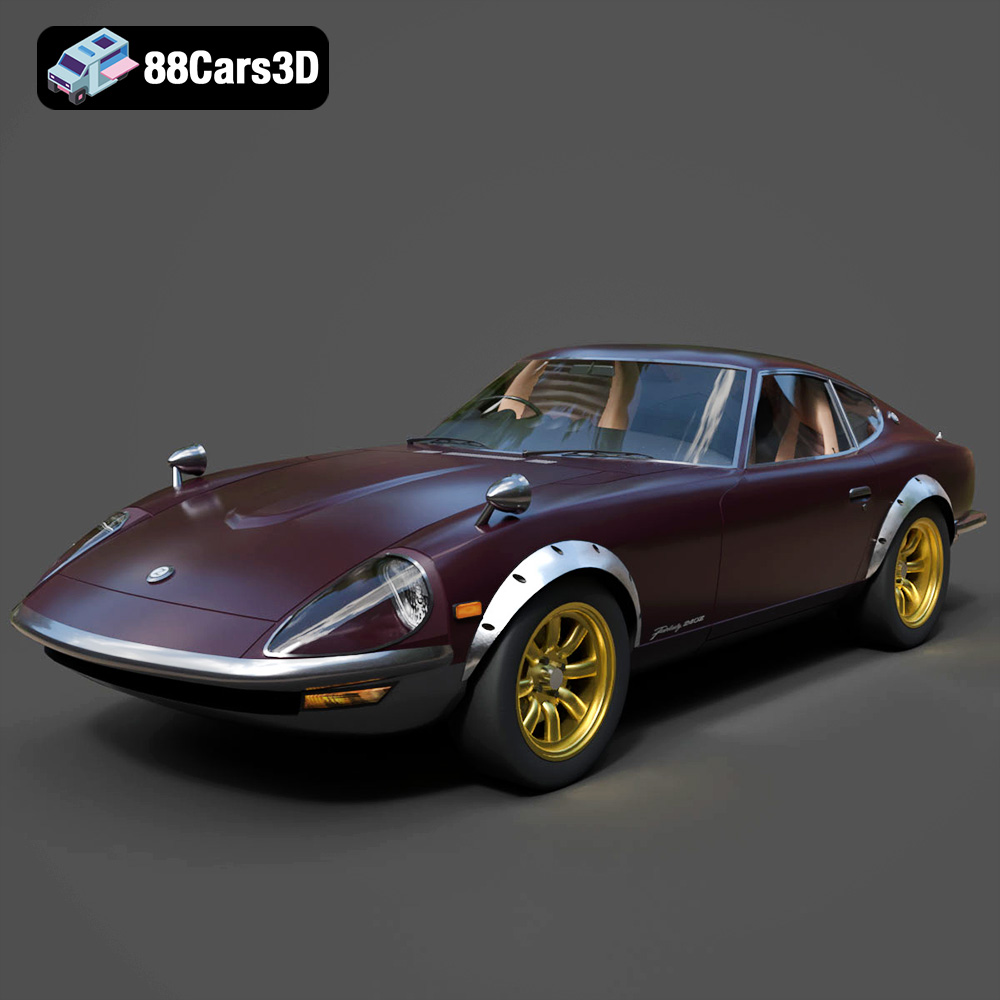
Download the Nissan FairLady 240ZG 3D Model featuring clean geometry, realistic detailing, and a fully modeled interior. Includes .blend, .fbx, .obj, .glb, .stl, .ply, .unreal, and .max formats for rendering, simulation, and game development.
Price: $4.99
Texture: Yes
Material: Yes
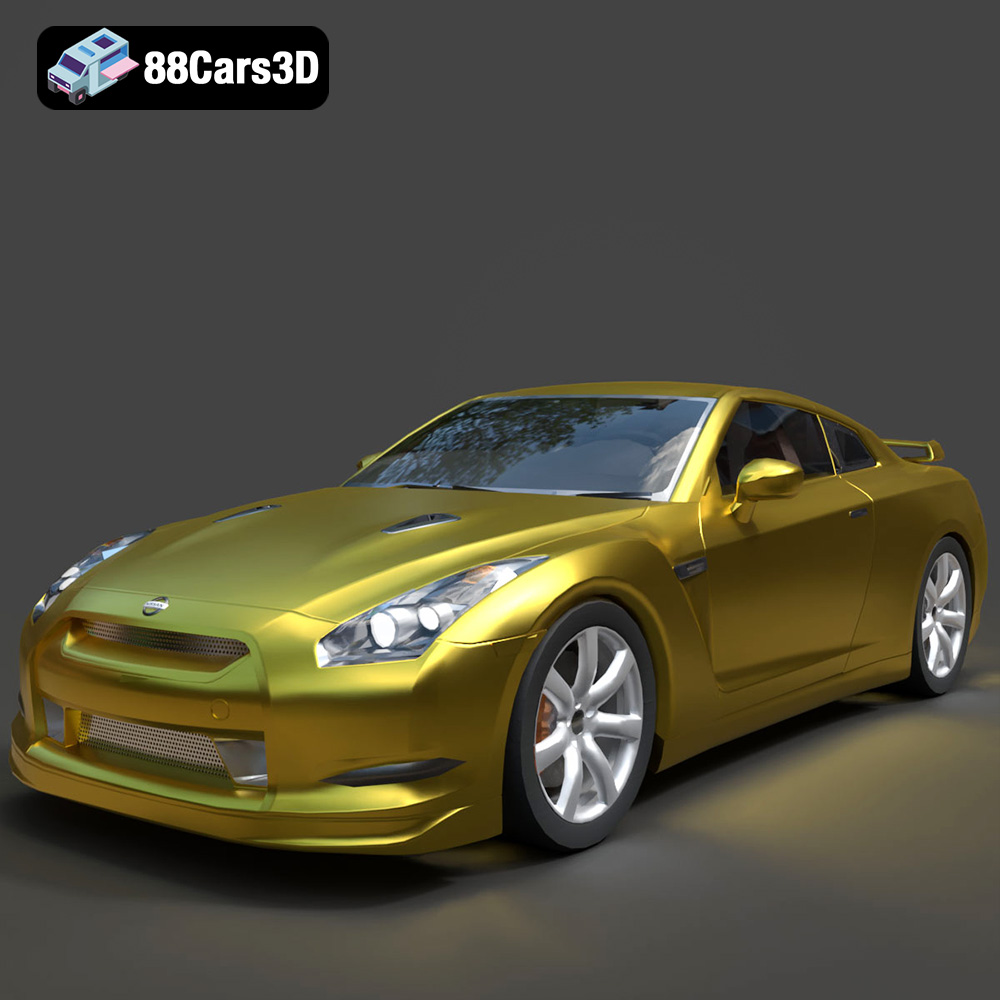
Download the Nissan GT-R 2008 3D Model featuring clean geometry, realistic detailing, and a fully modeled interior. Includes .blend, .fbx, .obj, .glb, .stl, .ply, .unreal, and .max formats for rendering, simulation, and game development.
Price: $4.99

Texture: Yes
Material: Yes
Download the Nissan Cube 3D Model featuring clean geometry, realistic detailing, and a fully modeled interior. Includes .blend, .fbx, .obj, .glb, .stl, .ply, .unreal, and .max formats for rendering, simulation, and game development.
Price: $4.99

Texture: Yes
Material: Yes
Download the Nissan Cedric Y32 3D Model featuring clean geometry, realistic detailing, and a fully modeled interior. Includes .blend, .fbx, .obj, .glb, .stl, .ply, .unreal, and .max formats for rendering, simulation, and game development.
Price: $4.99

Texture: Yes
Material: Yes
Download the Nissan Cima Infiniti Q45 2007 3D Model featuring clean geometry, realistic detailing, and a fully modeled interior. Includes .blend, .fbx, .obj, .glb, .stl, .ply, .unreal, and .max formats for rendering, simulation, and game development.
Price: $4.99

Texture: Yes
Material: Yes
Download the Nissan Juke 2025 3D Model featuring clean geometry, realistic detailing, and a fully modeled interior. Includes .blend, .fbx, .obj, .glb, .stl, .ply, .unreal, and .max formats for rendering, simulation, and game development.
Price: $4.99
Texture: Yes
Material: Yes
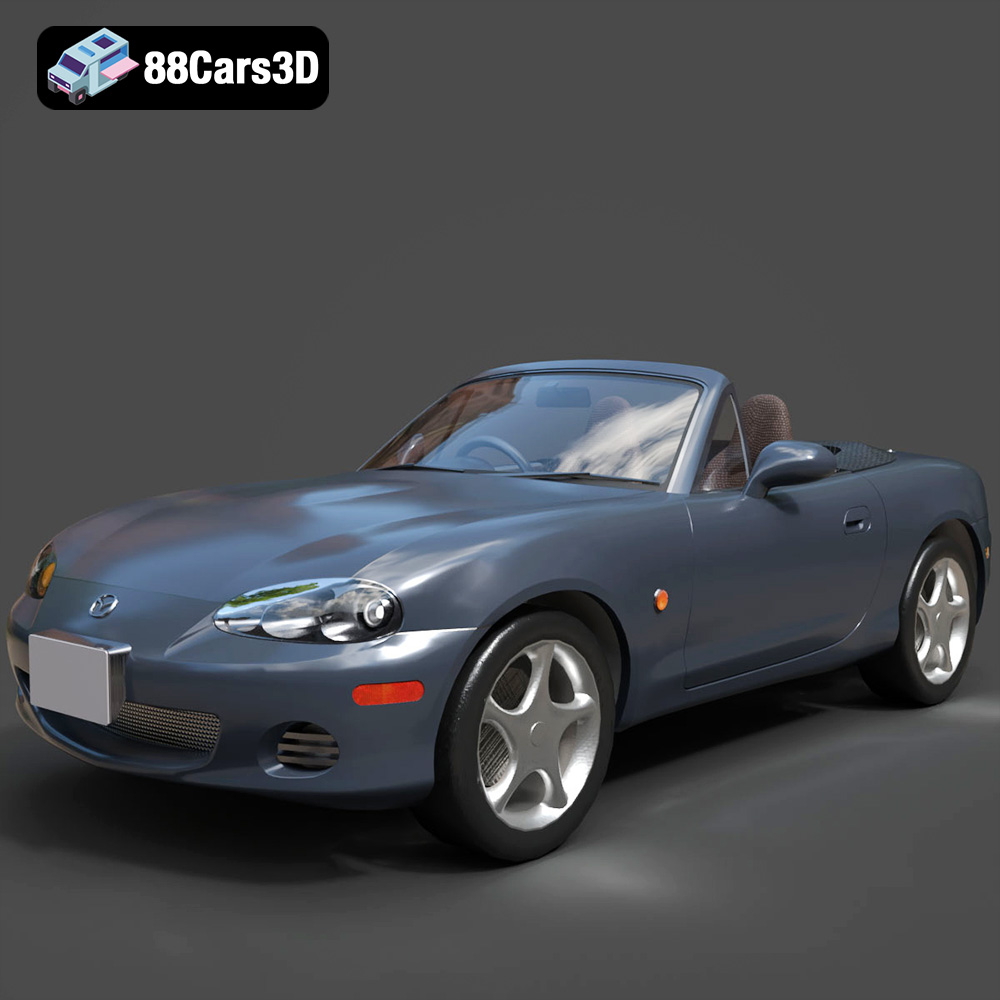
Download the Mazda MX-5 2025 3D Model featuring clean geometry, realistic detailing, and a fully modeled interior. Includes .blend, .fbx, .obj, .glb, .stl, .ply, .unreal, and .max formats for rendering, simulation, and game development.
Price: $4.99

Texture: Yes
Material: Yes
Download the Nissan Maxima 2009 3D Model featuring clean geometry, realistic detailing, and a fully modeled interior. Includes .blend, .fbx, .obj, .glb, .stl, .ply, .unreal, and .max formats for rendering, simulation, and game development.
Price: $4.99
Texture: Yes
Material: Yes
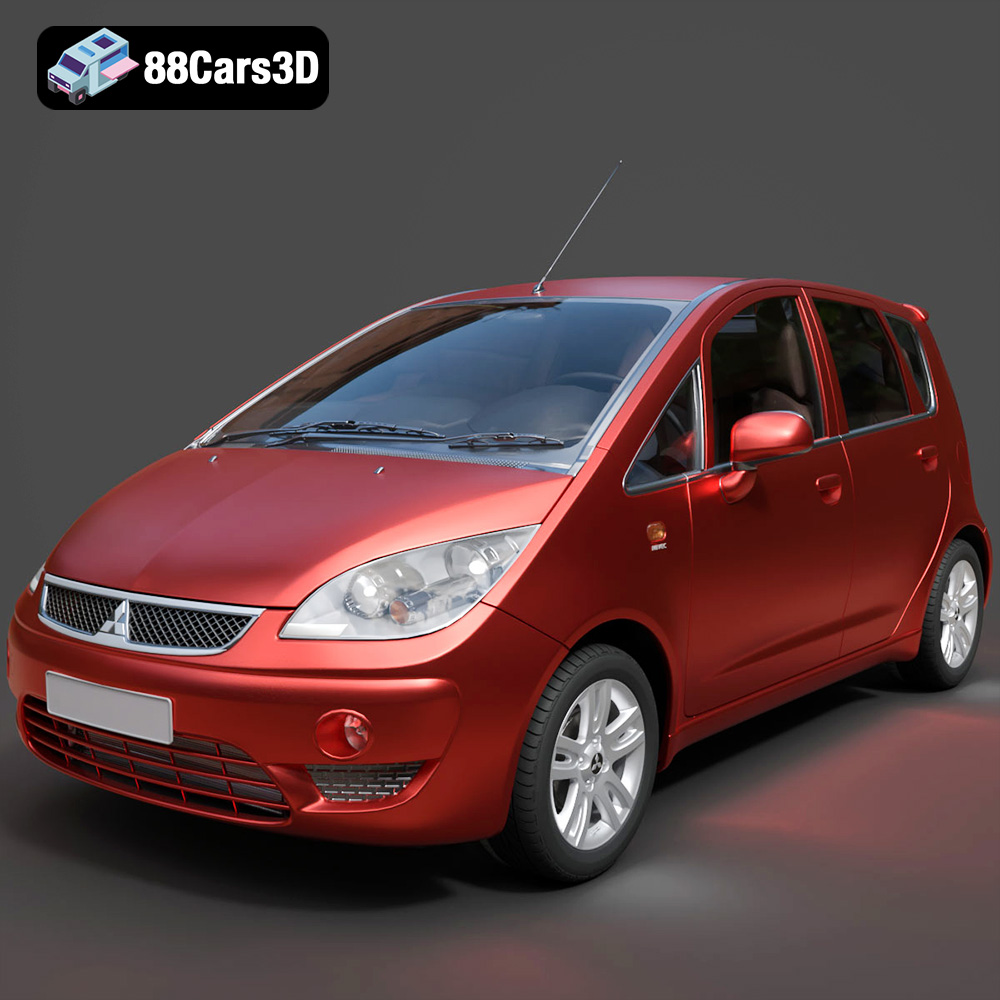
Download the Mitsubishi Colt 2025 3D Model featuring clean geometry, realistic detailing, and a fully modeled interior. Includes .blend, .fbx, .obj, .glb, .stl, .ply, .unreal, and .max formats for rendering, simulation, and game development.
Price: $4.99

