⚡ FLASH SALE: Get 60% OFF All Premium 3D & STL Models! ⚡

The automotive industry has always been at the forefront of innovation, and in the digital age, this extends deeply into the realm of 3D. From conceptual design and engineering visualization to high-fidelity marketing renders, immersive game environments, and interactive AR/VR experiences, high-quality 3D car models are the undisputed backbone. However, creating and optimizing these complex assets requires a blend of artistic skill, technical precision, and a deep understanding of specialized workflows.
This comprehensive guide delves into the intricate world of crafting professional 3D car models. We’ll journey through the entire pipeline, starting from the foundational principles of clean topology and efficient UV mapping, moving into the nuanced art of PBR material creation and photorealistic rendering. We’ll then pivot to critical optimization strategies for game engines and immersive platforms, exploring various file formats and even preparing models for the physical world through 3D printing. Whether you’re a seasoned 3D artist, a game developer, an automotive designer, or a student aspiring to master digital automotive creation, understanding these technical intricacies is paramount to achieving stunning, performant, and versatile results. Prepare to elevate your craft and unlock the full potential of your 3D automotive projects.
The bedrock of any high-quality 3D car model is its topology and edge flow. These are not merely technical terms but fundamental principles that dictate how a model looks, deforms, and interacts with lighting. Automotive surfaces, characterized by their smooth, reflective curves and sharp, precise panel gaps, demand an exceptionally clean and intentional approach to mesh construction. Poor topology can lead to artifacts, pinching, and an inability to achieve photorealistic renders or smooth deformations, making it a critical first step in the 3D modeling workflow.
A good automotive mesh is predominantly composed of quads (four-sided polygons), as these provide the most predictable and controllable surface behavior. Triangles, while sometimes unavoidable in very dense or specific areas, should be minimized, especially on large, smooth surfaces, as they can cause uneven shading and distort reflections. N-gons (polygons with more than four sides) are generally to be avoided entirely, as they are non-planar and lead to unpredictable shading and errors in subsequent operations like subdivision surfacing. The goal is to create a mesh where every polygon contributes meaningfully to the model’s form, ensuring that subdividing the mesh results in a smoother, more detailed, and accurate representation of the vehicle’s design without introducing unwanted lumps or creases.
Edge flow refers to the direction and continuity of edges within your mesh. For automotive models, strategic edge flow is crucial for defining sharp creases, accurate panel gaps, and intricate details like vents or headlights. Loops of edges should follow the natural contours and design lines of the car, guiding the surface where it needs to be taut and where it needs to curve smoothly.
Once your 3D car model boasts impeccable topology, the next critical step is UV mapping. UVs are the 2D coordinates that tell your software how to project 2D textures onto the 3D surface of your model. For complex objects like cars, with their diverse materials, intricate details, and large, smooth surfaces, effective UV mapping is paramount. Poor UVs can lead to stretched textures, visible seams, or inefficient use of texture space, severely impacting the realism and performance of your model. The goal is to create a clean, organized, and distortion-free UV layout that maximizes texture fidelity and facilitates efficient material application.
The complexity of a car’s surface, with its numerous components (body, interior, wheels, glass, lights), necessitates a thoughtful approach to UV unwrapping. You can’t simply project a single texture across the entire vehicle; instead, you need to segment the model into logical UV islands. These islands are then laid out in a 2D UV space, often referred to as a UV atlas or UV sheet. The quality of this atlas directly affects how crisp and detailed your textures will appear, especially when aiming for photorealistic results or when optimizing for real-time engines where texture memory is a precious resource. Platforms like 88cars3d.com ensure their models come with professional, production-ready UVs, saving artists valuable time and ensuring optimal texture application.
While generally avoiding overlapping UVs is a best practice for unique textures (like detailed paint scratches or custom decals), there are scenarios where overlapping is beneficial and even necessary.
With a perfectly modeled and UV-mapped car, the next transformative step is to bring its surfaces to life through realistic materials. Physically Based Rendering (PBR) has become the industry standard for achieving photorealistic results, accurately simulating how light interacts with different surfaces in the real world. This approach ensures that your 3D car models look consistent and believable under various lighting conditions, whether in a studio render, a dynamic game environment, or an augmented reality experience. Mastering PBR involves understanding core material properties and how to translate real-world characteristics into digital shader networks.
PBR materials are built upon a set of texture maps that define how light reacts to a surface, rather than merely defining its color. These maps (like Albedo, Normal, Roughness, Metallic, Ambient Occlusion) are generated or painted based on real-world physics and material properties. This consistency is why a PBR-textured car will look correct whether rendered in Corona, V-Ray, Cycles, or displayed in Unity or Unreal Engine, provided the PBR workflow (Metallic-Roughness or Specular-Glossiness) is respected. The complexity of a car, with its interplay of glossy paint, reflective chrome, transparent glass, and textured rubber, demands a deep dive into sophisticated shading techniques.
The two primary PBR workflows are Metallic-Roughness and Specular-Glossiness. While both aim for physical accuracy, they define material properties slightly differently:
This workflow is dominant in game engines (Unity, Unreal Engine) and many rendering packages (Blender Cycles, Substance Painter).
This workflow is common in renderers like V-Ray and Arnold, particularly for older assets or specific production pipelines.
Understanding which workflow your chosen renderer or engine uses is critical for accurate material setup and proper texture map generation.
Automotive models feature a diverse array of materials, each requiring a specialized approach to PBR shader construction:
By meticulously crafting these shader networks, leveraging the power of PBR, artists can imbue their 3D car models with a level of realism that truly captivates, making them ideal for high-end visualization or compelling marketing materials, much like the detailed assets found on 88cars3d.com.
The journey from a meticulously modeled and textured 3D car to a photorealistic image culminates in the rendering phase. This is where all the hard work in topology, UVs, and PBR materials comes together under the influence of light, camera, and environment to produce a compelling visual. Achieving photorealism isn’t just about applying a good renderer; it’s about understanding the subtle nuances of lighting, materials, and camera optics, and orchestrating them to mimic real-world photography and videography. The choice of renderer (Corona, V-Ray, Cycles, Arnold) will influence specific settings, but the underlying principles of good lighting and composition remain universal.
Renderers like Corona Renderer (known for its ease of use and physical accuracy), V-Ray (a long-standing industry standard for its versatility), Blender Cycles (integrated and powerful), and Arnold (favored in animation and VFX) each offer robust tools for achieving stunning results. Regardless of the specific software, the goal is to create an environment that accurately simulates how light would interact with the car in a real-world setting. This involves a delicate balance of direct and indirect illumination, precise camera settings, and thoughtful post-processing to enhance the final image. Many professional artists rely on these renderers to showcase the intricate details of high-quality 3D car models, just like those available for purchase at marketplaces such as 88cars3d.com.
Lighting is the single most critical factor in achieving photorealism. For automotive rendering, the way light interacts with the car’s reflective surfaces defines its shape, highlights its design, and conveys its material properties.
Just like in real photography, camera settings and post-production are vital for the final look and feel of your render.
By meticulously controlling each of these elements, from the placement of virtual light sources to the fine-tuning of camera settings and the final touches in post-processing, artists can create breathtakingly photorealistic visualizations of 3D car models that stand shoulder-to-shoulder with real-world photography.
While cinematic renders prioritize visual fidelity above all else, real-time applications like video games, AR/VR experiences, and interactive configurators demand a careful balance between visual quality and performance. A beautifully rendered 3D car model can bring a powerful workstation to its knees if not properly optimized for real-time engines. This section focuses on the critical techniques for making your 3D car models perform efficiently in environments like Unity and Unreal Engine, along with navigating the essential file formats for broad compatibility and diverse applications. Sourcing pre-optimized assets from platforms like 88cars3d.com can provide a significant head start here, as they often come game-ready.
The core challenge in real-time optimization is managing draw calls (the number of times the CPU tells the GPU to draw something) and polygon counts. Every additional polygon, texture map, and unique material adds to the computational load. Therefore, a strategic approach to reducing complexity without sacrificing perceived quality is essential. This often involves creating multiple versions of the model for different distances, combining textures, and streamlining materials. Furthermore, the ability to export your car models into various standardized file formats is crucial for seamless integration across different software, engines, and platforms, ensuring your asset has maximum utility and reach.
Game engines automatically swap between these LODs based on the camera’s distance, dramatically reducing the polygon count rendered at any given time.
The choice of file format dictates where and how your 3D car model can be used. Understanding their strengths and weaknesses is crucial for portability.
By mastering both optimization techniques and file format conversions, artists can ensure their 3D car models are not only visually stunning but also performant and versatile enough for any digital application, from cinematic renders to interactive AR experiences and physical prototypes.
The utility of high-quality 3D car models extends far beyond traditional renders and game environments. With the rapid evolution of technology, these digital assets are now crucial for immersive AR/VR experiences, rapid prototyping through 3D printing, and sophisticated real-world visualizations. Each of these applications presents unique technical demands and optimization challenges, requiring artists to adapt their workflows and considerations for the specific medium. Understanding these advanced applications is key to unlocking the full potential of your 3D automotive creations.
The shift from screen-based rendering to interactive and physical manifestations of 3D models introduces new constraints and opportunities. For AR/VR, the focus is on extreme performance optimization to maintain high frame rates and prevent motion sickness, while still delivering a compelling visual. For 3D printing, the concerns shift from pixels and polygons to real-world material properties, structural integrity, and manufacturing tolerances. By mastering these specialized preparation techniques, artists can ensure their 3D car models are not just digital representations but versatile tools capable of driving innovation across various industries, from automotive design to education and marketing.
Augmented Reality (AR) and Virtual Reality (VR) platforms demand an exceptionally lean approach to 3D asset creation due to the stringent performance requirements for real-time interaction and immersion. Maintaining a high frame rate (typically 60-90 FPS per eye) is crucial to avoid motion sickness and provide a comfortable user experience.
Transforming a digital 3D car model into a physical object via 3D printing requires a different set of technical considerations. The mesh needs to be perfectly “watertight” and structurally sound to be printable.
Tools like Blender’s 3D Print Toolbox, Meshmixer, or Netfabb are invaluable for checking and repairing these issues.
By mastering these specialized techniques, artists can transform their exquisite 3D car models, perhaps initially sourced from a diverse library like 88cars3d.com, into highly optimized assets for interactive AR/VR experiences or tangible prototypes through 3D printing, showcasing the incredible versatility and power of digital automotive design.
The journey through the creation, optimization, and application of high-quality 3D car models is a testament to the blend of artistry and technical mastery required in today’s digital landscape. We’ve explored the fundamental importance of clean topology and strategic edge flow for visually accurate surfaces, delved into the intricacies of UV mapping for efficient texturing, and unlocked the secrets of photorealistic PBR material creation and advanced shader networks. From orchestrating captivating lighting setups for cinematic renders to implementing rigorous optimization strategies for real-time game engines and immersive AR/VR experiences, every step plays a crucial role in bringing these complex machines to life.
Furthermore, understanding the nuances of various file formats ensures the portability and longevity of your assets across diverse platforms, while preparing models for 3D printing opens doors to physical prototyping and tangible design validation. Mastering these workflows not only elevates the visual fidelity of your automotive projects but also ensures their performance, versatility, and real-world applicability.
Whether you’re developing the next-generation racing game, crafting stunning marketing visuals, or innovating in automotive design and visualization, the principles outlined in this guide are your roadmap to success. Embrace continuous learning, experiment with different tools and techniques, and always strive for precision in your craft. For those looking for a head start or needing meticulously crafted, production-ready assets, platforms like 88cars3d.com offer an invaluable resource for high-quality 3D car models that adhere to these very standards. Dive in, explore the possibilities, and drive your digital automotive creations forward.
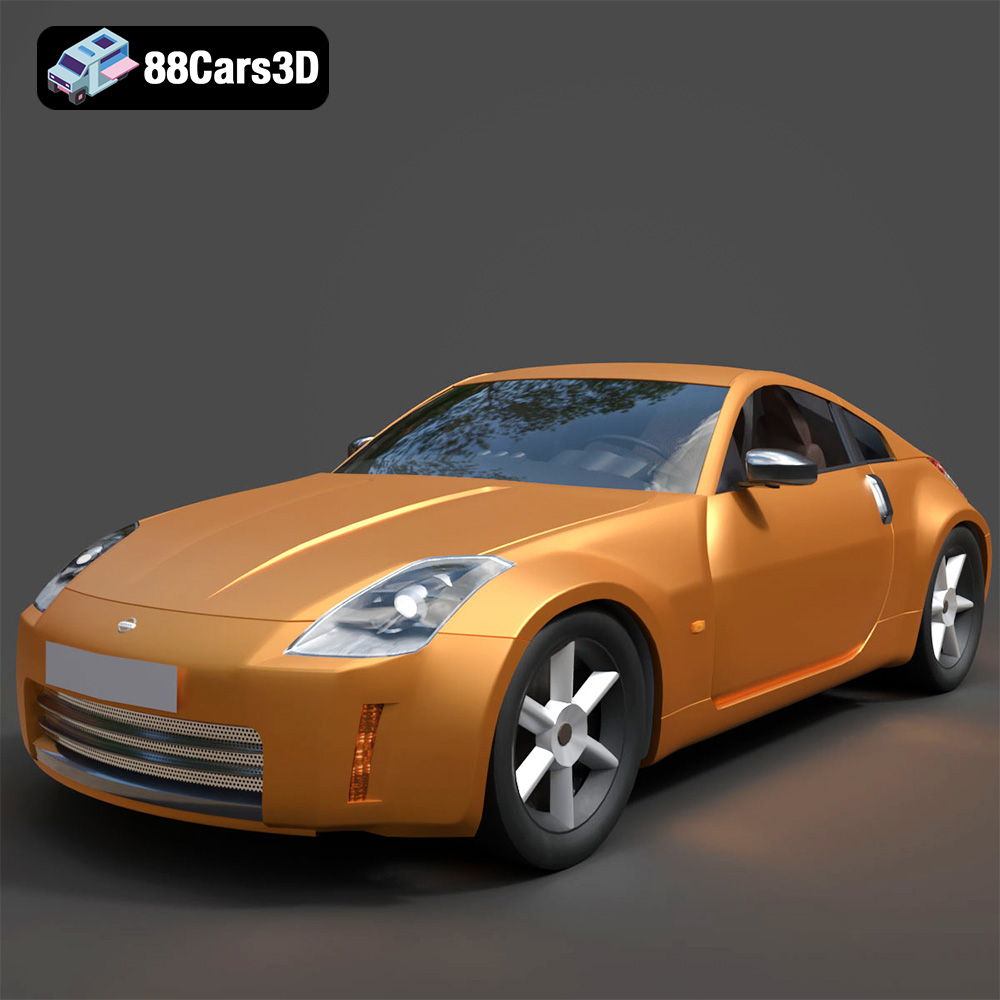
Texture: Yes
Material: Yes
Download the Nissan 350Z 3D Model featuring clean geometry, realistic detailing, and a fully modeled interior. Includes .blend, .fbx, .obj, .glb, .stl, .ply, .unreal, and .max formats for rendering, simulation, and game development.
Price: $4.99

Texture: Yes
Material: Yes
Download the Nissan Skyline V35 2001 3D Model featuring clean geometry, realistic detailing, and a fully modeled interior. Includes .blend, .fbx, .obj, .glb, .stl, .ply, .unreal, and .max formats for rendering, simulation, and game development.
Price: $4.99

Texture: Yes
Material: Yes
Download the Mercedes-Benz S-Klasse 221-007 3D Model featuring clean geometry, realistic detailing, and a fully modeled interior. Includes .blend, .fbx, .obj, .glb, .stl, .ply, .unreal, and .max formats for rendering, simulation, and game development.
Price: $4.99
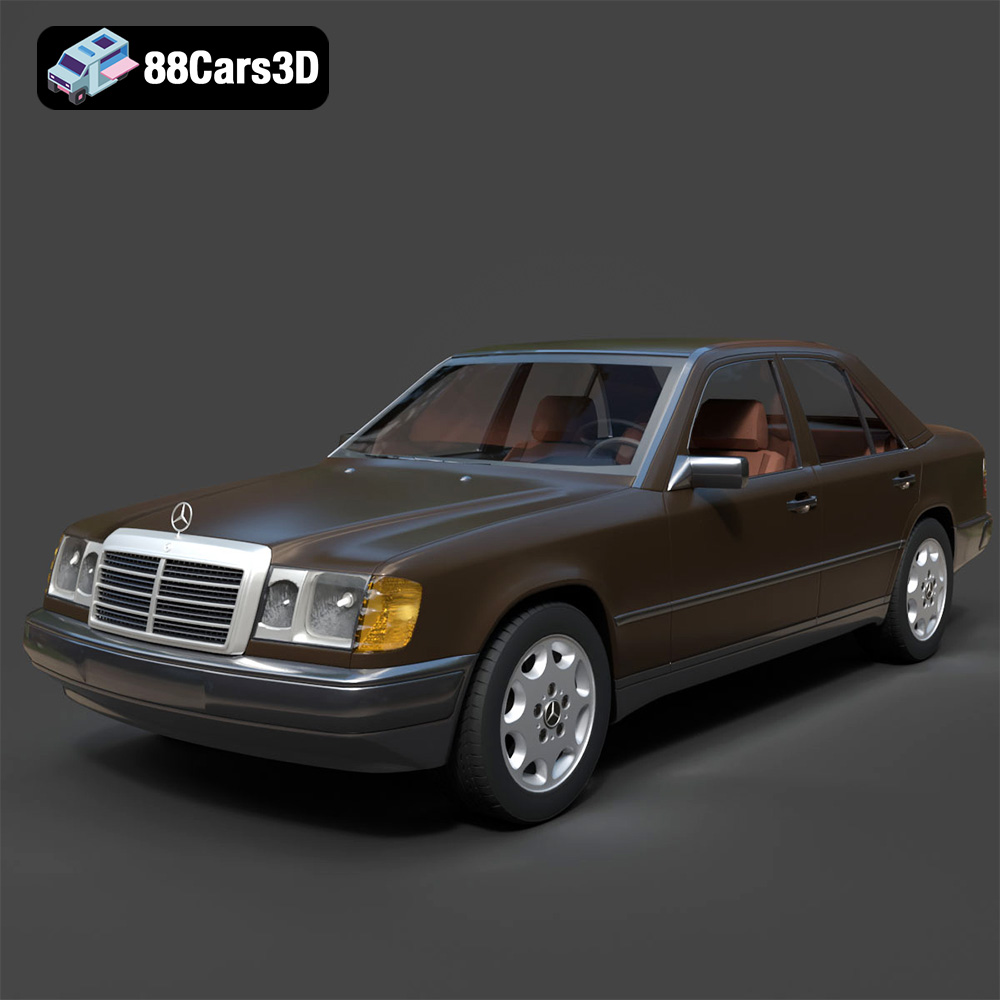
Texture: Yes
Material: Yes
Download the Mercedes W124 Sedan 3D Model featuring clean geometry, realistic detailing, and a fully modeled interior. Includes .blend, .fbx, .obj, .glb, .stl, .ply, .unreal, and .max formats for rendering, simulation, and game development.
Price: $4.99

Texture: Yes
Material: Yes
Download the Nissan Fuga 2003 3D Model featuring clean geometry, realistic detailing, and a fully modeled interior. Includes .blend, .fbx, .obj, .glb, .stl, .ply, .unreal, and .max formats for rendering, simulation, and game development.
Price: $4.99
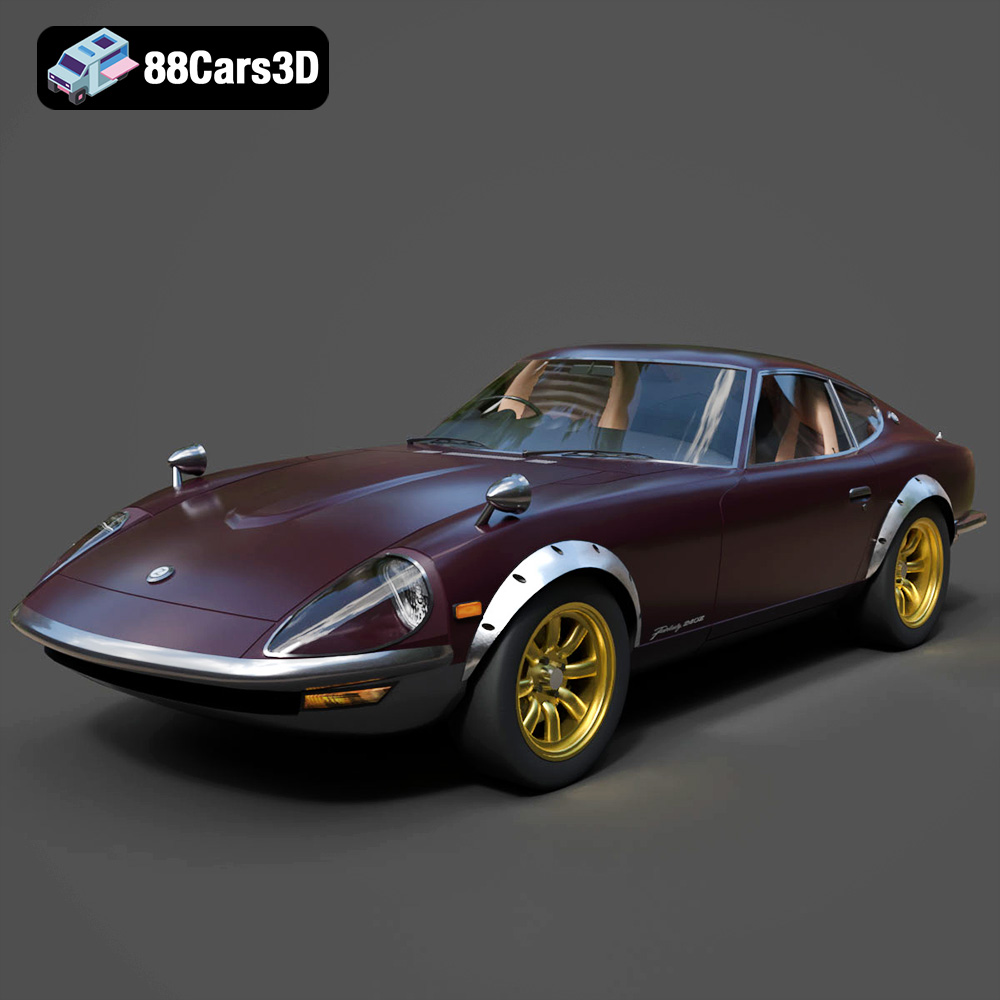
Texture: Yes
Material: Yes
Download the Nissan FairLady 240ZG 3D Model featuring clean geometry, realistic detailing, and a fully modeled interior. Includes .blend, .fbx, .obj, .glb, .stl, .ply, .unreal, and .max formats for rendering, simulation, and game development.
Price: $4.99
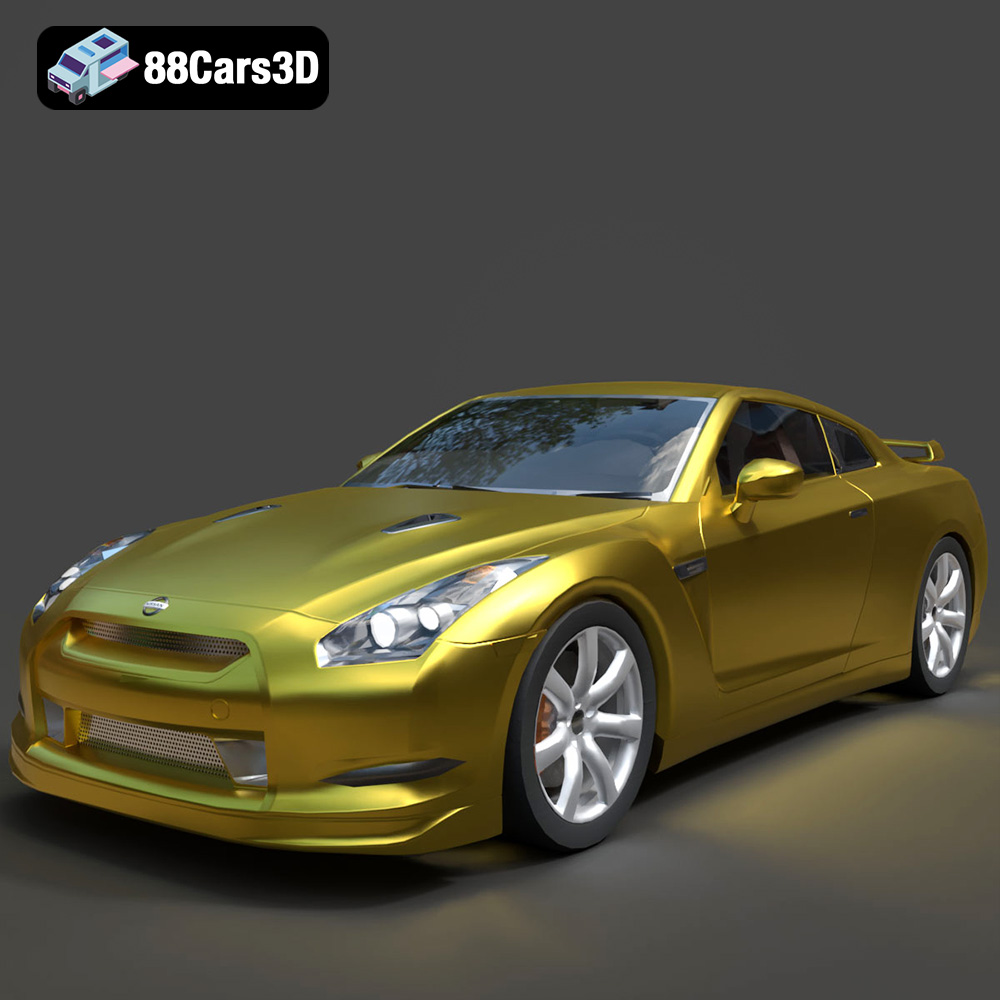
Texture: Yes
Material: Yes
Download the Nissan GT-R 2008 3D Model featuring clean geometry, realistic detailing, and a fully modeled interior. Includes .blend, .fbx, .obj, .glb, .stl, .ply, .unreal, and .max formats for rendering, simulation, and game development.
Price: $4.99

Texture: Yes
Material: Yes
Download the Nissan Cube 3D Model featuring clean geometry, realistic detailing, and a fully modeled interior. Includes .blend, .fbx, .obj, .glb, .stl, .ply, .unreal, and .max formats for rendering, simulation, and game development.
Price: $4.99

Texture: Yes
Material: Yes
Download the Nissan Cedric Y32 3D Model featuring clean geometry, realistic detailing, and a fully modeled interior. Includes .blend, .fbx, .obj, .glb, .stl, .ply, .unreal, and .max formats for rendering, simulation, and game development.
Price: $4.99

Texture: Yes
Material: Yes
Download the Nissan Cima Infiniti Q45 2007 3D Model featuring clean geometry, realistic detailing, and a fully modeled interior. Includes .blend, .fbx, .obj, .glb, .stl, .ply, .unreal, and .max formats for rendering, simulation, and game development.
Price: $4.99

