⚡ FLASH SALE: Get 60% OFF All Premium 3D & STL Models! ⚡

In the dynamic world of 3D visualization, automotive design, and interactive media, high-quality 3D car models are not just assets; they are the bedrock upon which stunning renders, immersive game experiences, and cutting-edge virtual reality simulations are built. From the sleek curves of a supercar concept to the intricate mechanics of an engine, the demand for photorealistic and performant digital vehicles has never been higher. Whether you’re an automotive designer showcasing a new prototype, a game developer crafting the next big racing title, or a visualization artist producing marketing materials, understanding the technical intricacies behind creating, optimizing, and deploying these complex models is paramount.
This comprehensive guide delves deep into the essential workflows and advanced techniques required to master 3D car models. We’ll explore everything from the foundational principles of topology and PBR materials to advanced rendering strategies, game engine optimization, and preparing assets for emerging technologies like AR/VR and 3D printing. Our goal is to equip you with the knowledge to not only appreciate the detail found in premium models, like those available on platforms such as 88cars3d.com, but also to understand the ‘how’ and ‘why’ behind every professional decision. Prepare to elevate your skills and unlock the full potential of automotive 3D visualization.
The visual integrity and performance of any 3D car model begin with its topology and edge flow. Topology refers to the arrangement of vertices, edges, and faces that make up a 3D mesh. For automotive models, clean, efficient, and deliberate topology is crucial for achieving smooth, realistic surfaces, particularly on reflective panels where imperfections are highly visible. Good edge flow ensures that the mesh deforms predictably, facilitates accurate hard surface modeling, and provides a solid base for UV mapping and texturing. A typical high-quality car model might range from 200,000 to over 1 million polygons, depending on its intended use (game vs. cinematic render), with careful polygon distribution focusing detail where it’s most needed.
Consider the sleek lines of a car’s bodywork. These curves are not just aesthetic; they are meticulously crafted with quads (four-sided polygons) as the primary building block. Using primarily quads helps prevent pinching and artifacts during subdivision surfacing (e.g., using a TurboSmooth modifier in 3ds Max or a Subdivision Surface modifier in Blender). Edges should follow the natural contours and design lines of the vehicle, defining creases, panel gaps, and subtle bulges with precision. This attention to detail in topology makes the difference between a passable model and a truly professional asset suitable for demanding automotive rendering applications. Mastering these foundational concepts is the first step towards creating stunning digital vehicles.
For pristine automotive surfaces, a common technique involves modeling a lower-polygon base mesh and then applying subdivision surface modifiers. This non-destructive workflow allows artists to iterate quickly and achieve extremely smooth surfaces without manual manipulation of millions of polygons. Critical to this process is the strategic placement of control loops (extra edge loops) around hard edges and panel lines. These loops “tighten” the subdivision, creating crisp details where desired, such as around headlights, grilles, or door handles, without introducing unwanted artifacts or softening adjacent smooth areas. For example, a sharp crease on a fender might require two or three closely spaced edge loops to hold its definition after subdivision.
Another crucial aspect is managing polygon density. Areas with high curvature, like wheel arches or mirror casings, require more polygons to maintain smoothness, while flatter panels can often get by with less. However, it’s essential to avoid overly dense meshes in flat areas, as this wastes polygon budget and can complicate UV mapping and performance. Tools like retopology features in Blender or ZBrush can be invaluable for rebuilding meshes with optimal edge flow from high-resolution sculpts or scanned data, ensuring a clean, quad-based mesh that is both visually appealing and technically sound for any application, including the creation of premium 3D car models.
Beyond aesthetics, clean topology directly impacts performance, especially for real-time applications like games or AR/VR. Excessive polygons, particularly in areas that don’t contribute significantly to visual detail, can lead to increased draw calls and reduced frame rates. For animatable components like doors, wheels, or suspension systems, proper edge flow is vital for smooth deformations. Edges should flow along the natural bending axes of moving parts, preventing stretching or tearing artifacts when the object is articulated. For example, a wheel rim should have radial edge loops to allow for smooth rotation, and a door hinge area needs dedicated topology to prevent mesh intersection during opening and closing.
When preparing models for games or interactive experiences, a common practice is to create multiple versions with varying polygon counts, known as Levels of Detail (LODs). This means the highest fidelity model (LOD0) has maximum detail, while LOD1, LOD2, and so on, have progressively fewer polygons. These LODs are then swapped out dynamically by the game engine based on the camera’s distance from the object. This requires an initial mesh that is robust enough to be decimated gracefully without losing critical silhouette information. Optimal topology at the base level ensures that even lower LODs maintain recognizable shapes, making a significant impact on overall scene performance and ensuring your game assets are efficient.
Once your 3D car model possesses impeccable topology, the next crucial step is to define its surfaces using Physically Based Rendering (PBR) materials. PBR is a modern shading paradigm that aims to simulate how light interacts with surfaces in the real world, leading to incredibly consistent and realistic results across various lighting conditions and rendering engines. Instead of hand-tweaking diffuse and specular values, PBR materials rely on physically accurate properties like albedo, roughness, metallicness, and normal maps to define a surface’s visual characteristics. This approach ensures that your automotive renders maintain their realism whether they are bathed in harsh sunlight or the subtle glow of streetlights, making it indispensable for any high-quality automotive rendering project.
The adoption of PBR has revolutionized the workflow for 3D artists, moving from subjective guesswork to a more scientific, measurable approach. This consistency is vital when working with libraries of materials or collaborating on large projects, as it guarantees that assets created by different artists or even in different software packages will look cohesive when brought together. A typical PBR material for a car might consist of 5-7 texture maps, each at resolutions ranging from 2K to 8K, depending on the detail required and proximity to the camera. These maps work in concert to describe everything from the paint’s metallic flake to the subtle imperfections on a leather seat, bringing the digital vehicle to life.
There are two primary PBR workflows: Metallic-Roughness and Specular-Glossiness. While both achieve similar realistic results, they differ in how they define the material properties. The **Metallic-Roughness** workflow is widely adopted in game engines like Unity and Unreal Engine, as well as many modern renderers. It uses an Albedo (or Base Color) map, a Metallic map (a grayscale mask indicating whether a surface is metallic or dielectric), and a Roughness map (a grayscale map defining microsurface imperfections that scatter light, from smooth/reflective to rough/matte). For instance, car paint would be primarily metallic, while tire rubber would be dielectric with high roughness.
The **Specular-Glossiness** workflow, often preferred in architectural visualization and some cinematic rendering pipelines, uses a Diffuse map, a Specular map (a color map defining the color and intensity of specular reflections), and a Glossiness map (the inverse of roughness, where white is perfectly smooth and black is very rough). While both can produce stunning results, consistency within a project is key. Most professional marketplaces, including 88cars3d.com, will specify which PBR workflow their models adhere to, making it easier for artists to integrate them into their existing pipelines. Understanding these distinctions ensures you select and apply textures correctly, leading to physically accurate visual outcomes.
Developing realistic car paint is one of the most challenging yet rewarding aspects of automotive material creation. A typical car paint PBR shader stack might involve multiple layers: a base metallic color, a clear coat layer, and often a subtle metallic flake normal map for added sparkle. The metallic map would define the underlying metallic properties, while the roughness map would control the sheen and reflections. For clear coat, techniques involve using a second layer of reflections with its own roughness values, often slightly higher than the base metallic layer to simulate the microscopic imperfections of a polished surface. Additionally, a subtle normal map can simulate orange peel effect, adding another layer of realism.
Interior materials demand equal attention to detail. Leather seats require high-resolution albedo, normal, and roughness maps to capture the subtle pores, wrinkles, and sheen. Fabrics like headliners or floor mats benefit from detailed normal maps derived from scanned data or generated using texturing software, combined with roughness variations to simulate their soft, light-absorbing properties. Plastics can range from glossy piano black to textured matte finishes, each requiring precise control over metallic and roughness values. Even small details like stitching, carbon fiber weaves, or brushed aluminum accents contribute immensely to the overall realism, often achieved through meticulous texture painting and shader network construction in software like Substance Painter, 3ds Max, or Blender.
UV mapping is the invisible art that binds 2D textures to 3D models. For intricate objects like 3D car models, effective UV mapping is paramount to avoid texture distortion, maximize texture resolution, and facilitate efficient material application. A UV map is essentially a flattened 2D representation of your 3D mesh, much like a tailor cutting and laying out fabric patterns. Each vertex in your 3D model corresponds to a UV coordinate on this 2D map, defining where a pixel from a texture image should be placed on the 3D surface. Without proper UVs, even the most beautiful PBR textures will appear stretched, blurry, or misaligned, ruining the realism of your automotive rendering.
The goal of UV mapping for cars is to create a layout that minimizes seams, avoids stretching, and provides sufficient pixel density for crucial areas. This often means breaking down the complex car body into logical, manageable pieces, such as individual panels, doors, hood, roof, and interior components. A professional 3D car model will feature meticulously unwrapped UVs, ensuring every part of the vehicle has dedicated texture space. For high-resolution renders, artists often use multiple UV maps or UV sets: one for the main body, another for interior details, wheels, and glass, allowing for higher fidelity textures across the entire vehicle without exceeding memory limits for a single enormous map.
Achieving distortion-free textures on curved car surfaces requires a strategic approach to UV unwrapping. Projection methods like planar, cylindrical, and spherical mapping are useful starting points for simple shapes, but complex automotive panels demand more advanced techniques. Software like 3ds Max, Blender, or Maya offer robust UV editors and tools. A common workflow involves creating “seams” – cuts on the 3D mesh – in inconspicuous areas (like panel gaps, edges that meet other parts, or the underside of the car). These seams allow the 3D mesh to be unfolded into a flat 2D island without excessive stretching. Visualization tools that show UV distortion (often a checkerboard pattern) are indispensable for identifying and correcting problem areas.
Once unwrapped, the UV islands must be arranged efficiently within the 0-1 UV space (the square area where textures reside). This means scaling islands proportionally to their importance and surface area on the 3D model. Larger, more prominent areas like the hood or side panels should occupy more UV space to receive higher texture detail, while smaller, less visible components can be scaled down. Overlapping UVs should generally be avoided unless specifically intended for mirrored textures (e.g., repeating tire tread patterns), as they can cause issues with baked lighting and unique texture painting. Maintaining consistent texel density (pixels per unit of surface area) across the entire model is crucial for uniform texture clarity.
For game assets and real-time applications, UV atlasing is a critical optimization technique. Instead of using separate texture maps for every single component of a car (which would lead to numerous draw calls and increased memory usage), UV atlasing consolidates multiple UV islands from different parts of the model onto a single UV map, which then uses a single, larger texture atlas. For example, all interior components like the dashboard, steering wheel, and seats might share one 4K texture atlas for their albedo, normal, and roughness maps.
This approach significantly reduces the number of material calls a game engine has to make, thereby improving performance. When creating a UV atlas, careful packing of the UV islands is essential to maximize the use of the texture space and minimize wasted pixels. Tools like RizomUV, UVLayout, or even built-in packers in 3ds Max/Blender can help automate this process, ensuring islands are tightly packed without overlapping. The drawback is that if any part of the atlas needs to be modified, the entire texture must be re-exported. Despite this, for highly optimized 3D car models intended for Unity or Unreal Engine, UV atlasing is an indispensable technique that balances visual quality with real-time performance requirements.
With a perfectly modeled and textured 3D car model, the next step is to transform it into a breathtaking image or animation through high-fidelity rendering. Rendering is the process of generating a 2D image from a 3D scene, simulating light, shadows, and reflections to create a photorealistic output. For automotive visualization, the choice of renderer, coupled with meticulous lighting and environment setup, profoundly impacts the final aesthetic. Industry-standard renderers like V-Ray, Corona Renderer (for 3ds Max, Cinema 4D), Arnold (for Maya, 3ds Max), and Cycles (Blender) are built upon physically accurate algorithms, capable of producing stunning results that are virtually indistinguishable from real-world photography, crucial for compelling automotive rendering.
A typical rendering workflow for a detailed car model involves several stages: scene setup (importing the model, arranging cameras), environment creation (HDRI maps, backplates), lighting (key lights, fill lights, accent lights), material adjustments (fine-tuning reflections, refractions), render settings (sampling, denoisers, output format), and finally, post-processing. The iterative nature of this process often involves test renders at lower resolutions or quality settings to quickly assess lighting and materials before committing to a final, high-resolution render. Achieving a compelling render is not just about technical execution; it’s also about artistic vision, understanding photographic principles, and knowing how to emphasize the car’s design elements through light and shadow.
Effective lighting is the cornerstone of a photorealistic car render. Often, a High Dynamic Range Image (HDRI) is used as the primary light source and environment backdrop. An HDRI captures real-world lighting information, providing accurate reflections and ambient illumination. When combined with a matching backplate photograph (a flat 2D image serving as the background), the car seamlessly integrates into a believable scene. For instance, using an HDRI of an overcast sky for soft, even lighting, or a sunset HDRI for dramatic, warm tones. Beyond HDRIs, supplementary lights are often employed: area lights to simulate studio softboxes, spot lights for accentuating details like brake calipers or badges, or subtle rim lights to separate the car from the background.
Shadows are equally important. Realistic soft shadows require sufficient light source size and proper sampling. Global Illumination (GI) algorithms (like brute force, irradiance map, or light cache in V-Ray/Corona) calculate indirect lighting bounces, filling the scene with natural ambient light and color bleed. Reflection planes or subtle ground planes with shadow catchers ensure the car casts realistic shadows onto the environment. For cinematic shots, subtle volumetric fog can add atmosphere and depth. The interplay of these elements, carefully balanced, creates a believable visual narrative that draws the viewer in and highlights the intricate design of the 3D car model.
While the underlying principles of PBR and lighting are universal, each renderer has its unique strengths and optimal workflows.
Corona Renderer: Known for its user-friendliness and excellent physically accurate results, Corona is a popular choice for architectural and automotive visualization. Its simplicity makes it easy to get good results quickly, with powerful denoisers (like NVIDIA OptiX or Intel Open Image Denoise) to clean up noise efficiently. Corona materials are straightforward, and its interactive render features allow for real-time feedback during scene setup.
V-Ray: A veteran in the industry, V-Ray offers immense control and flexibility. It’s highly optimized for complex scenes and animations, with advanced sampling options, a wide array of material types, and robust GI solutions (Brute Force + Light Cache often recommended for interiors/exteriors). Learning V-Ray involves mastering its many settings to balance speed and quality.
Cycles (Blender): Blender’s native physically based path tracer, Cycles, has evolved significantly. It leverages GPU rendering for speed and offers a powerful node-based shader editor, providing granular control over materials. Cycles excels at intricate details and complex material setups, making it a favorite for many independent artists and studios using Blender for automotive rendering.
Arnold (Maya, 3ds Max): Developed by Solid Angle and now part of Autodesk, Arnold is renowned for its unbiased path tracing and robustness in VFX and animation pipelines. It produces extremely high-quality, stable renders, particularly for complex materials and subtle lighting. Its node-based Hypershade editor in Maya offers deep customization for materials and lights. Regardless of the renderer chosen, understanding its specific strengths and settings is crucial for extracting the best possible visual fidelity from your 3D car models.
When transitioning a high-fidelity 3D car model from static renders to real-time interactive environments like game engines (Unity, Unreal Engine) or AR/VR applications, optimization becomes paramount. Unlike offline rendering, where computation time is less critical, real-time performance demands efficient asset management to maintain high frame rates and a smooth user experience. This involves a delicate balance between visual quality and resource consumption, focusing on polygon count, texture memory, draw calls, and shading complexity. A professional game-ready car model might range from 50,000 to 150,000 polygons for the main vehicle, with separate optimized meshes for interior, wheels, and destructive states, along with a suite of 2K or 4K PBR texture sets.
Every decision, from topology to material setup, needs to be re-evaluated through the lens of performance. Assets sourced from marketplaces like 88cars3d.com often provide optimized versions specifically tailored for game engines, complete with LODs and efficient UV mapping. Understanding these optimization techniques is not just about making things run faster; it’s about delivering a seamless, immersive experience where the virtual vehicle responds instantly to user input without visual hitches. This section explores key strategies to prepare your game assets for the demanding requirements of real-time environments, ensuring maximum precision and minimal performance overhead.
One of the most fundamental optimization techniques for real-time 3D car models is the implementation of Levels of Detail (LODs). As discussed earlier, LODs are progressively lower-polygon versions of the same mesh that are swapped in and out based on the camera’s distance from the object. This ensures that distant objects, which appear smaller on screen, do not waste precious rendering resources on details that are imperceptible. A common setup for a game car might include LOD0 (high detail, 100k+ polygons), LOD1 (medium detail, 30-50k polygons), LOD2 (low detail, 10-20k polygons), and LOD3 (imposter or billboard, <5k polygons).
Mesh decimation tools (like ProOptimizer in 3ds Max, Blender’s Decimate modifier, or external tools like Simplygon) are used to automatically reduce polygon counts while attempting to preserve the original silhouette and visual integrity. When decimating, it’s crucial to protect critical areas like wheel wells, headlights, and body creases to avoid significant visual degradation. Baking normal maps from the high-poly LOD0 onto the lower-poly LODs is also essential to retain the illusion of fine surface details without adding actual geometry. This process of creating robust LODs significantly reduces GPU load and draw calls, contributing to smoother frame rates in dense environments or fast-paced racing games, making them true game assets.
Beyond polygon count, minimizing draw calls is critical for performance. A draw call occurs every time the GPU is instructed to draw a batch of vertices. Each unique material, texture, or mesh requires a separate draw call. A single car with many separate parts and unique materials can accumulate hundreds of draw calls, which can quickly bog down a scene. To mitigate this, combine meshes where possible (e.g., all interior pieces into one mesh) and use texture atlases, as previously discussed, to consolidate multiple textures into a single map. Instancing, where multiple identical objects (like tire models) share the same mesh data, also significantly reduces draw calls.
Culling techniques further optimize performance. Frustum culling automatically prevents rendering objects outside the camera’s view frustum, while occlusion culling stops rendering objects hidden behind other geometry. For textures, choosing appropriate resolutions (e.g., 2K for body, 1K for interior, 512 for small details) and compression formats (e.g., DXT for diffuse/normal, BC5 for normal maps, BC4 for roughness/metallic in DirectX/OpenGL) balances visual quality with memory footprint. Generating mipmaps (smaller versions of textures) allows the engine to load lower-resolution textures for distant objects, reducing texture memory usage and improving cache performance, vital for responsive AR/VR optimization.
AR/VR optimization takes real-time performance considerations to an even more stringent level. VR headsets require two separate images (one for each eye) to be rendered per frame, effectively doubling the rendering workload. This means maintaining very high and consistent frame rates (e.g., 90 FPS) is non-negotiable to prevent motion sickness and ensure immersion. Consequently, polygon budgets for AR/VR 3D car models are typically much tighter than for traditional games, often requiring aggressive LODs and meticulous mesh optimization. Mobile AR (e.g., iOS ARKit, Android ARCore) is even more constrained, demanding extremely lightweight models and textures.
Shaders also need careful consideration. Complex, multi-layered PBR shaders with numerous texture samples can be expensive. Simplifying shader networks, using fewer texture maps, and leveraging baked lighting (where static shadows and lighting are pre-rendered into textures) can dramatically improve performance. Additionally, ensuring assets are designed with scale in mind is important for AR, where objects might be viewed up close or from a distance. For USDZ and GLB formats, which are native to AR platforms, ensuring embedded textures are optimized and materials are set up correctly for glTF/USD workflows is crucial for seamless integration and stunning visualization in interactive environments.
The journey of a 3D car model extends far beyond its initial creation and rendering. Its versatility is often defined by its ability to be utilized across different software, platforms, and even physical mediums. This interoperability hinges on understanding and managing various file formats, each with its own strengths and limitations. Whether you’re exchanging models between artists, uploading them to a marketplace like 88cars3d.com, preparing them for game engines, or pushing the boundaries into physical fabrication via 3D printing, selecting the correct format and ensuring proper preparation are critical steps. This section explores the landscape of 3D file formats and the unique considerations for transforming digital vehicles into tangible objects.
The choice of file format can impact everything from mesh integrity and material fidelity to animation support and metadata inclusion. A high-quality model might pass through several formats during its lifecycle, starting as a native scene file (e.g., .max, .blend, .ma), then exported to interchange formats for sharing (.FBX, .OBJ), and finally optimized for specific applications (.GLB, .USDZ). Each conversion requires attention to detail to preserve the model’s attributes. Furthermore, the advent of 3D printing introduces a whole new set of requirements for watertight meshes and precise geometry, turning virtual designs into physical prototypes or collectibles, bridging the gap between digital creation and physical manifestation.
FBX (.fbx): Developed by Autodesk, FBX is arguably the most widely used interchange format in the 3D industry. It supports not only geometry, UVs, and PBR materials but also complex data like animation, rigging, cameras, and lights. Its robustness makes it ideal for transferring assets between 3ds Max, Maya, Blender, Unity, and Unreal Engine. However, careful export settings are necessary to ensure all desired data is included and compatible with the target software.
OBJ (.obj): A simpler, older format, OBJ is excellent for transferring raw geometry and UV data. It doesn’t support animation or advanced material setups directly (it relies on an accompanying .MTL file for basic material properties), but its widespread compatibility makes it a reliable choice for mesh exchange.
GLB (.glb) / glTF (.gltf): The Graphics Library Transmission Format (glTF) and its binary variant (GLB) are emerging as the “JPEG of 3D.” Designed for efficient transmission and loading of 3D scenes and models by engines and applications, especially web-based and real-time. It natively supports PBR materials and is highly optimized for performance, making it a go-to for web 3D, AR, and VR applications.
USDZ (.usdz): Apple’s proprietary format for AR experiences, USDZ is built on Pixar’s Universal Scene Description (USD) framework. It’s a single, uncompressed, zero-dependency file that bundles geometry, textures, and PBR materials, optimized for mobile AR. It’s becoming increasingly important for showcasing 3D car models directly on iOS devices.
Other formats like STL (.stl) are specifically for 3D printing, while ABC (.abc) or Alembic is excellent for complex animations and simulations. Understanding when and why to use each format is key to a smooth workflow and successful deployment of your visualization assets.
Transforming a digital 3D car model into a physical object via 3D printing requires a distinct set of preparation steps. Unlike rendering, which can forgive small mesh imperfections, 3D printers demand watertight, manifold geometry without any holes, inverted normals, or self-intersecting faces. The model must be a single, solid volume for the printer to correctly interpret its shape and layers. Common issues include non-manifold edges (edges shared by more than two faces), open edges, and internal geometry that won’t be visible but adds unnecessary complexity and can cause print errors.
The workflow for 3D printing preparation typically involves:
1. Mesh Repair: Using software like Blender (with the 3D Print Toolbox addon), 3ds Max (with various script solutions), or dedicated repair tools like Netfabb or Meshmixer to identify and automatically or manually fix holes, inverted normals, and non-manifold geometry.
2. Shell Creation: Ensuring the model is a single, closed shell. If the car has an interior, it often needs to be merged with the exterior or removed entirely, leaving only the outer shell.
3. Wall Thickness: Adjusting the thickness of model walls to be sufficient for the chosen printing material and process. Too thin, and the print might fail; too thick, and it wastes material and time.
4. Detail Resolution: Adjusting the polygon count to match the printer’s capabilities. Very high-poly models might exceed printer memory, while low-poly models might show faceted surfaces.
5. Scaling: Scaling the model to the desired physical dimensions for printing.
6. Export to STL/OBJ: Exporting the final, watertight model to an STL (Stereolithography) or sometimes OBJ format, which are universally accepted by slicer software.
This meticulous preparation ensures that your beautifully crafted digital car model can become a tangible masterpiece.
Even after a 3D car model has been perfectly modeled, textured, and rendered, the journey to a truly stunning visual is not complete. The final stage involves the art of post-processing and compositing, where the raw render output is refined, enhanced, and integrated into its final context. This phase is where an image truly comes alive, allowing artists to add an extra layer of realism, mood, and photographic polish that might be difficult or computationally expensive to achieve solely within the 3D rendering software. It’s the critical step that elevates a good render to a professional-grade masterpiece suitable for high-end marketing, portfolio showcases, or any demanding visualization project.
Post-processing typically occurs in 2D image manipulation software like Adobe Photoshop, GIMP, or Affinity Photo, while compositing for animations happens in tools like Adobe After Effects, Nuke, or DaVinci Resolve. This workflow leverages render passes – separate images containing specific information (e.g., diffuse color, reflections, shadows, depth) – exported by the 3D renderer. By manipulating these passes independently, artists gain unparalleled control over the final image, allowing for non-destructive adjustments and creative enhancements. This approach allows for creative freedom to adjust color, contrast, glow effects, and even subtle lens imperfections, mimicking the nuances of real-world photography and videography.
Color grading is perhaps the most impactful aspect of post-processing. It involves adjusting the overall color balance, saturation, contrast, and brightness to evoke a specific mood or correct any inconsistencies. For automotive renders, color grading can emphasize the car’s sleekness, highlight its paint job, or create a dramatic, atmospheric setting. Techniques include:
Beyond color, various effects can add realism and appeal:
These adjustments, applied judiciously, can significantly enhance the perceived realism and artistic quality of your 3D car models.
For maximum control and flexibility, professional workflows heavily rely on rendering out multiple “render passes” or “render elements.” Instead of a single final image, the renderer outputs separate layers for components like raw lighting, direct lighting, global illumination, reflections, refractions, specular highlights, shadow masks, ambient occlusion, depth (Z-depth), and object IDs.
Here’s how they are used:
By layering and blending these passes in compositing software, artists can fine-tune every aspect of the image, correct imperfections, and achieve a level of polish that is difficult to attain otherwise. This non-destructive workflow is the hallmark of professional automotive rendering and visualization, ensuring unparalleled control over the final image of your 3D car models.
The journey of mastering 3D car models is a continuous pursuit of technical excellence and artistic vision. From the foundational precision of topology and UV mapping to the advanced realism of PBR materials and high-fidelity rendering, every step contributes to creating truly exceptional digital vehicles. We’ve explored the intricate balance required for performance optimization in game engines and AR/VR, the critical considerations for 3D printing, and the final magic woven through post-processing and compositing.
Equipped with this comprehensive knowledge, you are better prepared to tackle complex automotive projects, understand the value of meticulously crafted assets, and make informed decisions in your 3D workflow. Whether you’re building a vehicle from scratch or integrating premium models into your projects, remember that attention to detail at every stage is what separates good from great. For those seeking a head start or looking to elevate their projects instantly, exploring a vast library of high-quality, pre-optimized 3D car models on platforms like 88cars3d.com can provide the perfect foundation. Start applying these principles today, and watch your automotive rendering and visualization skills accelerate to new heights.

Texture: Yes
Material: Yes
Download the Nissan Fuga 2003 3D Model featuring clean geometry, realistic detailing, and a fully modeled interior. Includes .blend, .fbx, .obj, .glb, .stl, .ply, .unreal, and .max formats for rendering, simulation, and game development.
Price: $4.99
Texture: Yes
Material: Yes
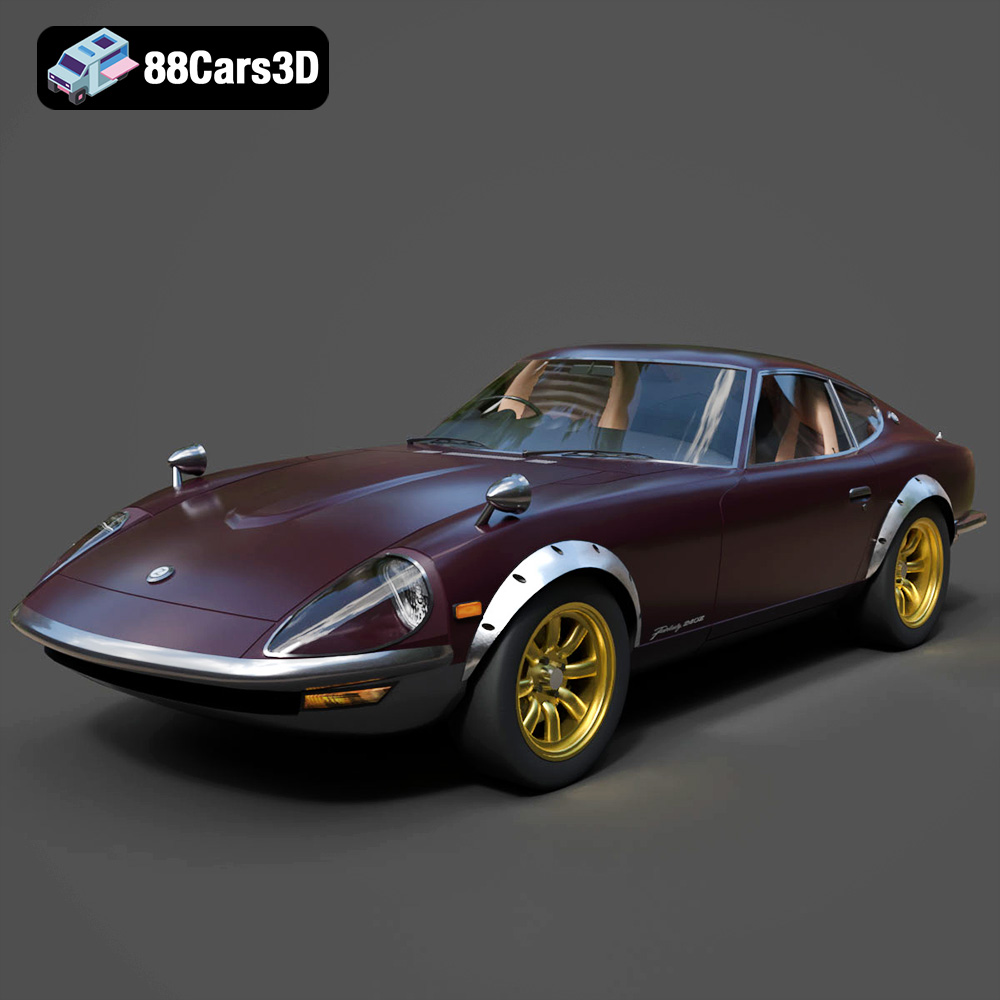
Download the Nissan FairLady 240ZG 3D Model featuring clean geometry, realistic detailing, and a fully modeled interior. Includes .blend, .fbx, .obj, .glb, .stl, .ply, .unreal, and .max formats for rendering, simulation, and game development.
Price: $4.99
Texture: Yes
Material: Yes
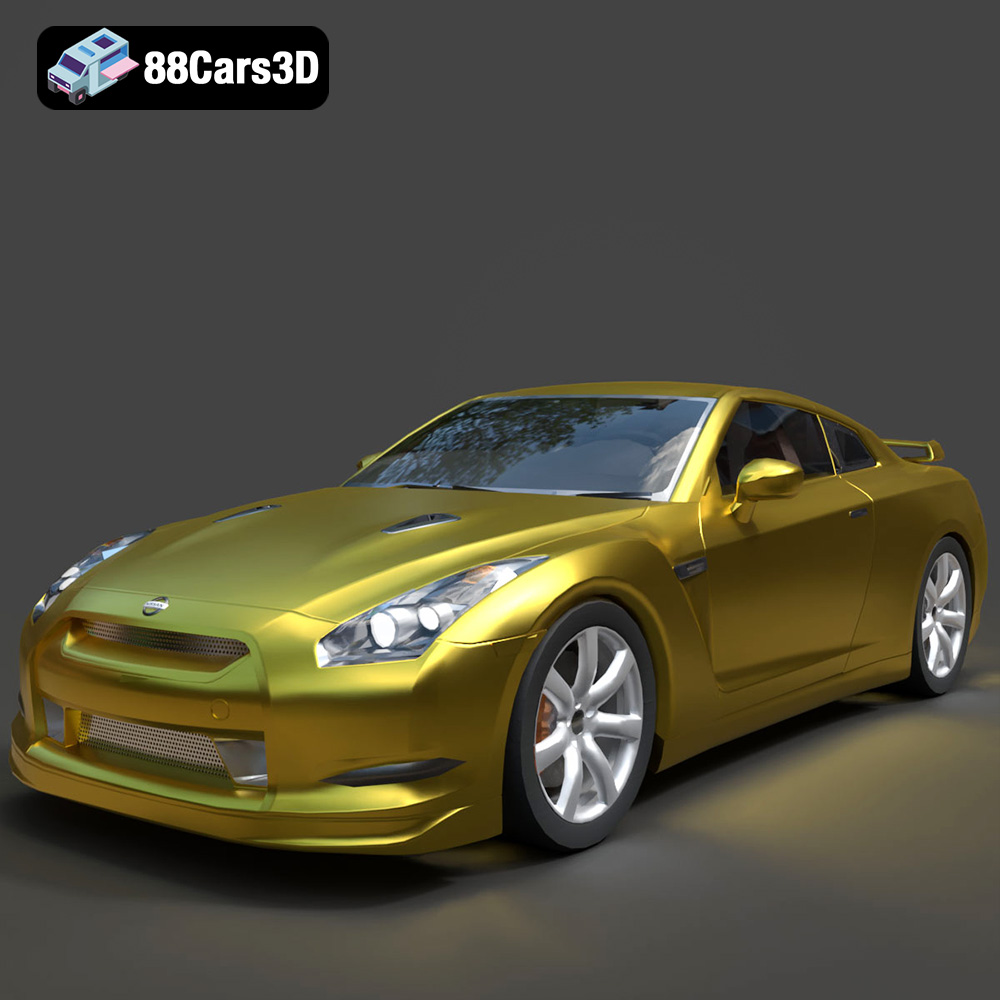
Download the Nissan GT-R 2008 3D Model featuring clean geometry, realistic detailing, and a fully modeled interior. Includes .blend, .fbx, .obj, .glb, .stl, .ply, .unreal, and .max formats for rendering, simulation, and game development.
Price: $4.99

Texture: Yes
Material: Yes
Download the Nissan Cube 3D Model featuring clean geometry, realistic detailing, and a fully modeled interior. Includes .blend, .fbx, .obj, .glb, .stl, .ply, .unreal, and .max formats for rendering, simulation, and game development.
Price: $4.99

Texture: Yes
Material: Yes
Download the Nissan Cedric Y32 3D Model featuring clean geometry, realistic detailing, and a fully modeled interior. Includes .blend, .fbx, .obj, .glb, .stl, .ply, .unreal, and .max formats for rendering, simulation, and game development.
Price: $4.99

Texture: Yes
Material: Yes
Download the Nissan Cima Infiniti Q45 2007 3D Model featuring clean geometry, realistic detailing, and a fully modeled interior. Includes .blend, .fbx, .obj, .glb, .stl, .ply, .unreal, and .max formats for rendering, simulation, and game development.
Price: $4.99

Texture: Yes
Material: Yes
Download the Nissan Juke 2025 3D Model featuring clean geometry, realistic detailing, and a fully modeled interior. Includes .blend, .fbx, .obj, .glb, .stl, .ply, .unreal, and .max formats for rendering, simulation, and game development.
Price: $4.99
Texture: Yes
Material: Yes
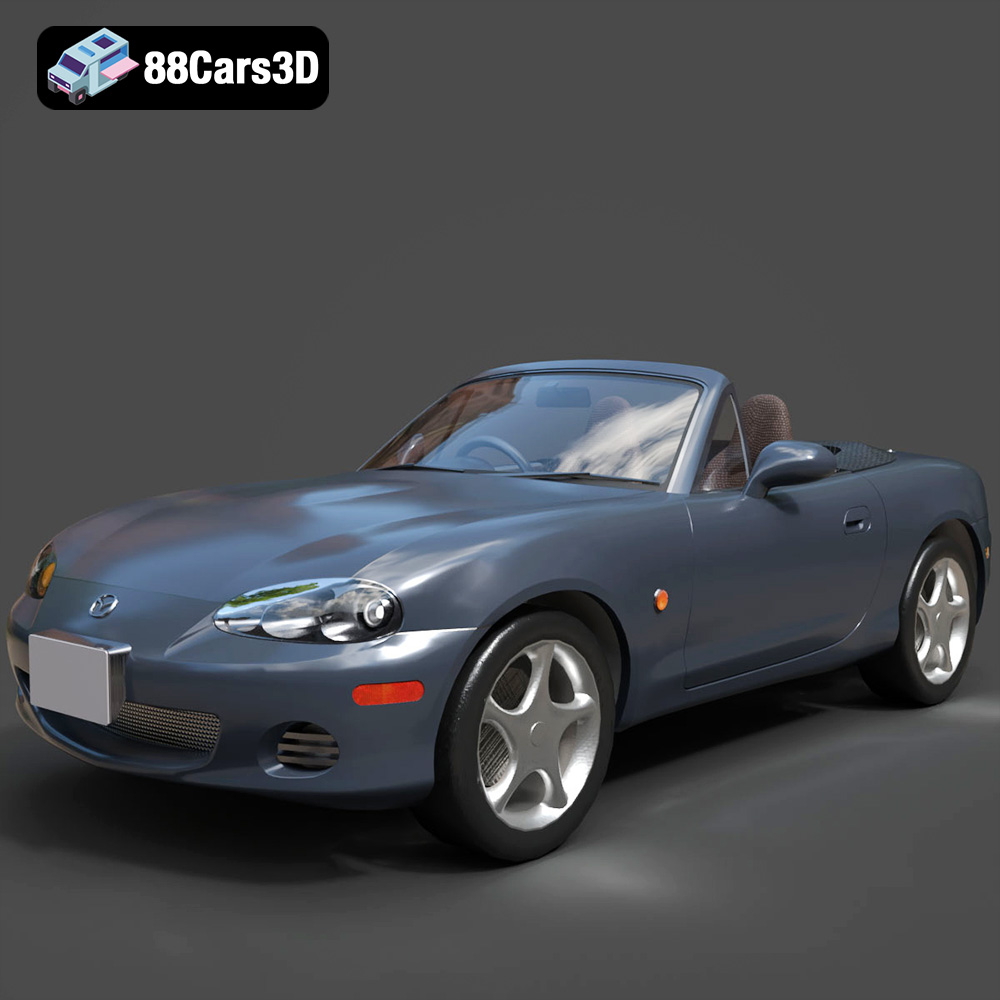
Download the Mazda MX-5 2025 3D Model featuring clean geometry, realistic detailing, and a fully modeled interior. Includes .blend, .fbx, .obj, .glb, .stl, .ply, .unreal, and .max formats for rendering, simulation, and game development.
Price: $4.99

Texture: Yes
Material: Yes
Download the Nissan Maxima 2009 3D Model featuring clean geometry, realistic detailing, and a fully modeled interior. Includes .blend, .fbx, .obj, .glb, .stl, .ply, .unreal, and .max formats for rendering, simulation, and game development.
Price: $4.99
Texture: Yes
Material: Yes
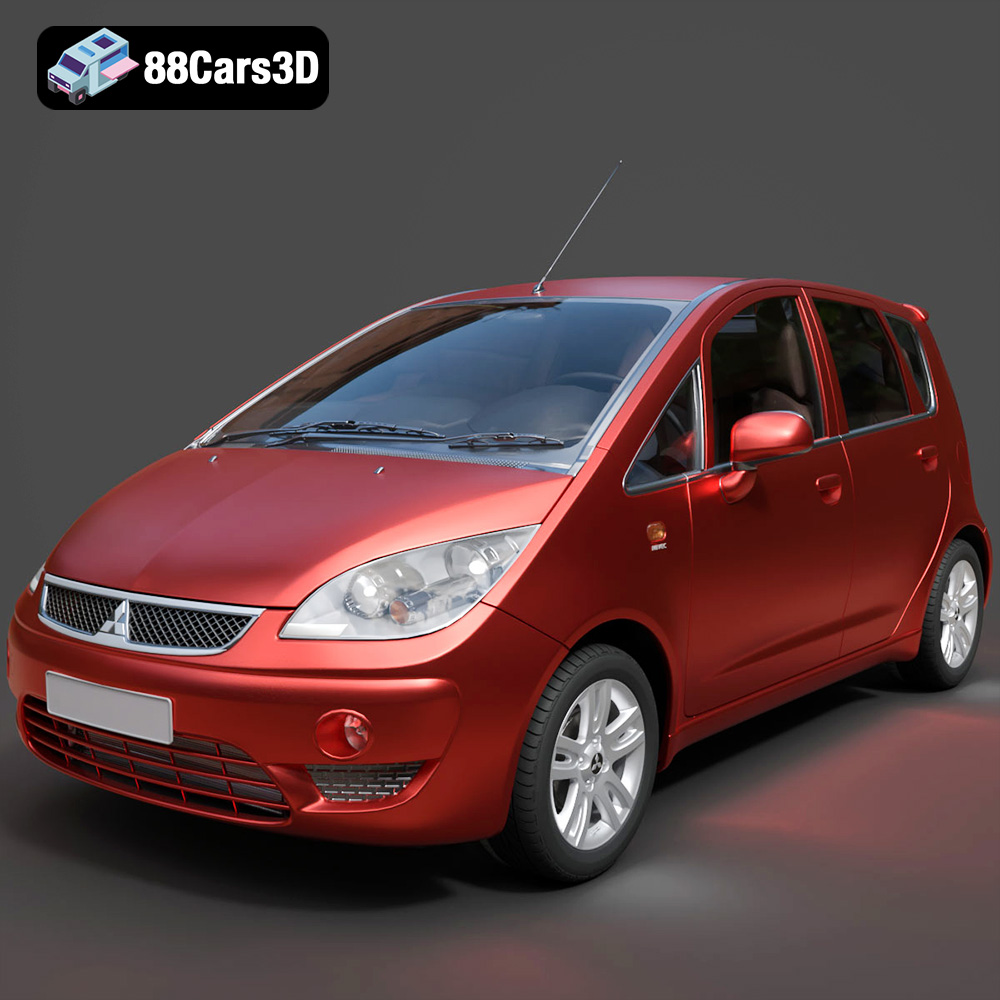
Download the Mitsubishi Colt 2025 3D Model featuring clean geometry, realistic detailing, and a fully modeled interior. Includes .blend, .fbx, .obj, .glb, .stl, .ply, .unreal, and .max formats for rendering, simulation, and game development.
Price: $4.99

