⚡ FLASH SALE: Get 60% OFF All Premium 3D & STL Models! ⚡

In the dynamic world of 3D visualization, the demand for exceptionally high-quality 3D car models has never been greater. From captivating cinematic renders and immersive game experiences to precise architectural visualizations and innovative AR/VR applications, a well-crafted automotive model is the cornerstone of success. But what truly defines a “high-quality” 3D car model, and how do professionals leverage them across such diverse fields? It’s more than just aesthetics; it’s about meticulous topology, intelligent UV mapping, physically accurate materials, and performance optimization tailored for specific pipelines.
This comprehensive guide will take you on an in-depth journey through the intricate world of 3D car models. We’ll peel back the layers to explore the foundational principles of clean modeling, delve into the art of realistic material creation, uncover the secrets to stunning rendering, and demystify the complexities of optimization for real-time engines and cutting-edge technologies like AR/VR and 3D printing. Whether you’re an aspiring 3D artist, a seasoned game developer, an automotive designer, or a visualization specialist, prepare to gain invaluable insights and actionable strategies to elevate your projects to the next level. Understanding these core principles will not only enhance your artistic output but also streamline your workflows and expand your creative horizons.
At the heart of any truly high-quality 3D car model lies impeccable topology and edge flow. This isn’t just an aesthetic preference; it’s a critical technical requirement that dictates how well the model deforms, subdivides, and receives textures. Automotive surfaces, with their sleek curves and sharp creases, demand particular attention to detail. A poorly constructed mesh can lead to artifacts, pinching, and an inability to achieve realistic reflections and highlights, even with the best materials and lighting. The goal is always to create a mesh that is both efficient in polygon count and robust enough to handle various production demands, ensuring smooth results across different rendering engines and real-time environments.
The golden rule for modeling organic and deformable surfaces like car bodies is to maintain a predominantly quad-based topology. Quads (four-sided polygons) subdivide predictably, allowing for smooth transitions and controllable deformation when using subdivision surface modifiers (like TurboSmooth in 3ds Max or Subdivision Surface in Blender). Triangles (three-sided polygons) should be avoided on large, smooth surfaces as they can introduce pinching and triangulation artifacts, especially after subdivision. N-gons (polygons with more than four sides) are generally unacceptable for production-ready models as they cause unpredictable shading and subdivision behavior. Professionals meticulously sculpt the mesh, guiding edge loops to follow the natural contours and flow of the vehicle, particularly around wheel wells, door seams, and panel gaps. This ensures that reflections glide smoothly across the surface without distortion, mimicking real-world automotive finishes.
Achieving the precise, subtle curvature of a car body is paramount. This requires careful attention to the density and distribution of edge loops. Areas with sharper curves or creases, such as character lines or the edges of a fender, will require denser edge loops to hold their shape after subdivision, often using supporting edge loops. Conversely, flatter surfaces can utilize sparser topology. Equally important are realistic panel gaps. These aren’t just cut-ins; they have a specific depth and a slight chamfer or rounded edge that catches the light accurately. Modeling these gaps as actual geometry, rather than just texture details, is crucial for photorealistic results. The careful placement of edge loops around these areas ensures that the gaps remain consistent and clean, even when viewed up close, adding immense realism to the final render. When sourcing models from platforms like 88cars3d.com, always inspect the wireframe for these crucial details.
While detail is key, polygon count is a constant balancing act. For high-fidelity renders, models can afford a higher poly count, often reaching hundreds of thousands or even millions of polygons after subdivision. However, for game engines or AR/VR applications, optimization is critical. A high-poly model might serve as a “master” from which lower-poly versions (LODs) are generated. The goal is to achieve visual fidelity with the fewest possible polygons. This involves intelligently merging vertices, removing unnecessary edge loops from flat surfaces, and using normal maps to bake high-detail information onto lower-poly meshes. A common strategy for game-ready car models might target around 50,000 to 100,000 polygons for a hero vehicle, while background cars could be as low as 5,000 to 15,000 polygons, all while striving for maximum visual impact.
Once a car model’s geometry is solid, the next critical step is to imbue it with realistic surface properties. This involves two closely related and equally important processes: UV mapping and Physically Based Rendering (PBR) material creation. Together, they transform a static mesh into a believable, interactive object that reacts to light as it would in the real world.
UV mapping is the process of flattening out the 3D surface of a model into a 2D space, allowing textures to be applied accurately. For complex objects like cars, intelligent UV unwrapping is paramount. The goal is to minimize stretching and distortion, prevent overlapping UV islands, and utilize the texture space efficiently. Car bodies often benefit from planar or cylindrical projections followed by careful manual stitching and relaxing in tools like 3ds Max’s Unwrap UVW modifier or Blender’s UV editor. Individual components like wheels, tires, interiors, and lights should have their own distinct UV layouts. For ultra-high-resolution textures, particularly for large, contiguous surfaces like the car body, artists might employ UDIMs (Unique Digital Identity Maps). This system allows for multiple UV tiles, each with its own texture set, avoiding resolution limitations and enabling incredibly detailed paint finishes. Proper padding between UV islands is also crucial to prevent texture bleeding when mipmaps are generated.
Physically Based Rendering (PBR) materials are the industry standard for achieving photorealistic results. PBR shaders simulate how light interacts with surfaces based on real-world physics, making them behave consistently across different lighting environments. A typical car paint PBR material might consist of several texture maps: Albedo (Base Color) for the base color, Normal Map for surface bumps and fine details (like orange peel effect), Roughness Map to control glossiness (micro-surface imperfections), and Metallic Map to define metallic properties (car paint is often treated as a dielectric with a clear coat, while chrome parts are metallic). Advanced car paint shaders might also incorporate anisotropic reflections to simulate the metallic flakes in the paint, often driven by tangent maps or specific shader nodes in renderers like Corona, V-Ray, Cycles, or Arnold. Glass shaders require precise control over Index of Refraction (IOR), transmission, and dispersion to accurately refract and reflect light, while tire rubber demands a detailed normal map and a rough, non-metallic appearance. Each material is a network of interconnected nodes, carefully calibrated to mimic its real-world counterpart.
The resolution of your textures directly impacts visual quality. For hero assets, 4K (4096×4096 pixels) or even 8K (8192×8192 pixels) textures are common for critical parts like the car body. Smaller components, such as bolts or interior buttons, might use 1K or 2K textures. However, using many high-resolution textures can quickly increase memory footprint and VRAM usage, especially in game engines. Texture atlasing is a powerful optimization technique where multiple smaller textures (e.g., for interior buttons, dashboard elements, or emblems) are combined into a single, larger texture map. This reduces draw calls (the number of times the GPU has to switch textures), significantly improving real-time performance. Effective atlasing requires careful UV layout to pack islands tightly without overlapping, maximizing the use of texture space. Similarly, baking ambient occlusion (AO) maps or custom utility maps can further enhance realism and streamline the shader setup, reducing complex calculations during rendering.
With a perfectly modeled and textured car, the final frontier is rendering. This is where all the painstaking detail comes to fruition, transforming static 3D data into stunning, photorealistic images or animations. High-fidelity rendering requires a deep understanding of lighting, camera principles, and advanced shader properties to truly capture the essence of an automotive masterpiece.
Effective lighting is arguably the most crucial element in achieving photorealistic renders. For automotive visualization, two common approaches are studio lighting and environment-based lighting (HDRI). Studio lighting involves meticulously placing virtual lights (e.g., area lights, photometric lights) to sculpt the car’s form, emphasize its curves, and create dramatic reflections. This often mimics real-world automotive photography studios, using softboxes and large diffusers. A classic setup might involve a large overhead softbox, two side fill lights, and a rim light to define the silhouette. Conversely, HDRI (High Dynamic Range Image) lighting uses a 360-degree panoramic image of a real-world environment to provide both illumination and reflections. This offers incredibly realistic and varied lighting scenarios, from sun-drenched outdoor scenes to moody overcast skies. Combining HDRI with supplementary targeted area lights (to boost specific reflections or shadows) often yields the most convincing results. Renderers like Corona, V-Ray, Cycles, and Arnold excel at handling these complex lighting setups, accurately simulating global illumination and physically correct light transport.
While PBR provides a robust foundation, mastering specific materials like car paint, glass, and chrome takes advanced shading knowledge. For car paint, understanding anisotropic reflections is key. Real car paint contains metallic flakes that reflect light differently depending on the viewing angle. Shaders with anisotropic controls can simulate this, creating the characteristic “streaky” or “swirly” reflections seen on high-gloss finishes. Layered materials, often available in advanced renderers, allow for building complex materials like car paint with multiple coats (base coat, clear coat, pearl effect). Glass requires accurate Fresnel reflections, realistic light absorption, and chromatic dispersion (the splitting of light into its constituent colors). Clear glass might use an IOR of 1.5-1.6, while tinted glass incorporates color absorption. Chrome and other polished metals demand precise metallic PBR values with very low roughness to achieve mirror-like reflections. Understanding these nuanced material properties and how to implement them within your chosen renderer (e.g., Corona Physical Material, V-Ray MTL, Blender Cycles nodes) is essential for professional results.
The render coming straight out of the 3D software is rarely the final image. Post-processing and compositing in software like Adobe Photoshop or Affinity Photo are vital steps to elevate a render to photorealistic standards. This involves using render passes (AOV’s – Arbitrary Output Variables) – separate image layers containing information like diffuse color, reflections, refractions, Z-depth, ambient occlusion, and material IDs. These passes provide granular control over every aspect of the image in post-production. Common post-processing tasks include: adjusting exposure and color grading, adding subtle depth of field (DoF), incorporating motion blur (if animated), fine-tuning reflections and highlights, adding lens effects (bloom, glare), and sharpening details. Professionals often work in a linear color space (like ACEScg) throughout the rendering and compositing pipeline to ensure accurate color representation and dynamic range, maintaining consistency and preventing color clipping or banding. A well-composited image can dramatically enhance the mood, atmosphere, and overall believability of a 3D car render.
While stunning offline renders are one goal, getting 3D car models to perform flawlessly in real-time environments like game engines (Unity, Unreal Engine) or AR/VR applications presents a unique set of challenges. Optimization becomes paramount, requiring a strategic approach to polygon count, materials, and overall asset management. A beautiful model that tanks frame rates is unusable in interactive experiences.
One of the most critical optimization techniques for game assets is Level of Detail (LOD). LODs are multiple versions of the same model, each with a progressively lower polygon count. When the car is close to the camera, the highest detail LOD (LOD0) is displayed. As it moves further away, the engine automatically switches to lower detail versions (LOD1, LOD2, etc.), which have fewer polygons and simpler textures, reducing the computational load. A typical car model might have 3-5 LODs. For example, LOD0 could be 80,000 polys, LOD1 at 25,000, LOD2 at 8,000, and LOD3 (for very distant views) at 2,000 polys. Generating effective LODs requires careful mesh simplification while preserving the overall silhouette and critical features. Many 3D software packages and game engines offer automated LOD generation tools, but manual tweaking is often necessary for optimal visual integrity.
Draw calls are instructions from the CPU to the GPU to render an object. Each draw call carries an overhead, and too many can significantly impact performance. A single car model might have many components (body, wheels, interior, lights), each potentially with its own material and requiring a separate draw call. To optimize, artists employ texture atlasing (as discussed earlier) to combine multiple material textures into one, reducing the number of materials used per model. Another technique is mesh combining or batching, where multiple smaller meshes that share the same material are combined into a single mesh. For instance, all interior dashboard buttons could be combined into one mesh with a single material. This allows the GPU to process them in a single draw call. Optimizing PBR materials themselves also plays a role; using fewer, more efficient shader instructions and avoiding complex, computationally expensive features where possible helps maintain high frame rates.
For interactive environments, car models need more than just visual geometry; they need physical properties. This involves creating collision meshes. These are simplified, invisible meshes that the game engine uses for physics calculations, detecting impacts, and determining how the car interacts with the environment. Collision meshes should be as simple as possible (often using primitive shapes like spheres, boxes, or convex hulls) to minimize physics simulation overhead, yet complex enough to accurately represent the car’s physical boundaries. For more advanced vehicle physics, a complex physics asset is created, often consisting of multiple rigid bodies (for the chassis, wheels, doors, etc.) connected by joints and constraints. This allows for realistic suspension, deformation, and damage systems. Proper setup of collision and physics assets in engines like Unity or Unreal is crucial for an authentic driving experience, affecting everything from handling to crash dynamics.
The versatility of high-quality 3D car models extends beyond traditional rendering and game development into exciting new frontiers: Augmented Reality (AR), Virtual Reality (VR), and 3D printing. Each of these applications has its own unique set of requirements and optimization strategies, transforming the car model into an interactive experience or a tangible object.
AR/VR environments impose even stricter performance budgets than traditional games due to the need for stereoscopic rendering (rendering two views simultaneously) and maintaining extremely high, consistent frame rates to prevent motion sickness. For AR/VR car models, an aggressive LOD strategy is essential, often with models optimized for mobile chipsets if targeting standalone headsets or mobile AR. This means prioritizing polygon counts in the range of 20,000-50,000 for hero cars, extensive use of texture atlasing, and limiting the number of unique materials and draw calls. Real-time lighting must be highly optimized, often relying on baked lighting (lightmaps) for static environments and highly efficient real-time solutions for dynamic elements. Furthermore, specific file formats like GLB (glTF Binary) or USDZ are preferred for AR/VR, particularly for web-based AR experiences (e.g., Apple’s AR Quick Look). These formats are lightweight, contain all necessary data (geometry, materials, textures, animation), and are designed for efficient streaming and rendering on various devices. When creating assets for platforms like 88cars3d.com, ensuring AR/VR readiness significantly broadens a model’s appeal.
Unlike digital rendering, 3D printing translates a virtual model into a physical object, which requires an entirely different set of considerations. The primary requirement for 3D printing is a watertight, manifold mesh. This means the model must be a completely enclosed volume with no holes, gaps, intersecting faces, or non-manifold edges (edges connected to more than two faces). Any open edges will prevent the slicing software from correctly interpreting the model’s interior and exterior, leading to printing errors. Artists must meticulously inspect the mesh for errors, using repair tools in software like Blender (3D Print Toolbox), 3ds Max (STL Check modifier), or dedicated repair software like Meshmixer. Additionally, attention must be paid to wall thickness – thin surfaces in the digital model might be too fragile to print. Features below a certain thickness (e.g., 0.8mm-1.5mm depending on printer and material) might not print correctly. If the model has overhanging parts (like a car’s spoiler), support structures will need to be generated by the slicing software, or sometimes manually modeled, to prevent the print from collapsing during the printing process.
The choice of file format is crucial for compatibility and functionality across different applications. For AR/VR, GLB (the binary version of glTF) is a strong contender due to its efficiency and widespread adoption in web and mobile AR. USDZ is Apple’s proprietary format for AR, offering similar benefits within their ecosystem. Both are optimized for real-time delivery and often include PBR material definitions. For 3D printing, STL (STereoLithography) is the de facto standard, though OBJ and AMF are also used. STL stores only raw triangulated geometry, without color or material information, making it simple and widely compatible with slicer software. For high-fidelity rendering and general 3D asset exchange, FBX and OBJ remain popular. FBX supports geometry, materials, animations, cameras, and lights, making it ideal for transferring complex scenes between 3D software. OBJ is simpler, primarily storing geometry, UVs, and basic material references. Understanding the strengths and limitations of each format is key to smooth data exchange and successful project delivery.
In a professional 3D pipeline, assets rarely stay in a single software package. A model might originate in Blender, textured in Substance Painter, rendered in 3ds Max with Corona, and then optimized for Unreal Engine. This necessitates seamless transfer of data, which relies heavily on understanding various file formats, conversion best practices, and anticipating potential interoperability issues. High-quality 3D car models, like those found on 88cars3d.com, are often provided in multiple formats to facilitate these diverse workflows.
A few core file formats dominate the 3D industry, each with its strengths. FBX (Filmbox), developed by Autodesk, is one of the most comprehensive interchange formats. It can store not just geometry and UVs, but also PBR materials (though sometimes with varying interpretation between software), animations, cameras, lights, and even skeletal rigs. This makes it incredibly versatile for full scene transfer. OBJ (Object) is an older, simpler format that excels at transferring geometry and UVs, often accompanied by an MTL (Material Template Library) file for basic material properties. It’s highly compatible but lacks support for advanced PBR, animation, or scene data. USD (Universal Scene Description), developed by Pixar, is an increasingly important format. It’s designed for collaborative workflows, capable of describing entire scenes with complex layering, non-destructive editing, and PBR materials (via USD Preview Surface or MaterialX). Its open, extensible nature is driving its adoption in large-scale productions. Finally, GLB (glTF Binary) is optimized for web and real-time applications, packing geometry, textures, and PBR materials into a single, efficient binary file, making it perfect for AR/VR and online viewers.
Converting between these formats is a common task, but it’s crucial to maintain data integrity. When converting from a complex format like FBX to a simpler one like OBJ, you risk losing information such as animation, advanced shader properties, or scene hierarchy. Always start with the richest possible source file. For example, if you have a 3ds Max file with Corona materials, exporting to FBX will attempt to translate those materials, but they may need manual adjustment in the target software (e.g., Blender, Maya) to look correct. PBR workflows have significantly improved material consistency, but renderer-specific nodes and settings often don’t translate directly. It’s often best practice to export geometry (FBX or OBJ), then re-apply PBR textures and reconstruct shaders in the target application using generic PBR material templates. When creating game assets, exporting cleaned, optimized meshes with baked normal maps and PBR texture sets is a reliable workflow, regardless of the target engine.
Each 3D software package has its own quirks and default settings that can affect how models are imported or exported. For instance, coordinate systems (Y-up vs. Z-up) can cause models to be imported rotated, requiring adjustment. Scaling can also be an issue; models exported at one unit scale might import at a different scale in another program. It’s good practice to always check and standardize unit settings across your pipeline. Normal maps can also be problematic; different software (e.g., Unity vs. Unreal) or game engines might interpret the green channel (Y-axis) of normal maps differently (DirectX vs. OpenGL). Awareness of these minor but impactful differences, and knowing how to adjust settings during export (e.g., tangent space options in FBX export), is vital for a smooth pipeline. Often, a quick test export and import with a simplified asset can save hours of troubleshooting with a complex model, ensuring that your meticulously crafted 3D car models maintain their fidelity across all stages of production.
The journey from concept to a high-fidelity 3D car model is a complex but incredibly rewarding endeavor. As we’ve explored, achieving automotive brilliance in the digital realm demands a holistic understanding of meticulous modeling principles, intelligent UV mapping, physically accurate material creation, and sophisticated rendering techniques. Furthermore, adapting these assets for diverse applications like real-time game engines, immersive AR/VR experiences, and tangible 3D prints requires a strategic approach to optimization and file format management.
The continuous evolution of 3D technology means that the demand for expertly crafted, versatile 3D car models will only continue to grow. Whether you’re aiming for a photorealistic cinematic render, an optimized game asset, or a precise visualization tool, the foundational principles of clean topology, efficient UVs, and PBR materials remain paramount. By embracing these best practices and understanding the nuances of different pipelines, you empower yourself to create compelling digital automotive experiences that truly stand out.
Remember that the quality of your base assets dictates the ultimate success of your project. For those seeking a head start or looking to expand their asset library, platforms like 88cars3d.com offer a curated selection of professional-grade 3D car models, meticulously crafted with clean topology, realistic materials, and multiple file formats, ready to be integrated into your next groundbreaking project. Continue to learn, experiment, and refine your skills – the open road of 3D automotive artistry awaits!

Texture: Yes
Material: Yes
Download the Nissan Fuga 2003 3D Model featuring clean geometry, realistic detailing, and a fully modeled interior. Includes .blend, .fbx, .obj, .glb, .stl, .ply, .unreal, and .max formats for rendering, simulation, and game development.
Price: $4.99
Texture: Yes
Material: Yes
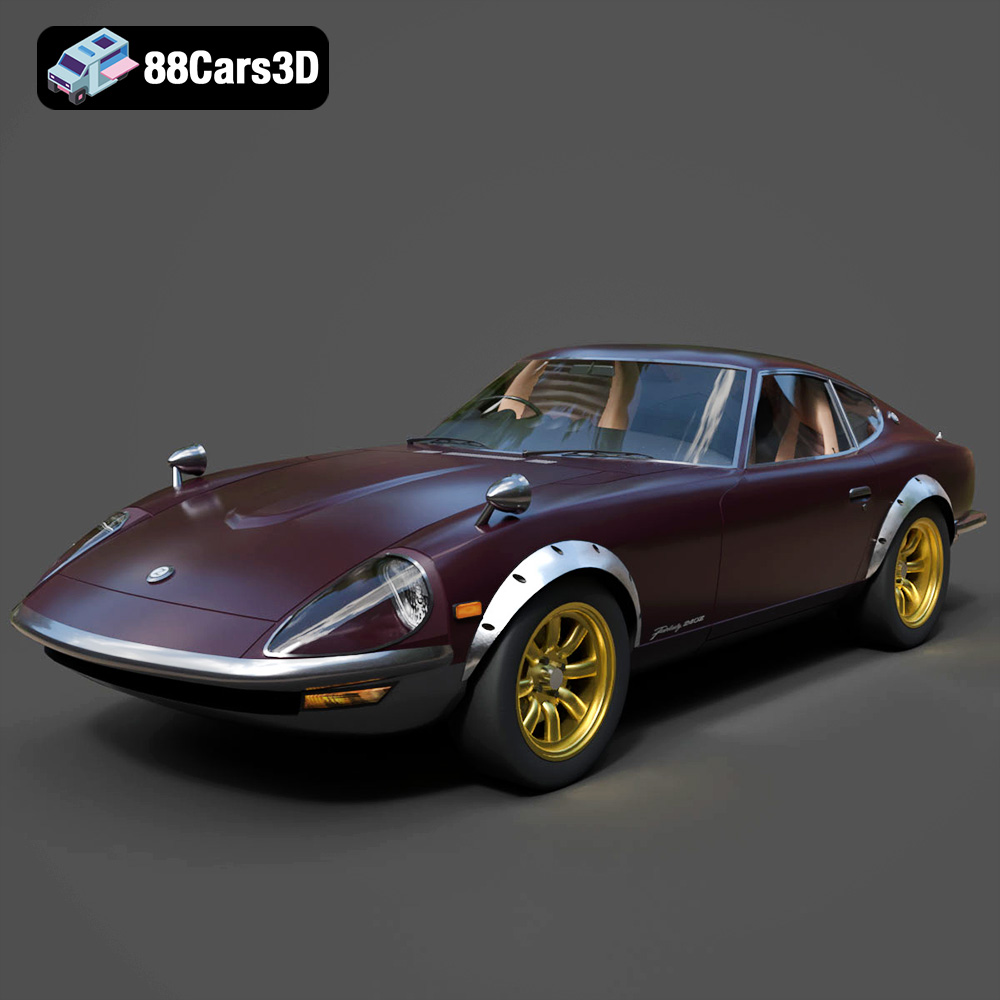
Download the Nissan FairLady 240ZG 3D Model featuring clean geometry, realistic detailing, and a fully modeled interior. Includes .blend, .fbx, .obj, .glb, .stl, .ply, .unreal, and .max formats for rendering, simulation, and game development.
Price: $4.99
Texture: Yes
Material: Yes
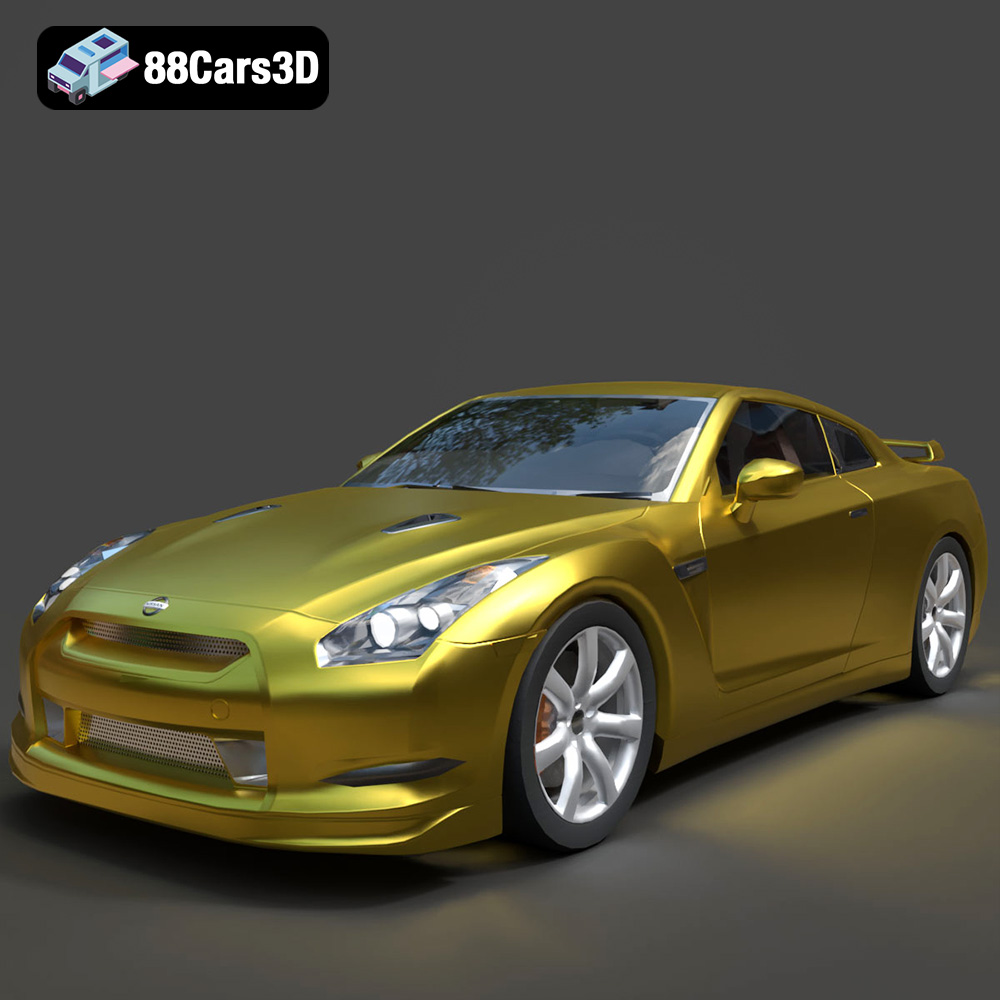
Download the Nissan GT-R 2008 3D Model featuring clean geometry, realistic detailing, and a fully modeled interior. Includes .blend, .fbx, .obj, .glb, .stl, .ply, .unreal, and .max formats for rendering, simulation, and game development.
Price: $4.99

Texture: Yes
Material: Yes
Download the Nissan Cube 3D Model featuring clean geometry, realistic detailing, and a fully modeled interior. Includes .blend, .fbx, .obj, .glb, .stl, .ply, .unreal, and .max formats for rendering, simulation, and game development.
Price: $4.99

Texture: Yes
Material: Yes
Download the Nissan Cedric Y32 3D Model featuring clean geometry, realistic detailing, and a fully modeled interior. Includes .blend, .fbx, .obj, .glb, .stl, .ply, .unreal, and .max formats for rendering, simulation, and game development.
Price: $4.99

Texture: Yes
Material: Yes
Download the Nissan Cima Infiniti Q45 2007 3D Model featuring clean geometry, realistic detailing, and a fully modeled interior. Includes .blend, .fbx, .obj, .glb, .stl, .ply, .unreal, and .max formats for rendering, simulation, and game development.
Price: $4.99

Texture: Yes
Material: Yes
Download the Nissan Juke 2025 3D Model featuring clean geometry, realistic detailing, and a fully modeled interior. Includes .blend, .fbx, .obj, .glb, .stl, .ply, .unreal, and .max formats for rendering, simulation, and game development.
Price: $4.99
Texture: Yes
Material: Yes
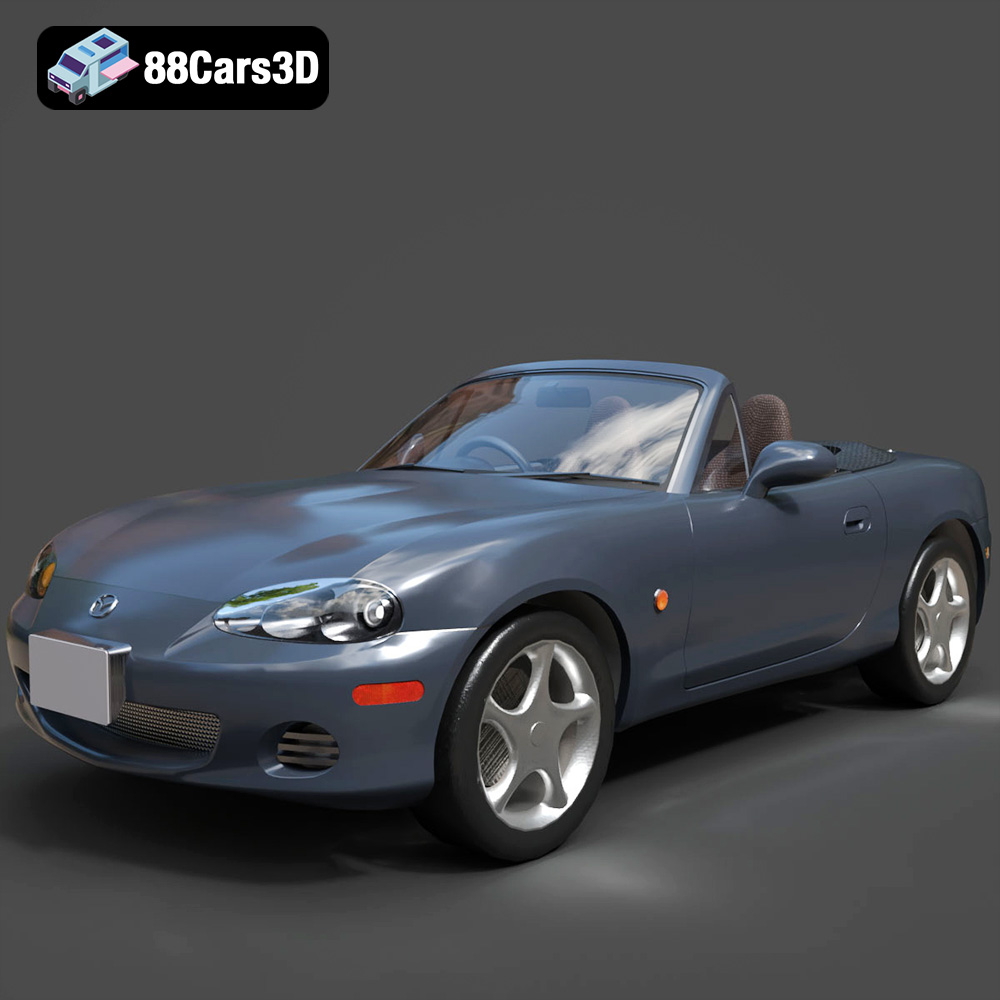
Download the Mazda MX-5 2025 3D Model featuring clean geometry, realistic detailing, and a fully modeled interior. Includes .blend, .fbx, .obj, .glb, .stl, .ply, .unreal, and .max formats for rendering, simulation, and game development.
Price: $4.99

Texture: Yes
Material: Yes
Download the Nissan Maxima 2009 3D Model featuring clean geometry, realistic detailing, and a fully modeled interior. Includes .blend, .fbx, .obj, .glb, .stl, .ply, .unreal, and .max formats for rendering, simulation, and game development.
Price: $4.99
Texture: Yes
Material: Yes
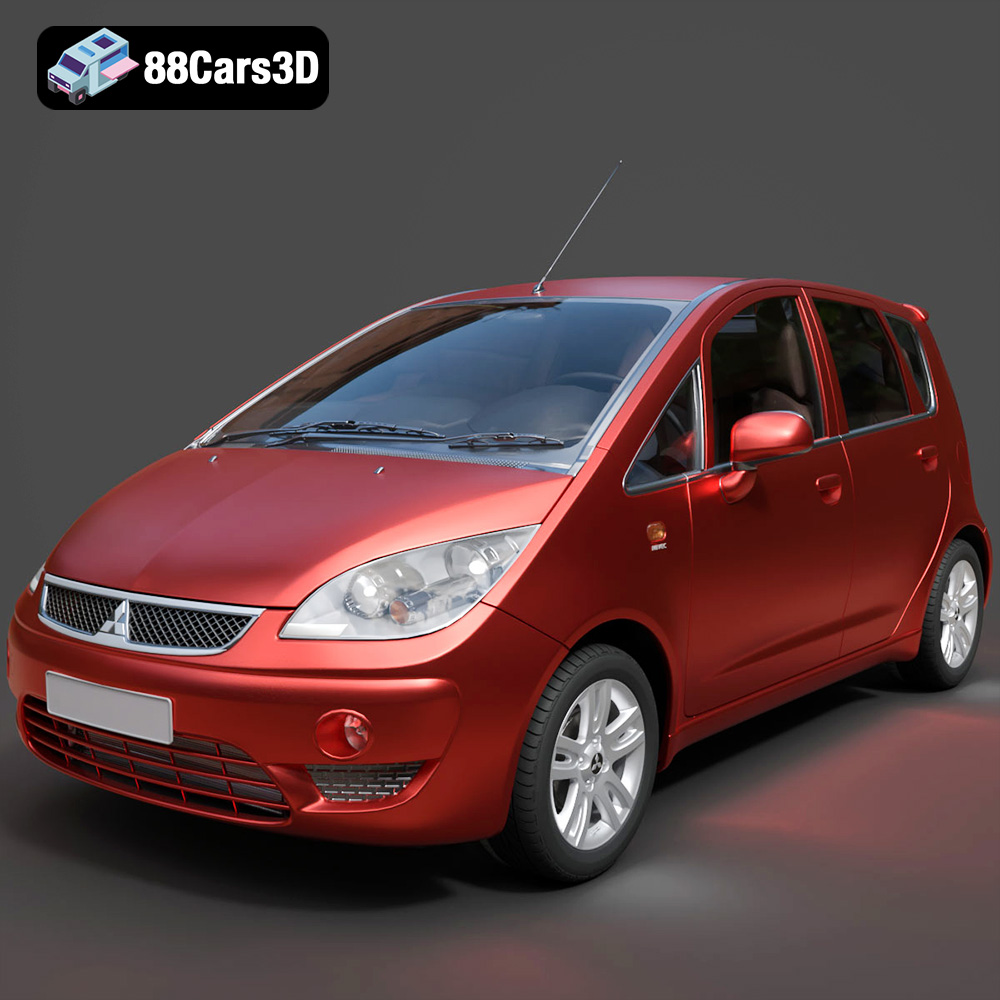
Download the Mitsubishi Colt 2025 3D Model featuring clean geometry, realistic detailing, and a fully modeled interior. Includes .blend, .fbx, .obj, .glb, .stl, .ply, .unreal, and .max formats for rendering, simulation, and game development.
Price: $4.99

