⚡ FLASH SALE: Get 60% OFF All Premium 3D & STL Models! ⚡

The automotive industry has always been at the forefront of technological innovation, and in the digital realm, 3D car models are no exception. From stunning photorealistic renders that define future vehicle concepts to immersive real-time experiences in virtual showrooms and high-octane video games, the demand for exceptionally crafted 3D car models is skyrocketing. Creating these assets, however, is far more intricate than simply extruding a few shapes. It demands a mastery of advanced modeling techniques, sophisticated texturing, optimized rendering workflows, and a deep understanding of application-specific requirements.
This comprehensive guide will take you on a journey through the intricate world of professional 3D car model development. We’ll explore the foundational principles of clean topology, delve into the nuances of UV mapping for complex surfaces, unravel the secrets of physically based rendering (PBR) materials, and dissect the most effective rendering and game engine optimization strategies. Whether you’re an aspiring 3D artist, an automotive designer, a game developer, or a visualization professional, understanding these technical pillars is crucial for producing assets that not only look incredible but also perform flawlessly across diverse platforms. Prepare to elevate your skills and discover the keys to creating truly outstanding digital automotive masterpieces.
The cornerstone of any high-quality 3D car model is its topology – the arrangement of its polygons, vertices, and edges. For automotive designs, where smooth, flowing curves and crisp panel lines are paramount, impeccable topology is non-negotiable. It dictates how light reflects off surfaces, how deformation occurs (if the model is animated), and how easily the model can be edited or optimized. Clean, quad-based topology is the industry standard, ensuring predictable subdivision results and a manageable mesh. Poor topology, characterized by triangles, N-gons, stretched polygons, or poles with more than five edges, can lead to rendering artifacts, shading inconsistencies, and difficulties in UV mapping and texture application. A professional model prioritizes an even distribution of polygons, particularly in areas of high curvature, to maintain visual fidelity even under close inspection.
For automotive models, the vast majority of faces should be quadrilaterals (quads). Quads subdivide cleanly using algorithms like Catmull-Clark, producing smooth, predictable surfaces without pinching or creasing. This is vital for vehicles where every curve and reflection must be perfect. When modeling car bodies, artists typically start with a low-polygon base mesh and then apply subdivision surfaces modifiers (e.g., TurboSmooth in 3ds Max, Subdivision Surface in Blender, Smooth Mesh in Maya). The base mesh must have an optimal edge flow that follows the natural contours and panel lines of the car. This ensures that when subdivided, the mesh retains its intended shape and sharpens edges precisely where needed without introducing unwanted bumps or distortions. Focusing on an “all-quads” workflow provides the ultimate flexibility for detail addition and ensures clean deformation if the model needs to be animated, such as opening doors or rotating wheels.
The distinctive character of a car often lies in the precision of its curves and the definition of its panel gaps. Achieving these realistically in 3D requires careful attention to edge flow. Edges should run parallel to the direction of curvature, creating “support loops” or “holding edges” around sharp details like panel lines, headlight cutouts, and window frames. These support loops prevent the subdivided surface from softening these critical hard edges too much, maintaining their crispness. For panel gaps, a common technique involves creating a slight bevel or two closely spaced edge loops along the gap. This creates a small, subtle indent that catches light and shadow, mimicking real-world construction. The spacing and depth of these details are crucial; too wide, and it looks cartoonish; too narrow, and it might disappear in renders. Professional 3D car models will feature meticulously crafted edge loops that define every intricate detail, from subtle body creases to intricate ventilation grilles.
The ideal polycount for a 3D car model is highly dependent on its intended application. A model destined for cinematic rendering or high-resolution architectural visualization might boast millions of polygons, allowing for extreme detail in every component, from the engine bay to the intricate stitching on the interior. These models can feature detailed meshes for every bolt and cable. In contrast, a model for a mobile game or an AR/VR experience must adhere to strict polycount budgets to ensure real-time performance. For a high-end game asset, a car might range from 80,000 to 150,000 triangles for the main body, with additional polygons for wheels, interior, and lights. For mobile or VR, this could be significantly lower, perhaps 15,000-50,000 triangles for the entire vehicle. Mastering the balance between visual fidelity and performance is a key skill, often involving techniques like baking normal maps from high-poly models onto optimized low-poly meshes, a workflow commonly found in models available on platforms like 88cars3d.com.
Once a 3D car model’s topology is meticulously crafted, the next critical step is UV mapping. UV mapping is the process of flattening the 3D surface of a model into a 2D space, allowing 2D textures to be applied accurately. For complex automotive surfaces with intricate curves, sharp angles, and numerous distinct material zones, advanced UV mapping strategies are essential to avoid distortion, seam visibility, and inefficient texture usage. Proper UVs are foundational for applying realistic paint, decals, carbon fiber patterns, and internal components without stretching or warping. A poorly UV-mapped model will never look convincing, no matter how high-resolution its textures are. The goal is to create a clean, organized, and optimized UV layout that maximizes texture resolution and minimizes seams.
The large, reflective surfaces of a car’s body panels are particularly sensitive to UV seams and texture distortion. For these areas, the aim is to create as few seams as possible, strategically placing them in hidden locations such as along natural panel breaks, underneath the car, or in concave areas where they are less visible. Advanced UV unwrapping tools in software like 3ds Max, Blender, or Maya allow artists to paint seams directly onto the 3D model, then unfold the UV shells. Techniques such as “Pelt Mapping” or “LSCM (Least Squares Conformal Mapping)” are often employed to achieve minimal distortion across large, curved surfaces. It’s also crucial to ensure uniform texel density across the entire body. Texel density refers to the number of texture pixels per unit of 3D space. Maintaining consistent texel density prevents some parts of the car from appearing blurry while others are sharp, contributing to a cohesive visual quality.
While the exterior body panels demand seamlessness, the interior and engine components often require a different approach. These areas typically contain many smaller, distinct parts, each with its own material properties (e.g., leather, plastic, metal, chrome). For efficiency and clarity, these components are usually unwrapped into individual UV islands, carefully packed within the 0-1 UV space. For intricate details like dashboard buttons, air vents, or engine manifold parts, careful unwrapping ensures that unique textures, such as those depicting etched symbols or specific material grains, align perfectly. Artists often utilize multiple UV sets: one for general surface textures and another for decals, ambient occlusion, or specific detail maps that might require different unwrapping strategies. Overlapping UVs can be used for identical, non-unique parts (like symmetrical nuts and bolts) to save texture space, but this must be done judiciously to avoid baking artifacts.
For game development and real-time applications, UV atlasing is a powerful optimization technique. Instead of using a separate texture map for every component, multiple UV islands from different parts of the car (e.g., doors, hood, fenders, interior pieces) are packed together into a single, larger UV texture atlas. This means a single material can use one large texture set for many parts, reducing the number of draw calls in the game engine. Reducing draw calls is critical for performance, as each draw call represents a command issued to the GPU, and too many can cause frame rate drops. When creating UV atlases, careful packing algorithms are used to maximize the use of the 0-1 UV space, leaving minimal wasted area. This also requires careful planning during the texturing phase to ensure all associated textures (albedo, normal, roughness, metallic, etc.) correspond to the same atlas layout. High-quality 3D car models designed for game engines, such as those found on 88cars3d.com, are frequently optimized with sophisticated UV atlasing to ensure smooth performance without compromising visual detail.
The visual fidelity of a 3D car model truly comes alive through its materials and shading. Physically Based Rendering (PBR) has become the industry standard for achieving photorealistic results, simulating how light interacts with surfaces based on real-world physics. PBR ensures that models look consistent under varying lighting conditions, providing a level of realism previously difficult to attain. Instead of simply defining color, PBR shaders rely on a set of maps that describe a material’s intrinsic properties: how much light it reflects (albedo/base color), how rough or smooth its surface is (roughness/glossiness), and how metallic it appears (metallic/specular). Building robust PBR shader networks involves understanding these principles and crafting detailed texture maps that accurately represent complex surfaces like car paint, leather, and chrome.
There are two primary PBR workflows: Metallic-Roughness and Specular-Glossiness.
* **Metallic-Roughness:** This is the most common workflow in modern engines and renderers (e.g., Unreal Engine, Substance Painter, Blender’s Principled BSDF). It uses an **Albedo/Base Color** map (for non-metallic color), a **Metallic** map (grayscale, 0 for dielectric, 1 for metallic), and a **Roughness** map (grayscale, 0 for smooth/shiny, 1 for rough/matte). Metals have their color defined by the Base Color and Metallic map, while dielectrics (non-metals) use Base Color and Roughness.
* **Specular-Glossiness:** Used by some renderers and engines (e.g., V-Ray, Unity’s standard shader). It uses an **Albedo/Diffuse** map (color without reflections), a **Specular** map (color of reflections), and a **Glossiness** map (grayscale, 0 for rough, 1 for smooth).
Regardless of the workflow, the core principle is the same: providing accurate physical properties for light interaction. Artists generate these maps using tools like Substance Painter, Photoshop, or directly within the 3D software’s texture painting capabilities, often layering procedural textures with hand-painted details.
Car paint is one of the most challenging materials to reproduce realistically due to its complex layered structure. A typical car paint shader involves:
1. **Base Color (Albedo):** The primary color of the paint.
2. **Metallic Flakes:** Often implemented as a separate layer or a procedural noise pattern masked and blended, giving the characteristic metallic fleck appearance. This requires a strong understanding of how to use procedural textures and noise maps.
3. **Clear Coat:** A transparent, glossy layer on top, which provides the primary reflection and specular highlights. This layer typically has its own roughness/glossiness and potentially a separate normal map for subtle imperfections.
4. **Anisotropy:** For brushed metals or certain paint finishes, anisotropy (direction-dependent reflections) adds a crucial layer of realism, simulating microscopic grooves on the surface.
Interior materials, such as leather, fabric, plastic, and carbon fiber, each require their own distinct PBR setup. Leather often uses detailed normal maps for grain, combined with roughness variations to simulate wear. Carbon fiber requires highly detailed normal and albedo maps that capture its intricate woven pattern, often combined with a clear coat layer for gloss. Understanding how to layer and blend these material properties within a shader network is essential for achieving a convincing final look.
Beyond the basics, advanced shader techniques elevate realism.
* **Clear Coat Shaders:** Many modern renderers offer dedicated clear coat layers within their PBR materials. This allows for precise control over the clear coat’s thickness, roughness, and index of refraction (IOR), which dictates how light bends as it passes through. This is vital for automotive paint and polished surfaces.
* **Anisotropy:** Critical for brushed metals (e.g., aluminum trim, engine parts) and certain types of paint. Anisotropic reflections spread light in a specific direction, creating elongated highlights that follow the surface’s “grain.” This is often controlled by a tangent map or a direction input, aligning the anisotropy to the UV direction or a custom vector.
* **Procedural Details:** Using procedural noise patterns (e.g., Perlin noise, Worley noise) to drive subtle variations in roughness, bump, or even color adds organic realism. For instance, subtle dirt accumulation in crevices, fingerprints on polished surfaces, or slight variations in paint sheen can be generated procedurally and blended with texture maps, enhancing the realism without requiring explicit texturing for every detail. Shader networks in software like Blender (Cycles/Eevee), 3ds Max (Corona/V-Ray), and Maya (Arnold) provide immense flexibility for constructing these complex, layered materials.
Creating a stunning image of a 3D car model goes beyond the model and its materials; it culminates in expert lighting and rendering. The way a car is illuminated can dramatically alter its perceived form, material properties, and overall mood. High-fidelity automotive rendering requires a deep understanding of light behavior, camera optics, and the capabilities of modern render engines. From capturing the sleek lines of a concept car in a minimalist studio to placing it realistically within an outdoor environment, the lighting setup is paramount. This section explores the best practices for illuminating your automotive masterpieces and achieving breathtaking visual results.
Studio lighting for automotive renders typically focuses on accentuating the car’s form and reflections. High Dynamic Range Images (HDRIs) are a staple, providing a realistic global illumination environment and complex reflections that mimic real-world lighting scenarios. An HDRI with a bright, uniform studio environment (e.g., a “white studio” or “automotive studio” HDRI) is often the starting point.
Complementing the HDRI, specific area lights are strategically placed:
* **Key Light:** The primary light source, defining the main shape and reflections. Often a large, soft box light placed at a 45-degree angle.
* **Fill Lights:** Softer lights used to reduce harsh shadows and reveal details in darker areas.
* **Rim Lights:** Placed behind and to the side of the car, these lights create a bright outline, separating the car from the background and emphasizing its contours.
* **Spot Lights/Strip Lights:** Used for precise highlights, especially along body lines, to emphasize curvature and gloss.
The careful balancing of intensity, size, and position of these lights, along with the HDRI, is key to achieving a professional, polished studio look that makes the car truly pop.
Each major renderer offers a unique set of tools and settings to fine-tune automotive renders:
* **Corona Renderer (3ds Max, Cinema 4D):** Known for its ease of use and photorealistic output. Key settings include “Light Mix” for interactive light adjustments during rendering, “Denoising” for cleaner images, and “Adaptive Image Sampling” for efficient rendering of complex scenes. Its material editor is intuitive for creating layered car paints and realistic glass.
* **V-Ray (3ds Max, Maya, SketchUp):** A long-standing industry standard, V-Ray offers extensive control. Important settings include “Global Illumination” (Brute Force/Light Cache for accuracy), “Image Sampler” (for anti-aliasing), and “Render Elements” (for compositing). V-Ray’s blend material is excellent for layered car paint shaders.
* **Cycles (Blender):** Blender’s physically based path tracer provides powerful nodal shaders. Key features include “Adaptive Sampling,” “OpenImageDenoise,” and comprehensive light path expressions. Cycles’ node-based material system allows for highly customized and complex car paint and glass shaders.
* **Arnold (Maya, 3ds Max, Cinema 4D):** A robust CPU and GPU renderer known for handling large production scenes. Arnold’s “Standard Surface” shader is highly versatile for PBR. Key settings involve “Ray Depth” (for reflections/refractions), “Sampling Settings” (for noise reduction), and “AOV” (Arbitrary Output Variables) for compositing passes.
Regardless of the renderer, understanding render passes (such as diffuse, reflection, specular, Z-depth, normal, and object ID passes) is crucial for flexibility in post-processing.
The raw render output is rarely the final image. Post-processing and compositing in software like Adobe Photoshop, Affinity Photo, or Blackmagic Fusion are essential steps to elevate a render to cinematic quality.
Typical post-processing steps include:
* **Color Correction:** Adjusting white balance, contrast, and saturation to achieve the desired mood.
* **Exposure Adjustment:** Fine-tuning the overall brightness.
* **Sharpening:** Enhancing details and crispness.
* **Vignetting:** Subtly darkening the edges to draw attention to the center.
* **Chromatic Aberration:** Adding a subtle photographic lens imperfection.
* **Bloom/Glow:** Enhancing highlights, especially for lights or very reflective surfaces.
* **Lens Flares:** Artistic additions for realism or stylized looks.
Compositing involves layering render passes to gain granular control. For example, a reflection pass can be enhanced independently, or an ambient occlusion pass can be multiplied over the diffuse pass to deepen contact shadows. Combining rendered car models with photographic backplates or HDRIs requires meticulous color matching, perspective matching, and careful integration of shadows to seamlessly blend the 3D asset into the real-world environment, creating truly indistinguishable scenes.
While high-poly models are fantastic for offline rendering, real-time applications like video games, interactive configurators, and architectural walkthroughs demand rigorous optimization. Every polygon, texture, and draw call contributes to the computational load, directly impacting frame rates and user experience. Optimizing 3D car models for game engines (Unity, Unreal Engine) and other real-time platforms is a specialized skill that balances visual quality with performance efficiency. The goal is to deliver a visually compelling asset that runs smoothly, even on a wide range of hardware specifications.
Level of Detail (LOD) is a fundamental optimization technique. Instead of rendering a single, high-resolution model regardless of its distance from the camera, LOD systems automatically switch to simpler versions of the model as it moves further away. A typical LOD setup for a car might include:
* **LOD0 (High-Poly):** Full detail, used when the car is close to the camera. (e.g., 80,000-150,000 triangles)
* **LOD1 (Medium-Poly):** Reduced detail, some smaller parts removed or simplified, less intricate geometry. (e.g., 25,000-50,000 triangles)
* **LOD2 (Low-Poly):** Significantly simplified mesh, often just the main body shape and wheels. (e.g., 8,000-15,000 triangles)
* **LOD3 (Very Low-Poly/Impostor):** For extreme distances, a very basic mesh or even a 2D impostor (a textured plane) might be used. (e.g., 1,000-3,000 triangles or a few quads for impostor)
Implementing LODs requires careful mesh reduction (decimation) while preserving UVs and normal map detail. Most game engines have built-in LOD systems that handle the automatic switching, requiring the artist to provide the different LOD meshes.
Draw calls are instructions from the CPU to the GPU to draw objects on the screen. Each unique material, mesh, or light can generate a draw call, and too many draw calls can bottleneck performance. Reducing draw calls is paramount for real-time efficiency.
* **Texture Atlasing:** As discussed in the UV mapping section, combining multiple textures into a single large texture atlas reduces the number of materials and thus draw calls. If all car body parts share one material and one set of textures, it generates significantly fewer draw calls than if each panel had its own material.
* **Mesh Merging:** Combining multiple small meshes into a single larger mesh (e.g., merging all the interior pieces that share the same material) can further reduce draw calls.
* **Material Instancing:** Using material instances (Unity) or material parent-child relationships (Unreal Engine) allows variations of a base material (e.g., different paint colors) without creating entirely new materials, saving draw calls and memory.
* **Occlusion Culling:** Game engines use occlusion culling to prevent objects hidden behind others from being rendered, saving GPU resources. Artists can optimize their scenes to facilitate efficient culling.
For interactive simulations and games, 3D car models require collision meshes and often physics assets.
* **Collision Meshes:** These are simplified, invisible meshes used by the game engine’s physics system to detect collisions. They are kept extremely low-poly (often just convex hulls or primitive shapes like spheres, boxes, and capsules) to minimize physics calculation overhead. A common approach is to create a series of simplified box colliders for the main body, wheels, and individual panels that need distinct collision behavior (e.g., breakable glass).
* **Physics Assets (Unreal Engine) / Rigidbodies and Colliders (Unity):** These define how the car interacts with the physical world. For vehicles, this often involves setting up a central rigidbody for the car’s body, and separate wheel colliders or suspension systems that correctly simulate independent wheel movement and interaction with terrain. Proper center of mass, inertia tensors, and friction parameters are crucial for realistic driving physics. Models sourced from marketplaces like 88cars3d.com often provide optimized low-poly versions and collision meshes, ready for direct integration into game engines.
The utility of high-quality 3D car models extends far beyond traditional rendering and gaming. Augmented Reality (AR) and Virtual Reality (VR) platforms offer immersive experiences, while 3D printing enables the creation of physical prototypes and collectibles. Architectural and product visualization leverages car models to add realism and context to broader scenes. Each of these applications presents unique technical requirements and optimization challenges that 3D artists must address to ensure their models perform optimally and achieve their intended purpose.
AR/VR experiences demand even more stringent optimization than traditional games due to the need for high, stable frame rates (typically 90 FPS or more per eye) to prevent motion sickness.
* **Extremely Low Polycount:** AR/VR models often require polycounts significantly lower than standard game assets. A car model might be restricted to 20,000-50,000 triangles for a detailed mobile VR experience, or even less for web-based AR. LODs are essential, and aggressive simplification is the norm.
* **Minimal Draw Calls:** As with game engines, reducing draw calls is paramount. Heavy use of texture atlasing and combining meshes is crucial.
* **Single Pass Rendering:** Many VR platforms utilize single-pass stereo rendering to reduce render time, effectively rendering both eyes in one pass.
* **Specific File Formats:** For AR, **USDZ** (Universal Scene Description Zip) is the standard for Apple’s ARKit, and **GLB** (binary GLTF) is widely used for Android ARCore and web-based AR. These formats are optimized for real-time rendering, include PBR materials, and are designed for portability. Converting and optimizing models for these formats requires ensuring all textures are correctly embedded, materials are PBR compliant, and the mesh is within polycount limits.
3D printing transforms digital models into physical objects, but it requires a very different approach to mesh integrity.
* **Watertight Mesh:** The most crucial requirement is a watertight (manifold) mesh. This means the model must be a completely enclosed volume with no holes, inverted normals, or self-intersecting geometry. Every edge must connect exactly two faces. Mesh repair tools (e.g., in Blender’s 3D Print Toolbox, Netfabb, Meshmixer) are used to automatically or manually fix these issues.
* **Wall Thickness:** The model must have a printable wall thickness. Thin, single-plane surfaces in a 3D model (like thin details of a grille or antenna) will not physically exist when printed. All surfaces must have a minimum thickness (e.g., 1-2mm, depending on the printer and material). Shell modifiers or extrusion techniques are used to give walls thickness.
* **Resolution and Detail:** While polygons are limited in games, 3D prints benefit from high-resolution meshes to capture fine details. However, over-detailing can lead to extremely large file sizes and complex geometry that might be difficult for the slicer software to process. A balance is needed, often achieved by baking high-detail normal maps into physical geometry for the print.
* **Scale and Orientation:** Models must be scaled correctly to the desired print size and oriented on the print bed to minimize support structures and maximize print quality.
In architectural visualization, 3D car models add life, scale, and realism to rendered buildings and environments. For product visualization, they often serve as compelling hero assets.
* **Contextual Realism:** Cars provide a sense of scale and purpose to architectural renders. A street scene without cars can feel empty and artificial.
* **Environmental Integration:** The car’s materials and lighting must match the surrounding environment perfectly. This means ensuring reflections accurately mirror the scene, shadows fall correctly, and the car’s color palette harmonizes with the overall aesthetic. Using the same HDRI for both the environment and the car’s reflections is crucial.
* **Asset Libraries:** Professionals often maintain libraries of high-quality, pre-optimized 3D car models for quick integration into various visualization projects. When sourcing models, especially from curated libraries such as 88cars3d.com, ensuring they come with clean topology, PBR materials, and optimized polycounts simplifies integration into any visualization workflow, whether for static renders or interactive presentations.
The 3D industry utilizes a diverse array of file formats, each with its strengths and specific use cases. Understanding these formats and their compatibility across different software and platforms is essential for seamless workflows, especially when collaborating or distributing 3D car models. Efficient data exchange ensures that all crucial information—mesh data, UVs, materials, textures, and even animation—is preserved and correctly interpreted, minimizing rework and potential data loss. Mastering the nuances of various file formats is a hallmark of a professional 3D artist.
* **FBX (Filmbox):** Autodesk’s proprietary format is a highly versatile and widely adopted industry standard. It supports mesh data, UVs, PBR materials, textures, rigging, animation, and cameras. FBX is excellent for transferring complex animated assets between major 3D software (3ds Max, Maya, Blender) and game engines (Unity, Unreal Engine). Its primary strength is its comprehensive data support, making it ideal for robust asset pipelines.
* **OBJ (Wavefront Object):** A simpler, older, but universally compatible format. It primarily stores mesh data (vertices, UVs, normals) and references to external MTL (material) files, which define basic material properties. OBJ is excellent for raw mesh exchange and static models due to its simplicity and broad support, but it lacks support for advanced PBR materials, rigging, or animation.
* **GLB (GL Transmission Format Binary):** The binary version of GLTF, an open standard designed for efficient transmission and loading of 3D scenes and models by web and real-time applications. GLB embeds all assets (mesh, textures, materials, animations) into a single file, making it highly portable. It supports PBR materials and is rapidly becoming the go-to format for web 3D, AR/VR, and cloud-based 3D applications.
* **USDZ (Universal Scene Description Zip):** Developed by Pixar and adopted by Apple, USDZ is specifically optimized for AR experiences on Apple devices. It’s a packed, non-editable variant of USD that contains 3D models, textures, and PBR materials within a single archive. Its strength lies in its native support for ARKit and its efficiency for mobile AR.
When exchanging 3D car models between different software, following best practices helps prevent issues:
* **Clean Up Before Export:** Ensure your model is clean (no stray vertices, non-manifold geometry, unused materials, or hidden objects). Reset transforms if necessary.
* **Embed Media:** When exporting FBX or GLB, always choose the option to embed media (textures). This creates a self-contained file, preventing “missing texture” errors upon import.
* **Version Compatibility:** Be aware of software version differences. Exporting an FBX from a newer version of Maya and importing it into an older version of 3ds Max might lead to compatibility issues. Often, exporting to an older FBX version is safer.
* **Scale Units:** Ensure consistent unit settings (meters, centimeters) across all software to avoid scaling discrepancies upon import.
* **Axis Systems:** Different software uses different up-axis conventions (Y-up vs. Z-up). Most export/import settings allow you to adjust this, or you may need to rotate the model after import.
* **Material Conversion:** PBR materials can sometimes lose fidelity when transferred between renderers (e.g., Corona to V-Ray) or between a DCC application and a game engine. Be prepared to re-link or adjust material maps after import, especially for complex shaders.
Maintaining data integrity is crucial for any professional 3D workflow.
* **Consistent Naming Conventions:** Use clear and consistent naming for all meshes, materials, textures, and scene elements (e.g., `Car_Body_Mesh`, `Tire_Front_Left_Material`, `CarPaint_Albedo.png`). This makes assets easier to manage, troubleshoot, and use in game engines.
* **Organized Folder Structures:** Keep source files, textures, and exported models in a well-organized folder structure.
* **Version Control:** For larger projects, use version control systems (like Git LFS) to track changes and collaborate effectively, especially for complex 3D assets that undergo numerous iterations.
* **Backup Strategy:** Regularly back up all project files.
* **Marketplace Standards:** Platforms like 88cars3d.com often have specific guidelines for file formats, polycounts, and asset organization to ensure consistency and quality across their offerings, making it easier for users to integrate purchased models directly into their projects. Adhering to these standards simplifies asset ingestion and ensures a smooth user experience for anyone purchasing 3D assets.
The creation of high-fidelity 3D car models is a multifaceted discipline, demanding a blend of artistic vision, technical prowess, and a deep understanding of various industry applications. We’ve journeyed through the critical stages, from meticulously crafting clean topology and intelligent UV layouts to developing physically accurate PBR materials and optimizing models for real-time performance. We’ve also explored the distinct requirements for diverse platforms, including AR/VR and 3D printing, and highlighted the importance of file format compatibility and robust asset management.
Mastering these technical pillars allows artists and developers to produce 3D car models that not only captivate viewers with their realism but also perform flawlessly in demanding interactive environments. The attention to detail in every polygon, every texture, and every optimization choice is what separates truly professional assets from amateur creations. By embracing industry best practices and continuously refining your skills, you can unlock the full potential of digital automotive design and visualization.
Whether you’re building a new car for a blockbuster game, visualizing an architectural marvel, or showcasing a future vehicle concept, the quality of your 3D car models will define the success of your project. For those seeking ready-to-use, meticulously crafted 3D car models that adhere to the highest industry standards, exploring curated marketplaces like 88cars3d.com can provide a significant advantage, offering a diverse collection of high-quality assets suitable for rendering, game development, AR/VR, and much more, allowing you to focus on bringing your creative visions to life with confidence.

Texture: Yes
Material: Yes
Download the Nissan Fuga 2003 3D Model featuring clean geometry, realistic detailing, and a fully modeled interior. Includes .blend, .fbx, .obj, .glb, .stl, .ply, .unreal, and .max formats for rendering, simulation, and game development.
Price: $4.99
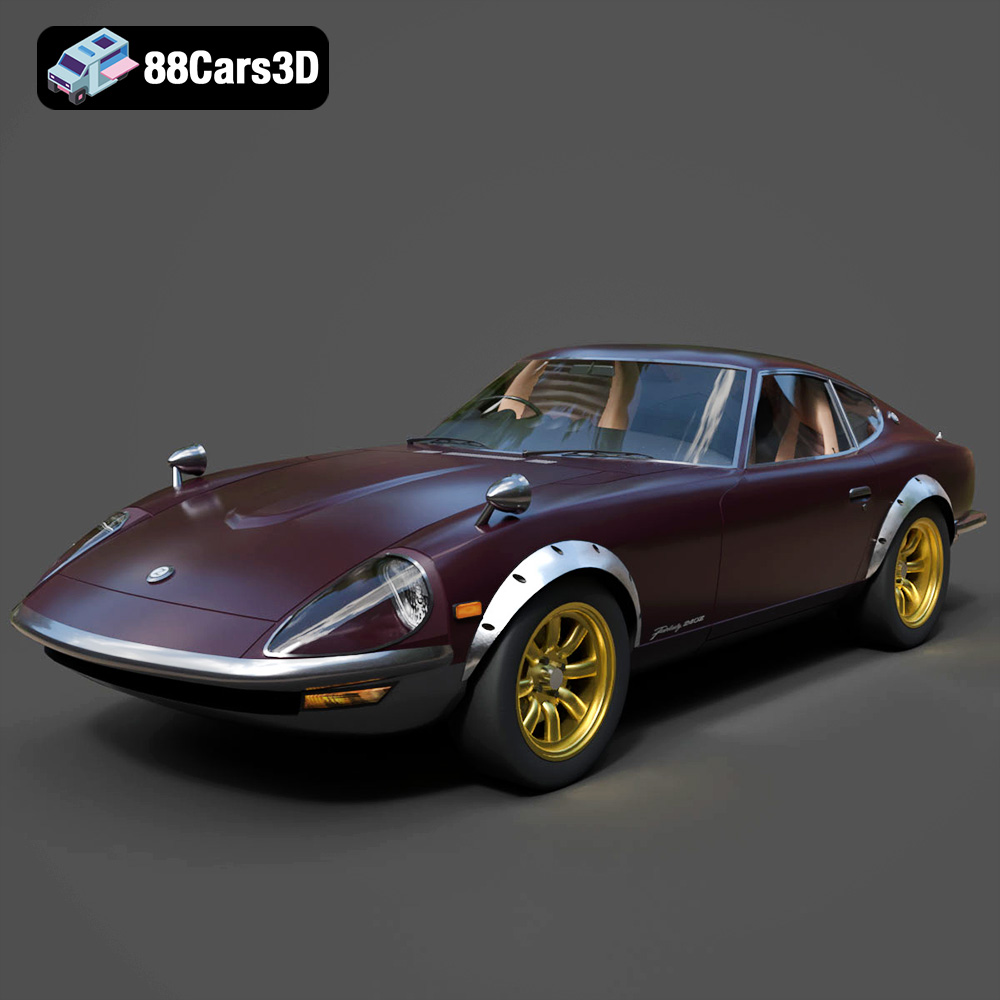
Texture: Yes
Material: Yes
Download the Nissan FairLady 240ZG 3D Model featuring clean geometry, realistic detailing, and a fully modeled interior. Includes .blend, .fbx, .obj, .glb, .stl, .ply, .unreal, and .max formats for rendering, simulation, and game development.
Price: $4.99
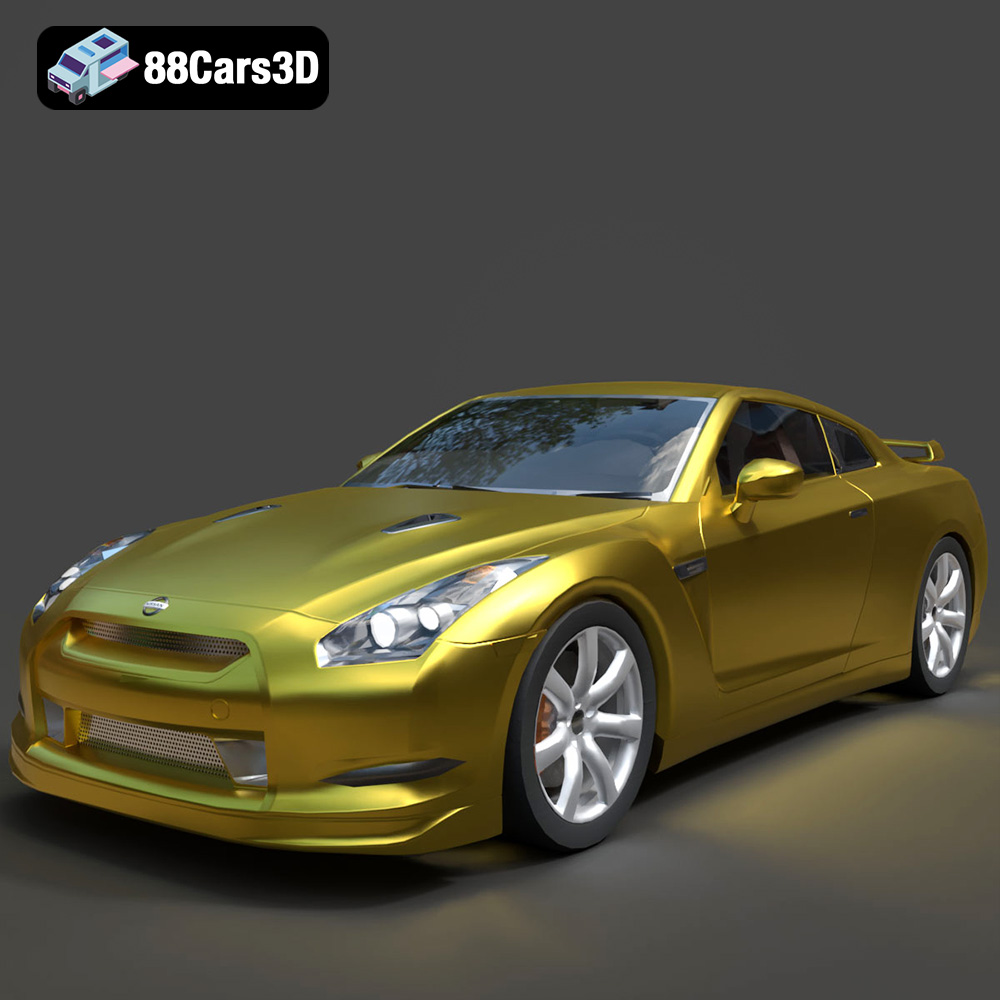
Texture: Yes
Material: Yes
Download the Nissan GT-R 2008 3D Model featuring clean geometry, realistic detailing, and a fully modeled interior. Includes .blend, .fbx, .obj, .glb, .stl, .ply, .unreal, and .max formats for rendering, simulation, and game development.
Price: $4.99

Texture: Yes
Material: Yes
Download the Nissan Cube 3D Model featuring clean geometry, realistic detailing, and a fully modeled interior. Includes .blend, .fbx, .obj, .glb, .stl, .ply, .unreal, and .max formats for rendering, simulation, and game development.
Price: $4.99

Texture: Yes
Material: Yes
Download the Nissan Cedric Y32 3D Model featuring clean geometry, realistic detailing, and a fully modeled interior. Includes .blend, .fbx, .obj, .glb, .stl, .ply, .unreal, and .max formats for rendering, simulation, and game development.
Price: $4.99

Texture: Yes
Material: Yes
Download the Nissan Cima Infiniti Q45 2007 3D Model featuring clean geometry, realistic detailing, and a fully modeled interior. Includes .blend, .fbx, .obj, .glb, .stl, .ply, .unreal, and .max formats for rendering, simulation, and game development.
Price: $4.99

Texture: Yes
Material: Yes
Download the Nissan Juke 2025 3D Model featuring clean geometry, realistic detailing, and a fully modeled interior. Includes .blend, .fbx, .obj, .glb, .stl, .ply, .unreal, and .max formats for rendering, simulation, and game development.
Price: $4.99
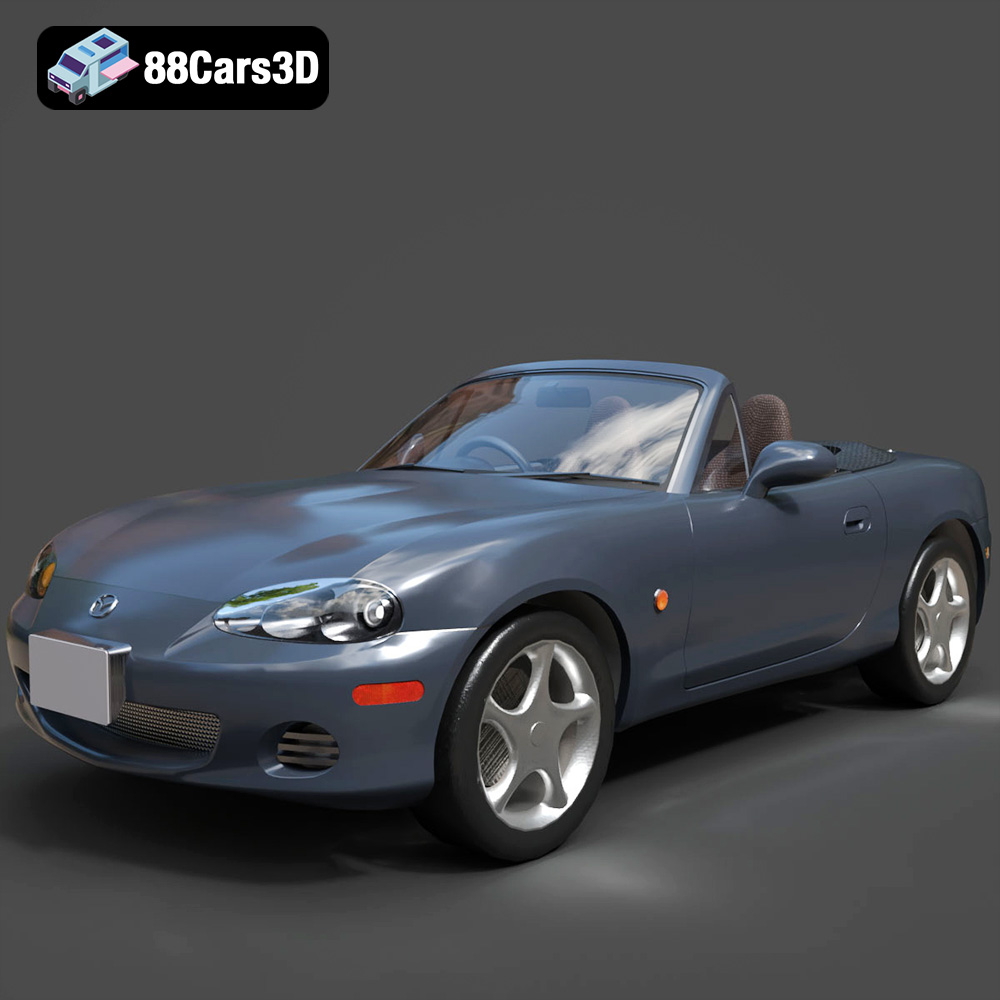
Texture: Yes
Material: Yes
Download the Mazda MX-5 2025 3D Model featuring clean geometry, realistic detailing, and a fully modeled interior. Includes .blend, .fbx, .obj, .glb, .stl, .ply, .unreal, and .max formats for rendering, simulation, and game development.
Price: $4.99

Texture: Yes
Material: Yes
Download the Nissan Maxima 2009 3D Model featuring clean geometry, realistic detailing, and a fully modeled interior. Includes .blend, .fbx, .obj, .glb, .stl, .ply, .unreal, and .max formats for rendering, simulation, and game development.
Price: $4.99
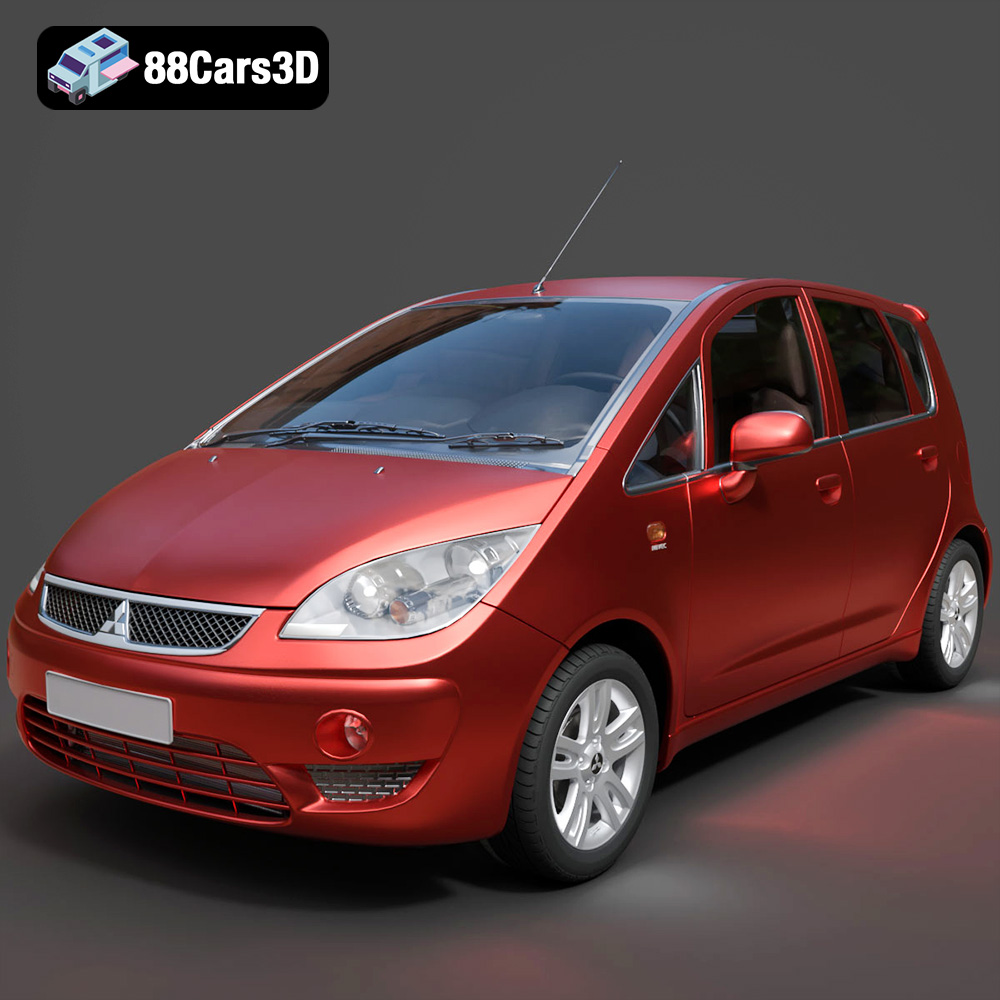
Texture: Yes
Material: Yes
Download the Mitsubishi Colt 2025 3D Model featuring clean geometry, realistic detailing, and a fully modeled interior. Includes .blend, .fbx, .obj, .glb, .stl, .ply, .unreal, and .max formats for rendering, simulation, and game development.
Price: $4.99

