⚡ FLASH SALE: Get 60% OFF All Premium 3D & STL Models! ⚡

The allure of the automobile transcends mere transportation; it’s a fusion of art, engineering, and cultural icon. For 3D artists, game developers, and visualization professionals, recreating this intricate beauty in a digital realm presents both a captivating challenge and an immense opportunity. High-quality 3D car models are the bedrock of stunning automotive rendering, immersive game assets, realistic AR/VR experiences, and precise 3D printing. But what truly defines a high-quality model, and how can you master the complex workflows required to achieve it?
This comprehensive guide dives deep into the technical intricacies of crafting, optimizing, and deploying exceptional 3D car models. We’ll explore everything from the foundational principles of clean topology and efficient UV mapping to advanced PBR material creation, cutting-edge rendering techniques, and crucial optimization strategies for real-time applications. Whether you’re aiming for cinematic realism or seamless interactive experiences, understanding these concepts is paramount. Prepare to elevate your projects, navigate common challenges, and uncover the secrets behind truly professional digital automotive assets.
At the heart of any exceptional 3D car model lies its topology. Good topology isn’t just about looking clean; it’s fundamental to how the model deforms, how subdivision surfaces behave, and ultimately, how light interacts with its surfaces during rendering. For automotive models, characterized by their smooth, reflective curves and sharp, precise panel gaps, immaculate edge flow is non-negotiable. Poor topology can lead to pinching, unsightly artifacts, and a loss of the car’s intended design aesthetic, especially when models are smoothed or animated.
The goal is to create an organized, quad-based mesh that follows the natural contours and design lines of the vehicle. This involves a meticulous approach to laying out polygons, ensuring they flow seamlessly along major surface changes, creases, and character lines. The density of your mesh also plays a critical role, with higher density required in areas of complex curvature or tight radii, and sparser topology on flatter panels to maintain efficiency. This careful balance ensures both visual fidelity and optimal performance, whether you’re working on a high-fidelity rendering or a performance-sensitive game asset.
Achieving perfect edge flow on complex automotive surfaces requires a strategic understanding of polygon distribution and pole placement. Poles, where more or less than four edges meet at a single vertex, are inevitable but must be managed carefully. Ideally, aim for 3-edge (N-gons) and 5-edge poles, strategically placing them in flatter, less visible areas to minimize their impact on surface smoothness. Avoiding 6-edge poles and higher, especially on curved surfaces, is crucial as they can introduce pinching and disrupt the flow.
When modeling car body panels, particular attention must be paid to maintaining continuity across surfaces. Edges should follow the direction of curvature and lead the eye smoothly along the panel. For sharp creases, like those around headlights or doors, using “holding loops” – additional edge loops placed close to the hard edge – helps to define the sharpness when subdivision surface modifiers are applied. Software like 3ds Max, Blender, and Maya provide powerful modeling tools (e.g., "Connect Edges," "Slide Edge," "Extrude along Spline") that assist in creating and refining these complex edge flows, ensuring the final subdivided mesh remains perfectly smooth and artifact-free. This attention to detail is what separates an average model from a truly professional one, ready for the most demanding rendering scenarios.
While cinematic renders can afford incredibly high polygon counts, real-time applications like games, AR, and VR demand efficiency. Understanding your target platform’s polygon budget is crucial. For high-resolution cinematic renders or marketing visuals, models might exceed 1 million polygons, allowing for incredibly fine detail and smooth surfaces even at close-up. However, for a modern game, a hero vehicle might range from 50,000 to 200,000 polygons, while mobile AR/VR applications could require models as low as 10,000 to 50,000 polygons. The polygon count directly impacts GPU performance, draw calls, and overall frame rate.
To bridge this gap, Level of Detail (LOD) systems are indispensable. LODs involve creating multiple versions of the same model, each with a progressively lower polygon count. The highest detail (LOD0) is used when the car is close to the camera, and as the car moves further away, the game engine switches to lower detail versions (LOD1, LOD2, etc.). This optimization dramatically reduces the computational load without noticeably impacting visual quality from a distance. Implementing LODs effectively requires planning during the modeling phase, ensuring that each LOD maintains the critical silhouette and visual identity of the car while shedding unnecessary geometric detail. Platforms like 88cars3d.com often provide models with various LODs to cater to diverse project needs, saving valuable production time.
Once your 3D car model’s topology is meticulously crafted, the next crucial step is giving it a convincing skin. This involves two closely related processes: UV mapping and PBR (Physically Based Rendering) material creation. UV mapping is the art of flattening the 3D surface of your car model into a 2D space, allowing textures to be applied accurately without distortion. Imagine unwrapping a gift – that’s essentially what UV mapping does for your 3D model. Without proper UVs, textures will stretch, blur, or appear incorrectly, undermining even the most perfect mesh. For complex automotive surfaces with their myriad of curves, sharp edges, and intricate details, strategic UV mapping is paramount to achieving photorealistic results.
Following UV mapping, PBR material creation takes center stage. PBR is a rendering technique that aims to simulate how light interacts with surfaces in the real world more accurately than traditional methods. This involves defining material properties like base color, metallicness, roughness, and normal maps, rather than just diffuse and specular values. The result is consistently realistic lighting and material responses across different lighting conditions, making the car look truly integrated into its environment. Mastering PBR workflows is essential for any modern 3D artist aiming for top-tier visual fidelity in their automotive projects.
Effective UV layout for automotive models prioritizes several key factors: minimizing seams, avoiding stretching, and maintaining consistent texel density. Seams are unavoidable, but they should be strategically placed in areas that are less visible or along natural breaks in the geometry, such as panel gaps, under trim pieces, or along the bottom of the car. Software like Blender’s UV Editor, 3ds Max’s Unwrap UVW modifier, and Maya’s UV Editor offer powerful tools for cutting seams, unfolding UVs, and arranging islands.
Texel density refers to the number of texture pixels per unit of surface area. Maintaining a consistent texel density across your entire car model ensures that all parts, from the large body panels to smaller details like door handles, receive an appropriate level of texture resolution. For instance, the main body might use an 8K texture map, while smaller, less prominent components could share a 2K or 4K map, or even be part of a larger texture atlas to optimize draw calls. Sometimes, multiple UV sets are used: one for primary textures (paint, decals), another for baked ambient occlusion or lightmaps, and perhaps a third for specific material effects like clear coat masks. This multi-layered approach provides maximum flexibility and detail.
PBR materials form the core of realistic surface representation. They typically adhere to either a Metallic/Roughness or Specular/Glossiness workflow, with Metallic/Roughness being more prevalent in modern pipelines. For a car’s paint, this means creating a Base Color map (the underlying hue), a Metallic map (defining metallic areas like chrome vs. non-metallic areas like plastic), a Roughness map (controlling surface micro-imperfections and shininess), and often a Normal map (adding fine surface detail without extra geometry). Additionally, complex car paint shaders often simulate a clear coat layer, which involves its own set of roughness and normal maps, and sometimes even specialized flakes or pearlescent effects.
Beyond paint, consider the array of materials in a car: glass (refractive, reflective), chrome (highly metallic, low roughness), rubber (non-metallic, high roughness), plastic (varying metallic and roughness), and interior fabrics. Each requires a carefully constructed PBR material. Tools like Substance Painter and Quixel Mixer are industry standards for creating PBR textures, allowing artists to paint directly onto the 3D model, generating all necessary maps simultaneously. These maps are then integrated into a shader network within your chosen rendering software (e.g., Corona, V-Ray, Cycles, Arnold) or game engine (Unity, Unreal Engine). Understanding how these maps interact within the shader network is key to achieving photorealistic reflections, accurate refractions, and believable surface characteristics that truly bring a 3D car model to life.
Once your 3D car model boasts impeccable topology, UVs, and PBR materials, the next thrilling stage is bringing it to life through rendering. This process transforms your digital asset into a stunning 2D image or animation, complete with realistic lighting, shadows, reflections, and atmospheric effects. A successful render is a careful orchestration of scene setup, lighting, camera work, and precise renderer settings. It’s where all the meticulous work on the model pays off, revealing its full potential. The ultimate goal is to create an image that is not only visually appealing but also conveys the car’s design intent and evokes emotion, whether for marketing, product visualization, or conceptual design.
Professional automotive rendering requires a deep understanding of light physics and artistic composition. It’s not just about hitting the render button; it’s about crafting a narrative with light and shadow. From setting up a convincing environment to fine-tuning the subtle nuances of reflections on a curved surface, every decision impacts the final realism. Leveraging modern rendering engines like Corona, V-Ray, Cycles, and Arnold allows artists to simulate complex physical phenomena with increasing accuracy, but mastering their specific features and optimization techniques is crucial for efficient and high-quality output.
Lighting is arguably the most critical element in automotive rendering. A beautifully modeled car can look flat and uninspiring under poor lighting, while a well-lit scene can make even a simpler model shine. High Dynamic Range Images (HDRIs) are the backbone of modern realistic lighting. An HDRI provides both environmental lighting (global illumination) and reflections from a single texture, accurately capturing the nuances of real-world lighting conditions – be it a sunny outdoor scene, an overcast day, or a studio setup. Applying an HDRI to an environment sphere or dome within your 3D software (e.g., 3ds Max, Blender, Maya) immediately grounds your car in a realistic context.
Beyond HDRIs, studio lighting setups are often employed for controlled and artistic results. Common techniques include three-point lighting (key, fill, and back lights) to sculpt the car’s form, softboxes, and large area lights to create pleasing reflections and smooth gradients on the car’s paintwork. Light-linking, a feature in most renderers, allows specific lights to affect only certain objects or exclude others, giving artists precise control over reflections and illumination. For instance, a dedicated light might be used solely to create a crisp highlight on a particular body line. Simulating caustics for glass components (headlights, windshields) and subtle subsurface scattering for materials like brake lights or badges further enhances realism. The interplay of direct light, bounce light, and accurate reflections is what ultimately sells the illusion of a physical object.
Modern renderers offer a plethora of settings that significantly impact both render quality and time. Understanding these settings for your chosen engine – be it Corona, V-Ray, Cycles, or Arnold – is crucial for efficient workflows. For instance, in Corona Renderer, the "Noise Level Limit" and "Pass Limit" settings allow you to control the trade-off between render time and image cleanliness. Its interactive render is invaluable for real-time feedback on lighting and material adjustments.
V-Ray offers powerful GPU rendering options that can dramatically speed up computations, especially for scenes with extensive geometry and lights. Artists can fine-tune global illumination settings (e.g., Irradiance Map, Light Cache) and image samplers to achieve optimal results. Blender’s Cycles renderer benefits greatly from denoising algorithms (like OpenImageDenoise or OptiX) which can significantly reduce noise in fewer samples, leading to faster renders. Arnold, favored for its physically accurate ray tracing, often requires careful management of ray depth settings and sample counts for different light types to balance quality and speed. Utilizing render passes (e.g., Z-depth, Albedo, Reflection, Specular) allows for greater flexibility during post-processing and compositing, enabling artists to fine-tune individual elements without re-rendering the entire scene. Mastering these specific settings can cut render times from hours to minutes while maintaining exceptional visual fidelity.
While cinematic renders aim for absolute photorealism without real-time constraints, integrating 3D car models into game engines like Unity and Unreal Engine demands a completely different set of priorities: performance. A beautiful, high-polygon model with complex PBR materials and intricate shader networks will cripple a game’s frame rate if not properly optimized. The challenge lies in striking a delicate balance between visual fidelity and real-time performance, ensuring that players experience smooth gameplay without sacrificing the immersive quality of the vehicle.
Game engine optimization is an art form in itself, involving a meticulous reduction of computational load on both the CPU and GPU. This includes intelligent use of Level of Detail (LOD) systems, minimizing draw calls, optimizing textures, and crafting efficient materials and shaders. For a game developer or a studio creating interactive automotive experiences, understanding these optimization techniques is as important as the initial modeling phase. A high-quality 3D car model from platforms like 88cars3d.com often comes with pre-optimized versions and multiple file formats, streamlining the integration process into your chosen game engine.
Level of Detail (LOD) systems are critical for managing polygon counts in real-time environments. As discussed earlier, multiple versions of the car model with decreasing geometric complexity are created. For a hero car in a racing game, you might have LOD0 (100k-200k tris) for close-ups, LOD1 (30k-50k tris) for medium distances, LOD2 (5k-10k tris) for distant views, and even a billboard or simple proxy for extreme distances. Game engines dynamically swap these models based on the camera’s distance, ensuring only necessary detail is rendered. Implementing LODs requires careful retopology and simplification while preserving the car’s silhouette.
Draw calls are another major performance bottleneck. Each time the GPU has to draw an object with a unique material, it incurs a draw call. A car with dozens of individual materials (one for each small part) can lead to hundreds of draw calls per car, quickly accumulating when multiple cars are on screen. Texture atlasing is a powerful solution: combining multiple smaller textures (e.g., for different interior parts, logos, badges) into a single, larger texture map. Correspondingly, consolidating materials into as few as possible (ideally one or two per car for body, glass, and interior) significantly reduces draw calls. This optimization technique, combined with efficient mesh geometry for collision physics, can drastically improve frame rates in demanding game scenarios.
While PBR maps are largely transferable, setting up materials within a game engine often involves specific considerations. Game engines like Unity and Unreal Engine have their own physically-based shading models. Converting your high-resolution PBR maps (Base Color, Metallic, Roughness, Normal, Ambient Occlusion) into textures compatible with the engine is typically straightforward. However, replicating complex car paint shaders with clear coats, metallic flakes, and iridescent effects requires more advanced techniques. Unreal Engine’s Material Editor, with its node-based workflow, allows for the creation of intricate custom shaders that simulate multi-layered car paint effects with optimized performance. Unity’s Shader Graph offers similar capabilities for visual shader creation.
Performance considerations are paramount: avoid overly complex shader networks with too many instructions, as these can quickly become GPU-intensive. Features like refraction for glass, while visually appealing, can be costly. Often, approximations or simpler shaders are used for transparency and reflections in games. Baking lighting and ambient occlusion directly into vertex colors or texture maps can also reduce real-time lighting calculations. Understanding the capabilities and limitations of the game engine’s rendering pipeline is crucial for building high-quality yet performant car assets that enhance the player’s experience.
The utility of high-quality 3D car models extends far beyond traditional rendering and game development. With the rise of immersive technologies, advanced manufacturing, and universal scene descriptions, these digital assets are finding new homes in exciting applications like Augmented Reality (AR), Virtual Reality (VR), and 3D printing. Each of these fields presents its own unique set of technical challenges and optimization requirements, demanding specialized workflows and an understanding of specific file formats. The ability to prepare a single 3D car model for such diverse applications is a testament to its quality and the artist’s expertise.
Navigating the landscape of file formats is equally critical. From the ubiquitous FBX and OBJ to the emerging GLB and USDZ, each format carries specific data and offers different levels of compatibility. Understanding which format is best suited for a particular application, and the best practices for converting between them, is essential for seamless integration into any pipeline. Whether you’re showcasing a new vehicle in an interactive AR experience or prototyping a component via 3D printing, the foundational quality of your 3D car model remains paramount.
AR/VR applications, especially on mobile devices, impose extremely stringent performance requirements. While a game might allow for a hero car of 100k polygons, an AR/VR experience often demands models to be aggressively optimized down to 5,000 to 20,000 triangles for an entire car. This involves meticulous decimation and simplification while preserving critical visual details.
Platforms like 88cars3d.com recognize these demands, often providing specially optimized models suitable for AR/VR, ensuring your projects run smoothly on target devices without compromising visual integrity.
3D printing requires a completely different approach to mesh preparation. The core requirement is a "watertight" or "manifold" mesh – meaning there are no holes, internal geometry, or disconnected edges. Every edge must connect to exactly two faces, forming a completely enclosed volume. Issues like flipped normals, non-manifold edges, or intersecting geometry must be repaired using tools in software like Blender (3D Print Toolbox), 3ds Max (STL Check), or dedicated mesh repair tools like Netfabb. Wall thickness is also a critical consideration, as thin areas might not print successfully or be too fragile. Scaling the model to the correct real-world dimensions is also essential.
When it comes to **file format conversions and compatibility**, understanding the strengths of each is vital:
Converting between formats can sometimes lead to data loss (e.g., complex shaders in FBX might simplify when exported to OBJ). Always verify the exported model in the target software to ensure fidelity. When sourcing models from marketplaces such as 88cars3d.com, pay attention to the list of included file formats to ensure compatibility with your specific project needs.
Mastering the art and science of 3D car models is a journey that intertwines technical precision with artistic vision. From the foundational intricacies of pristine topology and efficient UV mapping to the advanced alchemy of PBR materials and high-fidelity rendering, every step contributes to the creation of truly captivating digital vehicles. We’ve explored how to bring these machines to life in stunning visualizations, optimize them for the demanding real-time environments of game development, and prepare them for emerging frontiers like AR/VR and 3D printing.
The landscape of 3D production is constantly evolving, but the core principles of quality, efficiency, and adaptability remain timeless. By embracing industry best practices, understanding the nuances of various software, and strategically navigating file formats, you empower yourself to tackle any project with confidence. Whether your goal is a hyper-realistic cinematic render, an immersive driving experience, or a functional physical prototype, the techniques discussed here are your roadmap to success. Continue to experiment, learn, and push the boundaries of what’s possible in the world of 3D automotive design. For those seeking a head start, exploring professional-grade 3D car models from trusted sources like 88cars3d.com can provide the high-quality base assets needed to jumpstart your next groundbreaking project.
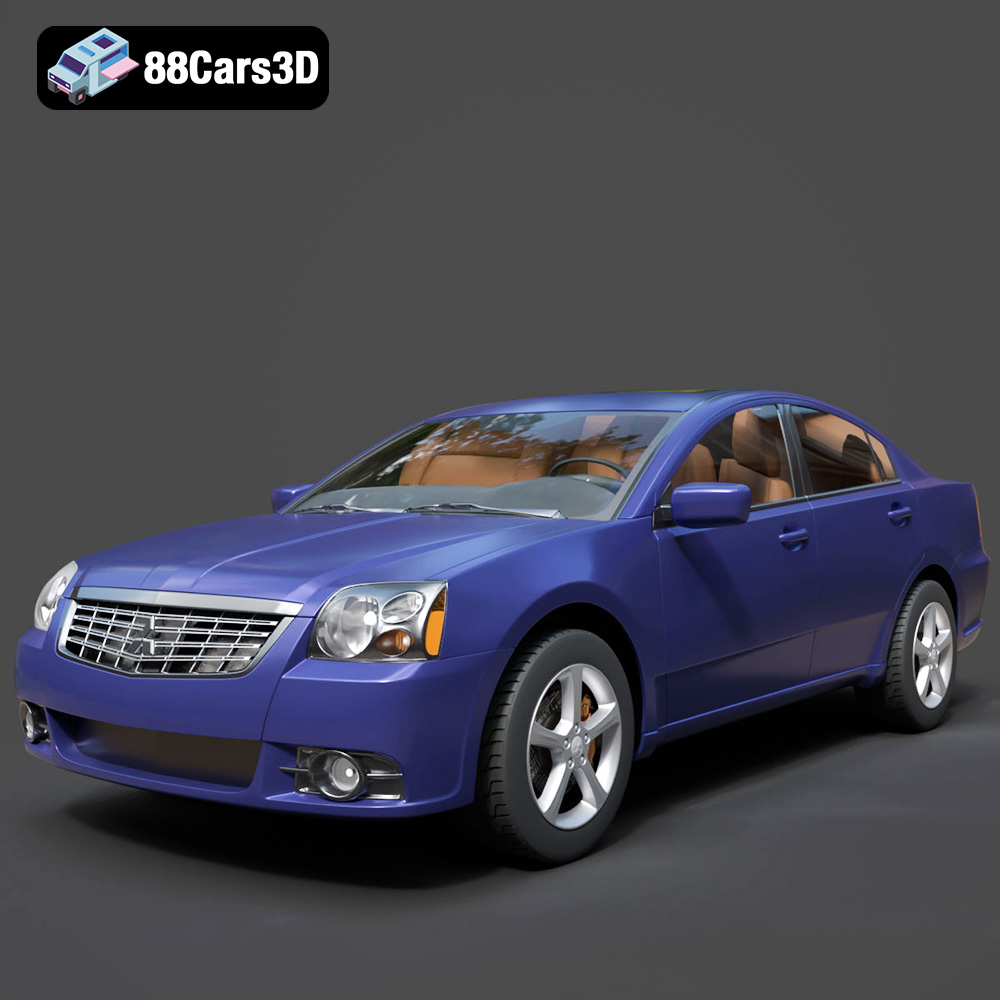
Texture: Yes
Material: Yes
Download the Mitsubishi Galant 2009 3D Model featuring clean geometry, realistic detailing, and a fully modeled interior. Includes .blend, .fbx, .obj, .glb, .stl, .ply, .unreal, and .max formats for rendering, simulation, and game development.
Price: $4.99
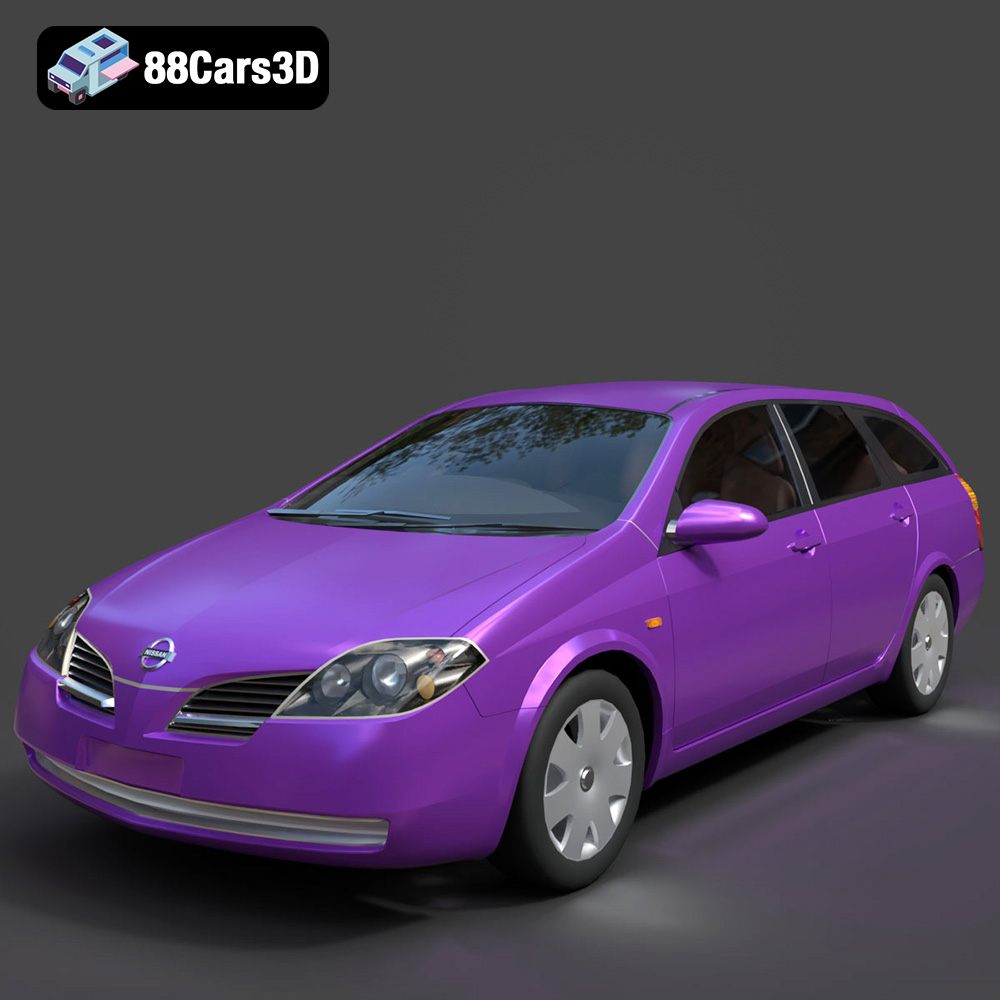
Texture: Yes
Material: Yes
Download the Nissan Primera Wagon 3D Model featuring clean geometry, realistic detailing, and a fully modeled interior. Includes .blend, .fbx, .obj, .glb, .stl, .ply, .unreal, and .max formats for rendering, simulation, and game development.
Price: $4.99
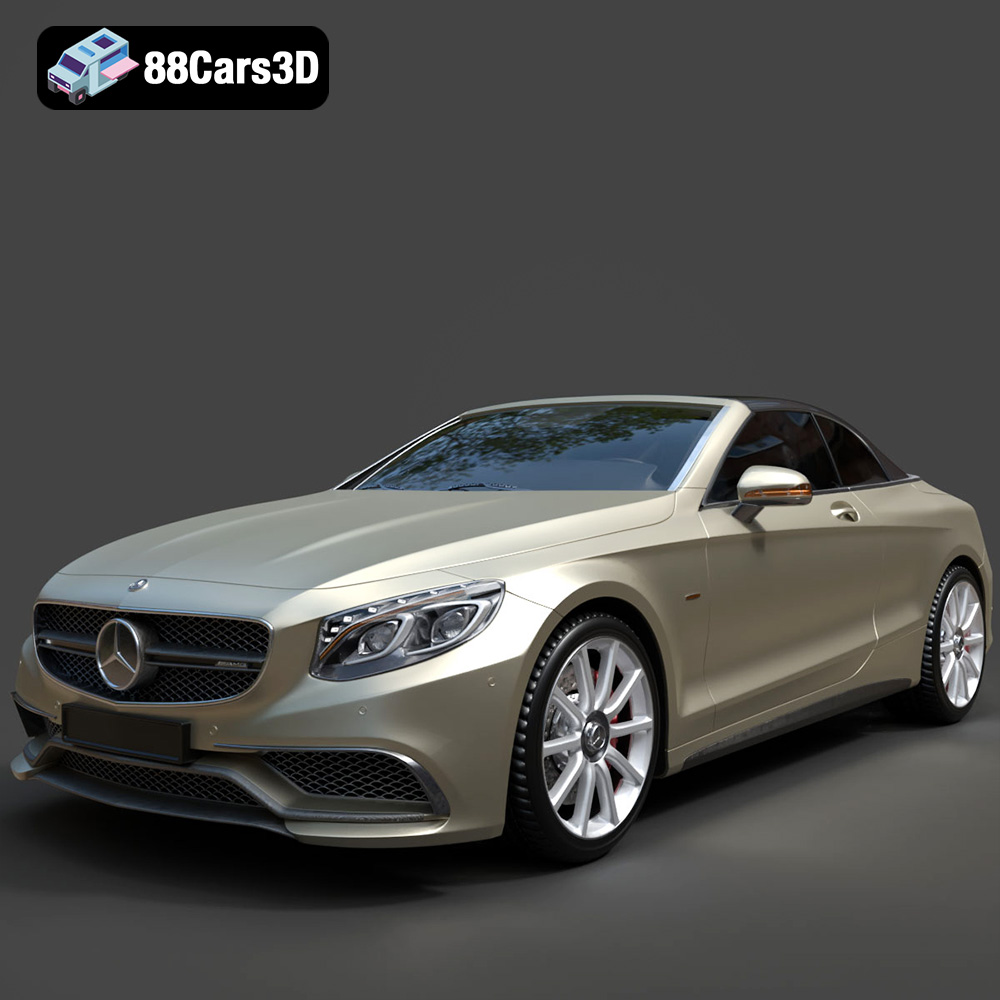
Texture: Yes
Material: Yes
Download the Mercedes-Benz S63 AMG Cabriolet 2017 3D Model featuring clean geometry, realistic detailing, and a fully modeled interior. Includes .blend, .fbx, .obj, .glb, .stl, .ply, .unreal, and .max formats for rendering, simulation, and game development.
Price: $20.99
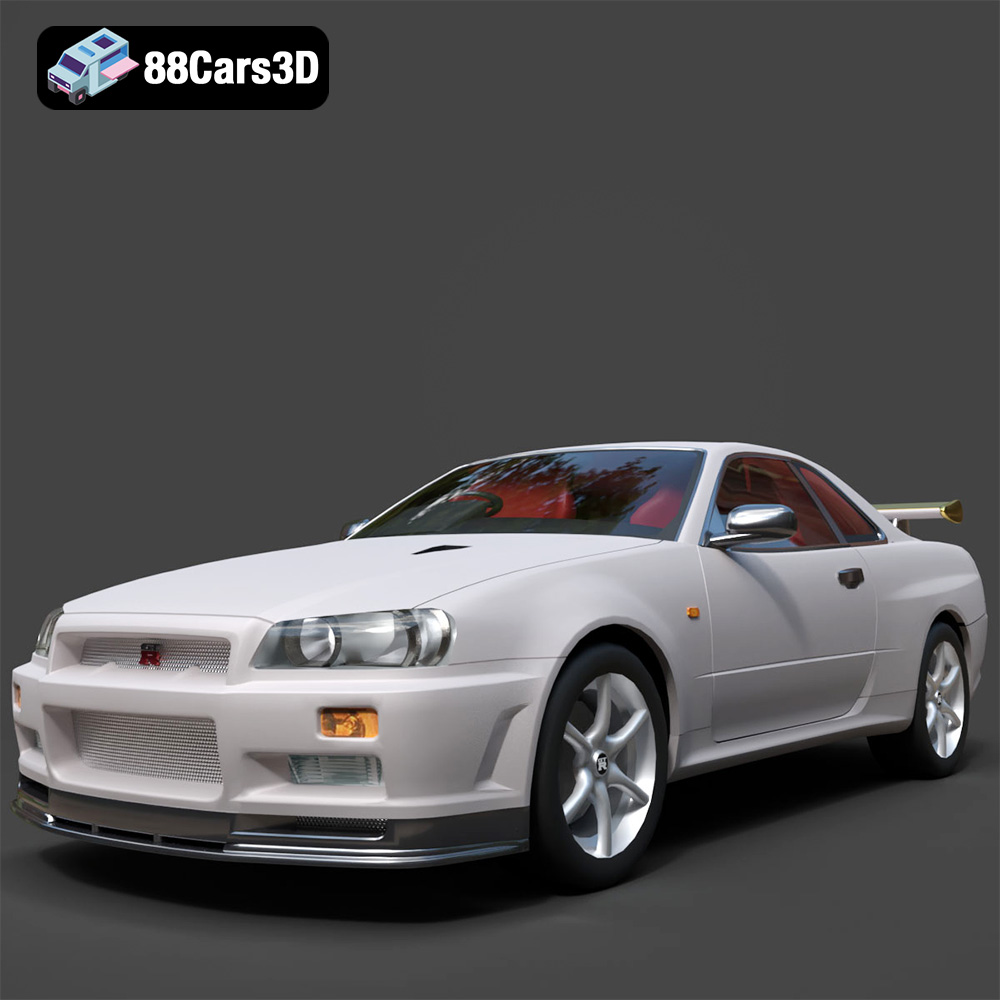
Texture: Yes
Material: Yes
Download the Nissan Skyline R34 2002 3D Model featuring clean geometry, realistic detailing, and a fully modeled interior. Includes .blend, .fbx, .obj, .glb, .stl, .ply, .unreal, and .max formats for rendering, simulation, and game development.
Price: $4.99
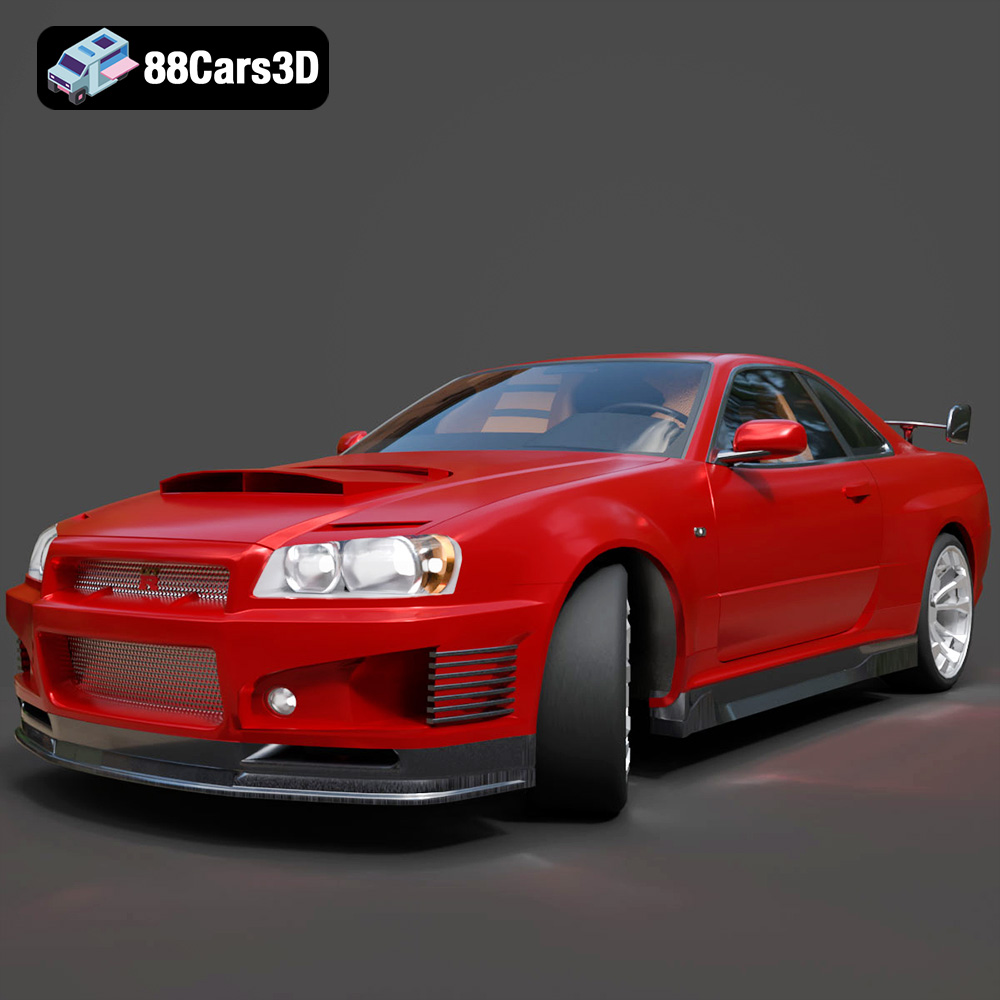
Texture: Yes
Material: Yes
Download the Nissan Skyline 3D Model featuring clean geometry, realistic detailing, and a fully modeled interior. Includes .blend, .fbx, .obj, .glb, .stl, .ply, .unreal, and .max formats for rendering, simulation, and game development.
Price: $9.99
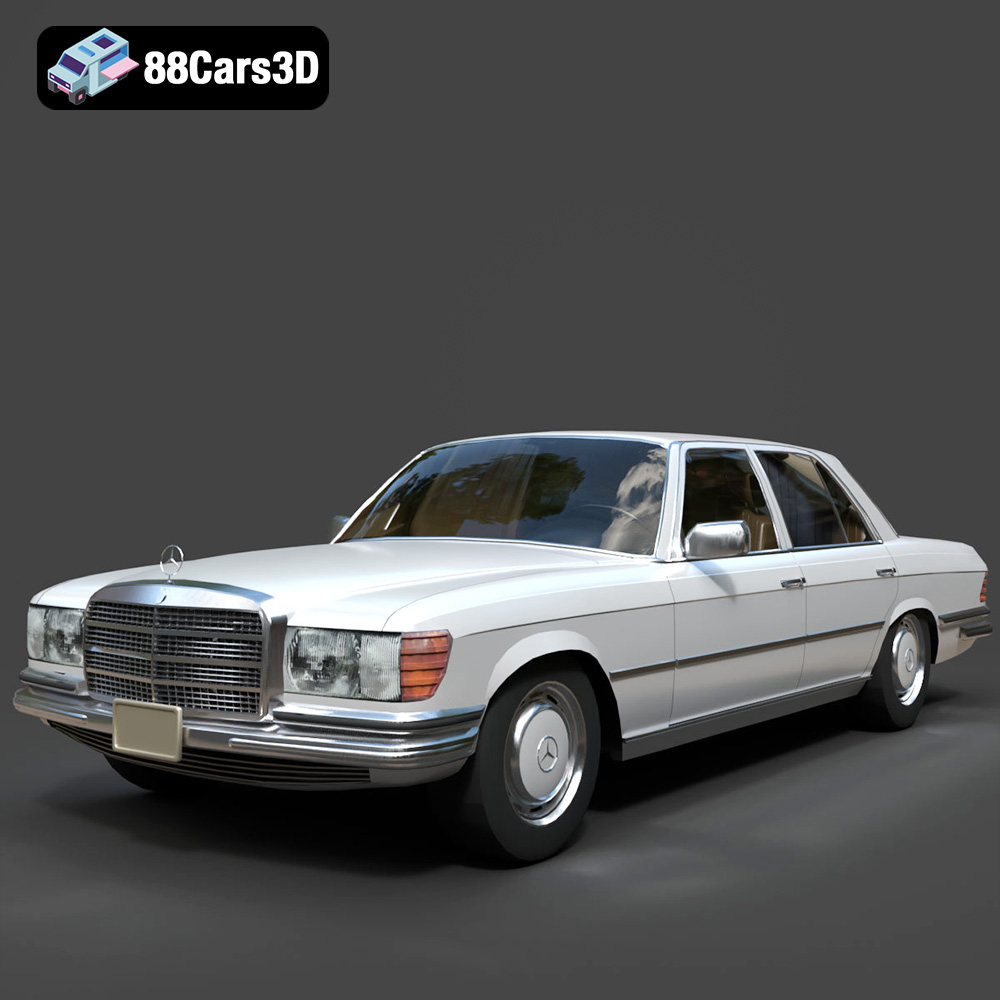
Texture: Yes
Material: Yes
Download the Mercedes-Benz S-Klasse W116 3D Model featuring clean geometry, realistic detailing, and a fully modeled interior. Includes .blend, .fbx, .obj, .glb, .stl, .ply, .unreal, and .max formats for rendering, simulation, and game development.
Price: $4.99
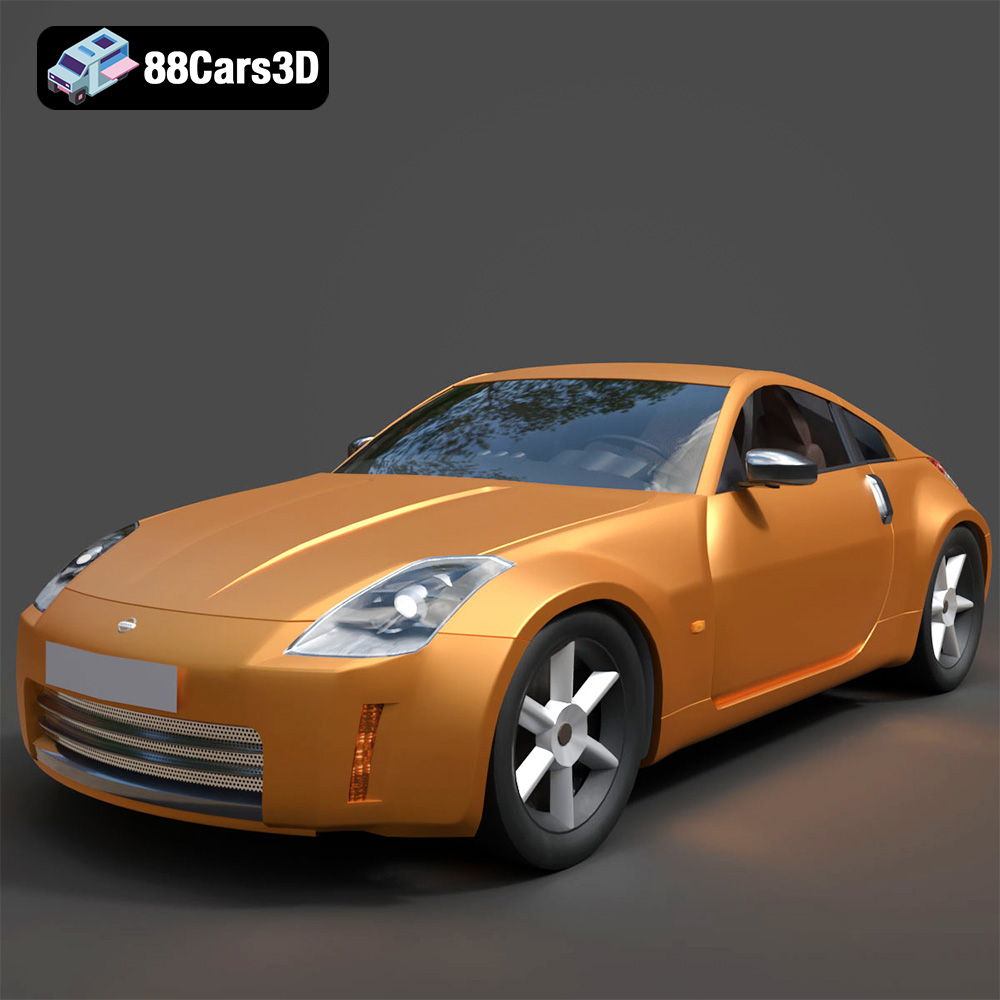
Texture: Yes
Material: Yes
Download the Nissan 350Z 3D Model featuring clean geometry, realistic detailing, and a fully modeled interior. Includes .blend, .fbx, .obj, .glb, .stl, .ply, .unreal, and .max formats for rendering, simulation, and game development.
Price: $4.99

Texture: Yes
Material: Yes
Download the Nissan Skyline V35 2001 3D Model featuring clean geometry, realistic detailing, and a fully modeled interior. Includes .blend, .fbx, .obj, .glb, .stl, .ply, .unreal, and .max formats for rendering, simulation, and game development.
Price: $4.99

Texture: Yes
Material: Yes
Download the Mercedes-Benz S-Klasse 221-007 3D Model featuring clean geometry, realistic detailing, and a fully modeled interior. Includes .blend, .fbx, .obj, .glb, .stl, .ply, .unreal, and .max formats for rendering, simulation, and game development.
Price: $4.99
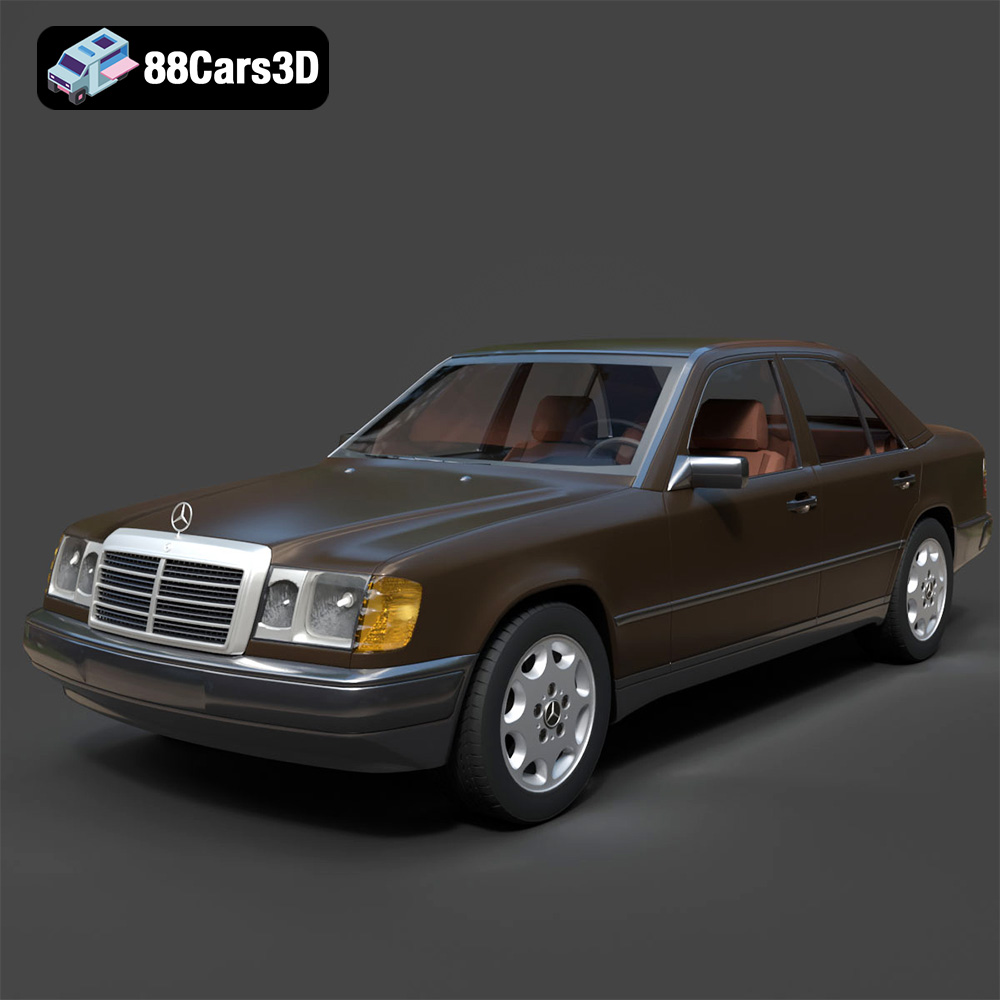
Texture: Yes
Material: Yes
Download the Mercedes W124 Sedan 3D Model featuring clean geometry, realistic detailing, and a fully modeled interior. Includes .blend, .fbx, .obj, .glb, .stl, .ply, .unreal, and .max formats for rendering, simulation, and game development.
Price: $4.99

