
The Foundation of Realism: Automotive 3D Modeling Topology and Edge Flow

In the dynamic world of 3D visualization, few subjects captivate the imagination and demand as much technical precision as automotive design. From sleek supercars gracing cinematic screens to rugged off-roaders tearing through virtual landscapes in cutting-edge games, 3D car models are fundamental assets across a myriad of industries. Creating, optimizing, and deploying these complex models requires a deep understanding of intricate workflows, sophisticated software techniques, and adherence to stringent industry standards. This comprehensive guide will take you on an in-depth journey, exploring the technical intricacies behind crafting flawless 3D vehicle assets.
Whether you’re a seasoned 3D artist aiming for photorealism in your automotive rendering, a game developer striving for optimized game assets, an architect visualizing a future urban landscape, or a product designer leveraging AR/VR for interactive experiences, the quality of your 3D car models dictates the success of your project. We’ll delve into the foundational principles of topology and UV mapping, master the art of PBR materials, navigate advanced rendering workflows, demystify game engine optimization, and explore specialized applications like 3D printing and immersive visualization. Prepare to unlock the secrets to creating truly stunning and performant automotive models, enhancing your creative toolkit and delivering unparalleled visual fidelity in every endeavor.
The Foundation of Realism: Automotive 3D Modeling Topology and Edge Flow
The journey to a photorealistic 3D car model begins with its underlying mesh structure – its topology. Automotive surfaces are renowned for their sweeping curves, crisp lines, and intricate panel gaps, all of which must be meticulously represented to avoid visual artifacts. A clean, efficient topology is not just about aesthetics; it’s crucial for smooth deformations, accurate reflections, and efficient subdivision. Poor topology can lead to pinching, unwanted bumps, and difficult UV unwrapping, compromising the entire asset. The goal is to create a mesh that is both visually accurate and technically sound, minimizing unnecessary polygons while preserving essential details.
Clean Topology for Smooth Surfaces
At the heart of good automotive topology lies the principle of quad-dominant meshes. While some triangulations are inevitable, especially for complex non-deforming parts, the bulk of your car’s body panels should consist of four-sided polygons (quads). Quads allow for predictable subdivision, meaning when you apply a subdivision surface modifier (like TurboSmooth in 3ds Max or Subdivision Surface in Blender/Maya), the surface will smooth out evenly without creating undesirable creases or pinches. N-gons (polygons with more than four sides) should be strictly avoided on surfaces that will be subdivided, as they can lead to unpredictable shading and triangulation artifacts. A common practice is to model the primary forms with large, evenly distributed quads, then add supporting edge loops to define sharper creases and panel lines.
For example, when modeling a car fender, begin with a low-polygon approximation of its general shape using quads. As you refine the silhouette, use loop cuts to add detail and curvature. The spacing of these edge loops is critical: denser loops around areas of high curvature or sharp edges, and sparser loops on flat surfaces. This approach allows for a relatively low base mesh polygon count while achieving high visual fidelity after subdivision. Typical polygon counts for a high-quality, subdividable automotive body range from 50,000 to 150,000 quads for the base mesh, which can become millions after subdivision for extreme close-ups in rendering.
Edge Flow and Crease Control
Edge flow refers to the direction and continuity of edge loops across your model. In automotive design, excellent edge flow is paramount for accurately capturing the car’s design intent, particularly for those iconic character lines and precise panel gaps. Edges should follow the natural contours of the vehicle, defining where surfaces transition and how they interact. For instance, the edges defining a headlight housing should seamlessly flow into the surrounding fender, maintaining a consistent gap and curvature.
To control surface creases and sharp details, artists employ various techniques. For subtle, smooth transitions, a few closely spaced edge loops around a feature will help define its sharpness after subdivision. For truly hard edges, such as the lip of a wheel arch or a crisp body line, you might use three or more tightly packed edge loops to “hold” the sharp angle. Alternatively, some workflows involve modeling hard edges with beveled curves or using weighted normals to achieve sharp appearances without excessively dense geometry. Understanding how edge loops terminate (e.g., using poles or redirecting flow) is also crucial to prevent artifacts. Mastering edge flow ensures that reflections on the car’s paintwork appear smooth and undistorted, contributing significantly to the overall realism of your automotive rendering.
Mastering Surface Detail: UV Mapping and PBR Material Creation
Once the geometric foundation is solid, the next crucial step is to define how textures will be applied to your 3D car model. This is where UV mapping comes into play, an often underestimated but profoundly important stage in achieving realistic surfaces. Following UVs, we move into the realm of PBR materials, which dictate how light interacts with the car’s surfaces, from the glossy sheen of its paint to the subtle imperfections on its tires and the intricate reflections in its chrome trim. Together, these processes transform a bare mesh into a visually convincing digital counterpart of a real-world vehicle.
Efficient UV Layout for Automotive Assets
UV mapping is the process of flattening the 3D surface of your model into a 2D space, allowing you to paint or apply 2D texture maps onto it. For complex automotive surfaces, an efficient UV layout is paramount. Poor UVs can lead to stretched textures, visible seams, and inefficient texture usage. The primary goals are to minimize distortion, maximize texel density (the number of texture pixels per unit of surface area), and place seams in inconspicuous locations. For a car body, this often means creating UV islands for major panels like the hood, doors, and roof, with seams carefully placed along natural breaks or panel lines.
Advanced techniques include utilizing multi-tile UVs, such as UDIMs, which allow for multiple texture sets across different parts of the model while maintaining high resolution. For instance, the car body might have its own UDIM tile at 4K or 8K resolution, while smaller details like emblems or interior components reside on separate tiles. This prevents large areas from suffering from low-resolution textures and provides flexibility. For small, repetitive details or generic materials, careful use of tiling textures with masks can also save UV space and texture memory. When acquiring models from platforms like 88cars3d.com, pay attention to the UV layout, ensuring it’s clean, organized, and optimized for various texture resolutions (e.g., 2048×2048 to 8192×8192 for major components).
Crafting Realistic PBR Shaders
Physically Based Rendering (PBR) materials are the industry standard for achieving photorealistic results because they accurately simulate how light behaves in the real world. A PBR shader network typically consists of several maps:
- Albedo/Base Color: Defines the base color of the surface without any lighting information. For cars, this would be the core color of the paint, plastic, or leather.
- Normal Map: Adds high-frequency surface detail (bumps, scratches, subtle textures) without increasing geometry, faking surface irregularities.
- Roughness Map (or Glossiness): Controls how rough or smooth a surface is, directly impacting how light reflects. A low roughness value means a highly reflective, glossy surface (like car paint), while a high value creates a diffuse, matte finish (like rubber).
- Metallic Map: Differentiates between dielectric (non-metallic) and metallic surfaces. Pure metals have a value of 1, non-metals 0. Car paints are dielectric, but chrome trim or polished metal parts are metallic.
- Ambient Occlusion (AO) Map: Simulates soft shadows where surfaces are close together, adding depth and realism to crevices and corners.
For automotive paint, a complex PBR setup often involves multiple layers. A metallic base coat (using the Metallic map) might be overlaid with a clear coat (a dielectric layer with high reflectivity and low roughness). Flake maps can be used in conjunction with a normal or anisotropy map to simulate the metallic flakes embedded in car paint, creating that distinctive shimmering effect. Understanding how these maps interact within your chosen renderer (e.g., Corona, V-Ray, Cycles, Arnold) is key to creating a convincing material. Experiment with precise RGB values for colors and grayscale values for roughness and metallic maps to fine-tune the material’s response to light.
Bringing Cars to Life: High-Fidelity Rendering Workflows
With a meticulously modeled and textured 3D car model, the next frontier is automotive rendering – the process of generating a photorealistic image from your 3D scene. This stage involves sophisticated lighting setups, advanced material definitions, and fine-tuning render engine parameters to capture every nuance of the vehicle’s design and surface properties. Achieving breathtaking renders requires a blend of technical expertise and artistic vision, making the car appear as if it exists in the physical world. The right lighting and environment can elevate a good model to an exceptional visual experience, showcasing reflections, shadows, and material properties in their best light.
Setting Up Studio-Quality Lighting and Environments
Effective lighting is paramount for compelling automotive rendering. For studio-style shots, a common approach is to use High Dynamic Range Images (HDRIs) as primary light sources. HDRIs provide realistic environmental lighting and reflections, simulating everything from a sunny outdoor scene to a professional studio setup with softboxes. In 3ds Max with Corona or V-Ray, or Blender with Cycles, an HDRI mapped to a dome light or world environment is often the starting point. This provides global illumination and accurate reflections on the car’s body. For example, a crisp, clean HDRI of an overcast sky or a controlled studio with large softboxes can produce ideal, even lighting that emphasizes the car’s form without harsh shadows.
Complementing HDRIs, dedicated area lights or emissive planes can be strategically placed to highlight specific features, add key reflections, or separate the car from the background. A three-point lighting setup (key, fill, and back/rim light) can be adapted for cars to emphasize contours and create depth. IES (Illuminating Engineering Society) profiles can be used with photometric lights to simulate real-world light fixtures, useful for interior car renders or detailed close-ups of headlights. Ensure your environment also has a floor or ground plane that interacts with the lighting and shadows, even if it’s not visible in the final shot, to ground the car realistically within the scene. For game assets, baking these lighting details into lightmaps can also provide highly optimized, static global illumination.
Render Engine Specifics and Optimization
Different render engines offer unique strengths and workflows.
- Corona Renderer (3ds Max): Known for its ease of use and physically accurate results, Corona excels with realistic global illumination and simplified material setups. It’s often favored for its intuitive controls and efficient progressive rendering. Optimization involves managing noise (through passes or denoisers), setting appropriate light samples, and optimizing geometry.
- V-Ray (3ds Max, Maya): A long-standing industry standard, V-Ray offers immense control over every aspect of rendering. It supports both CPU and GPU rendering, with features like adaptive sampling and a comprehensive array of render elements (passes) for compositing. It’s crucial to optimize subdiv levels, light bounces, and sampling rates to balance quality and render time.
- Cycles (Blender): Blender’s native physically-based path tracer, Cycles, leverages both CPU and GPU (NVIDIA CUDA/OptiX, AMD HIP) for rendering. It offers advanced features like adaptive sampling, denoisers (OptiX, OIDN, NLM), and powerful node-based materials. Optimizing Cycles involves reducing bounces for indirect lighting where appropriate, consolidating materials, and leveraging instancing.
- Arnold (Maya, 3ds Max): A production-grade Monte Carlo path tracer, Arnold is renowned for its robustness and ability to handle complex scenes with millions of polygons. It’s excellent for realistic scattering and volumetric effects. Optimization here focuses on intelligent camera (AA), diffuse, specular, and transmission samples, and efficient use of texture memory.
Regardless of the engine, common optimization techniques include using instance geometry for repeated elements (like wheels or interior buttons), managing texture resolution to prevent unnecessary memory usage, and leveraging render passes. Render passes (e.g., diffuse, reflection, refractions, Z-depth, normal, AO) allow for greater control during post-processing in applications like Photoshop or Nuke, enabling adjustments to lighting, color, and effects without re-rendering the entire image. This compositing workflow is a professional standard for fine-tuning your final automotive rendering.
Performance in Motion: Game Engine Optimization for 3D Car Assets
While photorealistic renders prioritize visual fidelity above all else, integrating 3D car models into real-time environments like game engines introduces a new set of challenges: performance optimization. Game engines such as Unity and Unreal Engine demand highly efficient assets that can be rendered tens or hundreds of times per second without bogging down the frame rate. This requires a strategic approach to polygon count, texture usage, and material complexity. Optimized game assets ensure a smooth, immersive experience for players, whether they’re racing on a track or exploring an open world.
Level of Detail (LODs) and Draw Call Reduction
One of the most critical optimization techniques for game assets is the implementation of Level of Detail (LODs). LODs are multiple versions of the same mesh, each with a progressively lower polygon count. The game engine automatically switches between these versions based on the camera’s distance from the object. For a high-quality 3D car model, you might have:
- LOD0: Full detail, 50,000-150,000 triangles, for close-ups.
- LOD1: Medium detail, 15,000-30,000 triangles, for medium distances.
- LOD2: Low detail, 5,000-10,000 triangles, for distant views.
- LOD3: Very low detail, 1,000-3,000 triangles, often a simplified silhouette.
Tools like Simplygon or the built-in LOD tools in Unity and Unreal Engine can generate these decimated meshes, but manual cleanup and optimization for critical areas (like headlights or grilles) are often necessary. The goal is to dramatically reduce the polygon count when the object is far away, saving GPU processing power. When sourcing models from marketplaces such as 88cars3d.com, look for models that already provide multiple LODs, streamlining your game development workflow.
Another key aspect is reducing draw calls. A draw call is a command from the CPU to the GPU to draw a specific mesh. Each unique material, mesh, or shadow caster generates a separate draw call. Combining multiple meshes into a single mesh (batching), using fewer unique materials, and sharing materials (material instancing) across different parts of the car can significantly reduce draw calls. For example, instead of having separate materials for each car decal, consider baking them into a single texture atlas with the car body’s texture. Even small details like individual bolts on a wheel can add up; optimizing these by combining them or simplifying their geometry can yield substantial performance gains.
Texture Optimization and Material Instancing
Textures are often the largest contributors to memory usage in game engines. Efficient texture optimization involves several strategies:
- Texture Atlasing: Combining multiple smaller textures into one large texture atlas. This reduces the number of texture lookups and draw calls. For a car, interior elements like dials, buttons, and various trim pieces can often share a single atlas.
- Appropriate Resolutions: Using textures at resolutions that match their on-screen pixel density. A 4K texture for a car’s entire body might be acceptable, but individual small bolts don’t need their own 512×512 texture. Often, 2048×2048 or 1024×1024 are sufficient for many components.
- Compression: Utilizing GPU-friendly texture compression formats like DXT (DirectX Texture) for diffuse/albedo maps, and BC5/RGTC for normal maps, which significantly reduce VRAM usage without noticeable quality loss.
- Material Instancing: Instead of creating unique materials for every slight variation (e.g., different paint colors), create a master material with exposed parameters (e.g., color, roughness multiplier). Then, create instances of this master material, allowing you to tweak parameters without creating a completely new material. This is incredibly efficient for variations of the same 3D car model.
By carefully managing texture assets – their number, resolution, format, and how they’re combined – you can drastically improve game performance without sacrificing visual quality. This meticulous approach is what separates a well-optimized game asset from a visually appealing but functionally problematic one.
Beyond Standard Displays: AR/VR, 3D Printing, and File Formats
The versatility of 3D car models extends far beyond traditional rendering and game development. They are increasingly vital for immersive experiences in AR/VR, practical applications like 3D printing, and ensuring seamless integration across diverse software ecosystems through various file formats. Each of these specialized applications demands specific technical considerations and optimization strategies to ensure functionality, performance, and accuracy.
AR/VR Readiness and Performance
Augmented Reality (AR) and Virtual Reality (VR) experiences place some of the most stringent demands on 3D car models. The need for real-time performance at high frame rates (typically 90 FPS per eye for VR to prevent motion sickness) means extreme polygon count limitations, efficient texture usage, and carefully managed lighting. For AR/VR, a car model might need to be drastically optimized, potentially down to 20,000-50,000 triangles for an entire vehicle, including wheels and interior, especially on mobile AR platforms. This often necessitates baking high-detail normal maps from higher-resolution models.
Lighting in AR/VR is also crucial. Real-time lighting solutions, while powerful, can be computationally expensive. Baking static lighting into lightmaps for non-dynamic elements can save significant performance. For dynamic objects like the car itself, dynamic lighting must be optimized. Often, a single directional light and careful use of reflection probes are sufficient. Transparency, complex shader effects, and excessive draw calls can severely impact performance in AR/VR. For distribution, specific file formats are preferred: GLB (a binary version of glTF) is a popular choice for web-based AR/VR due to its efficiency and inclusion of all necessary assets (geometry, materials, textures) in a single file. USDZ, Apple’s proprietary format built on Pixar’s Universal Scene Description, is essential for AR experiences on iOS devices. These formats streamline deployment and ensure compatibility across platforms.
Preparing 3D Models for Flawless 3D Printing
Transforming a digital 3D car model into a physical object via 3D printing introduces a unique set of technical requirements centered around mesh integrity. Unlike rendering, where non-manifold geometry or open edges might go unnoticed, 3D printers require a perfectly “watertight” mesh.
- Watertight Mesh: Every edge must be shared by exactly two faces, forming a completely enclosed volume without any holes or internal geometry.
- Manifold Geometry: No overlapping faces, self-intersecting polygons, or isolated vertices. All faces must have a consistent normal direction.
- Wall Thickness: The mesh must have sufficient wall thickness (e.g., 0.8mm – 2mm, depending on the printer and material) for all parts to prevent fragility during printing.
- Mesh Resolution: While high polygon counts aren’t as detrimental as in real-time, excessively dense meshes can increase file size and processing time for the slicer software. Conversely, too low resolution can result in faceted surfaces in the print.
- Tolerance for Small Details: Ensure small details (like mirrors or antennae) are sufficiently large and robust to be printed accurately and not break off.
Tools like Blender’s 3D Print Toolbox add-on, MeshLab, or Autodesk Meshmixer are invaluable for mesh inspection and repair, automatically detecting and fixing common issues. Converting all objects to a single solid mesh, checking for non-manifold edges, and ensuring uniform normal directions are standard practices. Preparing a model for 3D printing is a meticulous process that ensures the physical output accurately reflects the digital design, whether it’s a miniature collectible or a prototype car part.
Navigating File Formats and Conversions
The ecosystem of 3D software is vast, and ensuring compatibility between different applications is crucial. Understanding the strengths and weaknesses of various file formats is key to a smooth workflow.
- FBX (Filmbox): Autodesk’s proprietary format, widely used in game development and animation. It supports geometry, materials, textures, animations, and camera data. It’s an excellent choice for transferring rigged and animated car models between applications like Maya, 3ds Max, Unity, and Unreal Engine.
- OBJ (Object): A universal format, highly compatible across almost all 3D software. It primarily stores geometry and UV data, with material definitions in a separate .MTL file. Great for static meshes but doesn’t support rigging or animation.
- GLB/glTF (GL Transmission Format): An open standard designed for efficient transmission of 3D scenes and models. GLB is the binary version, embedding all assets (geometry, materials, textures, animations) into a single file. Ideal for web-based 3D, AR/VR, and real-time applications due to its small file size and quick loading.
- USDZ (Universal Scene Description Zip): Apple’s AR-optimized format, built on Pixar’s USD. It’s essentially a zip archive containing USD files and associated assets, optimized for quick loading and display in AR applications on iOS.
- USD (Universal Scene Description): Pixar’s powerful framework for interchange of 3D graphics data. It’s becoming increasingly important for complex scene assembly, collaborative workflows, and real-time rendering, offering a comprehensive way to describe entire 3D worlds, not just individual models.
- Alembic (.abc): Primarily used for transferring complex animated geometry (e.g., cached simulations) between different DCC applications.
Each format serves a specific purpose, and artists often convert between them depending on the project phase. For instance, you might model in Maya and export to FBX for Unity, or export to OBJ for 3D printing preparation, then to GLB for a web viewer. Platforms like 88cars3d.com typically offer models in multiple popular formats, ensuring maximum compatibility for their diverse user base.
Conclusion
The creation and deployment of high-quality 3D car models represent a fascinating confluence of art and technical prowess. From the foundational integrity of clean topology and optimal UV mapping to the breathtaking realism achieved through sophisticated PBR materials and advanced automotive rendering techniques, every stage demands meticulous attention to detail. We’ve explored the critical optimizations necessary for integrating these assets into demanding real-time environments like game engines, leveraging strategies such as LODs and texture atlasing to ensure peak performance. Furthermore, we’ve delved into specialized applications, from crafting immersive AR/VR experiences to preparing models for precise 3D printing, all while navigating the complexities of diverse file formats.
Mastering these workflows not only elevates the visual fidelity of your projects but also streamlines your production pipeline, saving valuable time and resources. The journey to becoming a proficient 3D automotive artist is continuous, filled with learning new software features, refining techniques, and staying abreast of industry best practices. Whether your goal is cinematic rendering, interactive game experiences, or cutting-edge visualization, the principles outlined here provide a robust framework for success. Remember, the quality of your source assets is paramount; platforms like 88cars3d.com are dedicated to providing the meticulously crafted 3D car models that form the perfect starting point for your creative ventures. Embrace these insights, experiment with the tools at your disposal, and continue pushing the boundaries of what’s possible in the world of 3D automotive design.
Featured 3D Car Models
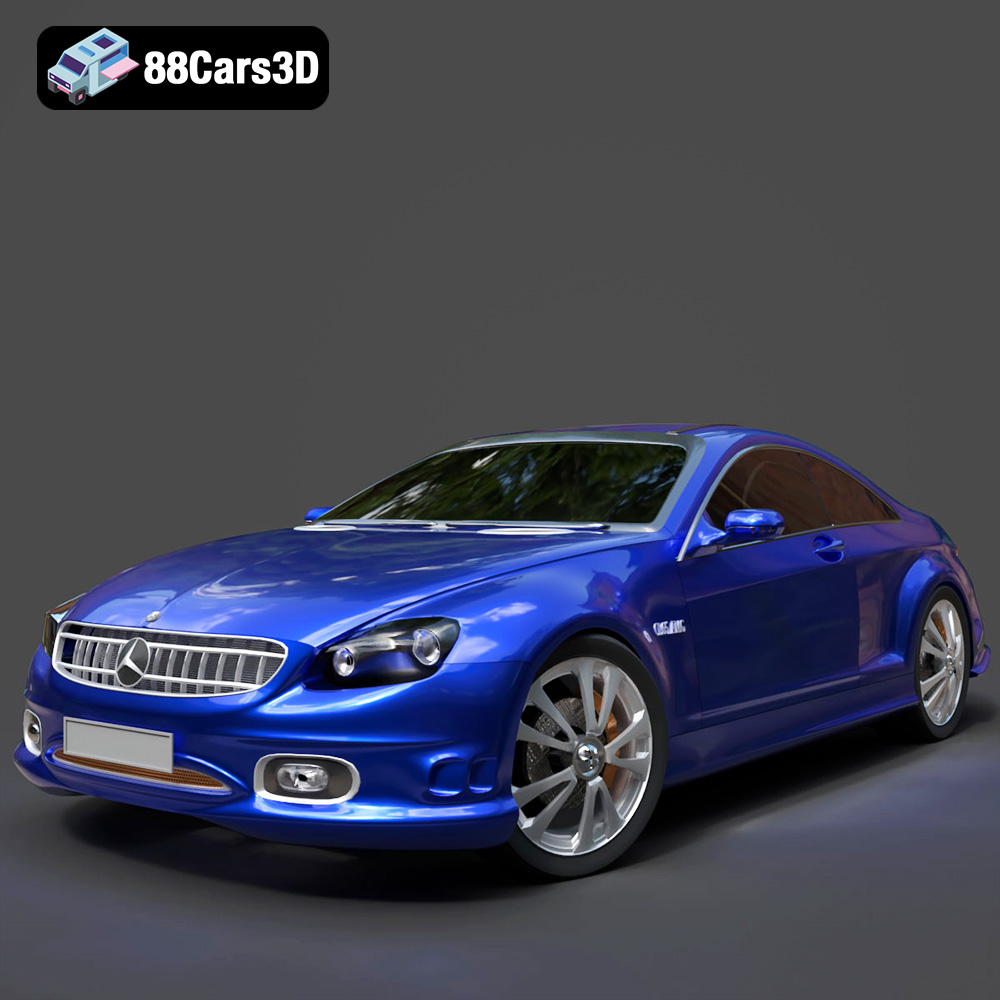
Mercedes-Benz CL6540-005 3D Model
Texture: Yes
Material: Yes
Download the Mercedes-Benz CL6540-005 3D Model featuring clean geometry, realistic detailing, and a fully modeled interior. Includes .blend, .fbx, .obj, .glb, .stl, .ply, .unreal, and .max formats for rendering, simulation, and game development.
Price: $4.99
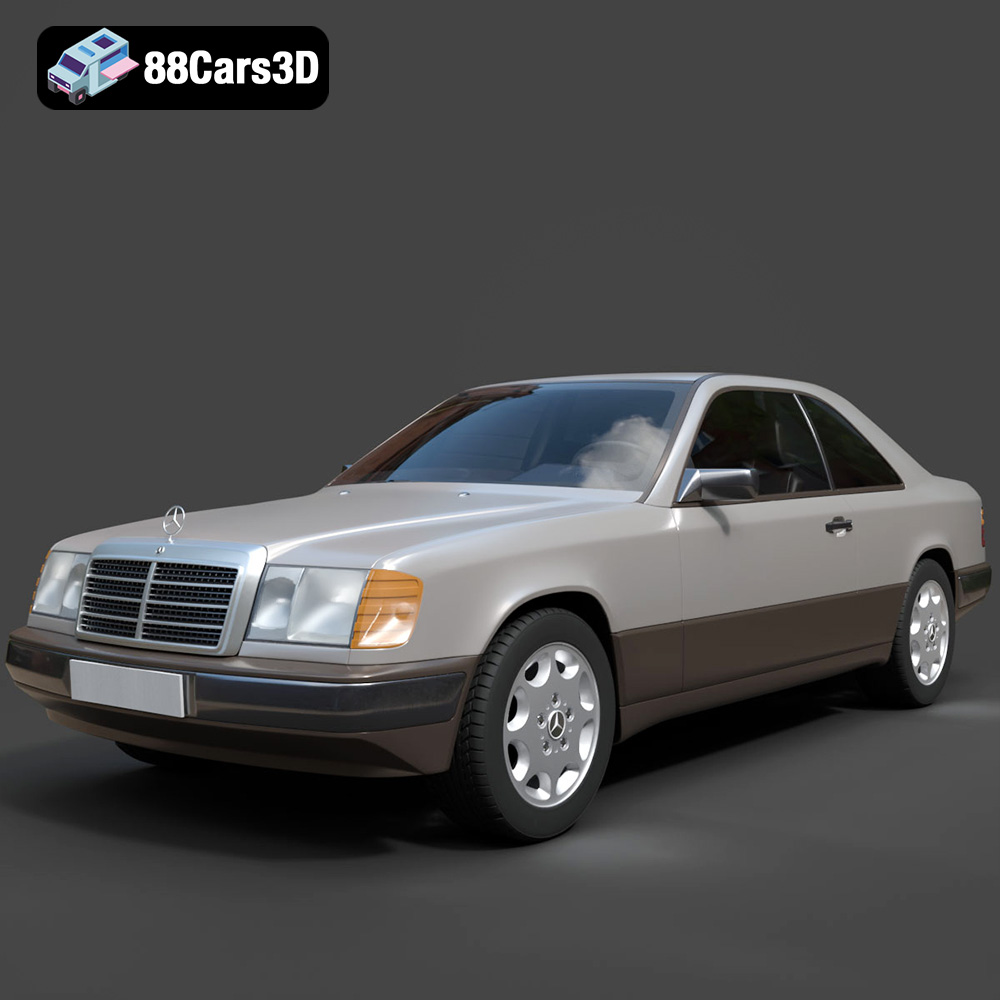
Mercedes E-Class w124 Coupe 3D Model
Texture: Yes
Material: Yes
Download the Mercedes E-Class w124 Coupe 3D Model featuring clean geometry, realistic detailing, and a fully modeled interior. Includes .blend, .fbx, .obj, .glb, .stl, .ply, .unreal, and .max formats for rendering, simulation, and game development.
Price: $4.99
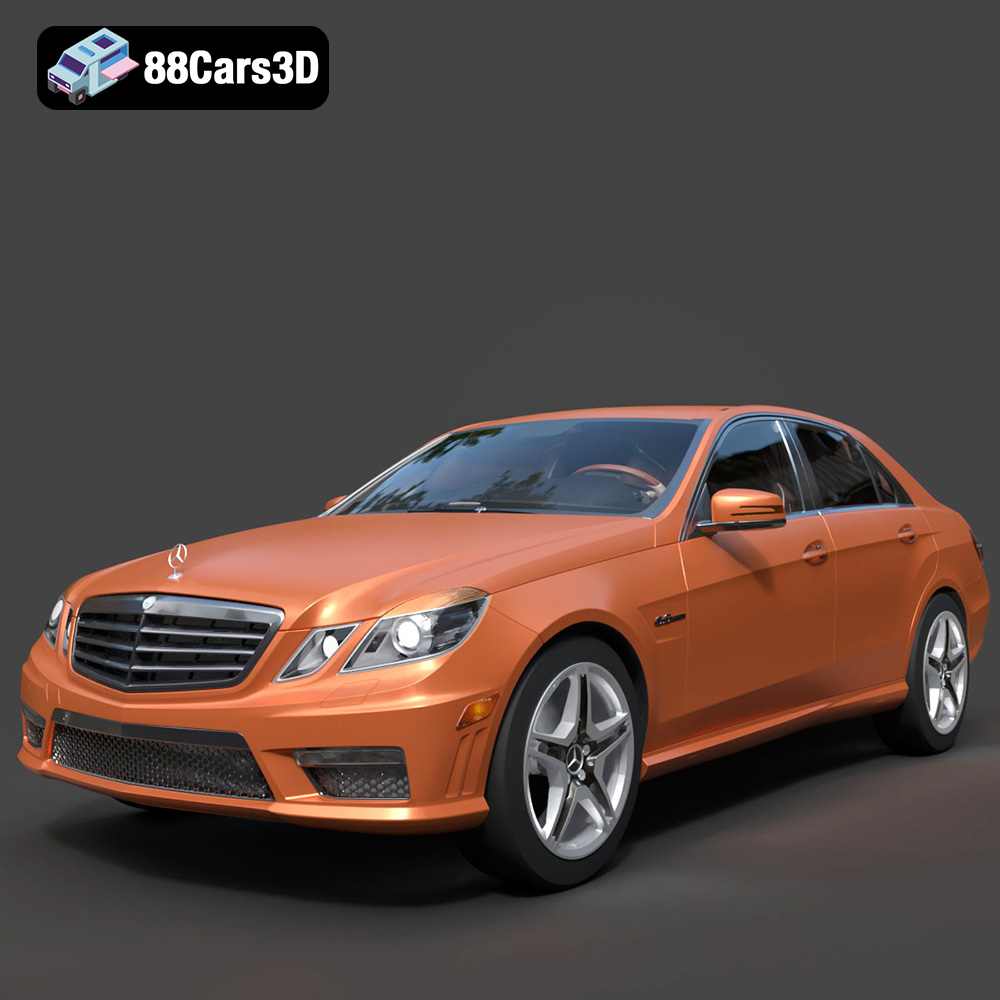
Mercedes-Benz E-Klasse 63 AMG 3D Model
Texture: Yes
Material: Yes
Download the Mercedes-Benz E-Klasse 63 AMG 3D Model featuring clean geometry, realistic detailing, and a fully modeled interior. Includes .blend, .fbx, .obj, .glb, .stl, .ply, .unreal, and .max formats for rendering, simulation, and game development.
Price: $4.99
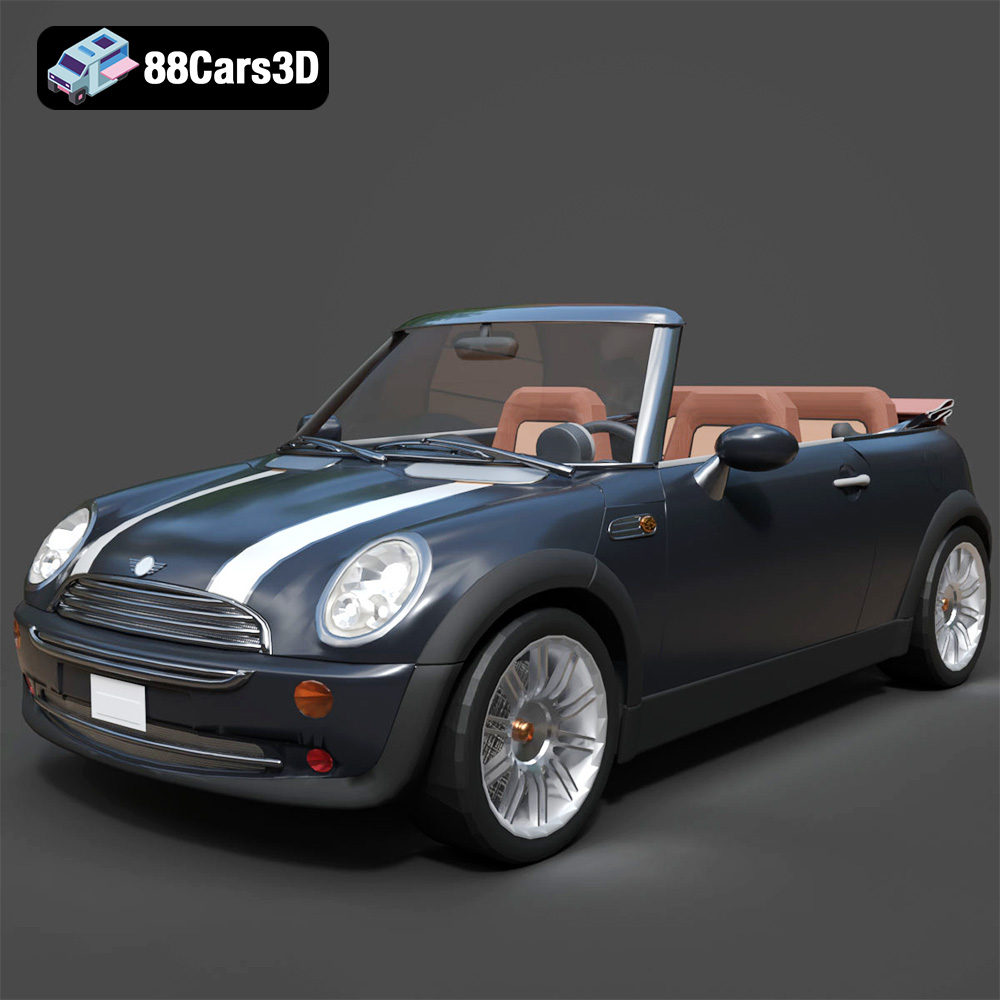
Mini Cabrio 2025 3D Model
Texture: Yes
Material: Yes
Download the Mini Cabrio 2025 3D Model featuring clean geometry, realistic detailing, and a fully modeled interior. Includes .blend, .fbx, .obj, .glb, .stl, .ply, .unreal, and .max formats for rendering, simulation, and game development.
Price: $4.99
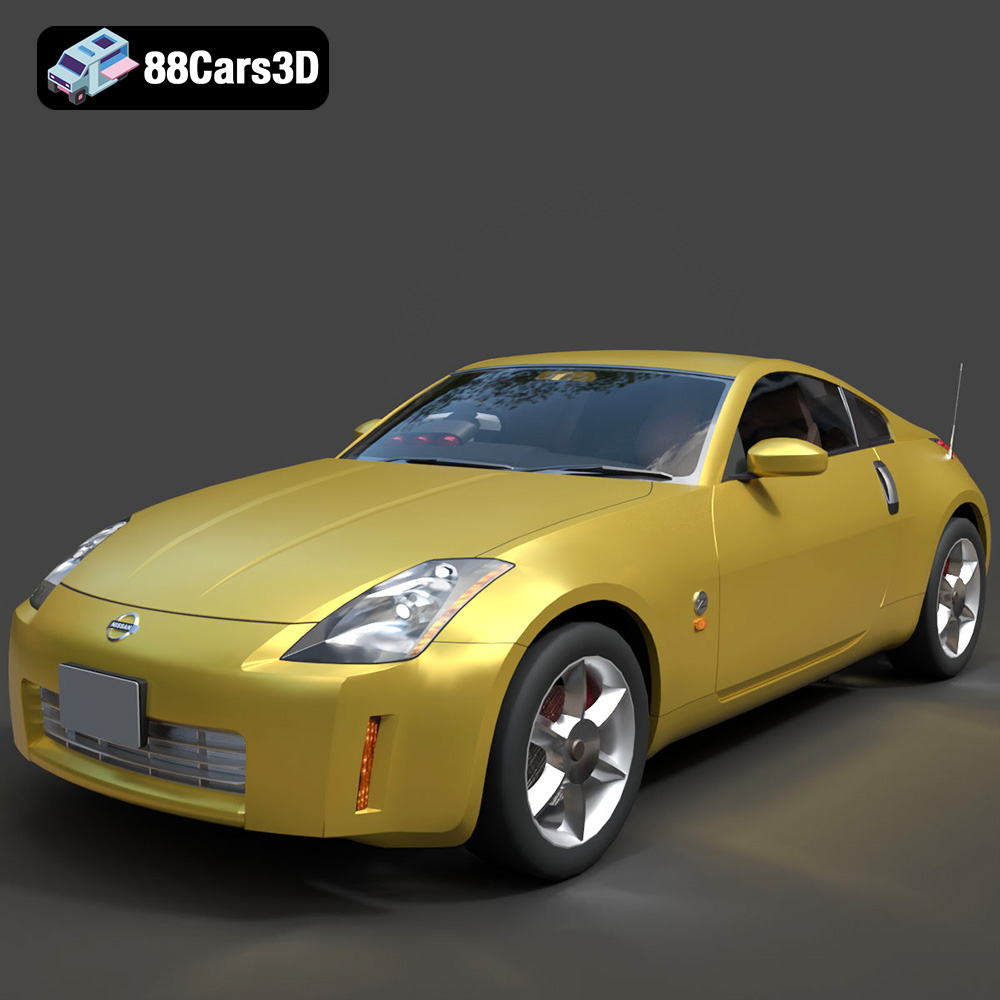
Nissan 350Z 3D Model
Texture: Yes
Material: Yes
Download the Nissan 350Z 3D Model featuring clean geometry, realistic detailing, and a fully modeled interior. Includes .blend, .fbx, .obj, .glb, .stl, .ply, .unreal, and .max formats for rendering, simulation, and game development.
Price: $4.99
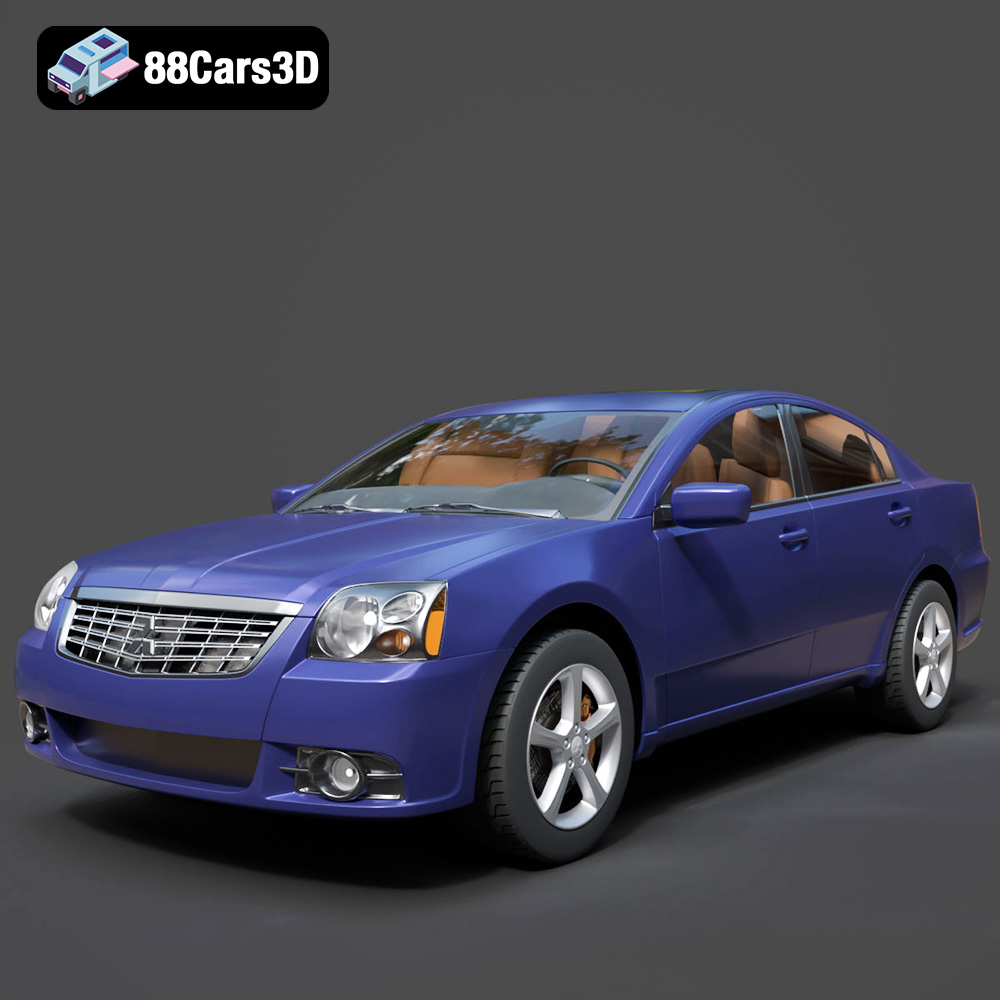
Mitsubishi Galant 2009 3D Model
Texture: Yes
Material: Yes
Download the Mitsubishi Galant 2009 3D Model featuring clean geometry, realistic detailing, and a fully modeled interior. Includes .blend, .fbx, .obj, .glb, .stl, .ply, .unreal, and .max formats for rendering, simulation, and game development.
Price: $4.99
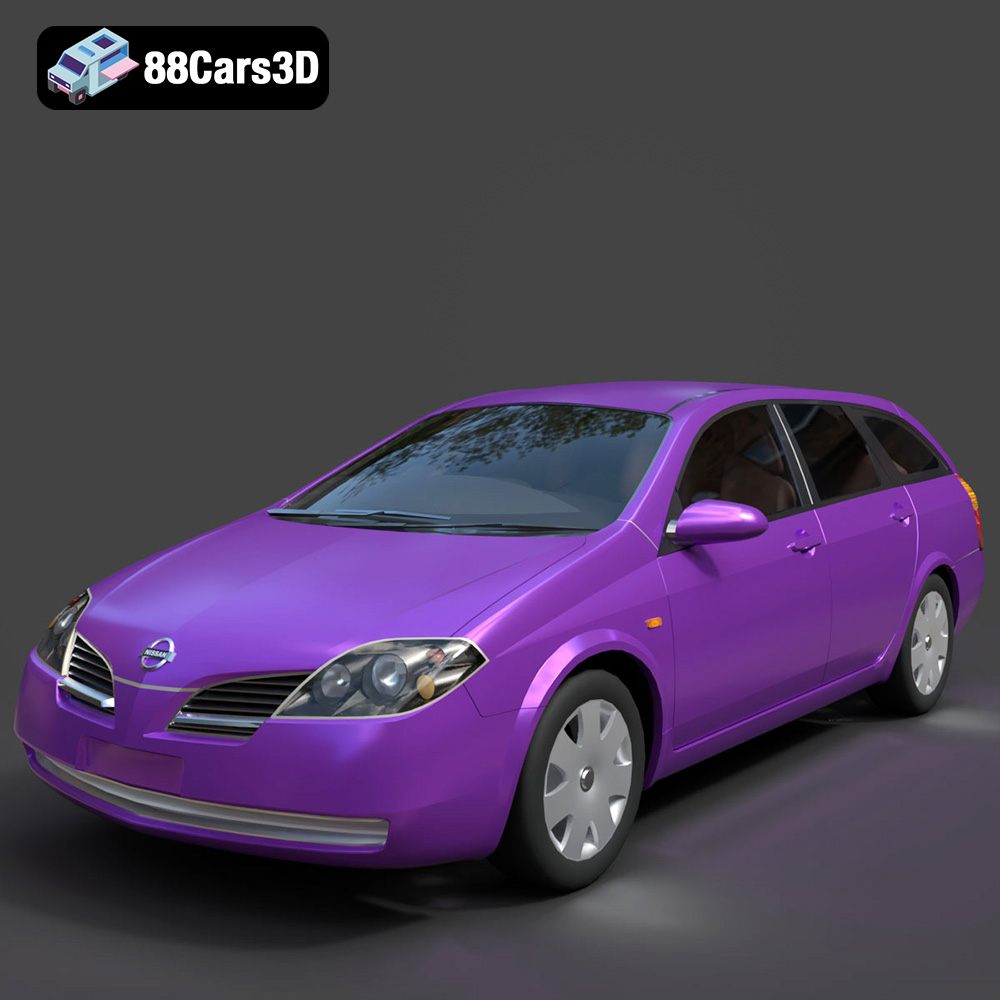
Nissan Primera Wagon 3D Model
Texture: Yes
Material: Yes
Download the Nissan Primera Wagon 3D Model featuring clean geometry, realistic detailing, and a fully modeled interior. Includes .blend, .fbx, .obj, .glb, .stl, .ply, .unreal, and .max formats for rendering, simulation, and game development.
Price: $4.99
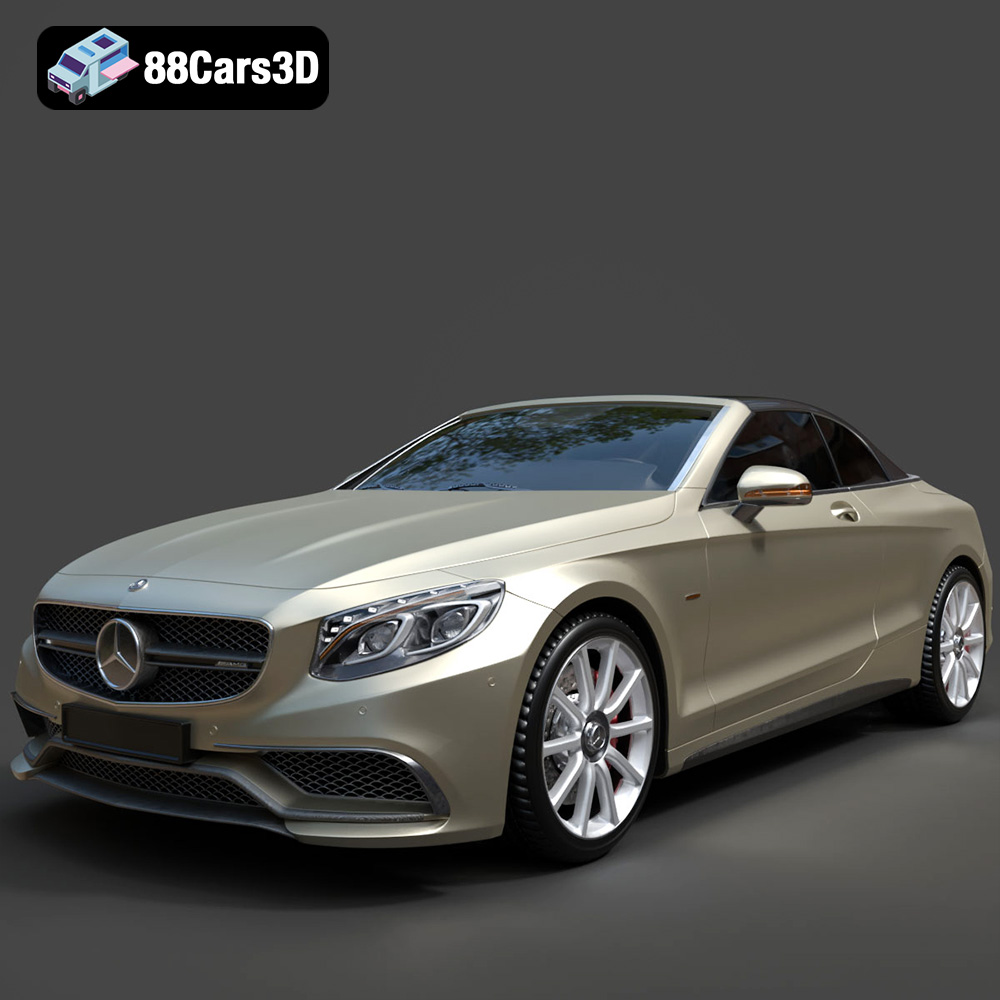
Mercedes-Benz S63 AMG Cabriolet 2017 3D Model
Texture: Yes
Material: Yes
Download the Mercedes-Benz S63 AMG Cabriolet 2017 3D Model featuring clean geometry, realistic detailing, and a fully modeled interior. Includes .blend, .fbx, .obj, .glb, .stl, .ply, .unreal, and .max formats for rendering, simulation, and game development.
Price: $20.99
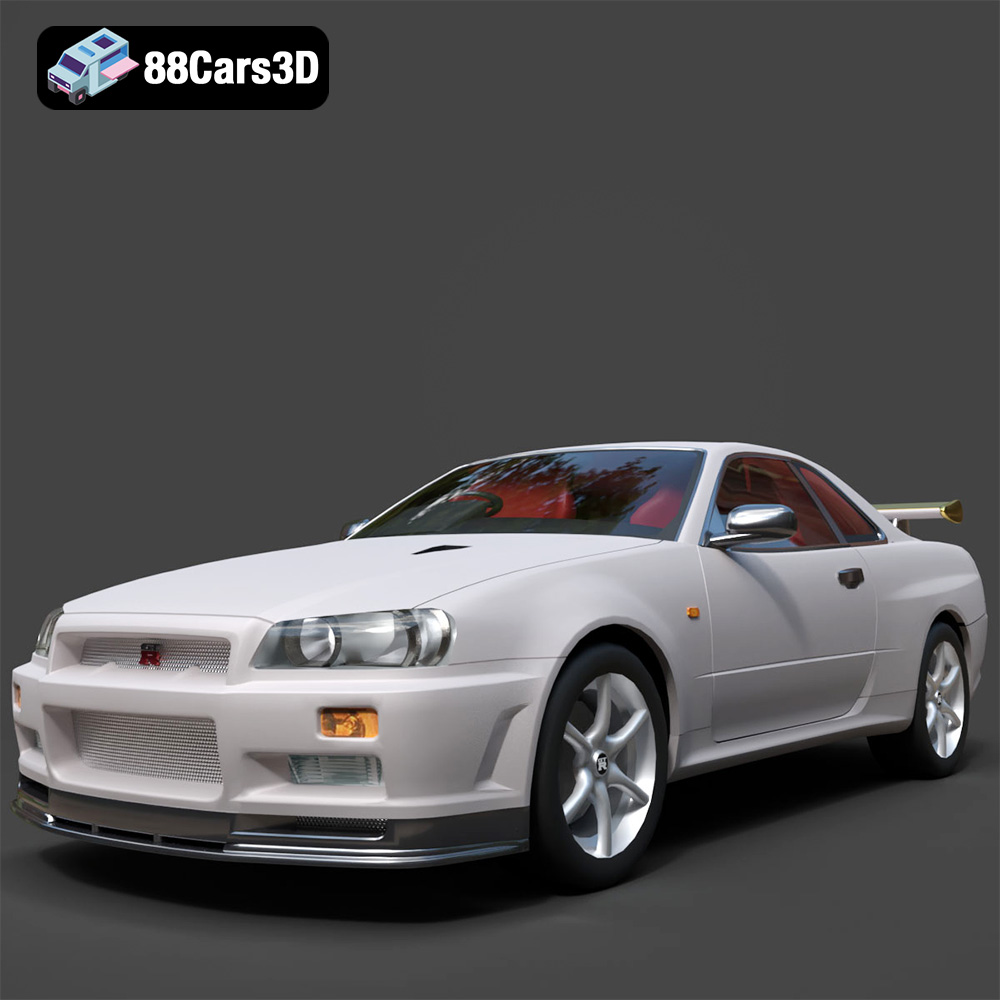
Nissan Skyline R34 2002 3D Model
Texture: Yes
Material: Yes
Download the Nissan Skyline R34 2002 3D Model featuring clean geometry, realistic detailing, and a fully modeled interior. Includes .blend, .fbx, .obj, .glb, .stl, .ply, .unreal, and .max formats for rendering, simulation, and game development.
Price: $4.99
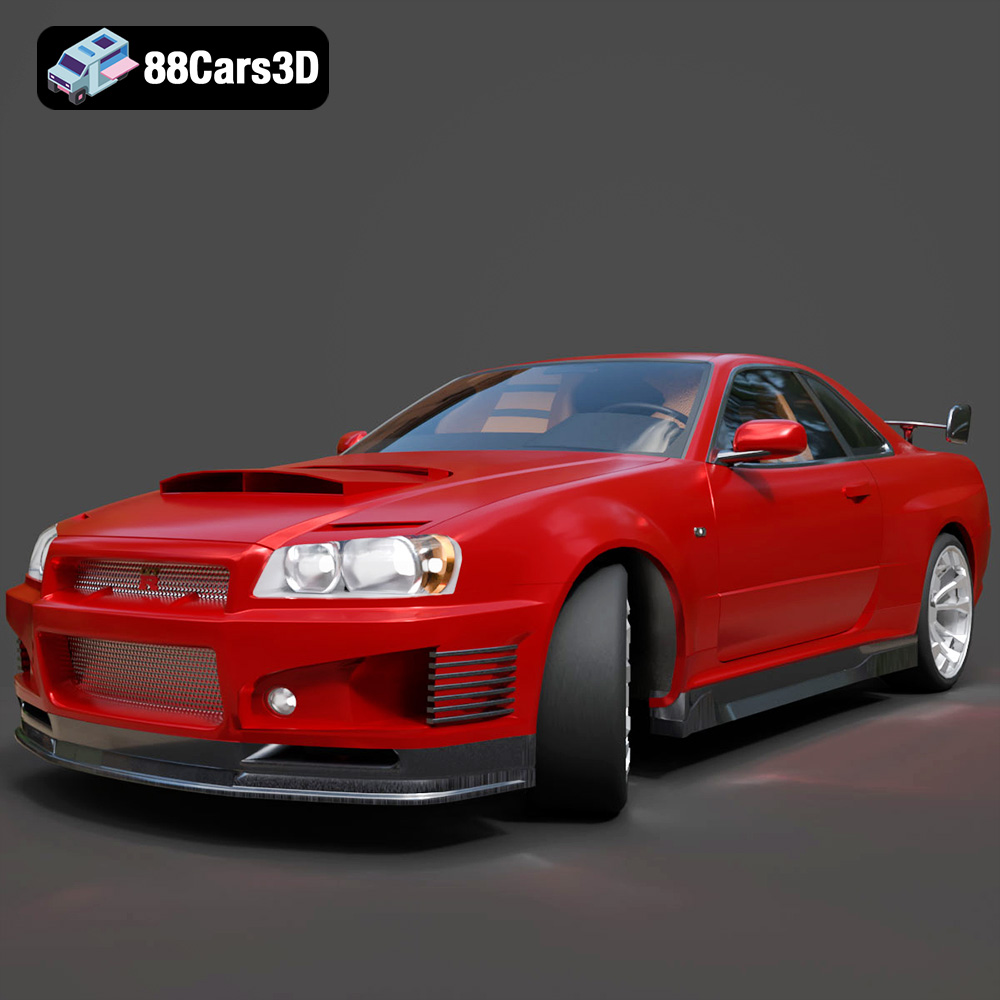
Nissan Skyline 3D Model
Texture: Yes
Material: Yes
Download the Nissan Skyline 3D Model featuring clean geometry, realistic detailing, and a fully modeled interior. Includes .blend, .fbx, .obj, .glb, .stl, .ply, .unreal, and .max formats for rendering, simulation, and game development.
Price: $9.99
