
The Foundation of Realism: Automotive 3D Modeling Topology & Edge Flow

The sleek lines, reflective surfaces, and intricate details of a modern automobile present one of the most compelling challenges and rewarding achievements in the realm of 3D modeling and visualization. From cinematic renders that blur the line between reality and CGI, to interactive game environments and groundbreaking AR/VR experiences, high-quality 3D car models are the digital backbone. However, achieving this level of photorealism and performance requires a deep understanding of complex technical workflows.
This comprehensive guide will take you on a journey through the advanced techniques and best practices essential for creating, optimizing, and deploying stunning automotive 3D models across various platforms. We’ll delve into the nuances of topology, master the art of UV mapping, explore the science behind PBR materials, optimize models for demanding real-time environments, and prepare them for emerging technologies like AR/VR and 3D printing. Whether you’re an aspiring 3D artist, a seasoned game developer, or an automotive design professional, prepare to elevate your understanding and transform your digital vehicles into masterpieces. By the end, you’ll have a robust framework for approaching even the most challenging automotive visualization projects, understanding why platforms like 88cars3d.com prioritize these meticulous details in their curated collections.
The Foundation of Realism: Automotive 3D Modeling Topology & Edge Flow
The quality of a 3D car model begins with its underlying mesh structure, or topology. For automotive designs, where smooth, reflective surfaces are paramount, clean and efficient topology is not just good practice—it’s absolutely critical. Poor topology can lead to artifacts, pinching, and an inability to smoothly subdivide the mesh, ruining the illusion of a perfectly manufactured vehicle body. Understanding the principles of edge flow ensures that your model behaves predictably under subdivision, deformation, and lighting conditions.
A professional approach to automotive modeling primarily relies on quad-based geometry. While triangles are necessary for real-time engines and N-gons (faces with more than four edges) might appear during initial blocking, the core mesh should strive for clean quads. These quads allow for predictable edge loops that follow the natural contours and creases of the car’s design, crucial for maintaining curvature and defining sharp details like panel gaps or body lines. The strategic placement of these edge loops dictates how light will reflect off the surface and how well the model will deform if rigged for animation. For a high-quality visualization model, poly counts can range from 100,000 to over a million triangles, depending on the level of detail, interior complexity, and engine bay inclusion. For game assets, these numbers must be significantly optimized, often starting with a high-poly master that is then retopologized.
Clean Topology for Deformation and Subdivision
The cornerstone of a high-quality 3D car model is its ability to handle subdivision surfaces gracefully. Software like 3ds Max, Blender, and Maya utilize modifiers (e.g., Turbosmooth, Subdivision Surface) that smooth the mesh by adding polygons. For this to work flawlessly, the mesh must consist predominantly of quads, with edge loops precisely defining where creases and hard edges should be preserved. Poorly placed edges or arbitrary triangulation can lead to visible pinching or artifacts, especially on highly reflective surfaces like car paint, where imperfections are magnified.
An ideal workflow involves building the primary forms with large, evenly spaced quads, then adding supporting edge loops near areas that require sharpness, such as the edges of doors, windows, and wheel arches. These supporting loops act as a “cage” for the subdivision modifier, preventing the entire area from becoming overly rounded. Additionally, edge flow should follow the natural direction of stresses or deformations, even if the model isn’t intended for animation. This foresight ensures better compatibility for future uses or modifications. Always aim for a topology that allows for smooth transitions between different surface angles and curves, a characteristic often overlooked but vital for photorealism.
Optimizing Polygon Count without Sacrificing Detail
Striking the right balance between detail and performance is a constant challenge, especially when dealing with high-fidelity automotive models. For rendering and visualization, a higher polygon count allows for smoother curves and more intricate details without relying solely on normal maps. However, for real-time applications like games or AR/VR, excessive polygons are a performance killer. The key is to optimize intelligently.
High-resolution models intended for static renders or cinematics can leverage subdivision surface modifiers extensively, pushing poly counts into the millions for ultimate fidelity. But even here, efficiency matters; removing unseen geometry (e.g., engine parts completely hidden by the hood) can save resources. For interactive applications, a common strategy is to create a high-polygon “master” model and then perform retopology to generate a lower-polygon version. This process involves rebuilding the mesh with fewer polygons while projecting the detail from the high-poly model onto normal maps. This allows a game engine to render a simplified mesh that appears highly detailed. Techniques include judicious edge loop removal, dissolving unnecessary vertices, and collapsing edges where curvature changes are minimal. Typically, a game-ready LOD0 (Level of Detail 0) car model might range from 30,000 to 80,000 triangles, with progressively lower LODs for models further from the camera.
Mastering Surfaces: UV Mapping for Complex Car Geometries
Once your 3D car model boasts impeccable topology, the next critical step is to prepare its surfaces for texturing. UV mapping is the process of flattening the 3D mesh onto a 2D plane, creating a set of coordinates (UVs) that tell the rendering engine how to apply textures. For a complex object like an automobile, with its myriad of panels, curves, and unique materials, strategic UV unwrapping is paramount for achieving seamless, high-resolution textures without stretching or distortion.
Effective UV mapping is an art form. It requires foresight to identify optimal seam placements that minimize visibility and allow for efficient texture painting. Each distinct material, such as car paint, glass, rubber tires, chrome, or interior fabrics, should ideally have its own dedicated UV space or be carefully grouped within a shared UV atlas. The goal is to maximize the texture resolution for each component while minimizing wasted space on the UV canvas. Poor UVs lead to blurry, stretched, or mismatched textures, undermining all the effort put into modeling. Software like 3ds Max, Blender, Maya, or dedicated tools like RizomUV offer robust UV editing capabilities to handle the intricacies of automotive unwrapping.
Strategic UV Unwrapping for Seams and Detail
The placement of UV seams is perhaps the most critical aspect of automotive UV unwrapping. Seams define where the 3D model is “cut” to lay flat in 2D space. For cars, these seams should ideally be hidden along natural creases, panel gaps, or under parts of the car that aren’t easily visible (e.g., the underside of the chassis, along the inside edge of a wheel well). The goal is to avoid prominent seams across large, reflective surfaces like the hood, roof, or door panels, where they would be highly noticeable and detract from realism.
For large, continuous surfaces like the main body panels, projection mapping (e.g., planar, cylindrical, or spherical) can be a good starting point, followed by careful manual adjustment and seam cutting. For complex, intricate parts like engine components or interior dashboard elements, a more granular approach, unwrapping piece by piece, might be necessary. Professional tip: Overlap UVs only for mirrored parts that will share the exact same texture information (e.g., identical wheels on opposite sides of the car, as long as there are no unique decals). Otherwise, unique UV space prevents texture baking issues and allows for specific detailing on each component. Consistent spacing of UV shells also helps to maintain a uniform texel density.
Texel Density and Texture Atlas Creation
Texel density refers to the number of texture pixels per unit of 3D space. Maintaining a consistent texel density across your entire 3D car model is crucial for visual fidelity. Inconsistent density means some parts of your car will appear highly detailed, while others look blurry or pixelated, even if they use the same texture resolution. For instance, a 4K texture map applied to the main body of a car will look significantly less detailed if the UV shells for that body panel are disproportionately small on the UV canvas compared to, say, the headlight glass.
To achieve uniform texel density, you typically calculate a target density based on the most critical components and then scale all other UV shells accordingly. Many UV tools provide automatic functions for this. For optimizing game assets and reducing draw calls, texture atlasing is a common technique. This involves consolidating multiple smaller textures into one larger texture map, and arranging the UV shells from different parts of the car (e.g., interior, exterior trim, engine components) into this single UV space. While this can complicate texture painting, it significantly improves real-time performance by allowing the GPU to load fewer texture maps and render more geometry in a single draw call. For example, a single 8K texture atlas might combine the textures for all the interior panels, saving multiple texture fetches and optimizing the render pipeline for engines like Unity or Unreal Engine.
Bringing Cars to Life: PBR Materials and Advanced Shading Networks
The transition from a raw 3D mesh to a visually stunning, photorealistic vehicle hinges entirely on the quality and accuracy of its materials. Physically Based Rendering (PBR) materials have revolutionized this process, providing a standardized, physically accurate approach to describing how light interacts with surfaces. For automotive rendering, PBR is non-negotiable, ensuring that car paint, glass, chrome, and rubber respond to light precisely as they would in the real world, regardless of the lighting environment or rendering engine.
PBR workflows rely on a set of texture maps that define various surface properties, such as color, roughness, metallicness, and normal direction. These maps are then fed into a complex shader network within your chosen rendering software (e.g., Corona, V-Ray, Cycles, Arnold). Crafting truly realistic car materials goes beyond simply applying a few maps; it involves understanding the subtle nuances of light interaction, Fresnel effects, and multi-layered shaders. This meticulous attention to detail is what separates good 3D car models from exceptional ones, giving them that undeniable visual punch that instantly resonates with viewers.
Understanding PBR Workflows (Metallic/Roughness vs. Specular/Glossiness)
There are two primary PBR workflows: Metallic/Roughness and Specular/Glossiness. Both aim for the same physically accurate result but achieve it using different sets of input maps:
- Metallic/Roughness Workflow: This is generally considered simpler and more intuitive.
- Base Color Map: Defines the diffuse color for dielectrics (non-metals) and the reflective color for metals.
- Metallic Map: A grayscale map where white (1.0) indicates a pure metal, and black (0.0) indicates a dielectric. Values between 0 and 1 are typically avoided for pure materials but can be used for mixed substances.
- Roughness Map: A grayscale map defining the microscopic surface irregularities. White (1.0) is rough, black (0.0) is smooth/mirror-like.
- Specular/Glossiness Workflow: This workflow offers more artistic control but can be more challenging to get physically accurate.
- Diffuse Map: Defines the non-specular color for dielectrics.
- Specular Map: An RGB map defining the color and intensity of specular reflections for dielectrics. Metals do not have a diffuse map; their color comes entirely from the specular map.
- Glossiness Map: The inverse of roughness; white (1.0) is smooth/mirror-like, black (0.0) is rough.
Most modern game engines (Unity, Unreal Engine) and real-time renderers primarily use Metallic/Roughness, while some offline renderers or legacy pipelines might still use Specular/Glossiness. Consistency within your pipeline is key. Tools like Substance Painter and Quixel Mixer are invaluable for generating these PBR texture sets.
Crafting Realistic Car Paint, Glass, and Chrome
Achieving truly convincing automotive materials requires specialized shader setups beyond basic PBR maps:
- Car Paint: Modern car paint is complex, often consisting of multiple layers:
- Base Coat: The primary color, often metallic (using a metallic PBR workflow), providing the underlying hue and sparkle. This layer often includes a subtle “flake” effect achieved with procedural noise or a dedicated flake texture, giving depth and shimmer.
- Clear Coat: A transparent, highly reflective, and glossy layer on top. This is a dielectric material (metallic value 0.0) with very low roughness (often near 0.0). It requires accurate IOR (Index of Refraction, typically 1.4-1.5 for clear coats) and Fresnel calculations to correctly simulate reflections and highlights. Anisotropic reflections, which stretch highlights in specific directions, are also critical for many car paints, especially those with metallic flakes.
- Glass: Car glass needs to be both reflective and refractive.
- Use a dielectric material with high transparency (low opacity) and a high IOR (around 1.5-1.55 for standard glass).
- Account for tinting by adding a subtle color to the transmission property.
- Slight roughness (0.01-0.05) can soften reflections and mimic slight surface imperfections.
- Thick glass (like windshields) often requires “thin-walled” or “solid” glass shaders, depending on whether you want to simulate internal reflections and refractions accurately or simplify for performance.
- Chrome/Metals: These are pure metallic PBR materials (metallic value 1.0).
- Their color is defined by the Base Color (or Specular Color for Specular/Glossiness), which should be nearly white or a very subtle gray for pure chrome.
- Roughness dictates how polished or brushed the metal appears. For mirror chrome, roughness is near 0.0. For brushed aluminum, roughness will be higher, and often an anisotropic reflection component is used to simulate the brushing direction.
- Always ensure your environment provides rich reflections; without it, metals will look dull.
Each material requires careful balancing of these parameters to achieve the desired level of realism, which is why sourcing models from platforms like 88cars3d.com where these details are meticulously crafted, saves countless hours.
Photorealistic Visions: Advanced Automotive Rendering Workflows
Bringing a 3D car model to life in a static image or animation requires more than just great modeling and materials; it demands a sophisticated approach to lighting, camera work, and rendering. Automotive rendering is an art form focused on showcasing design, form, and material properties in the most appealing and realistic way possible. This involves mastering advanced techniques in scene setup, lighting environments, renderer-specific settings, and crucial post-processing steps.
The goal is to create an image that could easily be mistaken for a photograph. This means understanding how light interacts with the complex surfaces of a car, how reflections define its shape, and how minute details contribute to the overall impression of realism. Professional workflows often leverage a combination of HDRI (High Dynamic Range Image) lighting for realistic global illumination and studio lights for precise highlight control. Choosing the right rendering engine and knowing its capabilities and optimal settings are also fundamental to achieving breathtaking results.
Lighting, HDRIs, and Studio Setups
Lighting is the single most important factor in a photorealistic render. For automotive subjects, a common and highly effective approach combines HDRI environments with targeted studio lighting:
- HDRI Lighting: An HDRI acts as a virtual light dome, providing complex, real-world lighting and reflections from all directions. A high-resolution (8K-16K) HDRI of an outdoor environment (e.g., a sunny day, an overcast sky) or a studio setup is crucial. When used with image-based lighting (IBL), the HDRI not only illuminates the scene but also provides accurate reflections on the car’s body, tires, and windows, which define the car’s contours and materials. Always ensure the HDRI is correctly oriented to match your desired light direction.
- Studio Lighting: While HDRIs provide global illumination, specific studio lights (area lights, softboxes, light planes) are used to craft perfect highlights and rim lights.
- Key Light: The main light source, typically a large softbox, defining the car’s primary form.
- Fill Light: Softer, less intense lights to reduce harsh shadows and reveal details in darker areas.
- Rim Lights: Positioned behind or to the sides of the car, these lights create a bright outline, separating the car from the background and enhancing its silhouette.
- Custom Reflection Cards: Sometimes, instead of lights, simple white or black planes are used purely as reflection sources, strategically placed to create specific highlights on the car’s reflective surfaces.
The interplay of these light sources, combined with careful camera placement (often using real-world focal lengths like 50mm-100mm) and depth of field, creates compelling compositions.
Rendering Engines (Corona, V-Ray, Cycles, Arnold) and Settings
Each major rendering engine offers unique strengths and workflows, though all are capable of producing stunning automotive renders:
- Corona Renderer (3ds Max, Cinema 4D): Known for its ease of use, physically accurate unbiased rendering, and intuitive material system. Corona excels at realistic light interaction and complex material calculations with minimal setup. Key settings include choosing the appropriate render preset (e.g., “High Quality”), setting a noise limit or time limit, and enabling the denoising feature.
- V-Ray (3ds Max, Maya, SketchUp, Rhino): A production-proven hybrid renderer (CPU & GPU) offering immense control and flexibility. V-Ray is renowned for its speed, scalability, and ability to handle massive scenes. Settings often involve balancing GI (Global Illumination) solutions (Brute Force for primary bounces, Light Cache for secondary) with image samplers and denoisers.
- Cycles (Blender): Blender’s powerful, physically based path-tracer, supporting both CPU and GPU rendering. Cycles offers great flexibility with its node-based shader editor and integrates seamlessly within Blender’s ecosystem. Key settings include adjusting render samples (e.g., 512-1024 for high quality), using adaptive sampling, and enabling the built-in OIDN or OptiX denoisers.
- Arnold (Maya, 3ds Max, Cinema 4D, Houdini): A high-performance, unbiased Monte Carlo path tracer developed by Autodesk, known for its robustness in animation and visual effects. Arnold excels at handling complex geometries, volumes, and physically accurate shading. Settings typically involve adjusting camera (AA) samples, diffuse, specular, and transmission samples, and configuring the denoiser.
Regardless of the engine, always prioritize physically accurate materials, sufficient light bounces (for realistic GI), and adequate sampling to minimize noise. A post-production pipeline involving exposure adjustments, color grading, and lens effects (like bloom or chromatic aberration) in software like Photoshop or Affinity Photo is also crucial to finalize the image.
Performance and Portability: Game Engine & Real-time Optimization
While photorealistic offline renders captivate, the world of interactive experiences demands a completely different optimization strategy for 3D car models. Game engines like Unity and Unreal Engine operate under strict real-time performance budgets, where every polygon, texture, and draw call contributes to the overall frame rate. Therefore, optimizing a car model for a game or other real-time application is a nuanced process involving significant compromise and clever techniques to maintain visual fidelity at speed.
The goal is to present a convincing illusion of detail without overwhelming the GPU. This often involves reducing polygon counts, consolidating textures, simplifying materials, and meticulously managing rendering processes. A well-optimized game asset car model can seamlessly integrate into vast open-world environments, VR simulations, or mobile AR apps, delivering a smooth and immersive experience. Understanding these optimization strategies is critical for anyone developing interactive automotive content.
Level of Detail (LODs) and Draw Call Reduction
Level of Detail (LODs) are cornerstone optimization techniques for real-time applications. Instead of rendering a single, high-polygon model at all distances, LODs involve creating multiple versions of the same asset, each with progressively fewer polygons and simpler materials. The game engine then automatically switches between these LODs based on the camera’s distance from the object. For a typical vehicle, you might have:
- LOD0: The highest detail model (e.g., 30,000-80,000 triangles), used when the car is close to the camera.
- LOD1: Medium detail (e.g., 10,000-20,000 triangles), for mid-range distances.
- LOD2: Low detail (e.g., 3,000-8,000 triangles), for objects further away.
- LOD3: Very low detail (e.g., 500-1,500 triangles) or even a billboard/imposter for extremely distant vehicles.
Creating LODs involves careful decimation or retopology, ensuring that normal maps from the high-poly version are baked down to preserve surface detail. A significant portion of game development is dedicated to reducing draw calls. Each time the CPU tells the GPU to render an object, it’s a draw call, and too many can cripple performance. Strategies to reduce draw calls include:
- Mesh Instancing: Reusing the same mesh geometry for multiple identical objects.
- Texture Atlasing: Combining multiple small textures into one larger texture, allowing the GPU to render multiple parts of the car with a single texture fetch.
- Mesh Merging: Combining multiple small meshes into one larger mesh (e.g., all parts of a car’s interior into a single mesh), reducing the number of objects the engine needs to process.
- Simple Shaders: Using optimized shaders with fewer instructions and texture lookups compared to complex offline rendering shaders.
Asset Pipelines for Unity, Unreal Engine, and WebGL
The pipeline for integrating 3D car models into game engines like Unity and Unreal Engine requires specific considerations:
- Unity: Supports FBX, OBJ, and various other formats. When importing, ensure your model has correct scale, rotation, and pivot points. Unity’s Mesh Renderer handles static meshes, while Skinned Mesh Renderer is for animated or deforming parts. Materials should be set up using the Universal Render Pipeline (URP) or High-Definition Render Pipeline (HDRP) shaders, opting for PBR Metallic/Roughness. Texture compression settings (e.g., BC7 for high quality, ASTC for mobile) are crucial. LOD groups can be set up directly in Unity, assigning different LOD meshes to corresponding render distances.
- Unreal Engine: Favors FBX for importing meshes, animations, and skeletal structures. Models should be exported with correct tangents and binormals for normal map accuracy. Unreal’s Material Editor is highly node-based and powerful for creating PBR Metallic/Roughness materials. It features robust LOD generation tools (Simplygon integration or built-in reduction). Performance optimization in Unreal often involves using its Static Mesh Editor to generate lightmap UVs, setting appropriate collision meshes, and using its profiling tools to identify bottlenecks.
- WebGL: For browser-based applications, GLB (glTF Binary) and USDZ are increasingly popular due to their efficiency and self-contained nature. Models must be extremely optimized—often under 100,000 triangles for a full car, with heavily atlased textures (e.g., 2K-4K per car). Shaders are typically simplified, and advanced rendering features are limited by browser capabilities. Efficient asset loading and asynchronous rendering are key for smooth web experiences. Platforms like 88cars3d.com often provide optimized GLB/USDZ versions for web and mobile use cases, reflecting the growing demand for interactive 3D in browsers.
Regardless of the engine, maintaining consistent naming conventions, organized folder structures, and rigorous testing for performance are essential for a professional workflow.
Beyond the Screen: AR/VR, 3D Printing & File Format Versatility
The utility of high-quality 3D car models extends far beyond traditional renders and game engines. Emerging technologies like Augmented Reality (AR) and Virtual Reality (VR) demand highly optimized assets for immersive, real-time experiences. Furthermore, the precision of digital models can directly translate into physical objects through 3D printing, opening avenues for prototyping, scale models, and even functional parts. Navigating these diverse applications requires an understanding of specific technical requirements and the appropriate file formats to ensure compatibility and fidelity across various platforms.
The versatility of a well-prepared 3D car model is a testament to its underlying quality. Whether you’re showcasing a concept car in an interactive AR presentation, allowing customers to customize a vehicle in a VR showroom, or producing a physical prototype for design review, the foundational principles of clean modeling, efficient UVs, and optimized materials remain paramount. Mastering the nuances of these different pipelines allows you to unlock the full potential of your digital automotive creations.
AR/VR Performance and Immersion Considerations
AR/VR environments are arguably the most demanding in terms of performance optimization. Unlike traditional games, AR/VR requires a sustained high frame rate (often 90 FPS or higher) to prevent motion sickness and ensure a comfortable, immersive experience. This translates to incredibly stringent polygon budgets and draw call limits:
- Ultra-Low Poly Counts: A full car model for AR/VR might need to be as low as 50,000-100,000 triangles for the entire vehicle (LOD0), sometimes even lower for mobile AR. This often means heavily simplifying interior details, using texture-based details (normal maps) extensively, and optimizing every component.
- Optimized Shaders: Complex shader networks found in offline renderers are too performance-heavy. AR/VR shaders must be lightweight, often using mobile-optimized PBR shaders with minimal instructions and texture fetches.
- Texture Atlasing and Power-of-Two Resolutions: Maximize draw call reduction through comprehensive texture atlasing. All textures should typically be power-of-two dimensions (e.g., 2K, 4K) for efficient GPU processing.
- Collision and Physics: Simplified collision meshes are crucial for performance. In VR, accurate scale and interaction points are vital for user comfort and immersion.
- Lighting and Reflections: Real-time global illumination is often too expensive. Baked lighting solutions (lightmaps, light probes) or simple real-time cubemaps for reflections are commonly used to mimic realistic lighting without the performance hit.
For AR, especially on mobile devices, file size is also a major concern, favoring compact formats like GLB and USDZ.
Preparing Models for 3D Printing and Manufacturing
3D printing requires a fundamentally different approach to mesh integrity. While a render might forgive minor mesh imperfections, a 3D printer demands a “watertight” and “manifold” mesh. This means:
- Watertight Geometry: The mesh must be completely enclosed, with no open edges or holes. Imagine filling the model with water; none should leak out.
- Manifold: Every edge should be shared by exactly two faces. No non-manifold geometry (e.g., internal faces, zero-thickness walls, or edges shared by more than two faces) should exist.
- Correct Normals: All face normals must point outwards consistently. Inverted normals can cause printing errors.
- Wall Thickness: The model must have sufficient wall thickness (typically 1mm-2mm minimum, depending on printer and material) for all its parts to be structurally sound once printed. Thin features can break easily.
- Scale and Units: Export the model in real-world units (mm, cm, inches) at the desired print scale.
- Mesh Repair: Tools like Blender’s 3D Print Toolbox, MeshMixer, Netfabb, or the repair functions in your slicer software (e.g., PrusaSlicer, Cura) are invaluable for identifying and fixing common 3D print issues.
- Polygon Count: While not as critical as for real-time, excessively high polygon counts can lead to large file sizes and slow slicing times. Optimize where possible without sacrificing necessary detail.
Converting a high-detail rendering model for 3D printing often involves cleanup, Boolean operations to create solid forms, and ensuring all parts are joined correctly.
Navigating File Formats: FBX, OBJ, GLB, USDZ
The choice of file format dictates how your 3D car model is transported and interpreted across different software and platforms:
- FBX (.fbx): The industry-standard format for exchanging 3D data, especially between DCC (Digital Content Creation) tools (3ds Max, Maya, Blender) and game engines (Unity, Unreal). It supports geometry, materials, textures, animations, rigging, and cameras. Highly versatile but can be verbose.
- OBJ (.obj): A simpler, widely supported format primarily for geometry, UVs, and basic material definitions (via an accompanying .mtl file). It does not support animations or advanced material properties. Excellent for static mesh exchange.
- GLB (.glb) / glTF (.gltf): The “JPEG of 3D.” glTF (Graphics Language Transmission Format) is an open-standard, royalty-free specification for 3D scenes and models. GLB is the binary version, packing everything (geometry, materials, textures, animations) into a single, compact file. It’s highly optimized for web, AR/VR, and real-time applications due to its efficiency and PBR material support. Platforms like 88cars3d.com often provide GLB for immediate web and mobile compatibility.
- USDZ (.usdz): Developed by Apple and Pixar, USDZ is a proprietary, self-contained format built on Pixar’s Universal Scene Description (USD) framework. It’s specifically optimized for AR experiences on Apple devices (iOS/iPadOS) and supports PBR materials. Like GLB, it bundles all necessary assets into a single, highly efficient file.
Understanding the strengths and limitations of each format is crucial for a smooth workflow and ensuring your 3D car models are accessible and performant in their intended final destination.
Conclusion
The journey from a conceptual idea to a fully realized, photorealistic 3D car model is a testament to the blend of artistic vision and rigorous technical execution. We’ve explored the intricate world of topology, where clean quad meshes form the bedrock of realistic surfaces, allowing for smooth subdivision and precise detail. We delved into the strategic art of UV mapping, ensuring every curve and panel receives optimal texture resolution without distortion, a crucial step for flawless material application.
Our deep dive into PBR materials illuminated how physically accurate shaders bring digital vehicles to life, meticulously mimicking car paint, glass, and chrome with astonishing fidelity. We then transitioned to the realm of automotive rendering, unraveling the secrets of lighting, HDRIs, and advanced engine settings that transform raw models into breathtaking visuals. Finally, we tackled the critical optimizations for game assets, AR/VR, and 3D printing, demonstrating how versatility and performance are achieved through techniques like LODs, draw call reduction, and careful file format selection.
Mastering these advanced techniques empowers you to create and utilize 3D car models across an incredibly diverse range of applications, from cutting-edge automotive design visualization to immersive virtual experiences and tangible 3D prints. The demand for high-quality, meticulously crafted 3D assets continues to grow, and understanding the workflows outlined here will position you at the forefront of this exciting industry. For those seeking a head start with professional-grade, ready-to-use models that embody these best practices, exploring curated collections on platforms like 88cars3d.com can be an invaluable resource, allowing you to focus on your creative vision rather than reinventing the wheel.
Featured 3D Car Models
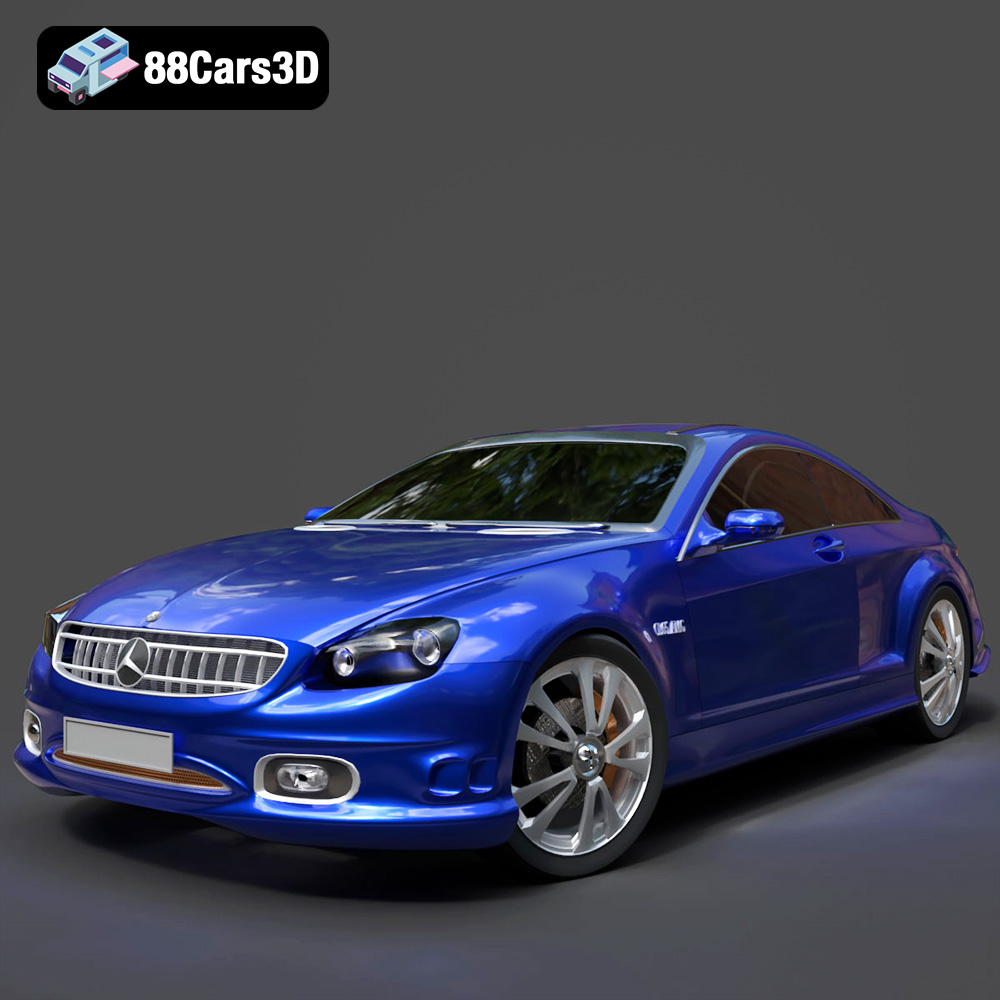
Mercedes-Benz CL6540-005 3D Model
Texture: Yes
Material: Yes
Download the Mercedes-Benz CL6540-005 3D Model featuring clean geometry, realistic detailing, and a fully modeled interior. Includes .blend, .fbx, .obj, .glb, .stl, .ply, .unreal, and .max formats for rendering, simulation, and game development.
Price: $4.99
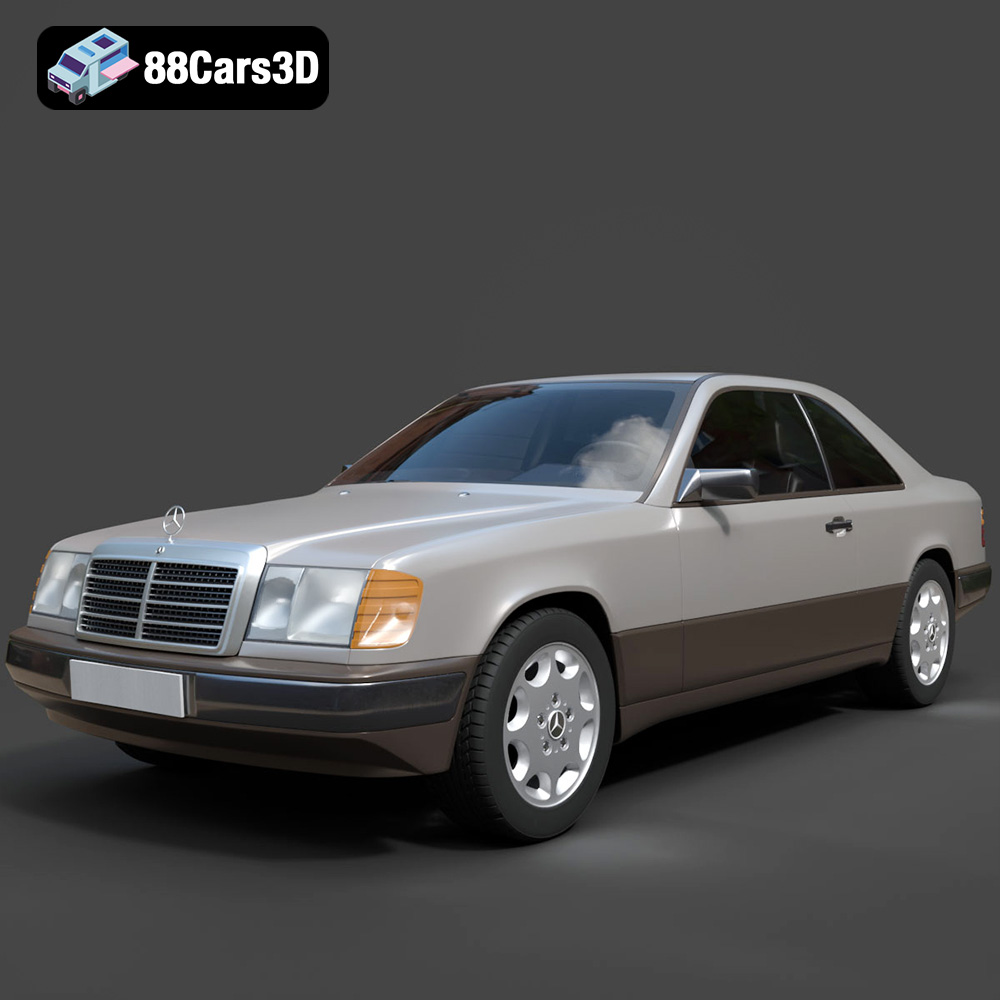
Mercedes E-Class w124 Coupe 3D Model
Texture: Yes
Material: Yes
Download the Mercedes E-Class w124 Coupe 3D Model featuring clean geometry, realistic detailing, and a fully modeled interior. Includes .blend, .fbx, .obj, .glb, .stl, .ply, .unreal, and .max formats for rendering, simulation, and game development.
Price: $4.99
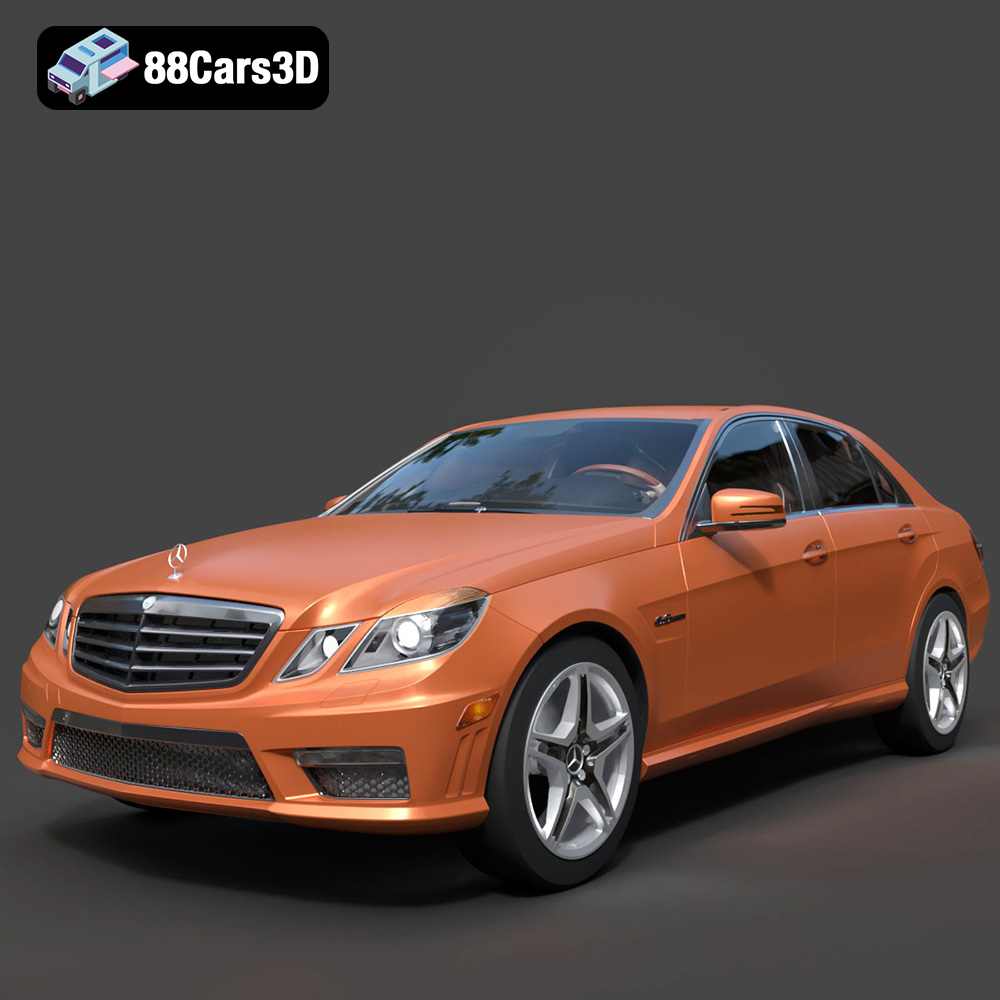
Mercedes-Benz E-Klasse 63 AMG 3D Model
Texture: Yes
Material: Yes
Download the Mercedes-Benz E-Klasse 63 AMG 3D Model featuring clean geometry, realistic detailing, and a fully modeled interior. Includes .blend, .fbx, .obj, .glb, .stl, .ply, .unreal, and .max formats for rendering, simulation, and game development.
Price: $4.99
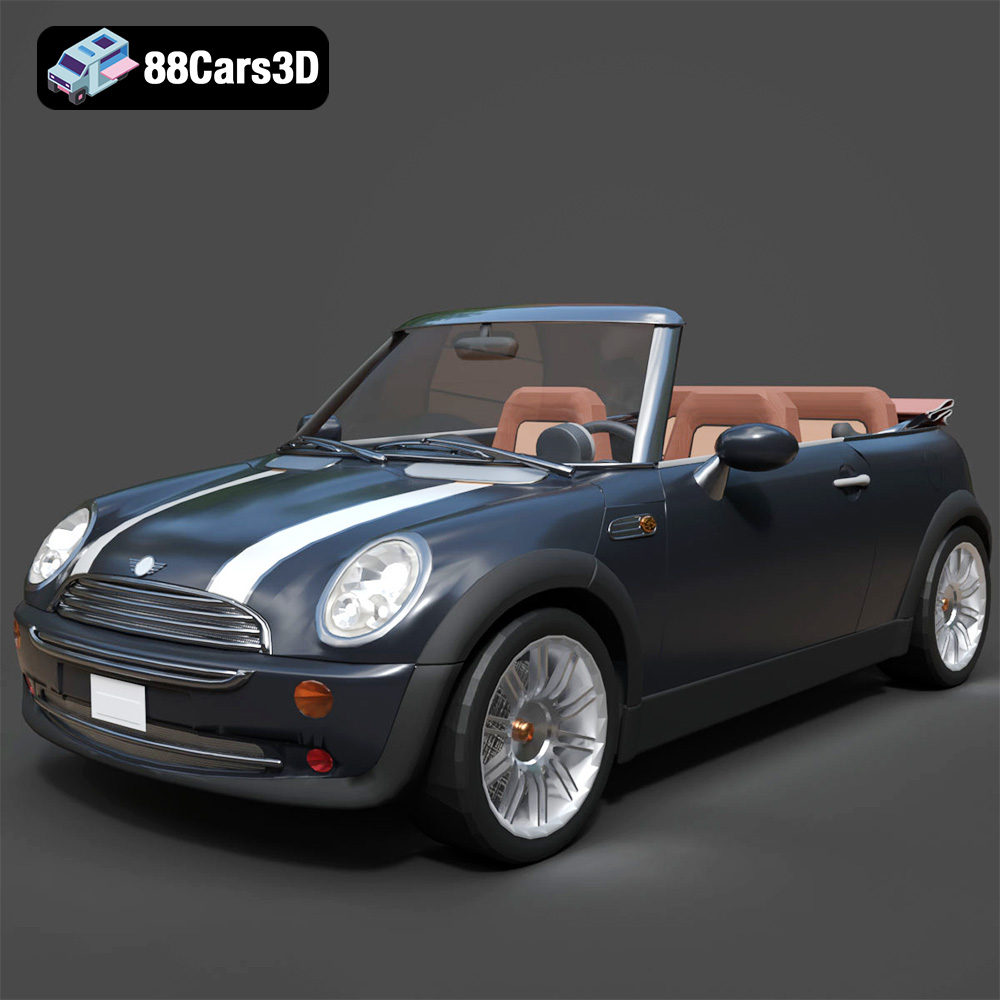
Mini Cabrio 2025 3D Model
Texture: Yes
Material: Yes
Download the Mini Cabrio 2025 3D Model featuring clean geometry, realistic detailing, and a fully modeled interior. Includes .blend, .fbx, .obj, .glb, .stl, .ply, .unreal, and .max formats for rendering, simulation, and game development.
Price: $4.99
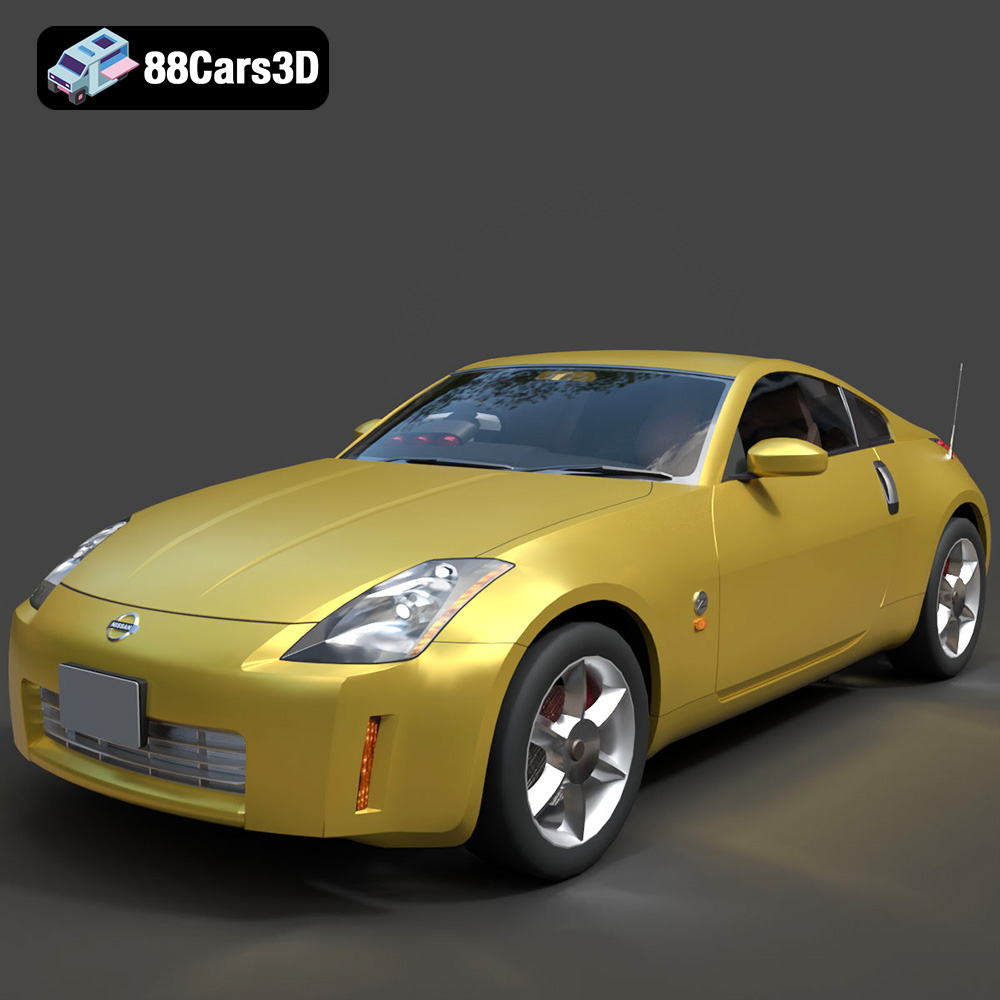
Nissan 350Z 3D Model
Texture: Yes
Material: Yes
Download the Nissan 350Z 3D Model featuring clean geometry, realistic detailing, and a fully modeled interior. Includes .blend, .fbx, .obj, .glb, .stl, .ply, .unreal, and .max formats for rendering, simulation, and game development.
Price: $4.99
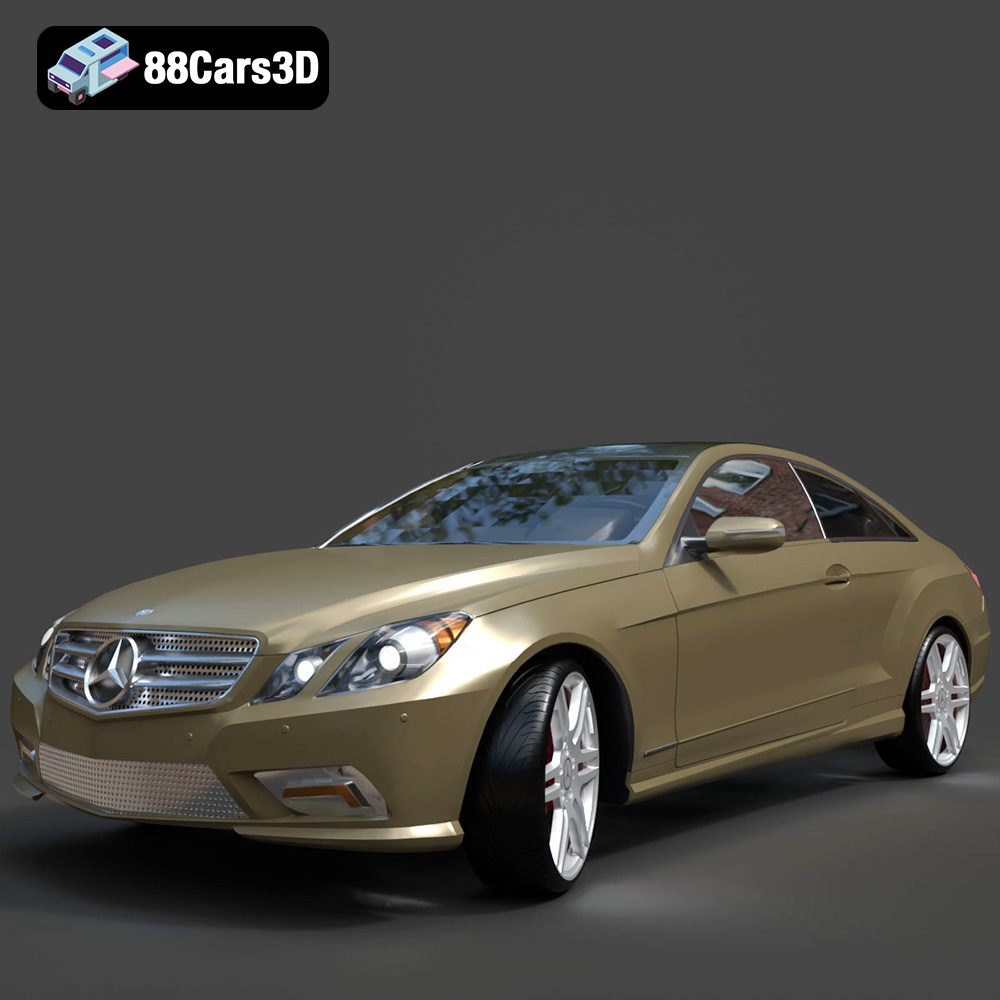
Mercedes-Benz E-Klasse Coupe 2010 3D Model
Texture: Yes
Material: Yes
Download the Mercedes-Benz E-Klasse Coupe 3D Model featuring clean geometry, realistic detailing, and a fully modeled interior. Includes .blend, .fbx, .obj, .glb, .stl, .ply, .unreal, and .max formats for rendering, simulation, and game development.
Price: $4.99
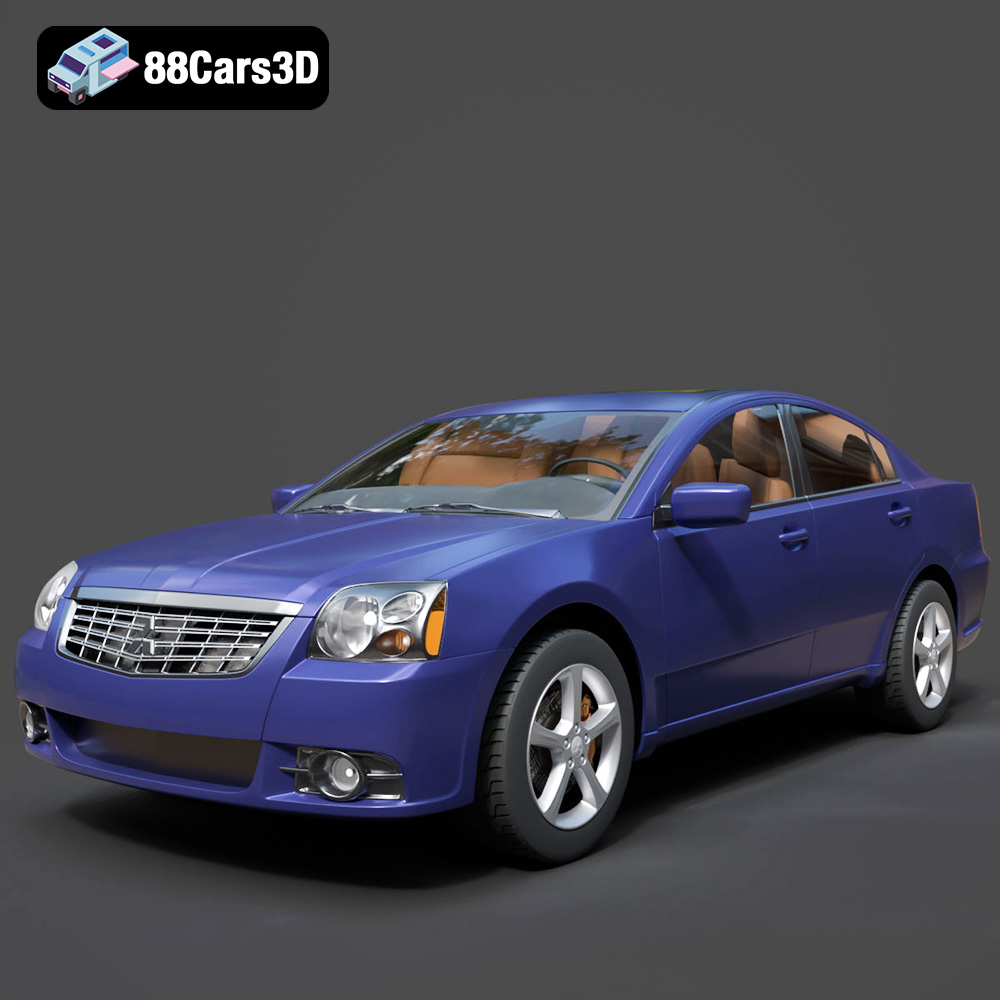
Mitsubishi Galant 2009 3D Model
Texture: Yes
Material: Yes
Download the Mitsubishi Galant 2009 3D Model featuring clean geometry, realistic detailing, and a fully modeled interior. Includes .blend, .fbx, .obj, .glb, .stl, .ply, .unreal, and .max formats for rendering, simulation, and game development.
Price: $4.99
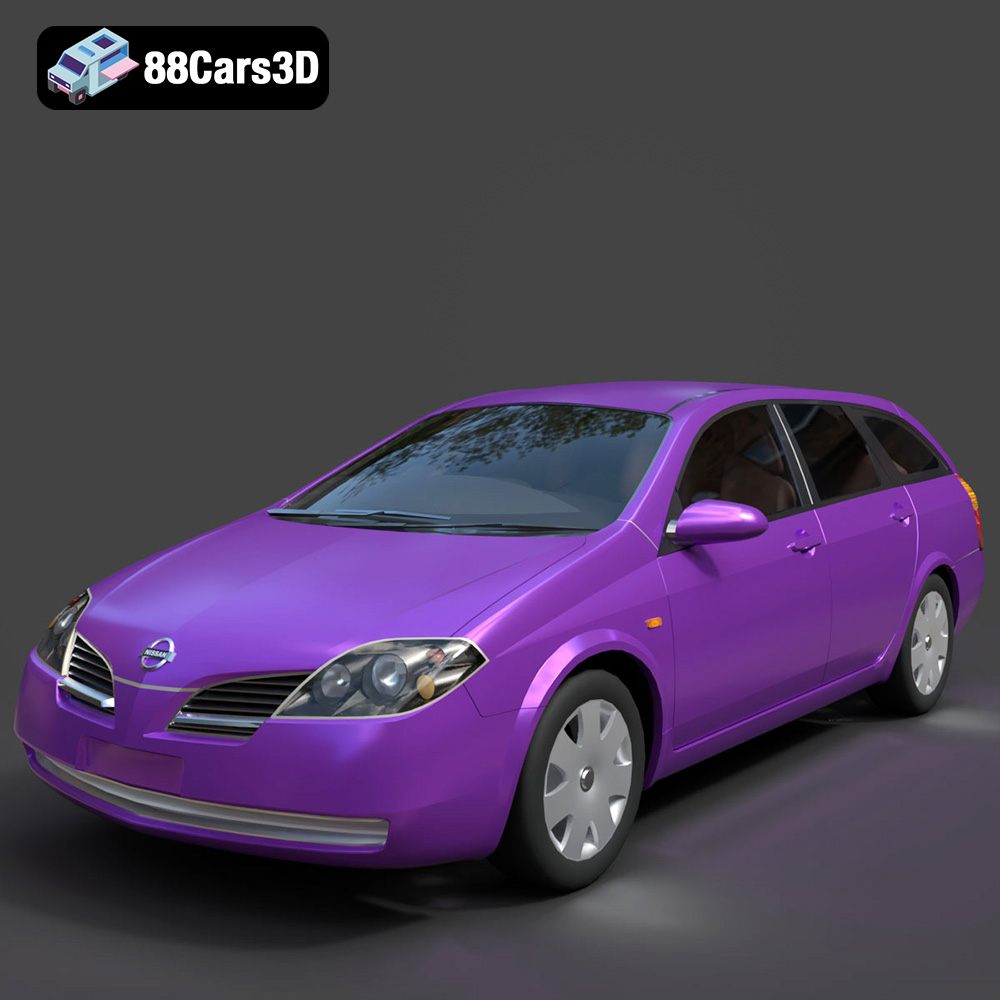
Nissan Primera Wagon 3D Model
Texture: Yes
Material: Yes
Download the Nissan Primera Wagon 3D Model featuring clean geometry, realistic detailing, and a fully modeled interior. Includes .blend, .fbx, .obj, .glb, .stl, .ply, .unreal, and .max formats for rendering, simulation, and game development.
Price: $4.99
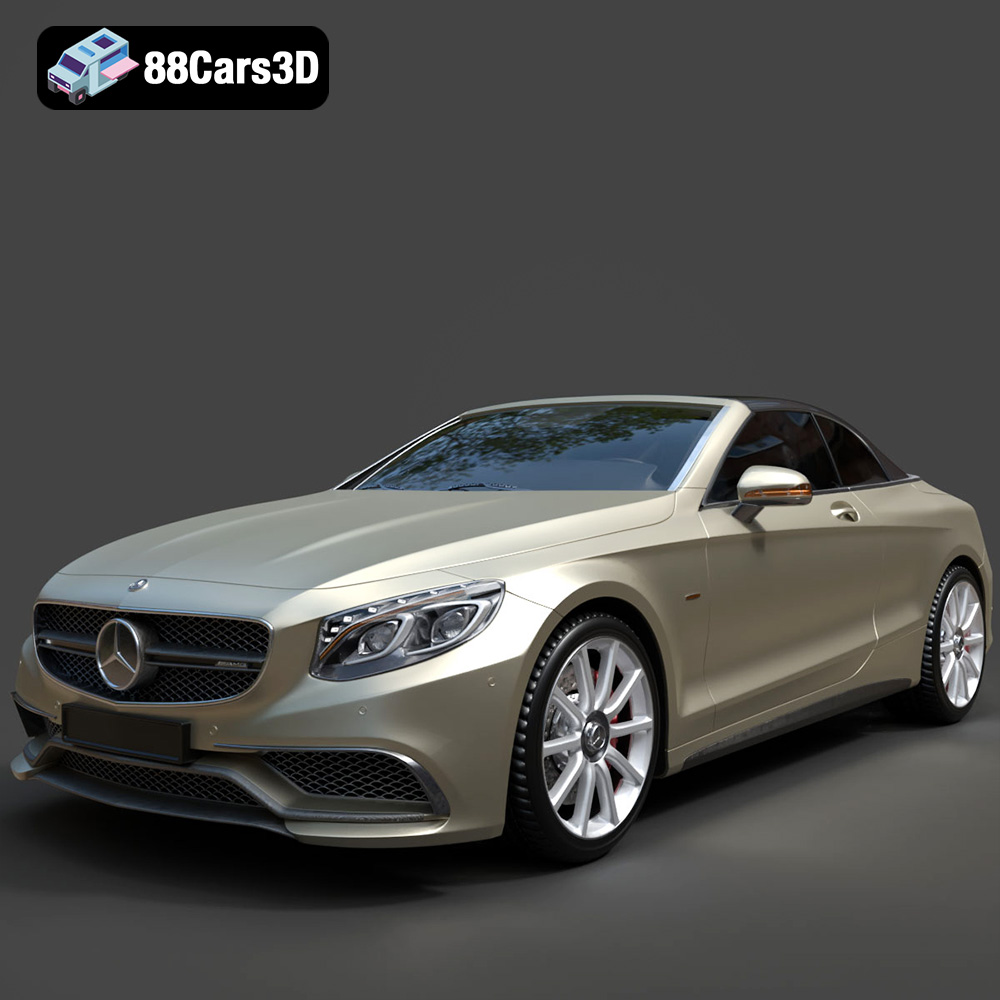
Mercedes-Benz S63 AMG Cabriolet 2017 3D Model
Texture: Yes
Material: Yes
Download the Mercedes-Benz S63 AMG Cabriolet 2017 3D Model featuring clean geometry, realistic detailing, and a fully modeled interior. Includes .blend, .fbx, .obj, .glb, .stl, .ply, .unreal, and .max formats for rendering, simulation, and game development.
Price: $20.99
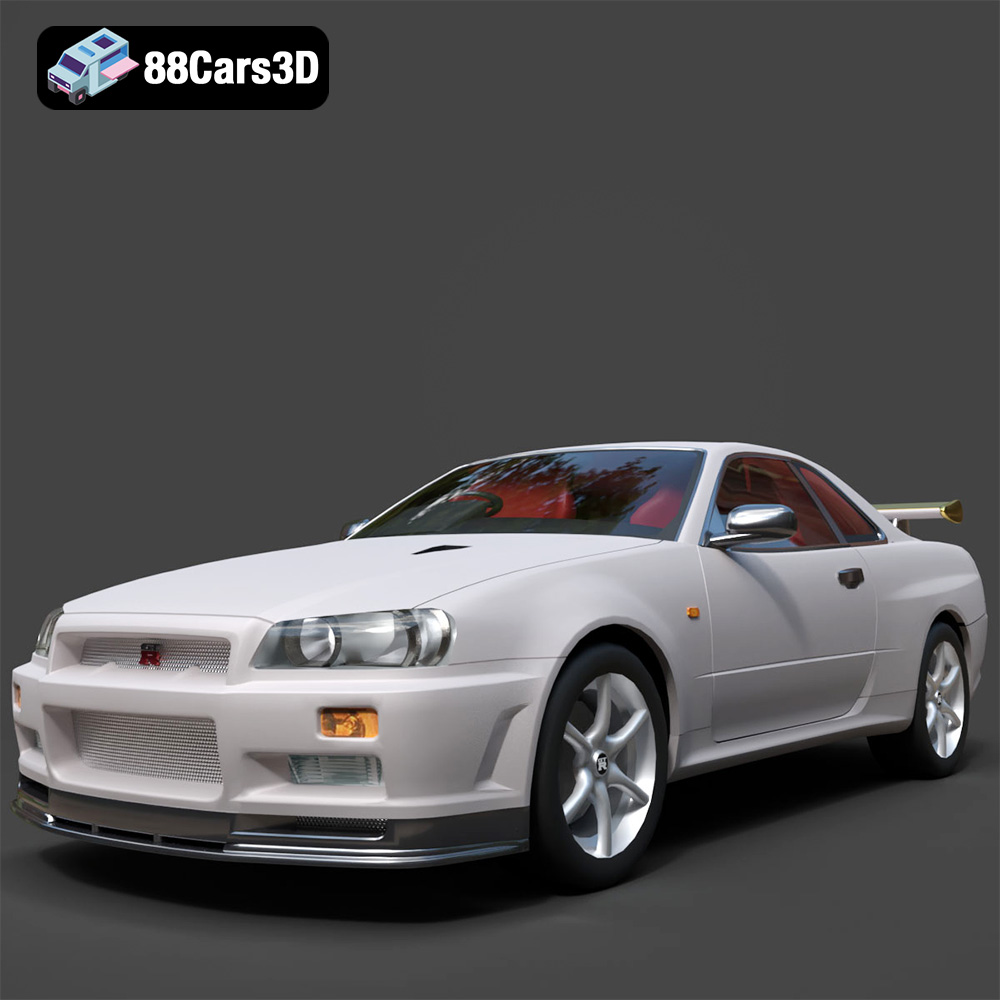
Nissan Skyline R34 2002 3D Model
Texture: Yes
Material: Yes
Download the Nissan Skyline R34 2002 3D Model featuring clean geometry, realistic detailing, and a fully modeled interior. Includes .blend, .fbx, .obj, .glb, .stl, .ply, .unreal, and .max formats for rendering, simulation, and game development.
Price: $4.99
