⚡ FLASH SALE: Get 60% OFF All Premium 3D & STL Models! ⚡

The automotive industry, game development, cinematic visualization, and even augmented reality are continually pushing the boundaries of realism and interactivity. At the heart of this evolution lies the demand for exceptionally high-quality 3D car models – assets that aren’t just visually stunning but also technically robust and optimized for diverse platforms. From the intricate curves of a supercar to the subtle reflections on its polished paint, every detail contributes to an immersive experience.
This comprehensive guide takes you on a journey through the intricate world of 3D car modeling, rendering, and optimization. We’ll peel back the layers of what makes a truly professional 3D car model, covering everything from the foundational principles of topology to advanced rendering techniques, game engine integration, and even preparing models for AR/VR and 3D printing. Whether you’re a seasoned 3D artist, a game developer, an automotive designer, or a student aspiring to master this demanding niche, understanding these technical intricacies is paramount. We’ll equip you with the knowledge to not only appreciate the craftsmanship behind premium assets but also to create or effectively utilize them in your projects, ensuring they meet the highest industry standards.
The underlying structure of any 3D model, its topology, is the bedrock upon which all other attributes – from smooth shading to animation and UV unwrapping – are built. For automotive models, where sleek curves, sharp creases, and complex panel intersections are abundant, impeccable topology is not merely a nicety; it’s a necessity. Good topology ensures that your model deforms predictably, subdivides cleanly, and receives lighting and reflections accurately, preventing unsightly pinches, bumps, or shading artifacts.
The golden rule for most organic and hard-surface modeling is to maintain an all-quad mesh (geometry composed solely of four-sided polygons). While triangles are permissible in very specific, non-deforming, flat areas or for game engine export, N-gons (polygons with more than four sides) should be avoided at all costs in production-ready geometry, as they can lead to unpredictable shading, rendering errors, and difficulties in UV mapping. For a typical render-ready high-poly car model, after subdivision, you might be looking at several million quads. For game-ready assets, polygon counts are much lower, typically ranging from 50,000 to 150,000 triangles for a hero vehicle, but the underlying base mesh still benefits from clean quad topology before optimization.
Clean edge flow directly impacts how light interacts with the surface. Automotive surfaces are famous for their continuous reflections, and any imperfections in the mesh’s curvature will manifest as breaks or wobbles in these reflections. This phenomenon is often referred to as “bad reflection lines.” Supporting edge loops are crucial here; they are strategically placed edges that run parallel to a sharp crease or edge, providing tension to hold the shape when a subdivision surface modifier (like Turbosmooth in 3ds Max or Subdivision Surface in Blender) is applied. Without sufficient supporting loops, sharp edges become soft, and smooth curves can lose their intended form.
For example, around a car’s wheel arch, a series of evenly spaced edge loops will ensure a perfect circle, while maintaining the surrounding curvature of the fender. Similarly, the sharp lines of a car’s character lines require precise edge loops running along them to preserve their crispness, even after multiple levels of subdivision. This meticulous attention to edge placement is what separates a novice model from a professional asset capable of photorealistic rendering.
Building a precise automotive model often involves a combination of techniques. Many artists start with a **box modeling** approach, blocking out the main forms and then refining them using edge loops, extrusions, and bevelling. For highly detailed or complex parts, **spline modeling** (e.g., using NURBS or editable splines in 3ds Max) can be incredibly effective for creating precise curves that are then lofted or extruded into surfaces. Regardless of the initial method, the goal is always to convert these into clean quad meshes suitable for subdivision.
When dealing with CAD data, a common challenge arises. CAD models are often composed of NURBS surfaces or heavily triangulated meshes that are not suitable for animation, subdivision, or clean UV mapping. In these cases, **retopology** is essential. This process involves manually or semi-automatically rebuilding a new, clean quad mesh over the existing high-density CAD data. This ensures proper edge flow and polygon distribution, making the model production-ready. Tools like ZBrush’s ZRemesher, Blender’s Retopoflow, or the Quad Draw tool in Maya are invaluable for this task. Professional 3D car models available on platforms like 88cars3d.com typically undergo this rigorous retopology process to ensure they are optimized and ready for immediate use.
Once a 3D car model boasts impeccable topology, the next critical step is to prepare its surfaces for texturing. UV mapping is the process of unwrapping the 3D mesh into a 2D layout, allowing textures to be painted or applied without distortion. For complex, curved surfaces like those found on cars, strategic UV mapping is paramount to achieve realistic material representation and efficient texture usage. Poor UVs lead to stretched textures, visible seams, and wasted texture space, undermining all the effort put into modeling.
The primary goal of UV mapping for automotive models is to minimize stretching, ensure consistent texel density across different parts of the model, and strategically place seams in less visible areas. Texel density refers to the number of texture pixels per unit of 3D space. Maintaining a uniform texel density ensures that details appear consistent, regardless of the size of the mesh island on the UV map. For instance, a small emblem on the car body should have a similar texture resolution to a large door panel when viewed up close. This consistency is often achieved by calculating the surface area of different mesh parts and scaling their UV islands accordingly.
Unwrapping large, curved panels such as the hood, roof, and doors requires careful planning to avoid distortion. Planar projections can work for relatively flat surfaces, but cylindrical or spherical projections are often better suited for curved areas. Tools like *Unfold3D* (integrated into Maya and Blender) or the *UVW Unwrap* modifier in 3ds Max provide advanced algorithms to flatten complex surfaces with minimal distortion. Seams should be placed along natural breaks or hard edges where they will be less noticeable, such as along the bottom edge of a door, inside a wheel well, or underneath a trim piece.
For intricate components like the grille, alloy wheels, or dashboard, multiple smaller UV islands might be necessary. While this increases the number of seams, the complexity of these parts often makes a single, seamless unwrap impractical. In such cases, artists often utilize **UDIMs** (U-Dimension), a system where multiple UV tiles (each representing a standard 0-1 UV space) are used across the model. This allows for incredibly high-resolution textures on different parts of the car without exceeding the memory limits of a single massive texture, and it’s particularly useful for film and high-end visualization projects. For game assets, simpler UV layouts are preferred, often combining many small parts into a single texture atlas to reduce draw calls.
Once the UVs are laid out, the real magic of texturing begins, typically following a Physically Based Rendering (PBR) workflow. PBR materials accurately simulate how light interacts with surfaces in the real world, leading to highly realistic results. The core maps in a PBR workflow usually include:
* **Albedo (Base Color):** The intrinsic color of the surface, free from lighting information.
* **Metallic:** A grayscale map indicating whether a surface is metallic (white) or dielectric/non-metallic (black).
* **Roughness:** A grayscale map controlling the microsurface detail, determining how blurry or sharp reflections appear. Low roughness means sharp reflections (polished metal), high roughness means diffuse reflections (matte plastic).
* **Normal:** A map that fakes surface detail by manipulating how light bounces off the surface, without adding actual geometry. Crucial for adding rivets, panel lines, or subtle imperfections.
* **Ambient Occlusion (AO):** Simulates self-shadowing in crevices and corners, adding depth.
* **Displacement/Height:** (Optional, for high-poly renders) Physically displaces geometry to add true surface detail, like tire treads or coarse fabrics.
Software like Substance Painter and Substance Designer are industry standards for creating PBR textures. They allow artists to paint directly onto the 3D model, leveraging smart materials, procedural generators, and hand-painted details. For car models, resolutions often range from 4K (4096×4096 pixels) for major body panels to 2K for interior components and 1K or 512 for smaller details or optimized game assets. The careful interplay of these maps defines the visual fidelity of the car, transforming a bare mesh into a photorealistic object.
The raw texture maps generated from the UV mapping and texturing phase are only half the story; they need to be fed into a sophisticated shader network within your rendering engine to truly come alive. Physically Based Rendering (PBR) shaders, whether using a Metallic-Roughness or Specular-Glossiness workflow, are designed to mimic real-world light interactions, ensuring consistency and realism across different lighting conditions. Crafting compelling PBR materials for a 3D car model goes beyond simply plugging in maps; it involves understanding the physics of light, layering materials, and fine-tuning parameters to achieve authentic surface qualities.
The complexity of a car’s surface demands a layered approach to material creation. The body paint, for instance, isn’t just a single color; it’s a multi-layered material with a base coat, a metallic flake layer, and a clear coat. Each layer has distinct properties that contribute to the final appearance. Understanding how these layers interact with light and how to replicate them in your chosen renderer (e.g., Corona Renderer, V-Ray, Cycles, Arnold) is essential for photorealistic results.
Automotive car paint is one of the most challenging materials to reproduce accurately due to its complex layering. A typical car paint shader involves:
1. **Base Layer (Diffuse/Albedo):** Defines the underlying color of the paint, whether it’s a solid, metallic, or pearlescent hue. This is where your base color map (or solid color) comes in.
2. **Metallic Flake Layer:** For metallic paints, this layer simulates tiny metallic flakes suspended in the paint. This is often achieved with a separate reflective component, sometimes driven by a noise map or a custom flake map to control the size, density, and anisotropy of the flakes. The roughness of this layer is typically very low.
3. **Clear Coat Layer:** This is a crucial transparent, reflective layer on top of everything. It acts like a very thin layer of glass, adding depth, gloss, and strong reflections. Its parameters typically include a high Index of Refraction (IOR) – around 1.4-1.5 for automotive clear coats – and extremely low roughness, mimicking a highly polished surface. Fresnel effects are critical here, meaning the reflectivity increases at glancing angles. Some renderers offer dedicated ‘Car Paint’ shaders (like in V-Ray or Corona) that simplify this layering process, providing intuitive controls for flake density, size, and clear coat properties.
Adding subtle imperfections like dust, fingerprints, or micro-scratches via separate dirt/grunge maps blended over the clear coat can significantly enhance realism, preventing the model from looking too “perfect” or CG.
While car paint often steals the show, the realism of other materials is equally vital for a convincing automotive model.
* **Interior Materials:** Leather, fabric, plastics, and brushed metals each require distinct PBR setups. Leather might involve subtle normal maps for grain, combined with roughness maps showing areas of wear. Fabrics benefit from intricate normal maps to simulate weave patterns and potentially a velvet-like “sheen” or “fuzz” effect, often controlled by anisotropy or diffuse scattering properties. Plastics vary widely in roughness and color.
* **Glass:** Car windows are not just transparent planes. They often have a slight tint, internal reflections, and may be slightly dirty. Volumetric glass shaders with appropriate IOR (around 1.5-1.55 for standard glass) and subtle absorption colors (e.g., a faint green or blue) are essential. Don’t forget to add a subtle normal map for surface imperfections like wiper streaks or dust. Caustics, if supported by the renderer, can add another layer of realism as light refracts through the glass.
* **Tires:** Rubber materials typically have a dark, slightly matte appearance with specific roughness variations due to wear. The sidewall often has molded text, which should be represented with a very detailed normal map. The tire tread, especially, needs a robust displacement or bump map to give it a convincing profile. Anisotropic reflections can be used on certain brushed metal parts (like aluminum trim) to simulate the directionality of the brushing, where reflections stretch along the grain.
All these materials, when properly configured and exposed to realistic lighting, contribute to a cohesive, photorealistic rendering that captivates the viewer. High-quality 3D car models found on marketplaces like 88cars3d.com often come pre-configured with these advanced material setups for immediate use.
Even the most meticulously modeled and textured 3D car model will fall flat without a thoughtfully designed lighting and environment setup. Lighting is the ultimate sculptor of form, emphasizing the car’s design cues, highlighting its materials, and setting the overall mood of the scene. Combined with realistic environments and a robust post-processing workflow, the render transforms from a digital asset into a compelling piece of visual art.
The choice of rendering engine (e.g., Corona, V-Ray, Cycles, Arnold) will influence specific settings, but the fundamental principles of lighting remain universal. The goal is to simulate real-world illumination, whether it’s the diffused light of a professional photography studio, the harsh glare of a desert sun, or the moody ambiance of a rainy city street. A common approach for photorealistic automotive rendering is to utilize physically accurate light sources combined with High Dynamic Range Imagery (HDRI).
* **HDRI (High Dynamic Range Image) Lighting:** This is often the starting point for realistic environments. An HDRI acts as both a light source and a background, providing accurate environmental lighting, reflections, and sometimes even the visible background. A high-quality 360-degree HDRI captures the full range of light intensities from a real-world location, resulting in incredibly natural illumination. For automotive renders, studio HDRIs with softboxes and diffusers are popular for clean product shots, while outdoor HDRIs provide dynamic, naturalistic lighting.
* **Physically Accurate Light Sources:** While HDRIs provide global illumination, specific light sources are used to emphasize details, create dramatic shadows, or act as fill lights.
* **Area Lights/Mesh Lights:** Used to simulate softboxes, studio lights, or even light-emitting elements within the car (e.g., headlights, taillights). Their size and shape directly influence the softness of shadows.
* **Directional Lights:** Mimic sunlight, creating strong, parallel shadows.
* **Spotlights:** Used for focused illumination, such as highlighting a specific badge or wheel.
* **Light Mix (Corona Renderer, V-Ray):** Advanced features like Light Mix allow artists to adjust the intensity, color, and even enable/disable individual lights or groups of lights *after* the render is complete, saving immense amounts of iteration time.
* **Caustics:** For renders involving glass (headlights, windshield), enabling caustics can add an extra layer of realism, showing how light is focused and refracted through transparent objects. However, caustics can be computationally expensive and often require specific settings or dedicated render passes.
The placement of lights is crucial for revealing the car’s form. Often, a three-point lighting setup (key light, fill light, back light) is adapted for cars, with additional rim lights or specific accent lights to highlight contours and reflections.
The environment around the car plays a significant role in how the vehicle is perceived. While an HDRI provides background reflections, often a more detailed **backplate** (a photographic background image) or even fully modeled **environment geometry** (e.g., a garage, a street scene) is used for the visible surroundings. Matching the perspective and lighting of the backplate to the 3D model is critical for seamless integration.
**Post-processing and Compositing** are the final, indispensable steps in creating a polished render. Rather than trying to get a “perfect” render directly from the 3D software, professional workflows involve rendering out multiple **render passes** (or AOV – Arbitrary Output Variables). These passes isolate different elements like:
* **Beauty Pass:** The combined, final render.
* **Alpha/Mask Pass:** For isolating the car from the background.
* **Reflection Pass:** Isolated reflections.
* **Refraction Pass:** Isolated refractions.
* **Ambient Occlusion Pass:** Darkening of crevices.
* **Z-Depth Pass:** Depth information for depth of field effects.
* **Lighting Passes:** Individual passes for different light sources (if not using Light Mix).
* **Normal/World Position Passes:** Useful for masking and relighting in compositing.
These passes are then brought into compositing software like Adobe Photoshop, Nuke, or Fusion. Here, artists perform crucial enhancements:
* **Color Grading:** Adjusting overall color, contrast, and tone to achieve the desired mood.
* **Depth of Field (DOF):** Simulating lens blur to draw attention to the car and provide a photographic quality.
* **Motion Blur:** Adding a sense of speed if the car is in motion.
* **Lens Effects:** Adding subtle lens flares, chromatic aberration, or vignetting.
* **Sharpening/Denoising:** Enhancing details and removing render noise (if not handled by the renderer’s built-in denoiser).
* **Atmospheric Effects:** Adding subtle fog, haze, or volumetric light shafts.
This multi-stage process ensures maximum control and flexibility, allowing artists to fine-tune every aspect of the final image, producing stunning, hyper-realistic automotive visualizations.
While visualization and film rendering prioritize absolute photorealism, game development and real-time applications like interactive configurators demand a different kind of mastery: optimization. High-fidelity 3D car models must be expertly tailored to run smoothly and efficiently within game engines such as Unity and Unreal Engine, balancing visual quality with strict performance budgets. The goal is to deliver a compelling visual experience without sacrificing frame rate or causing system lag.
Optimization is a multi-faceted process that touches upon polygon count, material complexity, texture usage, and draw calls. A render-ready model with millions of polygons and dozens of separate materials is simply not viable for real-time applications without significant modification. A high-quality game-ready car asset often targets around 80,000 to 150,000 triangles for the highest LOD (Level of Detail), with multiple lower LODs for distance viewing. For mobile games or VR, this budget can be even tighter, sometimes as low as 20,000-50,000 triangles.
One of the most crucial optimization techniques is the implementation of **Levels of Detail (LODs)**. Instead of rendering the full-resolution model at all distances, LODs involve creating multiple simplified versions of the same asset.
* **LOD0 (High-poly):** Used when the car is close to the camera.
* **LOD1 (Medium-poly):** Automatically swaps in when the car is at a medium distance, with reduced detail (e.g., 50% of LOD0’s poly count).
* **LOD2 (Low-poly):** Used for distant viewing, with significantly reduced detail (e.g., 25% or less of LOD0’s poly count).
* **LOD3 (Billboard/Imposter):** For very distant objects, a simple 2D image (billboard) might be used.
Game engines handle the automatic swapping of LODs based on camera distance, dramatically reducing the polygon count rendered at any given time. Tools within 3ds Max (ProOptimizer), Blender (Decimate modifier), Maya (Reduce), and dedicated software like InstaLOD or Simplygon can generate these simplified meshes while attempting to preserve visual integrity through normal map baking.
**Draw calls** are another critical performance bottleneck. Each time the CPU tells the GPU to render a batch of triangles, it’s a draw call. Many separate meshes, each with its own material, lead to numerous draw calls, taxing the CPU. Strategies to reduce draw calls include:
* **Mesh Merging:** Combining smaller meshes into larger ones where feasible (e.g., combining all the small bolts on an engine into a single mesh).
* **Instancing:** For identical objects (e.g., all four wheels if they are the same), using instancing allows the GPU to render multiple copies using a single draw call.
* **Static vs. Dynamic Objects:** Marking objects as static in the engine allows for pre-calculated lighting (lightmaps) and better culling, reducing real-time calculations.
Optimizing textures and materials is equally vital. High-resolution textures consume significant VRAM, and too many unique materials lead to more draw calls.
* **Texture Atlasing:** This involves combining multiple smaller textures (e.g., textures for various interior buttons, badges, and small trim pieces) into a single, larger texture map (an atlas). All meshes that use parts of this atlas can then share a single material, drastically reducing draw calls. While creating atlases, it’s important to pack UVs efficiently to minimize wasted space and maintain texel density.
* **Material Optimization:** Game engines offer various material types. PBR materials often require multiple texture maps (Albedo, Normal, Metallic, Roughness, AO). Packing multiple grayscale maps (e.g., Metallic, Roughness, AO) into different channels (R, G, B, A) of a single texture can save VRAM and texture lookups. **Material instances** are also crucial; instead of creating a new material for every color variation of a car, a single master material can have exposed parameters (like color, roughness values) that can be overridden in instances, saving compilation time and memory.
* **Baking:** Details from high-polygon meshes (like intricate moldings or bolts) can be “baked” onto the normal map of a low-polygon mesh, giving the illusion of detail without the geometric overhead. Ambient Occlusion and other masks can also be baked down.
* **Collision Meshes:** For physics interactions, simplified collision meshes (often convex hulls or simplified box colliders) are used instead of the high-fidelity render mesh, significantly improving physics performance.
By meticulously applying these optimization techniques, developers can integrate stunning 3D car models into games and real-time experiences, delivering both visual fidelity and smooth performance, critical for modern gaming and interactive visualization applications.
The utility of high-quality 3D car models extends far beyond traditional rendering and game engines. The rapid evolution of technologies like Augmented Reality (AR) and Virtual Reality (VR), coupled with advancements in 3D printing, has opened up a new frontier for how these assets are consumed and interacted with. Each of these applications brings its own unique set of technical requirements and optimization challenges, demanding a flexible and robust approach to 3D asset preparation.
Automotive manufacturers, marketing agencies, and even educational institutions are leveraging these technologies to create immersive experiences. Imagine a customer exploring a new car in AR, walking around it as if it were physically present in their driveway, or a designer holding a 3D-printed prototype of a new wheel rim. These applications rely entirely on the underlying quality and specific preparation of the 3D model. This is where the versatility of high-quality models, like those available on 88cars3d.com, becomes evident.
AR/VR applications often have the strictest performance budgets, even more so than traditional video games, especially for mobile-based AR (like Apple ARKit or Google ARCore) and standalone VR headsets (like Meta Quest). The demand for high frame rates (typically 90fps for VR to prevent motion sickness) combined with limited processing power and memory means aggressive optimization is necessary.
Key considerations for AR/VR car models:
* **Poly Count:** Extremely conservative. For mobile AR, a full car might need to be below 50,000 triangles, potentially with lower resolution textures. For high-end PC VR, it could go up to 200,000-300,000 triangles. LODs are crucial.
* **Draw Calls:** Minimize as much as possible through mesh merging and texture atlasing. Every material and object increases the workload.
* **Texture Resolutions:** Prioritize efficiency. 1K or 2K textures are common, often packed into atlases. PBR workflows are still used, but maps might be simplified.
* **Shader Complexity:** Keep materials as simple as possible. Avoid complex layered shaders, excessive transparency, or expensive real-time effects like global illumination (unless baked).
* **Single Pass Stereo Rendering:** For VR, engines often use single-pass stereo rendering to draw both eyes in one go, which requires careful material and lighting setup.
* **File Formats:** GLB (GLTF Binary) and USDZ are the dominant file formats for web-based and mobile AR/VR. They are compact, self-contained (embedding textures and animations), and optimized for real-time viewing. GLTF is an open standard, while USDZ is Apple’s proprietary format for ARKit. Ensuring models are exported cleanly to these formats is paramount.
* **Real-time Reflections:** Environment probes and reflection captures are used to simulate reflections in real-time, often at a lower resolution than offline renders.
3D printing a car model brings an entirely different set of technical requirements. Unlike screen-based applications, 3D printing deals with physical material, meaning the mesh must be structurally sound and manifold (watertight).
Critical aspects for 3D printing preparation:
* **Watertight Mesh:** The model must be a “solid” object with no holes, inverted normals, or self-intersecting geometry. Every edge must belong to exactly two faces. Non-manifold geometry (e.g., edges connected to more than two faces, or faces with zero thickness) will cause printing errors.
* **Wall Thickness:** Every part of the model must have a minimum wall thickness that the 3D printer can physically produce. This varies by printer technology and material (e.g., 1-2mm is a common safe minimum). Thin features like antennas or side mirrors might need to be thickened or simplified.
* **Scale:** The model must be accurately scaled to the desired real-world size. While 3D software might use generic units, knowing the target print size is essential.
* **Mesh Resolution:** While detailed, the mesh doesn’t need to be excessively high-poly. The printer’s resolution (layer height, nozzle size) is often the limiting factor. Excessive polygons can unnecessarily increase file size and processing time for the slicer software.
* **Export Formats:** STL (Standard Tessellation Language) is the most common format for 3D printing, though OBJ and AMF are also used. Ensure the export options maintain scale and mesh integrity.
* **Mesh Repair:** Tools like Meshmixer, Netfabb, Blender’s 3D Print Toolbox, or online services are often used to inspect and repair meshes, automatically closing holes, fixing non-manifold edges, and ensuring water-tightness.
The applications for high-quality 3D car models are constantly expanding. Beyond these, they are integral to automotive configurators for customer customization, virtual showrooms, driving simulators for training and entertainment, virtual production (VFX pre-visualization), and even forensic animation. Each scenario leverages the same core asset but demands specific optimization and technical preparation, underscoring the value of acquiring versatile models.
The journey of a 3D car model, from creation in a Digital Content Creation (DCC) tool to its deployment in a game engine, renderer, or AR/VR experience, often involves traversing various file formats. Understanding the strengths, weaknesses, and intended uses of these formats is crucial for seamless asset transfer, maintaining data integrity, and ensuring compatibility across different software ecosystems. In a pipeline involving multiple artists and tools, interoperability is key to efficiency and avoiding costly re-work.
No single file format is universally superior; each serves specific purposes. The choice of format depends on the type of data being transferred (geometry, textures, animations, rigging, materials), the target application, and the level of compatibility required between different software packages.
* **FBX (Filmbox):** Developed by Autodesk, FBX is arguably the most prevalent exchange format in the 3D industry, particularly for animation, rigging, and game development.
* **Strengths:** Supports geometry, UVs, PBR materials (though often requires re-linking in target software), animations, skeletal rigs, blend shapes, and lights. Excellent for transferring between 3ds Max, Maya, Blender, Unity, and Unreal Engine.
* **Weaknesses:** Can be proprietary, leading to compatibility issues between different software versions or non-Autodesk applications. Material definitions can be lost or misinterpreted, often requiring manual setup in the destination. File sizes can be large.
* **OBJ (Object):** One of the oldest and most universally supported 3D file formats.
* **Strengths:** Excellent for exporting pure geometric data (vertices, faces, UVs). Highly compatible across virtually all 3D software. Simple text-based format, easy to inspect.
* **Weaknesses:** Does not support animation, rigging, or advanced material properties beyond basic colors and texture assignments (via accompanying .MTL file). Can struggle with large meshes.
* **GLB/GLTF (GL Transmission Format):** An open-standard, royalty-free format designed for efficient transmission and loading of 3D scenes and models by engines and applications.
* **Strengths:** Highly optimized for web and real-time applications (AR/VR). Supports PBR materials, animations, and scene hierarchy. GLB is the binary version, embedding all assets (textures, meshes) into a single file, making it incredibly portable.
* **Weaknesses:** Not ideal for high-poly, non-optimized assets. Material conversions from complex DCC shaders can be lossy.
* **USDZ (Universal Scene Description Zip):** Apple’s proprietary format built on Pixar’s USD, specifically for ARKit on iOS devices.
* **Strengths:** Excellent for Apple’s AR ecosystem, optimized for mobile AR. Supports PBR materials and animations.
* **Weaknesses:** Primarily for Apple devices. Requires specific tooling for creation and editing outside of Apple’s ecosystem.
* **Native Formats (MAX, BLEND, C4D, MB):** These are the proprietary formats of software like 3ds Max, Blender, Cinema 4D, and Maya.
* **Strengths:** Retain all scene data, modifiers, procedural effects, complex material nodes, and non-destructive workflows. Offer the highest fidelity within their respective software.
* **Weaknesses:** Not directly compatible with other software. Require the native application to open and edit.
When sourcing models from marketplaces such as 88cars3d.com, you’ll often find models provided in a variety of these formats (e.g., .max for 3ds Max with Corona materials, .blend for Blender with Cycles materials, and universal .FBX and .OBJ for broader compatibility), ensuring maximum flexibility for users.
To mitigate potential issues during file format conversion and asset transfer, several best practices should be followed:
* **Clean Up Before Export:** Remove unnecessary objects, cameras, lights, and hidden geometry from your scene. Apply all transforms and reset X-forms.
* **Embed Textures:** Whenever possible, embed textures within the exported file (e.g., with FBX and GLB) or ensure they are placed in a well-organized folder structure relative to the model file.
* **Consistent Units:** Maintain consistent scene units (e.g., centimeters, meters) across all software to avoid scale discrepancies upon import.
* **Pivot Points and Transforms:** Ensure objects have logical pivot points (e.g., at the base of a wheel, or the center of a car’s chassis) and that all transformations (position, rotation, scale) are frozen or applied before export.
* **Normal Maps:** Be aware that some game engines (like Unity) expect Y-up normal maps, while others (like Unreal Engine) expect Z-up, or require flipping the green channel. Check your engine’s documentation.
* **Material Simplification:** For exchange formats, complex procedural materials may not transfer perfectly. Be prepared to rebuild or simplify materials in the destination software. PBR textures (Albedo, Normal, Roughness, Metallic, AO) are generally the most robust for transfer.
* **Test Exports:** Always perform test exports and imports into your target software to identify and troubleshoot any compatibility issues early in the pipeline.
By understanding these nuances of file formats and practicing careful asset management, artists and developers can ensure that their high-quality 3D car models seamlessly integrate into any workflow, maximizing efficiency and preserving visual fidelity.
The journey through the creation, optimization, and deployment of high-quality 3D car models reveals a multifaceted discipline demanding a blend of artistic skill, technical prowess, and meticulous attention to detail. From the foundational integrity of clean topology and strategic UV mapping to the advanced physics of PBR materials, dynamic lighting, and crucial real-time optimization techniques, every step contributes to the final, impactful result. Whether your goal is a breathtaking cinematic render, a high-performance game asset, an interactive AR experience, or a physically printed prototype, the underlying principles of craftsmanship remain constant.
We’ve explored how flawless topology prevents rendering artifacts, how detailed UVs and PBR textures breathe life into surfaces, and how precise lighting elevates a scene from ordinary to extraordinary. Furthermore, we’ve delved into the essential techniques for optimizing models for performance-critical environments like game engines and AR/VR, and how to prepare them for physical manifestation through 3D printing. Finally, navigating the landscape of diverse file formats ensures seamless integration across varying pipelines.
For any professional or aspiring artist in the 3D domain, mastering these technical aspects is an ongoing pursuit. The demand for meticulously crafted, high-fidelity 3D car models will only continue to grow across industries. Investing in a deep understanding of these workflows and best practices will empower you to create truly exceptional work that stands out. When you’re ready to jumpstart your projects with industry-leading assets, remember that platforms like 88cars3d.com offer a curated selection of pre-optimized, multi-format 3D car models, designed to meet the highest standards of quality and versatility for all your visualization and interactive needs. Continue to learn, experiment, and refine your craft – the world of automotive 3D is always evolving, and with the right knowledge, you can drive its future.
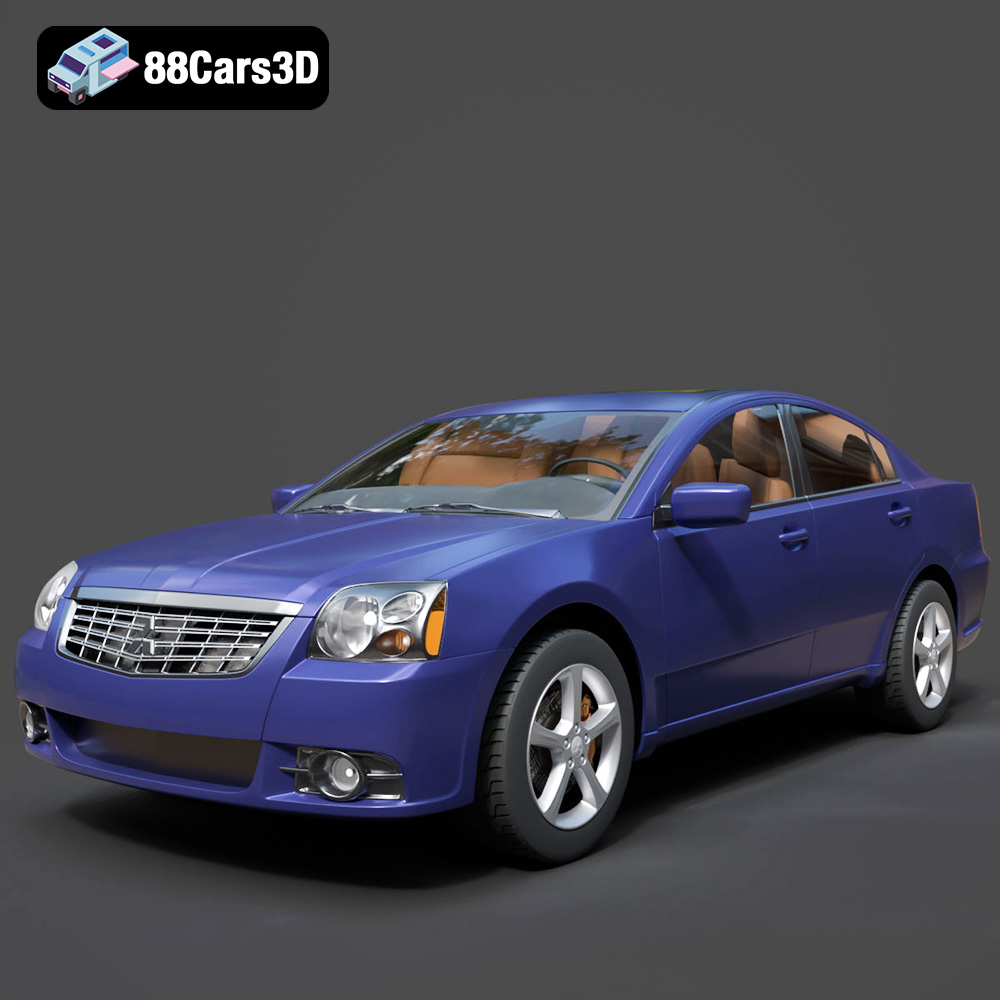
Texture: Yes
Material: Yes
Download the Mitsubishi Galant 2009 3D Model featuring clean geometry, realistic detailing, and a fully modeled interior. Includes .blend, .fbx, .obj, .glb, .stl, .ply, .unreal, and .max formats for rendering, simulation, and game development.
Price: $4.99
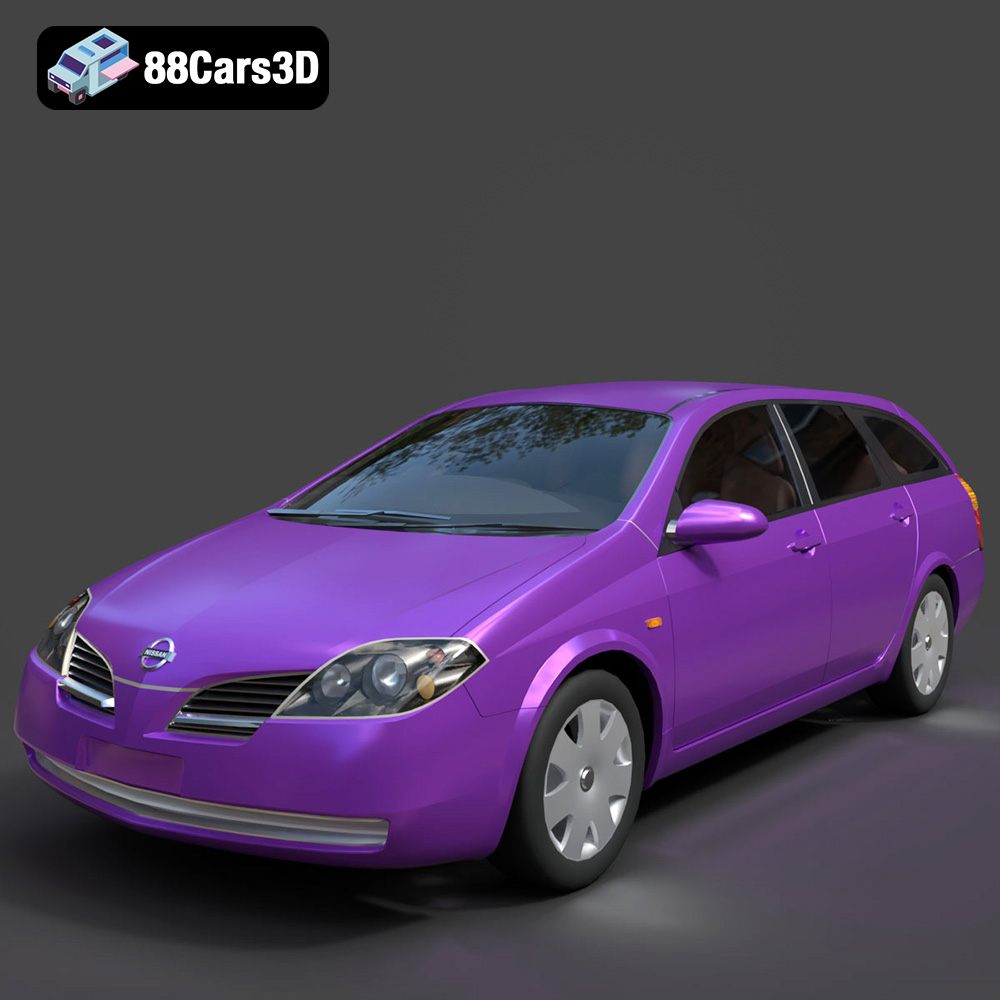
Texture: Yes
Material: Yes
Download the Nissan Primera Wagon 3D Model featuring clean geometry, realistic detailing, and a fully modeled interior. Includes .blend, .fbx, .obj, .glb, .stl, .ply, .unreal, and .max formats for rendering, simulation, and game development.
Price: $4.99
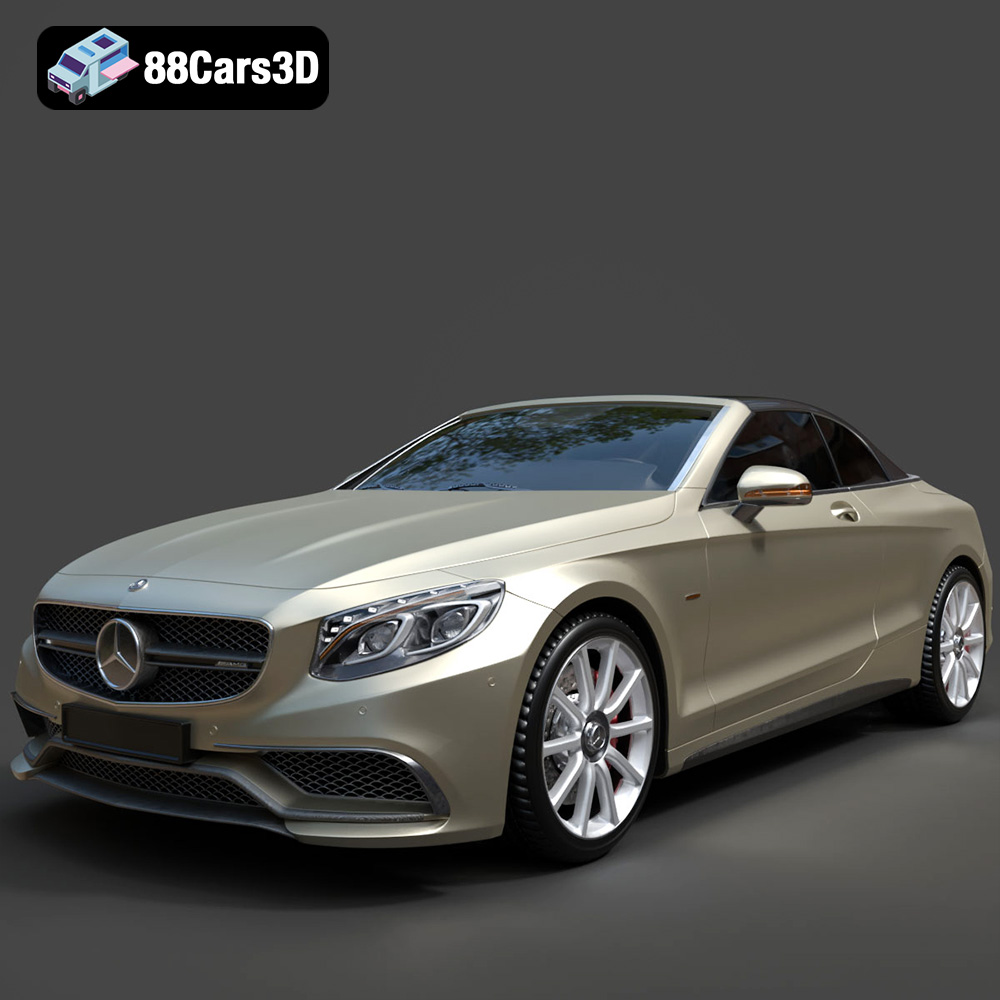
Texture: Yes
Material: Yes
Download the Mercedes-Benz S63 AMG Cabriolet 2017 3D Model featuring clean geometry, realistic detailing, and a fully modeled interior. Includes .blend, .fbx, .obj, .glb, .stl, .ply, .unreal, and .max formats for rendering, simulation, and game development.
Price: $20.99
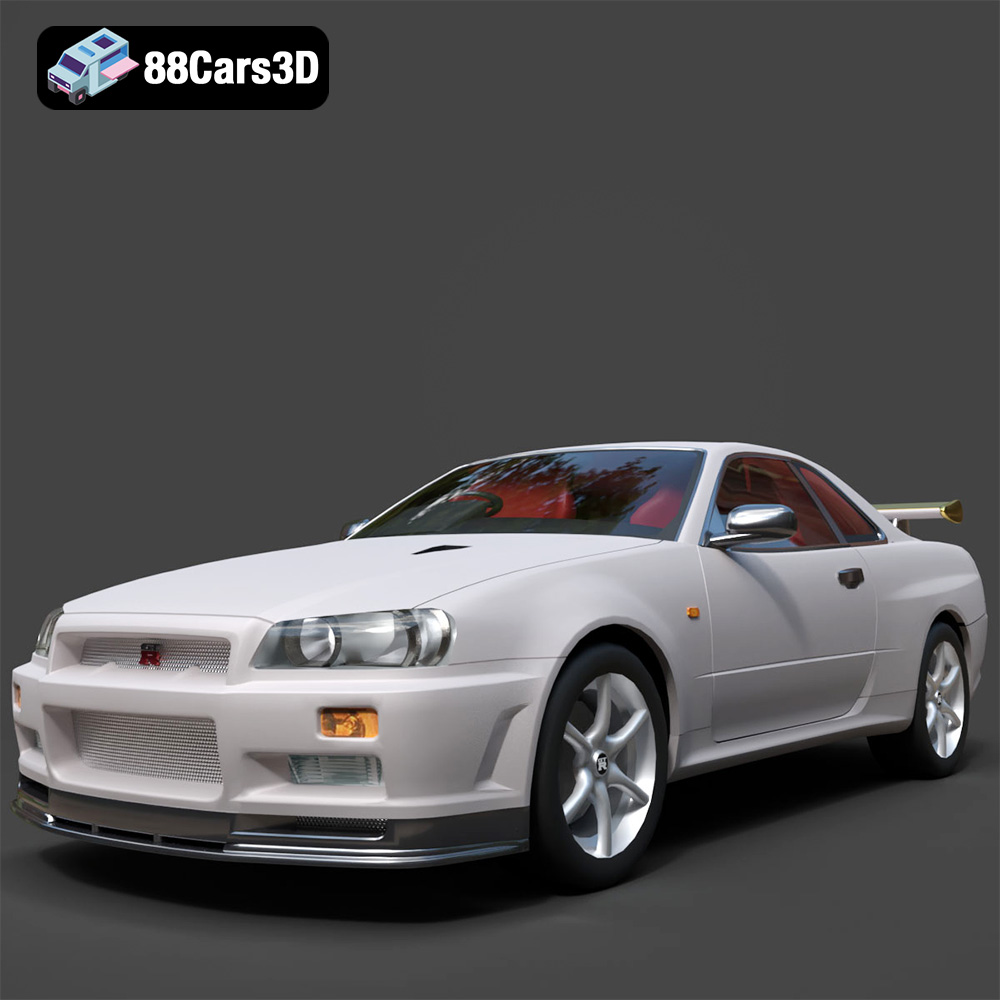
Texture: Yes
Material: Yes
Download the Nissan Skyline R34 2002 3D Model featuring clean geometry, realistic detailing, and a fully modeled interior. Includes .blend, .fbx, .obj, .glb, .stl, .ply, .unreal, and .max formats for rendering, simulation, and game development.
Price: $4.99
Texture: Yes
Material: Yes
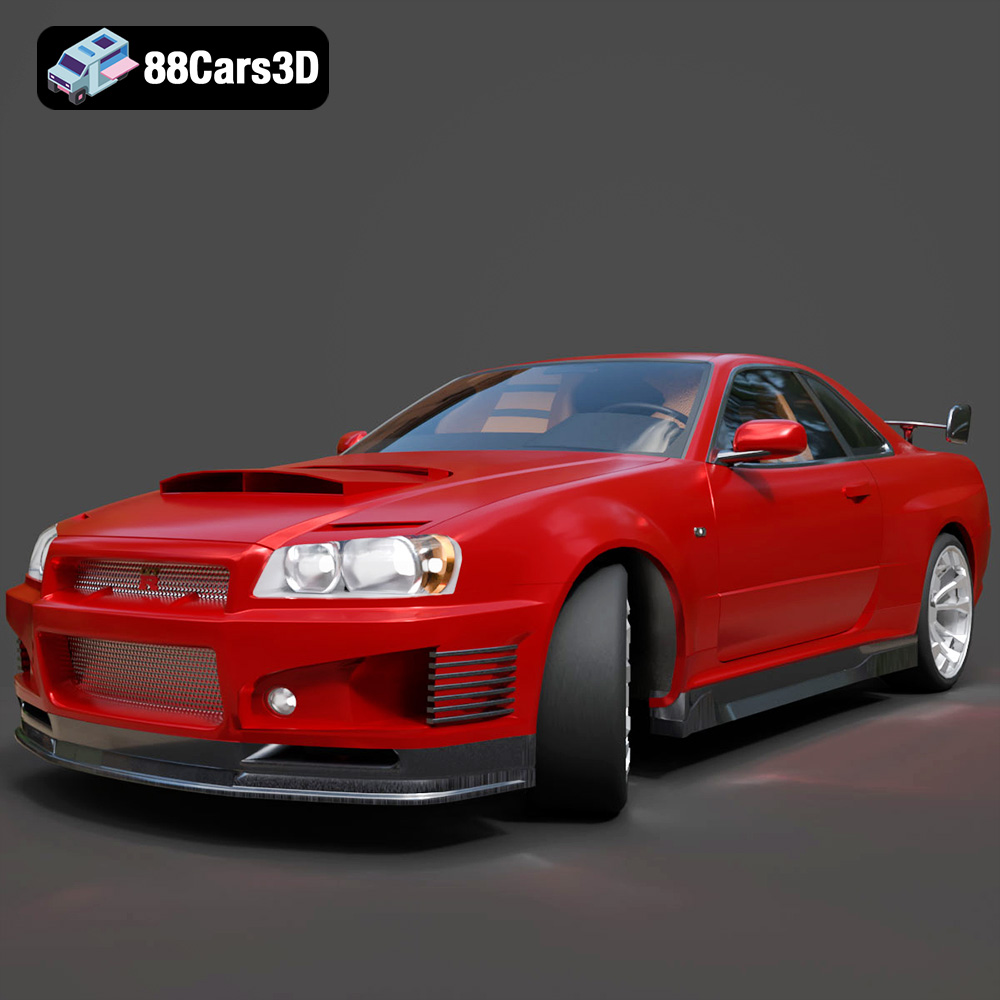
Download the Nissan Skyline 3D Model featuring clean geometry, realistic detailing, and a fully modeled interior. Includes .blend, .fbx, .obj, .glb, .stl, .ply, .unreal, and .max formats for rendering, simulation, and game development.
Price: $9.99
Texture: Yes
Material: Yes
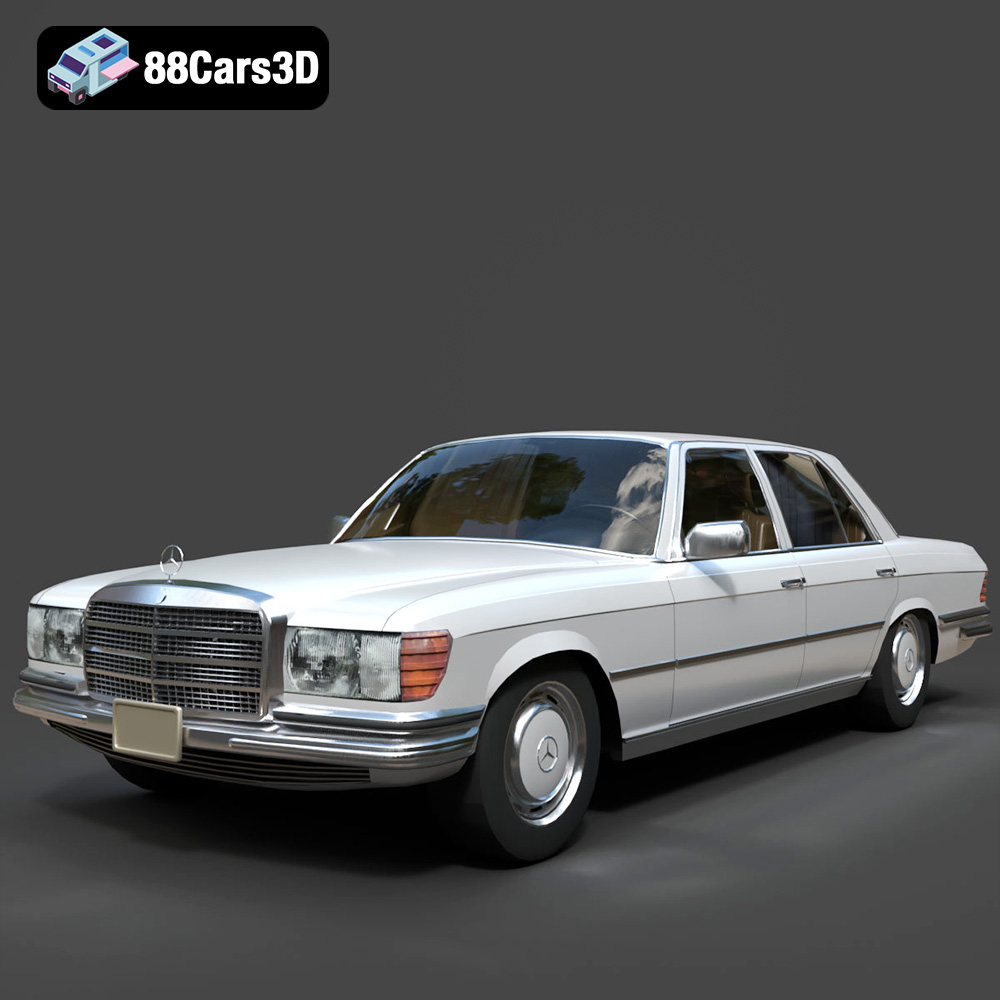
Download the Mercedes-Benz S-Klasse W116 3D Model featuring clean geometry, realistic detailing, and a fully modeled interior. Includes .blend, .fbx, .obj, .glb, .stl, .ply, .unreal, and .max formats for rendering, simulation, and game development.
Price: $4.99
Texture: Yes
Material: Yes
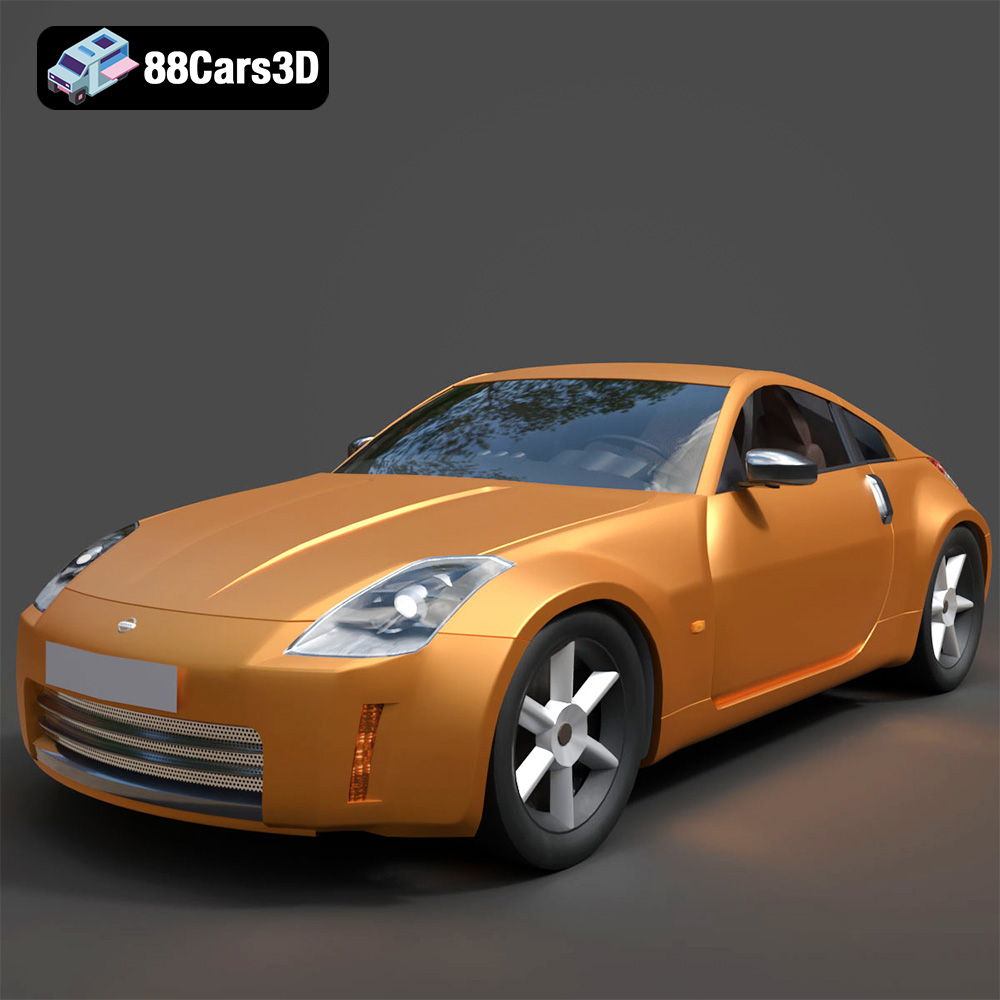
Download the Nissan 350Z 3D Model featuring clean geometry, realistic detailing, and a fully modeled interior. Includes .blend, .fbx, .obj, .glb, .stl, .ply, .unreal, and .max formats for rendering, simulation, and game development.
Price: $4.99

Texture: Yes
Material: Yes
Download the Nissan Skyline V35 2001 3D Model featuring clean geometry, realistic detailing, and a fully modeled interior. Includes .blend, .fbx, .obj, .glb, .stl, .ply, .unreal, and .max formats for rendering, simulation, and game development.
Price: $4.99

Texture: Yes
Material: Yes
Download the Mercedes-Benz S-Klasse 221-007 3D Model featuring clean geometry, realistic detailing, and a fully modeled interior. Includes .blend, .fbx, .obj, .glb, .stl, .ply, .unreal, and .max formats for rendering, simulation, and game development.
Price: $4.99
Texture: Yes
Material: Yes
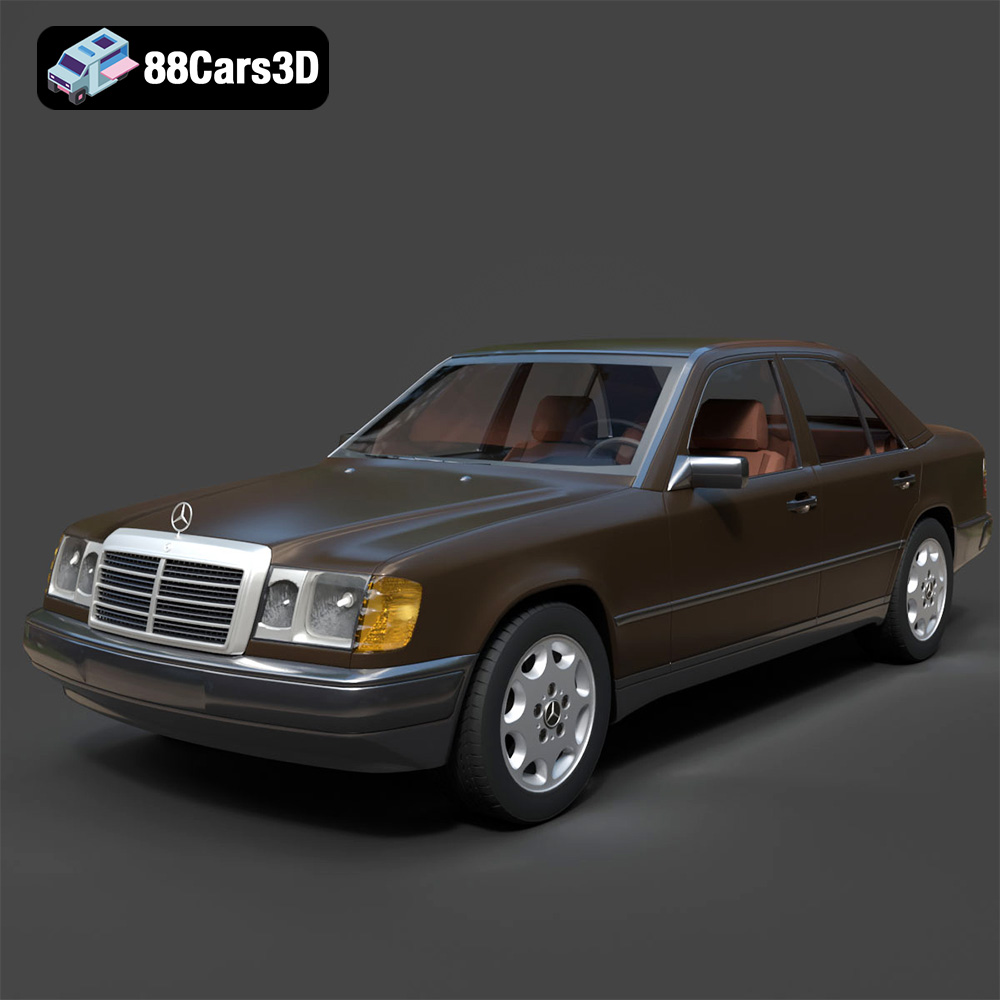
Download the Mercedes W124 Sedan 3D Model featuring clean geometry, realistic detailing, and a fully modeled interior. Includes .blend, .fbx, .obj, .glb, .stl, .ply, .unreal, and .max formats for rendering, simulation, and game development.
Price: $4.99

