
The Foundation – Mastering Automotive 3D Model Topology and Edge Flow

The world of 3D automotive visualization is a thrilling intersection of art and engineering, where digital craftsmanship brings dream machines to life. From photorealistic advertising renders that capture every curve to high-octane game experiences and interactive AR/VR applications, the demand for exquisite 3D car models is constantly accelerating. But behind every stunning visual lies a meticulously crafted asset, built upon a foundation of technical excellence.
Creating and deploying truly professional 3D car models requires a deep understanding of intricate workflows, from the foundational principles of topology and UV mapping to advanced rendering techniques and rigorous optimization strategies. Whether you’re a seasoned 3D artist aiming for unparalleled realism, a game developer seeking to optimize performance without sacrificing visual fidelity, or an automotive designer visualizing future concepts, mastering these technical aspects is paramount. In this comprehensive guide, we’ll delve into the sophisticated techniques that elevate a simple 3D mesh into a versatile, high-quality automotive asset, ready for any application. Prepare to navigate the complex yet rewarding journey of transforming raw data into breathtaking digital automobiles.
The Foundation – Mastering Automotive 3D Model Topology and Edge Flow
The underlying structure of your 3D car model, its topology, is perhaps the most critical factor determining its quality, versatility, and visual integrity. Automotive surfaces are renowned for their smooth, reflective curves and sharp, precise panel lines. Achieving this level of realism demands a clean, efficient, and well-thought-out mesh. Poor topology leads to pinching, artifacts, and difficulties in UV mapping, texturing, and animation. A professional-grade 3D car model, like those found on marketplaces such as 88cars3d.com, always begins with impeccable topology.
Clean Quads and Subdivision Readiness
For organic and smoothly curving surfaces like those of a car body, a quad-based topology is almost universally preferred. Quads (four-sided polygons) deform predictably, ensuring that when subdivision surface modifiers (e.g., Catmull-Clark in 3ds Max or Blender) are applied, the mesh smooths out evenly without undesirable bumps or pinches. Triangles (three-sided polygons) can create hard edges and uneven smoothing, making them unsuitable for areas requiring perfectly smooth reflections. While triangles are often unavoidable in highly optimized game assets, especially at LODs, the base mesh for high-fidelity rendering or subdivision should be predominantly quads.
When modeling, focus on maintaining an even distribution of polygons. Areas of high curvature require more polygons to define their shape accurately, but avoid excessively dense mesh in flat areas where detail isn’t needed. This approach helps manage polygon counts, which can range from 50,000 to 300,000 polygons for a high-detail base model before subdivision, and significantly more after. For mid-poly models used in real-time applications or as a base for further optimization, counts might be in the 10,000 to 50,000 range.
Edge Flow for Reflections and Deformations
Beyond simply using quads, the ‘edge flow’ – how edges are routed across the surface – dictates how light reflects off the car and how the model deforms. On an automotive surface, clean, uninterrupted edge loops that follow the natural contours of the bodywork are essential. These loops act like guide wires for reflections, ensuring that highlights on the car paint flow smoothly without breaks or wobbles, which would immediately betray the digital nature of the model.
For sharp creases, such as those defining panel gaps around doors, hoods, and trunks, additional edge loops must be strategically placed very close to the hard edge. These ‘control loops’ prevent the subdivision surface from excessively rounding off these critical details, maintaining the precise engineering look of a car. When modeling components like doors or suspension parts that will animate or deform, ensure edge loops are placed to support the pivot points and allow for smooth transformations without tearing or unwanted stretching. This meticulous attention to edge flow is what truly differentiates a professional 3D car model from a hastily constructed one.
The Skin – Advanced UV Mapping for Complex Car Surfaces
Once your 3D car model boasts flawless topology, the next critical step is UV mapping. UVs are the 2D coordinates that tell your software how to project 2D textures onto the 3D surface. For intricate objects like cars, with their complex curves, distinct material zones, and numerous small parts, effective UV mapping is an art form that directly impacts the quality of your textures and the realism of your final render.
Strategic UV Unwrapping Techniques
The goal of UV unwrapping is to flatten the 3D surface into a 2D plane with minimal distortion and strategically placed seams. For a car, this often involves a combination of techniques. Large, relatively flat panels like the hood or roof might be best unwrapped using planar projection. Cylindrical or spherical projections can be useful for wheels, tires, or curved fender flares, but often require further manual adjustment. The most detailed and critical areas, such as complex bumper designs or intricate interior components, typically demand manual unwrapping, where you strategically place seams along natural breaks in the geometry (e.g., where two panels meet, or along an edge that will be obscured) to allow the mesh to unfold cleanly.
The key is to minimize the visibility of seams on the final textured model. Seams should be hidden wherever possible, for example, along the underside of a car, inside a door jamb, or along very sharp edges where texture discontinuities are less noticeable. Tools like 3ds Max’s Unwrap UVW, Blender’s UV Editor, or Maya’s UV Toolkit provide robust functionalities for selecting edges, marking seams, and then unfolding the mesh. Regular checks for distortion using a checkerboard pattern are crucial to ensure uniform texture resolution across the model.
Maximizing Texture Resolution and UV Space Efficiency
Texture resolution is directly tied to the concept of ‘texel density’ – the number of texture pixels per unit of 3D space. For a high-quality 3D car model, maintaining a consistent texel density across all visible surfaces is vital. A common target might be 10.24 texels per centimeter for a hero asset, which translates to a typical 4096×4096 or 8192×8192 texture map for the main body panels of a detailed car. Small, intricate details might benefit from even higher densities or dedicated texture sheets.
Efficient UV space utilization means packing your UV islands tightly into the 0-1 UV space without overlap (unless intentionally layered for specific effects) and minimizing wasted space. For game engines, UV atlasing is a powerful technique where multiple smaller objects or parts of an object share a single, larger texture map. For instance, all exterior trim pieces (headlights, taillights, emblems) could be atlased onto one 2048×2048 texture. This reduces the number of materials and draw calls in the game engine, significantly improving performance. When preparing models for game development, consider generating multiple UV sets: one for unique PBR textures, and another for lightmaps or ambient occlusion. Platforms like 88cars3d.com often provide models with optimized UVs ready for diverse applications, saving significant production time.
The Finish – Crafting Realistic PBR Materials and Shading Networks
With perfect topology and optimized UVs, the next step is to breathe life into your 3D car model through physically based rendering (PBR) materials. PBR revolutionized rendering by simulating how light interacts with surfaces in a physically accurate way, leading to incredibly photorealistic results. For a car, this means meticulously crafting materials for everything from the high-gloss clear coat of the paint to the subtle reflections of chrome and the diffused appearance of rubber.
Understanding PBR Principles for Car Paint
PBR workflows primarily fall into two categories: Metallic-Roughness and Specular-Glossiness. While both can yield excellent results, Metallic-Roughness is more prevalent today due to its intuitive nature and efficiency. For a car, you’ll typically need several maps:
- Base Color (Albedo): The fundamental color of the surface, stripped of any lighting information.
- Metallic: A grayscale map (0 for dielectric/non-metal, 1 for metal) indicating which parts are metallic.
- Roughness: A grayscale map indicating the microscopic surface imperfections that scatter light (0 for perfectly smooth/glossy, 1 for completely rough/matte). This is crucial for car paint clear coat, which is highly smooth.
- Normal Map: A tangent-space normal map that fakes surface detail (like subtle orange peel effect on paint or fine scratches) without adding geometry.
- Ambient Occlusion (AO): A grayscale map representing contact shadows, enhancing small details and crevices.
Car paint is particularly complex due to its layered nature: a base color coat, often with metallic flakes, covered by a transparent, highly reflective clear coat. Replicating this involves combining these maps and often using advanced shader features to simulate the light interaction within the clear coat, including phenomena like Fresnel reflections and dispersion.
Advanced Shader Networks for Realism
Achieving true photorealism for a car often goes beyond simple PBR maps. It involves constructing sophisticated shader networks. For car paint, you might layer a metallic flake shader underneath a clear coat shader. The clear coat would have its own roughness and normal maps (perhaps for subtle dust or fingerprints), and a complex Fresnel curve for accurate reflections at grazing angles. For metallic flakes, parameters like flake density, size, and sparkle can be controlled within the shader.
Glass materials require precise control over refraction (IOR – Index of Refraction, typically around 1.5 for common glass), absorption color, and tint. Tires demand a robust rubber material with a distinct roughness, subtle normal map detail (for tread patterns and sidewall text), and perhaps a bit of translucency for very close-up shots. Chrome and other polished metals need extremely low roughness values and a strong metallic value. Software like 3ds Max (with Corona or V-Ray materials), Blender (Principled BSDF), and Maya (Arnold Standard Surface) offer node-based shader editors that allow artists to build these intricate material networks. Professional models from 88cars3d.com often come with pre-configured, high-quality PBR materials, ready for rendering in various engines.
The Scene – Rendering Cinematic Automotive Visualizations
With a perfectly modeled and textured 3D car, the final step in creating breathtaking visuals is the rendering process. This is where lighting, camera work, and render engine settings converge to transform your digital asset into a photorealistic image or animation. Mastering automotive rendering involves understanding how light interacts with the car’s surfaces and strategically composing your shot to highlight its design and details.
Lighting Setups for Automotive Glory
Lighting is paramount in automotive rendering, as it dictates how reflections play across the car’s body. There are two primary approaches: studio lighting and environmental lighting.
- Studio Lighting: This typically involves using virtual softboxes, strip lights, and reflectors, mimicking a professional photography studio. A common setup is the “three-point lighting” system (key, fill, and back/rim light), augmented with additional lights to emphasize specific curves or reflections. Large, soft lights create smooth, elegant reflections, while carefully placed rim lights can define the car’s silhouette.
- Environmental Lighting: This uses High Dynamic Range Images (HDRIs) to illuminate the scene with real-world light information. An outdoor HDRI of a sunny day or a cloudy sky can instantly provide realistic lighting and reflections, simulating a car in its natural environment. Often, HDRIs are combined with discreet area lights to add specific highlights, fill shadows, or introduce creative accents that enhance the HDRI’s base lighting.
Regardless of the approach, meticulous attention to reflections is key. The angle and intensity of your lights should be chosen to sculpt the car’s form with highlights and shadows, showcasing its design language. Physical light units (lumens, candelas) and real-world camera settings (ISO, aperture/f-stop, shutter speed) in your render engine will contribute significantly to realism.
Advanced Rendering Techniques and Software Workflows
Modern render engines like Corona Renderer, V-Ray, Cycles (Blender), and Arnold (Maya, 3ds Max) are built for physically accurate light simulation. Each offers a robust set of features for automotive rendering:
- Path Tracing/Bi-directional Path Tracing: These algorithms accurately simulate how light bounces around a scene, essential for complex reflections and global illumination.
- Render Passes (AOV – Arbitrary Output Variables): For advanced post-processing, rendering out separate passes (e.g., diffuse, reflection, specular, refraction, normal, Z-depth, Cryptomatte) allows for granular control in compositing software like Adobe Photoshop or Foundry Nuke. You can adjust reflections, darken shadows, or add depth of field effects without re-rendering the entire image.
- Denoisers: Built-in or external denoisers (like NVIDIA OptiX or Intel Open Image Denoise) can dramatically reduce render times by cleaning up noise from low-sample renders, making interactive rendering faster and final renders more efficient.
- Volumetric Effects: For atmospheric realism, adding subtle volumetric fog or mist can enhance the sense of depth and realism, especially in outdoor or moody studio shots.
When setting up your render, balance quality and speed. High sample counts provide pristine images but take longer. Utilize features like adaptive sampling, render regions, and render farms for complex animations. Post-processing is the final polish: color grading, adding bloom/glare for headlights, subtle lens distortions, and vignette effects can push your render from excellent to extraordinary, giving it that final cinematic touch.
The Engine – Optimizing 3D Car Models for Interactive Experiences
While high-fidelity rendering prioritizes visual quality above all else, real-time interactive experiences like video games, AR/VR applications, and configurators demand a different set of optimizations. Here, performance is paramount, meaning a delicate balance must be struck between visual fidelity and maintaining smooth frame rates. A high-quality 3D car model for real-time use needs intelligent optimization strategies from the ground up.
LODs and Poly-Reduction for Game Assets
The most fundamental optimization technique for game assets is the implementation of Level of Detail (LOD) systems. Instead of rendering a single high-polygon model at all distances, LODs involve creating multiple versions of the same asset, each with a progressively lower polygon count. When the car is close to the camera, the highest LOD (LOD0) is rendered. As it moves further away, the game engine automatically switches to a lower LOD (LOD1, LOD2, etc.).
Typical polygon targets for game car models might look like this:
- LOD0 (Close-up / Hero Shot): 50,000 – 150,000 polygons (or even higher for next-gen titles)
- LOD1 (Mid-distance): 20,000 – 50,000 polygons
- LOD2 (Far-distance / Gameplay): 5,000 – 20,000 polygons
- LOD3 (Very Far / Background): 1,000 – 5,000 polygons
Poly-reduction can be achieved through automated decimation tools found in Blender, Maya, or 3ds Max (e.g., ProOptimizer). However, for critical areas, manual retopology or targeted polygon reduction ensures that important silhouette details and reflections are preserved. Baking normal maps from the high-poly model onto the lower-poly LODs is crucial to retain fine surface details without the added geometry.
Efficient Texture Management and Draw Call Reduction
Beyond polygon count, texture usage and draw calls are significant performance bottlenecks in game engines like Unity and Unreal Engine. A “draw call” occurs every time the CPU instructs the GPU to draw an object, and each new material or mesh usually generates a new draw call. Minimizing draw calls is critical for performance.
One key strategy is texture atlasing, as discussed in the UV mapping section. By combining multiple smaller textures (e.g., for different car parts like emblems, headlights, interior buttons) into a single, larger texture atlas, you can reduce the number of materials used on the car, thereby cutting down draw calls. Similarly, merging individual mesh components (e.g., all exterior body panels, or all interior components) into a single mesh where appropriate can also reduce draw calls, provided it doesn’t hinder LOD switching or animation. Utilizing a single master shader for the car paint, which can be instanced with different color parameters, also helps keep draw calls low.
Texture streaming is another optimization where only the necessary parts of a texture are loaded into memory, especially for very large textures. For mobile AR/VR experiences, even more aggressive optimizations are needed, often requiring lower resolution textures (e.g., 1024×1024 or 2048×2048) and simplified shaders without complex layering, ensuring a smooth and responsive user experience. When sourcing game-ready 3D car models, platforms like 88cars3d.com often specify LODs and optimized material counts to simplify integration into your engine.
The Versatility – Expanding Applications: AR/VR, 3D Printing, and File Formats
The beauty of a meticulously crafted 3D car model lies in its versatility. Beyond traditional rendering and game development, these assets find homes in emerging technologies like Augmented Reality (AR) and Virtual Reality (VR), as well as physical manifestations through 3D printing. Each application presents its own unique technical requirements and best practices, emphasizing the need for adaptable and well-prepared models.
AR/VR Readiness and Performance Considerations
AR/VR applications demand extremely high frame rates (typically 60-90+ FPS per eye) to prevent motion sickness and ensure immersion. This translates to an even more stringent approach to optimization compared to traditional games. For a 3D car model in AR/VR, key considerations include:
- Ultra-Low Polygon Counts: While LODs are still important, the highest LOD (LOD0) for AR/VR is often closer to a game’s LOD1 or LOD2, perhaps 20,000-50,000 polygons for a hero vehicle, and significantly less for background objects or mobile AR.
- Simplified Shaders: Complex layered shaders and heavy material calculations can be performance killers. Opt for single-pass, optimized PBR shaders. Baked lighting (lightmaps) instead of real-time global illumination is often preferred.
- Texture Optimization: Use smaller texture resolutions (e.g., 1024×1024) and texture atlases extensively. Compressed texture formats (like ASTC or ETC2 for mobile) are crucial.
- Static Batching and Occlusion Culling: In engines like Unity, setting non-moving car parts to ‘static’ can allow the engine to combine them into fewer draw calls. Occlusion culling ensures that objects not visible to the camera are not rendered.
For deployment, file formats like GLTF/GLB (Graphics Language Transmission Format) are gaining traction due to their efficiency and inclusion of geometry, materials, and animations in a single file, making them ideal for web-based AR/VR experiences. Apple’s USDZ format, built on Universal Scene Description (USD), is specifically designed for ARKit applications, providing a robust, optimized package for AR on iOS devices.
Preparing 3D Models for Flawless 3D Printing
Transforming a digital car model into a physical object via 3D printing requires a fundamental shift in perspective. The model must become a “watertight” or “manifold” mesh – meaning it has no holes, self-intersecting geometry, or flipped normals. Every edge must be connected to exactly two faces, forming a completely enclosed volume. Common issues in models designed for rendering (like open edges, non-manifold geometry, or paper-thin surfaces) will cause printing failures.
Key technical considerations for 3D printing:
- Mesh Repair: Tools like Blender’s 3D Print Toolbox, Netfabb, or Meshmixer are invaluable for analyzing and repairing meshes, identifying non-manifold edges, open boundaries, and intersections.
- Wall Thickness: Ensure all surfaces have a sufficient wall thickness to be printable. Typically, this means a minimum of 0.8mm to 2mm, depending on the printing technology and material. Thin, delicate parts on a rendering model often need to be thickened or reinforced.
- Resolution for Print Size: The polygon density should be appropriate for the final print size. Too few polygons result in a blocky print, while excessive density can lead to very large file sizes and processing issues for the slicer software.
- Export Formats: The most common and reliable export formats for 3D printing are STL (Stereolithography) and OBJ (Object). STL is a simple triangular mesh format, while OBJ can also store color information and separate parts.
When preparing 3D car models for printing, it’s often necessary to separate components (wheels, body, interior) or add support structures digitally before sending them to the slicer software.
Navigating File Formats and Interoperability
The world of 3D software relies on a diverse ecosystem of file formats, each with its strengths and weaknesses. Understanding their implications for your workflow is crucial for seamless asset transfer and project collaboration.
- FBX (Filmbox): Developed by Autodesk, FBX is the industry standard for interoperability, supporting geometry, materials, textures, animations, and rigs across applications like 3ds Max, Maya, Blender, Unity, and Unreal Engine. It’s excellent for complex animated car models.
- OBJ (Object): A widely supported format for static 3D geometry. While it supports basic materials and UVs, it doesn’t handle animations or complex shader networks, making it ideal for simple mesh transfers or 3D printing.
- GLTF/GLB (Graphics Language Transmission Format): An open standard from the Khronos Group, often called the “JPEG of 3D.” It’s highly efficient for web and real-time applications, bundling everything (geometry, PBR materials, animations) into a single file (.glb is the binary version). It’s becoming the go-to for AR/VR and online configurators.
- USD (Universal Scene Description) / USDZ: Developed by Pixar, USD is a powerful framework for scene description, collaboration, and asset interchange, especially in large-scale productions. USDZ is its compressed, single-file variant for AR applications, particularly on Apple devices.
- Native Formats: .max (3ds Max), .blend (Blender), .ma/.mb (Maya) are robust but proprietary. They offer the most control within their respective software but require conversions for other applications.
Choosing the right format depends on your target application. When sourcing high-quality 3D car models from marketplaces like 88cars3d.com, you’ll often find models available in multiple formats, allowing you to select the best fit for your specific project needs and ensuring maximum compatibility.
Conclusion
The journey from a conceptual idea to a fully realized, high-quality 3D car model is a testament to the blend of technical skill and artistic vision. We’ve traversed the intricate landscape of automotive 3D modeling, from the foundational principles of clean topology and precise edge flow that define a car’s form, to the art of strategic UV mapping that ensures flawless texturing. We’ve explored the scientific accuracy of PBR materials, meticulously crafting car paint and other surfaces to react realistically to light, and delved into the cinematic techniques of rendering that transform raw data into stunning visualizations.
Furthermore, we’ve navigated the crucial optimizations required for interactive experiences in game engines and the rigorous preparation for immersive AR/VR applications, alongside the unique demands of bringing digital designs into the physical world through 3D printing. Understanding these technical nuances and mastering the diverse array of file formats is not just about creating pretty pictures; it’s about building versatile, professional-grade assets that empower creators across industries.
Whether you are embarking on your next rendering masterpiece, developing a groundbreaking game, or conceptualizing a future vehicle, the quality of your 3D car models forms the bedrock of your success. Equip yourself with the knowledge and tools to demand excellence in every polygon, texture, and shader. To jumpstart or elevate your projects with models that meet these exacting standards, explore the extensive collection of high-quality 3D car models available on 88cars3d.com. The world of digital automotive design is limitless, and with the right assets, your creations will drive the future.
Featured 3D Car Models
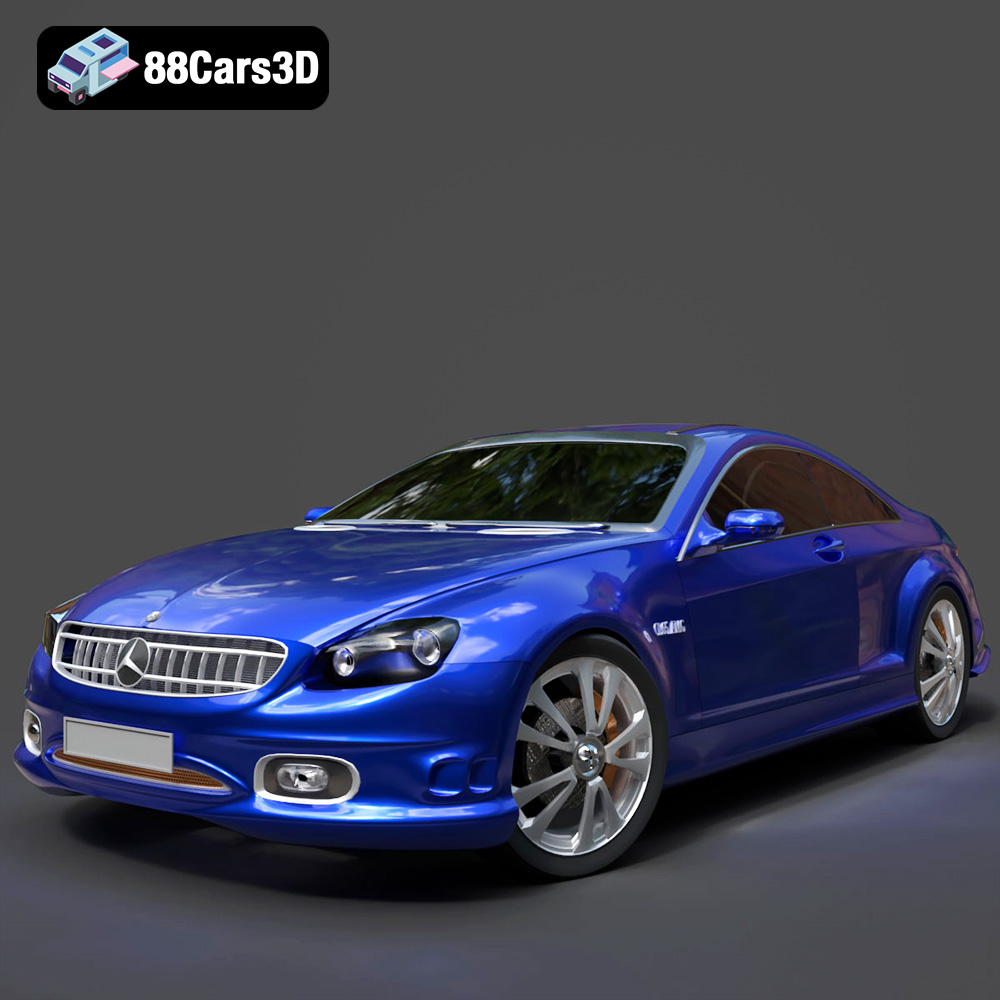
Mercedes-Benz CL6540-005 3D Model
Texture: Yes
Material: Yes
Download the Mercedes-Benz CL6540-005 3D Model featuring clean geometry, realistic detailing, and a fully modeled interior. Includes .blend, .fbx, .obj, .glb, .stl, .ply, .unreal, and .max formats for rendering, simulation, and game development.
Price: $4.99
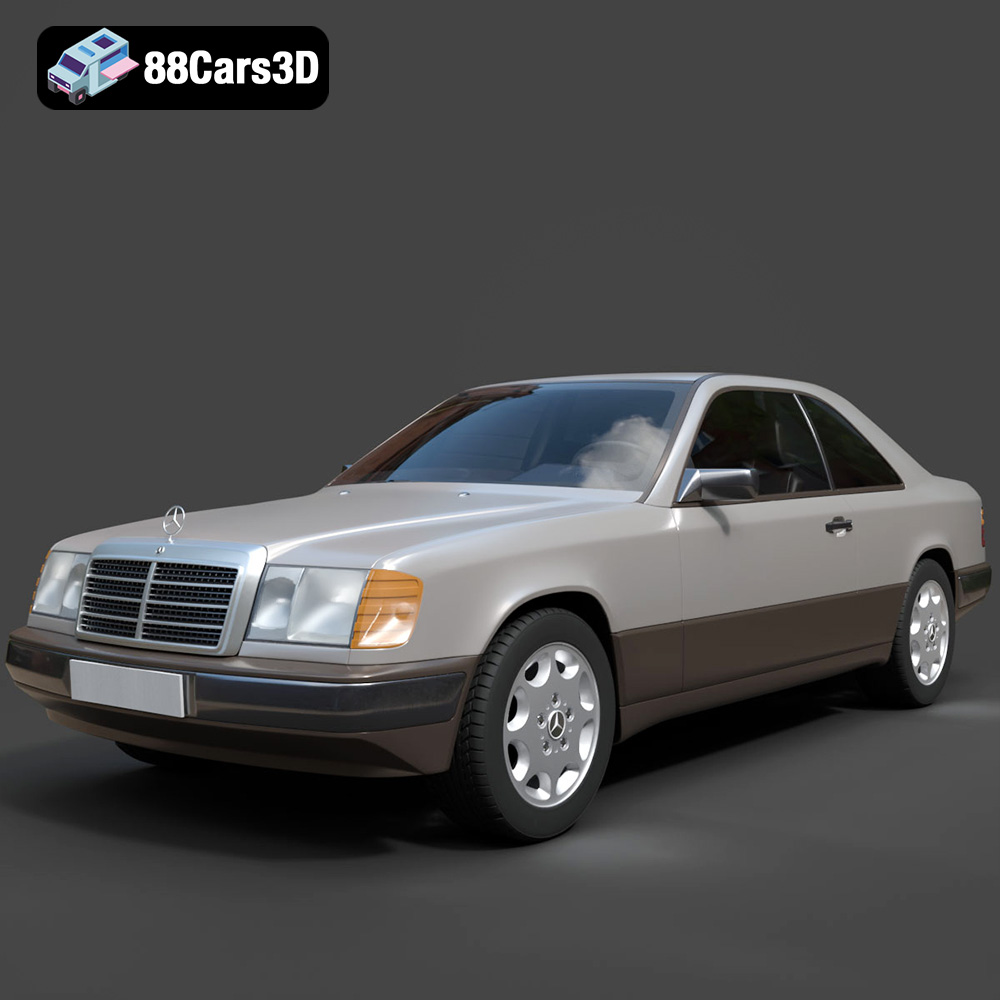
Mercedes E-Class w124 Coupe 3D Model
Texture: Yes
Material: Yes
Download the Mercedes E-Class w124 Coupe 3D Model featuring clean geometry, realistic detailing, and a fully modeled interior. Includes .blend, .fbx, .obj, .glb, .stl, .ply, .unreal, and .max formats for rendering, simulation, and game development.
Price: $4.99
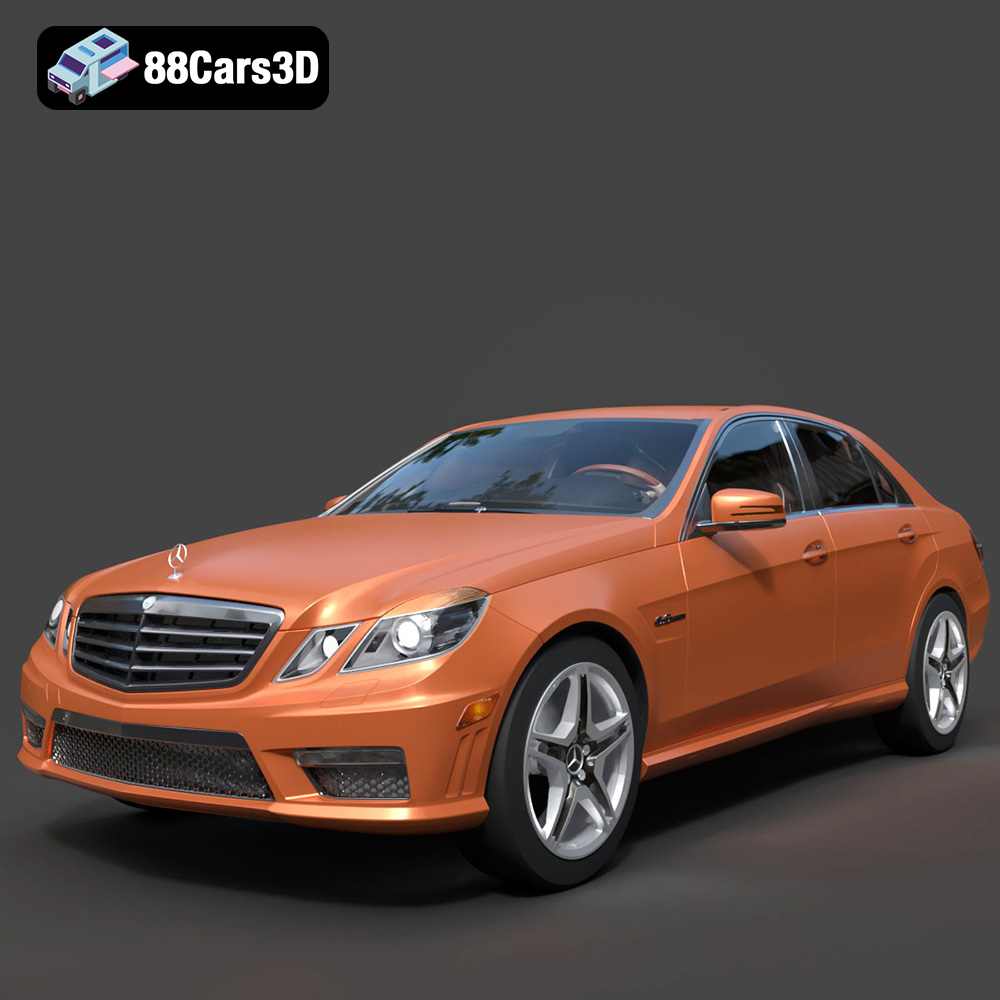
Mercedes-Benz E-Klasse 63 AMG 3D Model
Texture: Yes
Material: Yes
Download the Mercedes-Benz E-Klasse 63 AMG 3D Model featuring clean geometry, realistic detailing, and a fully modeled interior. Includes .blend, .fbx, .obj, .glb, .stl, .ply, .unreal, and .max formats for rendering, simulation, and game development.
Price: $4.99
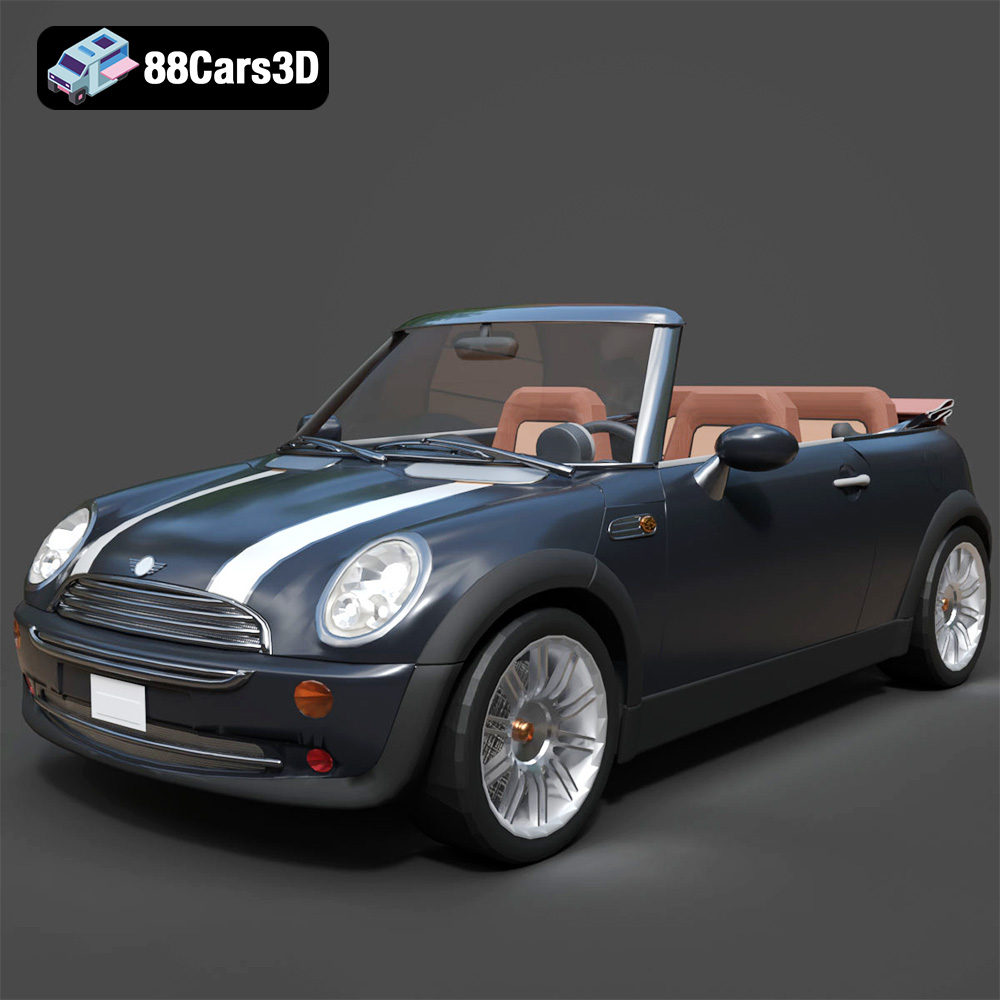
Mini Cabrio 2025 3D Model
Texture: Yes
Material: Yes
Download the Mini Cabrio 2025 3D Model featuring clean geometry, realistic detailing, and a fully modeled interior. Includes .blend, .fbx, .obj, .glb, .stl, .ply, .unreal, and .max formats for rendering, simulation, and game development.
Price: $4.99
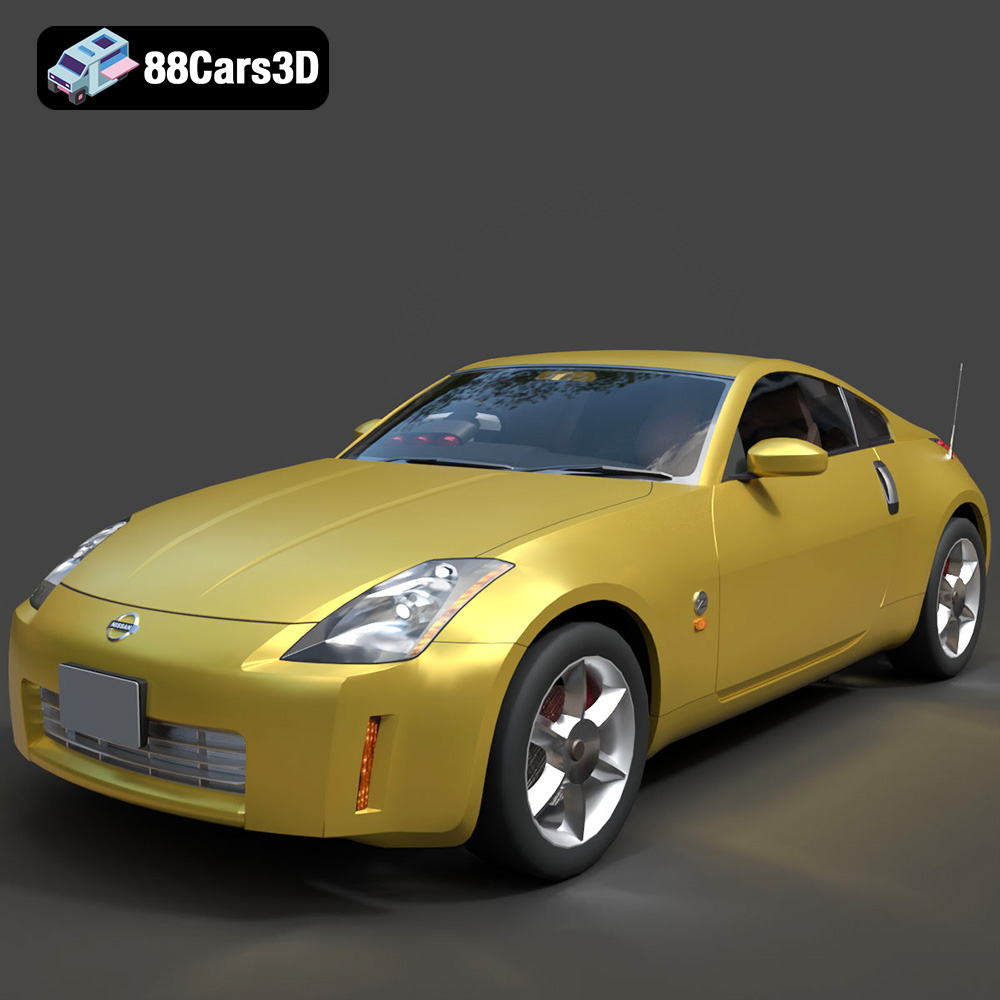
Nissan 350Z 3D Model
Texture: Yes
Material: Yes
Download the Nissan 350Z 3D Model featuring clean geometry, realistic detailing, and a fully modeled interior. Includes .blend, .fbx, .obj, .glb, .stl, .ply, .unreal, and .max formats for rendering, simulation, and game development.
Price: $4.99
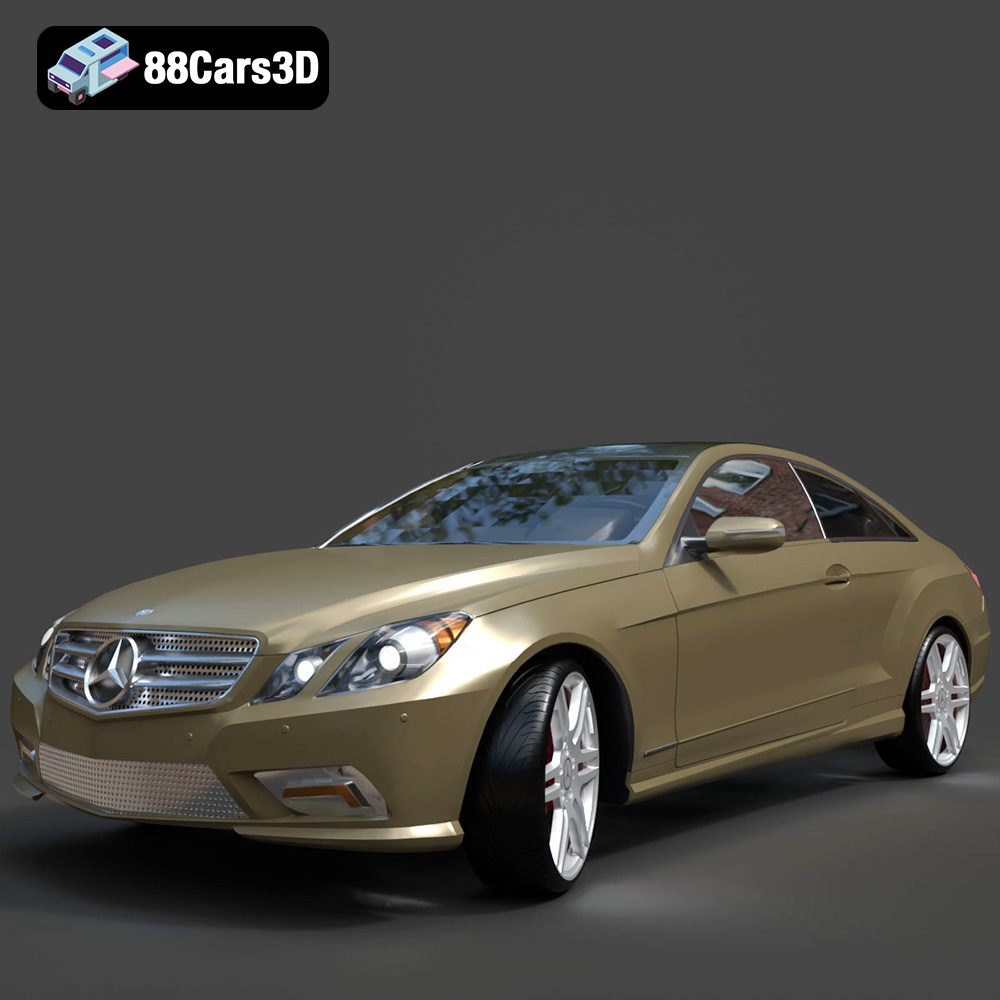
Mercedes-Benz E-Klasse Coupe 2010 3D Model
Texture: Yes
Material: Yes
Download the Mercedes-Benz E-Klasse Coupe 3D Model featuring clean geometry, realistic detailing, and a fully modeled interior. Includes .blend, .fbx, .obj, .glb, .stl, .ply, .unreal, and .max formats for rendering, simulation, and game development.
Price: $4.99
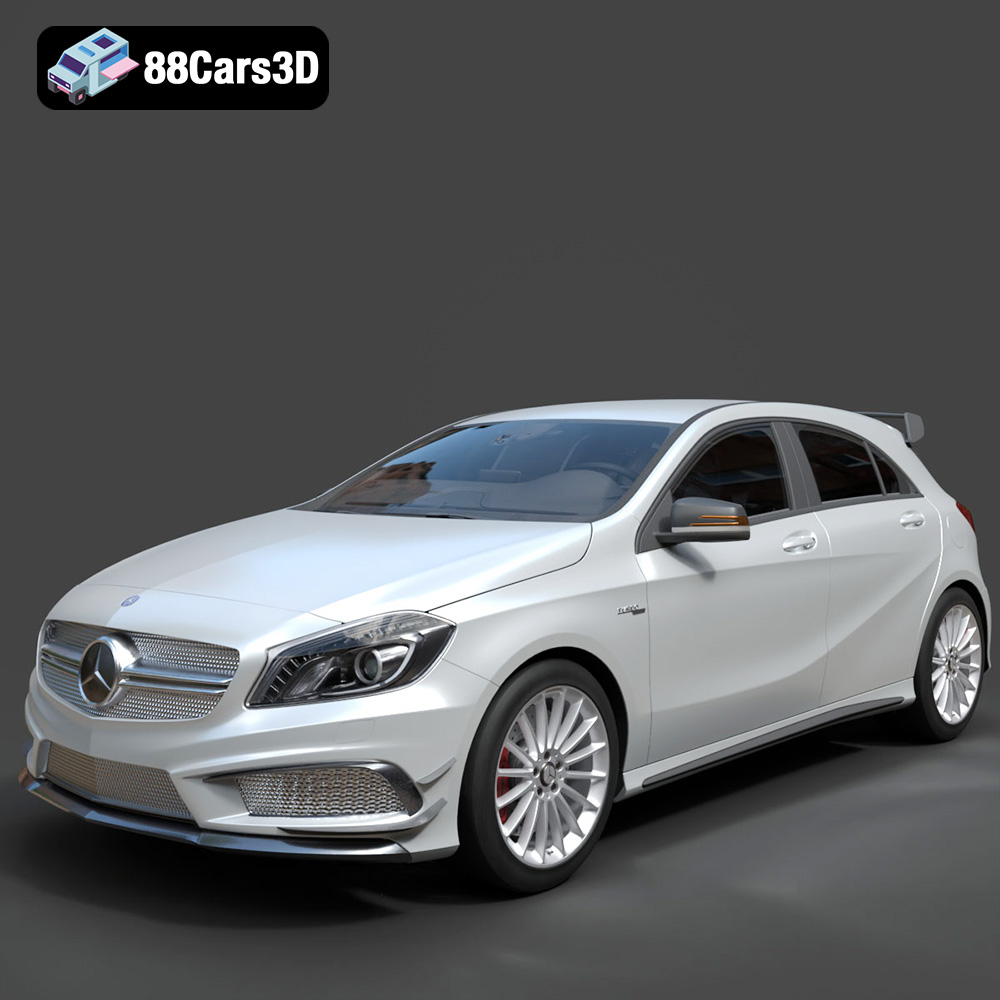
Mercedes-Benz A 45 AMG 3D Model
Texture: Yes
Material: Yes
Download the Benza MERS-007 3D Model featuring clean geometry, realistic detailing, and a fully modeled interior. Includes .blend, .fbx, .obj, .glb, .stl, .ply, .unreal, and .max formats for rendering, simulation, and game development.
Price: $4.99
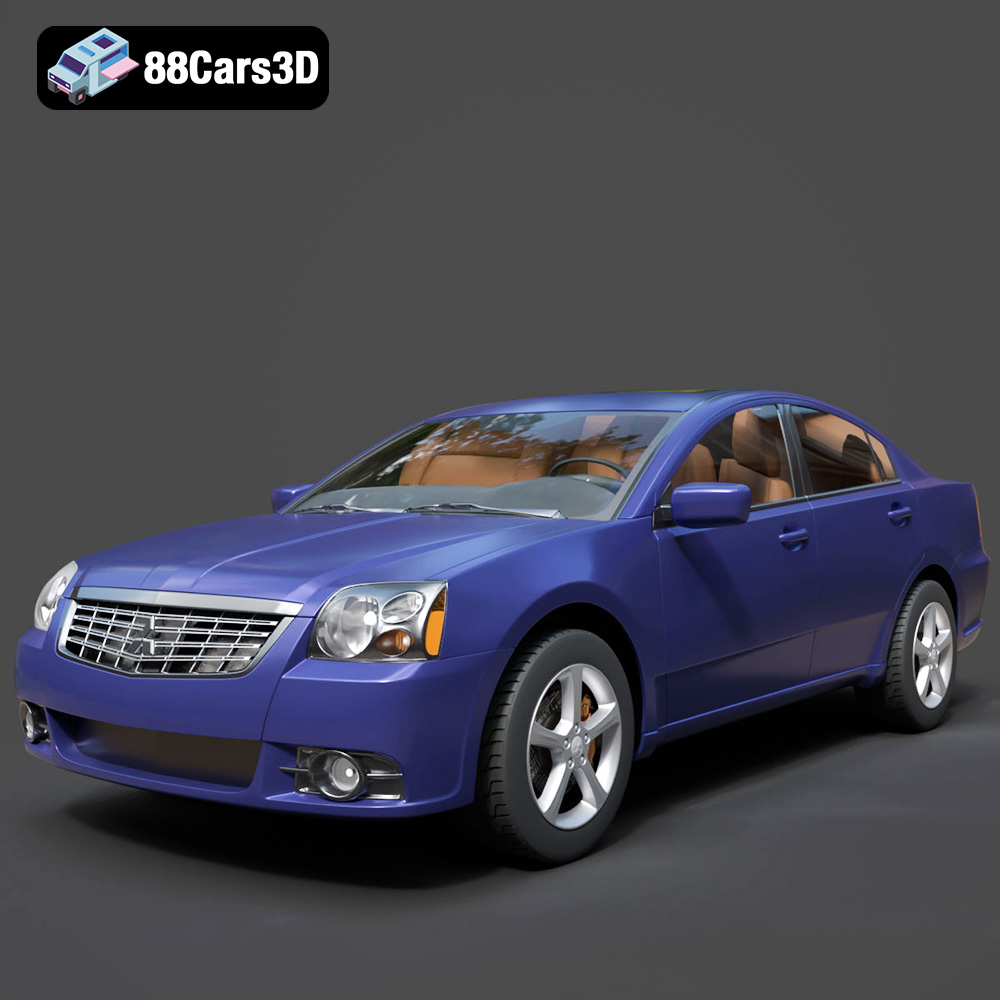
Mitsubishi Galant 2009 3D Model
Texture: Yes
Material: Yes
Download the Mitsubishi Galant 2009 3D Model featuring clean geometry, realistic detailing, and a fully modeled interior. Includes .blend, .fbx, .obj, .glb, .stl, .ply, .unreal, and .max formats for rendering, simulation, and game development.
Price: $4.99
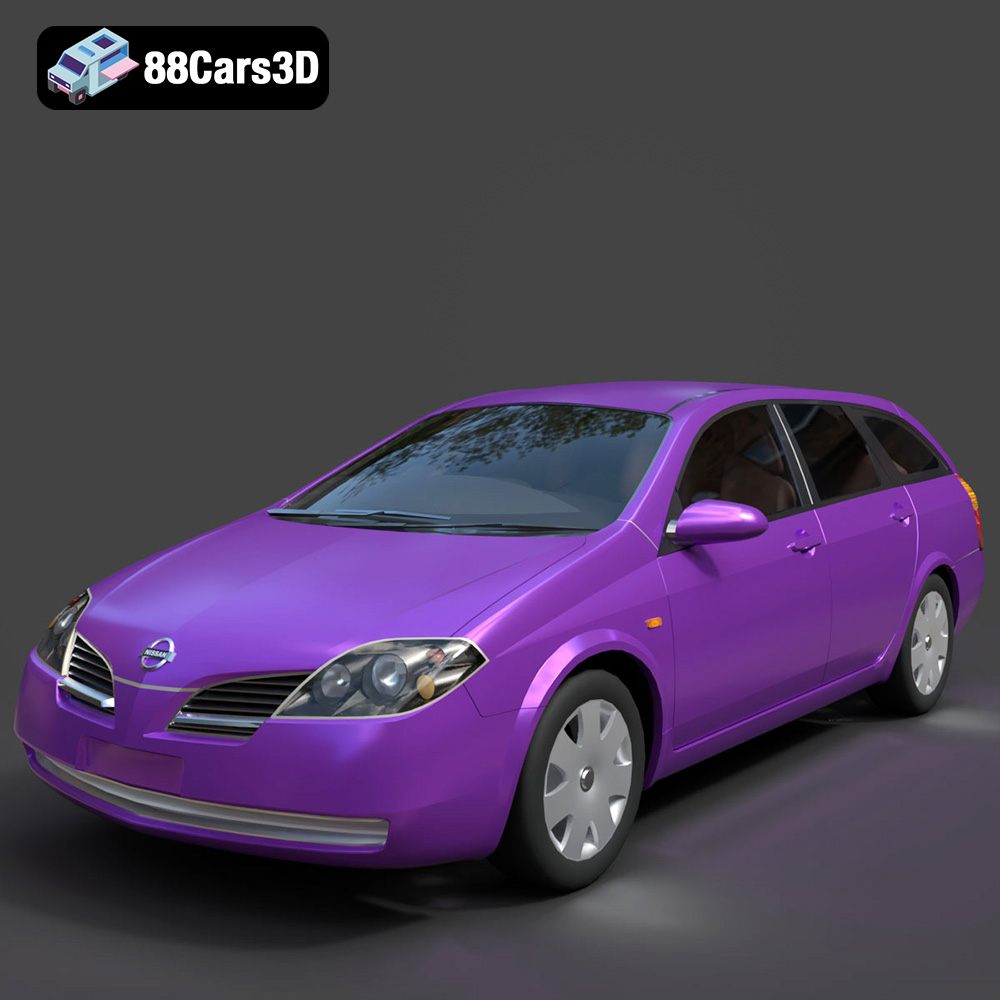
Nissan Primera Wagon 3D Model
Texture: Yes
Material: Yes
Download the Nissan Primera Wagon 3D Model featuring clean geometry, realistic detailing, and a fully modeled interior. Includes .blend, .fbx, .obj, .glb, .stl, .ply, .unreal, and .max formats for rendering, simulation, and game development.
Price: $4.99
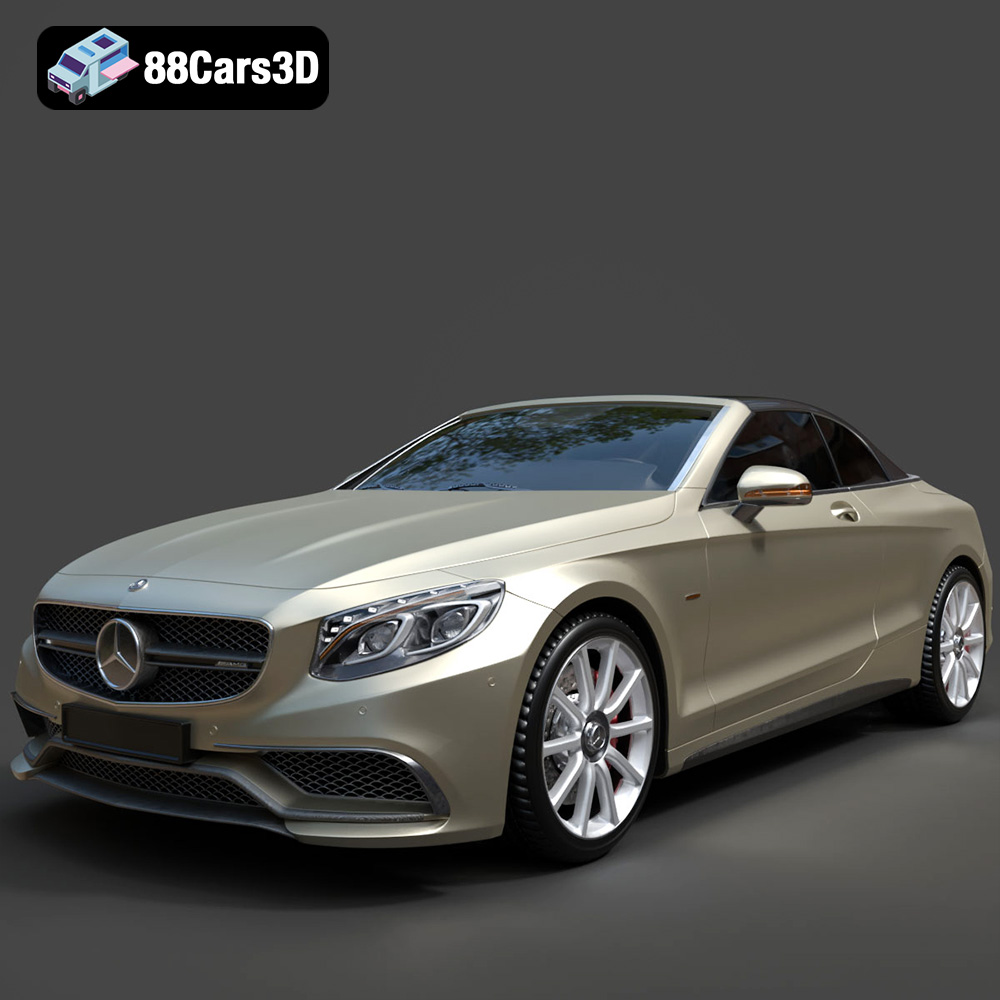
Mercedes-Benz S63 AMG Cabriolet 2017 3D Model
Texture: Yes
Material: Yes
Download the Mercedes-Benz S63 AMG Cabriolet 2017 3D Model featuring clean geometry, realistic detailing, and a fully modeled interior. Includes .blend, .fbx, .obj, .glb, .stl, .ply, .unreal, and .max formats for rendering, simulation, and game development.
Price: $20.99
