
From Showroom to Screen: A Deep Dive into Preparing 3D Car Models for Rendering and Real-Time Applications

“`html
From Showroom to Screen: A Deep Dive into Preparing 3D Car Models for Rendering and Real-Time Applications
The allure of a perfectly rendered automobile is undeniable. From the gleaming reflections on a curved fender to the intricate details of a leather-stitched interior, high-quality 3D car models are the cornerstone of breathtaking automotive visualizations, blockbuster video games, and immersive AR experiences. However, acquiring a beautifully detailed model is only the first step on a long and technical journey. The raw digital asset, no matter how precise, requires careful preparation, optimization, and refinement to truly shine in its final application. A model destined for a 4K cinematic render has vastly different requirements than one designed to perform flawlessly in a real-time game engine or be viewed on a mobile device in augmented reality.
This comprehensive guide will take you under the hood of professional 3D car model preparation. We will deconstruct the entire workflow, from initial mesh evaluation and cleanup to advanced material creation, rendering, and optimization for interactive media. You will learn the industry-standard techniques used by professional 3D artists to transform a base model into a polished, production-ready asset. We’ll cover the critical importance of topology, the nuances of UV mapping for complex surfaces, the art of PBR texturing for ultimate realism, and the specific optimization strategies for game engines like Unreal and Unity. Whether you are an automotive designer, a game developer, or a visualization specialist, this deep dive will equip you with the knowledge to push your automotive rendering and real-time projects to the next level of quality and performance.
The Foundation: Evaluating and Preparing Your 3D Car Model
Before you can even think about materials or lighting, the geometric foundation of your model—its mesh—must be flawless. A successful project is built upon a clean, well-organized, and technically sound 3D asset. Sourcing a high-quality model from a specialized marketplace like 88cars3d.com can significantly accelerate this process, as these models are typically built with clean topology and proper hierarchy from the start. However, it’s always crucial to perform your own due diligence and prepare the model for your specific pipeline. This initial stage is about ensuring the structural integrity of the car so that all subsequent steps, from UV mapping to animation, are executed smoothly.
Understanding Topology and Edge Flow for Automotive Surfaces
Topology refers to the arrangement of vertices, edges, and polygons that form the 3D mesh. For automotive models, which rely on smooth, flowing curves and crisp panel lines, good topology is non-negotiable. The goal is a predominantly quad-based mesh (polygons with four sides). Quads subdivide cleanly and deform predictably, which is essential for achieving smooth, artifact-free reflections. Avoid Ngons (polygons with more than four sides) on curved surfaces, as they can cause pinching and shading errors when smoothed or subdivided.
Pay close attention to the edge flow—the direction of the polygon loops. Edge loops should follow the natural contours and feature lines of the car’s body. For example, you should have clean edge loops running around the wheel arches, windows, and along character lines. This not only aids in realism but also makes selecting and modifying parts of the mesh significantly easier. A typical high-resolution model for cinematic rendering might range from 500,000 to over 2 million polygons to capture every detail, while a base game model might start at around 100,000 polygons before optimization.
Mesh Cleanup and Technical Inspection
Once you’ve assessed the topology, the next step is a technical cleanup. This involves hunting down and fixing common mesh errors that can cause issues down the line:
- Welding Vertices: Look for vertices that are stacked on top of each other but aren’t connected. This often happens during the modeling process. Use a “Weld” or “Merge” tool with a very small threshold to combine them.
- Checking Normals: Face normals dictate which direction a polygon is facing. Flipped normals will render as black or invisible holes. Use your 3D software’s viewport tools to display face normals and unify them so they all point outwards.
- Resetting Transformations: Ensure the model’s scale is set to 100% and its transformations (position, rotation) are “frozen” or “reset.” Working with a model at an incorrect scale can cause major problems with physics simulations, lighting calculations, and shader effects like subsurface scattering.
Hierarchy and Naming Conventions
A well-organized scene is an efficient scene. The car model should be logically grouped and named. The main body should be the parent object, with components like wheels, doors, steering wheel, and brake calipers parented to it. This ensures that when you move the main car body, all its parts move with it. Crucially, the pivot points for moving parts must be set correctly. A door’s pivot should be at its hinge, and a wheel’s pivot should be at its center axle. This is absolutely essential for animation and for setting up interactive vehicle physics in a game engine.
Mastering UV Unwrapping for Flawless Texturing
UV mapping is the process of translating the 3D surface of your model into a 2D space, allowing you to apply textures accurately. For a complex object like a car, with its mix of large, smooth panels and tiny, intricate details, a strategic UV workflow is paramount. Poor UVs can result in stretched textures, visible seams in awkward places, and inconsistent detail, shattering the illusion of realism. A professional approach to UVs is what separates amateur work from studio-quality results.
Core Principles of UV Mapping for Hard Surfaces
The primary goal of UV unwrapping is to create UV “islands” or “shells” with minimal distortion. When you flatten a 3D surface, some stretching is inevitable, but your goal is to minimize it, especially on visible areas. Best practices include:
- Placing Seams Logically: Hide UV seams along the hard edges or natural creases of the car model where they are least likely to be seen. For example, place seams on the underside of the car, in panel gaps, or along the inside edges of door frames.
- Straightening Shells: Whenever possible, straighten UV shells for man-made objects. For parts like dashboards, grilles, or trim pieces, perfectly straight horizontal and vertical UVs make it much easier to apply textures like carbon fiber, wood grain, or brushed metal without distortion.
- Packing Efficiently: Arrange your UV islands within the 0-1 UV space (the standard texture square) to maximize the use of the texture map. Wasted space means wasted memory and lower potential resolution.
Multi-Tile UV Workflows (UDIMs) for Ultimate Detail
For hero assets that will be seen up close, a single texture map is often not enough to provide the required level of detail across the entire vehicle. This is where a multi-tile workflow, most commonly UDIM (U-Dimension), comes into play. Instead of packing everything into the 0-1 space, UDIMs allow you to use multiple texture maps on a single object, with each map corresponding to a different grid square in the UV editor (1001, 1002, 1003, etc.).
A common UDIM setup for a car could be:
- 1001: Main car body paint.
- 1002: Interior elements (dashboard, seats, console).
- 1003: Wheels, tires, and brake assembly.
- 1004: Undercarriage and mechanical parts.
- 1005: Glass and light elements.
This approach allows you to assign a very high-resolution texture (e.g., 4K or 8K) to each section, resulting in incredibly sharp details even in extreme close-ups.
Texel Density: The Key to Consistent Resolution
Texel density is a measure of the resolution of your texture map relative to the size of your 3D model. Maintaining a consistent texel density across your entire model is crucial for a uniform appearance. If the car door has a much higher texel density than the fender next to it, the detail level will look inconsistent and jarring. Use tools within your 3D software or dedicated UV applications like RizomUV to visualize and equalize the texel density across all your UV shells. This ensures that a 1-inch square on the hood has the same number of pixels dedicated to it as a 1-inch square on the bumper, leading to a cohesive and believable final result.
Creating Hyper-Realistic PBR Materials and Shaders
With a clean mesh and perfect UVs, you can now move on to the most visually rewarding stage: creating materials. Modern rendering and game engines use a Physically Based Rendering (PBR) workflow, which aims to simulate how light interacts with materials in the real world. This approach, which relies on a set of standardized texture maps, is the key to achieving photorealism in your automotive rendering projects.
The PBR Metal/Roughness Workflow Explained
The most common PBR workflow is Metal/Roughness. It uses several key texture maps to define a material’s properties:
- Base Color (Albedo): This map defines the raw color of the surface. For metals, it should be very dark or black; for non-metals (dielectrics), it’s the diffuse color you see.
- Metallic: A grayscale map that tells the shader if a surface is a metal (white value of 1) or a non-metal (black value of 0). There are rarely in-between values.
- Roughness: Perhaps the most important map for realism. This grayscale map controls how rough or smooth a surface is. A black value (0) creates a perfectly smooth, mirror-like reflection (like chrome), while a white value (1) creates a completely matte, diffuse surface (like rough plastic).
- Normal Map: This map fakes high-frequency surface detail without adding extra polygons. It’s used for things like leather grain, tire treads, and small bumps or scratches.
Crafting Complex Car Paint Shaders
Standard PBR materials work well for many surfaces, but car paint is a special case that requires a more advanced, layered shader. A realistic car paint material in renderers like Corona or V-Ray typically involves multiple layers:
- Base Layer: This is the paint color itself. It has its own color and roughness values.
- Metallic Flakes Layer: To simulate the metallic look, a noise texture or a dedicated “flakes” map is used to drive the color or normal map of a secondary reflection layer. This creates the small, sparkling highlights you see in real metallic paint.
- Clear Coat Layer: This is the most crucial part. A top layer with its own reflection and roughness properties is added to simulate the glossy, protective varnish over the paint. This clear coat layer is what gives car paint its deep, wet look and sharp reflections. The fresnel effect (where reflections are stronger at grazing angles) is particularly important for this layer.
Texturing Imperfections: The Key to Realism
Perfection is the enemy of realism. A completely clean, flawless car looks artificial. The final touch of believability comes from adding subtle imperfections. Use procedural noises, grunge maps, and curvature masks in software like Substance Painter or directly in your shader network to add micro-details:
- Surface Dust: A light layer of grime, especially in crevices and on horizontal surfaces.
- Smudges and Fingerprints: Subtle variations in the roughness map on glass, chrome, and the car body.
- Tire Wear: Darkening and reduced roughness on the contact patch of the tires, with dirt buildup on the sidewalls.
- Edge Wear and Chips: Very subtle chipping on sharp panel edges, revealing a slightly different material underneath.
Photorealistic Automotive Rendering Workflows
With a fully prepared and textured model, the final step for visualization projects is the render itself. This is where lighting, camera work, and render settings converge to create a stunning final image. The choices you make here will define the mood, context, and overall impact of your automotive visualization.
Setting the Stage: Lighting and HDRI Environments
Lighting is arguably the most critical element in achieving photorealism. For automotive rendering, there are two primary approaches:
- Studio Lighting: This involves using a setup of virtual lights (area lights, spotlights) to sculpt the car’s form, similar to a real-world photography studio. A common setup is a three-point lighting system (key, fill, and rim light) plus large, soft area lights overhead to create broad, soft reflections on the car’s body panels. This gives you complete control over every highlight.
- Image-Based Lighting (IBL): This technique uses a High Dynamic Range Image (HDRI) to light the entire scene. An HDRI captures the full range of light intensity and color from a real-world location. Using an HDRI of an outdoor road, a professional photo studio, or a cityscape will instantly ground your car model in a realistic environment, providing both complex lighting and reflections simultaneously. For the best results, combine an HDRI for ambient light and reflections with a few direct lights to add extra “pop” and control.
Camera Setup and Composition
Treat your virtual camera like a real one. Understanding basic photographic principles is essential. Pay attention to:
- Focal Length: A wide-angle lens (e.g., 24-35mm) can create dynamic, aggressive-looking shots but can also introduce distortion. A longer lens (e.g., 85-135mm) compresses the perspective and is great for elegant, flattering “portrait” shots of the vehicle.
- Depth of Field (DoF): Use a shallow depth of field (low f-stop number) to blur the background and draw the viewer’s eye to a specific detail on the car. This is a powerful tool for creating a cinematic and professional look.
- Composition: Apply classic composition rules like the Rule of Thirds. Position the car off-center and use leading lines in the environment to guide the viewer’s gaze. Experiment with low angles to make the car look powerful and heroic, or high angles for a more informational, top-down view.
Render Settings Deep Dive (Corona, V-Ray, Cycles)
Modern render engines like Corona, V-Ray, and Blender’s Cycles have simplified the rendering process, but understanding key settings is still vital for balancing quality and speed. Instead of tweaking dozens of obscure values, you’ll primarily focus on noise levels. Set your renderer to stop when a certain noise threshold is met (e.g., 2-3% for final images). Enable the denoiser (e.g., NVIDIA OptiX or Intel Open Image Denoise) to clean up the last vestiges of noise, which dramatically reduces render times. For advanced post-production control, output your render with multiple passes or “render elements,” such as reflections, specular, lighting, and an object ID mask. This allows you to fine-tune each aspect of the image in compositing software like Photoshop or After Effects.
Optimizing 3D Car Models for Real-Time Game Engines
Preparing a 3D car model for a game engine like Unreal Engine or Unity is a completely different challenge. Here, performance is king. The goal is to maintain the highest possible visual fidelity while ensuring the game runs at a smooth frame rate (e.g., 60 FPS). This involves a series of aggressive optimization techniques that are unnecessary for offline rendering.
The Art of Polygon Reduction and LODs
A 2-million-polygon model is simply not feasible for real-time applications. The base model, or LOD0 (Level of Detail 0), needs to be optimized to a reasonable budget, often between 80,000 and 150,000 polygons for a hero player vehicle on PC or console. This is achieved by carefully removing edge loops on flat surfaces and simplifying hidden geometry. More importantly, you must create a series of lower-polygon versions of the model, known as LODs. As the car gets further from the camera, the game engine automatically swaps in a lower-detail version:
- LOD1: ~50% of LOD0’s polygons (e.g., 40k-75k). Details like interior stitching might be removed.
- LOD2: ~25% of LOD0’s polygons (e.g., 20k-40k). The entire interior might be simplified to a basic shape.
- LOD3: A very low-poly “impostor” (e.g., <10k), which is just a silhouette for distant traffic.
This process is critical for managing performance in scenes with many vehicles.
Texture Atlasing and Material Consolidation
Every separate material on a model can result in a separate “draw call” for the graphics card, which is a major performance bottleneck. While a render model might have 20-30 different materials (paint, chrome, plastic, glass, rubber), a game model should be consolidated to as few as possible. The ideal is often one single material for the entire car body and another for the glass. This is achieved through texture atlasing, where the UV shells for all the different parts (body, trim, lights) are laid out in a single UV space and textured using one set of PBR maps (Base Color, Normal, and a packed “ORM” map for Occlusion, Roughness, Metallic). This dramatically reduces draw calls and improves performance.
Collision Meshes and Physics Setup
Game engines don’t use the high-poly visual mesh for physics calculations. Instead, a much simpler, invisible collision mesh is created. This is often a series of convex hull shapes that approximate the car’s form. This simplified geometry is far less computationally expensive for the physics engine to process for collisions. Additionally, you need to set up the vehicle’s physics asset, which involves defining the wheels, their rotation axes, suspension parameters, and the car’s center of mass. This is a deep topic in itself and is crucial for creating believable vehicle handling.
Preparing Models for AR, VR, and 3D Printing
The use of 3D car models extends beyond traditional screens into the emerging fields of Augmented Reality (AR), Virtual Reality (VR), and 3D printing. Each of these applications has its own unique set of technical constraints and preparation requirements that build upon the principles of real-time optimization but with specific format and geometry considerations.
AR/VR Specific Optimizations and File Formats
For AR and VR, performance is even more critical than in traditional games, especially for mobile AR experiences. The primary goal is to keep the file size and memory footprint as low as possible. Heavy optimization, similar to creating game LODs, is the first step. Polygon counts should be kept very low (e.g., 20k-50k polygons for a detailed AR model). Texture resolutions are often capped at 1K or 2K, and efficient texture compression formats are used.
The choice of file format is paramount. The two industry standards are:
- GLB/gltf: This is the “JPEG of 3D.” It’s an incredibly efficient format that can package the 3D mesh, materials, textures, and even animations into a single, compact file. It’s the standard for web-based 3D and most Android AR applications.
- USDZ: Developed by Apple and Pixar, this format is the standard for AR experiences on iOS devices. It is also a highly optimized package designed for fast loading and efficient rendering on mobile hardware.
Converting a standard FBX or OBJ file to these formats requires careful attention to material compatibility, ensuring your PBR maps translate correctly into the standardized material models used by GLB and USDZ.
From Digital to Physical: 3D Printing Preparation
Preparing a model for 3D printing is a purely geometric task. Textures and materials are irrelevant; only the mesh itself matters. The model must be converted into a “watertight” or “manifold” mesh. This means it must be a single, continuous, enclosed surface with no holes. You will need to:
- Combine All Parts: All separate objects (body, wheels, windows) must be merged into a single mesh.
- Close Holes: Use mesh repair tools in software like Meshmixer or Blender 3D-Print Toolbox to find and patch any holes in the geometry.
- Check Wall Thickness: The model must have a minimum wall thickness to be physically printable. Paper-thin surfaces (like mirrors or window glass) must be given artificial thickness.
- Create a Flat Base: The model needs a perfectly flat surface to adhere to the printer’s build plate.
Once the mesh is prepared, it is exported as an STL or OBJ file and fed into a “slicer” program, which converts the model into the layer-by-layer instructions the 3D printer will follow.
Conclusion: From Raw Asset to Polished Masterpiece
The journey from a raw 3D model to a finished, production-ready asset is a multi-faceted and technically demanding process. As we’ve seen, every application—from a hyper-realistic cinematic render to an optimized game asset or an interactive AR experience—requires a unique and thoughtful approach to preparation. A solid foundation built on clean topology and meticulous UV mapping is the universal starting point, but from there, the paths diverge into specialized workflows for material creation, lighting, and performance optimization.
Mastering these techniques is what elevates good work to great work. Understanding how to craft a layered car paint shader, how to strategically create LODs for real-time performance, or how to ensure a mesh is watertight for 3D printing are the skills that define a professional 3D artist in the automotive space. The key takeaway is that the model itself is just the beginning. The true artistry lies in the preparation and refinement that tailors that model to its final purpose. Whether you’re sourcing a hero asset from a quality library like 88cars3d.com or building from scratch, apply these principles to your next project. Invest the time in a proper technical setup, and you will be rewarded with a final product that is not only beautiful but also efficient and perfectly suited to its task.
“`
Featured 3D Car Models

Mercedes-Benz SLK 350 2005 3D Model
Texture: Yes
Material: Yes
Download the Mercedes-Benz SLK 350 2005 3D Model featuring clean geometry, realistic detailing, and a fully modeled interior. Includes .blend, .fbx, .obj, .glb, .stl, .ply, .unreal, and .max formats for rendering, simulation, and game development.
Price: $9.99

Mercedes-Benz SL 65 AMG 3D Model
Texture: Yes
Material: Yes
Download the Mercedes-Benz SL 65 AMG 3D Model featuring clean geometry, realistic detailing, and a fully modeled interior. Includes .blend, .fbx, .obj, .glb, .stl, .ply, .unreal, and .max formats for rendering, simulation, and game development.
Price: $9.99

Mercedes-Benz S500 3D Model
Texture: Yes
Material: Yes
Download the Mercedes-Benz S500 3D Model featuring clean geometry, realistic detailing, and a fully modeled interior. Includes .blend, .fbx, .obj, .glb, .stl, .ply, .unreal, and .max formats for rendering, simulation, and game development.
Price: $9.99

Mercedes-Benz S55 W220 AMG 1999 3D Model
Texture: Yes
Material: Yes
Download the Mercedes-Benz S55 W220 AMG 1999 3D Model featuring clean geometry, realistic detailing, and a fully modeled interior. Includes .blend, .fbx, .obj, .glb, .stl, .ply, .unreal, and .max formats for rendering, simulation, and game development.
Price: $9.99
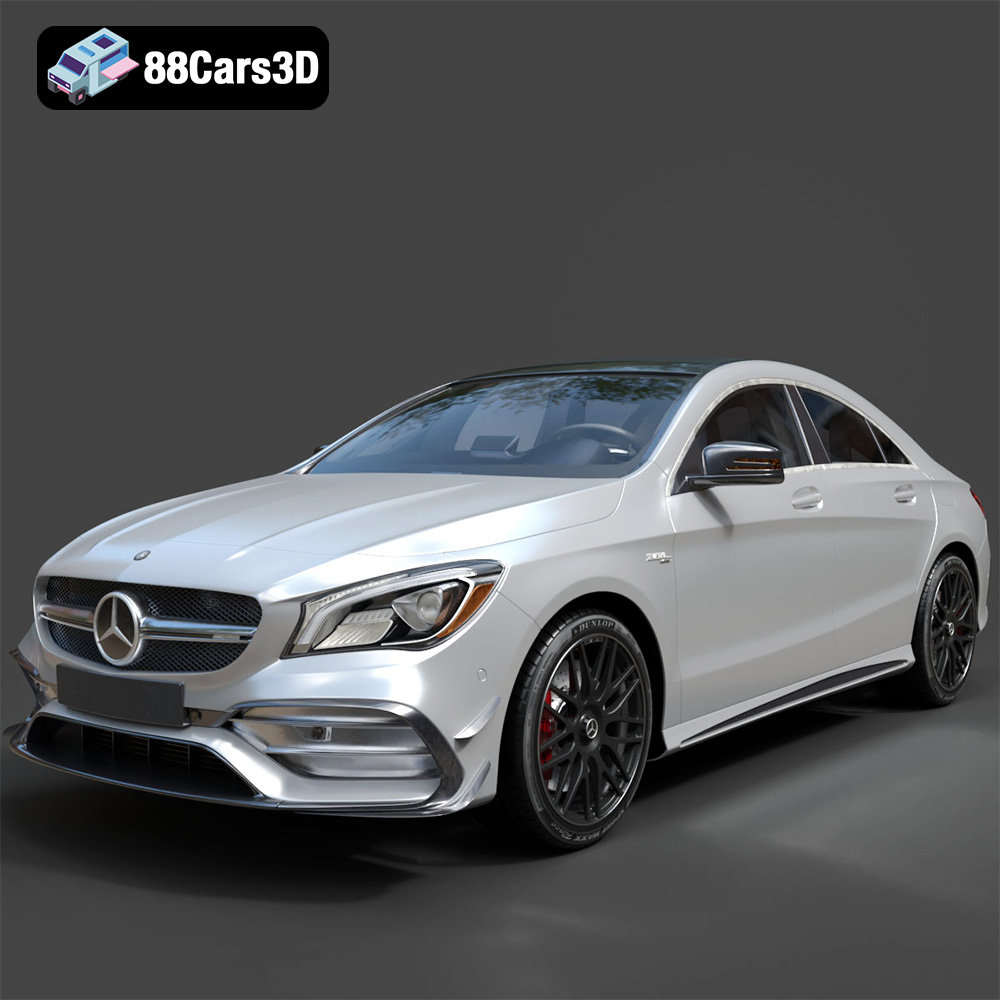
Mercedes-Benz CLA45 AMG 2017 3D Model
Texture: Yes
Material: Yes
Download the Mercedes-Benz CLA45 AMG 2017 3D Model featuring clean geometry, realistic detailing, and a fully modeled interior. Includes .blend, .fbx, .obj, .glb, .stl, .ply, .unreal, and .max formats for rendering, simulation, and game development.
Price: $29.99
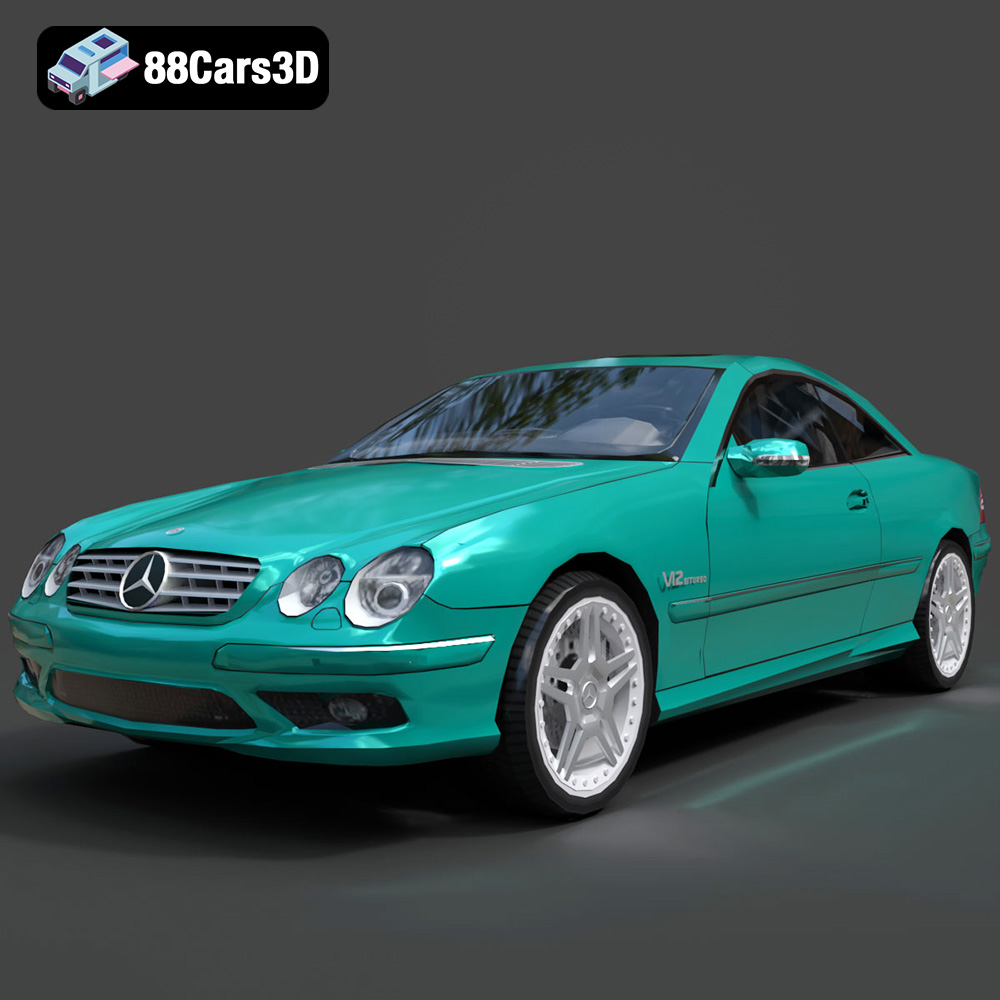
Mercedes-Benz CL65 C215 AMG 3D Model
Texture: Yes
Material: Yes
Download the Mercedes-Benz CL65 C215 AMG 3D Model featuring clean geometry, realistic detailing, and a fully modeled interior. Includes .blend, .fbx, .obj, .glb, .stl, .ply, .unreal, and .max formats for rendering, simulation, and game development.
Price: $9.99
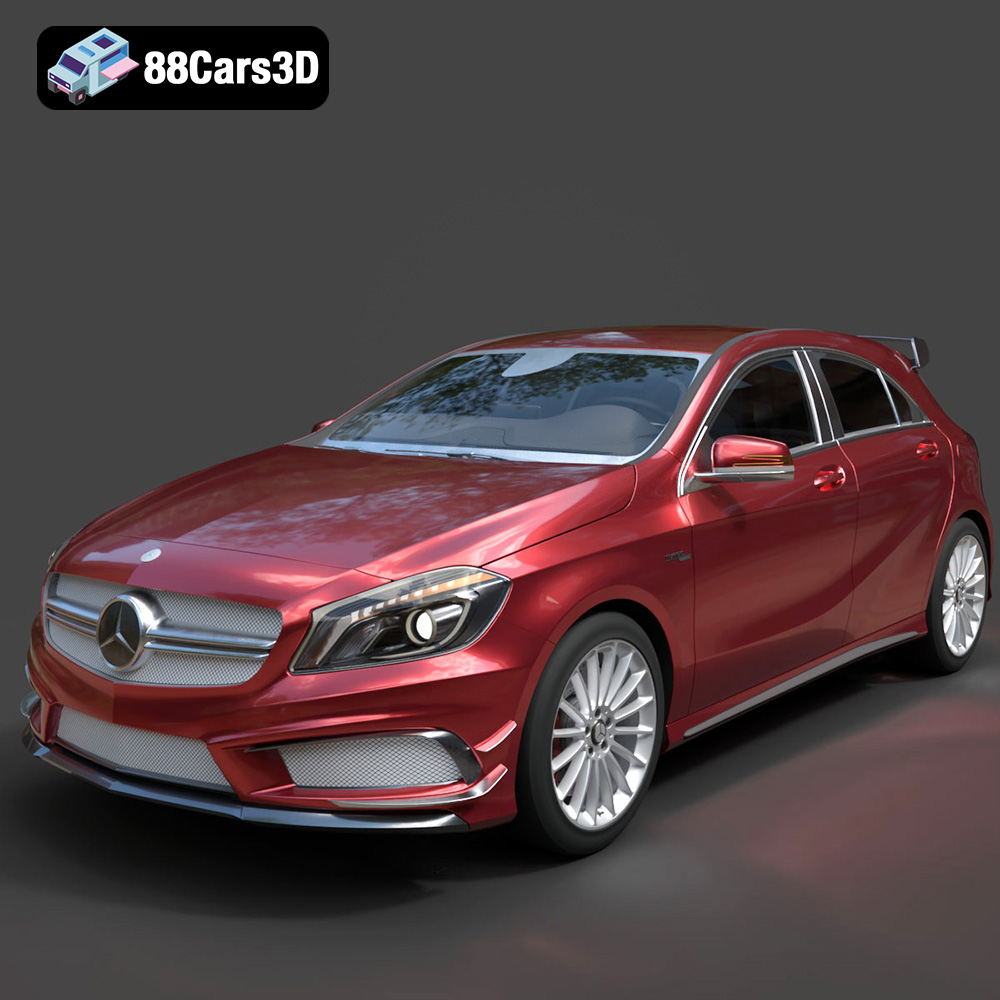
Mercedes-Benz A45 2021 3D Model
Texture: Yes
Material: Yes
Download the Mercedes-Benz A45 2021 3D Model featuring clean geometry, realistic detailing, and a fully modeled interior. Includes .blend, .fbx, .obj, .glb, .stl, .ply, .unreal, and .max formats for rendering, simulation, and game development.
Price: $9.99
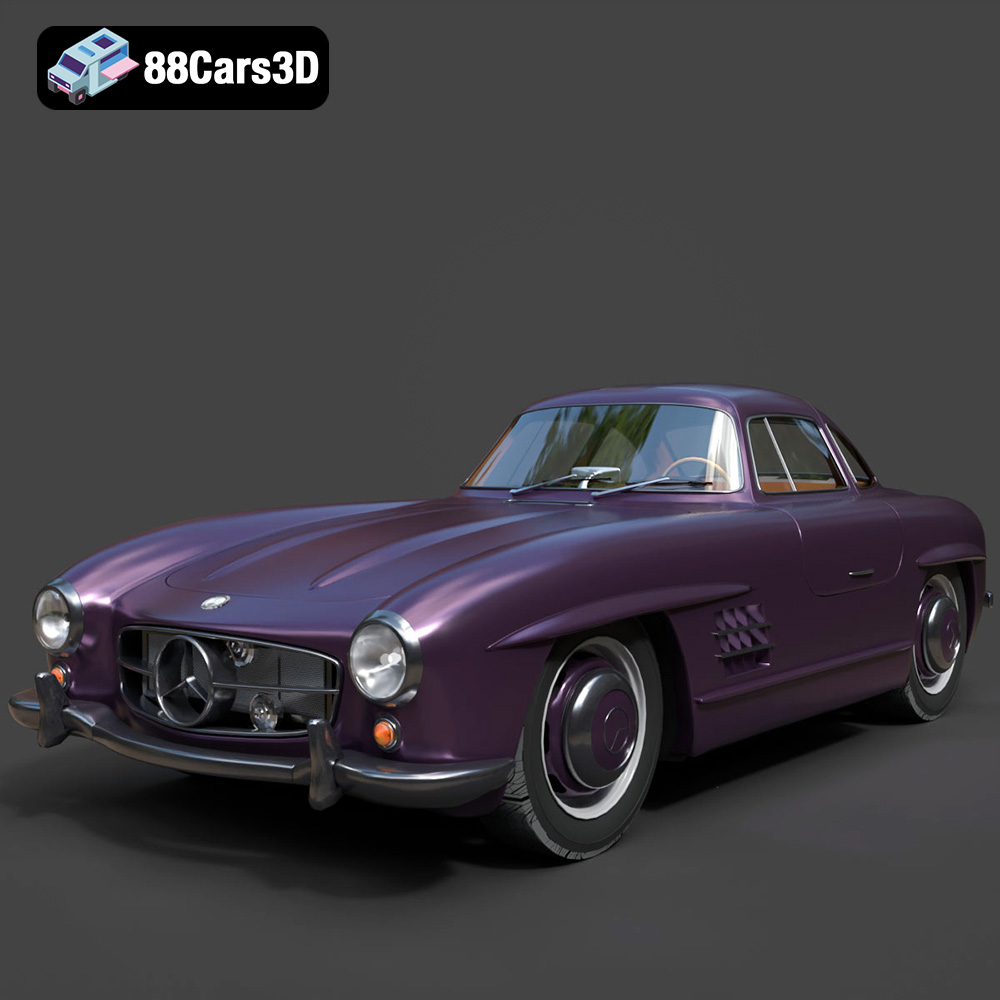
Mercedes-Benz 300SL 1955 3D Model
Texture: Yes
Material: Yes
Download the Mercedes-Benz 300SL 1955 3D Model featuring clean geometry, realistic detailing, and a fully modeled interior. Includes .blend, .fbx, .obj, .glb, .stl, .ply, .unreal, and .max formats for rendering, simulation, and game development.
Price: $9.99
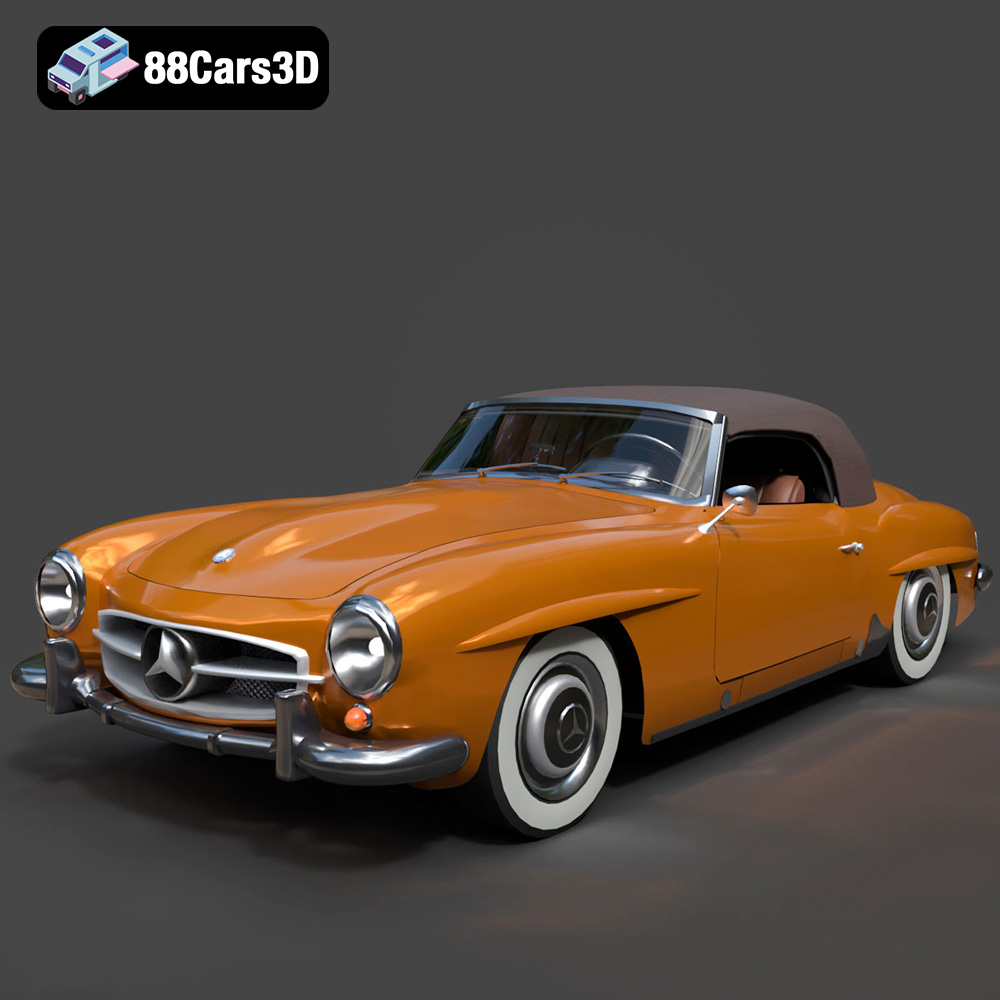
Mercedes-Benz 190SL 1955 3D Model
Texture: Yes
Material: Yes
Download the Mercedes-Benz 190SL 1955 3D Model featuring clean geometry, realistic detailing, and a fully modeled interior. Includes .blend, .fbx, .obj, .glb, .stl, .ply, .unreal, and .max formats for rendering, simulation, and game development.
Price: $9.99
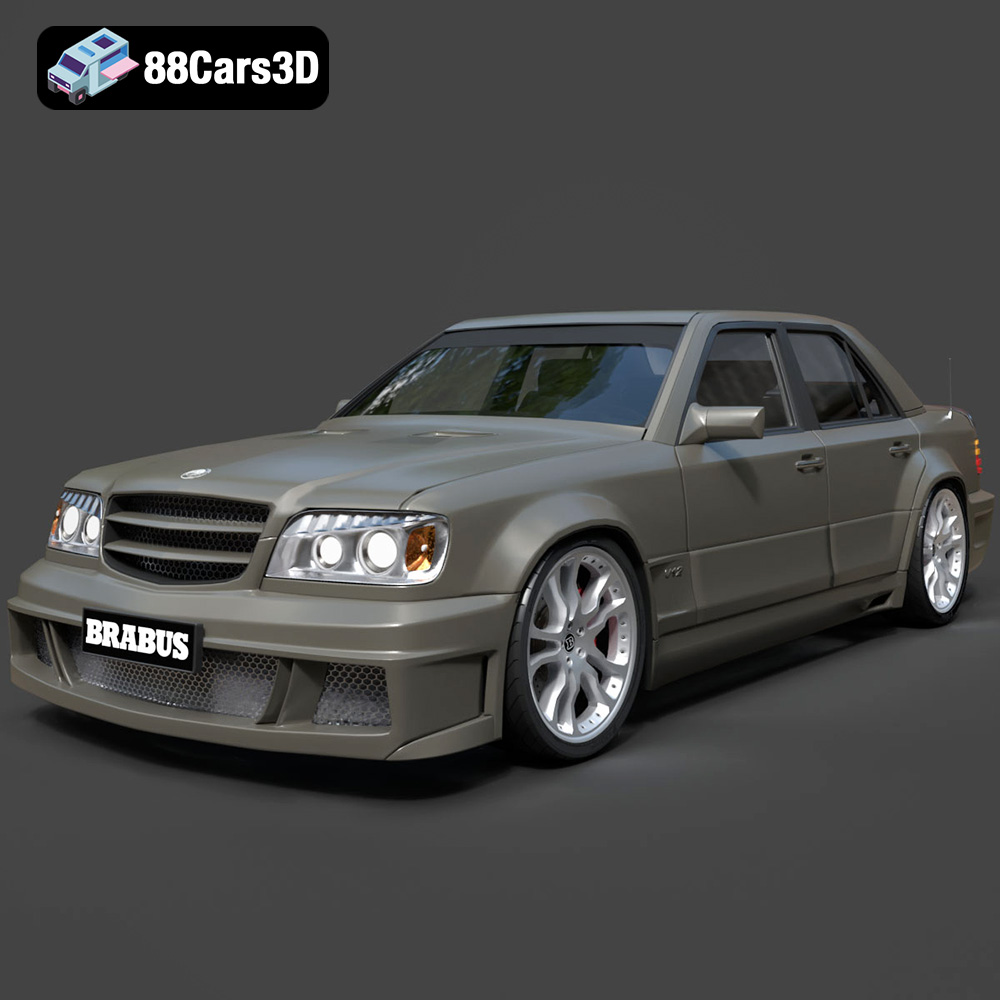
Mercedes-Benz W124 Brabus V12 3D Model
Texture: Yes
Material: Yes
Download the Mercedes-Benz W124 Brabus V12 3D Model featuring clean geometry, realistic detailing, and a fully modeled interior. Includes .blend, .fbx, .obj, .glb, .stl, .ply, .unreal, and .max formats for rendering, simulation, and game development.
Price: $9.99
