⚡ FLASH SALE: Get 60% OFF All Premium 3D & STL Models! ⚡

You’ve seen them. The jaw-dropping, photorealistic car renders that grace automotive commercials and high-end cinematic shorts. Every curve is perfect, every reflection is crisp, and the detail is so fine you can almost smell the leather. Now, imagine trying to drop that exact 3D model into a video game. The result? A slideshow. Your frame rate would plummet as the game engine struggles to render millions upon millions of polygons every sixtieth of a second.
This is the fundamental challenge that separates cinematic CGI from real-time graphics. So, how do developers create the stunningly realistic vehicles we see in games like Forza or Gran Turismo while maintaining buttery-smooth performance? The answer lies in a meticulous, industry-standard workflow that transforms a performance-heavy, high-poly masterpiece into a lean, efficient, and visually stunning game-ready 3D asset. This process is a blend of artistry and technical wizardry, and we’re about to break it down, step by step.
It might seem counterintuitive to begin a process focused on optimization by creating a model with an astronomical polygon count. However, the high-poly model is the most critical piece of the puzzle. It is the “source of truth,” the digital sculpture from which all subsequent detail is derived.
This initial model is created with zero regard for polygon budgets. Its sole purpose is to capture every minute detail with absolute precision. This includes perfectly smooth body panels, crisp panel gaps, beveled edges that catch the light correctly, and even tiny elements like bolts, screws, and headlight interiors modeled as separate geometry. Often, these models originate from pristine CAD data supplied by manufacturers or are meticulously crafted using subdivision modeling techniques.
The key takeaway is that the high-poly model is not for rendering in real-time. It’s an offline asset, a digital master copy. Its geometric density is what allows us to generate the data that will later create the *illusion* of detail on a much simpler model. Starting with an immaculate source, such as the detailed vehicle models available from 88cars3d.com, provides a massive advantage, ensuring your final asset is built on a foundation of quality.
With our high-poly master complete, we enter the first crucial stage of optimization: retopology. This is the process of building a brand-new, clean, low-polygon mesh directly on top of the high-poly surface. Think of it as tracing over a complex drawing with a much simpler, more efficient set of lines that still perfectly capture the original shape.
The goal of retopology is to create a model that retains the silhouette and major forms of the original car while using a tiny fraction of the polygons. This new low-poly mesh will become the actual geometry that the game engine renders.
Creating a good low-poly model is more than just reducing polygons; it’s about strategic reduction. The topology—the flow and structure of the polygons—matters immensely.
During retopology, you’re constantly making decisions about where to spend your polygon budget. An important hero car might have a budget of 100,000 to 200,000 triangles for its highest detail version. In contrast, a background traffic car might only have 10,000. Circular areas like wheels, headlights, and exhaust tips will require more polygons to look smooth, while large, flat areas like the roof or doors can use much less geometry.
At this point, we have two models: a beautiful but impossibly dense high-poly car, and an efficient but plain-looking low-poly version. The next step is where the real magic happens. We will project all the rich surface detail from the high-poly model onto the low-poly one using a series of specialized texture maps.
To do this, we first need to perform UV unwrapping.
Imagine peeling an orange and laying the peel flat on a table. That’s essentially what UV unwrapping is for a 3D model. We take the 3D surface of our low-poly car and flatten it into a 2D representation called a UV map. This map tells the game engine how to apply a 2D texture image onto the 3D surface.
Good UVs are critical for a high-quality asset. Best practices include:
With the low-poly model unwrapped, we can begin the baking process. This involves placing the low-poly model inside the high-poly model and casting rays from one to the other, recording the differences in surface detail as texture images.
Software like Marmoset Toolbag, Substance Painter, or the built-in baker in Blender are industry standards for this crucial step.
Our main game-ready model (often called LOD0) is now complete. It’s optimized and has textures that make it look incredibly detailed. But what about when this car is 100 meters away from the player? The engine would still be rendering tens of thousands of polygons for an object that only takes up a few pixels on screen. This is a massive waste of resources.
The solution is creating LODs (Levels of Detail). These are a series of progressively simpler versions of your model that the engine swaps out automatically as the object gets further from the camera.
A typical automotive game-ready 3D asset will have a chain of LODs:
This process of poly count optimization is fundamental to building scalable and performant game worlds. It ensures that the GPU’s power is spent rendering detail where it matters most—right in front of the player.
The final step is to give our model realistic materials and bring it into the game engine. This is where we leverage the baked maps to create stunning surfaces.
PBR texturing, or Physically Based Rendering, is a methodology for creating materials that react to light in a physically plausible way. Instead of faking reflections, we define the inherent properties of a surface, such as its base color, how metallic it is, and how rough or smooth it is.
Using a tool like Adobe Substance Painter, we can import our low-poly model and our baked maps (Normal, AO, Curvature). The Curvature map is used to add realistic edge scratches on the paint, while the AO map helps accumulate dust and grime in the crevices. This workflow allows for the rapid creation of incredibly realistic and detailed materials for everything from the car paint and carbon fiber to the tire rubber and brake calipers.
With the model and textures complete, it’s time for the moment of truth. We export the model as an FBX file, ensuring we include the entire LOD chain. This file is then imported into our target game engine, such as Unreal Engine 5.
Inside the engine, we perform the final setup:
The result is magical. The low-poly Unreal Engine car, running smoothly in real-time, appears nearly indistinguishable from the original high-poly render. The faked detail from the normal map catches the light, the PBR materials react realistically, and the LOD system ensures performance is maintained no matter how many cars are on screen.
The journey from a cinematic-quality high-poly model to a performant, real-time game-ready 3D asset is a testament to the technical artistry of modern game development. It’s a process of intelligent transformation, not just blind reduction.
By starting with a high-fidelity source, performing meticulous retopology, projecting detail through the baking of normal maps, and implementing smart poly count optimization with LODs, we can achieve the impossible: cinematic visual quality that runs at 60 frames per second. This workflow is the backbone of creating any high-quality hard-surface asset for games, virtual reality, or real-time simulations.
Ready to tackle your next automotive project but need a world-class high-poly model to serve as your foundation? Explore the meticulously crafted and production-ready vehicle library at 88cars3d.com to jumpstart your workflow and get straight to the creative process of optimization and texturing.

Texture: Yes
Material: Yes
Download the Mercedes-Benz SL500 AMG (R129) 3D Model featuring clean geometry, realistic detailing, and a fully modeled interior. Includes .blend, .fbx, .obj, .glb, .stl, .ply, .unreal, and .max formats for rendering, simulation, and game development.
Price: $9.99

Texture: Yes
Material: Yes
Download the Mercedes-Benz S-Class W221 2005 3D Model featuring clean geometry, realistic detailing, and a fully modeled interior. Includes .blend, .fbx, .obj, .glb, .stl, .ply, .unreal, and .max formats for rendering, simulation, and game development.
Price: $9.99

Texture: Yes
Material: Yes
Download the Mercedes-Benz E-Class W212 2009 3D Model featuring clean geometry, realistic detailing, and a fully modeled interior. Includes .blend, .fbx, .obj, .glb, .stl, .ply, .unreal, and .max formats for rendering, simulation, and game development.
Price: $9.99

Texture: Yes
Material: Yes
Download the Mercedes-Benz SLK 350 2005 3D Model featuring clean geometry, realistic detailing, and a fully modeled interior. Includes .blend, .fbx, .obj, .glb, .stl, .ply, .unreal, and .max formats for rendering, simulation, and game development.
Price: $9.99

Texture: Yes
Material: Yes
Download the Mercedes-Benz SL 65 AMG 3D Model featuring clean geometry, realistic detailing, and a fully modeled interior. Includes .blend, .fbx, .obj, .glb, .stl, .ply, .unreal, and .max formats for rendering, simulation, and game development.
Price: $9.99

Texture: Yes
Material: Yes
Download the Mercedes-Benz S500 3D Model featuring clean geometry, realistic detailing, and a fully modeled interior. Includes .blend, .fbx, .obj, .glb, .stl, .ply, .unreal, and .max formats for rendering, simulation, and game development.
Price: $9.99

Texture: Yes
Material: Yes
Download the Mercedes-Benz S55 W220 AMG 1999 3D Model featuring clean geometry, realistic detailing, and a fully modeled interior. Includes .blend, .fbx, .obj, .glb, .stl, .ply, .unreal, and .max formats for rendering, simulation, and game development.
Price: $9.99

Texture: Yes
Material: Yes
Download the Mercedes-Benz CLA45 AMG 2017 3D Model featuring clean geometry, realistic detailing, and a fully modeled interior. Includes .blend, .fbx, .obj, .glb, .stl, .ply, .unreal, and .max formats for rendering, simulation, and game development.
Price: $29.99
Texture: Yes
Material: Yes
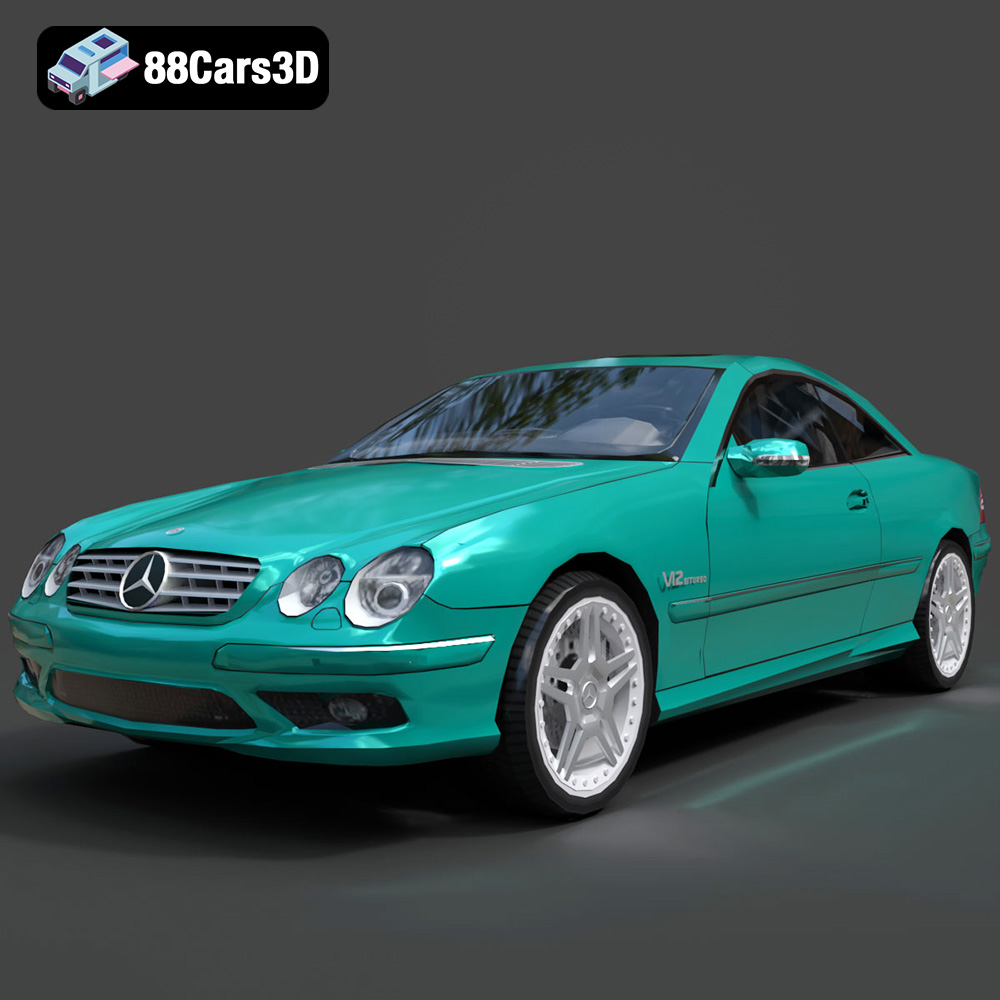
Download the Mercedes-Benz CL65 C215 AMG 3D Model featuring clean geometry, realistic detailing, and a fully modeled interior. Includes .blend, .fbx, .obj, .glb, .stl, .ply, .unreal, and .max formats for rendering, simulation, and game development.
Price: $9.99
Texture: Yes
Material: Yes
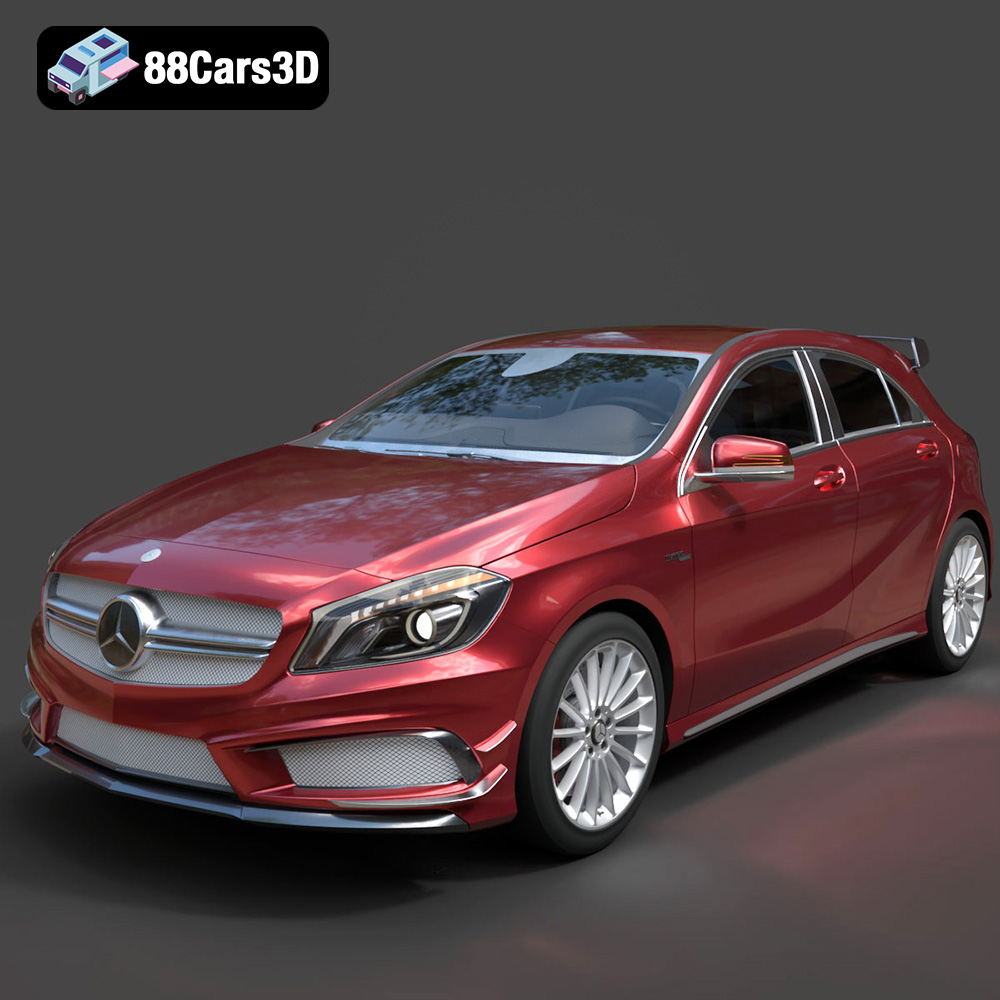
Download the Mercedes-Benz A45 2021 3D Model featuring clean geometry, realistic detailing, and a fully modeled interior. Includes .blend, .fbx, .obj, .glb, .stl, .ply, .unreal, and .max formats for rendering, simulation, and game development.
Price: $9.99

