⚡ FLASH SALE: Get 60% OFF All Premium 3D & STL Models! ⚡

From the gleaming reflections on a perfectly sculpted fender in a cinematic render to the adrenaline-pumping speed of a real-time race in a video game, 3D car models are at the heart of modern digital creation. They are more than just virtual objects; they are a complex synthesis of art and engineering, demanding precision, technical knowledge, and a deep understanding of form and material. Creating a truly exceptional automotive model is a journey that spans meticulous modeling, strategic texturing, and platform-specific optimization. For artists, designers, and developers, mastering this process is a gateway to producing stunning visualizations, immersive games, and innovative AR/VR experiences.
This comprehensive guide will take you deep into the professional pipeline for creating and utilizing high-fidelity 3D car models. We will dissect every critical stage, from establishing a flawless topological foundation to optimizing for peak performance in demanding real-time environments. You will learn the industry best practices for UV mapping complex surfaces, constructing photorealistic PBR materials for car paint and chrome, and setting up compelling lighting for breathtaking automotive rendering. Whether you’re a seasoned 3D artist aiming to refine your workflow or a developer needing to integrate assets seamlessly, this guide will provide the technical insights and actionable steps to elevate your automotive projects to the next level.
Before any texture is applied or any render is started, the success of a 3D car model is determined by its underlying geometry—its topology. Topology refers to the arrangement of vertices, edges, and polygons that form the mesh. For automotive models, clean, deliberate topology isn’t just a best practice; it’s a non-negotiable requirement for achieving smooth surfaces, crisp details, and predictable behavior under subdivision or deformation. A flawed foundation will cause endless problems down the line, from shading artifacts to UV mapping nightmares.
The gold standard for hard-surface modeling, especially for vehicles, is an all-quad mesh. Quads (polygons with four sides) are predictable and subdivide cleanly, making them ideal for creating smooth, flowing surfaces. While triangles (tris) and n-gons (polygons with more than four sides) have their place, they can cause significant issues on a car’s primary bodywork. N-gons often lead to pinching, shading errors, and unpredictable results when smoothing algorithms like TurboSmooth or OpenSubdiv are applied. Triangles can disrupt the flow of edge loops, causing visible termination points that break the seamless reflections crucial for realistic car paint. For this reason, professional artists strive to maintain a 100% quad-based workflow for all visible, smooth surfaces of a vehicle’s body panels. Sourcing a production-ready asset from a marketplace like 88cars3d.com can save hundreds of hours, as these models are built with this foundational principle in mind.
Edge flow is the directional logic of your topology. In automotive modeling, edge loops must follow the natural contour and character lines of the vehicle. This is what allows you to define both the broad, sweeping curves of a roofline and the razor-sharp creases of a body panel. Key principles include:
The required polygon density varies dramatically depending on the model’s final use case. There is no one-size-fits-all solution.
UV mapping is the process of translating a 3D model’s surface into a 2D space, allowing textures to be applied accurately. For a complex object like a car, with its intricate panels, mechanical parts, and interior details, UV mapping is a challenging but vital step. A poor unwrap can lead to stretched textures, visible seams, and inconsistent resolution, completely shattering the illusion of realism. Professional UV mapping is about strategic planning, technical precision, and maximizing efficiency.
A “seam” in a UV map is where the 3D mesh is “cut” to be flattened into 2D. The primary goal is to place these seams where they are least visible on the final model. For cars, this means leveraging the natural construction of the vehicle:
Texel density is a measure of texture resolution on the surface of a 3D model (e.g., pixels per meter). Maintaining a consistent texel density across the entire vehicle is crucial for ensuring that the level of detail is uniform. You don’t want a blurry door next to a razor-sharp fender. Artists use tools and scripts to visualize and equalize texel density across different UV shells.
For hero assets demanding extreme close-ups, a single texture map (e.g., 4K or 8K) may not be enough. This is where the UDIM (U-Dimension) workflow comes in. UDIMs allow you to spread a model’s UVs across multiple texture sets, or “tiles.” For a car, you could assign one UDIM tile for the main body, another for the wheels, one for the interior, and so on. This enables the use of multiple 4K or 8K textures on a single asset, resulting in breathtaking, high-resolution detail across every component.
Once all the UV shells are created, they must be arranged and packed into the 0-to-1 UV space (or across UDIM tiles). Efficient packing is about minimizing wasted space. Wasted space means wasted video memory and lower potential resolution. Best practices include:
While automated packing tools have improved, manual adjustments are often necessary to achieve the most optimal layout, especially for complex automotive 3D car models.
With a solid mesh and clean UVs, the next step is breathing life into the model with realistic materials. The industry standard for this is the Physically-Based Rendering (PBR) workflow, which aims to simulate how light interacts with materials in the real world. For automotive visualization, creating convincing PBR materials for car paint, glass, chrome, and rubber is what separates an average render from a photorealistic masterpiece.
The PBR workflow primarily uses a set of texture maps to define a material’s properties. The most common maps in a “Metallic/Roughness” workflow include:
A simple PBR material isn’t enough for high-quality car paint. Real automotive paint is a complex, multi-layered material. To replicate this digitally, artists build advanced shaders, often using specific tools in their chosen software (e.g., CoronaLayeredMtl in 3ds Max/Corona, V-Ray Blend Material, or layering nodes in Blender).
A typical car paint shader consists of three primary layers:
No real-world car is perfectly clean. Adding subtle imperfections is key to realism. This can be done by layering additional detail onto the PBR maps. A “grime” or “dirt” map can be multiplied over the Base Color and used to add variation to the Roughness map, creating dusty or smudged areas. Decals for logos, race numbers, or branding can be applied using projection mapping or by overlaying them in the texture files. These small details break up the digital perfection and sell the final image.
Rendering is where your meticulously crafted model and materials come together in a final image. The quality of your render is determined as much by the lighting and camera setup as it is by the asset itself. For automotive rendering, the goal is often to accentuate the car’s form, create beautiful reflections, and establish a specific mood, whether it’s a clean studio shot or a dynamic outdoor scene.
The fastest way to achieve photorealistic lighting and reflections is with an Image-Based Lighting (IBL) setup using a High Dynamic Range Image (HDRI). An HDRI is a 360-degree panoramic image that contains a vast range of light intensity data. When used as an environment light in a 3D scene, it simultaneously provides:
Choosing the right HDRI is an artistic decision. A studio HDRI with softboxes will create clean, controlled highlights perfect for showcasing design. An outdoor HDRI of a forest road or a cityscape will ground the vehicle in a realistic context.
While an HDRI provides a fantastic base, professional artists rarely stop there. They use additional, local lights to act as “sculpting” tools, enhancing the final image. These can be simple area lights, spotlights, or emissive planes. Their purpose is to:
Modern render engines are incredibly capable, but they have different strengths. For automotive rendering:
Regardless of the engine, key settings to focus on include noise thresholds (to control render time vs. quality), global illumination (GI) settings, and outputting render passes (like reflections, lighting, and ambient occlusion) for maximum control in post-processing.
Using a 3D car model in a game engine like Unreal Engine or Unity requires a completely different approach than rendering for cinematics. In a real-time environment, every polygon and texture byte counts. Performance is king, and the goal is to maintain the highest possible visual fidelity while ensuring a smooth, consistent framerate (typically 60 FPS or higher). This is achieved through a series of clever optimization techniques.
You cannot simply place a multi-million polygon model into a game engine. The first step is creating a low-polygon, game-ready mesh from the high-poly source. This process is called retopology. The artist builds a new, clean mesh over the high-poly version, capturing its silhouette and form with a fraction of the geometry. This low-poly model is then UV mapped.
The magic happens in the baking stage. Details from the high-poly mesh are “baked” into texture maps that are then applied to the low-poly mesh. The most important of these is the Normal map, which fakes the illusion of high-resolution geometric detail on the low-poly surface, creating realistic panel gaps, vents, and curves without any performance cost.
A Level of Detail (LOD) system is a critical optimization technique for game assets. It involves creating multiple versions of the car model, each with a progressively lower polygon count. The game engine automatically swaps these models based on the camera’s distance from the object:
LODs dramatically reduce the number of polygons the GPU has to render at any given moment, significantly improving performance, especially in scenes with many vehicles.
A “draw call” is a command the CPU sends to the GPU to draw an object on the screen. Each object with a unique material generates at least one draw call. Too many draw calls can create a CPU bottleneck and cripple performance. To combat this, artists use texture atlasing. This involves combining the textures for multiple different parts onto a single, larger texture sheet (an atlas). For example, instead of having separate materials and textures for the brake calipers, suspension, and exhaust, their UVs can be arranged to share one material and one set of textures. This allows the GPU to render all of those parts in a single draw call, providing a huge performance boost for these complex game assets.
The utility of 3D car models extends far beyond traditional screens. Emerging platforms like Augmented Reality (AR), Virtual Reality (VR), and 3D printing present unique technical challenges and requirements. Optimizing a model for these use cases requires careful preparation to ensure it performs well and functions correctly in these specialized environments.
AR and VR applications are incredibly performance-intensive. They must render a scene twice (once for each eye) and maintain a very high and stable framerate (typically 90 FPS) to prevent motion sickness. This demands even more aggressive optimization than standard game development.
Models intended for VR also need a clean, modeled interior, as users can physically put their heads inside the car to look around, an experience that cannot be faked.
Preparing a model for 3D printing is a process of turning a visual asset into a solid, manufacturable object. The primary requirement is that the mesh must be “watertight” or “manifold”. This means it must be a completely enclosed volume with no holes, inverted faces, or internal geometry that could confuse the slicing software.
Common steps for 3D printing preparation include:
The process requires a shift in thinking from “what looks good” to “what is physically possible to manufacture with a given printing technology.”
The journey of a 3D car model from a blank viewport to a final, polished asset is a testament to the fusion of artistic vision and technical execution. We’ve seen that a successful model is built upon a series of interdependent pillars: the flawless logic of its topology, the efficiency of its UV layout, the realism of its PBR materials, the artistry of its lighting, and the intelligence of its optimization. Neglecting any one of these stages can compromise the entire project, whether it results in a render that lacks punch or a game that fails to perform.
The key takeaway for any artist or developer is that fundamentals matter. A deep understanding of edge flow, texel density, shader construction, and performance budgets is what separates amateur work from professional results. Always begin with the end in mind, tailoring your workflow to the specific demands of your target platform—be it a cinematic render, a real-time game engine, an AR application, or a physical 3D print. For those looking to accelerate their projects or study professional-grade examples, sourcing high-quality assets from a curated library like 88cars3d.com can provide an incredible foundation and an invaluable learning resource. By mastering these principles, you equip yourself with the skills to tackle any automotive visualization challenge and consistently produce stunning, high-performance results.

Texture: Yes
Material: Yes
Download the Mercedes-Benz SL500 AMG (R129) 3D Model featuring clean geometry, realistic detailing, and a fully modeled interior. Includes .blend, .fbx, .obj, .glb, .stl, .ply, .unreal, and .max formats for rendering, simulation, and game development.
Price: $9.99

Texture: Yes
Material: Yes
Download the Mercedes-Benz S-Class W221 2005 3D Model featuring clean geometry, realistic detailing, and a fully modeled interior. Includes .blend, .fbx, .obj, .glb, .stl, .ply, .unreal, and .max formats for rendering, simulation, and game development.
Price: $9.99

Texture: Yes
Material: Yes
Download the Mercedes-Benz SLK 350 2005 3D Model featuring clean geometry, realistic detailing, and a fully modeled interior. Includes .blend, .fbx, .obj, .glb, .stl, .ply, .unreal, and .max formats for rendering, simulation, and game development.
Price: $9.99

Texture: Yes
Material: Yes
Download the Mercedes-Benz SL 65 AMG 3D Model featuring clean geometry, realistic detailing, and a fully modeled interior. Includes .blend, .fbx, .obj, .glb, .stl, .ply, .unreal, and .max formats for rendering, simulation, and game development.
Price: $9.99

Texture: Yes
Material: Yes
Download the Mercedes-Benz S500 3D Model featuring clean geometry, realistic detailing, and a fully modeled interior. Includes .blend, .fbx, .obj, .glb, .stl, .ply, .unreal, and .max formats for rendering, simulation, and game development.
Price: $9.99

Texture: Yes
Material: Yes
Download the Mercedes-Benz S55 W220 AMG 1999 3D Model featuring clean geometry, realistic detailing, and a fully modeled interior. Includes .blend, .fbx, .obj, .glb, .stl, .ply, .unreal, and .max formats for rendering, simulation, and game development.
Price: $9.99
Texture: Yes
Material: Yes
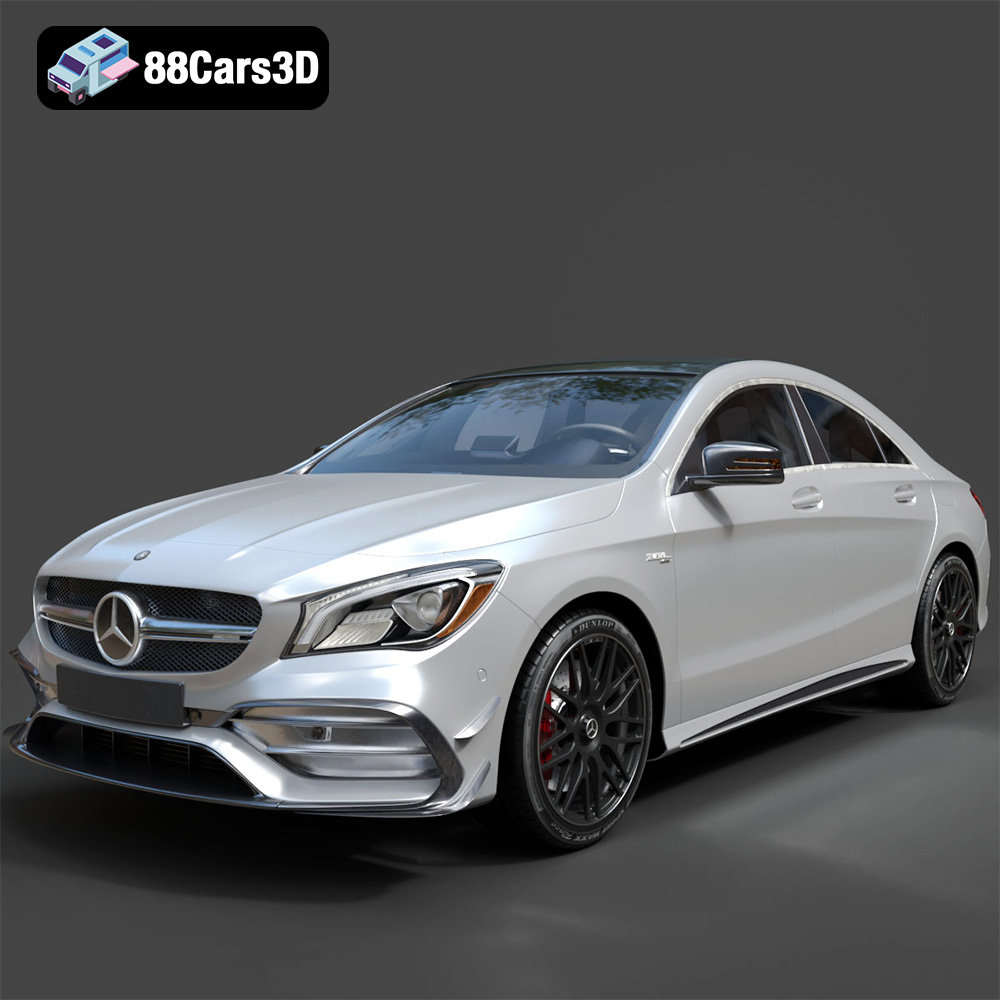
Download the Mercedes-Benz CLA45 AMG 2017 3D Model featuring clean geometry, realistic detailing, and a fully modeled interior. Includes .blend, .fbx, .obj, .glb, .stl, .ply, .unreal, and .max formats for rendering, simulation, and game development.
Price: $29.99
Texture: Yes
Material: Yes
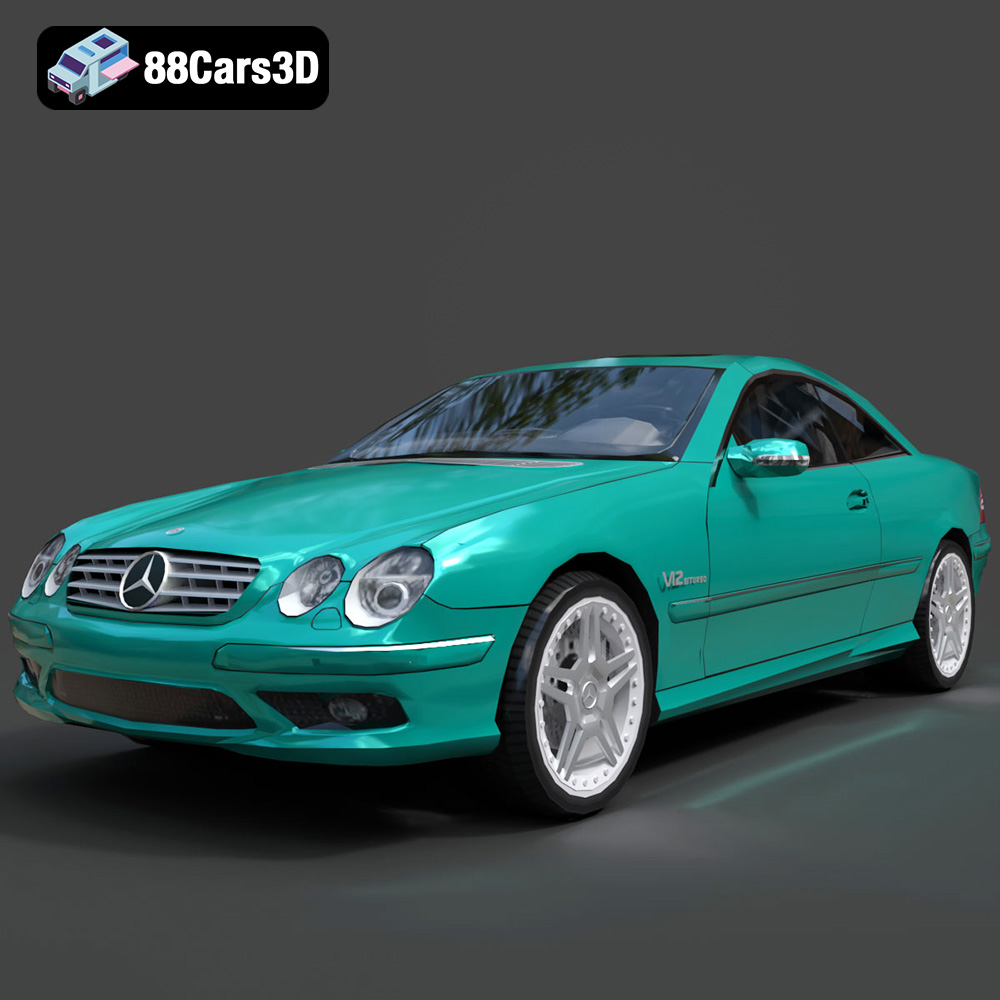
Download the Mercedes-Benz CL65 C215 AMG 3D Model featuring clean geometry, realistic detailing, and a fully modeled interior. Includes .blend, .fbx, .obj, .glb, .stl, .ply, .unreal, and .max formats for rendering, simulation, and game development.
Price: $9.99
Texture: Yes
Material: Yes
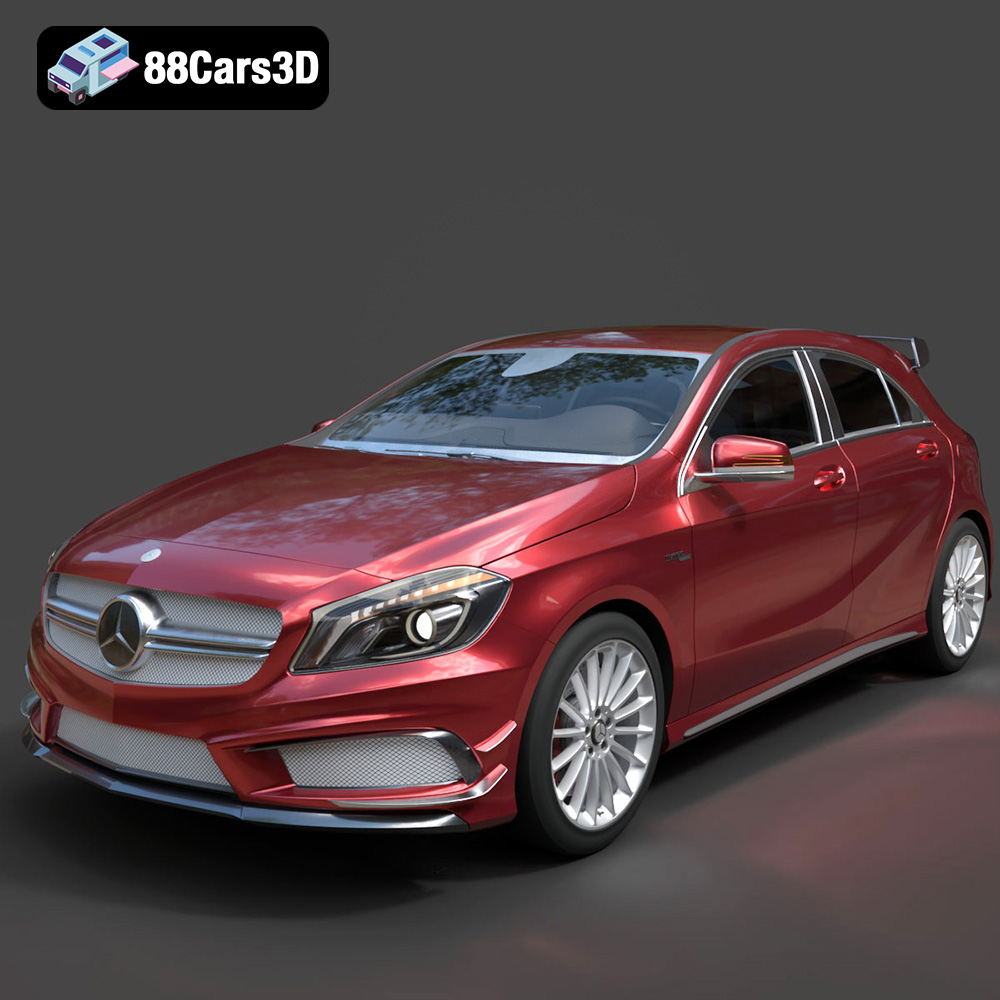
Download the Mercedes-Benz A45 2021 3D Model featuring clean geometry, realistic detailing, and a fully modeled interior. Includes .blend, .fbx, .obj, .glb, .stl, .ply, .unreal, and .max formats for rendering, simulation, and game development.
Price: $9.99
Texture: Yes
Material: Yes
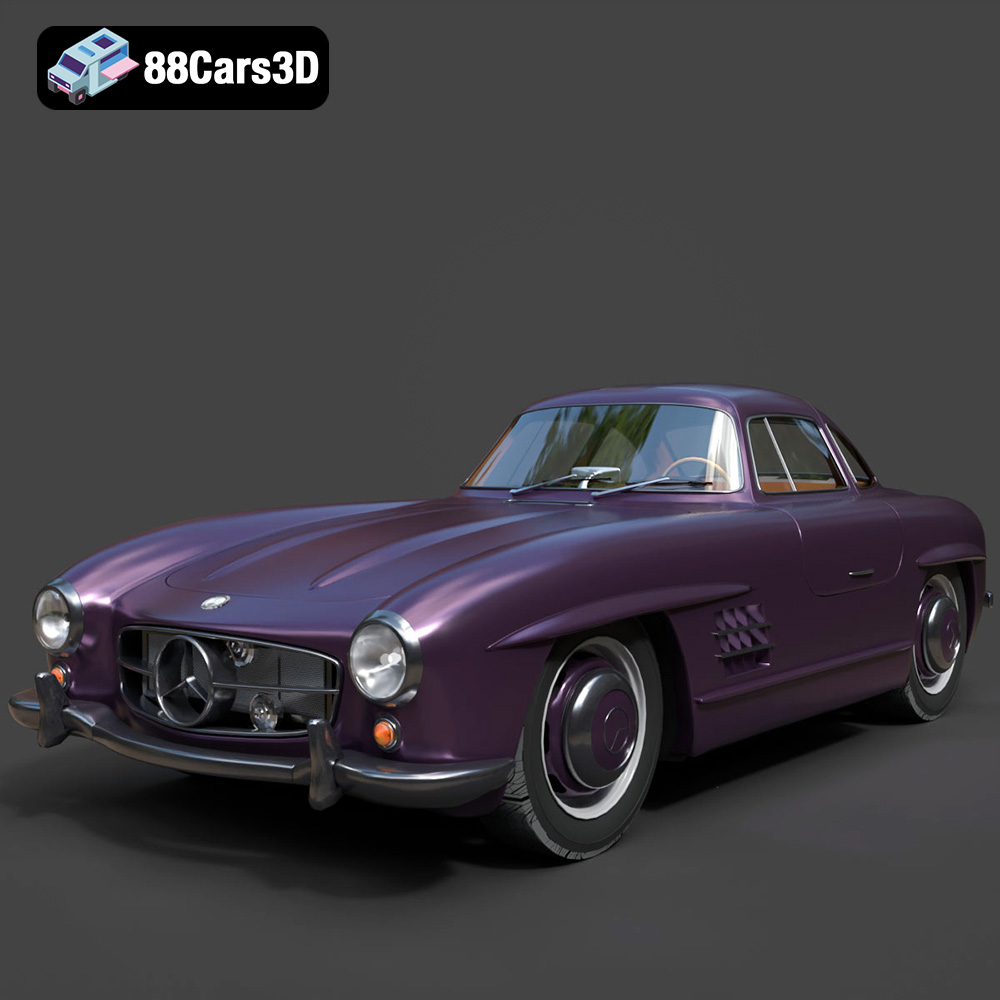
Download the Mercedes-Benz 300SL 1955 3D Model featuring clean geometry, realistic detailing, and a fully modeled interior. Includes .blend, .fbx, .obj, .glb, .stl, .ply, .unreal, and .max formats for rendering, simulation, and game development.
Price: $9.99

