⚡ FLASH SALE: Get 60% OFF All Premium 3D & STL Models! ⚡

You’ve done it. After hours of meticulous work, you have a stunning, high-resolution 3D car model. Every curve is perfect, every panel gap is precise, and the render looks photorealistic enough to fool a seasoned car enthusiast. But now comes the real challenge: getting that multi-million-polygon masterpiece to run smoothly in a real-time game engine. Pushing that raw data into Unreal Engine or Unity would be like trying to fit a V12 engine into a go-kart—it simply won’t work.
This is the critical juncture where artistry meets technical execution. The process of transforming a dense, high-poly model into a lean, efficient, game-ready asset is a fundamental skill for any 3D artist in the automotive or gaming space. It’s a delicate balance of preserving visual fidelity while ruthlessly cutting down on performance cost. This guide will walk you through the entire workflow, from initial mesh reconstruction to final in-engine implementation, ensuring your digital vehicles look incredible without grinding the frame rate to a halt.
The first and most crucial step is creating a low-poly model. This process, known as retopology, involves building a new, clean mesh shell over your high-poly source. The goal isn’t just to lower the polygon count; it’s to create intelligent, efficient geometry that deforms predictably and shades correctly under real-time lighting.
You have two primary paths for retopology: manual and automatic. Each has its place in the professional workflow.
Manual Retopology involves placing every vertex and polygon by hand. While time-consuming, it offers unparalleled control. For a car, this means you can ensure edge loops perfectly follow the hard edges of body panels, wrap cleanly around wheel arches, and define the crisp lines of headlights and grilles. This control is vital for achieving clean bakes and perfect shading. Tools like Blender’s Snap to Faces, Maya’s Quad Draw, or TopoGun are industry standards for this meticulous work.
Automatic Retopology, using algorithms like Quad Remesher or ZBrush’s ZRemesher, can produce a good starting point in a fraction of the time. For complex organic shapes or internal mechanical parts that won’t be seen up close, this is often a huge time-saver. However, for the main body of a car, automated solutions often struggle with the sharp, specific edge flow required for perfect reflections. A common professional workflow is to use an automatic tool for a first pass and then manually clean up the critical areas.
Once you have a clean low-poly model, you need to unwrap it. UV unwrapping is the process of flattening your 3D mesh into a 2D map. This map, the “UV layout,” tells the game engine how to apply 2D textures (like your baked normal maps and color maps) onto the 3D surface. Poor UVs can ruin an otherwise perfect model.
Texel density refers to the number of texture pixels per unit of 3D space. Higher texel density means sharper, more detailed textures. For a car, you need to be strategic:
Where you place your “seams” (where the mesh is cut to be flattened) is critical. Try to hide them in natural creases or on the underside of the model where they are less likely to be seen. A visible seam can break the illusion and show a noticeable artifact in the texture and lighting.
Efficiently packing your UV shells into the 0-1 UV space is an art form. The goal is to minimize wasted empty space while maintaining consistent texel density across similar parts. Automated packing tools are a great start, but manual adjustments are often needed for a truly professional result.
This is where the magic happens. Baking is the process of projecting the surface details from your high-poly model onto the UV layout of your low-poly model, storing that information in texture maps. This allows your simple, efficient mesh to look almost as detailed as the multi-million polygon source.
The most important bake is the normal map. A normal map is an RGB texture where each color channel corresponds to an X, Y, or Z direction. It fakes the way light interacts with a surface, creating the illusion of intricate detail on a flat polygon.
With your baked maps in hand, you can begin texturing. Modern game engines use a Physically Based Rendering (PBR) workflow, which aims to simulate real-world material properties. Your baked maps are a cornerstone of creating believable PBR materials.
By creating textures for these channels, you can define everything from multi-layered car paint with clear coats to greasy engine components and worn leather seats. The combination of an efficient low-poly model and high-quality PBR materials is what sells the final visual.
Your optimized car model looks fantastic up close, but what happens when it’s just a dozen pixels on the screen in the distance? Rendering it with 50,000 triangles is an enormous waste of resources. This is where LODs (Level of Detail) come in. They are the single most important optimization for maintaining high **game engine performance**.
An LOD system is a series of the same model, each with a progressively lower polygon count. The game engine automatically swaps them out based on the camera’s distance to the object.
Creating these LODs involves carefully removing edge loops and collapsing geometry from your LOD0 mesh. It’s a destructive process, so always work on copies. The goal is to preserve the overall shape and silhouette for as long as possible, as this is what the player will notice at a distance. When done well, the transition between LODs is completely unnoticeable to the player, but the savings in **game engine performance** are immense.
For developers looking to bypass this time-consuming process, sourcing assets from marketplaces is a great option. For instance, many of the professionally crafted models available at 88cars3d.com come with pre-built LODs, saving you countless hours of manual optimization work.
The journey from a high-poly sculpt to a fully optimized game asset is a testament to the technical skill required in modern 3D art. It’s a process of deconstruction and reconstruction, where every decision impacts the final balance between visual fidelity and performance.
By mastering the core pillars of this workflow—clean retopology to create an efficient low-poly model, strategic UV unwrapping, meticulous **baking of normal maps** to capture detail, and the intelligent implementation of LODs—you gain complete control over your asset’s performance. You can ensure your automotive creations not only look stunning in a portfolio render but also perform beautifully in the dynamic, demanding environment of a real-time game engine.
If you’d like to study finished, game-ready examples or acquire high-quality, pre-optimized vehicle models to accelerate your own projects, explore the extensive catalog at 88cars3d.com. Seeing these principles applied in a final product is one of the best ways to learn.

Texture: Yes
Material: Yes
Download the GAS 21 3D Model featuring clean geometry, realistic detailing, and a fully modeled interior. Includes .blend, .fbx, .obj, .glb, .stl, .ply, .unreal, and .max formats for rendering, simulation, and game development.
Price: $9.99

Texture: Yes
Material: Yes
Download the Mercedes-Benz SL500 AMG (R129) 3D Model featuring clean geometry, realistic detailing, and a fully modeled interior. Includes .blend, .fbx, .obj, .glb, .stl, .ply, .unreal, and .max formats for rendering, simulation, and game development.
Price: $9.99

Texture: Yes
Material: Yes
Download the Mercedes-Benz S-Class W221 2005 3D Model featuring clean geometry, realistic detailing, and a fully modeled interior. Includes .blend, .fbx, .obj, .glb, .stl, .ply, .unreal, and .max formats for rendering, simulation, and game development.
Price: $9.99

Texture: Yes
Material: Yes
Download the Mercedes-Benz E-Class W212 2009 3D Model featuring clean geometry, realistic detailing, and a fully modeled interior. Includes .blend, .fbx, .obj, .glb, .stl, .ply, .unreal, and .max formats for rendering, simulation, and game development.
Price: $9.99

Texture: Yes
Material: Yes
Download the Mercedes-Benz E-class Estate S212 2009 3D Model featuring clean geometry, realistic detailing, and a fully modeled interior. Includes .blend, .fbx, .obj, .glb, .stl, .ply, .unreal, and .max formats for rendering, simulation, and game development.
Price: $9.99

Texture: Yes
Material: Yes
Download the Mercedes-Benz 190 W201 3D Model featuring clean geometry, realistic detailing, and a fully modeled interior. Includes .blend, .fbx, .obj, .glb, .stl, .ply, .unreal, and .max formats for rendering, simulation, and game development.
Price: $9.99

Texture: Yes
Material: Yes
Download the Mercedes-Benz C230 SportCoupé 2005 3D Model featuring clean geometry, realistic detailing, and a fully modeled interior. Includes .blend, .fbx, .obj, .glb, .stl, .ply, .unreal, and .max formats for rendering, simulation, and game development.
Price: $9.99

Texture: Yes
Material: Yes
Download the Mercedes-Benz SLK 3D Model featuring clean geometry, realistic detailing, and a fully modeled interior. Includes .blend, .fbx, .obj, .glb, .stl, .ply, .unreal, and .max formats for rendering, simulation, and game development.
Price: $9.99
Texture: Yes
Material: Yes
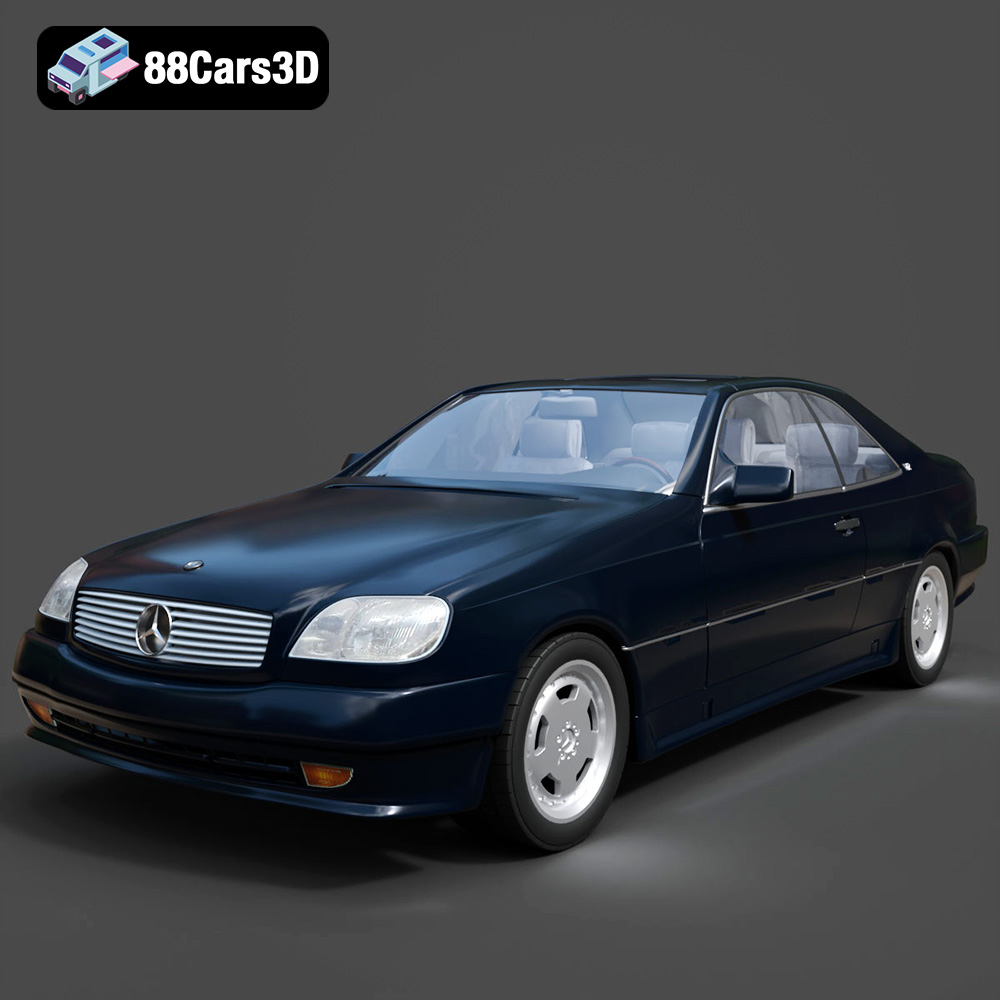
Download the Mercedes 600 SEC W140 1992 3D Model featuring clean geometry, realistic detailing, and a fully modeled interior. Includes .blend, .fbx, .obj, .glb, .stl, .ply, .unreal, and .max formats for rendering, simulation, and game development.
Price: $9.99
Texture: Yes
Material: Yes
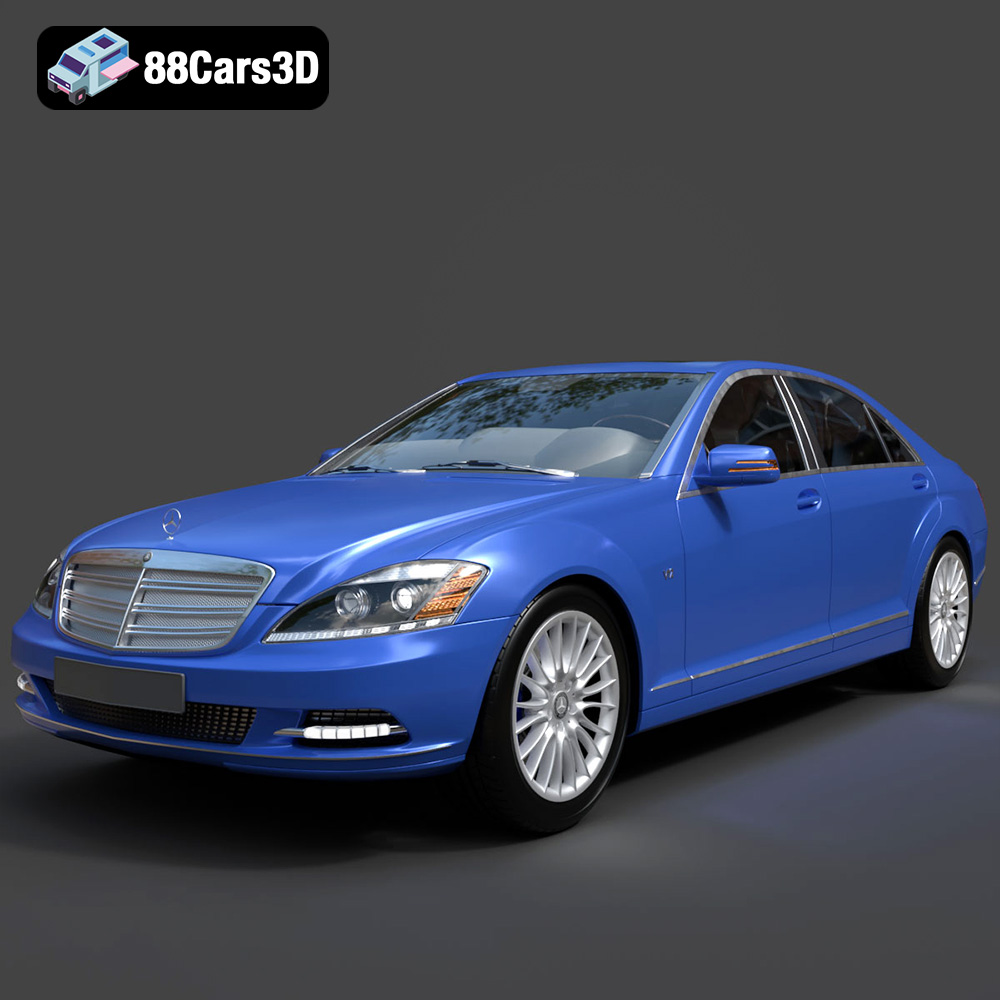
Download the Mercedes S-Class 2010 3D Model featuring clean geometry, realistic detailing, and a fully modeled interior. Includes .blend, .fbx, .obj, .glb, .stl, .ply, .unreal, and .max formats for rendering, simulation, and game development.
Price: $9.99

