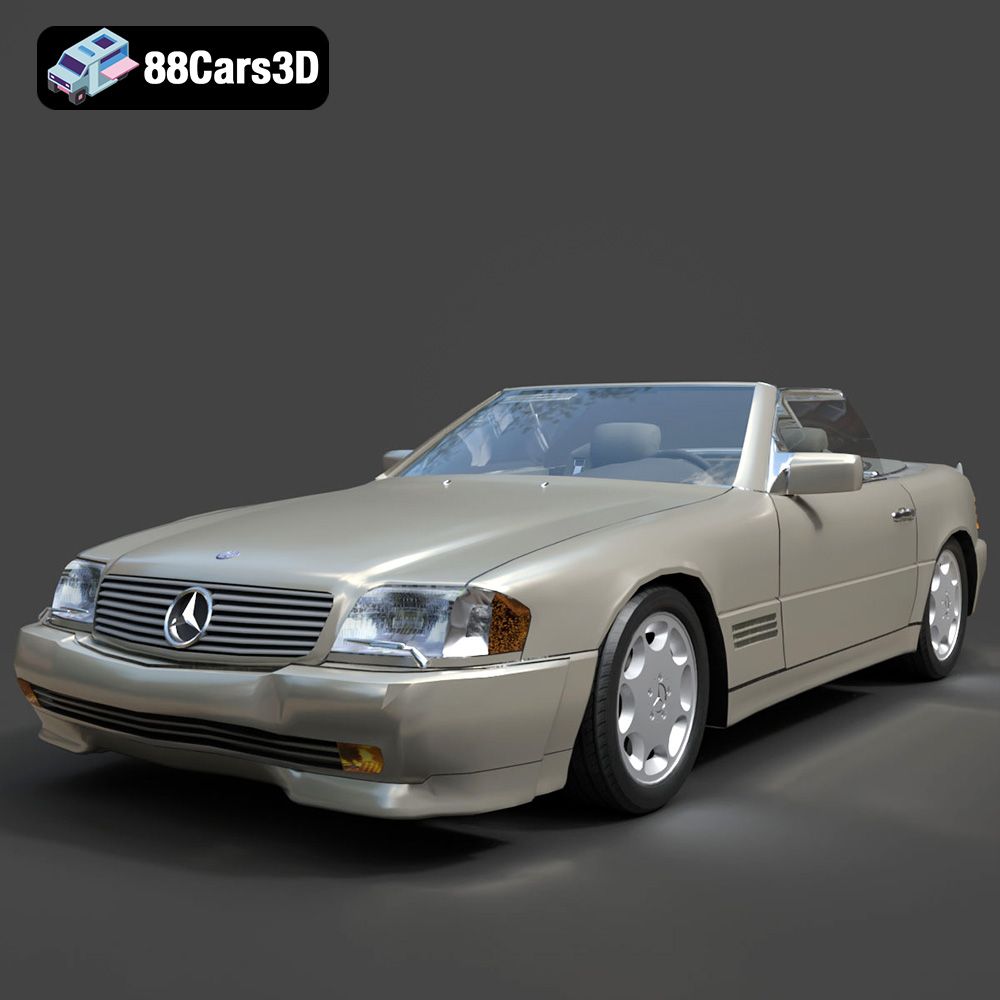
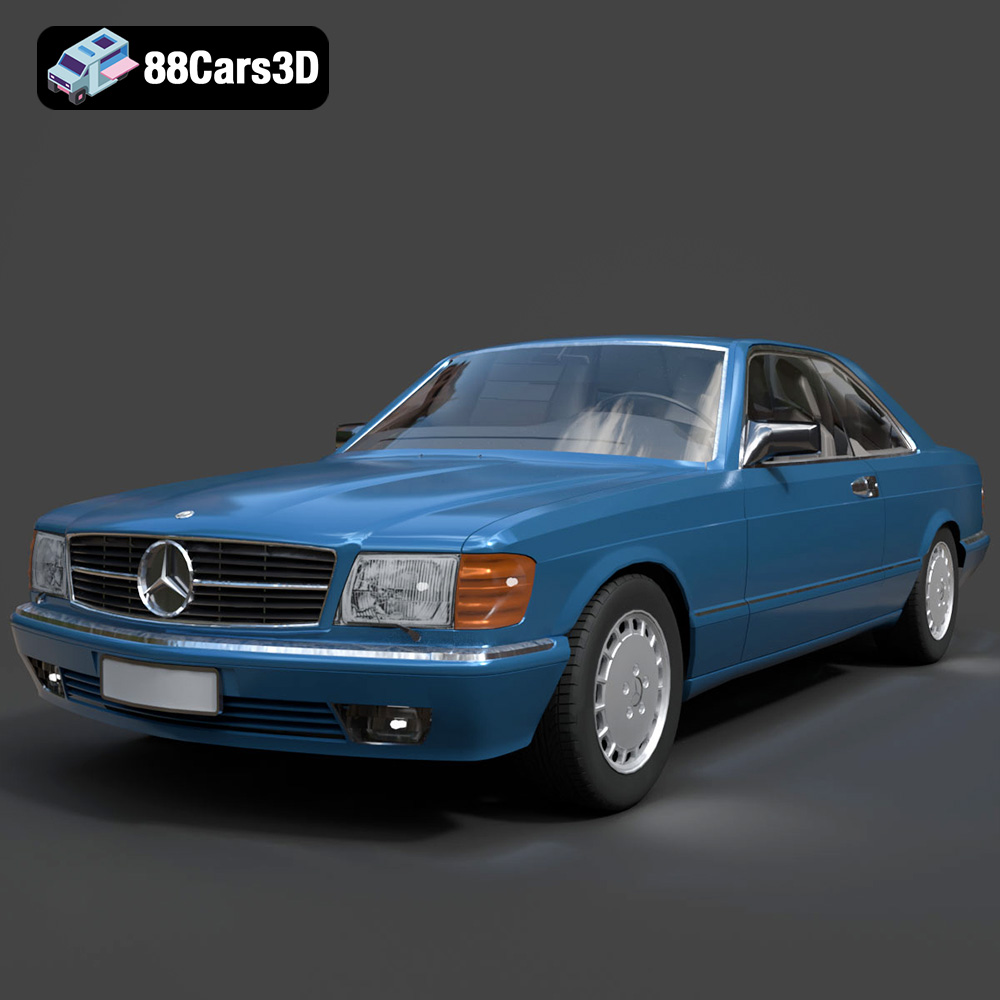
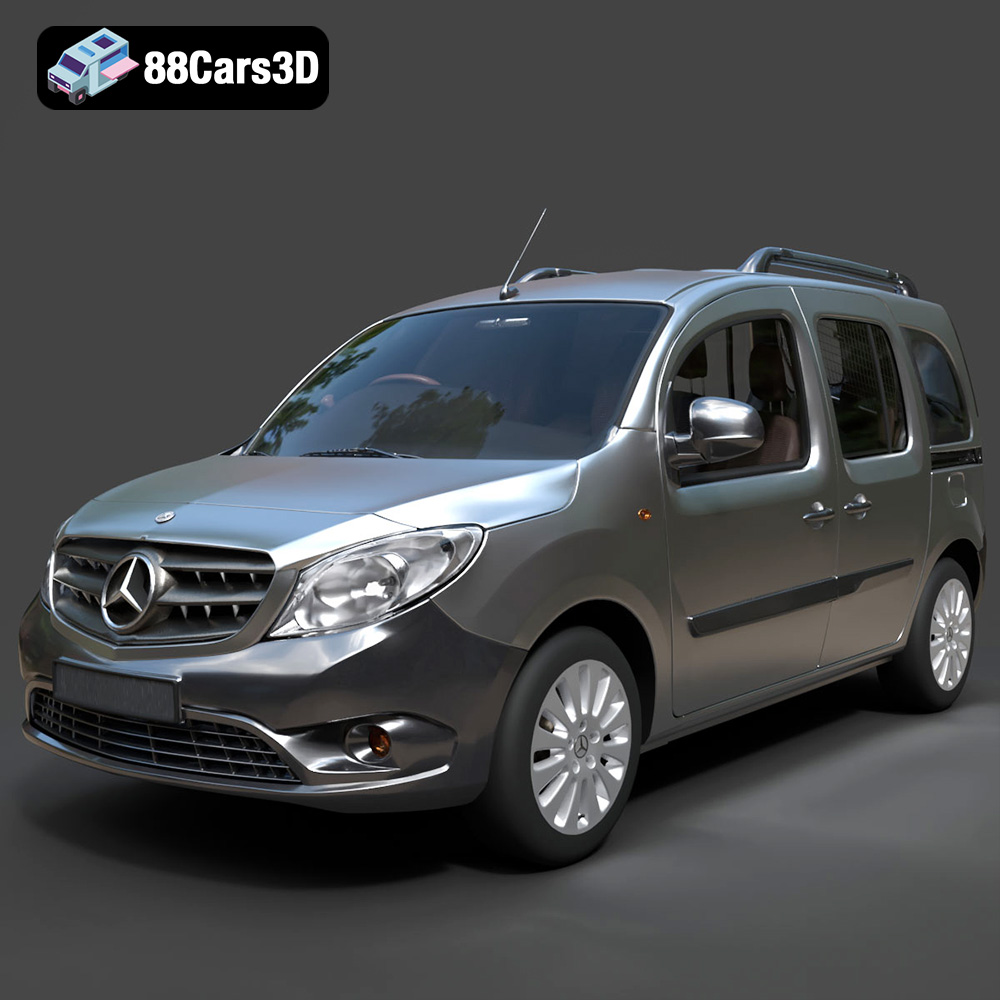
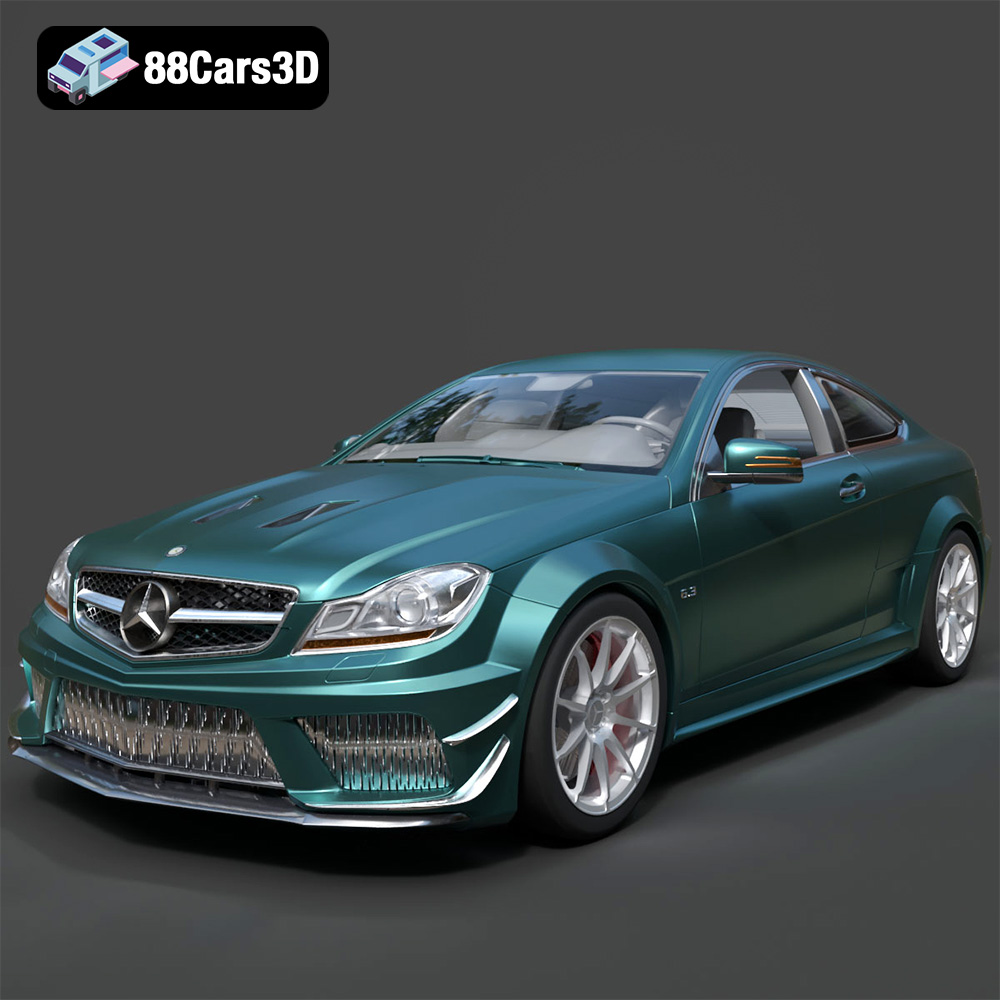
From Showroom to Screen: A Technical Guide to Using 3D Car Models for Next-Gen Rendering and Gaming

From Showroom to Screen: A Technical Guide to Using 3D Car Models for Next-Gen Rendering and Gaming
The glint of light off a perfectly curved fender, the aggressive stance of a supercar in a moody urban environment, the visceral thrill of driving a meticulously detailed vehicle in a video game—these experiences are born from a fusion of art and technology. At the heart of it all lies a single, crucial element: the 3D car model. For artists, designers, and developers, a high-quality 3D car is not just a digital object; it’s the foundational canvas upon which stunning visuals and interactive experiences are built.
However, transforming a raw 3D file into a breathtaking piece of automotive rendering or a real-time game asset is a complex process filled with technical hurdles. It requires a deep understanding of topology, materials, lighting, and engine-specific optimization. This guide will serve as your technical roadmap, navigating you through the entire pipeline from model selection to final implementation in professional rendering software and modern game engines. We’ll explore the critical specifications that define a superior model and detail the workflows used by industry professionals to achieve world-class results.
Section 1: Anatomy of a High-Quality 3D Car Model
Before you can create a stunning render or a functional game asset, you must start with the right raw material. Not all 3D car models are created equal. A model destined for a close-up cinematic shot has vastly different requirements than one designed to be a playable vehicle in an open-world game. Understanding these core components is the first step to success.
Understanding Polygon Count and Topology
Polygon count (or “poly count”) is often the first spec people look at, but it’s only half the story. Topology—the flow and structure of those polygons—is arguably more important. For photorealistic automotive rendering, a high-polygon model (often 500,000 to 2,000,000+ triangles) is desirable. This allows for incredibly smooth surfaces and subtle details that hold up under extreme close-ups. Look for quad-based topology, where the mesh is primarily constructed from four-sided polygons. This ensures clean reflections and predictable subdivision smoothing (like TurboSmooth in 3ds Max or a Subdivision Surface modifier in Blender).
For game assets, polygon count is a performance budget. A hero car in a racing game might be 100,000-300,000 triangles for the highest Level of Detail (LOD0), while distant traffic cars might be under 5,000 triangles. Clean topology is still vital here for proper lighting, deformation (if any), and efficient UV unwrapping.
The Critical Role of UV Unwrapping
UV unwrapping is the process of flattening a 3D model’s surface into a 2D map, which allows textures to be applied correctly. For vehicles, this is a meticulous process. A professional-grade model should have:
- Non-Overlapping UVs: For unique textures like dirt, scratches, or specific decals, each part of the model needs its own space on the UV map.
- Logical Shells: The UV map should be organized into logical islands or “shells” (e.g., one shell for the car body, one for the wheels, one for the interior). This simplifies the texturing process.
- Consistent Texel Density: This ensures that the texture resolution is uniform across the entire model. You don’t want a pixelated door right next to a crystal-clear hood.
Material Separation and Naming Conventions
A well-prepared model will have its components logically separated and named. Instead of a single, monolithic mesh, you should find distinct objects like “chassis,” “wheel_front_left,” “steering_wheel,” and “glass_windshield.” This separation is crucial for assigning different materials (like car paint, chrome, rubber, and glass) and for rigging the vehicle for animation or gameplay. Clean naming conventions save hours of guesswork during the look development and integration phases.
Section 2: Workflow for Photorealistic Automotive Rendering
Creating jaw-dropping, showroom-quality renders is an art form. The goal is to simulate reality so perfectly that the viewer questions whether they’re looking at a photograph or a CGI. This workflow typically prioritizes visual fidelity over real-time performance.
Material Setup in 3ds Max with V-Ray/Corona
The car paint shader is the most complex material on any vehicle. Modern render engines like V-Ray and Corona offer dedicated car paint materials that simulate its multi-layered nature. A typical setup involves:
- Base Layer: This defines the primary color of the car.
- Flake Layer: This simulates the metallic flakes within the paint. You can control the flake size, density, and color to create effects from subtle metallic sheens to vibrant pearlescent finishes.
- Clearcoat Layer: This is a transparent, reflective layer that sits on top, mimicking the real-world lacquer. Adjusting its Index of Refraction (IOR) and glossiness is key to achieving that deep, wet-look shine.
Other materials like glass require a correct IOR (around 1.52), while metals need high reflectivity and a low diffuse value. Using high-resolution PBR (Physically Based Rendering) textures for tire treads, brake discs, and leather interiors will elevate the realism significantly.
Lighting with Image-Based Lighting (IBL)
The secret to realistic reflections is a realistic environment. Image-Based Lighting using a High Dynamic Range Image (HDRI) is the industry standard for automotive rendering. An HDRI captures the full range of light from a real-world location (a photo studio, a desert road, a cityscape). When used as an environment map, it projects realistic lighting and reflections onto your 3D car model, instantly grounding it in a believable space. For studio shots, you can complement the HDRI with 3-point lighting (key, fill, and rim lights) to sculpt the car’s form and create dramatic highlights.
Camera and Post-Processing
Treat your 3D camera like a real-world DSLR. Use realistic focal lengths (e.g., 35mm-85mm) to avoid distortion. Enable depth of field (DoF) to create a pleasing focus falloff, drawing the viewer’s eye to a specific part of the car. The final 10% of realism often comes from post-processing. Render out passes like reflections, specular, and ambient occlusion, and composite them in a tool like Photoshop or After Effects. This gives you fine-grained control over color grading, contrast, adding lens flare, and bloom to produce a polished, final image.
Section 3: Optimizing 3D Car Models for Game Engines
Preparing a car for a game engine like Unreal Engine or Unity is a completely different challenge. The primary goal is to maintain the highest possible visual quality while adhering to a strict performance budget to ensure a smooth frame rate.
The Art of Poly Reduction and LODs
You cannot simply drop a 2-million-polygon film-quality model into a game. The first step is optimization. This involves creating a lower-polygon version of the model that retains the original silhouette and form. This “LOD0” is the highest quality version seen up close. From there, you create several more simplified versions (LOD1, LOD2, LOD3) that the engine will automatically swap to as the car gets further from the camera. This process is fundamental to managing performance in any game.
For this crucial first step, starting with a pristine source is paramount, which is why professional studios often acquire assets from marketplaces like 88cars3d.com, where the clean topology of the high-poly models makes the optimization process much more efficient.
Baking High-Poly Details onto a Low-Poly Mesh
How do you make a low-poly model look detailed? The answer is texture baking. This technique projects the surface detail from the original high-poly model onto the UV map of the low-poly model. The most important baked map is the Normal Map, which creates the illusion of intricate detail (panel gaps, bolts, vents) by manipulating how light reflects off the surface, without adding any extra polygons. Other common baked maps include Ambient Occlusion (for soft shadows) and Curvature (to guide wear-and-tear effects).
Efficient Texturing with PBR and Atlases
Modern game assets rely on a PBR workflow. For each material, you’ll create a set of textures that describe its physical properties: Albedo (base color), Metallic (is it metal?), Roughness (is it shiny or matte?), and Normal (the baked surface detail). To further optimize, multiple parts of the car can be combined into a single material using a texture atlas. For example, the interior dashboard, seats, and steering wheel might all share one texture set. This reduces the number of “draw calls” the engine has to make, which is a major performance win.
Section 4: Case Study: Integrating a Car into Unreal Engine 5
Let’s walk through a condensed workflow for getting a drivable car into Unreal Engine 5, one of the leading platforms for creating next-gen games and real-time experiences.
Import and Physics Asset Setup
After exporting your optimized car model as an FBX file from Blender or 3ds Max, you’ll import it into Unreal Engine. It’s crucial to separate the wheels and the car body into individual meshes. During import, ensure you generate a physics asset. You will then edit this asset to create simple collision shapes (spheres for the wheels, a box or convex hull for the body). Accurate, simple collision is vital for performance and believable physics interactions.
Creating a Versatile Car Paint Master Material
In Unreal, you can create a powerful “Master Material” for the car paint. This material uses the Clear Coat shading model. You can expose parameters for the base color, metallic value, roughness, and even a parameter to control the strength of a dirt or grunge texture overlay. From this Master Material, you can create dozens of “Material Instances” to change the car’s color and appearance instantly without recompiling the complex shader, an incredibly efficient workflow for creating variety.
Rigging with the Chaos Vehicle System
Unreal Engine 5’s Chaos Vehicle system is used to make the car drivable. You’ll create a Vehicle Blueprint that references your car’s skeletal mesh (or static meshes). Inside the Blueprint, you’ll define the “wheels” by linking the wheel meshes to specific bones. You can then configure engine parameters like torque curves, transmission settings, steering angles, and suspension properties (spring rate, damping). This is a highly iterative process of tweaking values and play-testing until the car handles exactly as you desire.
Section 5: Common Pitfalls and Expert Tips
Navigating the complex world of 3D vehicles can be tricky. Here are a few common issues and pro-tips to keep in mind.
Mismatched Scale and Axis Orientation
A car modeled in Blender (which uses Z-up) will import sideways into Unreal Engine (which uses Z-up but expects forward to be X). A model from 3ds Max (Z-up) might have scaling issues. Always work in real-world units (e.g., centimeters) and establish a consistent export/import pipeline. A simple scaling or rotation error can break physics, lighting, and rigging.
Neglecting the Interior for First-Person Views
For an automotive rendering from an exterior angle, the interior can be simple. But for a first-person driving game, a detailed interior is non-negotiable. This includes a functional-looking dashboard, steering wheel, seats, and mirrors. When selecting a model, consider its purpose. It’s a key reason why premium assets from sources like 88cars3d.com are so valuable, as they often include fully realized cockpits ready for camera-closeups.
Ignoring Texel Density
If you’re texturing a car, ensure the texel density is consistent. If the texture resolution on the door is much higher than on the hood, the difference will be jarring. Use UV packing tools and visualization aids to ensure your texture space is used efficiently and uniformly. For hero assets, you might use multiple larger texture sets (UDIMs) to maintain high fidelity across the entire surface.
Conclusion: The Journey Starts with a Quality Foundation
From the gleaming surfaces of a high-end commercial to the rubber-burning action of a blockbuster video game, the journey of a 3D car is a testament to technical artistry. The process demands a dual understanding of aesthetics and optimization, whether you are crafting materials for a photorealistic render or meticulously managing polygons for a real-time application.
While the techniques and workflows are complex, they all build upon a single, undeniable truth: the final result can only ever be as good as the initial asset. Starting with a meticulously crafted, topologically sound, and accurately detailed 3D car model saves countless hours of cleanup and frustration, allowing you to focus your energy on the creative aspects of lighting, texturing, and integration. By understanding the principles outlined in this guide, you are well-equipped to turn a digital file into a truly captivating automotive experience.
Featured 3D Car Models