Mastering the Fundamentals of 3D Modeling: A Comprehensive Guide for Aspiring Artists
In an increasingly digital world, 3D modeling has emerged as an indispensable skill, powering everything from blockbuster films and immersive video games to groundbreaking product design and architectural visualization. Whether you dream of creating stunning virtual worlds, designing innovative products, or simply giving form to your wildest imagination, understanding the core principles of 3D modeling is your gateway to a vast and exciting creative frontier.
This comprehensive guide is designed for absolute beginners and those looking to solidify their foundational knowledge. We’ll demystify the complex world of digital sculpting and asset creation, walking you through essential concepts, industry-standard software, and the step-by-step workflow of bringing a 3D model to life. Our goal is to equip you with the knowledge and confidence to embark on your journey as a proficient 3D artist, ensuring you build a robust understanding that stands the test of time.
What is 3D Modeling and Why Does it Matter?
At its heart, 3D modeling is the process of creating a three-dimensional representation of any object or surface using specialized software. Unlike traditional 2D art, which relies on flat images, 3D models possess depth, volume, and the ability to be viewed from any angle, making them incredibly versatile and realistic. These digital constructs are composed of meshes, which are collections of points (vertices), lines (edges), and surfaces (faces) that together define the shape of an object.
Defining the Digital Canvas
Think of 3D modeling as digital sculpting or construction. Instead of clay or wood, artists manipulate these fundamental geometric components within a virtual space to craft everything from intricate characters to vast landscapes. The precision and flexibility offered by 3D software allow for unparalleled control over form, texture, and visual fidelity, opening up endless possibilities for artistic expression and practical application.
The Ubiquity of 3D: From Gaming to Engineering
The applications of 3D modeling are virtually limitless and permeate almost every industry imaginable:
- Entertainment: The backbone of video games, animated movies, visual effects (VFX) for live-action films, and virtual reality (VR) experiences. Character models, environmental assets, and intricate props all begin as 3D models.
- Architecture & Construction: Architectural visualization (arch-viz) allows clients to walk through buildings before they’re built, while Building Information Modeling (BIM) uses 3D models for planning, construction, and facility management.
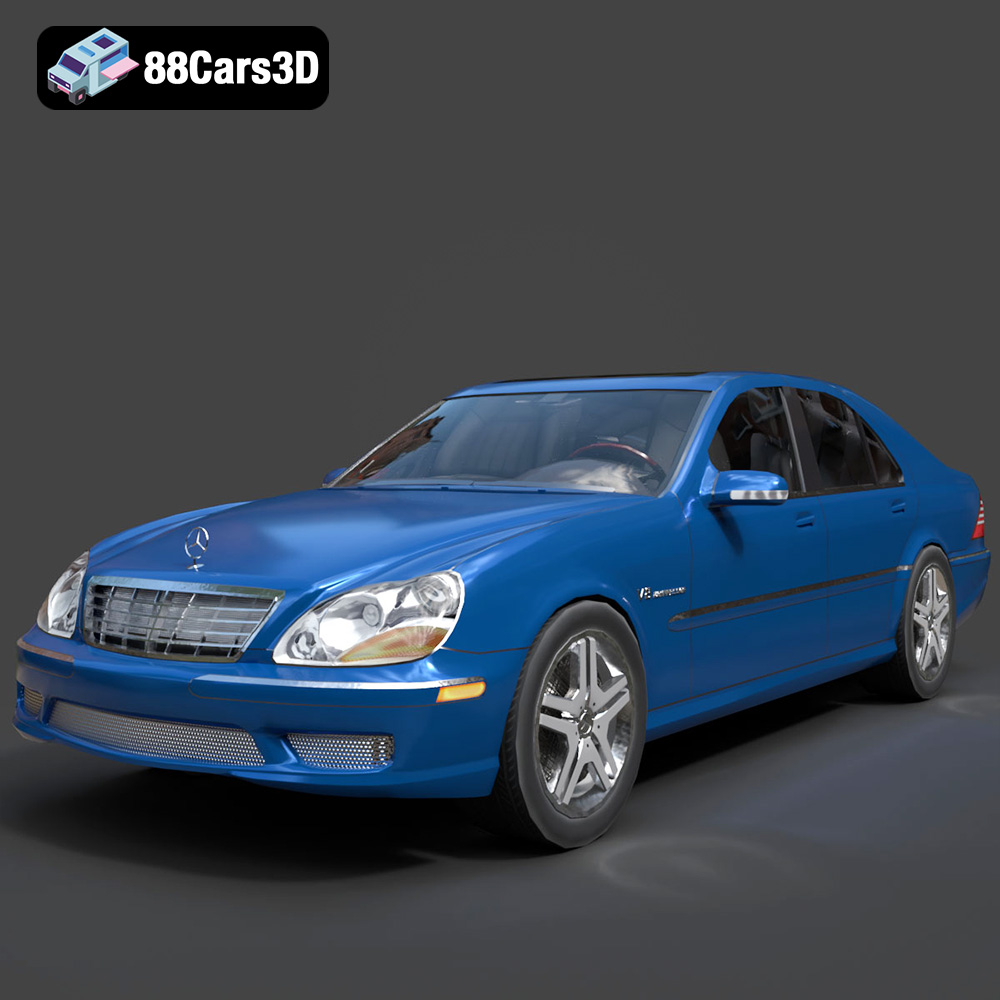
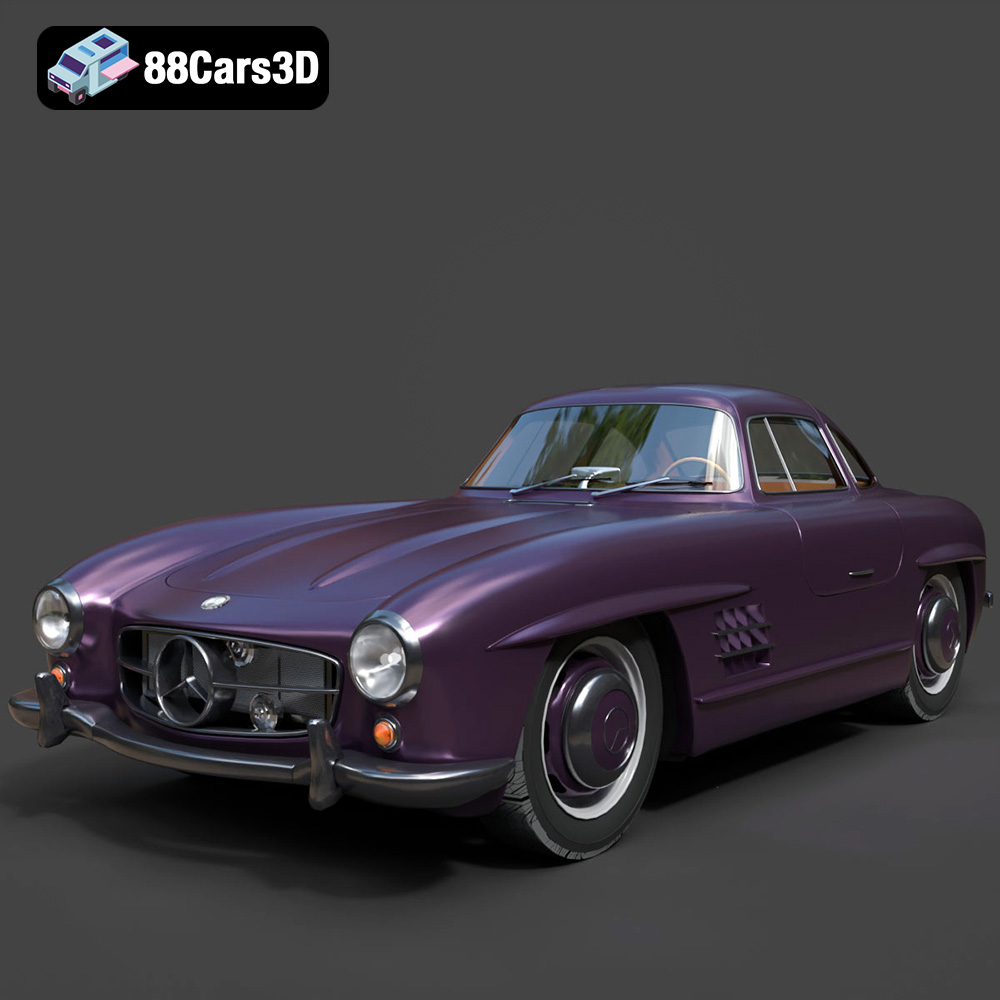
- Product Design & Manufacturing: From car bodies to consumer electronics, industrial designers use 3D modeling to prototype, test, and refine products before physical production. Computer-Aided Design (CAD) software is crucial here.
- Medical & Scientific: Creating anatomical models for study, simulating surgical procedures, and visualizing complex data in biology, chemistry, and physics.
- Marketing & Advertising: Producing high-quality renders for product showcases, interactive experiences, and engaging digital content.
- Education: Developing interactive learning materials and simulations that provide deeper understanding.
Understanding these diverse applications underscores the power and relevance of mastering 3D modeling skills in today’s digital economy.
Essential Skills and Mindset for Aspiring 3D Artists
While technical proficiency with software is crucial, successful 3D modeling also demands a particular set of soft skills and an adaptable mindset. Cultivating these traits will significantly accelerate your learning and improve the quality of your work.
Cultivating Spatial Awareness
3D modeling inherently requires thinking in three dimensions. You must be able to visualize objects from all angles, understand how different parts connect, and anticipate how your manipulations will affect the overall form. Practicing drawing, observing real-world objects closely, and even playing with physical building blocks can help develop this critical spatial reasoning.
The Art of Observation and Reference
Great 3D artists are meticulous observers. Whether you’re modeling a realistic human character or a stylized futuristic vehicle, having a strong understanding of anatomy, form, proportion, texture, and light is paramount. Always gather ample reference images and study them intently before and during your modeling process. This discipline ensures authenticity and realism in your digital creations.
Patience and Problem-Solving
3D modeling can be intricate and, at times, challenging. You will encounter technical hurdles, artistic dilemmas, and moments where your model just doesn’t look “right.” Patience is a virtue here. The ability to methodically troubleshoot issues, break down complex problems into smaller steps, and iterate on your designs is key to overcoming obstacles and achieving high-quality results. Embrace the learning process and don’t be afraid to experiment.
Navigating the Landscape of 3D Modeling Software
The market is rich with 3D modeling software, each with its strengths, specialties, and learning curves. Choosing your first software can feel overwhelming, but understanding their primary uses will help guide your decision.
Industry Standards: Blender, Maya, 3ds Max
- Blender: An incredibly powerful, open-source, and free 3D creation suite. Blender has grown exponentially in popularity and capability, offering tools for modeling, sculpting, animation, rendering, VFX, and even game development. It’s an excellent choice for beginners due to its cost and vast community support.
- Autodesk Maya: Long considered the industry standard for animation, visual effects, and game development. Maya excels in character rigging, animation, and complex simulations. It’s a professional-grade tool with a steep learning curve and a subscription cost, often used in large studios.
- Autodesk 3ds Max: Widely used in architectural visualization, product design, and game development. 3ds Max is renowned for its robust modeling tools, powerful rendering capabilities (especially with V-Ray), and extensive plugin ecosystem. Like Maya, it’s a professional, subscription-based software.
Specialized Tools: ZBrush, Substance Painter, AutoCAD
- ZBrush: The premier digital sculpting software. ZBrush allows artists to sculpt organic shapes and high-detail meshes with unparalleled fluidity, mimicking traditional clay sculpting. It’s indispensable for character design, creature creation, and adding intricate details.
- Substance Painter / Designer (Adobe Substance 3D): These tools revolutionize texturing workflows. Substance Painter allows for physically based rendering (PBR) texturing by painting directly onto 3D models, generating albedo, normal, roughness, and metallic maps. Substance Designer is for procedural material creation.
- AutoCAD (and other CAD Software): While not typically used for organic artistic modeling, CAD software like AutoCAD, SolidWorks, or Fusion 360 is fundamental for precise engineering, product design, and architectural drafting, focusing on technical accuracy and manufacturing specifications.
Choosing Your First Software
For beginners, Blender is almost universally recommended due to its zero cost, comprehensive feature set, and thriving online community. It provides a solid foundation that translates well to other software should you decide to specialize later. Start with Blender, learn the core concepts, and then explore other tools as your needs evolve.
Pro Tip: Don’t get caught in “software paralysis.” Pick one software (like Blender) and commit to learning its fundamentals thoroughly. The core principles of 3D modeling are transferable across different applications.
The Core Pillars of 3D Modeling Workflows
Regardless of the software you choose, the general workflow for creating a 3D model follows a logical sequence. Mastering these steps is crucial for producing high-quality 3D assets.
Step 1: Conceptualization and Planning
Before touching any software, clarity on what you’re building is paramount. This initial phase defines the scope and visual direction of your project.
- Reference Gathering: Collect a wide array of images, sketches, and real-world examples that inspire and inform your model. Pay attention to form, proportion, texture, and context.
- Sketching/Blocking Out: Even rudimentary sketches can help solidify your ideas and establish primary forms. For complex objects or characters, creating a rough 2D blueprint or a basic 3D block-out in your software helps define proportions and silhouette.
- Goal Setting: Determine the model’s intended use (game asset, render, animation) as this will influence its complexity, polygon count, and texturing approach.
Step 2: Polygonal Modeling (Mesh Creation)
This is where the actual construction of your 3D mesh begins. Most 3D models start with primitive shapes like cubes, spheres, and cylinders, which are then manipulated.
- Blocking Out: Start with simple geometric shapes to establish the primary forms and proportions of your object. This helps define the overall silhouette.
- Extrusion, Inset, Loop Cuts: These are fundamental tools. Extrusion pulls out faces to add volume. Inset shrinks faces inwards. Loop cuts add new rows of edges around a mesh, crucial for adding detail and controlling surface curvature.
- Topology: This refers to the arrangement of vertices, edges, and faces on your mesh. Good topology (often quad-based) is essential for clean deformations during animation, efficient UV unwrapping, and smooth subdivision surfaces. Avoid ngons (faces with more than four edges) and triangles where possible, especially on deformable surfaces.
- Edge Flow: The way edges flow across your model should ideally follow the natural contours and forms of the object, guiding detail and allowing for smooth deformation.
Step 3: Sculpting (Organic Forms & High Detail)
For organic models like characters, creatures, or detailed environments, digital sculpting becomes a powerful alternative or complement to polygonal modeling. Tools like ZBrush or Blender’s sculpt mode allow you to push, pull, smooth, and pinch the mesh as if it were clay.
- Dynamic Topology (Dyntopo): Allows you to add or remove mesh detail dynamically as you sculpt, focusing polygons where they are needed most.
- Brushes and Alphas: Utilize various brushes to create folds, wrinkles, pores, scars, or any intricate surface detail. Alphas are grayscale images used to define brush shapes and apply patterns.
- Retopology: After sculpting a high-resolution mesh, it often has millions of polygons and chaotic topology unsuitable for animation or game engines. Retopology is the process of creating a new, cleaner, low-polygon mesh that wraps around the high-poly sculpt, preserving its form while optimizing its structure. This clean mesh is then used for rigging, animation, and export.
Step 4: UV Unwrapping
Just as a global map flattens the spherical Earth onto a 2D surface, UV unwrapping flattens the 3D surface of your model into a 2D layout. This 2D space (the UV map) is where textures are painted or applied.
- Seams: You define “seams” (cuts) on your 3D model, much like how a tailor cuts fabric, to allow it to be laid flat without overlapping or excessive stretching. Strategic seam placement minimizes visibility and distortion.
- UV Layout: Once unwrapped, the 2D pieces of your model’s surface are arranged efficiently in a UV space (typically a 0-1 grid). Maximizing this space is important for texture resolution.
- Texture Atlas: For multiple small objects or parts of a single object, you might combine their UVs into a single 2D texture map, known as a texture atlas, to optimize performance in game engines.
Step 5: Texturing and Shading
This stage gives your model color, material properties, and surface details. It’s where a drab grey mesh transforms into a realistic or stylized object.
- Physically Based Rendering (PBR): Modern texturing heavily relies on PBR workflows. This involves creating multiple texture maps that accurately simulate how light interacts with different materials in the real world.
- Key PBR Maps:
- Albedo (Base Color): The pure color of the surface, without any lighting information.
- Normal Map: Stores surface detail (bumps, dents, wrinkles) as directional information, faking high-polygon detail on a low-polygon mesh.
- Roughness Map: Defines how rough or smooth a surface is, affecting how light scatters and reflects.
- Metallic Map: Indicates which parts of a surface are metallic and which are dielectric (non-metallic).
- Occlusion Map (AO): Simulates soft shadows where objects or parts of an object are close together, adding depth.
- Material Creation: In your 3D software, these texture maps are combined and plugged into a “shader” or “material” node setup, defining how the surface reacts to light.
Step 6: Rigging and Animation (If Applicable)
If your model is intended to move, it needs a rig – an internal digital skeleton that allows animators to pose and articulate it.
- Bones and Joints: A rig consists of a hierarchy of “bones” connected by “joints,” mimicking real-world skeletal structures.
- Skinning/Weight Painting: The process of attaching the mesh to the rig, defining how much each bone influences the deformation of specific areas of the mesh.
- Animation: Once rigged, animators create keyframes to define poses over time, generating movement.
Step 7: Lighting and Rendering
The final step for presenting your model is setting up the scene, illuminating it, and generating a final image or video.
- Scene Setup: Positioning your model within an environment, adding props, and defining camera angles.
- Lighting: Strategically placing virtual lights (point lights, area lights, sun lights, HDRI environment maps) to illuminate your model, create mood, and emphasize form. Understanding basic photography principles of three-point lighting is helpful here.
- Rendering Engines: Software like Cycles (Blender), V-Ray, or Arnold calculate how light interacts with your materials and surfaces to produce a realistic 2D image. Render settings influence quality and render time.
- Post-Production: After rendering, the image can be further enhanced in programs like Photoshop or GIMP, adding color grading, depth of field, bloom, and other visual effects to achieve a polished final look.
Optimizing Your Workflow: Best Practices for Efficiency
As you progress, adopting efficient practices will save you time and frustration, leading to better results.
Asset Management and Organization
Keep your project files, textures, and references meticulously organized. Use consistent naming conventions for objects, materials, and files. This is invaluable when working on complex projects or collaborating with others. Version control (saving iterations of your work) is also a lifesaver.
Iteration and Feedback Loops
Don’t strive for perfection in your first pass. Work iteratively. Block out forms, then refine, then add detail. Regularly take breaks and come back with fresh eyes. Seek feedback from peers or online communities; constructive criticism is invaluable for growth.
Staying Current with Industry Trends
The field of 3D modeling is constantly evolving with new software features, techniques, and rendering technologies. Follow industry news, subscribe to relevant channels, and experiment with new tools. Continuous learning is vital for staying competitive and expanding your skillset.
Where to Learn More and Continue Your Journey
This guide provides the essential fundamentals, but the journey of a 3D artist is continuous. Here are excellent resources to deepen your knowledge:
Online Courses and Tutorials
Platforms like Udemy, Coursera, Skillshare, ArtStation Learning, and YouTube offer an incredible wealth of tutorials for various software and techniques. Look for highly-rated courses that focus on project-based learning. For Blender users, Blender Guru’s “Donut Tutorial” is a rite of passage.
Communities and Forums
Engage with other artists! Websites like Polycount, ArtStation, BlenderArtists, and various Discord servers provide platforms for sharing work, asking questions, and getting feedback. Networking can also open doors to opportunities.
Building a Portfolio
The most effective way to showcase your skills is through a strong portfolio. Start with small, manageable projects. Focus on quality over quantity. As you learn new techniques, create pieces that demonstrate your understanding of modeling, texturing, and rendering. ArtStation is the industry standard for presenting 3D art.
Remember: Every professional 3D artist started as a beginner. The key is consistent practice, curiosity, and the willingness to learn from mistakes.
The world of 3D modeling is vast, rewarding, and constantly expanding. By understanding these fundamental concepts and committing to continuous practice, you are well-equipped to embark on an exciting creative path. Start small, build your skills incrementally, and enjoy the incredible satisfaction of bringing your digital visions to life. Your journey into 3D art begins now.