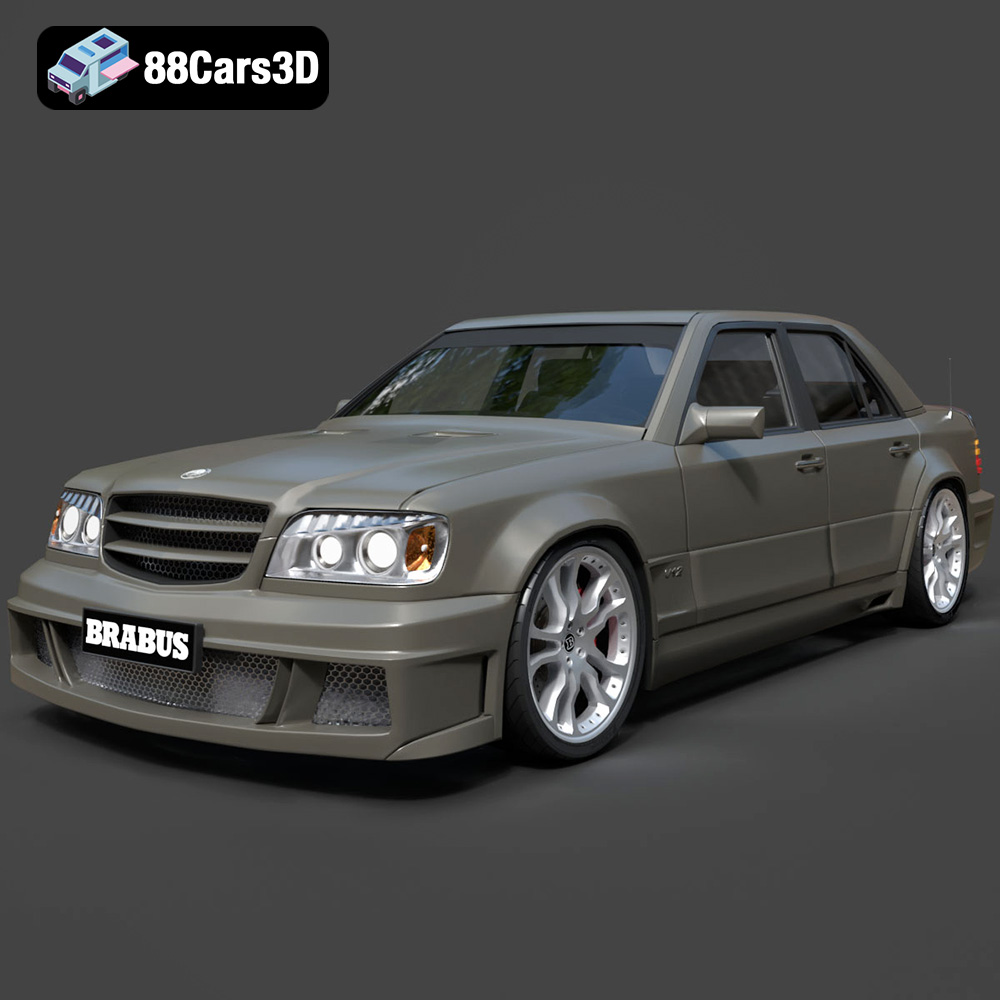
The Ultimate Beginner’s Guide to 3D Modeling: Your First Steps into Digital Creation

“`html
The Ultimate Beginner’s Guide to 3D Modeling: Your First Steps into Digital Creation
In an increasingly digital world, the ability to create and manipulate objects in three dimensions has transitioned from a niche skill to a highly sought-after superpower. Whether you dream of designing captivating characters for video games, visualizing stunning architectural projects, developing innovative product prototypes, or simply expressing your artistic vision in a new medium, 3D modeling is your gateway. This comprehensive guide is crafted specifically for absolute beginners, designed to demystify the world of digital creation and provide you with a clear roadmap to becoming a proficient 3D artist.
We’ll cover everything from the fundamental concepts of 3D modeling to the essential tools you’ll need, the core workflow steps, and invaluable practical advice to ensure your journey into this exciting field is both successful and rewarding. Prepare to unlock a universe of creative possibilities and transform your ideas into tangible, virtual realities.
What Exactly is 3D Modeling? A Foundational Understanding
At its core, 3D modeling is the process of developing a mathematical representation of any three-dimensional surface of an object (either inanimate or living) via specialized software. The resulting product is called a 3D model. Unlike traditional drawing or painting, which creates the illusion of depth on a 2D surface, 3D modeling generates actual depth, allowing objects to be viewed from any angle, manipulated, and even brought to life through animation.
Defining the Art and Science
Think of 3D modeling as digital sculpture. Instead of clay, you’re shaping virtual meshes made of vertices (points), edges (lines connecting points), and faces (polygons formed by edges). These fundamental building blocks allow you to create intricate forms, from organic characters with flowing curves to hard-surface machinery with precise angles. The “science” part comes from understanding the software interfaces, mathematical principles governing geometry, and optimization techniques for various applications.
There are several primary approaches to 3D modeling:
- Polygonal Modeling: The most common method, where objects are built from a collection of vertices, edges, and faces, forming a mesh. It’s versatile for everything from low-poly game assets to high-detail film models.
- NURBS (Non-Uniform Rational B-Splines) Modeling: Uses mathematical curves and surfaces to create smooth, precise forms. Often favored in industrial design, automotive, and architectural fields for its accuracy.
- Digital Sculpting: Mimics traditional sculpting with tools that push, pull, smooth, and pinch a high-density mesh, ideal for organic shapes, characters, and intricate details (e.g., using software like ZBrush).
- Parametric Modeling: Also known as solid modeling, this method is common in CAD software (Computer-Aided Design) where objects are defined by parameters and features (e.g., creating a hole of a specific diameter at a particular location). Great for engineering and product design.
Common Applications of 3D Modeling
The reach of 3D modeling is vast and continues to expand. Here are just a few industries where 3D models are indispensable:
- Video Games: Creating characters, environments, props, and visual effects for interactive experiences.
- Film and Television: Crafting CGI effects, animated characters, set extensions, and even entire virtual worlds.
- Architecture and Construction: Architectural visualization, rendering building designs, and creating virtual walkthroughs.
- Product Design and Industrial Design: Prototyping, visualizing new products, and creating realistic representations before manufacturing.
- Advertising and Marketing: Generating photorealistic product shots, motion graphics, and engaging visual content.
- Medical and Scientific Visualization: Illustrating complex anatomical structures or molecular processes.
- Virtual Reality (VR) and Augmented Reality (AR): Building immersive environments and interactive objects for emerging technologies.
- 3D Printing: Designing models that can be manufactured layer by layer into physical objects.
Why Learn 3D Modeling? Unlocking Creative and Professional Opportunities
Beyond the sheer joy of creating, learning 3D modeling opens up a myriad of professional pathways and personal growth opportunities.
Career Prospects in Diverse Industries
The demand for skilled 3D artists, modelers, and animators is consistently high across multiple sectors. A strong portfolio showcasing your 3D skills can lead to roles such as:
- 3D Modeler: Specializing in creating objects, characters, or environments.
- Texture Artist: Focusing on applying realistic or stylized surface details to models.
- Environment Artist: Building immersive digital landscapes and scenes.
- Character Artist: Designing and modeling compelling characters for games or film.
- Technical Artist: Bridging the gap between artists and programmers, optimizing assets.
- Animator: Bringing 3D models to life through motion.
- Product Designer: Utilizing 3D software for industrial design and prototyping.
- Architectural Visualizer: Creating realistic renders of buildings and interiors.
- VFX Artist: Contributing to special effects in film and television.
The versatility of 3D skills means you can pivot between different roles and industries, making it a robust and future-proof skill set.
Personal Creative Expression and Problem Solving
For many, 3D modeling is a powerful form of artistic expression. It allows you to visualize and bring to life concepts that might be impossible or impractical in the physical world. It cultivates problem-solving skills as you tackle challenges like optimizing mesh topology, creating believable textures, or making an animation flow naturally. The sense of accomplishment that comes from seeing your own digital creations come to life is incredibly rewarding.
Essential Tools for Aspiring 3D Artists: Software and Hardware
Embarking on your 3D modeling journey requires the right tools. This typically involves specialized software and, often, capable hardware.
Choosing Your First 3D Modeling Software (Free vs. Paid)
The landscape of 3D software is vast, with options catering to various budgets and skill levels. For beginners, the choice often boils down to starting with free, powerful tools or investing in industry-standard paid software.
- Free & Open-Source:
- Blender: This is arguably the most popular choice for beginners and professionals alike. It’s a comprehensive, open-source 3D creation suite that supports the entire 3D pipeline—modeling, sculpting, UV unwrapping, texturing, rigging, animation, rendering, video editing, and more. Its massive community and wealth of free tutorials make it an excellent starting point for anyone serious about learning 3D modeling without upfront cost.
- SketchUp Free: Excellent for architectural modeling, interior design, and simple object creation. It’s intuitive, making it a great entry point for spatial reasoning, though less robust for organic or complex models than Blender.
- Autodesk Fusion 360 (for hobbyists/startups): While primarily a professional CAD software, Autodesk offers free personal use licenses for hobbyists and startups. It’s fantastic for parametric modeling, product design, and 3D printing.
- Paid & Industry-Standard:
- Autodesk Maya: The industry standard for film, television, and game development. It’s incredibly powerful for animation, rigging, and character work. Has a steep learning curve and a subscription cost.
- Autodesk 3ds Max: Another industry leader, particularly strong in architectural visualization, motion graphics, and game development on the PC platform. Similar learning curve and cost to Maya.
- ZBrush: The undisputed king of digital sculpting, used for creating highly detailed organic models, characters, and creatures. Essential for any character artist.
- Cinema 4D: Popular among motion graphics artists and for its ease of use compared to Maya/3ds Max, especially for animation and rendering.
Recommendation for beginners: Start with Blender. It provides a complete workflow, is free, and has an incredible community and learning resources. Once you grasp the fundamentals, you can easily transition to other software if your specific career path demands it.
Hardware Considerations: What You’ll Need for a Smooth Workflow
While you don’t need a supercomputer to start, 3D modeling can be graphically intensive. Good hardware will significantly improve your experience and productivity, especially as your projects grow in complexity.
- Processor (CPU): A fast multi-core processor (Intel i7/i9 or AMD Ryzen 7/9) is crucial for complex calculations, simulations, and rendering, though an i5 or Ryzen 5 is sufficient to start.
- Graphics Card (GPU): This is arguably the most important component for 3D work. A dedicated graphics card (NVIDIA GeForce RTX or AMD Radeon RX series) with ample VRAM (8GB+ is good) will dramatically speed up viewport performance, real-time rendering, and certain rendering engines.
- RAM (Memory): 16GB is a good starting point, but 32GB or even 64GB is recommended for large scenes, high-resolution textures, and complex simulations.
- Storage: An SSD (Solid State Drive) is essential for fast operating system and software loading times. A larger HDD can supplement for mass storage of project files and assets.
- Input Devices: A good three-button mouse is a must. For sculpting, a graphics tablet (like a Wacom Intuos or Cintiq) is highly recommended for its pressure sensitivity and ergonomic benefits.
- Monitor: A high-resolution monitor (1080p minimum, 1440p or 4K preferred) provides more screen real estate for your software interface and model detail.
The Core Stages of the 3D Modeling Workflow
While every project is unique, a general workflow helps organize your approach to creating 3D models. Understanding these steps will provide a solid framework for your learning.
Step 1: Conceptualization and Reference Gathering
Before touching any software, clearly define what you want to create. This involves:
- Concept Art: Sketching out ideas, creating mood boards, or finding existing images that inspire your design.
- Reference Images: Collecting photos or blueprints from multiple angles (front, side, top, back) of the object you want to model. This is critical for accuracy.
- Story/Purpose: Understanding the context and function of your model (e.g., Is it a game asset? A product render? A piece of digital sculpture?).
Step 2: Polygonal Modeling and Sculpting
This is where you build the basic shape and structure of your object. You’ll use various tools within your chosen software to manipulate vertices, edges, and faces.
- Blockout: Starting with simple geometric primitives (cubes, spheres, cylinders) to establish the overall proportions and silhouette.
- Detailing: Refining the mesh by adding more polygons, using tools like extrude, bevel, loop cut, inset, and subdivision surfaces to create intricate forms.
- Sculpting (for organic models): If creating characters or organic shapes, you’ll often switch to a sculpting workflow, using virtual brushes to push and pull the mesh, mimicking traditional clay sculpting.
- Retopology: For sculpted models, you’ll often create a new, cleaner, lower-polygon mesh over the high-detail sculpt. This optimized mesh is better for animation and real-time rendering.
Step 3: UV Unwrapping and Texturing
Once your model’s form is complete, you need to tell the software how to apply images (textures) to its surface. This is analogous to cutting open a 3D object and laying it flat, like a sewing pattern.
- UV Unwrapping: Creating a 2D representation of your 3D model’s surface. A good UV map ensures textures are applied without stretching or distortion.
- Texturing: Painting or applying images (diffuse maps, normal maps, roughness maps, metallic maps, etc.) to the UV-mapped surface. These maps define color, material properties, and fine surface details without adding more geometry. Software like Substance Painter or Mari are dedicated texturing tools, though most 3D software has built-in texturing capabilities.
Step 4: Rigging and Animation (Optional, but often part of the pipeline)
If your model needs to move or deform, you’ll enter the rigging and animation phase.
- Rigging: Creating a virtual “skeleton” (a hierarchy of bones or joints) and connecting it to your 3D model. This allows you to pose and manipulate the model like a puppet. Controllers are often added to simplify the animation process.
- Animation: Bringing your rigged model to life by creating keyframes—specific poses at specific points in time. The software then interpolates between these keyframes to generate fluid motion.
Step 5: Lighting, Rendering, and Post-Production
The final steps involve illuminating your scene, generating a final image or video, and refining it.
- Lighting: Placing virtual lights within your 3D scene to illuminate your model, create shadows, and define mood. Understanding light physics is crucial here.
- Rendering: The process by which the computer calculates all the complex light interactions, material properties, and camera settings to produce a 2D image or sequence of images from your 3D scene. This can be very computationally intensive.
- Post-Production: Taking the raw rendered images into 2D image editing software (like Photoshop) or video editing software (like After Effects) to make final adjustments to color, contrast, add visual effects, or composite different elements.
Taking Your First Steps: Practical Advice for Beginners
Starting something new can be daunting, but with the right mindset and approach, your 3D modeling journey will be enjoyable and productive.
Start with Simple Projects
Don’t try to model a hyper-realistic dragon on day one. Begin with basic geometric shapes, simple household objects (a cup, a chair, a table), or stylized low-poly scenes. Focus on understanding the core tools and concepts before tackling complex creations. Mastery comes from building foundational skills.
Utilize Online Tutorials and Communities
The internet is a treasure trove of learning resources. YouTube, dedicated online academies (e.g., ArtStation Learning, Gumroad, Udemy, Coursera), and software-specific communities (e.g., Blender Artists, Autodesk forums) offer countless tutorials, courses, and helpful advice. Engage with these communities; asking questions and sharing your work is invaluable.
Practice Consistently and Be Patient
Like any skill, 3D modeling requires consistent practice. Dedicate regular time each week to learn new tools, follow tutorials, and work on personal projects. You won’t become an expert overnight. There will be frustrating moments, but patience and persistence are key.
Don’t Be Afraid to Experiment and Make Mistakes
Digital creation means you can always undo. Experiment with different tools, explore various techniques, and don’t be scared to break your model. These “mistakes” are often the best learning opportunities. Push boundaries and see what happens.
Build a Portfolio (Even with Beginner Work)
As soon as you have a few finished projects, start assembling a portfolio. Even if your work is basic, it demonstrates your commitment, learning progression, and ability to complete a project. Use platforms like ArtStation or personal websites to showcase your best pieces. A simple portfolio can be instrumental in securing future opportunities or even just getting feedback.
Beyond the Basics: What’s Next on Your 3D Journey?
Once you’ve grasped the fundamentals, the world of 3D modeling expands even further. Your path might diverge based on your interests and career aspirations.
Exploring Different Modeling Techniques
You might find yourself drawn to specific modeling approaches. Perhaps you love the artistic freedom of digital sculpting for character design, or you’re fascinated by the precision of parametric modeling for engineering purposes. Delve deeper into these specialized techniques. Learn advanced topology best practices, master procedural generation, or explore photogrammetry to create models from real-world scans.
Specializing in a Niche
The 3D industry is vast. Many professionals specialize in a particular niche:
- Hard Surface Modeling: For vehicles, weapons, and mechanical objects.
- Organic Modeling: For characters, creatures, and environments.
- Environment Art: Building entire digital worlds.
- VFX for Film: Focusing on realistic simulations and effects.
- Low-Poly Game Art: Optimizing assets for real-time game engines.
- Architectural Visualization: Creating stunning renders of buildings.
- Product Rendering: Crafting photorealistic images of consumer goods.
Finding your passion will help you focus your learning and build a strong, specialized portfolio.
Continuous Learning and Adapting to New Technologies
The field of 3D modeling is constantly evolving. New software features, rendering techniques, AI-driven tools, and emerging technologies like real-time rendering and virtual production are always on the horizon. A successful 3D artist is a lifelong learner, adapting to new tools and workflows to stay relevant and innovative.
Congratulations on taking the first step towards an incredibly rewarding journey into 3D modeling! By understanding the fundamentals, utilizing the right tools, following a structured workflow, and committing to consistent practice, you are well on your way to transforming your digital dreams into breathtaking realities. Embrace the learning process, enjoy the creative freedom, and soon you’ll be creating your own compelling 3D worlds.
The digital frontier awaits your unique vision. Start modeling today!
“`
Recommended undefined Models