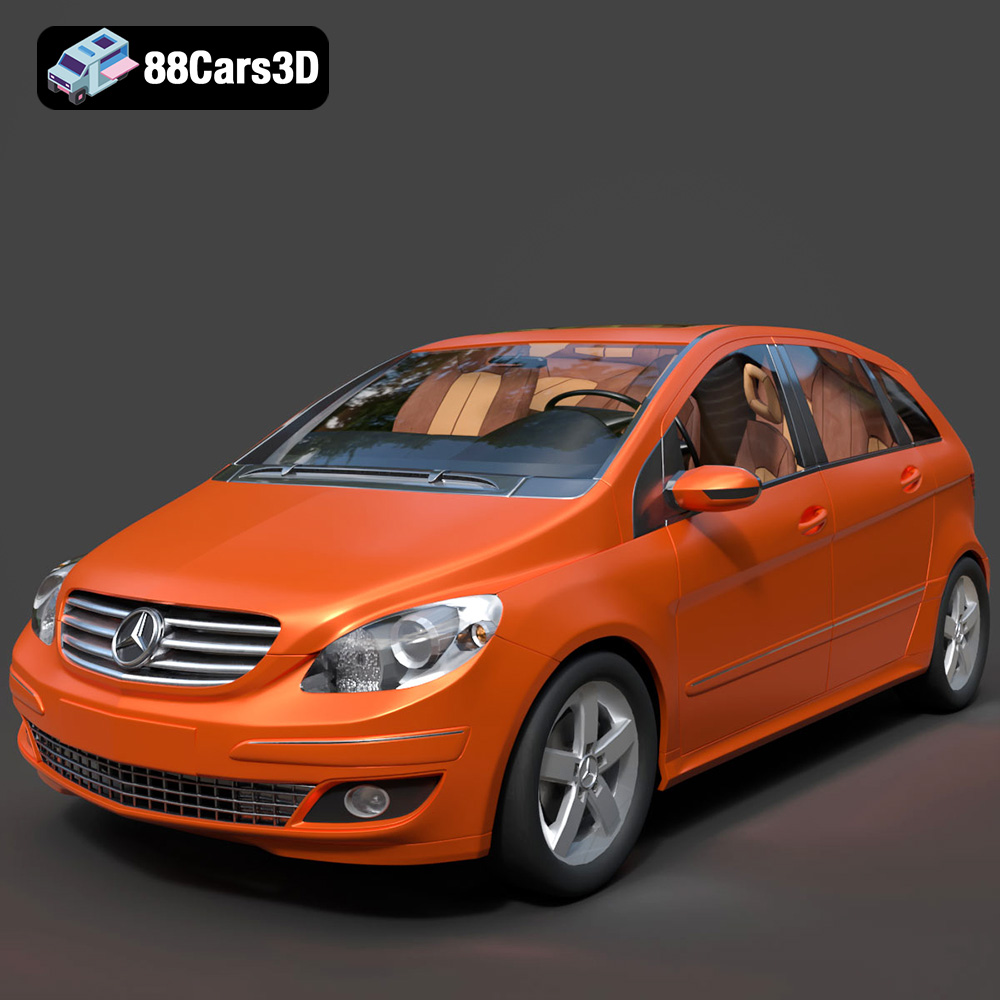
The Ultimate Guide to Using 3D Car Models: From Photorealistic Renders to Real-Time Game Assets

The Ultimate Guide to Using 3D Car Models: From Photorealistic Renders to Real-Time Game Assets
In the world of digital creation, few objects are as captivating and technically demanding as a vehicle. A perfectly rendered car can sell a concept, elevate an architectural visualization, or become the star of a blockbuster video game. The sleek curves, the interplay of light on metal and glass, and the intricate mechanical details all combine to create a powerful visual statement. However, crafting these complex assets from scratch is a monumental task, requiring hundreds of hours of meticulous modeling, texturing, and shading. This is where high-quality, professional 3D car models become an indispensable part of the modern creator’s toolkit.
This comprehensive guide will take you deep into the technical workflows for leveraging professional 3D car models. We will move beyond simple drag-and-drop usage and explore the specific techniques required to prepare these assets for two primary, yet vastly different, applications: stunningly realistic automotive rendering and high-performance, real-time game assets. Whether you are an architectural visualizer aiming for photorealism or a game developer building the next great racing simulator, understanding how to properly select, prepare, and optimize these models is the key to achieving world-class results.
Selecting the Right 3D Car Model: A Foundation for Success
The success of your final project begins with the quality of the initial asset. Not all 3D car models are created equal, and choosing the right one for your specific needs will save you countless hours of frustration down the line. It’s about looking past the beautiful marketing renders and scrutinizing the underlying technical specifications.
Understanding Polygon Count and Topology
The first metric most people look at is the polygon count. This is a crucial indicator of the model’s intended use.
- High-Poly Models (500k – 5M+ Polygons): These models are built for detail and realism, intended for offline rendering in applications like 3ds Max with V-Ray or Blender with Cycles. They feature smooth, dense geometry that can be subdivided further for extreme close-ups. The key here is clean, quad-based topology. Look for consistent edge flow that follows the natural contours of the car’s body panels. This ensures smooth, predictable reflections and eliminates visual artifacts.
- Low-Poly / Game-Ready Models (50k – 150k Polygons): These models are optimized for real-time performance in game engines like Unreal Engine or Unity. The goal is to represent the car’s shape with the fewest polygons possible without sacrificing its recognizable silhouette. While topology is still important, it’s often triangulated for optimal GPU performance. These models rely heavily on normal maps to fake high-frequency detail.
The Critical Role of UV Unwrapping and Textures
A model’s geometry is only half the story. The UVs and textures determine how its surface appears. A UV map is the 2D representation of the 3D model’s surface, acting as a guide for applying textures.
- UV Unwrapping: For high-end rendering, look for models with non-overlapping UVs, which allow for unique texturing on every part. Models may use multiple UV tiles (UDIMs) to achieve extremely high texture resolution across the entire vehicle. For game assets, efficient UV packing is paramount. Multiple parts of the car might be packed into a single UV space (a texture atlas) to reduce the number of draw calls, a key performance metric in real-time applications.
- PBR Textures: The industry standard is Physically Based Rendering (PBR). Ensure the model comes with a full set of PBR textures, typically including: Albedo (base color), Roughness (microsurface detail), Metallic (metalness), and a Normal map (surface detail). High-quality models will provide these textures in 4K (4096×4096) or even 8K resolution.
File Formats and Software Compatibility
Finally, consider the file format. A good model provider will offer multiple formats to ensure compatibility with your preferred software.
- .MAX / .BLEND: Native files for 3ds Max and Blender. These are often the best choice if you use these programs, as they usually come with pre-configured materials and render settings.
- .FBX: An excellent, versatile format that preserves hierarchies, materials, textures, and even animation rigs. It’s the go-to format for transferring assets between different 3D applications, especially for import into game engines.
- .OBJ: A simpler, widely supported format. It’s great for static geometry but can be less reliable for preserving complex material setups and hierarchies.
Preparing Your Model for High-End Automotive Rendering
Once you have a high-quality, high-polygon model, the next step is to integrate it into a scene to create a photorealistic image. This process is an art form that blends technical setup with creative lighting and material refinement.
Scene Setup in 3ds Max with V-Ray
Let’s walk through a typical studio lighting setup, a staple of automotive rendering.
- Import and Verify Scale: Import your model (.FBX or .MAX). The very first step is to check the system units and ensure the car is at the correct real-world scale. An incorrectly scaled car will react unrealistically to light and camera settings (like depth of field).
- Create a Studio Environment: Create a simple ground plane and a cyclorama (a curved backdrop) to catch shadows and reflections gracefully. Assign a neutral grey V-Ray material to it.
- Lighting with an HDRI: Create a V-Ray Dome Light and load a high-quality HDRI map of a studio environment or a clear outdoor location. This will provide realistic global illumination and reflections, instantly grounding your model in a believable space.
- Camera Setup: Create a V-Ray Physical Camera. Use a focal length that mimics real automotive photography, typically between 50mm and 85mm, to avoid distortion and create a pleasing composition. Enable Depth of Field (DoF) to add a subtle sense of realism, focusing sharply on a key feature like the headlight or badge.
Material and Shader Refinement
Even the best models may require material tweaks to fit your specific lighting and creative vision.
- Car Paint: The car paint shader is the most important material. In V-Ray, this is often a VrayCarPaintMtl or a complex layered material. You can dive in to adjust the base color, the flake color and density for metallic paints, and the clear coat reflection intensity. Adding a very subtle noise or grunge map to the clear coat roughness can break up the “perfect CG” look.
- Tires and Plastics: Add detail to tires by using a separate normal map for the sidewall text. For plastics, subtle variations in roughness values between different trim pieces can add a significant layer of realism.
– Glass and Chrome: Ensure the glass has the correct Index of Refraction (IOR), typically around 1.52. For chrome, make sure it is 100% metallic with a very low roughness value.
Optimizing 3D Car Models for Real-Time Game Engines
Taking a hyper-detailed model and making it perform smoothly in a game engine at 60 frames per second is a completely different challenge. The process is all about careful, strategic optimization.
The Art of Polygon Reduction and LODs
A 2-million-polygon model will cripple a game engine. The first step is to create a game-ready, low-poly version.
- Retopology: If you start with a high-poly model, you must create a new, optimized mesh that follows its silhouette. This can be done manually using tools in Blender or 3ds Max, or with semi-automated tools. The goal is to capture the shape with as few polygons as possible.
- Levels of Detail (LODs): You don’t need to render every detail of a car when it’s a tiny speck in the distance. This is where LODs come in. A typical setup for a hero car asset would be:
- LOD0: The highest quality in-game model (e.g., 100,000 polygons), used when the camera is close.
- LOD1: A reduced version (e.g., 50,000 polygons) used at a medium distance.
- LOD2: A heavily optimized version (e.g., 15,000 polygons) for long distances.
- LOD3: An extremely simple “impostor” mesh (e.g., <1,000 polygons) for very far distances.
Baking Textures: From High-Poly to Low-Poly
How do we retain the visual detail of the high-poly model on the low-poly mesh? The answer is texture baking. Using software like Marmoset Toolbag or Substance Painter, we project the surface details from the high-poly model onto the UVs of the low-poly model.
- Normal Map: This is the most important baked map. It stores all the fine surface details—panel gaps, vents, bolts—and uses lighting information to trick the eye into seeing detail that isn’t actually in the geometry.
- Ambient Occlusion (AO): This map bakes soft contact shadows, adding depth and realism to crevices and areas where parts meet.
Setup and Implementation in Unreal Engine 5
Getting the car into the engine is the final step. A professional provider of 3D car models like 88cars3d.com will often provide assets already optimized for this stage.
- Import: Import the low-poly mesh as a Skeletal Mesh, ensuring the wheels are separate objects rigged to bones. This is crucial for the vehicle physics system. Import the PBR textures.
- Material Creation: Create a new Material in Unreal’s powerful node-based editor. Plug the Albedo, Normal, and packed RMA (Roughness, Metallic, AO) textures into the corresponding inputs. Use material parameters to allow for real-time color changes.
- Chaos Vehicle Blueprint: Unreal Engine 5 uses the Chaos Vehicle system. Create a Vehicle Blueprint that references your skeletal mesh. Here, you will configure the wheel setups, engine torque curves, transmission settings, and suspension to define how the car actually drives and handles in the game. This is where the asset truly comes to life.
Real-World Case Studies
Case Study 1: Architectural Visualization
An architectural firm is creating a render for a luxury high-rise. The scene requires a photorealistic car parked in the driveway to add scale, context, and a sense of prestige. Instead of spending a week modeling a car, the artist licenses a high-poly model of a luxury sedan. They drop it into their 3ds Max scene, apply a custom V-Ray car paint material to match the building’s aesthetic, and the shot is ready to render. The model saves them 40-50 hours of work, allowing them to focus on perfecting the architectural lighting and materials.
Case Study 2: Indie Racing Game
A small indie development team is building a stylized racing game. Their team has strong programmers and level designers but lacks a dedicated vehicle artist. They license a collection of game-ready game assets from a marketplace like 88cars3d.com. The models come pre-optimized with LODs, PBR textures, and separated wheels ready for rigging. This allows the team to populate their game with a wide variety of vehicles, bypassing a massive production bottleneck and channeling their resources into what they do best: creating fun gameplay mechanics.
Conclusion: The Smart Professional’s Workflow
The journey of a 3D car model from a digital file to a final, stunning visual is a tale of two distinct paths. The path of automotive rendering is a quest for absolute realism, demanding meticulous attention to lighting, shading, and microscopic detail. The path of creating real-time game assets is a masterclass in efficiency and optimization, balancing visual fidelity with uncompromising performance.
What unites both workflows is the critical importance of the starting asset. Beginning with a professionally crafted, technically sound 3D car model is not a shortcut; it’s a strategic advantage. It allows artists, designers, and developers to stand on the shoulders of expert modelers and dedicate their valuable time and creative energy to the unique aspects of their project. Whether you are composing a single, breathtaking image or building an entire interactive world, leveraging high-quality assets is the cornerstone of a modern, efficient, and successful production pipeline.
Featured 3D Car Models