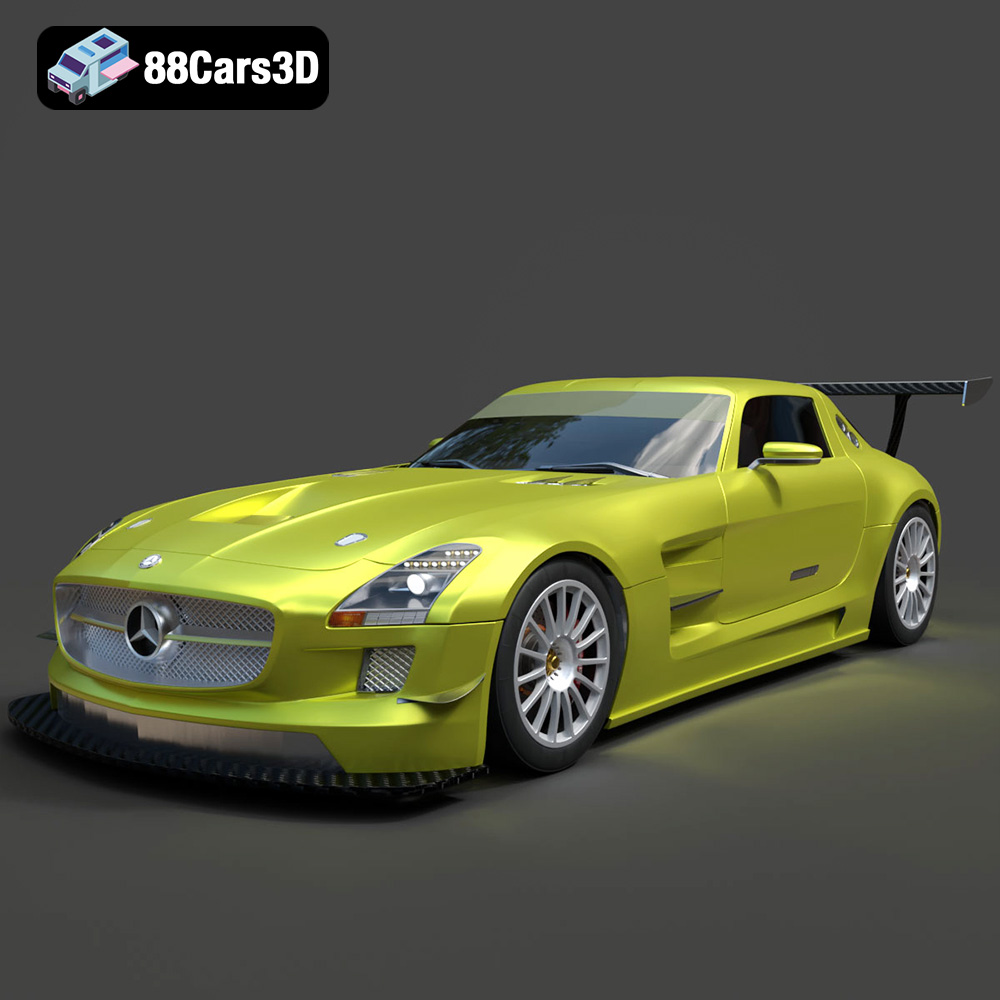
From Showroom to Screen: The Professional’s Guide to Using 3D Car Models

From Showroom to Screen: The Professional’s Guide to Using 3D Car Models
In the world of digital media, the demand for photorealistic vehicles has never been higher. From slick television commercials and blockbuster films to immersive video games and architectural visualizations, the digital car is a ubiquitous and essential asset. However, creating a high-fidelity, production-ready vehicle model from scratch is a monumental task, often requiring hundreds of hours of expert modeling, texturing, and shading. This is where professional, pre-made 3D car models become an indispensable tool for artists and studios, accelerating timelines and elevating the final quality of any project.
But not all 3D models are created equal. Integrating a purchased asset into a professional pipeline is a skill in itself, requiring a deep understanding of topology, materials, and optimization. This comprehensive guide will walk you through the entire process—from selecting the perfect model to preparing it for stunning automotive rendering and optimizing it for high-performance, real-time game assets. We will dive into specific workflows and technical considerations that separate amateur results from professional-grade output.
Selecting the Right 3D Car Model: A Technical Deep Dive
The success of your project begins with choosing the right foundation. Looking past the shiny preview renders and scrutinizing the technical specifications of a model is the first step towards a smooth production pipeline. A poorly constructed model can create more problems than it solves.
Decoding Topology and Polygon Count
Topology refers to the flow and structure of polygons that form the model’s surface. For automotive models, clean, quad-based topology is non-negotiable. This means the model is primarily built from four-sided polygons. Why is this critical? Quads deform predictably, subdivide cleanly (essential for creating ultra-high-resolution close-ups using modifiers like TurboSmooth or OpenSubdiv), and are easier to UV unwrap. Avoid models with excessive triangles or complex n-gons (polygons with more than four sides), especially on curved body panels, as they can cause shading artifacts and pinching when smoothed.
Polygon count is another key metric. A “high-poly” model, often exceeding 500,000 polygons, is ideal for cinematic renders where detail is paramount. A “low-poly” or “mid-poly” model (50,000 to 200,000 polygons) is better suited for real-time applications like games or VR. The best assets often come with multiple Levels of Detail (LODs), allowing the engine to use a less detailed version of the car as it gets further from the camera, saving performance.
Understanding UV Unwrapping and Texture Quality
A UV map is the 2D representation of the 3D model’s surface, acting as a guide for applying textures. A professional model will have clean, non-overlapping UVs with minimal stretching or distortion. Check if the UV islands are logically laid out—for example, all the components of the left-side door should be grouped together. Efficient use of UV space (known as texel density) is crucial. For hero assets, multiple UDIM tiles are often used to achieve extremely high texture resolution on different parts of the car.
Modern assets should use a Physically Based Rendering (PBR) material workflow. This means you’ll receive a set of texture maps like Albedo (base color), Roughness (micro-surface detail), Metallic (conductivity), and a Normal map (fine surface detail). High-quality textures should be at least 4K (4096×4096) resolution for rendering and can be downscaled for game performance if needed.
File Formats and Software Compatibility
The most versatile file formats for transferring 3D assets are FBX and OBJ. FBX is generally superior as it can contain mesh data, UVs, materials, basic rigging, and even animation. OBJ is a simpler, older format that reliably transfers geometry and UVs but less so for materials. Native file formats like .MAX (3ds Max) or .BLEND (Blender) are excellent if you use that specific software, as they often come with pre-configured, render-ready materials and lighting scenes. Always check the product description to ensure the model is compatible with your primary software and render engine (e.g., V-Ray, Corona, Octane, or Unreal Engine).
Preparing Models for Photorealistic Automotive Rendering
Once you’ve selected a high-quality model, the next phase is creating a compelling and realistic final image. This is where artistic and technical skills converge to bring the digital asset to life. A great model in a poor scene will always look mediocre.
The Crucial Role of a Lighting Setup
The foundation of photorealism is lighting. The most effective technique for automotive rendering is Image-Based Lighting (IBL) using a High Dynamic Range Image (HDRI). An HDRI is a 360-degree panoramic image that contains a vast range of light intensity data. When used as an environment map in your 3D scene, it projects realistic light and reflections onto your model. For a studio look, use an HDRI of a professional photo studio with softboxes. For an outdoor shot, use an exterior HDRI. This single element provides the bulk of your scene’s realism.
Supplement the HDRI with direct lights (area lights, spotlights) to act as key, fill, and rim lights. This allows you to sculpt the car’s form, create beautiful highlights along its body lines, and ensure the wheels and undercarriage aren’t lost in shadow.
Material and Shader Customization in V-Ray/Corona
Even the best models may require material tweaks to fit your specific scene. The car paint shader is the most important. In render engines like V-Ray or Corona (within 3ds Max), this is typically a layered material. You’ll have:
- Base Coat: The primary color of the car.
- Flake Layer: Tiny, reflective metallic flakes that give the paint its sparkle. You can control the flake size, density, and color.
- Clear Coat: A top reflective layer that mimics varnish. This layer should have a high Index of Refraction (IOR) of around 1.5-1.6 and its own roughness value to simulate a perfectly polished or slightly scuffed surface.
Pay equal attention to other materials. Glass requires the correct IOR (around 1.52) and slight tinting. Tire rubber should have a high roughness value and a detailed normal map to show tread and sidewall lettering. Chrome trim needs to be almost perfectly metallic with very low roughness.
Staging, Composition, and Camera Settings
How you frame the car is just as important as how you light it. For studio shots, place the model on a cyclorama (a curved “cyc” wall) to create a seamless, infinite background. If integrating the car into a photographic backplate, create a “shadow catcher” plane underneath the car to realistically ground it in the scene. Use a virtual camera with settings that mimic a real-world DSLR. A focal length between 50mm and 85mm is ideal for preventing distortion while capturing a flattering view. Enable Depth of Field (DoF) to create a soft, out-of-focus background that draws the viewer’s eye to a specific part of the car.
Optimizing 3D Car Models for Real-Time Game Engines
Using a 3D car model in a game engine like Unreal Engine or Unity presents a different set of challenges. Here, performance is king. The goal is to maintain the highest possible visual fidelity while ensuring the game runs at a smooth framerate.
Polygon Reduction and LOD Creation
A cinematic model with 1 million polygons is unusable in a real-time environment. The first step is optimization. This involves creating several Levels of Detail (LODs).
- LOD0: The highest quality version, used when the player is close. This might be 100,000-150,000 polygons.
- LOD1: A reduced version (e.g., 50,000 polygons) where smaller details are simplified.
- LOD2/LOD3: Progressively simpler versions, potentially ending with a “billboard” or extremely low-poly mesh for distant views.
This process can be done manually in software like Blender or 3ds Max by selectively removing edge loops, or by using automated tools within the game engine itself.
Texture Baking and Atlasing
To retain fine details on a lower-poly model, we use a technique called “normal map baking.” A high-poly version of the model is used to generate a normal map, which is then applied to the low-poly LOD0. This map fakes the lighting information of the intricate details, making the low-poly model appear far more complex than it is. Furthermore, to improve performance, multiple smaller textures can be combined into a single larger texture sheet called an “atlas.” This reduces the number of “draw calls” the engine has to make, as it can load one material and texture set for multiple parts of the car instead of dozens.
Preparing for Interactivity in Unreal Engine 5
A game asset needs to be more than just a static mesh. The wheels need to be separate objects with their pivot points centered correctly for rotation. The car body, doors, and wheels should all be exported as a single FBX file. In Unreal Engine 5, this asset is imported and used within the Chaos Vehicle Blueprint system. You’ll create a Physics Asset to define collision volumes, and then configure the blueprint to assign motor torque to the appropriate wheels, define steering angles, and set up suspension. Material setup in Unreal involves using its node-based material editor to recreate the PBR properties, often using a master material for easy customization.
Case Study: Creating a High-End Automotive Commercial
A recent project for a luxury car brand required us to produce several dynamic shots of their new coupe for a web commercial. The deadline was tight, and building the car from scratch was not an option.
Project Kickoff: Asset Selection
Our first step was to acquire a production-ready model. We browsed a specialized marketplace, 88cars3d.com, known for its meticulously detailed and clean models. We chose a model that came in a native 3ds Max format with V-Ray materials pre-configured. This saved us an entire day of basic setup. We inspected the mesh topology and UVs upon purchase and confirmed they met our studio’s high standards.
Workflow in 3ds Max and V-Ray
We imported the model into our master scene. The provided car paint material was excellent, but we tweaked the base color to match the client’s exact paint code and slightly increased the clear coat roughness for a more natural look under studio lights. We used a high-resolution HDRI from a professional lighting studio to get realistic reflections. Animated cameras were set up with subtle, sweeping motions, using a shallow depth of field to highlight specific design features like the headlights and wheel rims.
Rendering and Post-Production
We rendered the final shots as a multi-pass EXR sequence. This gave us separate render elements for reflections, specular highlights, lighting, and a Z-depth pass. In Adobe After Effects, these passes were composited together, giving our compositors full control to enhance reflections, add lens flares, and perfect the color grade without needing to re-render the entire 3D scene. The result was a stunning, photorealistic commercial delivered ahead of schedule.
Case Study: Developing a Drivable Vehicle for a Racing Game
For an indie racing game project, our team needed a diverse roster of tunable sports cars that were both visually appealing and highly performant.
Choosing the Right Game Asset
The key was finding game assets that were built with optimization in mind. We needed models with a polygon count under 150,000 for LOD0 and clean material separation. A good game-ready 3D car model will have separate materials for the body, glass, trim, wheels, and interior. This allows for easier customization and better performance management within the engine. After evaluating several options, we sourced a collection of models that fit these criteria perfectly.
The Unreal Engine 5 Pipeline
Each car’s FBX file, containing the body and separated wheels, was imported into Unreal Engine 5. We used the engine’s built-in tools to automatically generate 3 additional LODs for each car, setting the screen-space percentage at which each LOD would switch. We then created a master vehicle blueprint that handled all the driving physics via the Chaos Vehicle system. For each car, we created a child blueprint that inherited the master logic but was assigned the specific car’s mesh and had its unique performance values (horsepower, steering radius, etc.) adjusted.
Performance Profiling
Throughout development, we used Unreal’s GPU Visualizer to profile performance. We discovered that some initial interior textures were unnecessarily large (4K). By downscaling them to 2K and 1K for less visible components, we significantly reduced memory usage without any noticeable loss in quality from the driver’s perspective. This constant cycle of implementation and profiling ensured our game could maintain a solid 60 FPS even with multiple cars on screen.
Conclusion: Accelerating Your Creative Vision
Whether you are crafting a single breathtaking image or building an entire virtual garage, high-quality 3D car models are a powerful accelerator for any production pipeline. The key is to look beyond the initial visual appeal and understand the technical fundamentals that define a professional-grade asset. By prioritizing clean topology, well-designed UVs, and PBR materials, you set yourself up for success.
Remember that the model is just the beginning. Your skill in lighting, shading, composition, and optimization is what will truly elevate the final product. By mastering the workflows for both cinematic automotive rendering and real-time game assets, you can transform a purchased model into a central, stunning piece of your creative vision. Starting with a professionally crafted asset from a trusted source like 88cars3d.com provides the reliable, high-quality foundation you need to focus on what matters most: creating incredible visuals.
Featured 3D Car Models