⚡ FLASH SALE: Get 60% OFF All Premium 3D & STL Models! ⚡

From the gleaming reflections in a cinematic car commercial to the customizable vehicles in an open-world video game, high-quality 3D car models are the engine driving countless digital experiences. They are more than just digital replicas; they are complex assets that blend artistic precision with technical mastery. For artists, developers, and designers, understanding how to select, prepare, and deploy these models is a critical skill that separates amateur projects from professional-grade productions.
This comprehensive guide will take you under the hood of professional 3D car workflows. We will explore the essential characteristics of a top-tier model, detail the distinct pipelines for creating stunning automotive rendering, and break down the optimization process required for developing performant game assets. Whether you’re an architectural visualization artist needing to populate a driveway or a game developer building the next great racing simulator, this is your roadmap to maximizing the potential of 3D car models.
Before you can even think about rendering or importing into a game engine, you must start with a superior asset. The quality of your source model will dictate the ceiling of your final result. A poorly constructed model will cause endless headaches in any pipeline, while a well-crafted one provides a robust foundation for creativity and technical execution.
At its core, a 3D model is a collection of vertices, edges, and faces (polygons). The arrangement of these polygons, known as topology, is paramount. Clean topology consists primarily of four-sided polygons (quads) that follow the natural contours and curves of the car’s body. This ensures smooth surfaces when subdivided and predictable deformations if rigging is required.
You’ll typically encounter two main categories:
A 3D model is a blank canvas until textures are applied. The UV map is the bridge between the 3D surface and the 2D texture image. A professional model must have clean, non-overlapping, and efficiently packed UVs. This prevents texture stretching, seams, and wasted texture space. For cars, this often means separate UV islands for the body, wheels, interior, glass, and lights to allow for maximum texture resolution where it counts.
Modern workflows rely on Physically Based Rendering (PBR) materials, which simulate how light interacts with surfaces in the real world. Key texture maps for a car model include:
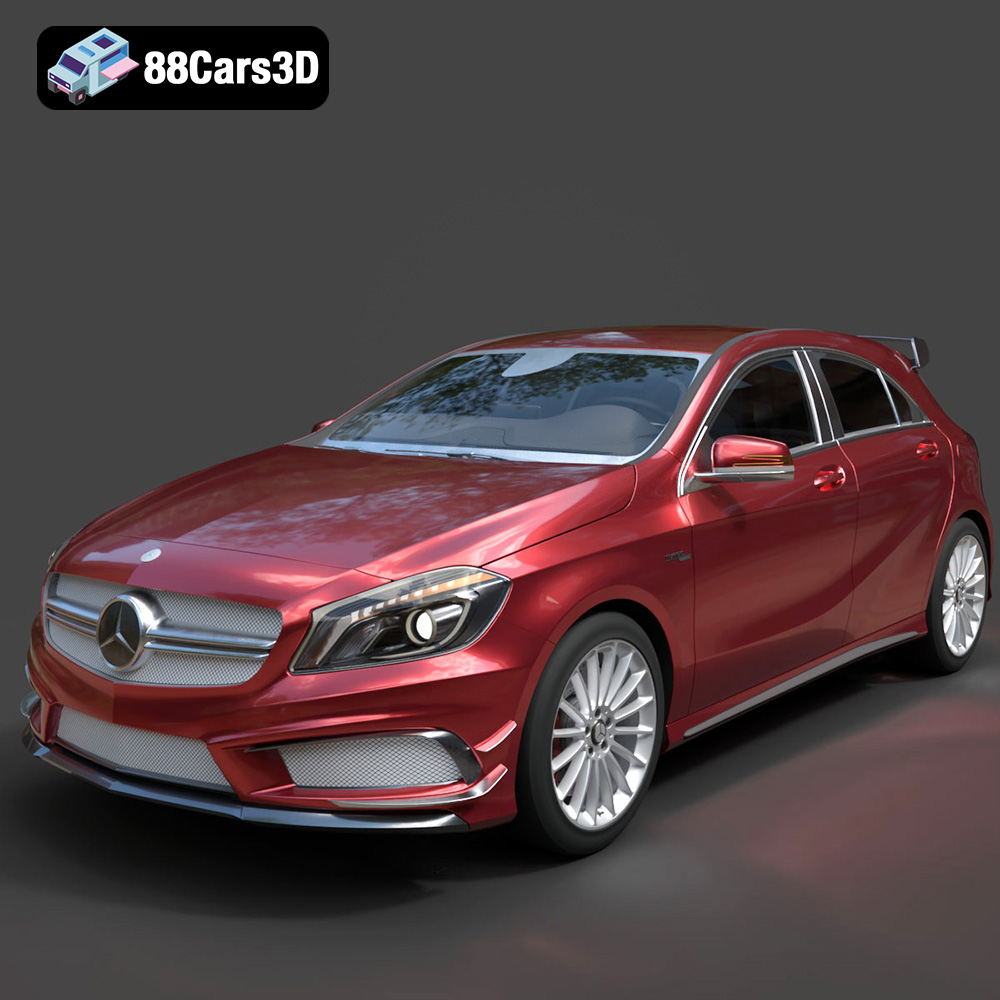
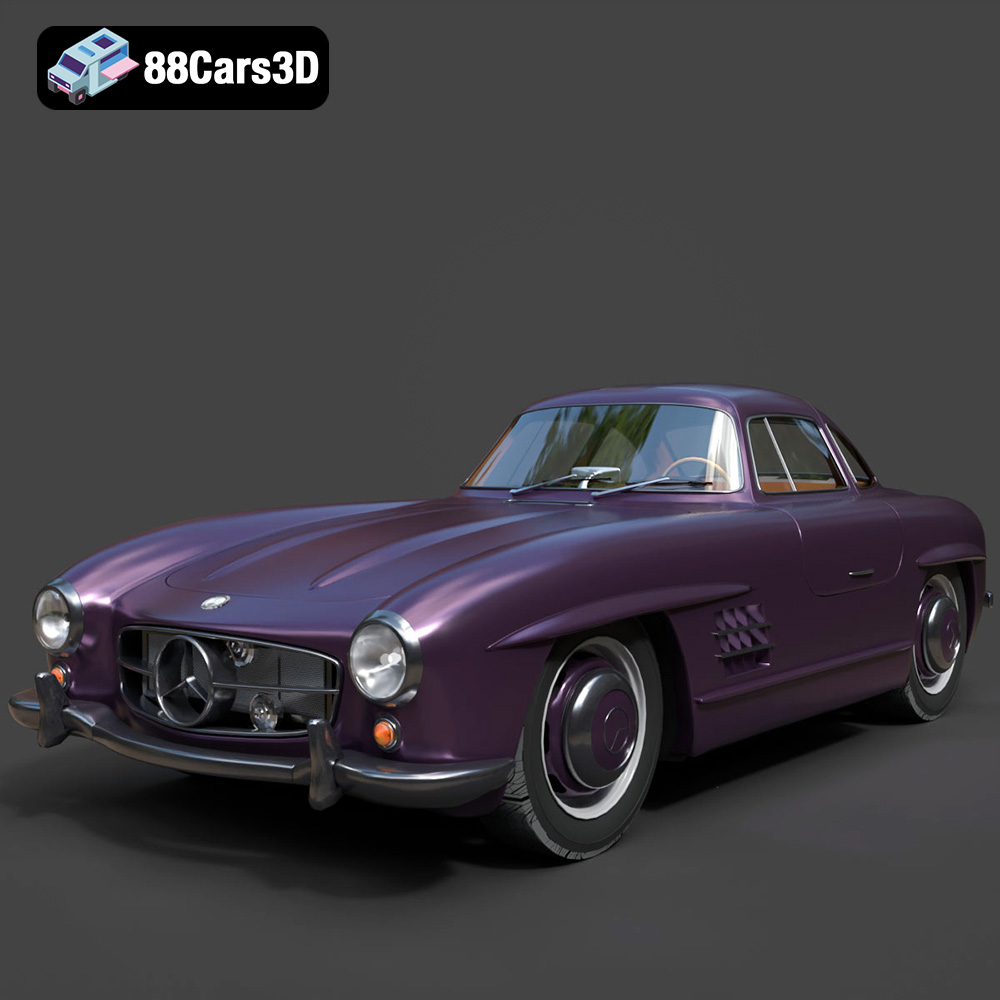
A great model is a faithful digital twin of its real-world counterpart. This means painstaking attention to scale, proportions, and detail. High-end models found on marketplaces like 88cars3d.com are often built using blueprints, CAD data, and extensive photographic references. Key areas of detail to inspect are the headlights and taillights (complex internal geometry), the wheel rims and brake calipers, and the interior—including the dashboard gauges, steering wheel stitching, and seat textures. This level of fidelity is what sells the realism, whether in a close-up render or an in-car gameplay camera.
For marketing, advertising, and portfolio work, the goal is pure photorealism. Here, detail is king, and render times are secondary. The workflow is centered around creating a perfect digital photograph in a controlled studio or natural environment.
A common professional pipeline involves Autodesk 3ds Max with a production renderer like V-Ray or Corona. The first step after importing your high-poly 3D car model is creating the environment.
A classic approach is the “cyclorama” or “cyc” studio—a simple plane with a curved backdrop to create a seamless floor and wall. For lighting, an HDRI (High Dynamic Range Image) is essential. A high-quality HDRI of a photo studio, an outdoor landscape, or an urban setting will provide realistic ambient light and, most importantly, detailed reflections that bring the car’s surfaces to life. You can then add key lights (V-Ray Plane Lights, for example) to create specific highlights and shape the car’s form.
This is where the magic happens. A car’s paint is not a simple color; it’s a multi-layered material. In V-Ray or Corona, you would build a layered shader to simulate this:
Other materials are just as critical. Glass needs the correct Index of Refraction (IOR), chrome must have a low roughness and high metallic value, and leather interiors require a detailed normal map to show texture and a subtle sheen. The quality of these shaders directly translates to the final image’s realism.
For the final render, you’ll use high sample counts to eliminate noise and capture crisp details. A crucial professional technique is rendering in passes, or “Render Elements.” This means outputting separate images for lighting, reflections, shadows, ambient occlusion, and object IDs. By compositing these passes in a tool like Adobe Photoshop or After Effects, you gain immense control. You can precisely adjust the brightness of reflections, deepen shadows, and color-correct specific parts of the car without needing to re-render the entire image, saving hours of work.
When creating game assets, the primary concern shifts from absolute realism to a balance of visual quality and real-time performance. The goal is to create a car that looks fantastic while maintaining a high and stable frame rate.
You cannot simply drop a 2-million-polygon model into a game engine. The first step is optimization. This involves creating a low-poly version of the car. While you can start with a high-poly model and retopologize it (manually tracing a new, simpler mesh over the original), many assets are built from the ground up with a target poly count in mind.
Level of Detail (LOD) meshes are non-negotiable for performance. This is a system where multiple versions of the same model are created at decreasing levels of detail:
The game engine automatically swaps these models based on the car’s distance from the camera, dramatically reducing the processing load.
How does a low-poly model look so detailed? The answer is “baking.” This is the process of projecting the surface detail from the high-poly model onto the texture maps of the low-poly model. The most important map created in this process is the Normal Map. It tricks the game engine’s lighting into thinking the flat, low-poly surface has all the bumps, dents, and panel lines of the high-poly original. This process is typically done in dedicated software like Marmoset Toolbag or Adobe Substance 3D Painter.
Once your optimized FBX file and PBR textures are ready, it’s time to bring them into a game engine like Unreal Engine 5. First, you’ll import the mesh and textures. Next, you’ll create a master material for the car paint. Using Unreal’s powerful material editor, you can expose parameters for color, roughness, and metallic values. This allows you to create Material Instances, which are lightweight duplicates of the master material. With these, you can create dozens of different paint jobs (red, blue, metallic black, matte green) without duplicating textures, saving memory and allowing for player customization.
Finally, for a drivable car, you’ll use Unreal’s Chaos Vehicles system. This involves setting up a Physics Asset for collision, configuring wheel blueprints, and tuning parameters like engine torque, gear ratios, and suspension to create the desired driving feel.
Imagine an architectural firm designing a modern luxury villa. To sell their vision to the client, their final renderings must evoke a sense of lifestyle and high-end appeal. This is a perfect scenario for a high-poly automotive rendering workflow.
The team selects a high-fidelity 3D model of a luxury SUV from a curated source like 88cars3d.com. The choice is deliberate; the car’s modern design complements the sharp lines of the architecture. Placing the car in the driveway or open garage instantly provides a sense of scale and humanizes the space. It answers the client’s unspoken question: “What would it feel like to live here?”
The arch-viz artist places the car in their 3D scene, which is lit by a realistic sun and sky system. The true test of the model’s quality comes from the reflections. The building’s windows, the ambient light from the sky, and the surrounding foliage are all accurately reflected on the car’s paint and glass. In turn, the color of the car subtly “bleeds” onto the polished concrete of the garage floor. This interplay of light and reflection is what grounds the car in the scene and sells the entire image as a cohesive, believable photograph.
Consider a small indie studio creating an open-world driving game. Their team is small, and their budget is tight. They cannot afford to spend six months modeling a single hero car. This is where leveraging pre-made game assets becomes a game-changer.
The team purchases a game-ready 3D car model that already includes a clean low-poly mesh, LODs, and PBR textures. This single purchase saves them hundreds of hours of modeling and texturing work, allowing them to focus their limited resources on gameplay, level design, and other core features. The high-quality asset immediately elevates the visual bar of their game.
Using the provided model, the team sets up a Material Instance in Unreal Engine as described earlier. They create a user interface that allows players to select their car’s base color, paint finish (glossy, metallic, matte), and rim color. This entire customization system is powered by one master material and a single set of textures, making it incredibly efficient. The pre-made LODs ensure the game runs smoothly, even when there are multiple cars on screen in a busy city environment, allowing the game to be accessible to players with a wide range of PC hardware.
Working with 3D car models is a tale of two distinct, yet related, disciplines. On one hand, the path of automotive rendering demands an uncompromising pursuit of realism, leveraging high-polygon models and advanced shading to create images indistinguishable from reality. On the other, the creation of real-time game assets is a masterclass in optimization, where artists use clever techniques to pack maximum visual detail into a performance-friendly package.
The key takeaway is that success in either field begins with a world-class asset. A model with clean topology, meticulous UVs, and accurate detail is a versatile tool that can be pushed to photorealistic heights or intelligently optimized for interactive performance. By understanding the fundamental anatomy of a great model and mastering the specific workflows for your chosen application, you can turn a digital vehicle into the centerpiece of a stunning render, an immersive game, or a compelling virtual experience.