
Demystifying Photorealistic Car Paint: Understanding the Complex Layers and PBR Principles

The quest for photorealism in real-time rendering has always pushed the boundaries of technology, and nowhere is this more apparent than in the meticulous recreation of vehicle aesthetics. Capturing the intricate nuances of a car’s paint job – its reflectivity, depth, and subtle metallic shimmer – is often the ultimate litmus test for any rendering engine. In Unreal Engine 5, with its advanced rendering capabilities, achieving truly uncompromised photorealism for automotive finishes is not just possible, it’s becoming an expectation.
However, mastering the art of Unreal Engine 5 car paint goes far beyond simply assigning a color. It demands a deep understanding of physically based rendering (PBR) principles, a keen eye for material layering, and a strategic approach to lighting. This comprehensive guide will demystify the complex process, empowering 3D artists, game developers, and automotive designers to create stunning, lifelike vehicle visualizations that stand out.
We’ll dive into the intricate world of PBR automotive shaders, explore the construction of a robust clear coat material, and unveil the secrets behind a convincing metallic flake shader. Prepare to elevate your automotive rendering techniques and unlock the full potential of Unreal Engine 5 for breathtaking real-time vehicle visualization.
Demystifying Photorealistic Car Paint: Understanding the Complex Layers and PBR Principles
At its core, photorealistic car paint is a marvel of optical physics, a complex stack of materials interacting with light in fascinating ways. To replicate this digitally, we must first understand its real-world composition and how it translates into the principles of Physically Based Rendering (PBR).
PBR ensures that materials react to light in a predictable and physically accurate manner, regardless of the lighting conditions. For automotive finishes, this means meticulously defining properties like base color, metallicness, roughness, and most importantly, the clear coat. The goal is to simulate how light reflects, refracts, and scatters through these layers.
A typical car paint job consists of several distinct layers, each contributing to the final look:
- Primer: A foundational layer, usually unseen, that provides a smooth base for subsequent coats.
- Base Coat (Color Coat): This layer provides the primary color of the vehicle. It can be solid, metallic, or pearlescent. For our purposes, this is where the core hue and saturation are defined.
- Metallic/Pearlescent Flakes: Embedded within or on top of the base coat, these tiny particles reflect light at various angles, creating the characteristic sparkle and depth of metallic finishes. This is where a sophisticated metallic flake shader becomes crucial.
- Clear Coat: This is the outermost, transparent layer that provides gloss, protection, and the deep, wet look characteristic of car paint. It’s a critical component, dictating the specular reflections and overall shine. Its interaction with light defines much of the visual quality.
Understanding these layers is the first step toward building a convincing PBR automotive shader in Unreal Engine 5. Each layer needs its own set of PBR parameters and must blend seamlessly with the others to achieve a cohesive, lifelike appearance.
Building Your Master Material: The Foundation of UE5 Material Functions
Efficiency and consistency are paramount when working on complex projects, especially with multiple car models or variations. This is where a master material, built using UE5 material functions, proves invaluable. A master material acts as a central hub, allowing you to define core logic once and then instance it across different vehicle meshes with unique parameter overrides.
Starting with a basic PBR material setup in Unreal Engine 5, we’ll expand it to accommodate the specific requirements of car paint. A standard material typically has inputs for Base Color, Metallic, Specular, Roughness, and Normal. However, car paint requires additional layers, most notably the clear coat, which UE5 provides as a dedicated input.
The power of UE5 material functions lies in their modularity. You can encapsulate specific shader logic—like the metallic flake pattern, a dirt layer, or a custom clear coat effect—into reusable functions. This keeps your main material graph clean, organized, and easy to debug. It also allows artists to quickly iterate on different looks by simply adjusting parameters exposed through material instances.
Structuring Your Material Graph
To begin, create a new material in the Content Browser. Within the material editor, you’ll want to think in terms of distinct functional blocks:
- Input Parameters: Expose scalar and vector parameters for color, roughness, flake intensity, clear coat amount, etc. These will be the controls for your material instances.
- Base Coat Logic: Define the core color and its underlying roughness before the clear coat is applied. This might involve a simple Vector3 parameter or a texture lookup.
- Metallic Flake Function: This will be a complex function, likely involving noise textures and UV manipulation, to generate the flake pattern.
- Clear Coat Logic: Utilize Unreal Engine’s built-in clear coat inputs, enhancing them with custom roughness and normal map contributions.
- Output & Blending: Combine all layers using various blend modes and maskings to produce the final PBR outputs.
By breaking down the material into these manageable pieces, you build a robust and flexible system that can handle a wide array of car paint finishes, from solid gloss to intricate multi-coat metallics.
Crafting the Core Layers: Base, Metallic Flake, and Clear Coat Material
Now, let’s dive into the specifics of building each critical layer for our Unreal Engine 5 car paint shader. Each component plays a vital role in achieving the desired realism.
The Base Layer
The base layer provides the foundational color for your car paint. This is typically a straightforward input, either a simple vector color parameter or a texture map. Even for metallic paints, defining a core color is crucial before adding the metallic flakes.
- Color Input: Use a Vector3 parameter (LinearColor) to allow artists to easily select the primary hue. You might also consider a tint parameter to subtly adjust the overall color.
- Base Roughness: This parameter represents the roughness of the paint *underneath* the clear coat. For a completely opaque paint, this might be very low, but for certain effects or pre-clear coat damage, it can be higher. This value will typically feed into a lerp node that blends with the clear coat roughness.
- Metallic Value: For non-metallic paints, this value will be 0. For metallic base coats, it will be 1, indicating that the base material itself is metallic before flakes are added. This helps define how light interacts with the primary color itself.
Keep this layer clean and simple, as its primary purpose is to establish the car’s core identity. All the visual flair comes from the layers above it.
Implementing the Metallic Flake Shader
The metallic flake shader is arguably the most complex and visually impactful component of a realistic car paint material. It simulates thousands of tiny metallic particles reflecting light individually.
- Noise Texture Generation: The flakes are best simulated using a high-frequency noise texture, often a procedural noise or a tiled texture with a fine grain. This texture will serve as a mask or a normal map for the flakes.
- UV Manipulation: To give the impression of randomly oriented flakes, you can pan and rotate the UVs of your noise texture over time or based on camera direction. Alternatively, using world-space UVs can help avoid visible tiling issues on large surfaces.
- Anisotropy and Orientation: Real-world metallic flakes often have a slight anisotropy. You can simulate this by distorting the normals based on the flake pattern, using a combination of texture samples and vector math to guide reflections.
- Controlling Flake Size and Density: Expose parameters for flake scale (via UV tiling), density (via a power node on the mask), and intensity (how much they contribute to metallicness/specularity).
- Blending with Base: The flake contribution is typically added to the material’s metallic input and can also influence the roughness and normal. Use a Lerp node to blend between the base metallic/roughness and the flake metallic/roughness, driven by the flake mask. This ensures the flakes only appear where they should.
Achieving a convincing metallic flake shader requires careful fine-tuning of these parameters to avoid patterns that look too regular or a sparkle that appears too noisy rather than subtly dynamic.
The Clear Coat Material
The clear coat is what gives car paint its signature deep, glossy, and protective finish. Unreal Engine 5 provides dedicated inputs for this, simplifying its implementation significantly.
- Clear Coat Input: This scalar input (0-1) determines the presence and strength of the clear coat. A value of 1 signifies a full, opaque clear coat.
- Clear Coat Roughness: This defines how glossy or diffuse the clear coat itself is. For a brand new car, this will be a very low value (e.g., 0.01-0.05) to achieve mirror-like reflections.
- Clear Coat Normal: You can apply a separate normal map to the clear coat, ideal for simulating subtle imperfections, scratches, or Orange Peel effect without affecting the underlying paint. This adds another layer of realism.
- Importance of `Ray Tracing Reflections`: For truly stunning clear coat realism, ray tracing reflections are indispensable. They provide accurate, sharp, and physically correct reflections, essential for capturing the interplay of light and environment on the glossy surface. Ensure your project is configured for hardware ray tracing to leverage this.
- IOR (Index of Refraction): While not a direct input for the clear coat in UE5’s standard material, understanding IOR is crucial. The clear coat typically has an IOR similar to glass (around 1.5). Unreal Engine approximates this, but knowing the physics helps in judging the visual accuracy of reflections and refractions.
Carefully balance the clear coat parameters with the underlying base and metallic layers. The clear coat should act as a transparent layer *over* everything else, refracting and reflecting light independently.
Remember that all these individual elements contribute to creating compelling PBR automotive shaders that capture the essence of a real-world vehicle finish.
Advanced Automotive Rendering Techniques: Enhancing Realism with Decals, Dirt, and Damage
While a pristine paint job is beautiful, true realism often lies in the subtle imperfections and additions that tell a story. Implementing decals, dirt, and damage layers are advanced automotive rendering techniques that elevate your real-time vehicle visualization beyond mere showroom quality.
Layering Decals for Visual Interest
Decals are essential for logos, racing stripes, and warning labels, breaking up monotonous surfaces and adding granular detail. In Unreal Engine 5, decals can be applied using a deferred decal actor or by blending textures directly into your master material.
- Deferred Decals: These are separate actors placed in the scene that project a material onto geometry. They are excellent for temporary marks, tire tracks, or quick additions. Ensure the decal material has appropriate blend modes (e.g., DBuffer_ColorNormalRoughness) to affect the underlying surface’s properties.
- Material-based Decals: For permanent markings like racing liveries, it’s often more efficient to blend decal textures directly into your car paint master material using masks. This allows the decal to inherit the clear coat properties, making it look integrated rather than simply plastered on.
- Masking and Blending: Use grayscale masks to define the shape of your decal. These masks can then be used in Lerp nodes to blend between your base paint properties and the decal’s specific colors, metallic, and roughness values.
Pay attention to the interaction of decals with the clear coat. A decal beneath the clear coat will appear embedded, while one on top will have its own distinct surface properties.
Adding Wear and Tear: Dirt, Dust, and Scratches
No car remains factory-fresh forever. Introducing signs of wear and tear adds character and authenticity, making your Unreal Engine 5 car paint feel lived-in.
- Dust and Dirt Layers:
- Vertex Painting: Use vertex colors on your mesh to paint areas where dirt would accumulate, like recesses or edges. This vertex color can then be used as a mask in your material.
- World-Space Masks: Leverage world-space position and normal data to create procedural dirt accumulation on upward-facing surfaces (e.g., using the Z-component of the world normal).
- Blending: Create a separate dirt material with higher roughness and a slightly darker, desaturated color. Use your masks to Lerp between the clean car paint and the dirt material.
- Scratch Maps and Damage:
- Texture Overlays: Apply texture maps containing scratches and scuffs. These textures should ideally include information for normal, roughness, and potentially even subtle color shifts.
- Masking Roughness and Normals: Use the scratch texture’s alpha or red channel to drive a Lerp node that increases roughness and applies a normal map for the scratch, breaking up the smooth clear coat.
- Procedural Edge Damage: Use curvature maps or ambient occlusion maps generated from your mesh to identify edges. These can then be used as masks to expose primer or metal underneath, simulating chipped paint.
The key to convincing wear and tear is subtlety. Overdoing it can quickly make your model look cartoony rather than realistic. Think about where dirt naturally settles and how scratches typically appear on a car’s body.
Lighting & Optimization for Impact: Showcasing Your Unreal Engine 5 Car Paint
Even the most meticulously crafted Unreal Engine 5 car paint material will fall flat without proper lighting. Lighting is paramount for showcasing reflections, depth, and the intricate details of your PBR automotive shaders. Simultaneously, optimizing your scene is crucial for smooth real-time vehicle visualization.
Studio Lighting Setups for Automotive Presentation
For cinematic renders or high-quality portfolio shots, a well-structured studio lighting setup is essential. The goal is to highlight the car’s form, reflections, and paint qualities.
- HDRIs for Environment Lighting: An High Dynamic Range Image (HDRI) is the backbone of realistic lighting, providing both global illumination and complex reflections. Use a studio-like HDRI with softboxes or a realistic outdoor environment for accurate reflections on your clear coat material.
- Key, Fill, and Rim Lights: Employ traditional three-point lighting principles. A key light defines the primary illumination, a fill light softens shadows, and a rim light (often from behind and above) helps define the car’s silhouette and highlight edges.
- Softboxes and Area Lights: Use large, soft area lights or rectangular lights to create flattering, smooth reflections on the car’s glossy surfaces. Position these strategically to sculpt the car’s curves and emphasize its design lines.
- Reflective Environment: Ensure your environment provides interesting and varied reflections. Even an empty studio needs large, emissive planes or reflection probes to give the car paint something compelling to reflect.
Experiment with light positions and intensities. The way light streaks across the car’s surface directly impacts the perceived quality of your Unreal Engine 5 car paint.
Ray Tracing Reflections and Global Illumination
Unreal Engine 5’s Lumen Global Illumination and Hardware Ray Tracing capabilities are game-changers for automotive rendering techniques. They provide unparalleled realism for reflections, shadows, and bounced light.
- Enabling Hardware Ray Tracing: For crystal-clear reflections, especially on the clear coat, enable Hardware Ray Tracing in your project settings. This will significantly enhance the accuracy and sharpness of reflections and refractions.
- Lumen GI: Lumen provides dynamic global illumination, ensuring light bounces naturally around your scene and illuminates your car realistically. This is particularly important for studio setups where light interacts with walls and floors.
- Impact on Clear Coat: With ray tracing reflections, the clear coat material will accurately reflect its environment, show off the subtle distortions from curved surfaces, and react correctly to light sources, creating a truly ‘wet’ and deep appearance.
While powerful, ray tracing can be demanding. Always balance visual fidelity with the performance requirements of your specific project.
Optimization Strategies for Real-Time Vehicle Visualization
Achieving stunning visuals in real-time requires smart optimization. Even with powerful hardware, poorly optimized assets can cripple performance, especially for real-time vehicle visualization.
- LODs (Levels of Detail) for Meshes: Create multiple versions of your car mesh with decreasing polygon counts. Unreal Engine will automatically switch between them based on distance, significantly reducing rendering overhead for distant vehicles. For high-quality, pre-optimized models ready for UE5, consider exploring resources like 88cars3d.com.
- Material Complexity: Keep your material instruction count as low as possible. Use UE5 material functions to reuse logic and avoid redundant calculations. Profile your materials to identify expensive nodes.
- Texture Resolutions: Use appropriate texture resolutions. While 4K or 8K textures might look great up close, they might be overkill for surfaces that are rarely seen in detail. Utilize texture streaming settings to manage memory.
- Culling Distances: Set appropriate culling distances for minor scene elements to prevent them from rendering when far away from the camera.
- Shader Complexity Viewmode: Regularly check the Shader Complexity viewmode in Unreal Editor to identify areas where your materials are too expensive. Aim for green/blue areas for good performance.
A well-optimized asset ensures that your beautiful car paint is rendered smoothly, whether for a game, a configurator, or a virtual production scene.
Common Pitfalls and Advanced Tips for Uncompromised Realism
Even seasoned artists encounter challenges when striving for truly uncompromised realism in Unreal Engine 5 car paint. Knowing common pitfalls and employing advanced techniques can save valuable time and significantly improve your final output.
Troubleshooting Common Issues
- Flat Reflections: If your car paint looks dull or lacks sharp reflections, check the following:
- Clear Coat Roughness: Is it too high? For glossy finishes, it should be very low (e.g., 0.01-0.05).
- Reflection Capture Actors: Are there enough, and are they properly placed? For static scenes, place Reflection Capture Actors. For dynamic environments, ensure ray tracing reflections are enabled and working.
- Environment Lighting: Is your HDRI or lighting setup providing enough contrast and specular highlights for the car to reflect?
- Unconvincing Metallic Flakes:
- Scale and Density: Flakes often appear too large or too sparse. Adjust the UV tiling and power nodes in your metallic flake shader to get a fine, subtle shimmer.
- Intensity: Are the flakes too bright or too dim? Control their contribution to the metallic and roughness values. They should enhance the paint, not dominate it.
- Noise Pattern: Avoid repetitive or overly obvious noise patterns. Use procedural noise or high-quality seamless textures.
- Performance Bottlenecks: If your scene is running slowly:
- Shader Instruction Count: Use the Shader Complexity viewmode to identify overly complex materials. Simplify logic where possible and leverage material functions.
- Texture Overload: Check texture memory usage. Reduce resolutions where high detail isn’t critical or use texture streaming.
- Mesh Density: Ensure LODs are correctly set up and switching as expected. Consider optimizing your base mesh if it’s excessively high poly for your target platform. For models from 88cars3d.com, you’ll often find they are already optimized for various uses.
Expert Workflow Enhancements
- Using Look-Up Tables (LUTs) for Color Grading: For a final polish, apply cinematic color grading using LUTs. This allows you to achieve specific visual styles and enhance the overall mood of your render without altering the base material properties.
- Post-Processing Effects: Thoughtful use of post-processing can dramatically improve realism.
- Bloom: Adds a soft glow to bright areas, enhancing the sense of light intensity.
- Chromatic Aberration: A subtle touch can mimic real-world lens imperfections.
- Depth of Field (DOF): Crucial for cinematic shots, it guides the viewer’s eye and adds a photographic quality.
- Vignette: A slight darkening at the edges can help frame your subject.
- Camera Settings: Mimicking real-world camera settings in Unreal Engine 5’s Cine Camera Actor enhances photographic realism.
- Aperture (f-stop): Controls depth of field and exposure. Use lower f-stops (e.g., f/2.8 – f/5.6) for shallow DOF.
- Focal Length: Choose appropriate focal lengths (e.g., 50mm for natural perspective, wider for dynamic shots).
- Exposure: Balance ISO and Shutter Speed to achieve correct exposure, matching your lighting setup.
- Start with High-Quality Base Models: Don’t underestimate the impact of a meticulously crafted base model. Websites like 88cars3d.com offer highly detailed and optimized car models, providing an excellent foundation to apply your advanced PBR automotive shaders and achieve instant visual impact. Starting with a solid mesh saves countless hours of modeling and allows you to focus purely on material and lighting refinement.
Mastering these advanced tips allows you to push the boundaries of automotive rendering techniques, delivering renders that are not only technically sound but also artistically compelling.
Mastering uncompromised photorealism for car paint in Unreal Engine 5 is a journey that blends technical understanding with artistic vision. We’ve traversed the intricate layers of real-world car paint, translated them into robust PBR automotive shaders within UE5, and meticulously constructed a compelling clear coat material alongside a dynamic metallic flake shader.
We’ve also highlighted the critical role of lighting, especially leveraging ray tracing reflections, and explored essential optimization strategies for smooth real-time vehicle visualization. By understanding UE5 material functions and applying advanced automotive rendering techniques, you now have the tools to overcome common pitfalls and achieve truly stunning results.
The power of Unreal Engine 5 car paint lies in its flexibility and depth. Continue to experiment, refine your materials, and observe how light interacts with real-world surfaces. For a head start with high-quality, pre-modeled, and optimized vehicles, explore the extensive collection available at 88cars3d.com. Take these principles, apply them to your projects, and witness your automotive visualizations transform into breathtaking, lifelike experiences.
Featured 3D Car Models

Skoda Superb 2009 3D Model
Texture: Yes
Material: Yes
Download the Skoda Superb 2009 3D Model featuring clean geometry, realistic detailing, and a fully modeled interior. Includes .blend, .fbx, .obj, .glb, .stl, .ply, .unreal, and .max formats for rendering, simulation, and game development.
Price: $10

Skoda Superb 2006 3D Model
Texture: Yes
Material: Yes
Download the Skoda Superb 2006 3D Model featuring clean geometry, realistic detailing, and a fully modeled interior. Includes .blend, .fbx, .obj, .glb, .stl, .ply, .unreal, and .max formats for rendering, simulation, and game development.
Price: $10

Ford Mustang Shelby Super Snake Concept 2018 3D Model
Texture: Yes
Material: Yes
Download the Ford Mustang Shelby Super Snake Concept 2018 3D Model featuring clean geometry, realistic detailing, and a fully modeled interior. Includes .blend, .fbx, .obj, .glb, .stl, .ply, .unreal, and .max formats for rendering, simulation, and game development.
Price: $18.99

Porsche Cayenne Turbo 2018 3D Model
Texture: Yes
Material: Yes
Download the Porsche Cayenne Turbo 2018 3D Model featuring clean geometry, realistic detailing, and a fully modeled interior. Includes .blend, .fbx, .obj, .glb, .stl, .ply, .unreal, and .max formats for rendering, simulation, and game development.
Price: $10

Chevrolet Lacetti Sedan 2004 3D Model
Texture: Yes
Material: Yes
Download the Chevrolet Lacetti Sedan 2004 3D Model featuring clean geometry, realistic detailing, and a fully modeled interior. Includes .blend, .fbx, .obj, .glb, .stl, .ply, .unreal, and .max formats for rendering, simulation, and game development.
Price: $10

Skoda Rapid 2013 3D Model
Texture: Yes
Material: Yes
Download the Skoda Rapid 2013 3D Model featuring clean geometry, realistic detailing, and a fully modeled interior. Includes .blend, .fbx, .obj, .glb, .stl, .ply, .unreal, and .max formats for rendering, simulation, and game development.
Price: $10

Skoda Octavia A5-007 3D Model
Texture: Yes
Material: Yes
Download the Skoda Octavia A5-007 3D Model featuring clean geometry, realistic detailing, and a fully modeled interior. Includes .blend, .fbx, .obj, .glb, .stl, .ply, .unreal, and .max formats for rendering, simulation, and game development.
Price: $10

Skoda Fabia 2023 3D Model
Texture: Yes
Material: Yes
Download the Skoda Fabia 2023 3D Model featuring clean geometry, realistic detailing, and a fully modeled interior. Includes .blend, .fbx, .obj, .glb, .stl, .ply, .unreal, and .max formats for rendering, simulation, and game development.
Price: $10

Skoda Fabia 2007 3D Model
Texture: Yes
Material: Yes
Download the Skoda Fabia 2007 3D Model featuring clean geometry, realistic detailing, and a fully modeled interior. Includes .blend, .fbx, .obj, .glb, .stl, .ply, .unreal, and .max formats for rendering, simulation, and game development.
Price: $10

Honda VFR 1200 F 2015 3D Model
Texture: Yes
Material: Yes
Download the Honda VFR 1200 F 2015 3D Model featuring clean geometry, realistic detailing, and a fully modeled interior. Includes .blend, .fbx, .obj, .glb, .stl, .ply, .unreal, and .max formats for rendering, simulation, and game development.
Price: $10

Subaru BRZ 2025 3D Model
Texture: Yes
Material: Yes
Download the Subaru BRZ 2025 3D Model featuring clean geometry, realistic detailing, and a fully modeled interior. Includes .blend, .fbx, .obj, .glb, .stl, .ply, .unreal, and .max formats for rendering, simulation, and game development.
Price: $10

SsangYong Rodius 2007 3D Model
Texture: Yes
Material: Yes
Download the SsangYong Rodius 2007 3D Model featuring clean geometry, realistic detailing, and a fully modeled interior. Includes .blend, .fbx, .obj, .glb, .stl, .ply, .unreal, and .max formats for rendering, simulation, and game development.
Price: $10

Subaru Impreza 1992 3D Model
Texture: Yes
Material: Yes
Download the Subaru Impreza 1992 3D Model featuring clean geometry, realistic detailing, and a fully modeled interior. Includes .blend, .fbx, .obj, .glb, .stl, .ply, .unreal, and .max formats for rendering, simulation, and game development.
Price: $10

Subaru Impreza 2005 3D Model
Texture: Yes
Material: Yes
Download the Subaru Impreza 2005 3D Model featuring clean geometry, realistic detailing, and a fully modeled interior. Includes .blend, .fbx, .obj, .glb, .stl, .ply, .unreal, and .max formats for rendering, simulation, and game development.
Price: $10

Spyker C8-007 2004 3D Model
Texture: Yes
Material: Yes
Download the Spyker C8-007 2004 3D Model featuring clean geometry, realistic detailing, and a fully modeled interior. Includes .blend, .fbx, .obj, .glb, .stl, .ply, .unreal, and .max formats for rendering, simulation, and game development.
Price: $10

Smart Roadster 2003 3D Model
Texture: Yes
Material: Yes
Download the Smart Roadster 2003 3D Model featuring clean geometry, realistic detailing, and a fully modeled interior. Includes .blend, .fbx, .obj, .glb, .stl, .ply, .unreal, and .max formats for rendering, simulation, and game development.
Price: $10

Skoda Roomster 2007 3D Model
Texture: Yes
Material: Yes
Download the Skoda Roomster 2007 3D Model featuring clean geometry, realistic detailing, and a fully modeled interior. Includes .blend, .fbx, .obj, .glb, .stl, .ply, .unreal, and .max formats for rendering, simulation, and game development.
Price: $10

Subaru Impreza Sport Wagon 3D Model
Texture: Yes
Material: Yes
Download the Subaru Impreza Sport Wagon 3D Model featuring clean geometry, realistic detailing, and a fully modeled interior. Includes .blend, .fbx, .obj, .glb, .stl, .ply, .unreal, and .max formats for rendering, simulation, and game development.
Price: $10

Skoda Octavia A7 2017 3D Model
Texture: Yes
Material: Yes
Download the Skoda Octavia A7 2017 3D Model featuring clean geometry, realistic detailing, and a fully modeled interior. Includes .blend, .fbx, .obj, .glb, .stl, .ply, .unreal, and .max formats for rendering, simulation, and game development.
Price: $10

Suzuki SX4-002 3D Model
Texture: Yes
Material: Yes
Download the Suzuki SX4-002 3D Model featuring clean geometry, realistic detailing, and a fully modeled interior. Includes .blend, .fbx, .obj, .glb, .stl, .ply, .unreal, and .max formats for rendering, simulation, and game development.
Price: $10

Tesla Model S 2024 3D Model
Texture: Yes
Material: Yes
Download the Tesla Model S 2024 3D Model featuring clean geometry, realistic detailing, and a fully modeled interior. Includes .blend, .fbx, .obj, .glb, .stl, .ply, .unreal, and .max formats for rendering, simulation, and game development.
Price: $10

Subaru Impreza WRX STi-002 3D Model
Texture: Yes
Material: Yes
Download the Subaru Impreza WRX STi-002 3D Model featuring clean geometry, realistic detailing, and a fully modeled interior. Includes .blend, .fbx, .obj, .glb, .stl, .ply, .unreal, and .max formats for rendering, simulation, and game development.
Price: $10

Subaru Impreza WRX STi Sedan 3D Model
Texture: Yes
Material: Yes
Download the Subaru Impreza WRX STi Sedan 3D Model featuring clean geometry, realistic detailing, and a fully modeled interior. Includes .blend, .fbx, .obj, .glb, .stl, .ply, .unreal, and .max formats for rendering, simulation, and game development.
Price: $10

Subaru Legacy 2009 3D Model
Texture: Yes
Material: Yes
Download the Subaru Legacy 2009 3D Model featuring clean geometry, realistic detailing, and a fully modeled interior. Includes .blend, .fbx, .obj, .glb, .stl, .ply, .unreal, and .max formats for rendering, simulation, and game development.
Price: $10

Suzuki Swift 2024 3D Model
Texture: Yes
Material: Yes
Download the Suzuki Swift 2024 3D Model featuring clean geometry, realistic detailing, and a fully modeled interior. Includes .blend, .fbx, .obj, .glb, .stl, .ply, .unreal, and .max formats for rendering, simulation, and game development.
Price: $10

Suzuki Liana Sedan 2004 3D Model
Texture: Yes
Material: Yes
Download the Suzuki Liana Sedan 2004 3D Model featuring clean geometry, realistic detailing, and a fully modeled interior. Includes .blend, .fbx, .obj, .glb, .stl, .ply, .unreal, and .max formats for rendering, simulation, and game development.
Price: $10

Subaru Outback 2024 3D Model
Texture: Yes
Material: Yes
Download the Subaru Outback 2024 3D Model featuring clean geometry, realistic detailing, and a fully modeled interior. Includes .blend, .fbx, .obj, .glb, .stl, .ply, .unreal, and .max formats for rendering, simulation, and game development.
Price: $10

Subaru Legacy 2003 3D Model
Texture: Yes
Material: Yes
Download the Subaru Legacy 2003 3D Model featuring clean geometry, realistic detailing, and a fully modeled interior. Includes .blend, .fbx, .obj, .glb, .stl, .ply, .unreal, and .max formats for rendering, simulation, and game development.
Price: $10

Subaru Legacy Touring Wagon 3D Model
Texture: Yes
Material: Yes
Download the Subaru Legacy Touring Wagon 3D Model featuring clean geometry, realistic detailing, and a fully modeled interior. Includes .blend, .fbx, .obj, .glb, .stl, .ply, .unreal, and .max formats for rendering, simulation, and game development.
Price: $10

Toyota Mark II (X100) 1998 3D Model
Texture: Yes
Material: Yes
Download the Toyota Mark II (X100) 3D Model featuring clean geometry, realistic detailing, and a fully modeled interior. Includes .blend, .fbx, .obj, .glb, .stl, .ply, .unreal, and .max formats for rendering, simulation, and game development.
Price: $10

Toyota Corona 1985 3D Model
Texture: Yes
Material: Yes
Download the Toyota Corona 1985 3D Model featuring clean geometry, realistic detailing, and a fully modeled interior. Includes .blend, .fbx, .obj, .glb, .stl, .ply, .unreal, and .max formats for rendering, simulation, and game development.
Price: $10

Toyota Mark II X81 1990 3D Model
Texture: Yes
Material: Yes
Download the Toyota Mark II X81 1990 3D Model featuring clean geometry, realistic detailing, and a fully modeled interior. Includes .blend, .fbx, .obj, .glb, .stl, .ply, .unreal, and .max formats for rendering, simulation, and game development.
Price: $10

Toyota iQ EV 2012 3D Model
Texture: Yes
Material: Yes
Download the Toyota iQ EV 2012 3D Model featuring clean geometry, realistic detailing, and a fully modeled interior. Includes .blend, .fbx, .obj, .glb, .stl, .ply, .unreal, and .max formats for rendering, simulation, and game development.
Price: $10

Toyota Aygo 2013 3D Model
Texture: Yes
Material: Yes
Download the Toyota Aygo 2013 3D Model featuring clean geometry, realistic detailing, and a fully modeled interior. Includes .blend, .fbx, .obj, .glb, .stl, .ply, .unreal, and .max formats for rendering, simulation, and game development.
Price: $10

Toyota Crown S180 2005 3D Model
Texture: Yes
Material: Yes
Download the Toyota Crown S180 2005 3D Model featuring clean geometry, realistic detailing, and a fully modeled interior. Includes .blend, .fbx, .obj, .glb, .stl, .ply, .unreal, and .max formats for rendering, simulation, and game development.
Price: $10

Toyota Celica 2004 3D Model
Texture: Yes
Material: Yes
Download the Toyota Celica 2004 3D Model featuring clean geometry, realistic detailing, and a fully modeled interior. Includes .blend, .fbx, .obj, .glb, .stl, .ply, .unreal, and .max formats for rendering, simulation, and game development.
Price: $10

Toyota Corolla AE100 1992 3D Model
Texture: Yes
Material: Yes
Download the Toyota Corolla AE100 1992 3D Model featuring clean geometry, realistic detailing, and a fully modeled interior. Includes .blend, .fbx, .obj, .glb, .stl, .ply, .unreal, and .max formats for rendering, simulation, and game development.
Price: $10

Toyota Mark II X110 2000 3D Model
Texture: Yes
Material: Yes
Download the Toyota Mark II X110 2000 3D Model featuring clean geometry, realistic detailing, and a fully modeled interior. Includes .blend, .fbx, .obj, .glb, .stl, .ply, .unreal, and .max formats for rendering, simulation, and game development.
Price: $10

Toyota Corolla 2020 3D Model
Texture: Yes
Material: Yes
Download the Toyota Corolla 2020 3D Model featuring clean geometry, realistic detailing, and a fully modeled interior. Includes .blend, .fbx, .obj, .glb, .stl, .ply, .unreal, and .max formats for rendering, simulation, and game development.
Price: $10

Toyota Yaris 2020 3D Model
Texture: Yes
Material: Yes
Download the Toyota Yaris 2020 3D Model featuring clean geometry, realistic detailing, and a fully modeled interior. Includes .blend, .fbx, .obj, .glb, .stl, .ply, .unreal, and .max formats for rendering, simulation, and game development.
Price: $9.9

Volkswagen Beetle 2012 3D Model
Texture: Yes
Material: Yes
Download the Volkswagen Beetle 2012 3D Model featuring clean geometry, realistic detailing, and a fully modeled interior. Includes .blend, .fbx, .obj, .glb, .stl, .ply, .unreal, and .max formats for rendering, simulation, and game development.
Price: $9.9

Toyota Matrix 2005 3D Model
Texture: Yes
Material: Yes
Download the Toyota Matrix 2005 3D Model featuring clean geometry, realistic detailing, and a fully modeled interior. Includes .blend, .fbx, .obj, .glb, .stl, .ply, .unreal, and .max formats for rendering, simulation, and game development.
Price: $9.9

Toyota Yaris Sedan 3D Model
Texture: Yes
Material: Yes
Download the Toyota Yaris Sedan 3D Model featuring clean geometry, realistic detailing, and a fully modeled interior. Includes .blend, .fbx, .obj, .glb, .stl, .ply, .unreal, and .max formats for rendering, simulation, and game development.
Price: $9.9

Volkswagen Golf R-004 2024 3D Model
Texture: Yes
Material: Yes
Download the Volkswagen Golf R-004 2024 3D Model featuring clean geometry, realistic detailing, and a fully modeled interior. Includes .blend, .fbx, .obj, .glb, .stl, .ply, .unreal, and .max formats for rendering, simulation, and game development.
Price: $9.9

Volkswagen Golf 5 Door 2010 3D Model
Texture: Yes
Material: Yes
Download the Volkswagen Golf 5 Door 2010 3D Model featuring clean geometry, realistic detailing, and a fully modeled interior. Includes .blend, .fbx, .obj, .glb, .stl, .ply, .unreal, and .max formats for rendering, simulation, and game development.
Price: $9.9

Toyota Premio 2010 3D Model
Texture: Yes
Material: Yes
Download the Toyota Premio 2010 3D Model featuring clean geometry, realistic detailing, and a fully modeled interior. Includes .blend, .fbx, .obj, .glb, .stl, .ply, .unreal, and .max formats for rendering, simulation, and game development.
Price: $9.9

Toyota Opa 2000 3D Model
Texture: Yes
Material: Yes
Download the Toyota Opa 2000 3D Model featuring clean geometry, realistic detailing, and a fully modeled interior. Includes .blend, .fbx, .obj, .glb, .stl, .ply, .unreal, and .max formats for rendering, simulation, and game development.
Price: $9.9

Volkswagen Polo 5 Door 2010 3D Model
Texture: Yes
Material: Yes
Download the Volkswagen Polo 5 Door 2010 3D Model featuring clean geometry, realistic detailing, and a fully modeled interior. Includes .blend, .fbx, .obj, .glb, .stl, .ply, .unreal, and .max formats for rendering, simulation, and game development.
Price: $9.9

Toyota Prius 2024 3D Model
Texture: Yes
Material: Yes
Download the Toyota Prius 2024 3D Model featuring clean geometry, realistic detailing, and a fully modeled interior. Includes .blend, .fbx, .obj, .glb, .stl, .ply, .unreal, and .max formats for rendering, simulation, and game development.
Price: $9.9

Toyota Yaris 1999 3D Model
Texture: Yes
Material: Yes
Download the Toyota Yaris 1999 3D Model featuring clean geometry, realistic detailing, and a fully modeled interior. Includes .blend, .fbx, .obj, .glb, .stl, .ply, .unreal, and .max formats for rendering, simulation, and game development.
Price: $9.9

Toyota Supra 2020 3D Model
Texture: Yes
Material: Yes
Download the Toyota Supra 2020 3D Model featuring clean geometry, realistic detailing, and a fully modeled interior. Includes .blend, .fbx, .obj, .glb, .stl, .ply, .unreal, and .max formats for rendering, simulation, and game development.
Price: $9.9

Volkswagen New Beetle 2000 3D Model
Texture: Yes
Material: Yes
Download the Volkswagen New Beetle 2000 3D Model featuring clean geometry, realistic detailing, and a fully modeled interior. Includes .blend, .fbx, .obj, .glb, .stl, .ply, .unreal, and .max formats for rendering, simulation, and game development.
Price: $14.99

Volkswagen Jetta 2005 3D Model
Texture: Yes
Material: Yes
Download the Volkswagen Jetta 2005 3D Model featuring clean geometry, realistic detailing, and a fully modeled interior. Includes .blend, .fbx, .obj, .glb, .stl, .ply, .unreal, and .max formats for rendering, simulation, and game development.
Price: $18.99

Volkswagen Golf 3-Door 3D Model
Texture: Yes
Material: Yes
Download the Volkswagen Golf 3-Door 3D Model featuring clean geometry, realistic detailing, and a fully modeled interior. Includes .blend, .fbx, .obj, .glb, .stl, .ply, .unreal, and .max formats for rendering, simulation, and game development.
Price: $14.99

Volvo V70 2005 3D Model
Texture: Yes
Material: Yes
Download the Volvo V70 2005 3D Model featuring clean geometry, realistic detailing, and a fully modeled interior. Includes .blend, .fbx, .obj, .glb, .stl, .ply, .unreal, and .max formats for rendering, simulation, and game development.
Price: $14.99

Volkswagen Bora 2004 3D Model
Texture: Yes
Material: Yes
Download the Volkswagen Bora 2004 3D Model featuring clean geometry, realistic detailing, and a fully modeled interior. Includes .blend, .fbx, .obj, .glb, .stl, .ply, .unreal, and .max formats for rendering, simulation, and game development.
Price: $14.99

Volkswagen Lupo 3D Model
Texture: Yes
Material: Yes
Download the Volkswagen Lupo 3D Model featuring clean geometry, realistic detailing, and a fully modeled interior. Includes .blend, .fbx, .obj, .glb, .stl, .ply, .unreal, and .max formats for rendering, simulation, and game development.
Price: $19.99

Volkswagen Passat B5 2000 3D Model
Texture: Yes
Material: Yes
Download the Volkswagen Passat B5 2000 3D Model featuring clean geometry, realistic detailing, and a fully modeled interior. Includes .blend, .fbx, .obj, .glb, .stl, .ply, .unreal, and .max formats for rendering, simulation, and game development.
Price: $19.99

Volkswagen Passat CC 3D Model
Texture: Yes
Material: Yes
Download the Volkswagen Passat CC 3D Model featuring clean geometry, realistic detailing, and a fully modeled interior. Includes .blend, .fbx, .obj, .glb, .stl, .ply, .unreal, and .max formats for rendering, simulation, and game development.
Price: $19.99

Volkswagen Golf V 2006 3D Model
Texture: Yes
Material: Yes
Download the Volkswagen Golf V 2006 3D Model featuring clean geometry, realistic detailing, and a fully modeled interior. Includes .blend, .fbx, .obj, .glb, .stl, .ply, .unreal, and .max formats for rendering, simulation, and game development.
Price: $19.99

Volvo S60 R-Design 2024 3D Model
Texture: Yes
Material: Yes
Download the Volvo S60 R-Design 3D Model featuring clean geometry, realistic detailing, and a fully modeled interior. Includes .blend, .fbx, .obj, .glb, .stl, .ply, .unreal, and .max formats for rendering, simulation, and game development.
Price: $19.99

Volkswagen Passat 2025 3D Model
Texture: Yes
Material: Yes
Download the Volkswagen Passat 2025 3D Model featuring clean geometry, realistic detailing, and a fully modeled interior. Includes .blend, .fbx, .obj, .glb, .stl, .ply, .unreal, and .max formats for rendering, simulation, and game development.
Price: $25.99

Volkswagen Passat Variant B6 2005 3D Model
Texture: Yes
Material: Yes
Download the Volkswagen Passat Variant B6 2005 3D Model featuring clean geometry, realistic detailing, and a fully modeled interior. Includes .blend, .fbx, .obj, .glb, .stl, .ply, .unreal, and .max formats for rendering, simulation, and game development.
Price: $25.99

Volkswagen Phaeton W12 2004 3D Model
Texture: Yes
Material: Yes
Download the Volkswagen Phaeton W12 2004 3D Model featuring clean geometry, realistic detailing, and a fully modeled interior. Includes .blend, .fbx, .obj, .glb, .stl, .ply, .unreal, and .max formats for rendering, simulation, and game development.
Price: $25.99

Volkswagen Scirocco 2015 3D Model
Texture: Yes
Material: Yes
Download the Volkswagen Scirocco 2015 3D Model featuring clean geometry, realistic detailing, and a fully modeled interior. Includes .blend, .fbx, .obj, .glb, .stl, .ply, .unreal, and .max formats for rendering, simulation, and game development.
Price: $25.99

Volvo S60 2024 3D Model
Texture: Yes
Material: Yes
Download the Volvo S60 2024 3D Model featuring clean geometry, realistic detailing, and a fully modeled interior. Includes .blend, .fbx, .obj, .glb, .stl, .ply, .unreal, and .max formats for rendering, simulation, and game development.
Price: $25.99

Volkswagen Polo 3D Model
Texture: Yes
Material: Yes
Download the Volkswagen Polo 3D Model featuring clean geometry, realistic detailing, and a fully modeled interior. Includes .blend, .fbx, .obj, .glb, .stl, .ply, .unreal, and .max formats for rendering, simulation, and game development.
Price: $25.99

Volkswagen Golf 5-Doors 2018 3D Model
Texture: Yes
Material: Yes
Download the Volkswagen Golf 5-Doors 3D Model featuring clean geometry, realistic detailing, and a fully modeled interior. Includes .blend, .fbx, .obj, .glb, .stl, .ply, .unreal, and .max formats for rendering, simulation, and game development.
Price: $25.99

Volvo C70 T5 2000 3D Model
Texture: Yes
Material: Yes
Download the Volvo C70 T5 2000 3D Model featuring clean geometry, realistic detailing, and a fully modeled interior. Includes .blend, .fbx, .obj, .glb, .stl, .ply, .unreal, and .max formats for rendering, simulation, and game development.
Price: $23.99

Volvo S40 Sedan 2004 3D Model
Texture: Yes
Material: Yes
Download the Volvo S40 Sedan 2004 3D Model featuring clean geometry, realistic detailing, and a fully modeled interior. Includes .blend, .fbx, .obj, .glb, .stl, .ply, .unreal, and .max formats for rendering, simulation, and game development.
Price: $23.99

Volvo C30 BEV 2012 3D Model
Texture: Yes
Material: Yes
Download the Volvo C30 BEV 2012 3D Model featuring clean geometry, realistic detailing, and a fully modeled interior. Includes .blend, .fbx, .obj, .glb, .stl, .ply, .unreal, and .max formats for rendering, simulation, and game development.
Price: $23.99

Volvo C70 1998 3D Model
Texture: Yes
Material: Yes
Download the Volvo C70 1998 3D Model featuring clean geometry, realistic detailing, and a fully modeled interior. Includes .blend, .fbx, .obj, .glb, .stl, .ply, .unreal, and .max formats for rendering, simulation, and game development.
Price: $23.99

Mazda B-Series 3D Model
Texture: Yes
Material: Yes
Download the Mazda B-Series 3D Model featuring clean geometry, realistic detailing, and a fully modeled interior. Includes .blend, .fbx, .obj, .glb, .stl, .ply, .unreal, and .max formats for rendering, simulation, and game development.
Price: $23.99

Mercsedes Benz Z3-006 3D Model
Texture: Yes
Material: Yes
Download the Mercsedes Benz Z3-006 3D Model featuring clean geometry, realistic detailing, and a fully modeled interior. Includes .blend, .fbx, .obj, .glb, .stl, .ply, .unreal, and .max formats for rendering, simulation, and game development.
Price: $23.99

Mazda RX-7 3D Model
Texture: Yes
Material: Yes
Download the Mazda RX-7 3D Model featuring clean geometry, realistic detailing, and a fully modeled interior. Includes .blend, .fbx, .obj, .glb, .stl, .ply, .unreal, and .max formats for rendering, simulation, and game development.
Price: $23.99

Volvo VCC-003 3D Model
Texture: Yes
Material: Yes
Download the Volvo VCC-003 3D Model featuring clean geometry, realistic detailing, and a fully modeled interior. Includes .blend, .fbx, .obj, .glb, .stl, .ply, .unreal, and .max formats for rendering, simulation, and game development.
Price: $23.99

Mercedes-Benz SLR McLaren 2005 3D Model
Texture: Yes
Material: Yes
Download the Mercedes-Benz SLR McLaren 2005 3D Model featuring clean geometry, realistic detailing, and a fully modeled interior. Includes .blend, .fbx, .obj, .glb, .stl, .ply, .unreal, and .max formats for rendering, simulation, and game development.
Price: $23.99

GAZ 3110 Pickup 2000 3D Model
Texture: Yes
Material: Yes
Download the GAZ 3110 Pickup 3D Model featuring clean geometry, realistic detailing, and a fully modeled interior. Includes .blend, .fbx, .obj, .glb, .stl, .ply, .unreal, and .max formats for rendering, simulation, and game development.
Price: $23.99

Mazda 626 GF 1997 3D Model
Texture: Yes
Material: Yes
Download the Mazda 626 GF 1997 3D Model featuring clean geometry, realistic detailing, and a fully modeled interior. Includes .blend, .fbx, .obj, .glb, .stl, .ply, .unreal, and .max formats for rendering, simulation, and game development.
Price: $23.99

Volvo S80 2011 3D Model
Texture: Yes
Material: Yes
Download the Volvo S80 2011 3D Model featuring clean geometry, realistic detailing, and a fully modeled interior. Includes .blend, .fbx, .obj, .glb, .stl, .ply, .unreal, and .max formats for rendering, simulation, and game development.
Price: $23.99

Volkswagen Touran restyle-006 3D Model
Texture: Yes
Material: Yes
Download the Volkswagen Touran restyle-006 3D Model featuring clean geometry, realistic detailing, and a fully modeled interior. Includes .blend, .fbx, .obj, .glb, .stl, .ply, .unreal, and .max formats for rendering, simulation, and game development.
Price: $23.99

Skoda Octavia Scout 3D Model
Texture: Yes
Material: Yes
Download the Skoda Octavia Scout 3D Model featuring clean geometry, realistic detailing, and a fully modeled interior. Includes .blend, .fbx, .obj, .glb, .stl, .ply, .unreal, and .max formats for rendering, simulation, and game development.
Price: $23.99

Volkswagen Golf V 2006 3D Model
Texture: Yes
Material: Yes
Download the Volkswagen Golf V 2006 3D Model featuring clean geometry, realistic detailing, and a fully modeled interior. Includes .blend, .fbx, .obj, .glb, .stl, .ply, .unreal, and .max formats for rendering, simulation, and game development.
Price: $23.99

Mazda CX-7 3D Model
Texture: Yes
Material: Yes
Download the Mazda CX-7 3D Model featuring clean geometry, realistic detailing, and a fully modeled interior. Includes .blend, .fbx, .obj, .glb, .stl, .ply, .unreal, and .max formats for rendering, simulation, and game development.
Price: $23.99

Mazda Familia 3D Model
Texture: Yes
Material: Yes
Download the Mazda Familia 3D Model featuring clean geometry, realistic detailing, and a fully modeled interior. Includes .blend, .fbx, .obj, .glb, .stl, .ply, .unreal, and .max formats for rendering, simulation, and game development.
Price: $23.99

GAS 21 3D Model
Texture: Yes
Material: Yes
Download the GAS 21 3D Model featuring clean geometry, realistic detailing, and a fully modeled interior. Includes .blend, .fbx, .obj, .glb, .stl, .ply, .unreal, and .max formats for rendering, simulation, and game development.
Price: $23.99

Mercedes-Benz SL500 AMG (R129) 3D Model
Texture: Yes
Material: Yes
Download the Mercedes-Benz SL500 AMG (R129) 3D Model featuring clean geometry, realistic detailing, and a fully modeled interior. Includes .blend, .fbx, .obj, .glb, .stl, .ply, .unreal, and .max formats for rendering, simulation, and game development.
Price: $23.99

Mercedes-Benz S-Class W221 2005 3D Model
Texture: Yes
Material: Yes
Download the Mercedes-Benz S-Class W221 2005 3D Model featuring clean geometry, realistic detailing, and a fully modeled interior. Includes .blend, .fbx, .obj, .glb, .stl, .ply, .unreal, and .max formats for rendering, simulation, and game development.
Price: $23.99

Mercedes-Benz E-Class W212 2009 3D Model
Texture: Yes
Material: Yes
Download the Mercedes-Benz E-Class W212 2009 3D Model featuring clean geometry, realistic detailing, and a fully modeled interior. Includes .blend, .fbx, .obj, .glb, .stl, .ply, .unreal, and .max formats for rendering, simulation, and game development.
Price: $23.99

Mercedes-Benz E-class Estate S212 2009 3D Model
Texture: Yes
Material: Yes
Download the Mercedes-Benz E-class Estate S212 2009 3D Model featuring clean geometry, realistic detailing, and a fully modeled interior. Includes .blend, .fbx, .obj, .glb, .stl, .ply, .unreal, and .max formats for rendering, simulation, and game development.
Price: $23.99

Mercedes-Benz 190 W201 3D Model
Texture: Yes
Material: Yes
Download the Mercedes-Benz 190 W201 3D Model featuring clean geometry, realistic detailing, and a fully modeled interior. Includes .blend, .fbx, .obj, .glb, .stl, .ply, .unreal, and .max formats for rendering, simulation, and game development.
Price: $23.99

Mercedes-Benz C230 SportCoupé 2005 3D Model
Texture: Yes
Material: Yes
Download the Mercedes-Benz C230 SportCoupé 2005 3D Model featuring clean geometry, realistic detailing, and a fully modeled interior. Includes .blend, .fbx, .obj, .glb, .stl, .ply, .unreal, and .max formats for rendering, simulation, and game development.
Price: $23.99

Mercedes-Benz SLK 3D Model
Texture: Yes
Material: Yes
Download the Mercedes-Benz SLK 3D Model featuring clean geometry, realistic detailing, and a fully modeled interior. Includes .blend, .fbx, .obj, .glb, .stl, .ply, .unreal, and .max formats for rendering, simulation, and game development.
Price: $23.99

Mercedes 600 SEC W140 1992 3D Model
Texture: Yes
Material: Yes
Download the Mercedes 600 SEC W140 1992 3D Model featuring clean geometry, realistic detailing, and a fully modeled interior. Includes .blend, .fbx, .obj, .glb, .stl, .ply, .unreal, and .max formats for rendering, simulation, and game development.
Price: $23.99

Mercedes S-Class 2010 3D Model
Texture: Yes
Material: Yes
Download the Mercedes S-Class 2010 3D Model featuring clean geometry, realistic detailing, and a fully modeled interior. Includes .blend, .fbx, .obj, .glb, .stl, .ply, .unreal, and .max formats for rendering, simulation, and game development.
Price: $23.99

McLaren MP4-12C-001 3D Model
Texture: Yes
Material: Yes
Download the McLaren MP4-12C-001 3D Model featuring clean geometry, realistic detailing, and a fully modeled interior. Includes .blend, .fbx, .obj, .glb, .stl, .ply, .unreal, and .max formats for rendering, simulation, and game development.
Price: $23.99

Mercedes-Benz SLK 350 2005 3D Model
Texture: Yes
Material: Yes
Download the Mercedes-Benz SLK 350 2005 3D Model featuring clean geometry, realistic detailing, and a fully modeled interior. Includes .blend, .fbx, .obj, .glb, .stl, .ply, .unreal, and .max formats for rendering, simulation, and game development.
Price: $23.99

Mercedes-Benz SL 65 AMG 3D Model
Texture: Yes
Material: Yes
Download the Mercedes-Benz SL 65 AMG 3D Model featuring clean geometry, realistic detailing, and a fully modeled interior. Includes .blend, .fbx, .obj, .glb, .stl, .ply, .unreal, and .max formats for rendering, simulation, and game development.
Price: $23.99

Mercedes-Benz S500 3D Model
Texture: Yes
Material: Yes
Download the Mercedes-Benz S500 3D Model featuring clean geometry, realistic detailing, and a fully modeled interior. Includes .blend, .fbx, .obj, .glb, .stl, .ply, .unreal, and .max formats for rendering, simulation, and game development.
Price: $23.99
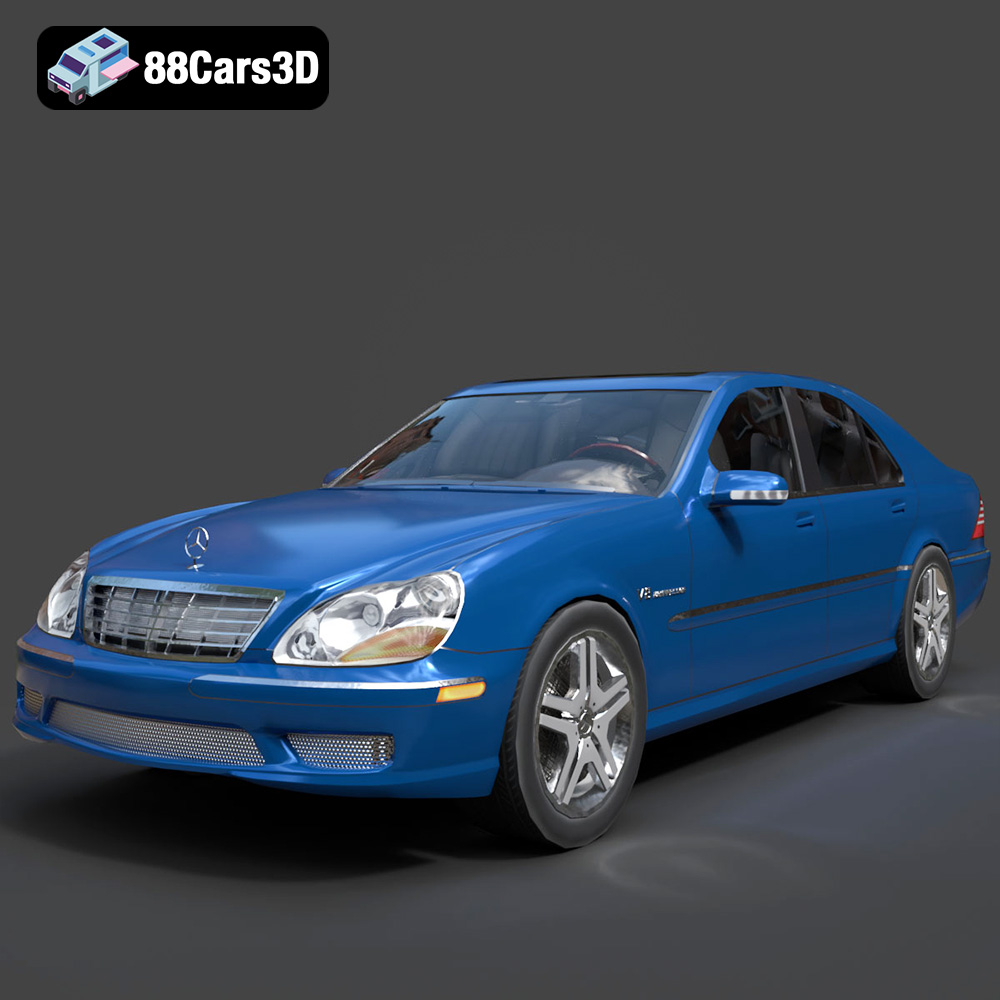
Mercedes-Benz S55 W220 AMG 1999 3D Model
Texture: Yes
Material: Yes
Download the Mercedes-Benz S55 W220 AMG 1999 3D Model featuring clean geometry, realistic detailing, and a fully modeled interior. Includes .blend, .fbx, .obj, .glb, .stl, .ply, .unreal, and .max formats for rendering, simulation, and game development.
Price: $23.99
