⚡ FLASH SALE: Get 60% OFF All Premium 3D & STL Models! ⚡

Unreal Engine 5 has revolutionized the landscape of real-time rendering, empowering creators to achieve photorealistic visuals that were once the exclusive domain of offline, path-traced renderers. For the automotive industry, this shift is monumental. From interactive car configurators and virtual showrooms to high-octane game development and virtual production for commercials, Unreal Engine provides a powerful, all-in-one solution. However, harnessing this power requires a deep understanding of its core systems, from asset preparation and material creation to lighting, optimization, and interactivity. This guide will walk you through the complete workflow of bringing a high-quality 3D car model into Unreal Engine 5 and transforming it into a stunning, interactive digital asset.
This comprehensive technical post is designed for 3D artists, game developers, and visualization specialists looking to elevate their automotive projects. We will deconstruct the entire process, starting with optimal project setup and asset preparation. You’ll learn the intricacies of importing complex models, leveraging the groundbreaking Nanite virtualized geometry system, and crafting breathtakingly realistic PBR materials for paint, glass, and chrome. We’ll then illuminate your scene using the dynamic power of Lumen global illumination and explore how to add user interaction with Blueprint visual scripting. Finally, we’ll cover the critical steps of performance optimization to ensure your application runs smoothly across all target platforms. By the end, you’ll have the knowledge to create truly next-generation automotive experiences.
Before you can import your first vehicle, laying a solid foundation within your Unreal Engine project is paramount. A properly configured project ensures that you have access to the right tools and that your settings are optimized for the high-fidelity visuals required for automotive visualization. This initial setup phase, combined with meticulous asset preparation, will save you countless hours of troubleshooting down the line and set your project up for success.
When creating a new project in Unreal Engine, the template you choose matters. For most automotive visualization work, starting with the Games > Blank template provides a clean slate. However, if you know your project will be focused on cinematic output or virtual production, the Film/Video & Live Events templates come pre-configured with useful plugins and settings. Regardless of your starting point, several essential plugins should be enabled:
You can enable these by navigating to Edit > Plugins. A restart of the editor will be required after enabling them.
The quality of your final render is directly tied to the quality of your source model. Using professionally crafted assets from marketplaces like 88cars3d.com provides a significant head start, as they typically feature clean topology, proper scale, and well-organized hierarchies. Before exporting, ensure the following steps are completed in your 3D software (e.g., Blender, 3ds Max, Maya):
Importing a complex asset like a car into Unreal Engine is more than just a drag-and-drop operation. The settings you choose during the import process have a profound impact on performance, visual fidelity, and your ability to work with the model efficiently. With the advent of Unreal Engine 5, we now have Nanite, a technology that fundamentally changes how we handle high-polygon geometry.
While Unreal supports a wide range of file formats, FBX and USD (Universal Scene Description) are the two primary choices for high-quality assets.
For most users, starting with FBX is straightforward and reliable. As your projects grow in complexity, exploring a USD-based pipeline is highly recommended.
When you import your FBX or USD file, an import options dialog will appear. This is a critical step. For a typical car model, consider these settings:
After import, you will have a collection of Static Meshes in your Content Browser. You can select them all and drag them into the viewport to assemble your car at the world origin (0,0,0).
Once imported, you may need to adjust pivots for interactive elements. For example, to make a door open correctly, its pivot point must be at the hinge. If this wasn’t set correctly in the DCC, you can adjust it in Unreal by entering Modeling Mode (Shift+5), selecting the mesh, and using the Pivot tool. Having a clean hierarchy from your source file makes selecting and manipulating these individual components a simple task.
A great model is nothing without great materials. Unreal Engine’s node-based Material Editor is an incredibly powerful tool for creating physically-based rendering (PBR) materials that mimic real-world surfaces. For automotive visualization, mastering materials for car paint, metal, glass, and rubber is essential for achieving photorealism.
Instead of creating a new material from scratch for every surface, the professional workflow is to create a generic “Master Material” and then create Material Instances from it. A Master Material contains all the complex logic and texture inputs. A Material Instance is a lightweight “child” of the master that allows you to change parameters (like color, roughness, or textures) without recompiling the shader.
For example, you can create one `M_CarPaint_Master` material. From this, you can create instances like `MI_CarPaint_Red`, `MI_CarPaint_Black`, and `MI_CarPaint_Blue`, each with a different Base Color parameter. This is efficient, organized, and crucial for building interactive configurators. When sourcing your assets from a platform like 88cars3d.com, you often receive pre-built PBR textures (Albedo, Normal, Roughness, Metallic, Ambient Occlusion) which can be plugged directly into these master materials.
Standard car paint is a complex, multi-layered surface. We can replicate this using the Clear Coat shading model in the Material Editor. Here’s a breakdown of a typical car paint material:
Beyond paint, other materials complete the vehicle:
Lighting is what breathes life and emotion into your scene. Unreal Engine 5’s Lumen is a fully dynamic global illumination and reflections system that provides stunning, real-time results without the need for light baking. This is a game-changer for automotive visualization, allowing for instant feedback and dynamic scenarios.
A classic way to showcase a vehicle is in a virtual photo studio. Here’s a quick setup:
Lumen provides incredibly detailed reflections out of the box. For the highest fidelity, especially on smooth surfaces like car paint and glass, you can enhance it further. In the Post Process Volume, under the `Reflections` section, you can increase the `Quality`. For ultimate quality, if your hardware supports it, you can enable `Use Hardware Ray Tracing when available` in the Lumen settings. This will produce physically accurate, ray-traced reflections, which are particularly noticeable in mirrors and on chrome trim. Be aware that this comes at a significant performance cost and is typically reserved for high-end PCs and cinematic rendering.
For outdoor scenes, Lumen works seamlessly with Unreal’s Sky Atmosphere system. By adding a `Directional Light` (representing the sun), a `Sky Light`, and a `Sky Atmosphere` actor, you can create realistic time-of-day scenarios. As you move the directional light, Lumen will dynamically update the global illumination and shadows in real-time, allowing you to find the perfect lighting for your vehicle in any environment.
Static renders are impressive, but interactive experiences are engaging. Unreal Engine’s Blueprint visual scripting system allows artists and designers to create complex gameplay and interactivity without writing a single line of code. For automotive visualization, a common use case is creating a simple car configurator.
The first step is to create a UI for the user to interact with. Unreal’s UMG (Unreal Motion Graphics) is a powerful tool for this. You can create a new `Widget Blueprint` to design your UI. Drag and drop elements like `Buttons` and `Text` onto a canvas. For a color switcher, you might create a series of buttons, each representing a different paint color.
Let’s create a simple Blueprint that changes the car’s paint color when a UI button is clicked. This requires communication between the UI Widget and an Actor Blueprint in the level.
With this simple setup, clicking a button in the UI will now instantly change the material on the car in real-time. This same principle can be extended to open doors (using timelines to animate rotation), switch wheel styles, or change interior trims, forming the basis of a complete automotive configurator.
The logic for material swapping can be adapted for mechanical animations. To open a door, you would create a `Timeline` node in your Blueprint. This timeline would animate a float value from 0 to 1 over a second. You would then use this value to drive a `Set Relative Rotation` node on the door’s static mesh component, interpolating between a closed and an open angle. This level of interactivity transforms a static model into a dynamic, explorable product.
Achieving stunning visuals is only half the battle. Your application must run at a smooth, consistent frame rate to provide a good user experience. This is especially critical for VR applications, where low frame rates can cause motion sickness. Optimization is a continuous process of identifying and resolving performance bottlenecks.
Unreal Engine includes a suite of powerful profiling tools. The most essential are the `stat` commands.
Use these tools to get a baseline understanding of your scene’s performance before you start optimizing.
Even with Nanite, not all geometry is equal. Nanite is ideal for static, opaque meshes. For objects that need to deform, be transparent, or use certain material effects, you will fall back to traditional static meshes which require Level of Detail (LODs). Unreal can automatically generate LODs for your meshes, creating simplified versions that are swapped in as the object gets further from the camera. You can configure the number of LODs and the screen size at which they activate in the Static Mesh editor. For a hero car that is always close to the camera, you may only need 1-2 LOD levels, whereas background environment assets might need 4-5.
High-resolution textures consume significant VRAM. Follow these best practices:
We’ve journeyed through the complete pipeline of creating a high-end automotive visualization in Unreal Engine 5. By starting with a well-prepared, high-quality 3D asset, you lay the groundwork for success. We’ve seen how Unreal’s import options and the revolutionary Nanite technology allow us to work with cinematic-quality models in real-time. We delved into the art of PBR material creation, replicating complex surfaces like multi-layered car paint, and explored how Lumen and HDRI backdrops can produce breathtakingly realistic lighting with incredible speed. Furthermore, we unlocked the potential for interactivity with Blueprint, transforming a static model into an engaging configurator, and covered the essential principles of performance optimization to ensure a smooth final product.
The convergence of high-fidelity 3D car models and the power of real-time rendering engines like Unreal is not just a trend; it is the future of how consumers will engage with automotive products. Whether you are creating a marketing cinematic, a VR showroom, or a next-gen racing game, the skills and workflows outlined here are your keys to building immersive, visually stunning, and interactive automotive experiences. The next step is to take these concepts and apply them to your own projects. Start with a high-quality model, experiment with materials and lighting, and begin building simple interactive features. The power to create is at your fingertips.

**Meta Description:**
Texture: Yes
Material: Yes
Download the Toyota Crown Majesta 2009 3D Model with luxury detailing, clean topology, and a fully modeled interior. Available in .blend, .fbx, .obj, .glb, .stl, .ply, .unreal, and .max formats for rendering, simulation, and game development.
Price: $13.9
**Meta Description:**
Texture: Yes
Material: Yes
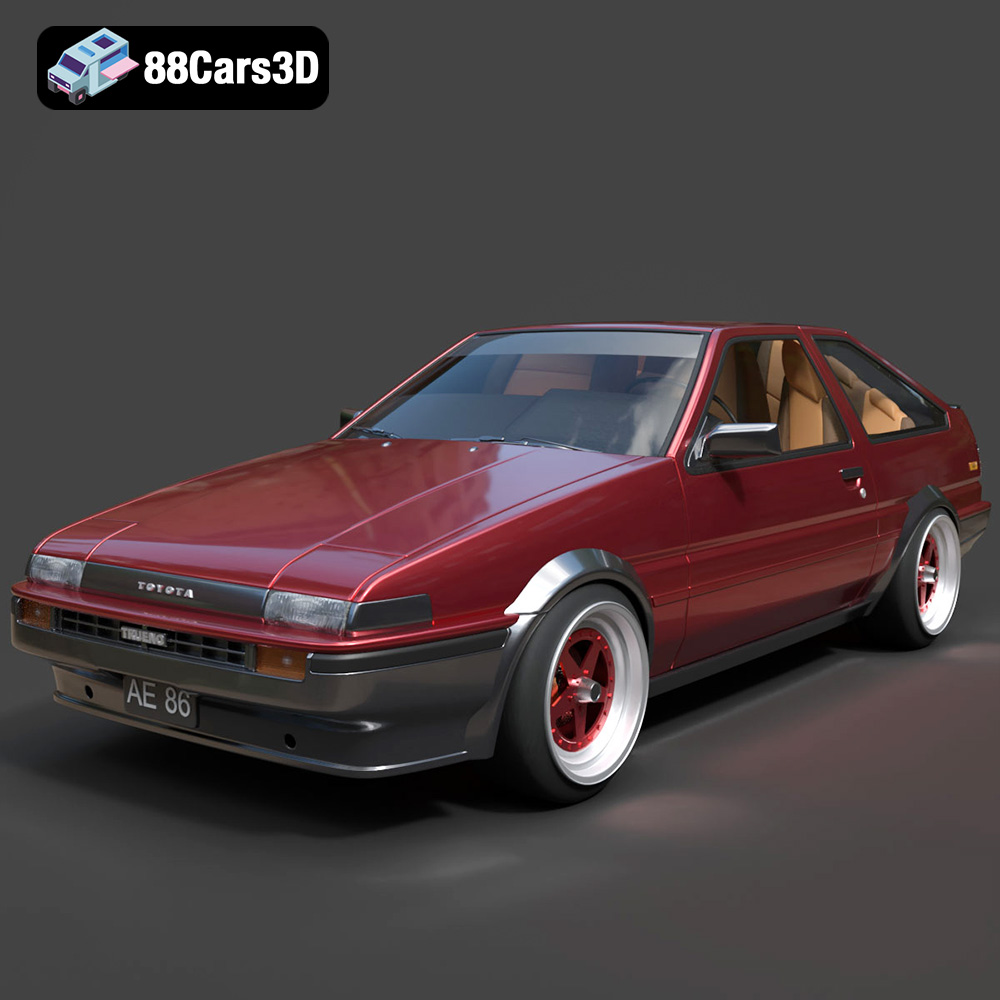
Download the Toyota AE86 Levin 1983 1987 3D Model featuring realistic exterior and interior detailing. Includes .blend, .fbx, .obj, .glb, .stl, .ply, .unreal, and .max formats for rendering, simulation, and game development.
Price: $29.99

Texture: Yes
Material: Yes
Download the Toyota Mark 2 2001 3D Model featuring clean geometry, realistic detailing, and a fully modeled interior. Includes .blend, .fbx, .obj, .glb, .stl, .ply, .unreal, and .max formats for rendering, simulation, and game development.
Price: $10

Texture: Yes
Material: Yes
Download the Toyota Celica 2000 3D Model featuring clean geometry, realistic detailing, and a fully modeled interior. Includes .blend, .fbx, .obj, .glb, .stl, .ply, .unreal, and .max formats for rendering, simulation, and game development.
Price: $10

Download the Toyota Camry US 2012 3D Model featuring clean geometry, realistic detailing, and a fully modeled interior. Includes .blend, .fbx, .obj, .glb, .stl, .ply, .unreal, and .max formats for rendering, simulation, and game development.
Price: $10

Texture: Yes
Material: Yes
Download the Toyota GT 86 2013 3D Model featuring clean geometry, realistic detailing, and a fully modeled interior. Includes .blend, .fbx, .obj, .glb, .stl, .ply, .unreal, and .max formats for rendering, simulation, and game development.
Price: $10

Texture: Yes
Material: Yes
Download the Toyota Mark X 2010 3D Model featuring clean geometry, realistic detailing, and a fully modeled interior. Includes .blend, .fbx, .obj, .glb, .stl, .ply, .unreal, and .max formats for rendering, simulation, and game development.
Price: $10
Texture: Yes
Material: Yes
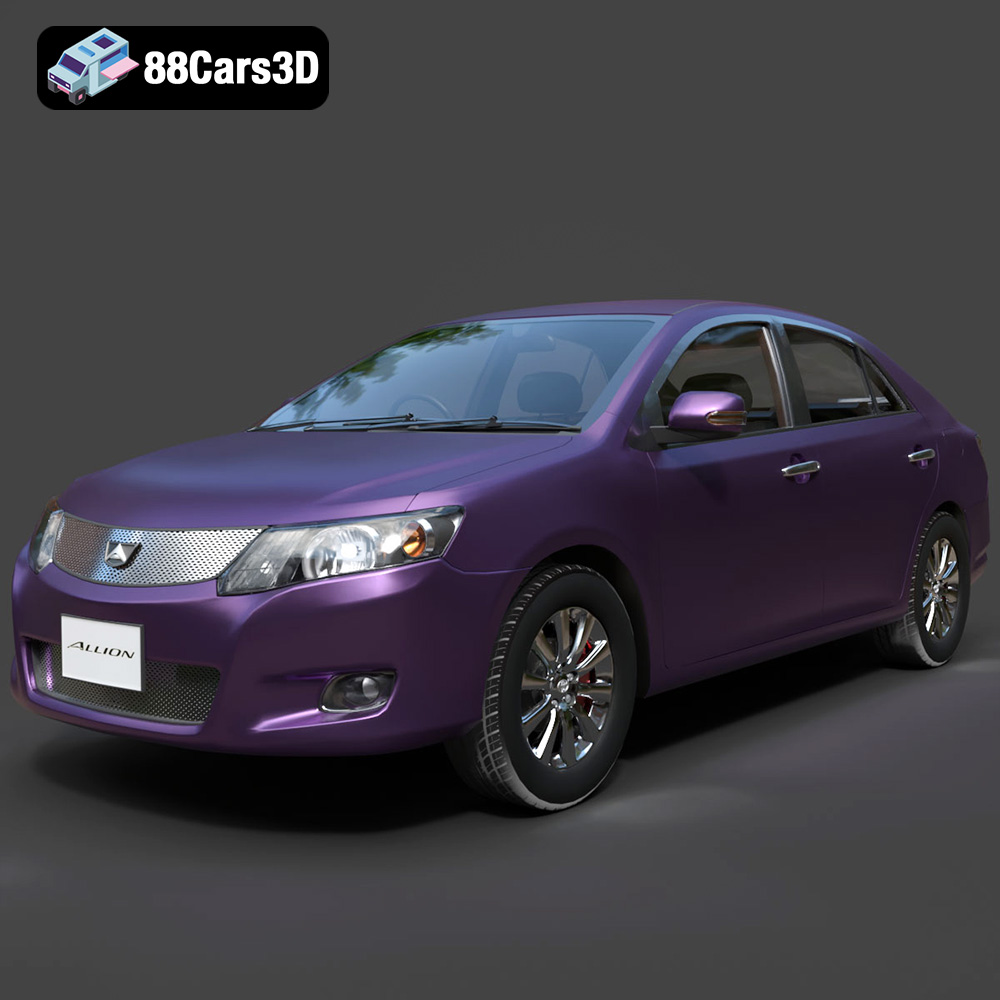
Download the Toyota Allion 2008 3D Model featuring clean geometry, realistic detailing, and a fully modeled interior. Includes .blend, .fbx, .obj, .glb, .stl, .ply, .unreal, and .max formats for rendering, simulation, and game development.
Price: $10
Texture: Yes
Material: Yes
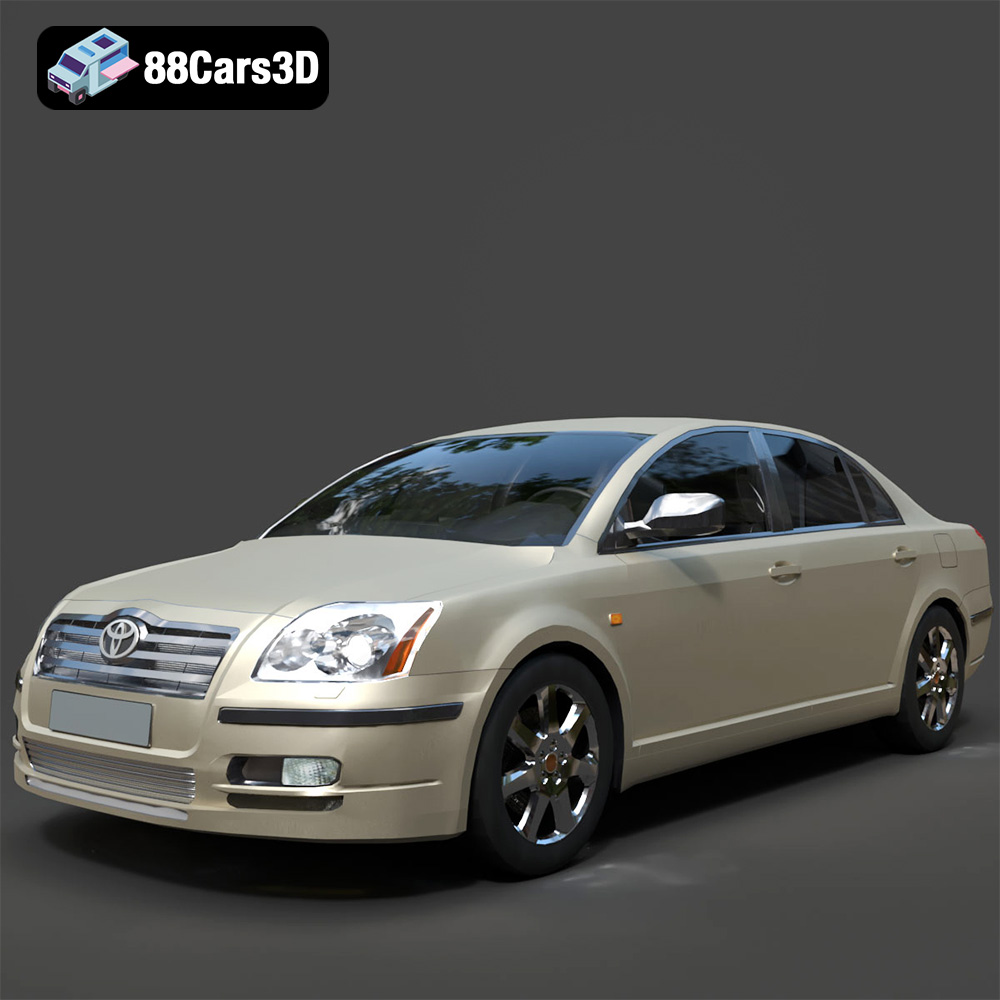
Download the Toyota Avensis 2005 3D Model featuring clean geometry, realistic detailing, and a fully modeled interior. Includes .blend, .fbx, .obj, .glb, .stl, .ply, .unreal, and .max formats for rendering, simulation, and game development.
Price: $10
Texture: Yes
Material: Yes
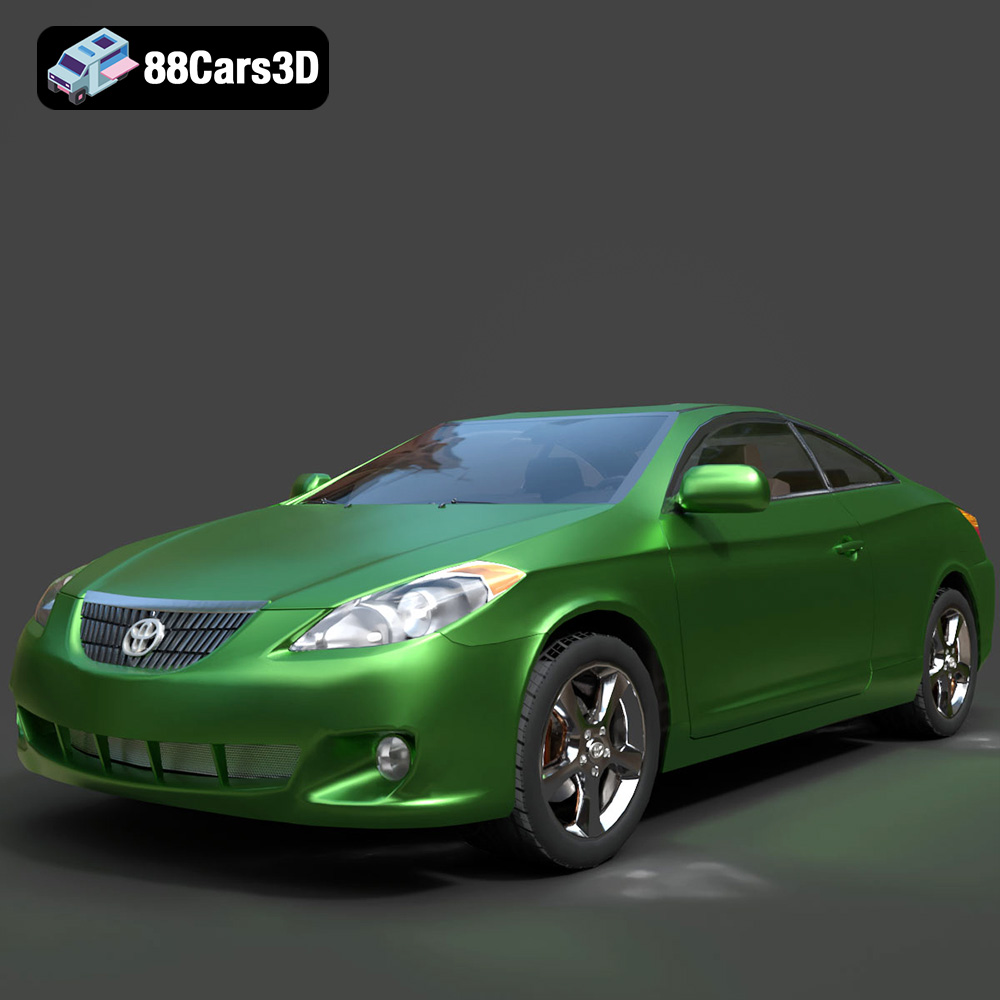
Download the Toyota Camry Solara 2006 3D Model featuring clean geometry, realistic detailing, and a fully modeled interior. Includes .blend, .fbx, .obj, .glb, .stl, .ply, .unreal, and .max formats for rendering, simulation, and game development.
Price: $10

