⚡ FLASH SALE: Get 60% OFF All Premium 3D & STL Models! ⚡

In the demanding world of 3D automotive visualization, mere realism isn’t enough anymore. Audiences, accustomed to the incredible fidelity of modern films and games, expect nothing less than perfection. Crafting vehicles that truly look like they could roll off the showroom floor requires an intricate understanding of materials, and at the heart of this pursuit lies Physically Based Rendering (PBR). For artists striving to push the boundaries of visual fidelity, especially with complex subjects like vehicles, mastering PBR is non-negotiable.
The challenge with automotive surfaces is their inherent complexity: a mosaic of reflective paints, translucent glass, rough plastics, and intricate fabrics, all interacting with light in unique ways. Traditional rendering techniques often struggled to replicate these interactions accurately and consistently across different lighting conditions. This is where PBR shines, offering a robust, physically accurate framework that simplifies material creation while delivering unparalleled realism. As experts in high-quality 3D automotive assets, we at 88cars3d.com understand the nuances involved, and this guide will equip you with the knowledge to achieve breathtaking photorealistic car materials.
This comprehensive guide will deconstruct the principles of PBR as applied to automotive assets, delve into advanced techniques for crafting everything from the most complex paint shaders to subtle interior materials, and provide strategies for optimizing your materials for various rendering environments. Get ready to elevate your automotive renders to an entirely new level of authenticity.
At its core, PBR aims to simulate how light interacts with surfaces in the real world, based on physical laws. This approach ensures that materials look correct under any lighting condition, eliminating the guesswork inherent in older rendering workflows. For automotive models, understanding these foundational principles is crucial for achieving convincing results.
One of PBR’s cornerstones is the principle of energy conservation. This dictates that a surface cannot reflect more light than it receives. Light striking a surface is either reflected (specularly or diffusely) or absorbed. Metals primarily reflect light, while dielectrics (non-metals like paint, plastic, glass) absorb some light and scatter the rest. The ratio of reflection to absorption, and the nature of that reflection, determines the material’s appearance.
For car materials, this means a highly reflective chrome bumper will absorb very little light, while a matte plastic trim will absorb most incident light, reflecting only a small amount diffusely. Maintaining energy conservation throughout your material setup prevents materials from appearing unnaturally bright or dull, ensuring a grounded, realistic look.
No real-world surface is perfectly smooth. Even highly polished automotive paint has microscopic imperfections. Microfacet theory models surfaces as collections of tiny, randomly oriented mirrors (microfacets). The roughness of a surface determines the distribution of these microfacets. A perfectly smooth surface (low roughness) has microfacets aligned, reflecting light uniformly, leading to sharp, clear reflections. A rougher surface has microfacets oriented in many directions, scattering light and producing blurry, diffuse reflections.
In PBR, the ‘Roughness’ (or ‘Glossiness’ depending on the workflow) parameter is paramount. It dictates how sharp or blurred reflections appear and how light is scattered across a surface. For instance, the subtle difference in roughness between a brand-new car’s clear coat and a slightly weathered plastic bumper is key to visual authenticity. Properly utilizing PBR texture maps for roughness is essential for defining these surface characteristics.
PBR fundamentally distinguishes between metallic and dielectric (non-metallic) materials. Metals have unique optical properties: their base color (albedo) is determined by their reflected color, and they exhibit strong specular reflections across their entire surface, with virtually no diffuse component. Dielectrics, on the other hand, have a diffuse base color (albedo) that represents the light scattered beneath the surface, and they have a separate, typically achromatic, specular reflection at the surface.
The ‘Metallic’ map in PBR workflows acts as a binary switch: 0 (black) for dielectrics and 1 (white) for metals. For dielectric surfaces like car paint, plastics, or rubber, the base color map holds all the color information, and the ‘Metallic’ map is pure black. The Fresnel effect (how reflection strength changes with viewing angle) is also handled differently. Dielectrics have a fixed Fresnel reflectance at a normal angle (F0), typically around 0.04 (4% reflection), while metals have F0 values ranging from 0.5 to 0.98, and their F0 is colored by their albedo. Correctly classifying your materials as metallic or dielectric is the first critical step in a PBR workflow for automotive assets.
To accurately describe the complex light interactions of automotive surfaces, PBR relies on a set of standardized texture maps. These maps provide granular control over various material properties, allowing artists to paint highly detailed surface characteristics. Understanding each map’s function is key to achieving truly photorealistic results.
The Albedo (sometimes called Base Color) map defines the diffuse color of a dielectric surface or the reflected color of a metallic surface. For dielectrics, this map should contain only color information, devoid of any lighting or shadowing. Think of it as the ‘pure’ color of the material. For example, a red car paint’s albedo map would be a flat red. For metals, this map defines the color of their strong reflections, such as the silvery-blue hue of polished chrome or the warm yellow of brass.
It’s crucial that albedo maps are desaturated of ambient occlusion or baked lighting, as these elements should be handled by the renderer’s lighting solution. A clean albedo map is foundational for accurate PBR materials.
This map, arguably one of the most impactful for visual realism, controls the microscopic surface imperfections that scatter light. A Roughness map uses values from 0 (perfectly smooth, mirror-like) to 1 (extremely rough, diffuse). A Glossiness map is the inverse: 0 (rough) to 1 (smooth). Most modern engines and software use a Roughness workflow.
For automotive materials, this map is vital. It defines the subtle differences between a highly polished clear coat, a slightly textured plastic, or the matte finish of an interior fabric. Variations in roughness can convey wear, dust, fingerprints, or even the subtle texture of a specific paint finish, making your photorealistic car materials truly come alive. Creating accurate roughness maps often involves a combination of procedural noise, painted details, and real-world reference analysis during your Substance Painter workflow.
As discussed, the Metallic map is typically a grayscale or single-channel texture that tells the renderer whether a surface point is metallic (white, value 1) or dielectric (black, value 0). While it can sometimes carry gradient information for blending between metallic and non-metallic properties, it’s generally best to keep it binary for most automotive applications. For example, the chrome trim on a car would be white, while the surrounding paint would be black.
This map is critical for telling the shader how to interpret the Albedo map and handle reflections, ensuring that metals behave like metals and non-metals behave like non-metals, following physical laws.
Normal maps (and sometimes Height/Displacement maps) are used to add fine surface detail without increasing polygon count. A normal map stores directional information (normals) that tell the renderer how light should bounce off the surface, simulating bumps, grooves, and intricate textures. For instance, the subtle grain on interior plastics, the weave of carbon fiber, or the fine texture of tire rubber can be effectively conveyed with normal maps.
Height maps, when used for displacement, physically displace vertices, offering even greater realism for macro details but at a higher computational cost. For most real-time automotive rendering, normal maps are the workhorse for adding surface detail efficiently.
While not strictly a PBR material property, the Ambient Occlusion (AO) map is commonly used to enhance realism. It simulates self-shadowing in crevices and cavities, adding depth and contact shadows where surfaces are close together. An AO map is typically a grayscale texture where darker areas indicate occluded regions.
When used in conjunction with PBR materials, AO helps ground the object in its environment, making details pop and contributing significantly to the overall sense of depth and realism on automotive components like grilles, panel gaps, and intricate engine parts.
The automotive paint shader is arguably the most complex and defining material on a vehicle. Modern car paints are multi-layered, exhibiting depth, sparkle, and unique optical properties. Recreating this accurately with PBR requires a deep dive into advanced techniques.
The base coat of automotive paint provides the primary color. For solid paints, this is straightforward: a clean albedo map. However, for metallic paints, you need to simulate the tiny metallic flakes suspended within the paint. This is often achieved by layering a subtle noise texture (like a tiny anisotropic or isotropic speckle) onto the roughness or normal map, which breaks up reflections in a characteristic way. Some advanced shaders might even use a dedicated flake normal map or a procedural flake generator.
The metallic map for the base paint itself remains black (dielectric), as the paint film is non-metallic. The metallic appearance comes from the flakes underneath the clear coat, which are typically handled by a separate layer or by specifically designed shader nodes that simulate reflective particles within the paint’s volume. Using a dedicated shader for metallic flakes, often through a secondary reflection lobe, offers the best control and fidelity.
The clear coat is what gives car paint its signature gloss and depth. It’s a transparent, highly reflective dielectric layer applied over the base coat. A proper clear coat model in PBR simulates this layer as a distinct, separate material on top of the base paint. This means it has its own roughness, normal, and Fresnel properties.
The clear coat’s roughness will typically be very low, resulting in sharp, mirror-like reflections. It also has its own F0 (around 0.04 for dielectrics). Advanced clear coat shaders might include features like absorption (for subtle color tinting) or even multiple clear coat layers for increased depth. The interplay between the clear coat and the underlying base paint is what creates the captivating multi-dimensional look of real automotive finishes. A good clear coat implementation will correctly handle energy conservation, allowing the underlying paint’s properties to show through, albeit refracted and reflected by the top layer.
Pearl and candy paints introduce even more complexity. Pearl (or “mica”) paints contain iridescent particles that shift color depending on the viewing angle. Candy paints achieve deep, vibrant colors through a translucent, tinted clear coat over a metallic base. To simulate these, you’ll need advanced shader techniques:
Achieving these effects often involves custom shader nodes in game engines like Unreal Engine or advanced material graphs in rendering software like V-Ray or Arnold. For texture creation, a robust Substance Painter workflow allows you to layer these intricate effects by leveraging masks and procedural generators.
While paint is paramount, a vehicle is a collection of diverse materials, each requiring careful PBR treatment to achieve overall realism. From transparent glass to textured rubber, every surface contributes to the final image.
Automotive glass is more than just transparent. It reflects, refracts, and can exhibit subtle imperfections. For windshields and windows, a dielectric material with a low roughness and an accurate Index of Refraction (IOR) (around 1.5-1.6 for glass) is essential. The Fresnel effect will ensure reflections are strongest at glancing angles. Don’t forget subtle details like dirt, streaks, or water droplets, which can be added via roughness and normal maps.
Headlight lenses are even more complex. They often feature intricate internal geometry for light scattering, and the outer lens can have subtle textures or patterns. Simulating these details requires careful modeling and PBR materials that account for subsurface scattering (if light passes through thick parts) or intricate normal/displacement maps for lens patterns. Accurate IOR values for plastics (e.g., acrylics, polycarbonates) are also critical.
Carbon fiber is a hallmark of high-performance vehicles, and its distinctive woven pattern and anisotropic reflections are a challenge to replicate. The key to photorealistic carbon fiber lies in two main components: a detailed normal/bump map of the weave pattern and anisotropic reflections. Anisotropy means that reflections stretch or streak in a particular direction, following the grain of the material.
In PBR, this is usually controlled by an anisotropic direction map (tangent map) or by setting the anisotropy parameter in the shader and rotating it. The roughness map will define how blurry or sharp these stretched reflections are. Combining these elements with a dark albedo and a subtle clear coat layer over the carbon weave creates a truly convincing material. When sourcing models for demanding projects, consider checking out resources like 88cars3d.com for expertly crafted carbon fiber textures.
These seemingly mundane materials play a huge role in grounding a vehicle in reality. Tire rubber, for example, is a dielectric with a relatively high roughness and a dark albedo. Its texture comes from intricate normal maps detailing the tread pattern and sidewall markings. Variations in roughness can simulate wear and tear, dust, or even wetness.
Grille plastics often have specific textures (e.g., honeycomb, matte finish) that require corresponding normal and roughness maps. They are typically dark dielectrics with a roughness value that makes them appear slightly duller than paint. Understanding the specific type of plastic (e.g., ABS, polypropylene) can guide your choices for roughness and albedo. Subtle imperfections like scuffs or dust further enhance realism.
The vehicle’s interior requires an equally meticulous PBR approach. Fabrics like upholstery or headliners are dielectrics with varying levels of roughness and potentially subtle normal maps to simulate their weave. Advanced fabric shaders might incorporate fuzz (fibers that stick up) or thin-film interference for unique optical properties.
Leather, a complex organic material, benefits from intricate normal maps to show its grain and wrinkles, coupled with a moderately rough PBR material. Subtle color variations, wear, and sheen differences (controlled by roughness maps) across the leather surface are crucial for realism. Subsurface scattering can also be used subtly to simulate light penetrating the leather’s surface. A thorough material calibration process using real-world references is indispensable for these nuanced interior elements.
The success of your PBR materials hinges on accurate calibration and a keen eye for real-world references. Without grounding your materials in physical reality, even the most technically perfect PBR setup can fall flat.
Never underestimate the power of reference. Collect a vast library of high-resolution photographs of the specific car model, materials, and lighting conditions you want to emulate. Pay close attention to how light interacts with different surfaces: the sharpness of reflections on the clear coat, the subtle sheen of rubber, the translucency of glass, and the unique sparkle of metallic paint. Analyze roughness, color, and reflectivity.
High Dynamic Range Images (HDRIs) are indispensable for PBR scene lighting. They provide accurate environmental lighting and reflections, making material calibration much easier. Test your materials under various HDRIs to ensure they hold up in different lighting scenarios, a key advantage of PBR’s physical accuracy.
While PBR simplifies many aspects of material creation, certain pitfalls can derail realism:
Creating beautiful photorealistic car materials is one thing; making them perform efficiently across different platforms is another. Whether you’re aiming for a cinematic render or real-time game integration, optimization is a crucial final step.
For pre-rendered cinematics or high-fidelity marketing visuals, performance is less of a bottleneck, allowing you to push visual quality to its limits. Here, you can:
These renders typically rely on powerful offline renderers like V-Ray, Arnold, or Redshift, which are designed to handle complex light transport and massive data sets.
Real-time automotive rendering in game engines like Unreal Engine or Unity demands a delicate balance between visual fidelity and performance. Optimizing your PBR materials is critical to maintaining high frame rates while still looking impressive.
Careful planning in your PBR material creation, especially with a Substance Painter workflow, can yield assets that perform admirably in real-time while retaining much of their photorealistic appeal.
Mastering photorealistic car materials with PBR is an art form, demanding both technical prowess and a keen artistic eye. By thoroughly understanding the principles of energy conservation, microfacet theory, and the distinctions between metals and dielectrics, you lay a solid foundation for all your automotive projects. The ability to craft intricate automotive paint shaders, including sophisticated clear coat models, and accurately simulate diverse materials like glass, carbon fiber, and rubber, sets truly exceptional work apart.
Remember that consistent material calibration against real-world references is your compass, guiding you toward authenticity. Whether your goal is a stunning cinematic visual or optimized assets for real-time automotive rendering in a game engine, the PBR workflow provides the tools to achieve it. The journey of mastering PBR is continuous, filled with learning and refinement, but the rewards are breathtakingly realistic automotive visuals.
For those looking to jumpstart their projects with expertly crafted models featuring production-ready PBR materials, explore the extensive library at 88cars3d.com. We provide high-quality 3D car models that serve as excellent starting points or valuable references for your own material development. Keep experimenting, keep learning, and drive your renders to the pinnacle of photorealism!

Texture: Yes
Material: Yes
Download the Toyota Mark 2 2001 3D Model featuring clean geometry, realistic detailing, and a fully modeled interior. Includes .blend, .fbx, .obj, .glb, .stl, .ply, .unreal, and .max formats for rendering, simulation, and game development.
Price: $10

Texture: Yes
Material: Yes
Download the Toyota Celica 2000 3D Model featuring clean geometry, realistic detailing, and a fully modeled interior. Includes .blend, .fbx, .obj, .glb, .stl, .ply, .unreal, and .max formats for rendering, simulation, and game development.
Price: $10

Texture: Yes
Material: Yes
Download the Skoda Superb 2009 3D Model featuring clean geometry, realistic detailing, and a fully modeled interior. Includes .blend, .fbx, .obj, .glb, .stl, .ply, .unreal, and .max formats for rendering, simulation, and game development.
Price: $10

Texture: Yes
Material: Yes
Download the Skoda Superb 2006 3D Model featuring clean geometry, realistic detailing, and a fully modeled interior. Includes .blend, .fbx, .obj, .glb, .stl, .ply, .unreal, and .max formats for rendering, simulation, and game development.
Price: $10

Texture: Yes
Material: Yes
Download the Ford Mustang Shelby Super Snake Concept 2018 3D Model featuring clean geometry, realistic detailing, and a fully modeled interior. Includes .blend, .fbx, .obj, .glb, .stl, .ply, .unreal, and .max formats for rendering, simulation, and game development.
Price: $18.99

Texture: Yes
Material: Yes
Download the Porsche Cayenne Turbo 2018 3D Model featuring clean geometry, realistic detailing, and a fully modeled interior. Includes .blend, .fbx, .obj, .glb, .stl, .ply, .unreal, and .max formats for rendering, simulation, and game development.
Price: $10

Texture: Yes
Material: Yes
Download the Chevrolet Lacetti Sedan 2004 3D Model featuring clean geometry, realistic detailing, and a fully modeled interior. Includes .blend, .fbx, .obj, .glb, .stl, .ply, .unreal, and .max formats for rendering, simulation, and game development.
Price: $10

Texture: Yes
Material: Yes
Download the Skoda Rapid 2013 3D Model featuring clean geometry, realistic detailing, and a fully modeled interior. Includes .blend, .fbx, .obj, .glb, .stl, .ply, .unreal, and .max formats for rendering, simulation, and game development.
Price: $10

Texture: Yes
Material: Yes
Download the Skoda Octavia A5-007 3D Model featuring clean geometry, realistic detailing, and a fully modeled interior. Includes .blend, .fbx, .obj, .glb, .stl, .ply, .unreal, and .max formats for rendering, simulation, and game development.
Price: $10

Texture: Yes
Material: Yes
Download the Skoda Fabia 2023 3D Model featuring clean geometry, realistic detailing, and a fully modeled interior. Includes .blend, .fbx, .obj, .glb, .stl, .ply, .unreal, and .max formats for rendering, simulation, and game development.
Price: $10

Texture: Yes
Material: Yes
Download the Skoda Fabia 2007 3D Model featuring clean geometry, realistic detailing, and a fully modeled interior. Includes .blend, .fbx, .obj, .glb, .stl, .ply, .unreal, and .max formats for rendering, simulation, and game development.
Price: $10

Texture: Yes
Material: Yes
Download the Honda VFR 1200 F 2015 3D Model featuring clean geometry, realistic detailing, and a fully modeled interior. Includes .blend, .fbx, .obj, .glb, .stl, .ply, .unreal, and .max formats for rendering, simulation, and game development.
Price: $10

Texture: Yes
Material: Yes
Download the Subaru BRZ 2025 3D Model featuring clean geometry, realistic detailing, and a fully modeled interior. Includes .blend, .fbx, .obj, .glb, .stl, .ply, .unreal, and .max formats for rendering, simulation, and game development.
Price: $10

Texture: Yes
Material: Yes
Download the SsangYong Rodius 2007 3D Model featuring clean geometry, realistic detailing, and a fully modeled interior. Includes .blend, .fbx, .obj, .glb, .stl, .ply, .unreal, and .max formats for rendering, simulation, and game development.
Price: $10

Texture: Yes
Material: Yes
Download the Subaru Impreza 1992 3D Model featuring clean geometry, realistic detailing, and a fully modeled interior. Includes .blend, .fbx, .obj, .glb, .stl, .ply, .unreal, and .max formats for rendering, simulation, and game development.
Price: $10

Texture: Yes
Material: Yes
Download the Subaru Impreza 2005 3D Model featuring clean geometry, realistic detailing, and a fully modeled interior. Includes .blend, .fbx, .obj, .glb, .stl, .ply, .unreal, and .max formats for rendering, simulation, and game development.
Price: $10

Texture: Yes
Material: Yes
Download the Spyker C8-007 2004 3D Model featuring clean geometry, realistic detailing, and a fully modeled interior. Includes .blend, .fbx, .obj, .glb, .stl, .ply, .unreal, and .max formats for rendering, simulation, and game development.
Price: $10

Texture: Yes
Material: Yes
Download the Smart Roadster 2003 3D Model featuring clean geometry, realistic detailing, and a fully modeled interior. Includes .blend, .fbx, .obj, .glb, .stl, .ply, .unreal, and .max formats for rendering, simulation, and game development.
Price: $10

Texture: Yes
Material: Yes
Download the Skoda Roomster 2007 3D Model featuring clean geometry, realistic detailing, and a fully modeled interior. Includes .blend, .fbx, .obj, .glb, .stl, .ply, .unreal, and .max formats for rendering, simulation, and game development.
Price: $10

Texture: Yes
Material: Yes
Download the Subaru Impreza Sport Wagon 3D Model featuring clean geometry, realistic detailing, and a fully modeled interior. Includes .blend, .fbx, .obj, .glb, .stl, .ply, .unreal, and .max formats for rendering, simulation, and game development.
Price: $10

Texture: Yes
Material: Yes
Download the Skoda Octavia A7 2017 3D Model featuring clean geometry, realistic detailing, and a fully modeled interior. Includes .blend, .fbx, .obj, .glb, .stl, .ply, .unreal, and .max formats for rendering, simulation, and game development.
Price: $10

Texture: Yes
Material: Yes
Download the Suzuki SX4-002 3D Model featuring clean geometry, realistic detailing, and a fully modeled interior. Includes .blend, .fbx, .obj, .glb, .stl, .ply, .unreal, and .max formats for rendering, simulation, and game development.
Price: $10

Texture: Yes
Material: Yes
Download the Tesla Model S 2024 3D Model featuring clean geometry, realistic detailing, and a fully modeled interior. Includes .blend, .fbx, .obj, .glb, .stl, .ply, .unreal, and .max formats for rendering, simulation, and game development.
Price: $10

Texture: Yes
Material: Yes
Download the Subaru Impreza WRX STi-002 3D Model featuring clean geometry, realistic detailing, and a fully modeled interior. Includes .blend, .fbx, .obj, .glb, .stl, .ply, .unreal, and .max formats for rendering, simulation, and game development.
Price: $10

Texture: Yes
Material: Yes
Download the Subaru Impreza WRX STi Sedan 3D Model featuring clean geometry, realistic detailing, and a fully modeled interior. Includes .blend, .fbx, .obj, .glb, .stl, .ply, .unreal, and .max formats for rendering, simulation, and game development.
Price: $10

Texture: Yes
Material: Yes
Download the Subaru Legacy 2009 3D Model featuring clean geometry, realistic detailing, and a fully modeled interior. Includes .blend, .fbx, .obj, .glb, .stl, .ply, .unreal, and .max formats for rendering, simulation, and game development.
Price: $10

Texture: Yes
Material: Yes
Download the Suzuki Swift 2024 3D Model featuring clean geometry, realistic detailing, and a fully modeled interior. Includes .blend, .fbx, .obj, .glb, .stl, .ply, .unreal, and .max formats for rendering, simulation, and game development.
Price: $10

Texture: Yes
Material: Yes
Download the Suzuki Liana Sedan 2004 3D Model featuring clean geometry, realistic detailing, and a fully modeled interior. Includes .blend, .fbx, .obj, .glb, .stl, .ply, .unreal, and .max formats for rendering, simulation, and game development.
Price: $10

Texture: Yes
Material: Yes
Download the Subaru Outback 2024 3D Model featuring clean geometry, realistic detailing, and a fully modeled interior. Includes .blend, .fbx, .obj, .glb, .stl, .ply, .unreal, and .max formats for rendering, simulation, and game development.
Price: $10

Texture: Yes
Material: Yes
Download the Subaru Legacy 2003 3D Model featuring clean geometry, realistic detailing, and a fully modeled interior. Includes .blend, .fbx, .obj, .glb, .stl, .ply, .unreal, and .max formats for rendering, simulation, and game development.
Price: $10

Texture: Yes
Material: Yes
Download the Subaru Legacy Touring Wagon 3D Model featuring clean geometry, realistic detailing, and a fully modeled interior. Includes .blend, .fbx, .obj, .glb, .stl, .ply, .unreal, and .max formats for rendering, simulation, and game development.
Price: $10

Texture: Yes
Material: Yes
Download the Toyota Mark II (X100) 3D Model featuring clean geometry, realistic detailing, and a fully modeled interior. Includes .blend, .fbx, .obj, .glb, .stl, .ply, .unreal, and .max formats for rendering, simulation, and game development.
Price: $10

Texture: Yes
Material: Yes
Download the Toyota Corona 1985 3D Model featuring clean geometry, realistic detailing, and a fully modeled interior. Includes .blend, .fbx, .obj, .glb, .stl, .ply, .unreal, and .max formats for rendering, simulation, and game development.
Price: $10

Texture: Yes
Material: Yes
Download the Toyota Mark II X81 1990 3D Model featuring clean geometry, realistic detailing, and a fully modeled interior. Includes .blend, .fbx, .obj, .glb, .stl, .ply, .unreal, and .max formats for rendering, simulation, and game development.
Price: $10

Texture: Yes
Material: Yes
Download the Toyota iQ EV 2012 3D Model featuring clean geometry, realistic detailing, and a fully modeled interior. Includes .blend, .fbx, .obj, .glb, .stl, .ply, .unreal, and .max formats for rendering, simulation, and game development.
Price: $10

Texture: Yes
Material: Yes
Download the Toyota Aygo 2013 3D Model featuring clean geometry, realistic detailing, and a fully modeled interior. Includes .blend, .fbx, .obj, .glb, .stl, .ply, .unreal, and .max formats for rendering, simulation, and game development.
Price: $10

Texture: Yes
Material: Yes
Download the Toyota Crown S180 2005 3D Model featuring clean geometry, realistic detailing, and a fully modeled interior. Includes .blend, .fbx, .obj, .glb, .stl, .ply, .unreal, and .max formats for rendering, simulation, and game development.
Price: $10

Texture: Yes
Material: Yes
Download the Toyota Celica 2004 3D Model featuring clean geometry, realistic detailing, and a fully modeled interior. Includes .blend, .fbx, .obj, .glb, .stl, .ply, .unreal, and .max formats for rendering, simulation, and game development.
Price: $10

Texture: Yes
Material: Yes
Download the Toyota Corolla AE100 1992 3D Model featuring clean geometry, realistic detailing, and a fully modeled interior. Includes .blend, .fbx, .obj, .glb, .stl, .ply, .unreal, and .max formats for rendering, simulation, and game development.
Price: $10

Texture: Yes
Material: Yes
Download the Toyota Mark II X110 2000 3D Model featuring clean geometry, realistic detailing, and a fully modeled interior. Includes .blend, .fbx, .obj, .glb, .stl, .ply, .unreal, and .max formats for rendering, simulation, and game development.
Price: $10

Texture: Yes
Material: Yes
Download the Toyota Corolla 2020 3D Model featuring clean geometry, realistic detailing, and a fully modeled interior. Includes .blend, .fbx, .obj, .glb, .stl, .ply, .unreal, and .max formats for rendering, simulation, and game development.
Price: $10

Texture: Yes
Material: Yes
Download the Toyota Yaris 2020 3D Model featuring clean geometry, realistic detailing, and a fully modeled interior. Includes .blend, .fbx, .obj, .glb, .stl, .ply, .unreal, and .max formats for rendering, simulation, and game development.
Price: $9.9

Texture: Yes
Material: Yes
Download the Volkswagen Beetle 2012 3D Model featuring clean geometry, realistic detailing, and a fully modeled interior. Includes .blend, .fbx, .obj, .glb, .stl, .ply, .unreal, and .max formats for rendering, simulation, and game development.
Price: $9.9

Texture: Yes
Material: Yes
Download the Toyota Matrix 2005 3D Model featuring clean geometry, realistic detailing, and a fully modeled interior. Includes .blend, .fbx, .obj, .glb, .stl, .ply, .unreal, and .max formats for rendering, simulation, and game development.
Price: $9.9

Texture: Yes
Material: Yes
Download the Toyota Yaris Sedan 3D Model featuring clean geometry, realistic detailing, and a fully modeled interior. Includes .blend, .fbx, .obj, .glb, .stl, .ply, .unreal, and .max formats for rendering, simulation, and game development.
Price: $9.9

Texture: Yes
Material: Yes
Download the Volkswagen Golf R-004 2024 3D Model featuring clean geometry, realistic detailing, and a fully modeled interior. Includes .blend, .fbx, .obj, .glb, .stl, .ply, .unreal, and .max formats for rendering, simulation, and game development.
Price: $9.9

Texture: Yes
Material: Yes
Download the Volkswagen Golf 5 Door 2010 3D Model featuring clean geometry, realistic detailing, and a fully modeled interior. Includes .blend, .fbx, .obj, .glb, .stl, .ply, .unreal, and .max formats for rendering, simulation, and game development.
Price: $9.9

Texture: Yes
Material: Yes
Download the Toyota Premio 2010 3D Model featuring clean geometry, realistic detailing, and a fully modeled interior. Includes .blend, .fbx, .obj, .glb, .stl, .ply, .unreal, and .max formats for rendering, simulation, and game development.
Price: $9.9

Texture: Yes
Material: Yes
Download the Toyota Opa 2000 3D Model featuring clean geometry, realistic detailing, and a fully modeled interior. Includes .blend, .fbx, .obj, .glb, .stl, .ply, .unreal, and .max formats for rendering, simulation, and game development.
Price: $9.9

Texture: Yes
Material: Yes
Download the Volkswagen Polo 5 Door 2010 3D Model featuring clean geometry, realistic detailing, and a fully modeled interior. Includes .blend, .fbx, .obj, .glb, .stl, .ply, .unreal, and .max formats for rendering, simulation, and game development.
Price: $9.9

Texture: Yes
Material: Yes
Download the Toyota Prius 2024 3D Model featuring clean geometry, realistic detailing, and a fully modeled interior. Includes .blend, .fbx, .obj, .glb, .stl, .ply, .unreal, and .max formats for rendering, simulation, and game development.
Price: $9.9

Texture: Yes
Material: Yes
Download the Toyota Yaris 1999 3D Model featuring clean geometry, realistic detailing, and a fully modeled interior. Includes .blend, .fbx, .obj, .glb, .stl, .ply, .unreal, and .max formats for rendering, simulation, and game development.
Price: $9.9

Texture: Yes
Material: Yes
Download the Toyota Supra 2020 3D Model featuring clean geometry, realistic detailing, and a fully modeled interior. Includes .blend, .fbx, .obj, .glb, .stl, .ply, .unreal, and .max formats for rendering, simulation, and game development.
Price: $9.9

Texture: Yes
Material: Yes
Download the Volkswagen New Beetle 2000 3D Model featuring clean geometry, realistic detailing, and a fully modeled interior. Includes .blend, .fbx, .obj, .glb, .stl, .ply, .unreal, and .max formats for rendering, simulation, and game development.
Price: $14.99

Texture: Yes
Material: Yes
Download the Volkswagen Jetta 2005 3D Model featuring clean geometry, realistic detailing, and a fully modeled interior. Includes .blend, .fbx, .obj, .glb, .stl, .ply, .unreal, and .max formats for rendering, simulation, and game development.
Price: $18.99

Texture: Yes
Material: Yes
Download the Volkswagen Golf 3-Door 3D Model featuring clean geometry, realistic detailing, and a fully modeled interior. Includes .blend, .fbx, .obj, .glb, .stl, .ply, .unreal, and .max formats for rendering, simulation, and game development.
Price: $14.99

Texture: Yes
Material: Yes
Download the Volvo V70 2005 3D Model featuring clean geometry, realistic detailing, and a fully modeled interior. Includes .blend, .fbx, .obj, .glb, .stl, .ply, .unreal, and .max formats for rendering, simulation, and game development.
Price: $14.99

Texture: Yes
Material: Yes
Download the Volkswagen Bora 2004 3D Model featuring clean geometry, realistic detailing, and a fully modeled interior. Includes .blend, .fbx, .obj, .glb, .stl, .ply, .unreal, and .max formats for rendering, simulation, and game development.
Price: $14.99

Texture: Yes
Material: Yes
Download the Volkswagen Lupo 3D Model featuring clean geometry, realistic detailing, and a fully modeled interior. Includes .blend, .fbx, .obj, .glb, .stl, .ply, .unreal, and .max formats for rendering, simulation, and game development.
Price: $19.99

Texture: Yes
Material: Yes
Download the Volkswagen Passat B5 2000 3D Model featuring clean geometry, realistic detailing, and a fully modeled interior. Includes .blend, .fbx, .obj, .glb, .stl, .ply, .unreal, and .max formats for rendering, simulation, and game development.
Price: $19.99

Texture: Yes
Material: Yes
Download the Volkswagen Passat CC 3D Model featuring clean geometry, realistic detailing, and a fully modeled interior. Includes .blend, .fbx, .obj, .glb, .stl, .ply, .unreal, and .max formats for rendering, simulation, and game development.
Price: $19.99

Texture: Yes
Material: Yes
Download the Volkswagen Golf V 2006 3D Model featuring clean geometry, realistic detailing, and a fully modeled interior. Includes .blend, .fbx, .obj, .glb, .stl, .ply, .unreal, and .max formats for rendering, simulation, and game development.
Price: $19.99

Texture: Yes
Material: Yes
Download the Volvo S60 R-Design 3D Model featuring clean geometry, realistic detailing, and a fully modeled interior. Includes .blend, .fbx, .obj, .glb, .stl, .ply, .unreal, and .max formats for rendering, simulation, and game development.
Price: $19.99

Texture: Yes
Material: Yes
Download the Volkswagen Passat 2025 3D Model featuring clean geometry, realistic detailing, and a fully modeled interior. Includes .blend, .fbx, .obj, .glb, .stl, .ply, .unreal, and .max formats for rendering, simulation, and game development.
Price: $25.99

Texture: Yes
Material: Yes
Download the Volkswagen Passat Variant B6 2005 3D Model featuring clean geometry, realistic detailing, and a fully modeled interior. Includes .blend, .fbx, .obj, .glb, .stl, .ply, .unreal, and .max formats for rendering, simulation, and game development.
Price: $25.99

Texture: Yes
Material: Yes
Download the Volkswagen Phaeton W12 2004 3D Model featuring clean geometry, realistic detailing, and a fully modeled interior. Includes .blend, .fbx, .obj, .glb, .stl, .ply, .unreal, and .max formats for rendering, simulation, and game development.
Price: $25.99

Texture: Yes
Material: Yes
Download the Volkswagen Scirocco 2015 3D Model featuring clean geometry, realistic detailing, and a fully modeled interior. Includes .blend, .fbx, .obj, .glb, .stl, .ply, .unreal, and .max formats for rendering, simulation, and game development.
Price: $25.99

Texture: Yes
Material: Yes
Download the Volvo S60 2024 3D Model featuring clean geometry, realistic detailing, and a fully modeled interior. Includes .blend, .fbx, .obj, .glb, .stl, .ply, .unreal, and .max formats for rendering, simulation, and game development.
Price: $25.99

Texture: Yes
Material: Yes
Download the Volkswagen Polo 3D Model featuring clean geometry, realistic detailing, and a fully modeled interior. Includes .blend, .fbx, .obj, .glb, .stl, .ply, .unreal, and .max formats for rendering, simulation, and game development.
Price: $25.99

Texture: Yes
Material: Yes
Download the Volkswagen Golf 5-Doors 3D Model featuring clean geometry, realistic detailing, and a fully modeled interior. Includes .blend, .fbx, .obj, .glb, .stl, .ply, .unreal, and .max formats for rendering, simulation, and game development.
Price: $25.99

Texture: Yes
Material: Yes
Download the Volvo C70 T5 2000 3D Model featuring clean geometry, realistic detailing, and a fully modeled interior. Includes .blend, .fbx, .obj, .glb, .stl, .ply, .unreal, and .max formats for rendering, simulation, and game development.
Price: $23.99

Texture: Yes
Material: Yes
Download the Volvo S40 Sedan 2004 3D Model featuring clean geometry, realistic detailing, and a fully modeled interior. Includes .blend, .fbx, .obj, .glb, .stl, .ply, .unreal, and .max formats for rendering, simulation, and game development.
Price: $23.99

Texture: Yes
Material: Yes
Download the Volvo C30 BEV 2012 3D Model featuring clean geometry, realistic detailing, and a fully modeled interior. Includes .blend, .fbx, .obj, .glb, .stl, .ply, .unreal, and .max formats for rendering, simulation, and game development.
Price: $23.99

Texture: Yes
Material: Yes
Download the Volvo C70 1998 3D Model featuring clean geometry, realistic detailing, and a fully modeled interior. Includes .blend, .fbx, .obj, .glb, .stl, .ply, .unreal, and .max formats for rendering, simulation, and game development.
Price: $23.99

Texture: Yes
Material: Yes
Download the Mazda B-Series 3D Model featuring clean geometry, realistic detailing, and a fully modeled interior. Includes .blend, .fbx, .obj, .glb, .stl, .ply, .unreal, and .max formats for rendering, simulation, and game development.
Price: $23.99

Texture: Yes
Material: Yes
Download the Mercsedes Benz Z3-006 3D Model featuring clean geometry, realistic detailing, and a fully modeled interior. Includes .blend, .fbx, .obj, .glb, .stl, .ply, .unreal, and .max formats for rendering, simulation, and game development.
Price: $23.99

Texture: Yes
Material: Yes
Download the Mazda RX-7 3D Model featuring clean geometry, realistic detailing, and a fully modeled interior. Includes .blend, .fbx, .obj, .glb, .stl, .ply, .unreal, and .max formats for rendering, simulation, and game development.
Price: $23.99

Texture: Yes
Material: Yes
Download the Volvo VCC-003 3D Model featuring clean geometry, realistic detailing, and a fully modeled interior. Includes .blend, .fbx, .obj, .glb, .stl, .ply, .unreal, and .max formats for rendering, simulation, and game development.
Price: $23.99

Texture: Yes
Material: Yes
Download the Mercedes-Benz SLR McLaren 2005 3D Model featuring clean geometry, realistic detailing, and a fully modeled interior. Includes .blend, .fbx, .obj, .glb, .stl, .ply, .unreal, and .max formats for rendering, simulation, and game development.
Price: $23.99

Texture: Yes
Material: Yes
Download the GAZ 3110 Pickup 3D Model featuring clean geometry, realistic detailing, and a fully modeled interior. Includes .blend, .fbx, .obj, .glb, .stl, .ply, .unreal, and .max formats for rendering, simulation, and game development.
Price: $23.99

Texture: Yes
Material: Yes
Download the Mazda 626 GF 1997 3D Model featuring clean geometry, realistic detailing, and a fully modeled interior. Includes .blend, .fbx, .obj, .glb, .stl, .ply, .unreal, and .max formats for rendering, simulation, and game development.
Price: $23.99

Texture: Yes
Material: Yes
Download the Volvo S80 2011 3D Model featuring clean geometry, realistic detailing, and a fully modeled interior. Includes .blend, .fbx, .obj, .glb, .stl, .ply, .unreal, and .max formats for rendering, simulation, and game development.
Price: $23.99

Texture: Yes
Material: Yes
Download the Volkswagen Touran restyle-006 3D Model featuring clean geometry, realistic detailing, and a fully modeled interior. Includes .blend, .fbx, .obj, .glb, .stl, .ply, .unreal, and .max formats for rendering, simulation, and game development.
Price: $23.99

Texture: Yes
Material: Yes
Download the Skoda Octavia Scout 3D Model featuring clean geometry, realistic detailing, and a fully modeled interior. Includes .blend, .fbx, .obj, .glb, .stl, .ply, .unreal, and .max formats for rendering, simulation, and game development.
Price: $23.99

Texture: Yes
Material: Yes
Download the Volkswagen Golf V 2006 3D Model featuring clean geometry, realistic detailing, and a fully modeled interior. Includes .blend, .fbx, .obj, .glb, .stl, .ply, .unreal, and .max formats for rendering, simulation, and game development.
Price: $23.99

Texture: Yes
Material: Yes
Download the Mazda CX-7 3D Model featuring clean geometry, realistic detailing, and a fully modeled interior. Includes .blend, .fbx, .obj, .glb, .stl, .ply, .unreal, and .max formats for rendering, simulation, and game development.
Price: $23.99

Texture: Yes
Material: Yes
Download the Mazda Familia 3D Model featuring clean geometry, realistic detailing, and a fully modeled interior. Includes .blend, .fbx, .obj, .glb, .stl, .ply, .unreal, and .max formats for rendering, simulation, and game development.
Price: $23.99

Texture: Yes
Material: Yes
Download the GAS 21 3D Model featuring clean geometry, realistic detailing, and a fully modeled interior. Includes .blend, .fbx, .obj, .glb, .stl, .ply, .unreal, and .max formats for rendering, simulation, and game development.
Price: $23.99

Texture: Yes
Material: Yes
Download the Mercedes-Benz SL500 AMG (R129) 3D Model featuring clean geometry, realistic detailing, and a fully modeled interior. Includes .blend, .fbx, .obj, .glb, .stl, .ply, .unreal, and .max formats for rendering, simulation, and game development.
Price: $23.99

Texture: Yes
Material: Yes
Download the Mercedes-Benz S-Class W221 2005 3D Model featuring clean geometry, realistic detailing, and a fully modeled interior. Includes .blend, .fbx, .obj, .glb, .stl, .ply, .unreal, and .max formats for rendering, simulation, and game development.
Price: $23.99

Texture: Yes
Material: Yes
Download the Mercedes-Benz E-Class W212 2009 3D Model featuring clean geometry, realistic detailing, and a fully modeled interior. Includes .blend, .fbx, .obj, .glb, .stl, .ply, .unreal, and .max formats for rendering, simulation, and game development.
Price: $23.99

Texture: Yes
Material: Yes
Download the Mercedes-Benz E-class Estate S212 2009 3D Model featuring clean geometry, realistic detailing, and a fully modeled interior. Includes .blend, .fbx, .obj, .glb, .stl, .ply, .unreal, and .max formats for rendering, simulation, and game development.
Price: $23.99

Texture: Yes
Material: Yes
Download the Mercedes-Benz 190 W201 3D Model featuring clean geometry, realistic detailing, and a fully modeled interior. Includes .blend, .fbx, .obj, .glb, .stl, .ply, .unreal, and .max formats for rendering, simulation, and game development.
Price: $23.99

Texture: Yes
Material: Yes
Download the Mercedes-Benz C230 SportCoupé 2005 3D Model featuring clean geometry, realistic detailing, and a fully modeled interior. Includes .blend, .fbx, .obj, .glb, .stl, .ply, .unreal, and .max formats for rendering, simulation, and game development.
Price: $23.99

Texture: Yes
Material: Yes
Download the Mercedes-Benz SLK 3D Model featuring clean geometry, realistic detailing, and a fully modeled interior. Includes .blend, .fbx, .obj, .glb, .stl, .ply, .unreal, and .max formats for rendering, simulation, and game development.
Price: $23.99

Texture: Yes
Material: Yes
Download the Mercedes 600 SEC W140 1992 3D Model featuring clean geometry, realistic detailing, and a fully modeled interior. Includes .blend, .fbx, .obj, .glb, .stl, .ply, .unreal, and .max formats for rendering, simulation, and game development.
Price: $23.99

Texture: Yes
Material: Yes
Download the Mercedes S-Class 2010 3D Model featuring clean geometry, realistic detailing, and a fully modeled interior. Includes .blend, .fbx, .obj, .glb, .stl, .ply, .unreal, and .max formats for rendering, simulation, and game development.
Price: $23.99

Texture: Yes
Material: Yes
Download the McLaren MP4-12C-001 3D Model featuring clean geometry, realistic detailing, and a fully modeled interior. Includes .blend, .fbx, .obj, .glb, .stl, .ply, .unreal, and .max formats for rendering, simulation, and game development.
Price: $23.99

Texture: Yes
Material: Yes
Download the Mercedes-Benz SLK 350 2005 3D Model featuring clean geometry, realistic detailing, and a fully modeled interior. Includes .blend, .fbx, .obj, .glb, .stl, .ply, .unreal, and .max formats for rendering, simulation, and game development.
Price: $23.99
Texture: Yes
Material: Yes
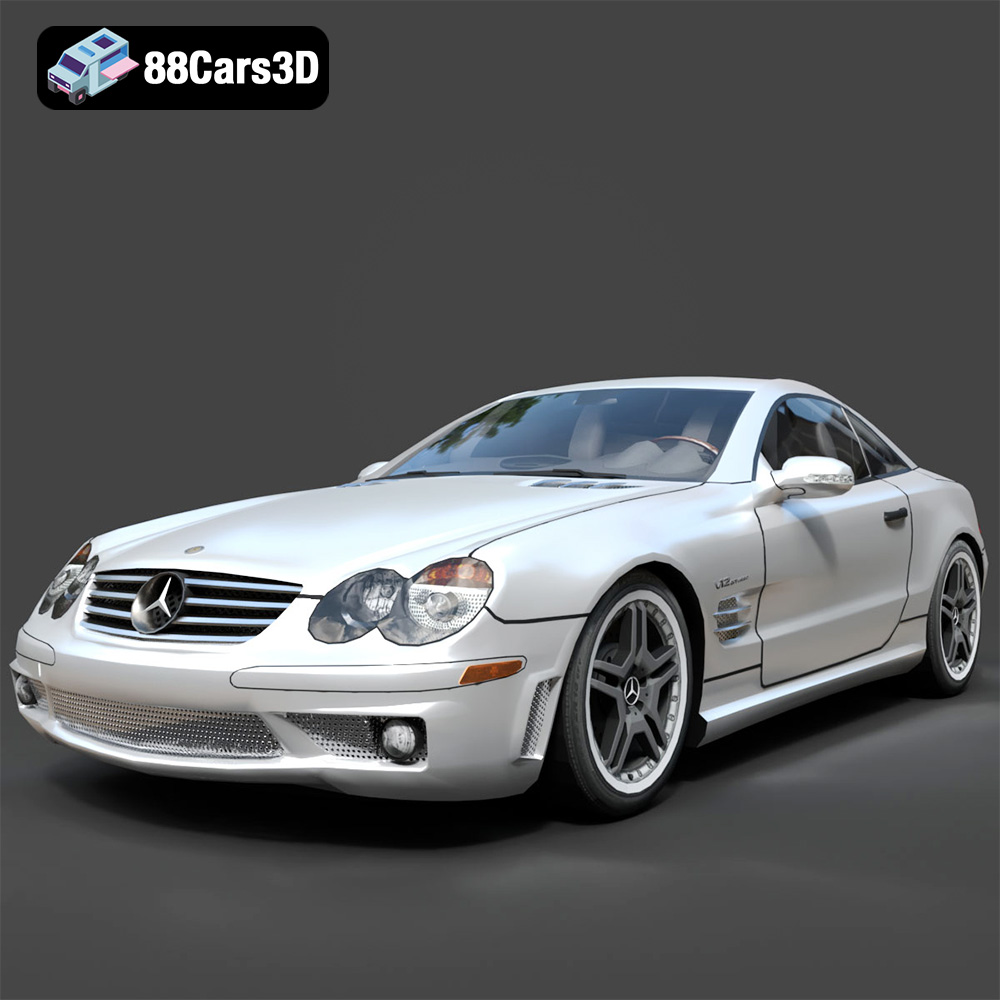
Download the Mercedes-Benz SL 65 AMG 3D Model featuring clean geometry, realistic detailing, and a fully modeled interior. Includes .blend, .fbx, .obj, .glb, .stl, .ply, .unreal, and .max formats for rendering, simulation, and game development.
Price: $23.99

