
The Core of Realism: Unreal Engine 5’s Foundational Technologies

The pursuit of photorealistic automotive visualization has never been more intense. From captivating marketing campaigns to cutting-edge game development and advanced virtual production, the demand for vehicles that look indistinguishable from reality is paramount. However, achieving this level of visual fidelity with efficiency and flexibility has long been a challenge, often requiring extensive rendering times and complex pipelines.
Enter Unreal Engine 5. With its groundbreaking suite of tools, UE5 has revolutionized how artists, designers, and developers approach real-time rendering. No longer just for games, it stands as a powerhouse for creating stunning, high-fidelity automotive experiences. This definitive guide will take you through the essential steps and advanced techniques to leverage Unreal Engine 5 for unparalleled photorealistic automotive rendering, especially for high-end models where every detail counts. We’ll explore how core features like Lumen and Nanite transform your workflow, dive deep into advanced automotive material setup, and discuss strategies for optimizing your high-poly asset optimization for various virtual production workflows and real-time cinematic rendering.
To start your journey with top-tier assets, remember that quality input leads to quality output. Resources like 88cars3d.com offer an excellent starting point with high-quality, pre-modeled vehicles, ensuring your foundation is solid.
The Core of Realism: Unreal Engine 5’s Foundational Technologies
Unreal Engine 5 is built upon a foundation of revolutionary technologies designed to push the boundaries of real-time graphics. For automotive rendering, two features, in particular, stand out: Lumen and Nanite. These, coupled with advanced Ray Tracing capabilities, are the bedrock of achieving true photorealism for your vehicles.
Unreal Engine 5 Lumen: Dynamic Global Illumination and Reflections
At the heart of UE5’s lighting prowess for photorealistic scenes is Unreal Engine 5 Lumen. Lumen is a fully dynamic global illumination and reflection system that completely changes how light interacts with your automotive models and environments. Unlike traditional baked lighting solutions, Lumen calculates indirect lighting and reflections in real time, making it incredibly responsive to scene changes.
For automotive visualization, this means:
- Dynamic Environments: You can change the time of day, move vehicles, or adjust environment props, and Lumen will instantly update the indirect lighting and reflections, showcasing how light realistically bounces off your car’s surfaces.
- Realistic Reflections: Lumen provides incredibly accurate reflections on metallic car paints, glass, and chrome elements, capturing the environment and other vehicles dynamically. This is crucial for selling the realism of a vehicle.
- Soft, Natural Light: It produces beautifully soft and natural-looking indirect light, eliminating the need for complex light probe setups or extensive manual light placements, saving significant time in your automotive material setup and lighting pipeline.
To leverage Lumen effectively, ensure it’s enabled in your Project Settings under Rendering > Global Illumination and Reflections. Experiment with its quality settings (e.g., Final Gather Quality, Samples) to balance performance and visual fidelity for your specific output.
Nanite Geometry: Unprecedented Detail for High-Poly Models
The second game-changing technology is Nanite geometry. Nanite is a virtualized micro-polygon geometry system that allows Unreal Engine 5 to ingest and render incredibly detailed assets, comprising billions of polygons, without performance degradation. This is an absolute revolution for high-poly asset optimization, particularly for automotive models which often originate from CAD data with immense polygon counts.
The benefits for automotive artists are profound:
- Direct CAD Data Utilization: No longer do you need to spend countless hours painstakingly retopologizing high-fidelity CAD data import down to game-ready polygon budgets. Nanite handles the complexity, allowing you to import your highest-detail models directly.
- Preservation of Micro-Detail: Every curve, panel gap, and intricate component from your source model is preserved, leading to an unprecedented level of visual fidelity. This is critical for close-up shots in real-time cinematic rendering.
- Efficient Rendering: Nanite intelligently streams and renders only the necessary detail for what’s visible on screen, irrespective of the original mesh complexity. This means you can have multiple high-detail vehicles in a scene without grinding performance to a halt.
When importing assets, ensure you enable Nanite support. For static meshes, you’ll see an option to “Enable Nanite” in the Static Mesh Editor. Note that Nanite works best with meshes that have a high polygon count and consistent mesh density, which perfectly suits most automotive CAD models.
Complementing Lumen and Nanite with Ray Tracing
While Lumen provides excellent real-time global illumination, Unreal Engine 5’s hardware-accelerated Ray Tracing further enhances realism, especially for reflections and shadows. For ultimate fidelity, combining Lumen with Ray Traced Reflections and Shadows (for specific lights) can yield stunning results, particularly for the glossy, reflective surfaces of a car. Ray Traced reflections offer pixel-perfect accuracy that even Lumen’s highly advanced screen-space and SDF (Signed Distance Field) reflections can sometimes miss, especially for off-screen reflections.
Preparing Your Automotive Assets: From CAD to UE5
The journey to photorealistic rendering begins long before your model touches Unreal Engine 5. Proper asset preparation, especially for complex automotive data, is crucial for efficiency and quality. This section focuses on best practices for handling high-fidelity CAD data import and optimizing assets.
Navigating CAD Data Import Challenges
Automotive design often starts with precise CAD (Computer-Aided Design) software, which outputs highly accurate but typically non-polygonal geometry (NURBS or solids). Importing this data directly into a polygonal renderer like Unreal Engine requires conversion and careful handling.
H3: Conversion Tools and Workflows
- Datasmith: Unreal Engine’s Datasmith plugin is the recommended workflow for CAD data import. It supports various CAD formats (STEP, IGES, SolidWorks, Catia, etc.) and is designed to bring complex scene hierarchies, materials, and metadata into UE5. Datasmith intelligently tessellates CAD surfaces into optimized polygonal meshes, often with Nanite automatically enabled for high-detail parts.
- PiXYZ Studio: For even more control over the CAD conversion and optimization process, tools like PiXYZ Studio offer advanced features. PiXYZ can decimate, consolidate, and process CAD data before it even enters Unreal, ensuring cleaner, more optimized meshes for Datasmith to import. It’s excellent for further high-poly asset optimization and preparing complex assemblies.
During import, be mindful of scale and units. Ensure your CAD data is exported and imported with consistent unit settings to prevent scaling issues within Unreal Engine.
High-Poly Asset Optimization Strategies Before Nanite
While Nanite handles immense polygon counts, some preparatory steps in a Digital Content Creation (DCC) tool (like Maya, 3ds Max, Blender) can still significantly improve your workflow and final quality, especially for animation or specific material requirements.
H3: Pre-processing in DCC Tools
- Mesh Cleanup: Even with Nanite, cleaning up egregious mesh errors (non-manifold geometry, flipped normals, stray vertices) can prevent rendering artifacts and improve material assignment.
- Normal Unification: Ensure all normals are consistently pointing outwards. This is fundamental for correct lighting and shading.
- UV Mapping Essentials: While Nanite doesn’t strictly require UVs for geometry, they are absolutely essential for texture mapping, lightmaps (if not using Lumen for all lighting), and custom material effects. Plan your UVs carefully, aiming for clean, non-overlapping islands for important parts of the car. Use multiple UV channels: one for textures, one for lightmaps (if needed), and potentially one for specific effects like decals.
- Material ID Assignment: Before importing, assign different material IDs to distinct parts of your car (body, glass, tires, interior, chrome trim) in your DCC software. Datasmith will translate these into separate material slots in Unreal, making your automotive material setup significantly easier.
- Hierarchy Organization: Maintain a clear and logical hierarchy for your car model (e.g., body, doors, wheels, interior components). This makes it easier to select, animate, and manage parts within Unreal Engine, crucial for real-time cinematic rendering sequences.
For high-quality models that are already optimized and structured, consider exploring the detailed vehicle models available on 88cars3d.com. Starting with a well-prepared asset can drastically accelerate your rendering pipeline and allow you to focus more on the artistic aspects of UE5.
Importing into Unreal Engine 5: Best Practices
Once your CAD data is processed or your DCC asset is ready, importing it into Unreal Engine is straightforward:
- Datasmith Import: Use the Datasmith importer from the toolbar. Select your prepared Datasmith file (.udatasmith) or direct CAD format.
- Choose Import Options: Pay attention to options like “Convert Scene,” “Import Materials,” and “Build Hierarchy.” Ensure “Enable Nanite” is checked for meshes where you want to leverage its benefits.
- Check for Errors: After import, review the output log for any warnings or errors related to missing textures or geometry issues.
- Initial Material Pass: Even if Datasmith imports basic materials, you’ll likely want to replace them with more advanced Unreal materials tailored for photorealistic automotive rendering, which we’ll cover next.
Mastering Automotive Materials and Texturing
The visual realism of an automotive model in Unreal Engine 5 is heavily dependent on its materials. Achieving that showroom-quality finish requires a deep understanding of automotive material setup, particularly for complex surfaces like car paint, glass, and carbon fiber. This is where your vehicle truly comes to life.
Deep Dive into Automotive Material Setup
Unreal Engine’s physically based rendering (PBR) system is designed for realism. You’ll primarily work with parameters like Base Color, Metallic, Specular, Roughness, Normal, and Emissive.
H3: Car Paint: The Foundation of Automotive Aesthetics
Car paint is arguably the most complex and critical material. It’s a multi-layered surface, typically consisting of a metallic base coat, a clear coat, and often metallic flakes within the base.
- Layered Material Approach: For the most realistic car paint, use a layered material. This involves creating a master material that combines different effects.
- Base Layer (Metallic):
- Base Color: The primary color of the car.
- Metallic: Set close to 1 for metallic paints (e.g., 0.8-1.0).
- Roughness: A low value (e.g., 0.2-0.4) for a polished, metallic sheen.
- Normal Map: Can be used for subtle surface imperfections or panel details.
- Clear Coat Layer:
- Unreal Engine’s default material model includes a dedicated Clear Coat input. This adds an additional specular lobe over the base material, simulating the protective clear coat.
- Clear Coat Weight: Set to 1 for full clear coat effect.
- Clear Coat Roughness: Very low value (e.g., 0.05-0.1) for a highly polished, mirror-like finish.
- Clear Coat Normal: Can be used for fine scratches or dust on the clear coat layer, often driven by a grunge texture.
- Clear Coat Tint: A subtle color tint can be added, though often left at white for accuracy.
- Metallic Flakes: To simulate metallic or pearlescent car paints, you can procedurally generate or use a texture for flakes. Blend this into the Base Color or normal map, often with a high frequency texture that uses a Fresnel effect to control visibility at glancing angles. You might also use an anisotropic effect with a custom normal.
- Anisotropy: For brushed metals or certain car paints, anisotropy (directional reflections) is key. You’ll need to compute tangent and bitangent vectors and feed them into the material’s Anisotropy input, often driven by a texture or procedural noise.
H3: Glass: Transparency, Reflections, and Refractions
Realistic automotive glass requires careful attention to transparency, reflections, and refraction.
- Transparency: Use the Translucency blend mode for the material. Set the Opacity value.
- IOR (Index of Refraction): Glass typically has an IOR around 1.5. This is crucial for realistic refraction. Unreal Engine’s Refraction input can be driven by a scalar parameter.
- Reflections: Glass should reflect the environment. High metallic values (close to 1.0) and very low roughness (0.0-0.1) contribute to strong reflections, even on transparent surfaces.
- Tint: Apply a subtle Base Color for tinted windows.
- Advanced Glass: For headlamps and taillamps, you might need more complex materials involving emissive elements, iridescent effects, and specific internal geometry to catch light realistically.
H3: Carbon Fiber: Intricate Weave and Anisotropic Sheen
Carbon fiber is characterized by its distinctive weave pattern and a subtle anisotropic sheen. This material benefits greatly from detailed normal maps and controlled anisotropy.
- Normal Map: Essential for defining the weave pattern. Use a high-resolution normal map.
- Base Color: Dark gray or black.
- Metallic: Generally non-metallic (0.0) or very low, depending on the clear coat.
- Roughness: Medium-low (0.3-0.5) for a slightly matte, clear-coated look, or very low if extremely polished.
- Anisotropy: This is critical. Drive the Anisotropy with custom tangent maps that follow the weave direction to create the distinctive directional sheen.
- Clear Coat: Often, carbon fiber is clear-coated, so use the Clear Coat input for added depth and reflection.
H3: Other Key Materials
- Rubber & Plastics: Focus on varying roughness values and subtle normal maps for texture. Different plastics will have different sheen levels (matte, semi-gloss).
- Chrome & Metals: Very high metallic (1.0), very low roughness (0.0-0.1). For brushed metals, introduce a specific normal map and anisotropy.
- Leather & Fabric: Utilize detailed normal maps, roughness maps, and potentially subsurface scattering for soft materials like leather to simulate light penetration.
Always utilize Material Instances based on master materials. This allows you to quickly adjust parameters like color, roughness, and other attributes for different parts of the car without recompiling shaders, greatly speeding up your automotive material setup workflow.
Crafting Immersive Lighting and Environments
Even with perfectly textured models, an automotive render will fall flat without compelling lighting and a rich environment. Unreal Engine 5 provides powerful tools to create atmospheric and realistic settings that showcase your vehicle in the best light, especially thanks to Unreal Engine 5 Lumen.
Environment Lighting: HDRI vs. Direct Light Sources
The foundation of any photorealistic scene is its environment lighting. Unreal Engine offers flexibility in how you achieve this.
- HDRI Backdrops: High Dynamic Range Image (HDRI) domes are excellent for real-world lighting. Import an HDRI texture and use it with a Sky Light actor and an HDRI Backdrop actor. The Sky Light captures the distant lighting from the HDRI, illuminating your scene with realistic global illumination, which Lumen then enhances. The Backdrop acts as a physical background, providing accurate reflections in your car’s surfaces.
- Direct Light Sources: For studio setups or specific outdoor scenarios, combine the Sky Light with a Directional Light (for the sun), and potentially other Point Lights or Spot Lights to simulate artificial light sources.
- Directional Light: Represents sunlight. Ensure ‘Cast Ray Traced Shadows’ is enabled for crisp, accurate shadows.
- Sky Light: Captures the ambient light of the sky or HDRI. Crucial for realistic overall illumination and fills.
- Rect Lights: Ideal for simulating studio softboxes or large light panels, perfect for product visualization.
Unreal Engine 5 Lumen plays a critical role here. It calculates how light from these sources bounces around the scene, providing soft indirect illumination and accurate color bleeding, enhancing the realism of your environment and how it interacts with your vehicle. For instance, a red wall will subtly tint the indirect light hitting your car with a reddish hue.
Artificial Lighting and Studio Setups
For controlled environments like virtual showrooms or product configurators, a studio lighting setup is essential. This often involves:
- Multiple Rect Lights: Positioned strategically to highlight different curves and details of the car. Use varying intensities and colors.
- Point Lights/Spot Lights: For accentuating specific features, such as wheel details or interior elements.
- Light Functions and IES Profiles: Apply light functions for textured light projections (e.g., Gobos) or IES profiles for accurate simulation of real-world light fixtures.
Post-Processing Volumes for Final Aesthetic Touches
Post-processing is the final layer of polish that can dramatically elevate the visual quality of your automotive renders. Use a Post Process Volume to apply cinematic effects:
- Color Grading: Adjust exposure, contrast, saturation, and overall color temperature to achieve a desired mood or match a specific brand aesthetic.
- Bloom: Adds a soft glow to bright areas, enhancing the perception of light. Use sparingly for realism.
- Ambient Occlusion: Adds subtle shadows where surfaces are close together, enhancing contact shadows and depth. Lumen handles much of this, but screen-space AO can complement it.
- Lens Effects: Vignette, film grain, and chromatic aberration can add a cinematic feel, but use them subtly to avoid artificiality.
- Depth of Field: Essential for focusing the viewer’s eye on specific details, especially in real-time cinematic rendering.
Remember that good lighting complements your automotive material setup. The interplay between light and surface properties is what truly creates a photorealistic image.
Unleashing Performance and Quality: Workflows for Diverse Applications
Unreal Engine 5 isn’t just about creating beautiful static images; it’s about enabling dynamic, interactive, and high-quality experiences across a range of applications. Whether you’re working on virtual production workflows, real-time cinematic rendering, interactive configurators, or game assets, understanding optimization and workflow specifics is key.
Virtual Production Workflows
Virtual production, especially in-camera VFX using LED volumes, has been revolutionized by UE5. For automotive applications, this means:
- Real-Time Feedback: Directors and designers can see their car models in a virtual environment, composited with live actors and practical sets, all in real-time. This iterative process is incredibly efficient.
- High-Fidelity Backdrops: Unreal Engine renders detailed environments and vehicles on LED screens, providing realistic reflections and lighting interaction with physical props and the real car (if present). Nanite ensures the background environments are as detailed as foreground elements, and Unreal Engine 5 Lumen provides consistent global illumination.
- Seamless Integration: Datasmith and other tools facilitate the import of complex scenes, allowing automotive design teams to integrate their latest models directly into virtual sets for rapid prototyping and visualization.
Optimizing for virtual production often involves balancing absolute fidelity with consistent framerates needed for real-time camera tracking and display on LED walls. Utilizing efficient LODs (Levels of Detail) where Nanite isn’t feasible or for very distant objects, and carefully managing texture resolutions, are still valuable alongside Nanite.
Real-Time Cinematic Rendering
For high-quality rendered videos and stills, Unreal Engine 5’s Sequencer and Movie Render Queue are your go-to tools.
- Sequencer: This is UE5’s non-linear editor for creating cinematic sequences. Animate cameras, vehicle parts (e.g., opening doors, rotating wheels), and light changes. Sequencer allows for precise control over timings and keyframes, essential for dynamic car commercials or presentations.
- Movie Render Queue (MRQ): MRQ is critical for outputting high-fidelity images and video from Sequencer. It offers advanced features not available with the legacy render export, such as:
- Temporal Anti-Aliasing (TAA) Samples: Crucial for clean, crisp images, especially with motion.
- Anti-Aliasing Quality: Significantly reduces aliasing (jagged edges).
- Console Variables: Allows you to override engine settings at render time for maximum quality (e.g., increasing Lumen samples, increasing shadow map resolution).
- Warm-up Frames: Ensures Lumen and other dynamic systems have time to converge to a stable, high-quality state before recording begins.
- Output Formats: Supports EXR, PNG, JPG, and video codecs, with multi-layer EXR allowing for compositing in external software.
Leverage MRQ’s capabilities to push your real-time cinematic rendering to its photorealistic peak. This is where high-poly asset optimization really pays off in terms of final image quality.
Interactive Configurators and Game Assets
For interactive applications like car configurators or integration into games, optimization is paramount. While Nanite helps tremendously with geometry, other aspects require attention:
- Texture Optimization: Use appropriate texture resolutions. While Nanite handles geometry, huge textures still consume VRAM. Utilize texture streaming and proper compression.
- LODs for Non-Nanite Meshes: For dynamic elements, skeletal meshes, or small props, traditional LODs are still necessary for high-poly asset optimization and performance.
- Material Complexity: While you can create incredibly complex automotive material setup for cinematics, interactive experiences may require slightly simplified versions or careful profiling to ensure performance.
- Scalability Settings: Implement Unreal Engine’s scalability settings to allow users to adjust quality based on their hardware, ensuring a wider audience can experience your content.
The beauty of Unreal Engine 5 is its versatility. The same high-fidelity models and materials you prepare for virtual production can, with careful optimization, be adapted for high-end interactive experiences.
Conclusion
Unreal Engine 5 represents a paradigm shift in photorealistic automotive rendering. Its revolutionary technologies like Unreal Engine 5 Lumen and Nanite geometry empower artists and designers to achieve unprecedented levels of visual fidelity and efficiency. From handling complex CAD data import with ease to crafting intricate automotive material setup and leveraging advanced virtual production workflows, UE5 provides a comprehensive toolkit for bringing high-end automotive models to life.
By mastering high-poly asset optimization, understanding the nuances of material creation, and utilizing robust lighting and post-processing techniques, you can produce stunning real-time cinematic rendering that rivals offline renderers. The future of automotive visualization is real-time, dynamic, and incredibly photorealistic, and Unreal Engine 5 is leading the charge.
Ready to embark on your photorealistic rendering journey? Start with a solid foundation. Explore the range of high-quality, pre-optimized vehicle models available at 88cars3d.com and unleash the full potential of Unreal Engine 5 for your next automotive project. The road to unparalleled realism starts here!
Featured 3D Car Models

Skoda Superb 2009 3D Model
Texture: Yes
Material: Yes
Download the Skoda Superb 2009 3D Model featuring clean geometry, realistic detailing, and a fully modeled interior. Includes .blend, .fbx, .obj, .glb, .stl, .ply, .unreal, and .max formats for rendering, simulation, and game development.
Price: $10

Skoda Superb 2006 3D Model
Texture: Yes
Material: Yes
Download the Skoda Superb 2006 3D Model featuring clean geometry, realistic detailing, and a fully modeled interior. Includes .blend, .fbx, .obj, .glb, .stl, .ply, .unreal, and .max formats for rendering, simulation, and game development.
Price: $10

Ford Mustang Shelby Super Snake Concept 2018 3D Model
Texture: Yes
Material: Yes
Download the Ford Mustang Shelby Super Snake Concept 2018 3D Model featuring clean geometry, realistic detailing, and a fully modeled interior. Includes .blend, .fbx, .obj, .glb, .stl, .ply, .unreal, and .max formats for rendering, simulation, and game development.
Price: $18.99

Porsche Cayenne Turbo 2018 3D Model
Texture: Yes
Material: Yes
Download the Porsche Cayenne Turbo 2018 3D Model featuring clean geometry, realistic detailing, and a fully modeled interior. Includes .blend, .fbx, .obj, .glb, .stl, .ply, .unreal, and .max formats for rendering, simulation, and game development.
Price: $10

Chevrolet Lacetti Sedan 2004 3D Model
Texture: Yes
Material: Yes
Download the Chevrolet Lacetti Sedan 2004 3D Model featuring clean geometry, realistic detailing, and a fully modeled interior. Includes .blend, .fbx, .obj, .glb, .stl, .ply, .unreal, and .max formats for rendering, simulation, and game development.
Price: $10

Skoda Rapid 2013 3D Model
Texture: Yes
Material: Yes
Download the Skoda Rapid 2013 3D Model featuring clean geometry, realistic detailing, and a fully modeled interior. Includes .blend, .fbx, .obj, .glb, .stl, .ply, .unreal, and .max formats for rendering, simulation, and game development.
Price: $10

Skoda Octavia A5-007 3D Model
Texture: Yes
Material: Yes
Download the Skoda Octavia A5-007 3D Model featuring clean geometry, realistic detailing, and a fully modeled interior. Includes .blend, .fbx, .obj, .glb, .stl, .ply, .unreal, and .max formats for rendering, simulation, and game development.
Price: $10

Skoda Fabia 2023 3D Model
Texture: Yes
Material: Yes
Download the Skoda Fabia 2023 3D Model featuring clean geometry, realistic detailing, and a fully modeled interior. Includes .blend, .fbx, .obj, .glb, .stl, .ply, .unreal, and .max formats for rendering, simulation, and game development.
Price: $10

Skoda Fabia 2007 3D Model
Texture: Yes
Material: Yes
Download the Skoda Fabia 2007 3D Model featuring clean geometry, realistic detailing, and a fully modeled interior. Includes .blend, .fbx, .obj, .glb, .stl, .ply, .unreal, and .max formats for rendering, simulation, and game development.
Price: $10

Honda VFR 1200 F 2015 3D Model
Texture: Yes
Material: Yes
Download the Honda VFR 1200 F 2015 3D Model featuring clean geometry, realistic detailing, and a fully modeled interior. Includes .blend, .fbx, .obj, .glb, .stl, .ply, .unreal, and .max formats for rendering, simulation, and game development.
Price: $10

Subaru BRZ 2025 3D Model
Texture: Yes
Material: Yes
Download the Subaru BRZ 2025 3D Model featuring clean geometry, realistic detailing, and a fully modeled interior. Includes .blend, .fbx, .obj, .glb, .stl, .ply, .unreal, and .max formats for rendering, simulation, and game development.
Price: $10

SsangYong Rodius 2007 3D Model
Texture: Yes
Material: Yes
Download the SsangYong Rodius 2007 3D Model featuring clean geometry, realistic detailing, and a fully modeled interior. Includes .blend, .fbx, .obj, .glb, .stl, .ply, .unreal, and .max formats for rendering, simulation, and game development.
Price: $10

Subaru Impreza 1992 3D Model
Texture: Yes
Material: Yes
Download the Subaru Impreza 1992 3D Model featuring clean geometry, realistic detailing, and a fully modeled interior. Includes .blend, .fbx, .obj, .glb, .stl, .ply, .unreal, and .max formats for rendering, simulation, and game development.
Price: $10

Subaru Impreza 2005 3D Model
Texture: Yes
Material: Yes
Download the Subaru Impreza 2005 3D Model featuring clean geometry, realistic detailing, and a fully modeled interior. Includes .blend, .fbx, .obj, .glb, .stl, .ply, .unreal, and .max formats for rendering, simulation, and game development.
Price: $10

Spyker C8-007 2004 3D Model
Texture: Yes
Material: Yes
Download the Spyker C8-007 2004 3D Model featuring clean geometry, realistic detailing, and a fully modeled interior. Includes .blend, .fbx, .obj, .glb, .stl, .ply, .unreal, and .max formats for rendering, simulation, and game development.
Price: $10

Smart Roadster 2003 3D Model
Texture: Yes
Material: Yes
Download the Smart Roadster 2003 3D Model featuring clean geometry, realistic detailing, and a fully modeled interior. Includes .blend, .fbx, .obj, .glb, .stl, .ply, .unreal, and .max formats for rendering, simulation, and game development.
Price: $10

Skoda Roomster 2007 3D Model
Texture: Yes
Material: Yes
Download the Skoda Roomster 2007 3D Model featuring clean geometry, realistic detailing, and a fully modeled interior. Includes .blend, .fbx, .obj, .glb, .stl, .ply, .unreal, and .max formats for rendering, simulation, and game development.
Price: $10

Subaru Impreza Sport Wagon 3D Model
Texture: Yes
Material: Yes
Download the Subaru Impreza Sport Wagon 3D Model featuring clean geometry, realistic detailing, and a fully modeled interior. Includes .blend, .fbx, .obj, .glb, .stl, .ply, .unreal, and .max formats for rendering, simulation, and game development.
Price: $10

Skoda Octavia A7 2017 3D Model
Texture: Yes
Material: Yes
Download the Skoda Octavia A7 2017 3D Model featuring clean geometry, realistic detailing, and a fully modeled interior. Includes .blend, .fbx, .obj, .glb, .stl, .ply, .unreal, and .max formats for rendering, simulation, and game development.
Price: $10

Suzuki SX4-002 3D Model
Texture: Yes
Material: Yes
Download the Suzuki SX4-002 3D Model featuring clean geometry, realistic detailing, and a fully modeled interior. Includes .blend, .fbx, .obj, .glb, .stl, .ply, .unreal, and .max formats for rendering, simulation, and game development.
Price: $10

Tesla Model S 2024 3D Model
Texture: Yes
Material: Yes
Download the Tesla Model S 2024 3D Model featuring clean geometry, realistic detailing, and a fully modeled interior. Includes .blend, .fbx, .obj, .glb, .stl, .ply, .unreal, and .max formats for rendering, simulation, and game development.
Price: $10

Subaru Impreza WRX STi-002 3D Model
Texture: Yes
Material: Yes
Download the Subaru Impreza WRX STi-002 3D Model featuring clean geometry, realistic detailing, and a fully modeled interior. Includes .blend, .fbx, .obj, .glb, .stl, .ply, .unreal, and .max formats for rendering, simulation, and game development.
Price: $10

Subaru Impreza WRX STi Sedan 3D Model
Texture: Yes
Material: Yes
Download the Subaru Impreza WRX STi Sedan 3D Model featuring clean geometry, realistic detailing, and a fully modeled interior. Includes .blend, .fbx, .obj, .glb, .stl, .ply, .unreal, and .max formats for rendering, simulation, and game development.
Price: $10

Subaru Legacy 2009 3D Model
Texture: Yes
Material: Yes
Download the Subaru Legacy 2009 3D Model featuring clean geometry, realistic detailing, and a fully modeled interior. Includes .blend, .fbx, .obj, .glb, .stl, .ply, .unreal, and .max formats for rendering, simulation, and game development.
Price: $10

Suzuki Swift 2024 3D Model
Texture: Yes
Material: Yes
Download the Suzuki Swift 2024 3D Model featuring clean geometry, realistic detailing, and a fully modeled interior. Includes .blend, .fbx, .obj, .glb, .stl, .ply, .unreal, and .max formats for rendering, simulation, and game development.
Price: $10

Suzuki Liana Sedan 2004 3D Model
Texture: Yes
Material: Yes
Download the Suzuki Liana Sedan 2004 3D Model featuring clean geometry, realistic detailing, and a fully modeled interior. Includes .blend, .fbx, .obj, .glb, .stl, .ply, .unreal, and .max formats for rendering, simulation, and game development.
Price: $10

Subaru Outback 2024 3D Model
Texture: Yes
Material: Yes
Download the Subaru Outback 2024 3D Model featuring clean geometry, realistic detailing, and a fully modeled interior. Includes .blend, .fbx, .obj, .glb, .stl, .ply, .unreal, and .max formats for rendering, simulation, and game development.
Price: $10

Subaru Legacy 2003 3D Model
Texture: Yes
Material: Yes
Download the Subaru Legacy 2003 3D Model featuring clean geometry, realistic detailing, and a fully modeled interior. Includes .blend, .fbx, .obj, .glb, .stl, .ply, .unreal, and .max formats for rendering, simulation, and game development.
Price: $10

Subaru Legacy Touring Wagon 3D Model
Texture: Yes
Material: Yes
Download the Subaru Legacy Touring Wagon 3D Model featuring clean geometry, realistic detailing, and a fully modeled interior. Includes .blend, .fbx, .obj, .glb, .stl, .ply, .unreal, and .max formats for rendering, simulation, and game development.
Price: $10

Toyota Mark II (X100) 1998 3D Model
Texture: Yes
Material: Yes
Download the Toyota Mark II (X100) 3D Model featuring clean geometry, realistic detailing, and a fully modeled interior. Includes .blend, .fbx, .obj, .glb, .stl, .ply, .unreal, and .max formats for rendering, simulation, and game development.
Price: $10

Toyota Corona 1985 3D Model
Texture: Yes
Material: Yes
Download the Toyota Corona 1985 3D Model featuring clean geometry, realistic detailing, and a fully modeled interior. Includes .blend, .fbx, .obj, .glb, .stl, .ply, .unreal, and .max formats for rendering, simulation, and game development.
Price: $10

Toyota Mark II X81 1990 3D Model
Texture: Yes
Material: Yes
Download the Toyota Mark II X81 1990 3D Model featuring clean geometry, realistic detailing, and a fully modeled interior. Includes .blend, .fbx, .obj, .glb, .stl, .ply, .unreal, and .max formats for rendering, simulation, and game development.
Price: $10

Toyota iQ EV 2012 3D Model
Texture: Yes
Material: Yes
Download the Toyota iQ EV 2012 3D Model featuring clean geometry, realistic detailing, and a fully modeled interior. Includes .blend, .fbx, .obj, .glb, .stl, .ply, .unreal, and .max formats for rendering, simulation, and game development.
Price: $10

Toyota Aygo 2013 3D Model
Texture: Yes
Material: Yes
Download the Toyota Aygo 2013 3D Model featuring clean geometry, realistic detailing, and a fully modeled interior. Includes .blend, .fbx, .obj, .glb, .stl, .ply, .unreal, and .max formats for rendering, simulation, and game development.
Price: $10

Toyota Crown S180 2005 3D Model
Texture: Yes
Material: Yes
Download the Toyota Crown S180 2005 3D Model featuring clean geometry, realistic detailing, and a fully modeled interior. Includes .blend, .fbx, .obj, .glb, .stl, .ply, .unreal, and .max formats for rendering, simulation, and game development.
Price: $10

Toyota Celica 2004 3D Model
Texture: Yes
Material: Yes
Download the Toyota Celica 2004 3D Model featuring clean geometry, realistic detailing, and a fully modeled interior. Includes .blend, .fbx, .obj, .glb, .stl, .ply, .unreal, and .max formats for rendering, simulation, and game development.
Price: $10

Toyota Corolla AE100 1992 3D Model
Texture: Yes
Material: Yes
Download the Toyota Corolla AE100 1992 3D Model featuring clean geometry, realistic detailing, and a fully modeled interior. Includes .blend, .fbx, .obj, .glb, .stl, .ply, .unreal, and .max formats for rendering, simulation, and game development.
Price: $10

Toyota Mark II X110 2000 3D Model
Texture: Yes
Material: Yes
Download the Toyota Mark II X110 2000 3D Model featuring clean geometry, realistic detailing, and a fully modeled interior. Includes .blend, .fbx, .obj, .glb, .stl, .ply, .unreal, and .max formats for rendering, simulation, and game development.
Price: $10

Toyota Corolla 2020 3D Model
Texture: Yes
Material: Yes
Download the Toyota Corolla 2020 3D Model featuring clean geometry, realistic detailing, and a fully modeled interior. Includes .blend, .fbx, .obj, .glb, .stl, .ply, .unreal, and .max formats for rendering, simulation, and game development.
Price: $10

Toyota Yaris 2020 3D Model
Texture: Yes
Material: Yes
Download the Toyota Yaris 2020 3D Model featuring clean geometry, realistic detailing, and a fully modeled interior. Includes .blend, .fbx, .obj, .glb, .stl, .ply, .unreal, and .max formats for rendering, simulation, and game development.
Price: $9.9

Volkswagen Beetle 2012 3D Model
Texture: Yes
Material: Yes
Download the Volkswagen Beetle 2012 3D Model featuring clean geometry, realistic detailing, and a fully modeled interior. Includes .blend, .fbx, .obj, .glb, .stl, .ply, .unreal, and .max formats for rendering, simulation, and game development.
Price: $9.9

Toyota Matrix 2005 3D Model
Texture: Yes
Material: Yes
Download the Toyota Matrix 2005 3D Model featuring clean geometry, realistic detailing, and a fully modeled interior. Includes .blend, .fbx, .obj, .glb, .stl, .ply, .unreal, and .max formats for rendering, simulation, and game development.
Price: $9.9

Toyota Yaris Sedan 3D Model
Texture: Yes
Material: Yes
Download the Toyota Yaris Sedan 3D Model featuring clean geometry, realistic detailing, and a fully modeled interior. Includes .blend, .fbx, .obj, .glb, .stl, .ply, .unreal, and .max formats for rendering, simulation, and game development.
Price: $9.9

Volkswagen Golf R-004 2024 3D Model
Texture: Yes
Material: Yes
Download the Volkswagen Golf R-004 2024 3D Model featuring clean geometry, realistic detailing, and a fully modeled interior. Includes .blend, .fbx, .obj, .glb, .stl, .ply, .unreal, and .max formats for rendering, simulation, and game development.
Price: $9.9

Volkswagen Golf 5 Door 2010 3D Model
Texture: Yes
Material: Yes
Download the Volkswagen Golf 5 Door 2010 3D Model featuring clean geometry, realistic detailing, and a fully modeled interior. Includes .blend, .fbx, .obj, .glb, .stl, .ply, .unreal, and .max formats for rendering, simulation, and game development.
Price: $9.9

Toyota Premio 2010 3D Model
Texture: Yes
Material: Yes
Download the Toyota Premio 2010 3D Model featuring clean geometry, realistic detailing, and a fully modeled interior. Includes .blend, .fbx, .obj, .glb, .stl, .ply, .unreal, and .max formats for rendering, simulation, and game development.
Price: $9.9

Toyota Opa 2000 3D Model
Texture: Yes
Material: Yes
Download the Toyota Opa 2000 3D Model featuring clean geometry, realistic detailing, and a fully modeled interior. Includes .blend, .fbx, .obj, .glb, .stl, .ply, .unreal, and .max formats for rendering, simulation, and game development.
Price: $9.9

Volkswagen Polo 5 Door 2010 3D Model
Texture: Yes
Material: Yes
Download the Volkswagen Polo 5 Door 2010 3D Model featuring clean geometry, realistic detailing, and a fully modeled interior. Includes .blend, .fbx, .obj, .glb, .stl, .ply, .unreal, and .max formats for rendering, simulation, and game development.
Price: $9.9

Toyota Prius 2024 3D Model
Texture: Yes
Material: Yes
Download the Toyota Prius 2024 3D Model featuring clean geometry, realistic detailing, and a fully modeled interior. Includes .blend, .fbx, .obj, .glb, .stl, .ply, .unreal, and .max formats for rendering, simulation, and game development.
Price: $9.9

Toyota Yaris 1999 3D Model
Texture: Yes
Material: Yes
Download the Toyota Yaris 1999 3D Model featuring clean geometry, realistic detailing, and a fully modeled interior. Includes .blend, .fbx, .obj, .glb, .stl, .ply, .unreal, and .max formats for rendering, simulation, and game development.
Price: $9.9

Toyota Supra 2020 3D Model
Texture: Yes
Material: Yes
Download the Toyota Supra 2020 3D Model featuring clean geometry, realistic detailing, and a fully modeled interior. Includes .blend, .fbx, .obj, .glb, .stl, .ply, .unreal, and .max formats for rendering, simulation, and game development.
Price: $9.9

Volkswagen New Beetle 2000 3D Model
Texture: Yes
Material: Yes
Download the Volkswagen New Beetle 2000 3D Model featuring clean geometry, realistic detailing, and a fully modeled interior. Includes .blend, .fbx, .obj, .glb, .stl, .ply, .unreal, and .max formats for rendering, simulation, and game development.
Price: $14.99

Volkswagen Jetta 2005 3D Model
Texture: Yes
Material: Yes
Download the Volkswagen Jetta 2005 3D Model featuring clean geometry, realistic detailing, and a fully modeled interior. Includes .blend, .fbx, .obj, .glb, .stl, .ply, .unreal, and .max formats for rendering, simulation, and game development.
Price: $18.99

Volkswagen Golf 3-Door 3D Model
Texture: Yes
Material: Yes
Download the Volkswagen Golf 3-Door 3D Model featuring clean geometry, realistic detailing, and a fully modeled interior. Includes .blend, .fbx, .obj, .glb, .stl, .ply, .unreal, and .max formats for rendering, simulation, and game development.
Price: $14.99

Volvo V70 2005 3D Model
Texture: Yes
Material: Yes
Download the Volvo V70 2005 3D Model featuring clean geometry, realistic detailing, and a fully modeled interior. Includes .blend, .fbx, .obj, .glb, .stl, .ply, .unreal, and .max formats for rendering, simulation, and game development.
Price: $14.99

Volkswagen Bora 2004 3D Model
Texture: Yes
Material: Yes
Download the Volkswagen Bora 2004 3D Model featuring clean geometry, realistic detailing, and a fully modeled interior. Includes .blend, .fbx, .obj, .glb, .stl, .ply, .unreal, and .max formats for rendering, simulation, and game development.
Price: $14.99

Volkswagen Lupo 3D Model
Texture: Yes
Material: Yes
Download the Volkswagen Lupo 3D Model featuring clean geometry, realistic detailing, and a fully modeled interior. Includes .blend, .fbx, .obj, .glb, .stl, .ply, .unreal, and .max formats for rendering, simulation, and game development.
Price: $19.99

Volkswagen Passat B5 2000 3D Model
Texture: Yes
Material: Yes
Download the Volkswagen Passat B5 2000 3D Model featuring clean geometry, realistic detailing, and a fully modeled interior. Includes .blend, .fbx, .obj, .glb, .stl, .ply, .unreal, and .max formats for rendering, simulation, and game development.
Price: $19.99

Volkswagen Passat CC 3D Model
Texture: Yes
Material: Yes
Download the Volkswagen Passat CC 3D Model featuring clean geometry, realistic detailing, and a fully modeled interior. Includes .blend, .fbx, .obj, .glb, .stl, .ply, .unreal, and .max formats for rendering, simulation, and game development.
Price: $19.99

Volkswagen Golf V 2006 3D Model
Texture: Yes
Material: Yes
Download the Volkswagen Golf V 2006 3D Model featuring clean geometry, realistic detailing, and a fully modeled interior. Includes .blend, .fbx, .obj, .glb, .stl, .ply, .unreal, and .max formats for rendering, simulation, and game development.
Price: $19.99

Volvo S60 R-Design 2024 3D Model
Texture: Yes
Material: Yes
Download the Volvo S60 R-Design 3D Model featuring clean geometry, realistic detailing, and a fully modeled interior. Includes .blend, .fbx, .obj, .glb, .stl, .ply, .unreal, and .max formats for rendering, simulation, and game development.
Price: $19.99

Volkswagen Passat 2025 3D Model
Texture: Yes
Material: Yes
Download the Volkswagen Passat 2025 3D Model featuring clean geometry, realistic detailing, and a fully modeled interior. Includes .blend, .fbx, .obj, .glb, .stl, .ply, .unreal, and .max formats for rendering, simulation, and game development.
Price: $25.99

Volkswagen Passat Variant B6 2005 3D Model
Texture: Yes
Material: Yes
Download the Volkswagen Passat Variant B6 2005 3D Model featuring clean geometry, realistic detailing, and a fully modeled interior. Includes .blend, .fbx, .obj, .glb, .stl, .ply, .unreal, and .max formats for rendering, simulation, and game development.
Price: $25.99

Volkswagen Phaeton W12 2004 3D Model
Texture: Yes
Material: Yes
Download the Volkswagen Phaeton W12 2004 3D Model featuring clean geometry, realistic detailing, and a fully modeled interior. Includes .blend, .fbx, .obj, .glb, .stl, .ply, .unreal, and .max formats for rendering, simulation, and game development.
Price: $25.99

Volkswagen Scirocco 2015 3D Model
Texture: Yes
Material: Yes
Download the Volkswagen Scirocco 2015 3D Model featuring clean geometry, realistic detailing, and a fully modeled interior. Includes .blend, .fbx, .obj, .glb, .stl, .ply, .unreal, and .max formats for rendering, simulation, and game development.
Price: $25.99

Volvo S60 2024 3D Model
Texture: Yes
Material: Yes
Download the Volvo S60 2024 3D Model featuring clean geometry, realistic detailing, and a fully modeled interior. Includes .blend, .fbx, .obj, .glb, .stl, .ply, .unreal, and .max formats for rendering, simulation, and game development.
Price: $25.99

Volkswagen Polo 3D Model
Texture: Yes
Material: Yes
Download the Volkswagen Polo 3D Model featuring clean geometry, realistic detailing, and a fully modeled interior. Includes .blend, .fbx, .obj, .glb, .stl, .ply, .unreal, and .max formats for rendering, simulation, and game development.
Price: $25.99

Volkswagen Golf 5-Doors 2018 3D Model
Texture: Yes
Material: Yes
Download the Volkswagen Golf 5-Doors 3D Model featuring clean geometry, realistic detailing, and a fully modeled interior. Includes .blend, .fbx, .obj, .glb, .stl, .ply, .unreal, and .max formats for rendering, simulation, and game development.
Price: $25.99

Volvo C70 T5 2000 3D Model
Texture: Yes
Material: Yes
Download the Volvo C70 T5 2000 3D Model featuring clean geometry, realistic detailing, and a fully modeled interior. Includes .blend, .fbx, .obj, .glb, .stl, .ply, .unreal, and .max formats for rendering, simulation, and game development.
Price: $23.99

Volvo S40 Sedan 2004 3D Model
Texture: Yes
Material: Yes
Download the Volvo S40 Sedan 2004 3D Model featuring clean geometry, realistic detailing, and a fully modeled interior. Includes .blend, .fbx, .obj, .glb, .stl, .ply, .unreal, and .max formats for rendering, simulation, and game development.
Price: $23.99

Volvo C30 BEV 2012 3D Model
Texture: Yes
Material: Yes
Download the Volvo C30 BEV 2012 3D Model featuring clean geometry, realistic detailing, and a fully modeled interior. Includes .blend, .fbx, .obj, .glb, .stl, .ply, .unreal, and .max formats for rendering, simulation, and game development.
Price: $23.99

Volvo C70 1998 3D Model
Texture: Yes
Material: Yes
Download the Volvo C70 1998 3D Model featuring clean geometry, realistic detailing, and a fully modeled interior. Includes .blend, .fbx, .obj, .glb, .stl, .ply, .unreal, and .max formats for rendering, simulation, and game development.
Price: $23.99

Mazda B-Series 3D Model
Texture: Yes
Material: Yes
Download the Mazda B-Series 3D Model featuring clean geometry, realistic detailing, and a fully modeled interior. Includes .blend, .fbx, .obj, .glb, .stl, .ply, .unreal, and .max formats for rendering, simulation, and game development.
Price: $23.99

Mercsedes Benz Z3-006 3D Model
Texture: Yes
Material: Yes
Download the Mercsedes Benz Z3-006 3D Model featuring clean geometry, realistic detailing, and a fully modeled interior. Includes .blend, .fbx, .obj, .glb, .stl, .ply, .unreal, and .max formats for rendering, simulation, and game development.
Price: $23.99

Mazda RX-7 3D Model
Texture: Yes
Material: Yes
Download the Mazda RX-7 3D Model featuring clean geometry, realistic detailing, and a fully modeled interior. Includes .blend, .fbx, .obj, .glb, .stl, .ply, .unreal, and .max formats for rendering, simulation, and game development.
Price: $23.99

Volvo VCC-003 3D Model
Texture: Yes
Material: Yes
Download the Volvo VCC-003 3D Model featuring clean geometry, realistic detailing, and a fully modeled interior. Includes .blend, .fbx, .obj, .glb, .stl, .ply, .unreal, and .max formats for rendering, simulation, and game development.
Price: $23.99

Mercedes-Benz SLR McLaren 2005 3D Model
Texture: Yes
Material: Yes
Download the Mercedes-Benz SLR McLaren 2005 3D Model featuring clean geometry, realistic detailing, and a fully modeled interior. Includes .blend, .fbx, .obj, .glb, .stl, .ply, .unreal, and .max formats for rendering, simulation, and game development.
Price: $23.99

GAZ 3110 Pickup 2000 3D Model
Texture: Yes
Material: Yes
Download the GAZ 3110 Pickup 3D Model featuring clean geometry, realistic detailing, and a fully modeled interior. Includes .blend, .fbx, .obj, .glb, .stl, .ply, .unreal, and .max formats for rendering, simulation, and game development.
Price: $23.99

Mazda 626 GF 1997 3D Model
Texture: Yes
Material: Yes
Download the Mazda 626 GF 1997 3D Model featuring clean geometry, realistic detailing, and a fully modeled interior. Includes .blend, .fbx, .obj, .glb, .stl, .ply, .unreal, and .max formats for rendering, simulation, and game development.
Price: $23.99

Volvo S80 2011 3D Model
Texture: Yes
Material: Yes
Download the Volvo S80 2011 3D Model featuring clean geometry, realistic detailing, and a fully modeled interior. Includes .blend, .fbx, .obj, .glb, .stl, .ply, .unreal, and .max formats for rendering, simulation, and game development.
Price: $23.99

Volkswagen Touran restyle-006 3D Model
Texture: Yes
Material: Yes
Download the Volkswagen Touran restyle-006 3D Model featuring clean geometry, realistic detailing, and a fully modeled interior. Includes .blend, .fbx, .obj, .glb, .stl, .ply, .unreal, and .max formats for rendering, simulation, and game development.
Price: $23.99

Skoda Octavia Scout 3D Model
Texture: Yes
Material: Yes
Download the Skoda Octavia Scout 3D Model featuring clean geometry, realistic detailing, and a fully modeled interior. Includes .blend, .fbx, .obj, .glb, .stl, .ply, .unreal, and .max formats for rendering, simulation, and game development.
Price: $23.99

Volkswagen Golf V 2006 3D Model
Texture: Yes
Material: Yes
Download the Volkswagen Golf V 2006 3D Model featuring clean geometry, realistic detailing, and a fully modeled interior. Includes .blend, .fbx, .obj, .glb, .stl, .ply, .unreal, and .max formats for rendering, simulation, and game development.
Price: $23.99

Mazda CX-7 3D Model
Texture: Yes
Material: Yes
Download the Mazda CX-7 3D Model featuring clean geometry, realistic detailing, and a fully modeled interior. Includes .blend, .fbx, .obj, .glb, .stl, .ply, .unreal, and .max formats for rendering, simulation, and game development.
Price: $23.99

Mazda Familia 3D Model
Texture: Yes
Material: Yes
Download the Mazda Familia 3D Model featuring clean geometry, realistic detailing, and a fully modeled interior. Includes .blend, .fbx, .obj, .glb, .stl, .ply, .unreal, and .max formats for rendering, simulation, and game development.
Price: $23.99

GAS 21 3D Model
Texture: Yes
Material: Yes
Download the GAS 21 3D Model featuring clean geometry, realistic detailing, and a fully modeled interior. Includes .blend, .fbx, .obj, .glb, .stl, .ply, .unreal, and .max formats for rendering, simulation, and game development.
Price: $23.99

Mercedes-Benz SL500 AMG (R129) 3D Model
Texture: Yes
Material: Yes
Download the Mercedes-Benz SL500 AMG (R129) 3D Model featuring clean geometry, realistic detailing, and a fully modeled interior. Includes .blend, .fbx, .obj, .glb, .stl, .ply, .unreal, and .max formats for rendering, simulation, and game development.
Price: $23.99

Mercedes-Benz S-Class W221 2005 3D Model
Texture: Yes
Material: Yes
Download the Mercedes-Benz S-Class W221 2005 3D Model featuring clean geometry, realistic detailing, and a fully modeled interior. Includes .blend, .fbx, .obj, .glb, .stl, .ply, .unreal, and .max formats for rendering, simulation, and game development.
Price: $23.99

Mercedes-Benz E-Class W212 2009 3D Model
Texture: Yes
Material: Yes
Download the Mercedes-Benz E-Class W212 2009 3D Model featuring clean geometry, realistic detailing, and a fully modeled interior. Includes .blend, .fbx, .obj, .glb, .stl, .ply, .unreal, and .max formats for rendering, simulation, and game development.
Price: $23.99

Mercedes-Benz E-class Estate S212 2009 3D Model
Texture: Yes
Material: Yes
Download the Mercedes-Benz E-class Estate S212 2009 3D Model featuring clean geometry, realistic detailing, and a fully modeled interior. Includes .blend, .fbx, .obj, .glb, .stl, .ply, .unreal, and .max formats for rendering, simulation, and game development.
Price: $23.99

Mercedes-Benz 190 W201 3D Model
Texture: Yes
Material: Yes
Download the Mercedes-Benz 190 W201 3D Model featuring clean geometry, realistic detailing, and a fully modeled interior. Includes .blend, .fbx, .obj, .glb, .stl, .ply, .unreal, and .max formats for rendering, simulation, and game development.
Price: $23.99

Mercedes-Benz C230 SportCoupé 2005 3D Model
Texture: Yes
Material: Yes
Download the Mercedes-Benz C230 SportCoupé 2005 3D Model featuring clean geometry, realistic detailing, and a fully modeled interior. Includes .blend, .fbx, .obj, .glb, .stl, .ply, .unreal, and .max formats for rendering, simulation, and game development.
Price: $23.99

Mercedes-Benz SLK 3D Model
Texture: Yes
Material: Yes
Download the Mercedes-Benz SLK 3D Model featuring clean geometry, realistic detailing, and a fully modeled interior. Includes .blend, .fbx, .obj, .glb, .stl, .ply, .unreal, and .max formats for rendering, simulation, and game development.
Price: $23.99

Mercedes 600 SEC W140 1992 3D Model
Texture: Yes
Material: Yes
Download the Mercedes 600 SEC W140 1992 3D Model featuring clean geometry, realistic detailing, and a fully modeled interior. Includes .blend, .fbx, .obj, .glb, .stl, .ply, .unreal, and .max formats for rendering, simulation, and game development.
Price: $23.99

Mercedes S-Class 2010 3D Model
Texture: Yes
Material: Yes
Download the Mercedes S-Class 2010 3D Model featuring clean geometry, realistic detailing, and a fully modeled interior. Includes .blend, .fbx, .obj, .glb, .stl, .ply, .unreal, and .max formats for rendering, simulation, and game development.
Price: $23.99

McLaren MP4-12C-001 3D Model
Texture: Yes
Material: Yes
Download the McLaren MP4-12C-001 3D Model featuring clean geometry, realistic detailing, and a fully modeled interior. Includes .blend, .fbx, .obj, .glb, .stl, .ply, .unreal, and .max formats for rendering, simulation, and game development.
Price: $23.99

Mercedes-Benz SLK 350 2005 3D Model
Texture: Yes
Material: Yes
Download the Mercedes-Benz SLK 350 2005 3D Model featuring clean geometry, realistic detailing, and a fully modeled interior. Includes .blend, .fbx, .obj, .glb, .stl, .ply, .unreal, and .max formats for rendering, simulation, and game development.
Price: $23.99

Mercedes-Benz SL 65 AMG 3D Model
Texture: Yes
Material: Yes
Download the Mercedes-Benz SL 65 AMG 3D Model featuring clean geometry, realistic detailing, and a fully modeled interior. Includes .blend, .fbx, .obj, .glb, .stl, .ply, .unreal, and .max formats for rendering, simulation, and game development.
Price: $23.99

Mercedes-Benz S500 3D Model
Texture: Yes
Material: Yes
Download the Mercedes-Benz S500 3D Model featuring clean geometry, realistic detailing, and a fully modeled interior. Includes .blend, .fbx, .obj, .glb, .stl, .ply, .unreal, and .max formats for rendering, simulation, and game development.
Price: $23.99
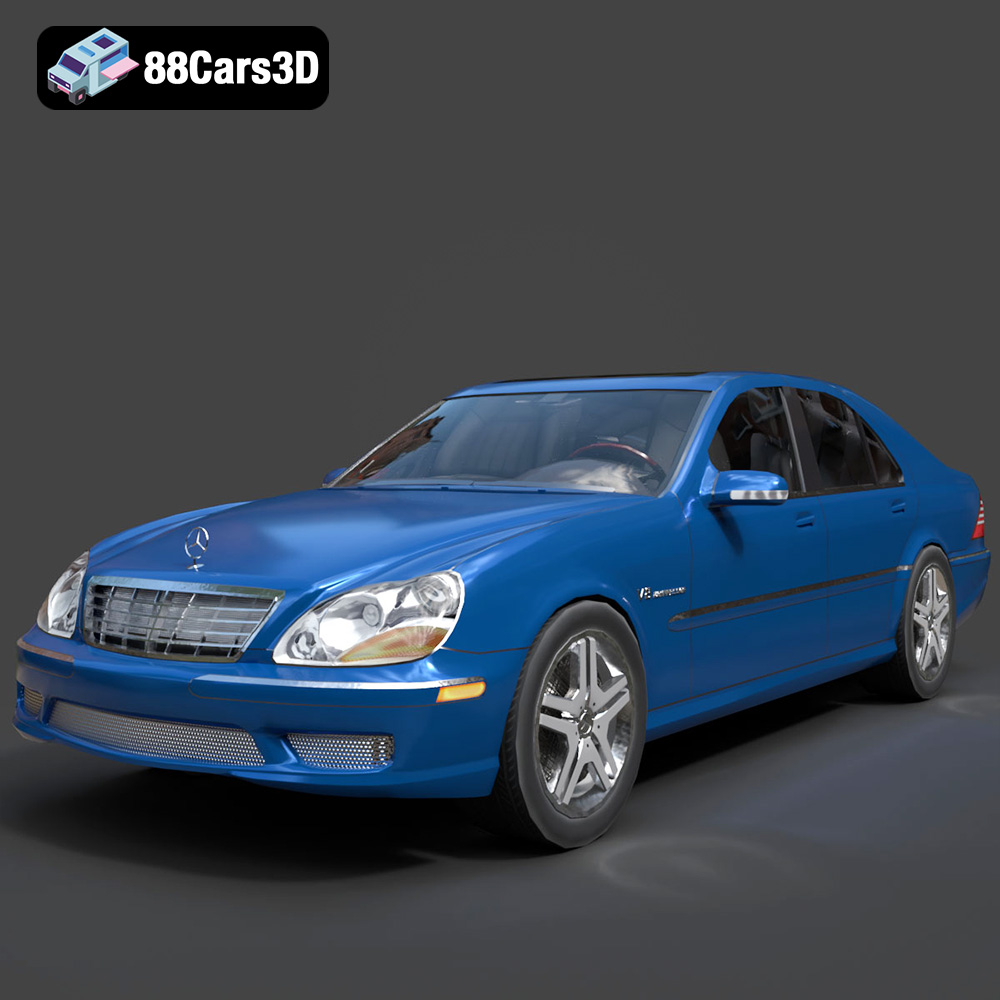
Mercedes-Benz S55 W220 AMG 1999 3D Model
Texture: Yes
Material: Yes
Download the Mercedes-Benz S55 W220 AMG 1999 3D Model featuring clean geometry, realistic detailing, and a fully modeled interior. Includes .blend, .fbx, .obj, .glb, .stl, .ply, .unreal, and .max formats for rendering, simulation, and game development.
Price: $23.99
