
Bridging the Chasm: The Challenges of CAD to Real-Time Conversion

The roar of a high-performance engine, the glint of chrome under the sun, the sleek lines of a supercar—these are the hallmarks of automotive design that captivate us. In today’s digital age, the demand for experiencing these vehicles in immersive, real-time 3D environments, from interactive configurators to cutting-edge game titles, has never been higher. Yet, bridging the gap between highly detailed engineering CAD models and the performance-demanding world of real-time rendering is an art form in itself, fraught with technical challenges.
Raw CAD data, designed for precision manufacturing, is notoriously heavy and complex, making it impractical for direct use in game engines or real-time visualization applications. This disparity presents a significant hurdle for 3D artists, game developers, and automotive designers striving for ultra-realistic experiences without sacrificing performance. This guide delves into the high-end workflow required for optimizing automotive CAD, transforming it into stunning, real-time-ready 3D assets that meet the exacting standards of modern real-time automotive visualization.
We’ll explore the intricate automotive rendering pipeline, from initial data preparation and sophisticated polygon reduction techniques to the creation of physically accurate materials using a robust PBR texture workflow. Ultimately, our goal is to achieve seamless game engine integration, leveraging advanced LOD strategies and efficient data preparation for 3D assets to deliver unparalleled visual fidelity and fluid performance.
Bridging the Chasm: The Challenges of CAD to Real-Time Conversion
At first glance, it might seem straightforward to take a high-fidelity CAD model and drop it into a real-time engine. However, the underlying philosophy and structure of engineering CAD (Computer-Aided Design) software differ fundamentally from that of real-time 3D applications like Unreal Engine or Unity. CAD systems primarily work with NURBS (Non-Uniform Rational B-Splines) and parametric surfaces, which define geometry mathematically with infinite precision. These surfaces are perfect for manufacturing and engineering analysis, ensuring smooth curvature and exact dimensions.
Real-time engines, on the other hand, operate almost exclusively with polygon meshes—collections of vertices, edges, and faces that approximate surfaces. Converting NURBS to polygons, known as tessellation, is the initial step in data preparation for 3D assets, but it’s where many challenges arise. A direct, unoptimized tessellation of a complex automotive CAD model often results in millions, if not billions, of polygons. This astronomical poly count is simply unsustainable for real-time rendering, leading to crippling frame rates and excessive memory usage.
Beyond the sheer poly count, CAD data often contains numerous issues that hinder real-time performance and visual quality. These include non-manifold geometry (edges or vertices shared by more than two faces), tiny gaps or overlaps between surfaces, and an abundance of hidden interior components that are never seen but still contribute to the geometry load. Furthermore, CAD data typically lacks UV coordinates, which are essential for applying textures, and its material assignments are usually based on engineering properties rather than visual PBR requirements. Addressing these issues is paramount for effective CAD data optimization.
Advanced Data Preparation: Transforming CAD for Real-Time Efficiency
The journey from raw CAD to a real-time-ready asset begins with meticulous data preparation for 3D assets. This phase is arguably the most critical, laying the groundwork for both visual quality and performance. It involves a strategic blend of cleanup, tessellation, and significant geometric optimization.
Initial Data Cleanup and Tessellation
Before any significant optimization can occur, the CAD model needs a thorough cleanup. This typically involves identifying and removing invisible internal components like intricate engine parts that won’t be exposed, or redundant fasteners hidden deep within assemblies. Fixing non-manifold geometry, small gaps, or overlapping surfaces is also crucial to ensure the mesh behaves correctly during texturing and rendering.
Once clean, the NURBS surfaces must be tessellated into polygons. This process must be controlled. Instead of a blanket conversion, different parts of the car require varying levels of detail. Highly visible, curved surfaces like the exterior body panels demand a denser tessellation to maintain their smoothness and visual integrity. Less critical areas, such as the underside of the chassis or parts of the engine bay that are only briefly visible, can tolerate a much lower polygon density. This selective approach is the first step in effective polygon reduction techniques.
Strategic Polygon Reduction Techniques
Even with controlled tessellation, the initial polygonal mesh derived from CAD is likely still too dense. This is where advanced polygon reduction techniques come into play, aiming to significantly lower the poly count while meticulously preserving the car’s distinctive shape and critical details.
-
Manual Retopology: For the most critical and visually prominent parts of the vehicle, such as the main body panels, wheels, and major interior components, manual retopology is often the gold standard. This involves painstakingly rebuilding the mesh by hand or using specialized tools (e.g., in Autodesk Maya, Blender, ZBrush) to create a clean, optimized quad-based topology. Manual retopology ensures ideal polygon flow, which is crucial for smooth deformations, clean UV unwrapping, and efficient baking of normal maps from the high-poly source.
-
Automated Decimation: For less critical areas or when time is a major constraint, automated decimation algorithms (available in tools like Pixologic ZBrush, Autodesk 3ds Max, or within game engines) can be incredibly useful. These tools reduce polygon count by selectively collapsing edges or vertices, often with preservation of detail based on curvature. While fast, they can sometimes produce triangulated, less predictable topology that might require further manual cleanup, especially in highly visible areas. The key is to find the right balance between automation and manual refinement.
-
Detail Baking: A cornerstone of modern CAD data optimization is the concept of baking high-frequency detail from a high-polygon mesh onto a much lower-polygon one. This typically involves creating normal maps, which store surface angle information, effectively “faking” geometric detail. Ambient occlusion, curvature, and other utility maps can also be baked, ensuring that the visual richness of the original CAD is retained without the associated polygon overhead.
Precise UV Unwrapping and Atlas Creation
With an optimized low-polygon mesh, the next critical step for a robust PBR texture workflow is precise UV unwrapping. UV coordinates map the 2D texture space onto the 3D model’s surface, acting as instructions for where each pixel of a texture should appear. Without clean, distortion-free UVs, even the highest quality textures will look stretched or blurry.
For complex automotive geometries, careful unwrapping is essential. Hard surface unwrapping techniques, minimizing seams in visible areas, and ensuring uniform texel density across the model are crucial. Often, multiple UV sets are created: one for primary PBR textures, another for lightmaps (if using baked lighting), and potentially others for decals or specific effects. Utilizing texture atlases, where multiple smaller textures are combined into a single, larger texture map, is a common data preparation for 3D assets strategy. This helps to reduce draw calls in the engine, improving rendering performance by allowing the engine to render more surfaces with fewer texture switches. Many high-quality 3D car models, such as those found on 88cars3d.com, come with meticulously prepared UVs, simplifying this complex stage.
Achieving Unparalleled Photorealism with PBR Materials & Textures
Once the geometry is optimized, the focus shifts to materials and textures—the visual layer that breathes life into the model. The Physically Based Rendering (PBR) paradigm is fundamental to modern real-time automotive visualization, ensuring that materials react realistically to light in any environment. Mastering the PBR texture workflow is essential for achieving true photorealism.
Understanding the PBR Texture Workflow
PBR materials are defined by a set of texture maps that describe how light interacts with their surfaces. The most common maps include:
-
Albedo (or Base Color): Defines the diffuse color of the surface without any lighting information. This is typically a flat color or a texture with color variation.
-
Normal Map: Stores surface normal information, used to simulate high-resolution geometric detail (like subtle panel gaps or texture on plastic) on a low-polygon mesh.
-
Roughness Map: Controls the microscopic surface irregularities that scatter light. A value of 0 (black) is perfectly smooth and reflective, while 1 (white) is completely rough and diffuse.
-
Metallic Map: Differentiates between metallic (1/white) and non-metallic (0/black) surfaces. Metallic surfaces reflect light differently, absorbing less diffuse light and having colored reflections.
-
Ambient Occlusion (AO) Map: Simulates soft global illumination, indicating areas where light would be blocked (e.g., crevices, corners), making materials appear grounded in the scene.
-
Emissive Map: Defines areas that emit light, like headlights or glowing dashboards.
Creating these maps often involves a combination of texturing software like Adobe Substance Painter, Substance Designer, Mari, and Photoshop, often baking initial maps from the high-poly model to inform subsequent texture painting.
Crafting Realistic Automotive Materials
Automotive surfaces are notoriously challenging to render realistically due to their unique optical properties. Each component demands a specific approach within the PBR texture workflow:
-
Car Paint: This is often the most complex material. Realistic car paint requires a multi-layered shader that simulates a clear coat over a base coat. The base coat typically includes metallic flakes (often simulated with a separate flake normal map or procedural noise), which react anisotropically to light. The clear coat provides the high reflectivity and subtle fresnel effect (where reflections become stronger at grazing angles). Achieving accurate color, metallic sheen, and reflectivity is paramount for real-time automotive visualization.
-
Glass & Transparencies: Windshields, windows, and headlights need accurate refraction, reflection, and absorption properties. Tinting and subtle dirt or smudges on the surface add to realism. Using thin-walled refraction models in real-time engines, along with normal maps for wiper marks or imperfections, enhances believability.
-
Tires & Rubber: These materials are characterized by their deep black color and relatively high roughness. Micro-detail from the tire tread, sidewall lettering, and subtle variations in roughness (e.g., from wear and tear) are key. Normal maps are vital here to capture the intricate tread patterns without adding excessive geometry.
-
Chrome & Metals: Highly reflective metals like chrome, polished aluminum, and brushed steel require careful control of their metallic and roughness maps. Anisotropic reflections, where light streaks in a particular direction (common on brushed metals), add another layer of realism. Accurately representing these materials is crucial for the high-end automotive rendering pipeline.
Texture Atlas and Material Instancing Strategies
To optimize performance, especially with many unique materials, utilizing texture atlases (as mentioned in UV unwrapping) and material instancing is key. Instead of having dozens of individual textures for various small parts, combining them into larger atlases reduces the number of draw calls. Similarly, material instancing allows you to create variations of a master material (e.g., different car paint colors) without duplicating the entire shader code, leading to significant performance gains and easier iteration.
Optimizing for Performance and Seamless Game Engine Integration
Even with meticulously prepared geometry and stunning PBR materials, a high-fidelity automotive asset needs to perform flawlessly within a real-time engine. This requires strategic planning for performance, robust organization, and proper engine-specific setup. This phase is where game engine integration truly shines, demonstrating the effectiveness of the entire automotive rendering pipeline.
Implementing Effective LOD Strategies
Level of Detail (LOD) strategies are fundamental for maintaining performance in dynamic scenes. The core idea is to use simpler versions of a model when it is further away from the camera, progressively increasing detail as it gets closer. This significantly reduces the processing load on the GPU without a noticeable drop in visual quality for the player.
-
What are LODs? An LOD group consists of several versions of the same mesh, each with a decreasing polygon count and texture resolution. LOD0 is the highest detail, used when the object is close; LOD1, LOD2, etc., are progressively lower detail versions for increasing distances.
-
Creating LODs: This can be done manually through retopology for each LOD level, or semi-automatically using decimation tools. For an automotive asset, you might create 3-5 LOD levels for the main body, separate LODs for wheels, interior, and even smaller components. The goal is to have a significant poly count reduction (e.g., 50-70% reduction between each LOD level) while preserving the silhouette and critical features.
-
Transition Distances: Game engines allow you to define the screen space percentage or distance at which each LOD switches. Careful tuning is required to ensure smooth transitions without popping or noticeable quality changes. Implementing robust LOD strategies is paramount for maintaining high frame rates in large environments with many vehicles.
Handling Complex Automotive Assemblies
Automotive models are rarely single monolithic meshes. They are complex assemblies of many distinct parts—doors, hood, trunk, wheels, suspension components, interior elements, and more. Proper organization of this hierarchy is crucial for game engine integration.
-
Hierarchical Structure: Group parts logically. The main body might be the parent, with doors, hood, trunk, and wheels as children. Wheels themselves might have tires and brake calipers as children. This allows for independent animation (e.g., opening doors, steering wheels) and simplifies collision setup.
-
Pivot Points: Ensure that pivot points for animatable parts (like doors, steering wheels, wheels) are correctly positioned in the 3D authoring software before export. This saves significant time in the engine.
-
Blueprints/Prefabs: Once assembled and configured in the engine, the entire vehicle should be saved as a reusable asset (e.g., an Unreal Engine Blueprint or Unity Prefab). This allows for easy instantiation, modification, and consistency across your project.
Import and Setup Best Practices in Real-Time Engines (Unreal/Unity)
The final step is to bring the optimized asset into your chosen real-time engine and configure it for optimal performance and visual quality. This culminates the automotive rendering pipeline.
-
FBX Export Settings: Use the FBX format for export from your 3D software (Maya, 3ds Max, Blender). Ensure correct unit scales (e.g., centimeters for Unreal Engine, meters for Unity), up-axis settings, and that smoothing groups/normals are exported correctly.
-
Material Import and Assignment: Import your PBR textures and create master materials, then instance them for variations. Connect the appropriate texture maps (Albedo, Normal, Roughness, Metallic, AO) to their respective shader inputs. Tune material parameters (e.g., clear coat thickness, metallic response) for maximum realism.
-
Collision Setup: For physics and interaction, simplified collision meshes should be created. Using complex mesh collisions for the entire car is very expensive; instead, use primitive shapes (boxes, capsules) or convex hulls to approximate the car’s volume for physics calculations.
-
Engine-Specific Features: Leverage the strengths of your chosen engine. Unreal Engine’s Lumen for global illumination, Nanite for incredibly high poly models (though optimization is still key for most real-time scenarios), and Chaos physics system can further enhance real-time automotive visualization. Unity’s High Definition Render Pipeline (HDRP) offers similar advanced rendering capabilities. Understanding these features and how they interact with your optimized assets is critical.
Post-Processing and Final Touches for Hyperrealism
Achieving truly hyperrealistic real-time automotive visualization extends beyond the quality of the model and its materials. The final polish comes from carefully crafted lighting, environment, and post-processing effects, which collectively sell the illusion of reality.
Lighting and Environment
Lighting is arguably the most crucial element in making an asset look realistic. Modern real-time engines offer powerful lighting solutions:
-
HDRI Lighting: High Dynamic Range Image (HDRI) maps are indispensable for realistic reflections and ambient lighting. They capture real-world lighting environments and project them onto your scene, providing accurate reflections on reflective surfaces like car paint and chrome.
-
Real-Time Ray Tracing: Next-generation engines (like Unreal Engine 5 with Lumen) offer real-time ray tracing, enabling incredibly accurate reflections, global illumination, and shadows. While computationally intensive, it delivers unparalleled visual quality for high-end cinematic or interactive experiences. For broader compatibility, baked lighting (pre-calculated lightmaps) remains a viable option for static environments.
-
Studio Setups vs. Outdoor Environments: The choice of lighting setup significantly impacts the car’s presentation. A controlled studio environment with softbox lights emphasizes the car’s form and finish, while an outdoor environment introduces dynamic shadows, environmental reflections, and natural light sources that enhance realism.
Camera & Post-Process Effects
To truly mimic photographic realism, applying cinematic post-process effects is essential. These effects simulate the quirks and characteristics of real-world cameras and optical lenses.
-
Exposure and Color Grading: Fine-tuning the scene’s exposure ensures that highlights and shadows are balanced, while color grading can evoke specific moods or aesthetics, mirroring professional photography or film.
-
Bloom and Lens Flares: These effects simulate light scattering in the camera lens, adding a subtle glow to bright areas and creating realistic lens artifacts from intense light sources.
-
Depth of Field (DOF): DOF blurs distant or foreground objects, drawing the viewer’s eye to the car and creating a sense of scale and photographic depth.
-
Motion Blur: For animated sequences or driving simulations, motion blur adds a sense of speed and realism, smoothing out fast movements.
-
Vignette, Film Grain, and Chromatic Aberration: These subtle effects, used sparingly, can add a cinematic quality, simulating imperfections found in traditional photography and film, further enhancing the hyperrealistic look.
Conclusion
The journey from a complex engineering CAD model to an ultra-realistic, performant real-time 3D automotive asset is a testament to the blend of technical skill and artistic vision. It requires a deep understanding of CAD data optimization, the mastery of advanced polygon reduction techniques, a comprehensive grasp of the PBR texture workflow, and meticulous execution of LOD strategies for seamless game engine integration. Every step, from initial data preparation for 3D assets to the final post-processing, contributes to the overall fidelity of the automotive rendering pipeline.
This high-end workflow, while demanding, unlocks incredible possibilities for immersive experiences, interactive configurators, and next-generation games. The ability to render intricate vehicle designs with stunning photorealism in real-time pushes the boundaries of digital content creation. Mastering these techniques ensures that your automotive visualizations stand out in an increasingly competitive landscape.
Ready to elevate your real-time automotive visualization projects? For those seeking a head start or requiring expertly optimized and textured car models, exploring resources like 88cars3d.com can provide access to a vast library of high-quality, real-time-ready 3D car models, meticulously crafted to meet the demands of professional production pipelines. Dive in and bring your automotive visions to life with unparalleled realism and performance!
Featured 3D Car Models
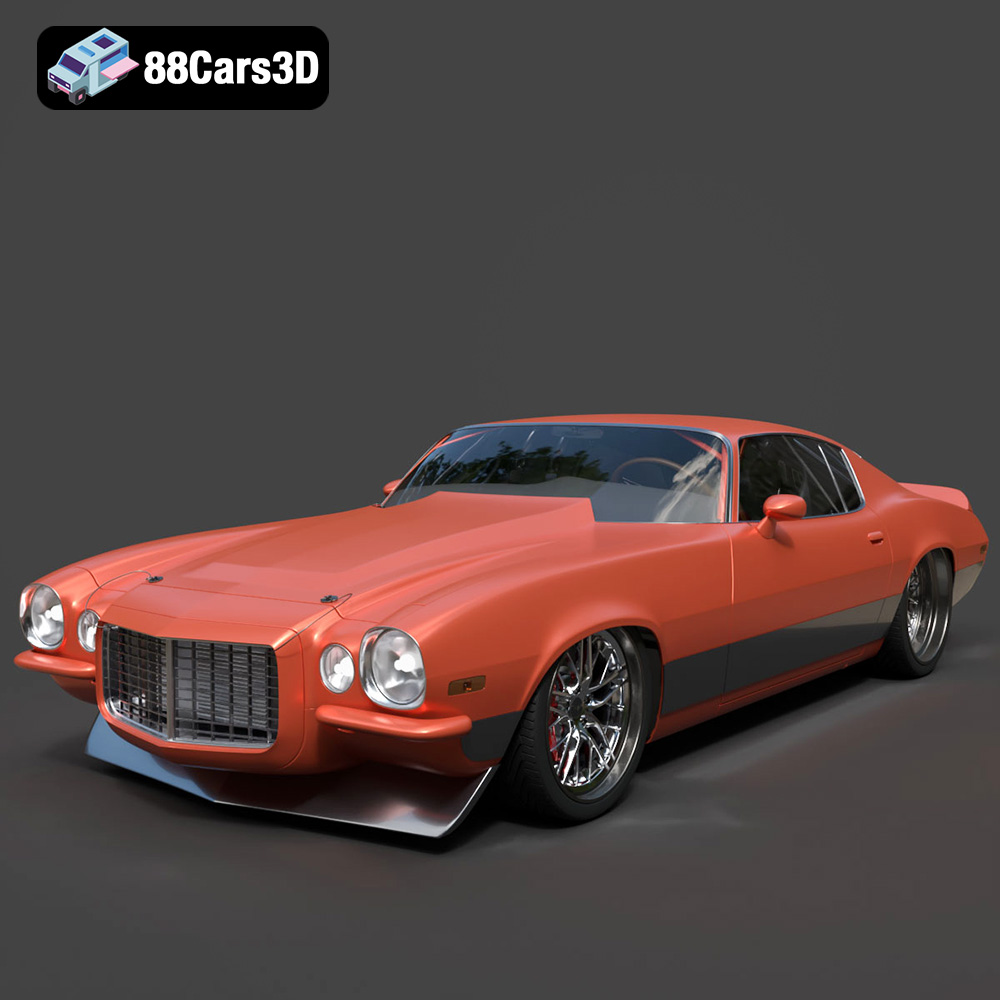
Chevrolet Camaro 1970 3D Model
Texture: Yes
Material: Yes
Download the Chevrolet Camaro 1970 3D Model featuring clean geometry, realistic detailing, and a fully modeled interior. Includes .blend, .fbx, .obj, .glb, .stl, .ply, .unreal, and .max formats for rendering, simulation, and game development.
Price: $10

Toyota Crown Majesta 2009 3D Model
**Meta Description:**
Texture: Yes
Material: Yes
Download the Toyota Crown Majesta 2009 3D Model with luxury detailing, clean topology, and a fully modeled interior. Available in .blend, .fbx, .obj, .glb, .stl, .ply, .unreal, and .max formats for rendering, simulation, and game development.
Price: $4.99
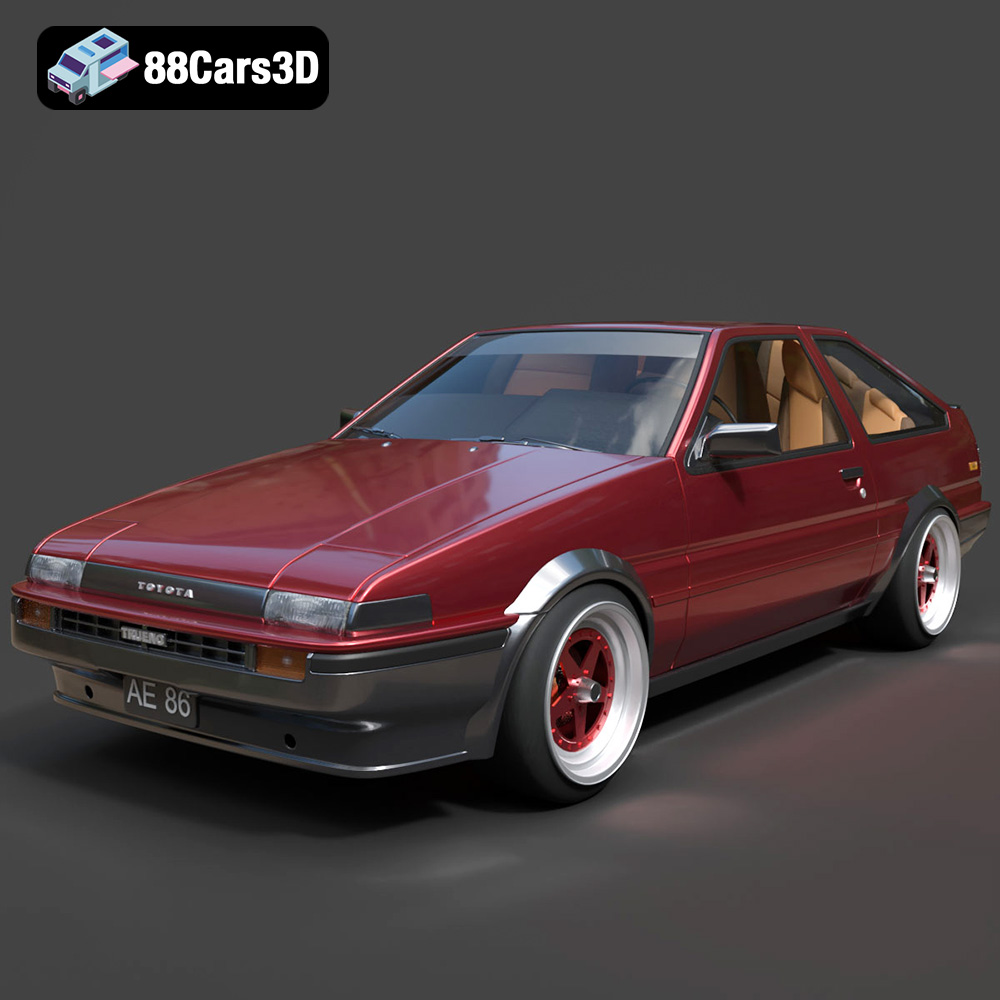
Toyota AE86 Levin 1983 1987 3D Model
**Meta Description:**
Texture: Yes
Material: Yes
Download the Toyota AE86 Levin 1983 1987 3D Model featuring realistic exterior and interior detailing. Includes .blend, .fbx, .obj, .glb, .stl, .ply, .unreal, and .max formats for rendering, simulation, and game development.
Price: $9.99

Toyota Mark 2 2001 3D Model
Texture: Yes
Material: Yes
Download the Toyota Mark 2 2001 3D Model featuring clean geometry, realistic detailing, and a fully modeled interior. Includes .blend, .fbx, .obj, .glb, .stl, .ply, .unreal, and .max formats for rendering, simulation, and game development.
Price: $4.99

Toyota Celica 2000 3D Model
Texture: Yes
Material: Yes
Download the Toyota Celica 2000 3D Model featuring clean geometry, realistic detailing, and a fully modeled interior. Includes .blend, .fbx, .obj, .glb, .stl, .ply, .unreal, and .max formats for rendering, simulation, and game development.
Price: $4.99

Toyota Camry US 2012 3D Model
- Texture: Yes
Material: Yes
Download the Toyota Camry US 2012 3D Model featuring clean geometry, realistic detailing, and a fully modeled interior. Includes .blend, .fbx, .obj, .glb, .stl, .ply, .unreal, and .max formats for rendering, simulation, and game development.
Price: $4.99

Toyota GT 86 2013 3D Model
Texture: Yes
Material: Yes
Download the Toyota GT 86 2013 3D Model featuring clean geometry, realistic detailing, and a fully modeled interior. Includes .blend, .fbx, .obj, .glb, .stl, .ply, .unreal, and .max formats for rendering, simulation, and game development.
Price: $4.99

Toyota Mark X 2010 3D Model
Texture: Yes
Material: Yes
Download the Toyota Mark X 2010 3D Model featuring clean geometry, realistic detailing, and a fully modeled interior. Includes .blend, .fbx, .obj, .glb, .stl, .ply, .unreal, and .max formats for rendering, simulation, and game development.
Price: $4.99
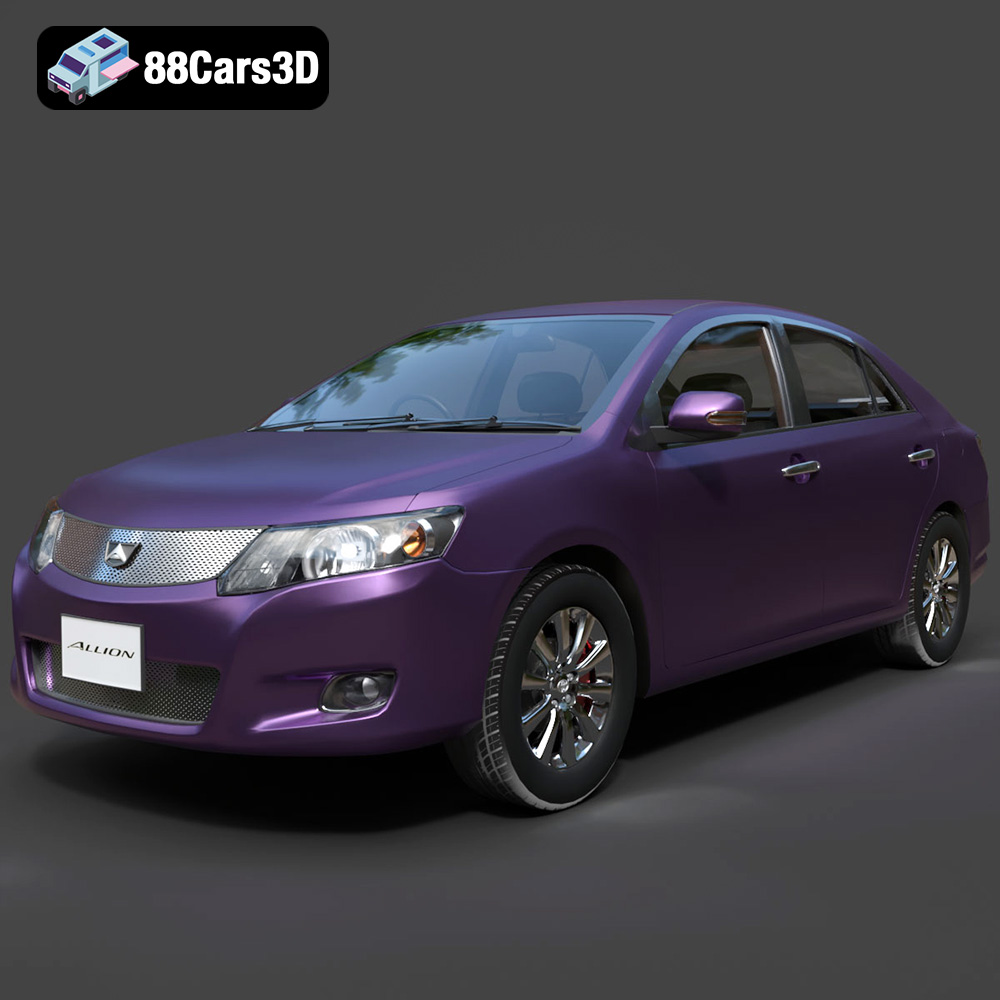
Toyota Allion 2008 3D Model
Texture: Yes
Material: Yes
Download the Toyota Allion 2008 3D Model featuring clean geometry, realistic detailing, and a fully modeled interior. Includes .blend, .fbx, .obj, .glb, .stl, .ply, .unreal, and .max formats for rendering, simulation, and game development.
Price: $4.99
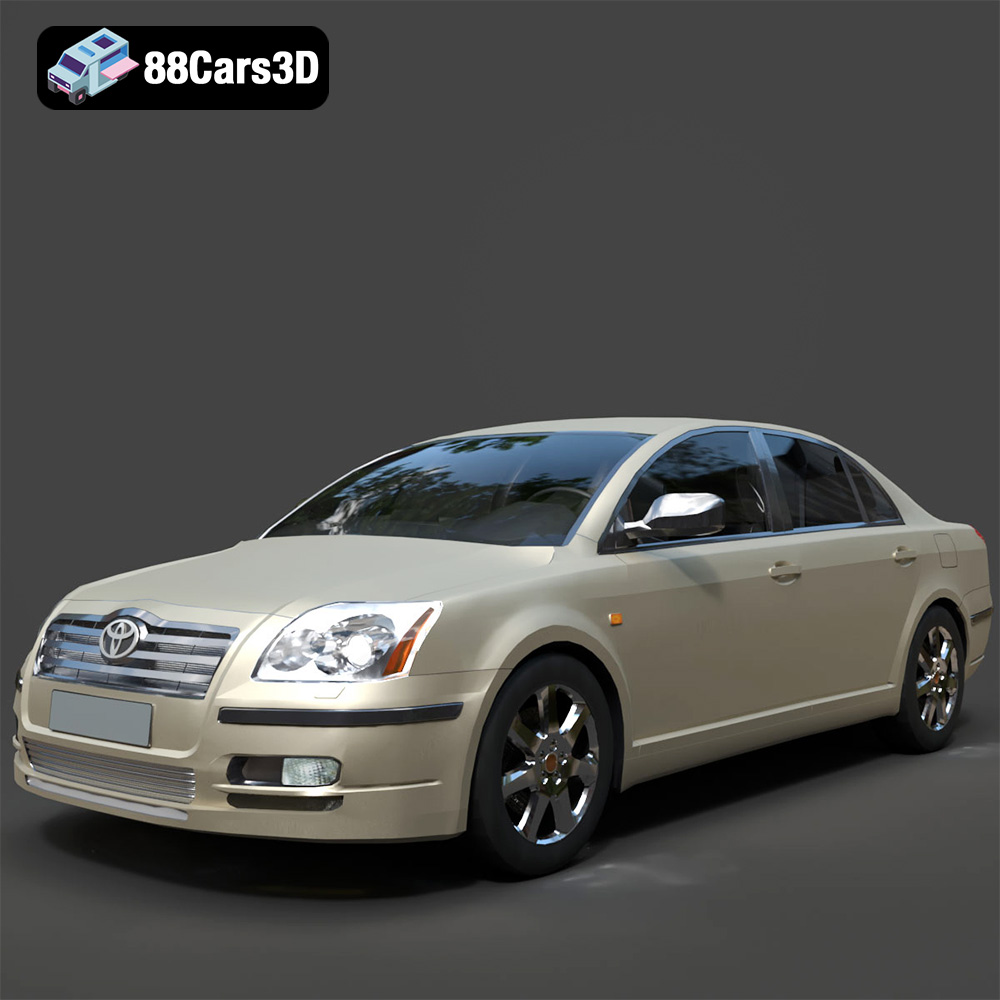
Toyota Avensis 2005 3D Model
Texture: Yes
Material: Yes
Download the Toyota Avensis 2005 3D Model featuring clean geometry, realistic detailing, and a fully modeled interior. Includes .blend, .fbx, .obj, .glb, .stl, .ply, .unreal, and .max formats for rendering, simulation, and game development.
Price: $4.99
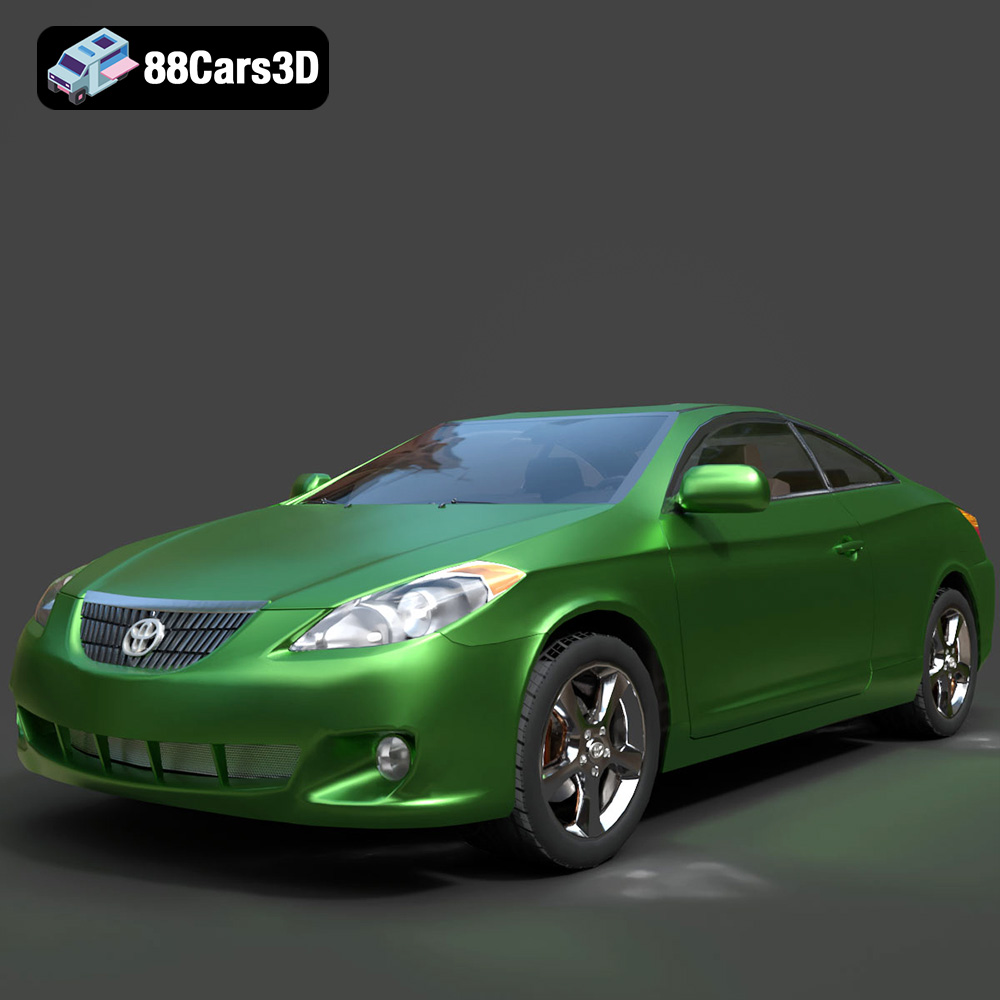
Toyota Camry Solara 2006 3D Model
Texture: Yes
Material: Yes
Download the Toyota Camry Solara 2006 3D Model featuring clean geometry, realistic detailing, and a fully modeled interior. Includes .blend, .fbx, .obj, .glb, .stl, .ply, .unreal, and .max formats for rendering, simulation, and game development.
Price: $4.99

Skoda Superb 2009 3D Model
Texture: Yes
Material: Yes
Download the Skoda Superb 2009 3D Model featuring clean geometry, realistic detailing, and a fully modeled interior. Includes .blend, .fbx, .obj, .glb, .stl, .ply, .unreal, and .max formats for rendering, simulation, and game development.
Price: $4.99

Skoda Superb 2006 3D Model
Texture: Yes
Material: Yes
Download the Skoda Superb 2006 3D Model featuring clean geometry, realistic detailing, and a fully modeled interior. Includes .blend, .fbx, .obj, .glb, .stl, .ply, .unreal, and .max formats for rendering, simulation, and game development.
Price: $4.99

Ford Mustang Shelby Super Snake Concept 2018 3D Model
Texture: Yes
Material: Yes
Download the Ford Mustang Shelby Super Snake Concept 2018 3D Model featuring clean geometry, realistic detailing, and a fully modeled interior. Includes .blend, .fbx, .obj, .glb, .stl, .ply, .unreal, and .max formats for rendering, simulation, and game development.
Price: $4.99

Porsche Cayenne Turbo 2018 3D Model
Texture: Yes
Material: Yes
Download the Porsche Cayenne Turbo 2018 3D Model featuring clean geometry, realistic detailing, and a fully modeled interior. Includes .blend, .fbx, .obj, .glb, .stl, .ply, .unreal, and .max formats for rendering, simulation, and game development.
Price: $4.99

Chevrolet Lacetti Sedan 2004 3D Model
Texture: Yes
Material: Yes
Download the Chevrolet Lacetti Sedan 2004 3D Model featuring clean geometry, realistic detailing, and a fully modeled interior. Includes .blend, .fbx, .obj, .glb, .stl, .ply, .unreal, and .max formats for rendering, simulation, and game development.
Price: $4.99

Skoda Rapid 2013 3D Model
Texture: Yes
Material: Yes
Download the Skoda Rapid 2013 3D Model featuring clean geometry, realistic detailing, and a fully modeled interior. Includes .blend, .fbx, .obj, .glb, .stl, .ply, .unreal, and .max formats for rendering, simulation, and game development.
Price: $4.99

Skoda Octavia A5-007 3D Model
Texture: Yes
Material: Yes
Download the Skoda Octavia A5-007 3D Model featuring clean geometry, realistic detailing, and a fully modeled interior. Includes .blend, .fbx, .obj, .glb, .stl, .ply, .unreal, and .max formats for rendering, simulation, and game development.
Price: $4.99

Skoda Fabia 2023 3D Model
Texture: Yes
Material: Yes
Download the Skoda Fabia 2023 3D Model featuring clean geometry, realistic detailing, and a fully modeled interior. Includes .blend, .fbx, .obj, .glb, .stl, .ply, .unreal, and .max formats for rendering, simulation, and game development.
Price: $4.99

Skoda Fabia 2007 3D Model
Texture: Yes
Material: Yes
Download the Skoda Fabia 2007 3D Model featuring clean geometry, realistic detailing, and a fully modeled interior. Includes .blend, .fbx, .obj, .glb, .stl, .ply, .unreal, and .max formats for rendering, simulation, and game development.
Price: $4.99

Honda VFR 1200 F 2015 3D Model
Texture: Yes
Material: Yes
Download the Honda VFR 1200 F 2015 3D Model featuring clean geometry, realistic detailing, and a fully modeled interior. Includes .blend, .fbx, .obj, .glb, .stl, .ply, .unreal, and .max formats for rendering, simulation, and game development.
Price: $4.99

Subaru BRZ 2025 3D Model
Texture: Yes
Material: Yes
Download the Subaru BRZ 2025 3D Model featuring clean geometry, realistic detailing, and a fully modeled interior. Includes .blend, .fbx, .obj, .glb, .stl, .ply, .unreal, and .max formats for rendering, simulation, and game development.
Price: $4.99

SsangYong Rodius 2007 3D Model
Texture: Yes
Material: Yes
Download the SsangYong Rodius 2007 3D Model featuring clean geometry, realistic detailing, and a fully modeled interior. Includes .blend, .fbx, .obj, .glb, .stl, .ply, .unreal, and .max formats for rendering, simulation, and game development.
Price: $4.99

Subaru Impreza 1992 3D Model
Texture: Yes
Material: Yes
Download the Subaru Impreza 1992 3D Model featuring clean geometry, realistic detailing, and a fully modeled interior. Includes .blend, .fbx, .obj, .glb, .stl, .ply, .unreal, and .max formats for rendering, simulation, and game development.
Price: $4.99

Subaru Impreza 2005 3D Model
Texture: Yes
Material: Yes
Download the Subaru Impreza 2005 3D Model featuring clean geometry, realistic detailing, and a fully modeled interior. Includes .blend, .fbx, .obj, .glb, .stl, .ply, .unreal, and .max formats for rendering, simulation, and game development.
Price: $4.99

Spyker C8-007 2004 3D Model
Texture: Yes
Material: Yes
Download the Spyker C8-007 2004 3D Model featuring clean geometry, realistic detailing, and a fully modeled interior. Includes .blend, .fbx, .obj, .glb, .stl, .ply, .unreal, and .max formats for rendering, simulation, and game development.
Price: $4.99

Smart Roadster 2003 3D Model
Texture: Yes
Material: Yes
Download the Smart Roadster 2003 3D Model featuring clean geometry, realistic detailing, and a fully modeled interior. Includes .blend, .fbx, .obj, .glb, .stl, .ply, .unreal, and .max formats for rendering, simulation, and game development.
Price: $4.99

Skoda Roomster 2007 3D Model
Texture: Yes
Material: Yes
Download the Skoda Roomster 2007 3D Model featuring clean geometry, realistic detailing, and a fully modeled interior. Includes .blend, .fbx, .obj, .glb, .stl, .ply, .unreal, and .max formats for rendering, simulation, and game development.
Price: $4.99

Subaru Impreza Sport Wagon 3D Model
Texture: Yes
Material: Yes
Download the Subaru Impreza Sport Wagon 3D Model featuring clean geometry, realistic detailing, and a fully modeled interior. Includes .blend, .fbx, .obj, .glb, .stl, .ply, .unreal, and .max formats for rendering, simulation, and game development.
Price: $4.99

Skoda Octavia A7 2017 3D Model
Texture: Yes
Material: Yes
Download the Skoda Octavia A7 2017 3D Model featuring clean geometry, realistic detailing, and a fully modeled interior. Includes .blend, .fbx, .obj, .glb, .stl, .ply, .unreal, and .max formats for rendering, simulation, and game development.
Price: $4.99

Suzuki SX4-002 3D Model
Texture: Yes
Material: Yes
Download the Suzuki SX4-002 3D Model featuring clean geometry, realistic detailing, and a fully modeled interior. Includes .blend, .fbx, .obj, .glb, .stl, .ply, .unreal, and .max formats for rendering, simulation, and game development.
Price: $4.99

Tesla Model S 2024 3D Model
Texture: Yes
Material: Yes
Download the Tesla Model S 2024 3D Model featuring clean geometry, realistic detailing, and a fully modeled interior. Includes .blend, .fbx, .obj, .glb, .stl, .ply, .unreal, and .max formats for rendering, simulation, and game development.
Price: $4.99

Subaru Impreza WRX STi-002 3D Model
Texture: Yes
Material: Yes
Download the Subaru Impreza WRX STi-002 3D Model featuring clean geometry, realistic detailing, and a fully modeled interior. Includes .blend, .fbx, .obj, .glb, .stl, .ply, .unreal, and .max formats for rendering, simulation, and game development.
Price: $4.99

Subaru Impreza WRX STi Sedan 3D Model
Texture: Yes
Material: Yes
Download the Subaru Impreza WRX STi Sedan 3D Model featuring clean geometry, realistic detailing, and a fully modeled interior. Includes .blend, .fbx, .obj, .glb, .stl, .ply, .unreal, and .max formats for rendering, simulation, and game development.
Price: $4.99

Subaru Legacy 2009 3D Model
Texture: Yes
Material: Yes
Download the Subaru Legacy 2009 3D Model featuring clean geometry, realistic detailing, and a fully modeled interior. Includes .blend, .fbx, .obj, .glb, .stl, .ply, .unreal, and .max formats for rendering, simulation, and game development.
Price: $4.99

Suzuki Swift 2024 3D Model
Texture: Yes
Material: Yes
Download the Suzuki Swift 2024 3D Model featuring clean geometry, realistic detailing, and a fully modeled interior. Includes .blend, .fbx, .obj, .glb, .stl, .ply, .unreal, and .max formats for rendering, simulation, and game development.
Price: $4.99

Suzuki Liana Sedan 2004 3D Model
Texture: Yes
Material: Yes
Download the Suzuki Liana Sedan 2004 3D Model featuring clean geometry, realistic detailing, and a fully modeled interior. Includes .blend, .fbx, .obj, .glb, .stl, .ply, .unreal, and .max formats for rendering, simulation, and game development.
Price: $4.99

Subaru Outback 2024 3D Model
Texture: Yes
Material: Yes
Download the Subaru Outback 2024 3D Model featuring clean geometry, realistic detailing, and a fully modeled interior. Includes .blend, .fbx, .obj, .glb, .stl, .ply, .unreal, and .max formats for rendering, simulation, and game development.
Price: $4.99

Subaru Legacy 2003 3D Model
Texture: Yes
Material: Yes
Download the Subaru Legacy 2003 3D Model featuring clean geometry, realistic detailing, and a fully modeled interior. Includes .blend, .fbx, .obj, .glb, .stl, .ply, .unreal, and .max formats for rendering, simulation, and game development.
Price: $4.99

Subaru Legacy Touring Wagon 3D Model
Texture: Yes
Material: Yes
Download the Subaru Legacy Touring Wagon 3D Model featuring clean geometry, realistic detailing, and a fully modeled interior. Includes .blend, .fbx, .obj, .glb, .stl, .ply, .unreal, and .max formats for rendering, simulation, and game development.
Price: $4.99

Toyota Mark II (X100) 1998 3D Model
Texture: Yes
Material: Yes
Download the Toyota Mark II (X100) 3D Model featuring clean geometry, realistic detailing, and a fully modeled interior. Includes .blend, .fbx, .obj, .glb, .stl, .ply, .unreal, and .max formats for rendering, simulation, and game development.
Price: $4.99

Toyota Corona 1985 3D Model
Texture: Yes
Material: Yes
Download the Toyota Corona 1985 3D Model featuring clean geometry, realistic detailing, and a fully modeled interior. Includes .blend, .fbx, .obj, .glb, .stl, .ply, .unreal, and .max formats for rendering, simulation, and game development.
Price: $4.99

Toyota Mark II X81 1990 3D Model
Texture: Yes
Material: Yes
Download the Toyota Mark II X81 1990 3D Model featuring clean geometry, realistic detailing, and a fully modeled interior. Includes .blend, .fbx, .obj, .glb, .stl, .ply, .unreal, and .max formats for rendering, simulation, and game development.
Price: $4.99

Toyota iQ EV 2012 3D Model
Texture: Yes
Material: Yes
Download the Toyota iQ EV 2012 3D Model featuring clean geometry, realistic detailing, and a fully modeled interior. Includes .blend, .fbx, .obj, .glb, .stl, .ply, .unreal, and .max formats for rendering, simulation, and game development.
Price: $4.99

Toyota Aygo 2013 3D Model
Texture: Yes
Material: Yes
Download the Toyota Aygo 2013 3D Model featuring clean geometry, realistic detailing, and a fully modeled interior. Includes .blend, .fbx, .obj, .glb, .stl, .ply, .unreal, and .max formats for rendering, simulation, and game development.
Price: $4.99

Toyota Crown S180 2005 3D Model
Texture: Yes
Material: Yes
Download the Toyota Crown S180 2005 3D Model featuring clean geometry, realistic detailing, and a fully modeled interior. Includes .blend, .fbx, .obj, .glb, .stl, .ply, .unreal, and .max formats for rendering, simulation, and game development.
Price: $4.99

Toyota Celica 2004 3D Model
Texture: Yes
Material: Yes
Download the Toyota Celica 2004 3D Model featuring clean geometry, realistic detailing, and a fully modeled interior. Includes .blend, .fbx, .obj, .glb, .stl, .ply, .unreal, and .max formats for rendering, simulation, and game development.
Price: $4.99

Toyota Corolla AE100 1992 3D Model
Texture: Yes
Material: Yes
Download the Toyota Corolla AE100 1992 3D Model featuring clean geometry, realistic detailing, and a fully modeled interior. Includes .blend, .fbx, .obj, .glb, .stl, .ply, .unreal, and .max formats for rendering, simulation, and game development.
Price: $4.99

Toyota Mark II X110 2000 3D Model
Texture: Yes
Material: Yes
Download the Toyota Mark II X110 2000 3D Model featuring clean geometry, realistic detailing, and a fully modeled interior. Includes .blend, .fbx, .obj, .glb, .stl, .ply, .unreal, and .max formats for rendering, simulation, and game development.
Price: $4.99

Toyota Corolla 2020 3D Model
Texture: Yes
Material: Yes
Download the Toyota Corolla 2020 3D Model featuring clean geometry, realistic detailing, and a fully modeled interior. Includes .blend, .fbx, .obj, .glb, .stl, .ply, .unreal, and .max formats for rendering, simulation, and game development.
Price: $4.99

Toyota Yaris 2020 3D Model
Texture: Yes
Material: Yes
Download the Toyota Yaris 2020 3D Model featuring clean geometry, realistic detailing, and a fully modeled interior. Includes .blend, .fbx, .obj, .glb, .stl, .ply, .unreal, and .max formats for rendering, simulation, and game development.
Price: $4.99

Volkswagen Beetle 2012 3D Model
Texture: Yes
Material: Yes
Download the Volkswagen Beetle 2012 3D Model featuring clean geometry, realistic detailing, and a fully modeled interior. Includes .blend, .fbx, .obj, .glb, .stl, .ply, .unreal, and .max formats for rendering, simulation, and game development.
Price: $4.99

Toyota Matrix 2005 3D Model
Texture: Yes
Material: Yes
Download the Toyota Matrix 2005 3D Model featuring clean geometry, realistic detailing, and a fully modeled interior. Includes .blend, .fbx, .obj, .glb, .stl, .ply, .unreal, and .max formats for rendering, simulation, and game development.
Price: $4.99

Toyota Yaris Sedan 3D Model
Texture: Yes
Material: Yes
Download the Toyota Yaris Sedan 3D Model featuring clean geometry, realistic detailing, and a fully modeled interior. Includes .blend, .fbx, .obj, .glb, .stl, .ply, .unreal, and .max formats for rendering, simulation, and game development.
Price: $4.99

Volkswagen Golf R-004 2024 3D Model
Texture: Yes
Material: Yes
Download the Volkswagen Golf R-004 2024 3D Model featuring clean geometry, realistic detailing, and a fully modeled interior. Includes .blend, .fbx, .obj, .glb, .stl, .ply, .unreal, and .max formats for rendering, simulation, and game development.
Price: $4.99

Volkswagen Golf 5 Door 2010 3D Model
Texture: Yes
Material: Yes
Download the Volkswagen Golf 5 Door 2010 3D Model featuring clean geometry, realistic detailing, and a fully modeled interior. Includes .blend, .fbx, .obj, .glb, .stl, .ply, .unreal, and .max formats for rendering, simulation, and game development.
Price: $4.99

Toyota Premio 2010 3D Model
Texture: Yes
Material: Yes
Download the Toyota Premio 2010 3D Model featuring clean geometry, realistic detailing, and a fully modeled interior. Includes .blend, .fbx, .obj, .glb, .stl, .ply, .unreal, and .max formats for rendering, simulation, and game development.
Price: $4.99

Toyota Opa 2000 3D Model
Texture: Yes
Material: Yes
Download the Toyota Opa 2000 3D Model featuring clean geometry, realistic detailing, and a fully modeled interior. Includes .blend, .fbx, .obj, .glb, .stl, .ply, .unreal, and .max formats for rendering, simulation, and game development.
Price: $4.99

Volkswagen Polo 5 Door 2010 3D Model
Texture: Yes
Material: Yes
Download the Volkswagen Polo 5 Door 2010 3D Model featuring clean geometry, realistic detailing, and a fully modeled interior. Includes .blend, .fbx, .obj, .glb, .stl, .ply, .unreal, and .max formats for rendering, simulation, and game development.
Price: $4.99

Toyota Prius 2024 3D Model
Texture: Yes
Material: Yes
Download the Toyota Prius 2024 3D Model featuring clean geometry, realistic detailing, and a fully modeled interior. Includes .blend, .fbx, .obj, .glb, .stl, .ply, .unreal, and .max formats for rendering, simulation, and game development.
Price: $4.99

Toyota Yaris 1999 3D Model
Texture: Yes
Material: Yes
Download the Toyota Yaris 1999 3D Model featuring clean geometry, realistic detailing, and a fully modeled interior. Includes .blend, .fbx, .obj, .glb, .stl, .ply, .unreal, and .max formats for rendering, simulation, and game development.
Price: $4.99

Toyota Supra 2020 3D Model
Texture: Yes
Material: Yes
Download the Toyota Supra 2020 3D Model featuring clean geometry, realistic detailing, and a fully modeled interior. Includes .blend, .fbx, .obj, .glb, .stl, .ply, .unreal, and .max formats for rendering, simulation, and game development.
Price: $4.99

Volkswagen New Beetle 2000 3D Model
Texture: Yes
Material: Yes
Download the Volkswagen New Beetle 2000 3D Model featuring clean geometry, realistic detailing, and a fully modeled interior. Includes .blend, .fbx, .obj, .glb, .stl, .ply, .unreal, and .max formats for rendering, simulation, and game development.
Price: $14.99

Volkswagen Jetta 2005 3D Model
Texture: Yes
Material: Yes
Download the Volkswagen Jetta 2005 3D Model featuring clean geometry, realistic detailing, and a fully modeled interior. Includes .blend, .fbx, .obj, .glb, .stl, .ply, .unreal, and .max formats for rendering, simulation, and game development.
Price: $4.99

Volkswagen Golf 3-Door 3D Model
Texture: Yes
Material: Yes
Download the Volkswagen Golf 3-Door 3D Model featuring clean geometry, realistic detailing, and a fully modeled interior. Includes .blend, .fbx, .obj, .glb, .stl, .ply, .unreal, and .max formats for rendering, simulation, and game development.
Price: $14.99

Volvo V70 2005 3D Model
Texture: Yes
Material: Yes
Download the Volvo V70 2005 3D Model featuring clean geometry, realistic detailing, and a fully modeled interior. Includes .blend, .fbx, .obj, .glb, .stl, .ply, .unreal, and .max formats for rendering, simulation, and game development.
Price: $14.99

Volkswagen Bora 2004 3D Model
Texture: Yes
Material: Yes
Download the Volkswagen Bora 2004 3D Model featuring clean geometry, realistic detailing, and a fully modeled interior. Includes .blend, .fbx, .obj, .glb, .stl, .ply, .unreal, and .max formats for rendering, simulation, and game development.
Price: $14.99

Volkswagen Lupo 3D Model
Texture: Yes
Material: Yes
Download the Volkswagen Lupo 3D Model featuring clean geometry, realistic detailing, and a fully modeled interior. Includes .blend, .fbx, .obj, .glb, .stl, .ply, .unreal, and .max formats for rendering, simulation, and game development.
Price: $5.99

Volkswagen Passat B5 2000 3D Model
Texture: Yes
Material: Yes
Download the Volkswagen Passat B5 2000 3D Model featuring clean geometry, realistic detailing, and a fully modeled interior. Includes .blend, .fbx, .obj, .glb, .stl, .ply, .unreal, and .max formats for rendering, simulation, and game development.
Price: $5.99

Volkswagen Passat CC 3D Model
Texture: Yes
Material: Yes
Download the Volkswagen Passat CC 3D Model featuring clean geometry, realistic detailing, and a fully modeled interior. Includes .blend, .fbx, .obj, .glb, .stl, .ply, .unreal, and .max formats for rendering, simulation, and game development.
Price: $5.99

Volkswagen Golf V 2006 3D Model
Texture: Yes
Material: Yes
Download the Volkswagen Golf V 2006 3D Model featuring clean geometry, realistic detailing, and a fully modeled interior. Includes .blend, .fbx, .obj, .glb, .stl, .ply, .unreal, and .max formats for rendering, simulation, and game development.
Price: $5.99

Volvo S60 R-Design 2024 3D Model
Texture: Yes
Material: Yes
Download the Volvo S60 R-Design 3D Model featuring clean geometry, realistic detailing, and a fully modeled interior. Includes .blend, .fbx, .obj, .glb, .stl, .ply, .unreal, and .max formats for rendering, simulation, and game development.
Price: $5.99

Volkswagen Passat 2025 3D Model
Texture: Yes
Material: Yes
Download the Volkswagen Passat 2025 3D Model featuring clean geometry, realistic detailing, and a fully modeled interior. Includes .blend, .fbx, .obj, .glb, .stl, .ply, .unreal, and .max formats for rendering, simulation, and game development.
Price: $5.99

Volkswagen Passat Variant B6 2005 3D Model
Texture: Yes
Material: Yes
Download the Volkswagen Passat Variant B6 2005 3D Model featuring clean geometry, realistic detailing, and a fully modeled interior. Includes .blend, .fbx, .obj, .glb, .stl, .ply, .unreal, and .max formats for rendering, simulation, and game development.
Price: $5.99

Volkswagen Phaeton W12 2004 3D Model
Texture: Yes
Material: Yes
Download the Volkswagen Phaeton W12 2004 3D Model featuring clean geometry, realistic detailing, and a fully modeled interior. Includes .blend, .fbx, .obj, .glb, .stl, .ply, .unreal, and .max formats for rendering, simulation, and game development.
Price: $5.99

Volkswagen Scirocco 2015 3D Model
Texture: Yes
Material: Yes
Download the Volkswagen Scirocco 2015 3D Model featuring clean geometry, realistic detailing, and a fully modeled interior. Includes .blend, .fbx, .obj, .glb, .stl, .ply, .unreal, and .max formats for rendering, simulation, and game development.
Price: $5.99

Volvo S60 2024 3D Model
Texture: Yes
Material: Yes
Download the Volvo S60 2024 3D Model featuring clean geometry, realistic detailing, and a fully modeled interior. Includes .blend, .fbx, .obj, .glb, .stl, .ply, .unreal, and .max formats for rendering, simulation, and game development.
Price: $5.99

Volkswagen Polo 3D Model
Texture: Yes
Material: Yes
Download the Volkswagen Polo 3D Model featuring clean geometry, realistic detailing, and a fully modeled interior. Includes .blend, .fbx, .obj, .glb, .stl, .ply, .unreal, and .max formats for rendering, simulation, and game development.
Price: $5.99

Volkswagen Golf 5-Doors 2018 3D Model
Texture: Yes
Material: Yes
Download the Volkswagen Golf 5-Doors 3D Model featuring clean geometry, realistic detailing, and a fully modeled interior. Includes .blend, .fbx, .obj, .glb, .stl, .ply, .unreal, and .max formats for rendering, simulation, and game development.
Price: $5.99

Volvo C70 T5 2000 3D Model
Texture: Yes
Material: Yes
Download the Volvo C70 T5 2000 3D Model featuring clean geometry, realistic detailing, and a fully modeled interior. Includes .blend, .fbx, .obj, .glb, .stl, .ply, .unreal, and .max formats for rendering, simulation, and game development.
Price: $5.99

Volvo S40 Sedan 2004 3D Model
Texture: Yes
Material: Yes
Download the Volvo S40 Sedan 2004 3D Model featuring clean geometry, realistic detailing, and a fully modeled interior. Includes .blend, .fbx, .obj, .glb, .stl, .ply, .unreal, and .max formats for rendering, simulation, and game development.
Price: $5.99

Volvo C30 BEV 2012 3D Model
Texture: Yes
Material: Yes
Download the Volvo C30 BEV 2012 3D Model featuring clean geometry, realistic detailing, and a fully modeled interior. Includes .blend, .fbx, .obj, .glb, .stl, .ply, .unreal, and .max formats for rendering, simulation, and game development.
Price: $5.99

Volvo C70 1998 3D Model
Texture: Yes
Material: Yes
Download the Volvo C70 1998 3D Model featuring clean geometry, realistic detailing, and a fully modeled interior. Includes .blend, .fbx, .obj, .glb, .stl, .ply, .unreal, and .max formats for rendering, simulation, and game development.
Price: $5.99

Mazda B-Series 3D Model
Texture: Yes
Material: Yes
Download the Mazda B-Series 3D Model featuring clean geometry, realistic detailing, and a fully modeled interior. Includes .blend, .fbx, .obj, .glb, .stl, .ply, .unreal, and .max formats for rendering, simulation, and game development.
Price: $5.99

Mercsedes Benz Z3-006 3D Model
Texture: Yes
Material: Yes
Download the Mercsedes Benz Z3-006 3D Model featuring clean geometry, realistic detailing, and a fully modeled interior. Includes .blend, .fbx, .obj, .glb, .stl, .ply, .unreal, and .max formats for rendering, simulation, and game development.
Price: $5.99

Mazda RX-7 3D Model
Texture: Yes
Material: Yes
Download the Mazda RX-7 3D Model featuring clean geometry, realistic detailing, and a fully modeled interior. Includes .blend, .fbx, .obj, .glb, .stl, .ply, .unreal, and .max formats for rendering, simulation, and game development.
Price: $5.99

Volvo VCC-003 3D Model
Texture: Yes
Material: Yes
Download the Volvo VCC-003 3D Model featuring clean geometry, realistic detailing, and a fully modeled interior. Includes .blend, .fbx, .obj, .glb, .stl, .ply, .unreal, and .max formats for rendering, simulation, and game development.
Price: $5.99

Mercedes-Benz SLR McLaren 2005 3D Model
Texture: Yes
Material: Yes
Download the Mercedes-Benz SLR McLaren 2005 3D Model featuring clean geometry, realistic detailing, and a fully modeled interior. Includes .blend, .fbx, .obj, .glb, .stl, .ply, .unreal, and .max formats for rendering, simulation, and game development.
Price: $5.99

GAZ 3110 Pickup 2000 3D Model
Texture: Yes
Material: Yes
Download the GAZ 3110 Pickup 3D Model featuring clean geometry, realistic detailing, and a fully modeled interior. Includes .blend, .fbx, .obj, .glb, .stl, .ply, .unreal, and .max formats for rendering, simulation, and game development.
Price: $5.99

Mazda 626 GF 1997 3D Model
Texture: Yes
Material: Yes
Download the Mazda 626 GF 1997 3D Model featuring clean geometry, realistic detailing, and a fully modeled interior. Includes .blend, .fbx, .obj, .glb, .stl, .ply, .unreal, and .max formats for rendering, simulation, and game development.
Price: $5.99

Volvo S80 2011 3D Model
Texture: Yes
Material: Yes
Download the Volvo S80 2011 3D Model featuring clean geometry, realistic detailing, and a fully modeled interior. Includes .blend, .fbx, .obj, .glb, .stl, .ply, .unreal, and .max formats for rendering, simulation, and game development.
Price: $5.99

Volkswagen Touran restyle-006 3D Model
Texture: Yes
Material: Yes
Download the Volkswagen Touran restyle-006 3D Model featuring clean geometry, realistic detailing, and a fully modeled interior. Includes .blend, .fbx, .obj, .glb, .stl, .ply, .unreal, and .max formats for rendering, simulation, and game development.
Price: $5.99

Skoda Octavia Scout 3D Model
Texture: Yes
Material: Yes
Download the Skoda Octavia Scout 3D Model featuring clean geometry, realistic detailing, and a fully modeled interior. Includes .blend, .fbx, .obj, .glb, .stl, .ply, .unreal, and .max formats for rendering, simulation, and game development.
Price: $5.99

Volkswagen Golf V 2006 3D Model
Texture: Yes
Material: Yes
Download the Volkswagen Golf V 2006 3D Model featuring clean geometry, realistic detailing, and a fully modeled interior. Includes .blend, .fbx, .obj, .glb, .stl, .ply, .unreal, and .max formats for rendering, simulation, and game development.
Price: $5.99

Mazda CX-7 3D Model
Texture: Yes
Material: Yes
Download the Mazda CX-7 3D Model featuring clean geometry, realistic detailing, and a fully modeled interior. Includes .blend, .fbx, .obj, .glb, .stl, .ply, .unreal, and .max formats for rendering, simulation, and game development.
Price: $5.99

Mazda Familia 3D Model
Texture: Yes
Material: Yes
Download the Mazda Familia 3D Model featuring clean geometry, realistic detailing, and a fully modeled interior. Includes .blend, .fbx, .obj, .glb, .stl, .ply, .unreal, and .max formats for rendering, simulation, and game development.
Price: $5.99

GAS 21 3D Model
Texture: Yes
Material: Yes
Download the GAS 21 3D Model featuring clean geometry, realistic detailing, and a fully modeled interior. Includes .blend, .fbx, .obj, .glb, .stl, .ply, .unreal, and .max formats for rendering, simulation, and game development.
Price: $5.99

Mercedes-Benz SL500 AMG (R129) 3D Model
Texture: Yes
Material: Yes
Download the Mercedes-Benz SL500 AMG (R129) 3D Model featuring clean geometry, realistic detailing, and a fully modeled interior. Includes .blend, .fbx, .obj, .glb, .stl, .ply, .unreal, and .max formats for rendering, simulation, and game development.
Price: $5.99

Mercedes-Benz S-Class W221 2005 3D Model
Texture: Yes
Material: Yes
Download the Mercedes-Benz S-Class W221 2005 3D Model featuring clean geometry, realistic detailing, and a fully modeled interior. Includes .blend, .fbx, .obj, .glb, .stl, .ply, .unreal, and .max formats for rendering, simulation, and game development.
Price: $5.99

Mercedes-Benz E-Class W212 2009 3D Model
Texture: Yes
Material: Yes
Download the Mercedes-Benz E-Class W212 2009 3D Model featuring clean geometry, realistic detailing, and a fully modeled interior. Includes .blend, .fbx, .obj, .glb, .stl, .ply, .unreal, and .max formats for rendering, simulation, and game development.
Price: $5.99
