⚡ FLASH SALE: Get 60% OFF All Premium 3D & STL Models! ⚡

“`html
The allure of 3D printing extends to countless hobbies, and few are as captivating as creating miniature automotive masterpieces. Whether you’re a seasoned model maker, an engineering student, or simply a car enthusiast, 3D printing opens a world of possibilities for bringing your favorite vehicles to life. However, transforming a digital design into a tangible, high-quality 3D printed car model requires a thorough understanding of the process, from selecting the right STL file to optimizing your printer settings. This comprehensive guide will walk you through every stage, offering expert advice and technical insights to help you achieve stunning results. We’ll cover essential topics such as STL file structure, slicing parameters, support generation, post-processing techniques, and much more. Get ready to dive deep into the world of 3D printed car models and unlock your creative potential.
The STL (Stereolithography) file format is the cornerstone of 3D printing. It represents the surface geometry of a 3D object using a mesh of interconnected triangles. Understanding the intricacies of STL files is crucial for ensuring successful and high-quality prints. A well-structured STL file translates into a smoother, more accurate physical model. Platforms like 88cars3d.com offer print-ready STL files specifically designed for optimal 3D printing outcomes, saving you valuable time and effort.
The density and arrangement of triangles within an STL file directly impact the final print quality. A higher triangle count results in a smoother surface but also increases file size and processing time. Conversely, a low triangle count can lead to faceted surfaces and a loss of detail. The ideal triangle count depends on the desired level of detail and the capabilities of your 3D printer. When examining an STL, look for even triangle distribution and minimal gaps or overlaps. Problematic areas often manifest as visible facets or staircase effects in the final print. Software such as Meshmixer and Blender offer tools to refine mesh topology, allowing you to increase or decrease triangle density, smooth surfaces, and repair errors.
STL files are prone to various issues that can negatively affect print quality or even prevent printing altogether. These issues include non-manifold geometry (edges shared by more than two faces), flipped normals (surfaces facing the wrong direction), holes in the mesh, and self-intersections. Fortunately, dedicated software can identify and automatically repair many of these problems. Netfabb Basic is a popular choice, offering a range of mesh repair tools. Other options include Meshmixer and online STL repair services. The key is to ensure your STL file is “watertight” – meaning it represents a closed, continuous surface with no gaps or inconsistencies. Run your STL file through a repair tool before slicing to avoid potential printing problems. This often involves filling small holes, stitching together disconnected edges, and ensuring correct surface orientations.
Slicing is the process of converting a 3D model into a series of 2D layers that a 3D printer can understand and build upon. Slicing software allows you to control a multitude of parameters that directly influence the print’s quality, strength, and speed. For detailed car models, careful consideration of these parameters is essential to capture intricate features and achieve a smooth surface finish.
Layer height is arguably the most critical slicing parameter. It determines the thickness of each individual layer of printed material. Lower layer heights (e.g., 0.1mm or 0.05mm) result in smoother surfaces and finer details but significantly increase print time. Higher layer heights (e.g., 0.2mm or 0.3mm) print faster but produce more visible layer lines. For car models, a layer height between 0.1mm and 0.15mm is generally recommended to balance detail and print speed. Experiment with different layer heights to find the optimal setting for your specific model and printer. Consider using adaptive layer height in slicers like PrusaSlicer, which automatically adjusts layer height based on the model’s geometry, using finer layers for curved surfaces and coarser layers for flat areas. This can improve surface quality without drastically increasing overall print time.
Infill refers to the internal structure of a 3D printed object. It determines the density and pattern of material filling the inside of the model. Higher infill densities increase strength and weight but also consume more material and prolong print time. Common infill patterns include rectilinear, grid, gyroid, and honeycomb. For car models, an infill density of 15-25% is typically sufficient for structural integrity, unless the model will be subjected to significant stress. The gyroid infill pattern offers a good balance of strength and material efficiency. Experiment with different infill patterns to see how they affect the model’s weight, strength, and printing time. Some slicers also offer features like “gradual infill,” which increases infill density near the top layers to improve surface quality without increasing overall material usage.
Support structures are temporary scaffolding printed to support overhanging features of a 3D model during printing. Without supports, these overhangs would collapse due to gravity. Generating and removing support structures is an essential part of the 3D printing process, especially for complex geometries like those found in car models.
Various support structure types exist, each with its own advantages and disadvantages. Tree supports are branching structures that minimize material usage and are relatively easy to remove. Linear supports are simpler but can leave more noticeable marks on the model’s surface. Hybrid supports combine elements of both tree and linear supports. The best support type depends on the model’s geometry and the desired level of surface finish. For car models with intricate details and delicate overhangs, tree supports are often preferred. Experiment with different support settings in your slicer, such as support density, overhang angle, and support interface thickness, to optimize support generation and removal. Consider using soluble support materials (e.g., PVA for PLA) if your printer has dual extrusion capabilities, as these supports dissolve in water, leaving a clean surface finish.
Proper support placement is crucial for both print success and ease of removal. Position supports strategically to minimize their impact on visible surfaces. Consider the orientation of the model to minimize the need for supports in the first place (see next section). When removing supports, use appropriate tools such as pliers, tweezers, and knives to carefully detach them from the model. Take your time to avoid damaging the printed part. Post-processing techniques such as sanding and filing can be used to smooth any remaining support marks. In slicing software, explore options to customize support placement, such as manually adding or removing supports, adjusting support angles, and creating support blockers to prevent supports from generating in specific areas. This level of control can significantly improve the final print quality and reduce post-processing time.
The orientation of your model on the print bed and ensuring proper bed adhesion are fundamental aspects of 3D printing. Optimizing these factors can significantly improve print quality, reduce warping, and prevent print failures. Choosing the right orientation minimizes support requirements, enhances surface finish, and improves overall print stability. Ensuring adequate bed adhesion prevents the print from detaching from the bed during the printing process, which is a common cause of print failures.
Carefully consider the orientation of your car model on the print bed. The goal is to minimize the need for support structures, improve surface quality on visible surfaces, and enhance bed adhesion. Orient the model so that the flattest surface is in contact with the bed for maximum adhesion. Avoid orientations that create large overhangs or require extensive support structures on critical areas. For example, printing a car model with the roof facing down will minimize support requirements on the hood and fenders. Experiment with different orientations to find the optimal balance between support requirements, surface finish, and print stability. Many slicing programs allow you to rotate the model in small increments to find the best orientation. Consider using the “lay flat” feature in your slicer, which automatically orients the model to minimize the Z-height and maximize bed contact.
Good bed adhesion is essential for preventing warping and print failures. Several factors contribute to bed adhesion, including bed temperature, nozzle height, and bed surface. Ensure that your bed is properly leveled and clean. Use appropriate bed adhesion aids such as painter’s tape, glue stick, or hairspray. Adjust the nozzle height so that the first layer is properly squished onto the bed. For PLA, a bed temperature of 60°C is typically recommended. For ABS, a higher bed temperature of 100-110°C is required. Regularly clean your print bed with isopropyl alcohol to remove any grease or residue. Experiment with different bed adhesion techniques to find what works best for your printer and material. Some printers come with specialized bed surfaces, such as PEI sheets, which provide excellent adhesion without the need for additional aids. If you’re still experiencing bed adhesion issues, try increasing the initial layer line width or using a “brim” – a single-layer skirt that surrounds the model to increase the surface area in contact with the bed.
Choosing the right material and properly calibrating your 3D printer are critical for achieving optimal results when printing car models. Different materials offer different properties, such as strength, flexibility, and heat resistance. Proper printer calibration ensures that your printer is extruding the correct amount of material, moving accurately, and maintaining consistent temperatures.
PLA (Polylactic Acid), PETG (Polyethylene Terephthalate Glycol), and ABS (Acrylonitrile Butadiene Styrene) are three of the most commonly used 3D printing filaments. PLA is biodegradable, easy to print, and offers good detail. PETG is stronger and more heat-resistant than PLA, but it can be more prone to stringing. ABS is even stronger and more heat-resistant than PETG, but it requires a heated bed and enclosed chamber to prevent warping. For car models intended for display, PLA is often a good choice due to its ease of printing and good detail. For functional car models or those that will be exposed to heat, PETG or ABS may be more suitable. When downloading models from marketplaces such as 88cars3d.com, check the recommended filament type from the designer. Consider the environmental conditions the finished model will be subjected to. PLA is not suitable for models left in hot cars, as it can warp and deform.
Proper extruder calibration and bed leveling are essential for accurate and consistent 3D printing. Extruder calibration ensures that your printer is extruding the correct amount of material. Bed leveling ensures that the nozzle is the correct distance from the bed across the entire print surface. To calibrate your extruder, measure the amount of filament that is actually extruded when you tell the printer to extrude a specific amount (e.g., 100mm). Adjust the extruder steps/mm setting in your printer’s firmware until the measured amount matches the commanded amount. To level your bed, use a leveling tool (e.g., a piece of paper or a feeler gauge) to adjust the bed height at multiple points. The goal is to achieve a consistent gap between the nozzle and the bed across the entire print surface. Regularly check and adjust your extruder calibration and bed leveling to maintain optimal print quality. Many printers now come with automatic bed leveling features, which use sensors to map the bed surface and compensate for any imperfections. However, it’s still important to perform a manual bed leveling occasionally to ensure accurate results.
Post-processing refers to the steps taken after printing to improve the appearance, strength, or functionality of a 3D printed part. For car models, post-processing can involve sanding, painting, assembly, and other techniques to create a polished, professional-looking final product.
Sanding and smoothing are essential for removing layer lines and imperfections from 3D printed surfaces. Start with coarse sandpaper (e.g., 220 grit) to remove large imperfections, then gradually move to finer grits (e.g., 400 grit, 600 grit, 800 grit) to create a smooth surface. Wet sanding can help to reduce dust and improve the surface finish. Consider using a filler primer to fill in any remaining imperfections before painting. For car models, pay particular attention to curved surfaces and edges. Power sanders can speed up the sanding process, but be careful not to remove too much material. Wear a dust mask to protect yourself from airborne particles. After sanding, clean the model thoroughly with a tack cloth to remove any remaining dust before painting.
Painting and detailing are crucial for bringing your car model to life. Use high-quality paints designed for plastics. Apply thin, even coats to avoid drips and runs. Allow each coat to dry completely before applying the next. Consider using masking tape to create clean lines and separate different colors. Detailing can involve adding small parts, decals, or other embellishments to enhance the model’s realism. Use weathering techniques, such as dry brushing or washes, to add depth and dimension. Clear coats can protect the paint and add a glossy or matte finish. Research the specific paint colors and detailing techniques used on the real car model you’re replicating to achieve the most accurate and realistic result. Investing in an airbrush can significantly improve the quality and precision of your paint job.
Mastering the 3D printing of car models requires a combination of technical knowledge, practical skills, and creative vision. By understanding STL file structure, optimizing slicing parameters, generating effective support structures, and implementing proper post-processing techniques, you can achieve stunning results. Remember to choose the right materials, calibrate your printer carefully, and experiment with different settings to find what works best for your specific models and equipment. Whether you’re printing a vintage classic or a modern supercar, the possibilities are endless. The ability to create detailed, customized car models through 3D printing is a rewarding and engaging hobby. Remember that resources like 88cars3d.com are great for finding quality STL files. So, take the knowledge you’ve gained, fire up your 3D printer, and start bringing your dream cars to life!
“`

**Meta Description:**
Texture: Yes
Material: Yes
Download the Toyota Crown Majesta 2009 3D Model with luxury detailing, clean topology, and a fully modeled interior. Available in .blend, .fbx, .obj, .glb, .stl, .ply, .unreal, and .max formats for rendering, simulation, and game development.
Price: $13.9

**Meta Description:**
Texture: Yes
Material: Yes
Download the Toyota AE86 Levin 1983 1987 3D Model featuring realistic exterior and interior detailing. Includes .blend, .fbx, .obj, .glb, .stl, .ply, .unreal, and .max formats for rendering, simulation, and game development.
Price: $29.99

Texture: Yes
Material: Yes
Download the Toyota Mark 2 2001 3D Model featuring clean geometry, realistic detailing, and a fully modeled interior. Includes .blend, .fbx, .obj, .glb, .stl, .ply, .unreal, and .max formats for rendering, simulation, and game development.
Price: $10

Texture: Yes
Material: Yes
Download the Toyota Celica 2000 3D Model featuring clean geometry, realistic detailing, and a fully modeled interior. Includes .blend, .fbx, .obj, .glb, .stl, .ply, .unreal, and .max formats for rendering, simulation, and game development.
Price: $10

Download the Toyota Camry US 2012 3D Model featuring clean geometry, realistic detailing, and a fully modeled interior. Includes .blend, .fbx, .obj, .glb, .stl, .ply, .unreal, and .max formats for rendering, simulation, and game development.
Price: $10

Texture: Yes
Material: Yes
Download the Toyota GT 86 2013 3D Model featuring clean geometry, realistic detailing, and a fully modeled interior. Includes .blend, .fbx, .obj, .glb, .stl, .ply, .unreal, and .max formats for rendering, simulation, and game development.
Price: $10

Texture: Yes
Material: Yes
Download the Toyota Mark X 2010 3D Model featuring clean geometry, realistic detailing, and a fully modeled interior. Includes .blend, .fbx, .obj, .glb, .stl, .ply, .unreal, and .max formats for rendering, simulation, and game development.
Price: $10

Texture: Yes
Material: Yes
Download the Toyota Allion 2008 3D Model featuring clean geometry, realistic detailing, and a fully modeled interior. Includes .blend, .fbx, .obj, .glb, .stl, .ply, .unreal, and .max formats for rendering, simulation, and game development.
Price: $10

Texture: Yes
Material: Yes
Download the Toyota Avensis 2005 3D Model featuring clean geometry, realistic detailing, and a fully modeled interior. Includes .blend, .fbx, .obj, .glb, .stl, .ply, .unreal, and .max formats for rendering, simulation, and game development.
Price: $10
Texture: Yes
Material: Yes
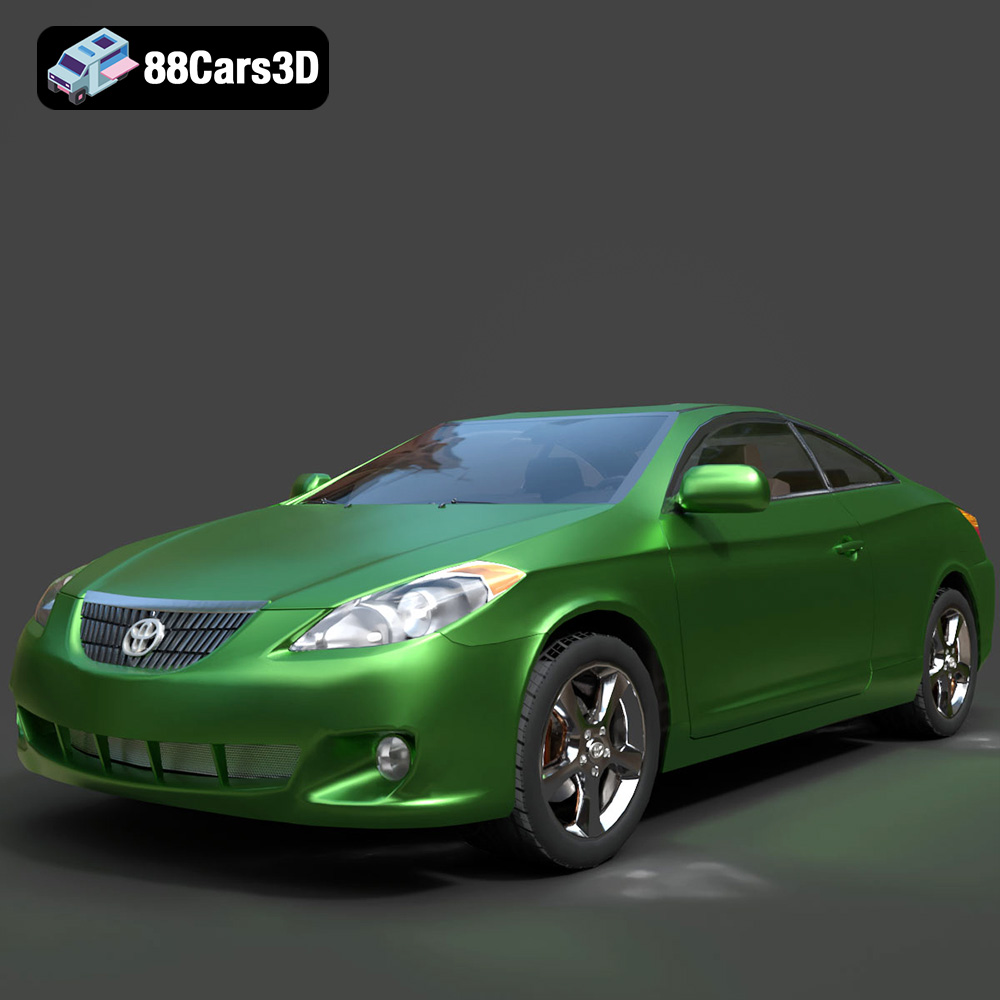
Download the Toyota Camry Solara 2006 3D Model featuring clean geometry, realistic detailing, and a fully modeled interior. Includes .blend, .fbx, .obj, .glb, .stl, .ply, .unreal, and .max formats for rendering, simulation, and game development.
Price: $10

