⚡ FLASH SALE: Get 60% OFF All Premium 3D & STL Models! ⚡

“`html
In today’s visually driven world, the demand for high-fidelity 3D car models has accelerated beyond the confines of automotive design studios. From hyper-realistic marketing renders that gleam on digital billboards to game-ready assets tearing up virtual racetracks, and immersive AR/VR showrooms, digital vehicles are everywhere. Creating these assets, or choosing the right one for your project, requires a deep understanding of a complex, multi-stage pipeline. A truly great 3D car model isn’t just a pretty picture; it’s a masterpiece of technical artistry, built on a foundation of clean topology, meticulously crafted materials, and intelligent optimization for its final application.
This comprehensive guide will take you on a journey through the entire lifecycle of a professional 3D car model. We will dissect the fundamental principles of automotive modeling, unravel the secrets behind photorealistic texturing and rendering, and navigate the critical process of optimizing these complex assets for real-time game engines, AR/VR experiences, and even 3D printing. Whether you are a 3D artist aiming to perfect your craft, a game developer in need of high-performance assets, or a visualization professional seeking to create stunning automotive renders, this article will provide the technical insights and actionable workflows you need to succeed. Get ready to look under the hood and master the art and science of digital automobiles.
The creation of any high-quality 3D car model begins with a rock-solid foundation: the 3D mesh itself. The quality of the modeling and the logical flow of its underlying geometry—known as topology—dictate everything that follows, from how smoothly the surface reflects light to how efficiently it can be optimized for different platforms. Rushing this stage is a recipe for headaches in texturing, rigging, and rendering. A well-constructed mesh is characterized by clean, deliberate geometry that is both accurate to the real-world vehicle and technically sound for digital manipulation. This foundational stage is about building a digital sculpture that is as robust as the machine it represents, ensuring that every subsequent step is built on stable ground.
At the heart of a great car model is its topology. For automotive surfaces, the industry standard is to use a mesh composed almost entirely of quadrilaterals, or “quads.” This practice is non-negotiable for achieving the smooth, flowing surfaces characteristic of vehicle bodies. Quads subdivide cleanly and predictably, which is essential when using modifiers like Subdivision Surfaces (in Blender) or TurboSmooth (in 3ds Max) to create a high-resolution final mesh from a more manageable base. The strategic placement and direction of these quads, or edge flow, is paramount. Edge loops should follow the main character lines and contours of the car’s body panels—the sharp crease running down the side, the curve of the wheel arch, or the bezel around a headlight. This ensures that when the mesh is subdivided, these defining features remain crisp and true to the design. A common pitfall is creating “poles”—vertices where five or more edges meet—on flat, visible surfaces, as they can cause pinching and lighting artifacts. These should be strategically hidden in less visible areas or resolved into cleaner quad geometry.
Accuracy is key in automotive modeling. Professionals typically start with a collection of high-resolution blueprints or reference photos, meticulously aligning them in the 3D software’s orthographic views (top, side, front, and back). The initial form is often blocked out using primitive shapes or by tracing the main contours with splines or NURBS curves, which provide a mathematically perfect guide for placing polygons. The primary technique used is Subdivision Surface Modeling. Artists build a low-to-medium resolution “cage” mesh that defines the overall shape. This cage is easier to manipulate and keeps the scene light. A non-destructive modifier is then applied to generate the smooth, high-poly result in real-time. This workflow allows for constant refinement. An artist might start with the hood, extruding edges from a single plane, carefully tracing the blueprint lines, and adding edge loops with tools like Swift Loop (3ds Max) or Loop Cut (Blender) to tighten curves and define panel gaps. This process is repeated for every panel, ensuring a seamless connection between parts like doors, fenders, and bumpers.
The level of detail required for a 3D car model is dictated by its intended use. A “hero” vehicle for a cinematic close-up might require a fully modeled interior, including the dashboard, seats with stitching, and even the engine bay. Conversely, a car intended for a background shot in a large architectural visualization might only need a basic, low-detail interior silhouette. When high detail is required, efficiency is still a concern. Small, intricate details like dashboard buttons, air vents, or brake calipers are often modeled as separate, “floating” pieces of geometry that slightly intersect with the main surface. This avoids overly complex topology on the main mesh and makes UV mapping simpler. For the undercarriage, artists often use a combination of reference photos and technical diagrams to model key components like the exhaust system, suspension, and chassis frame, but only to the extent they will be visible in the final renders. This selective detailing ensures the model is both realistic and optimized.
A perfectly modeled car is an unpainted sculpture; it’s the texturing and material stage that truly brings it to life. This process involves two critical, interconnected steps: UV mapping and PBR material creation. UV mapping is the technical process of “unwrapping” the 3D mesh into a 2D plane, creating a map that dictates how textures are applied. Without a clean UV layout, even the best textures will appear stretched, compressed, or distorted. Once the UVs are prepared, the artistic work of creating hyper-realistic, physically-based materials begins. This involves building shaders that accurately simulate how different materials—like metallic car paint, rubber, glass, and chrome—interact with light in the real world, complete with subtle imperfections that sell the illusion of reality.
UV mapping a car is an art form in itself. The goal is to create a 2D representation of the 3D surface with minimal stretching and efficient use of texture space. The process starts by defining “seams,” which tell the software where to “cut” the mesh for unwrapping. For a car, seams are logically placed along hard edges or natural panel gaps, much like a tailor would cut fabric. For example, the edges of a car door or the seam where a fender meets the bumper are ideal locations. Once seams are marked, an unwrapping algorithm is used. In Blender, artists can use tools like the “Unwrap” operator, which has various methods. For more information on these workflows, the official Blender 4.4 documentation is an excellent resource, available at https://docs.blender.org/manual/en/4.4/. For large, contiguous surfaces like the car body, it’s crucial to check for distortion using a checkerboard pattern. Islands (the unwrapped pieces) should be straightened and oriented logically, then packed tightly into the UV space to maximize pixel density. For ultra-high-resolution assets, artists often use UDIMs (U-Dimension), a system that allows a single model to use multiple texture maps, providing incredible detail without resorting to massive single textures.
Physically Based Rendering (PBR) is the industry-standard workflow for creating materials that react believably to light. The core of PBR is a set of texture maps that describe different physical properties of a surface. These typically include:
A complex car paint material is a perfect example. In a shader network (like in Blender’s Shader Editor or the 3ds Max Material Editor), this involves a layered approach: a base layer with the paint’s Albedo and metallic flake properties, topped with a “clear coat” layer controlled by its own Roughness value to simulate the glossy, protective finish. Adding subtle variations, like an “orange peel” effect using a faint noise texture in the Normal map, can dramatically increase realism.
No real-world object is perfectly clean. Selling the realism of a 3D car model requires adding imperfections. This can be done in several ways. Decals, such as racing stripes or logos, are often applied using a separate “decal sheet” texture and projected onto the model using a specific UV channel or a dedicated decal shader. Weathering effects like dirt, dust, and rust are often added in a specialized 3D texturing application like Adobe Substance Painter. This software allows artists to paint directly onto the 3D model in layers and use procedural generators to intelligently place grime in crevices and exposed areas (using baked maps like Ambient Occlusion and Curvature). This non-destructive workflow allows for incredible control, from a showroom-clean finish to a battle-scarred, off-road vehicle.
With the model built and its materials meticulously crafted, the next stage is to place it in a virtual environment and capture it in the best possible light. This is the domain of automotive rendering. The goal is to create a final image that is indistinguishable from a professional photograph. This involves choosing the right render engine for the job, designing a sophisticated lighting setup that accentuates the car’s form, and fine-tuning render settings for the optimal balance of quality and speed. The final touches are often applied in post-processing, where raw render outputs are composited and graded to achieve a polished, cinematic look.
The choice of render engine significantly impacts the workflow and final result. For architectural and automotive visualization, Corona Renderer and V-Ray (both popular for 3ds Max and Cinema 4D) are industry titans. Corona is often praised for its ease of use and incredibly realistic lighting with minimal tweaking, making it a favorite for artists focused on pure photorealism. V-Ray is a more versatile powerhouse, offering a vast array of controls and features that make it suitable for everything from visual effects to product design. For Blender users, the built-in Cycles engine is a powerful, production-proven path-tracer that is deeply integrated into Blender’s ecosystem. It excels at creating realistic materials and lighting and has been heavily optimized for both CPU and GPU rendering. Ultimately, the choice depends on your host software, budget, and specific project needs, but all three are capable of producing world-class results.
Lighting is what gives a car its shape, defines its curves, and makes its materials pop. There are two primary approaches:
Achieving a clean, noise-free render requires careful management of render settings. The most critical setting is sampling, which controls the number of light rays calculated per pixel. Higher samples reduce noise but increase render time. Modern render engines feature powerful AI-based denoisers that can intelligently remove noise from a lower-sample render, dramatically speeding up the process. A professional workflow also involves rendering in passes, or Render Elements (V-Ray/Corona) / AOVs (Cycles). This means exporting separate images for different components of the final image, such as reflections, shadows, ambient occlusion, and direct lighting. These passes are then reassembled in post-processing software like Adobe Photoshop or Foundry Nuke. This gives the artist complete control to fine-tune the final image—for example, they can enhance reflections, deepen shadows, or perform color grading on the final composite without having to re-render the entire scene.
Creating a 3D car for a game engine like Unreal Engine or Unity is a completely different challenge than creating one for a pre-rendered cinematic. In real-time applications, every polygon and every texture pixel counts. The model must be incredibly efficient to ensure the game runs at a smooth, high framerate (typically 60 FPS or more). This requires a process of heavy optimization, transforming the high-resolution, multi-million-polygon cinematic model into a lean, performant game asset. This process involves rebuilding the geometry, consolidating materials, and creating multiple levels of detail to ensure performance across a wide range of hardware.
The first step is creating a low-polygon mesh that retains the silhouette and character of the high-poly source. This process is called retopology. It can be done manually, by drawing new polygons over the surface of the high-poly model, or with the help of semi-automated tools. The goal is to capture the shape with the lowest possible polygon count. A “hero” player vehicle in a modern PC/console game might have a budget of 100,000 to 300,000 triangles, while a background traffic car might be under 15,000. During this process, the fine details from the high-poly model (like panel gaps, bolts, and vents) are not modeled; instead, they are “baked” into a Normal map. This map is then applied to the low-poly model, creating the illusion of high-resolution detail on a very efficient mesh. This baking process is a fundamental step in creating almost all modern game assets.
Even an optimized low-poly model can be too heavy to render hundreds of times in a busy scene. This is where Levels of Detail (LODs) come in. An artist will create several versions of the car model, each with a progressively lower polygon count.
The game engine automatically switches between these models based on the car’s distance from the camera, drastically reducing the total number of polygons being rendered per frame. Another key optimization is managing draw calls. A draw call is a command from the CPU to the GPU to draw an object. Each object with a unique material generates at least one draw call. A car with 30 different materials would be very inefficient. To solve this, artists consolidate materials wherever possible.
To reduce draw calls and memory usage, game artists use a technique called texture atlasing. Instead of having separate textures for the body paint, tires, glass, and chrome, the UVs for all these different parts are arranged and packed into a single UV space. All the corresponding PBR maps (Albedo, Normal, etc.) are baked into one large set of textures (e.g., a single 4096×4096 Albedo map for the entire car). This means the entire vehicle can be rendered with just one material, reducing dozens of draw calls to just one. Finally, these textures are compressed using formats like DXT (for PC) or ASTC (for mobile). These are “lossy” compression formats that significantly reduce the file size and memory footprint of textures, which is crucial for performance, especially on memory-constrained hardware like game consoles.
The utility of a high-quality 3D car model now extends far beyond traditional screens. Immersive technologies like Augmented Reality (AR) and Virtual Reality (VR) are using these assets for virtual test drives and interactive configurators. Simultaneously, the rise of affordable, high-resolution 3D printing allows designers and hobbyists to bring these digital vehicles into the physical world. Each of these applications has its own unique set of technical requirements and optimization challenges. Preparing a model for these new frontiers requires a specialized workflow focused on real-time performance for AR/VR and geometric integrity for 3D printing.
For AR and VR applications, maintaining a consistently high and stable framerate (typically 90 FPS or higher) is non-negotiable. Dropped frames can cause motion sickness and ruin the immersive experience. This necessitates the most aggressive optimization strategies. Polygon counts must be kept extremely low, often below 100,000 triangles even for a detailed model. Texture resolutions are typically capped at 2K (2048×2048) or even 1K, and texture atlasing is mandatory to minimize draw calls. The key is to bake as much detail as possible into the texture maps. The final asset must be delivered in a highly efficient, web-friendly format. The two dominant standards are GLB (the binary version of glTF) and USDZ (developed by Apple for AR). These formats are designed to package the mesh, materials, and textures into a single, compact file that can be loaded quickly on mobile devices. Professional asset stores often provide models in these ready-to-use file formats, as seen on platforms like **88cars3d.com**.
Preparing a model for 3D printing is a process of ensuring the digital mesh is a valid, solid object that a printer can understand. This involves several key steps:
The final, prepared model is typically exported as an STL or OBJ file, which are standard formats for 3D printing slicer software.
Understanding the primary file formats is crucial for ensuring compatibility between different software and platforms.
Having access to a model in multiple formats, as provided by quality marketplaces, ensures maximum flexibility for any project.
The journey of a 3D car model, from a simple polygon plane to a fully realized digital asset, is a testament to the convergence of technical skill and artistic vision. We’ve seen how a foundation of clean topology is essential for every subsequent stage. We’ve explored how strategic UV mapping and layered PBR materials breathe life and realism into the mesh. We’ve delved into the nuanced arts of photorealistic automotive rendering and the critical, performance-driven process of optimization for real-time game assets. Finally, we’ve looked to the future, preparing these models for the immersive worlds of AR/VR and the tangible reality of 3D printing.
The key takeaway is that a great 3D car model is not a single object, but a versatile digital asset designed with a purpose. Its form must adapt to its function, whether that’s enduring the scrutiny of a 4K cinematic close-up or delivering flawless performance in a mobile AR app. By mastering these diverse workflows, creators can unlock the full potential of their digital vehicles. As a next step, try focusing on one area of this pipeline. For instance, start a new project with the sole focus of creating perfect, flowing topology on a single car panel. Mastering this foundational skill will elevate the quality of all your future work. For those who need to accelerate their projects, exploring professionally crafted models from marketplaces like **88cars3d.com** can provide a production-ready starting point, allowing you to focus on bringing your creative vision to life.
“`
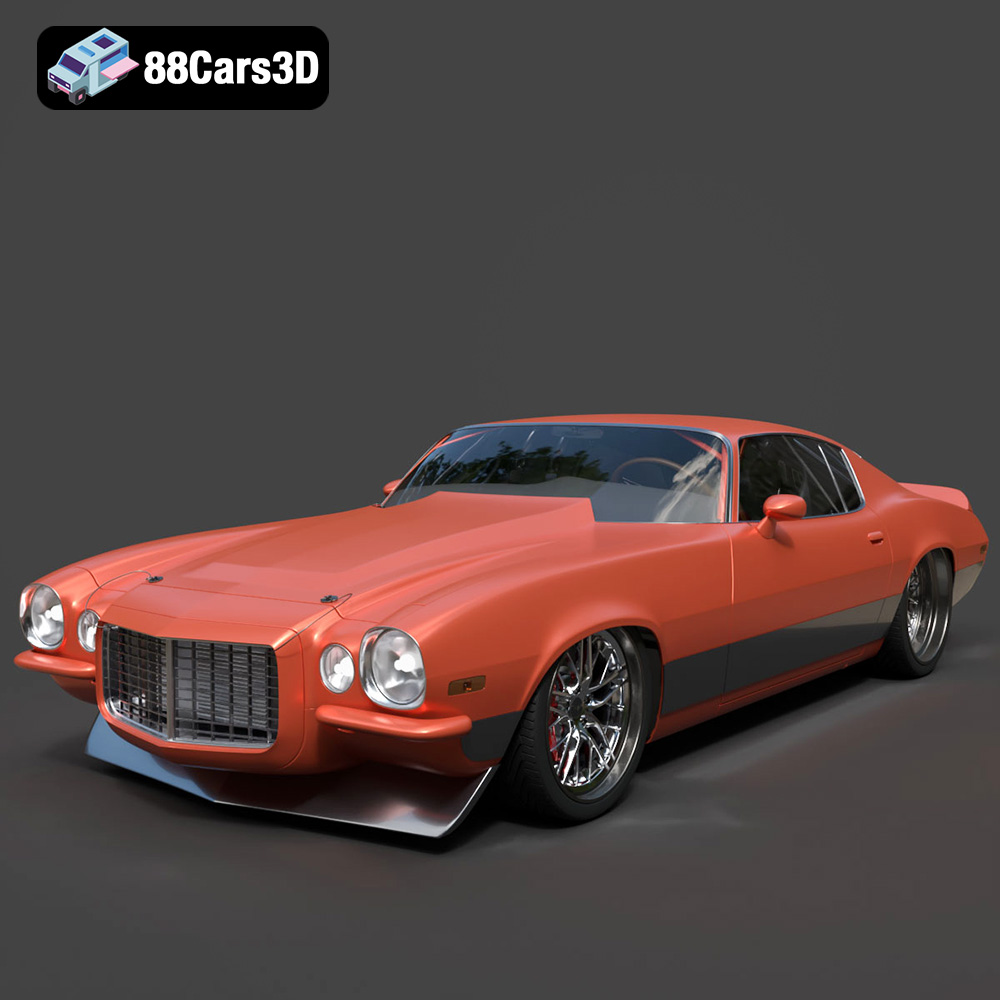
Texture: Yes
Material: Yes
Download the Chevrolet Camaro 1970 3D Model featuring clean geometry, realistic detailing, and a fully modeled interior. Includes .blend, .fbx, .obj, .glb, .stl, .ply, .unreal, and .max formats for rendering, simulation, and game development.
Price: $10
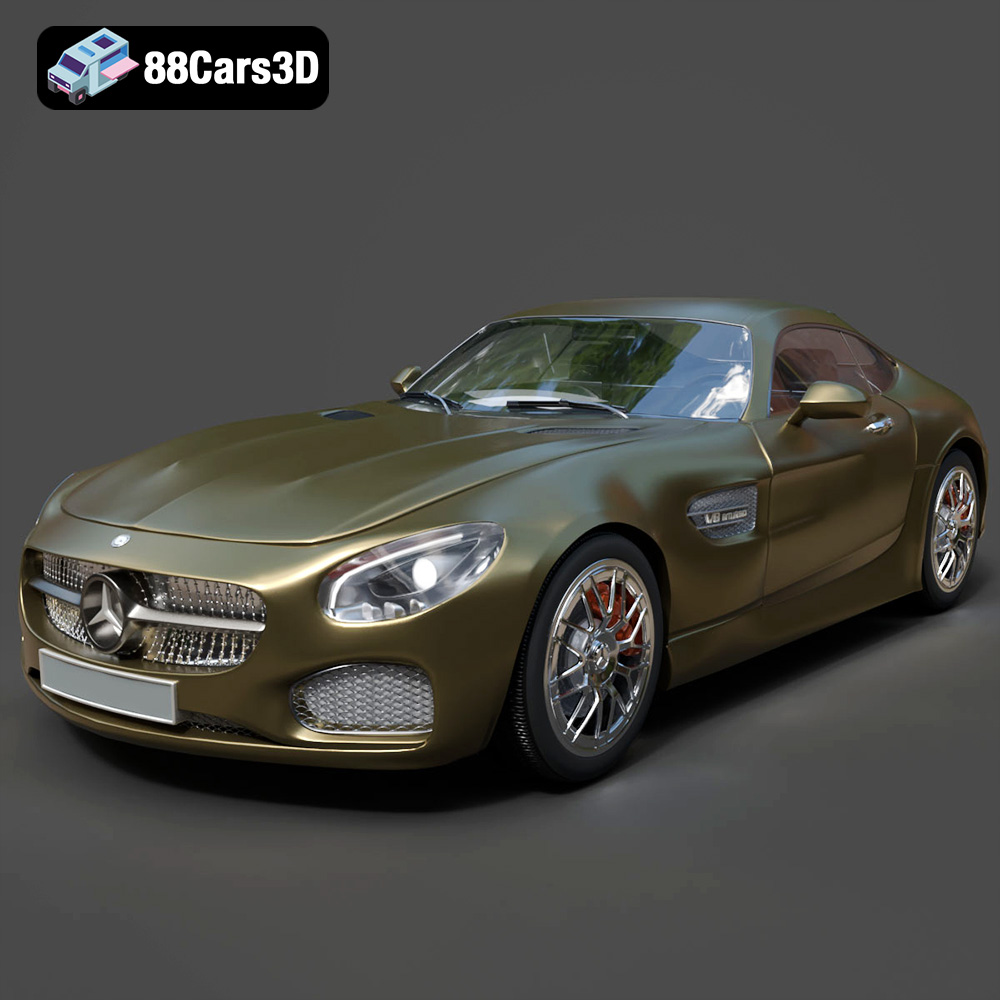
Texture: Yes
Material: Yes
Download the Mercedes-AMG GT 2015 3D Model featuring clean geometry, realistic detailing, and a fully modeled interior. Includes .blend, .fbx, .obj, .glb, .stl, .ply, .unreal, and .max formats for rendering, simulation, and game development.
Price: $88.99

**Meta Description:**
Texture: Yes
Material: Yes
Download the Toyota Crown Majesta 2009 3D Model with luxury detailing, clean topology, and a fully modeled interior. Available in .blend, .fbx, .obj, .glb, .stl, .ply, .unreal, and .max formats for rendering, simulation, and game development.
Price: $4.99

**Meta Description:**
Texture: Yes
Material: Yes
Download the Toyota AE86 Levin 1983 1987 3D Model featuring realistic exterior and interior detailing. Includes .blend, .fbx, .obj, .glb, .stl, .ply, .unreal, and .max formats for rendering, simulation, and game development.
Price: $9.99

Texture: Yes
Material: Yes
Download the Toyota Mark 2 2001 3D Model featuring clean geometry, realistic detailing, and a fully modeled interior. Includes .blend, .fbx, .obj, .glb, .stl, .ply, .unreal, and .max formats for rendering, simulation, and game development.
Price: $4.99

Texture: Yes
Material: Yes
Download the Toyota Celica 2000 3D Model featuring clean geometry, realistic detailing, and a fully modeled interior. Includes .blend, .fbx, .obj, .glb, .stl, .ply, .unreal, and .max formats for rendering, simulation, and game development.
Price: $4.99

Download the Toyota Camry US 2012 3D Model featuring clean geometry, realistic detailing, and a fully modeled interior. Includes .blend, .fbx, .obj, .glb, .stl, .ply, .unreal, and .max formats for rendering, simulation, and game development.
Price: $4.99

Texture: Yes
Material: Yes
Download the Toyota GT 86 2013 3D Model featuring clean geometry, realistic detailing, and a fully modeled interior. Includes .blend, .fbx, .obj, .glb, .stl, .ply, .unreal, and .max formats for rendering, simulation, and game development.
Price: $4.99

Texture: Yes
Material: Yes
Download the Toyota Mark X 2010 3D Model featuring clean geometry, realistic detailing, and a fully modeled interior. Includes .blend, .fbx, .obj, .glb, .stl, .ply, .unreal, and .max formats for rendering, simulation, and game development.
Price: $4.99

Texture: Yes
Material: Yes
Download the Toyota Allion 2008 3D Model featuring clean geometry, realistic detailing, and a fully modeled interior. Includes .blend, .fbx, .obj, .glb, .stl, .ply, .unreal, and .max formats for rendering, simulation, and game development.
Price: $4.99

