⚡ FLASH SALE: Get 60% OFF All Premium 3D & STL Models! ⚡

The world of automotive visualization has undergone a seismic shift. Gone are the days of long, overnight renders and static imagery being the only way to showcase a new vehicle design. Today, real-time rendering has taken the driver’s seat, and Unreal Engine is the high-performance engine powering this revolution. This powerful tool, once exclusively the domain of game development, now enables designers, marketers, and engineers to create stunningly realistic, interactive, and immersive automotive experiences. From photorealistic virtual showrooms and dynamic car configurators to cutting-edge virtual production for commercials, Unreal Engine offers an unprecedented level of creative freedom and fidelity.
This comprehensive guide is your roadmap to mastering automotive visualization in Unreal Engine. We will navigate the entire workflow, starting from the crucial first steps of project setup and model preparation. We’ll then dive deep into the art of creating lifelike PBR materials, mastering the nuances of a perfect car paint shader. You’ll learn how to harness the power of Lumen for dynamic global illumination and leverage Nanite to render incredibly detailed 3D car models without breaking a sweat. Finally, we’ll explore how to add interactivity with Blueprint scripting and produce breathtaking cinematic sequences. Whether you are a seasoned 3D artist or an Unreal Engine developer new to the automotive space, this article will equip you with the technical knowledge to turn high-quality assets into world-class real-time experiences.
A successful automotive visualization project begins long before you start creating beautiful renders. A solid foundation built on correct project setup and a clean import pipeline is paramount to a smooth and efficient workflow. Getting these initial steps right saves countless hours of troubleshooting later and ensures your 3D car models perform optimally within the engine.
When you first launch Unreal Engine, you’re presented with several project templates. While starting with a ‘Blank’ project is always an option for experienced users, Unreal Engine offers specialized templates that can significantly accelerate your setup process. The ‘Automotive, Film & TV, and Live Events’ category is your best starting point. The ‘Automotive Configurator’ template, for instance, comes pre-packaged with a studio lighting setup, example Blueprint logic for variant switching, and project settings optimized for high-fidelity real-time rendering. This includes enabling hardware ray tracing support (if your GPU allows it) and setting default Lumen settings for high-quality global illumination. Starting here gives you a professional-grade environment right out of the box.
Getting your vehicle model into the engine is the next critical step. Unreal Engine supports several file formats, but the most common for automotive assets are FBX and USD (Universal Scene Description). For a seamless experience, especially with complex, multi-part models, using a clean pipeline is essential. Marketplaces like 88cars3d.com provide models that are often prepared for engine integration, featuring clean geometry and organized hierarchies.
– USD (Datasmith) Import: For complex CAD data or scenes from other DCC applications like 3ds Max or Maya, the Datasmith plugin (part of the USD pipeline) is often superior. It does a better job of preserving material assignments, object hierarchies, and metadata, making it a robust choice for professional workflows.
Before any import, it’s a good practice to consult the official documentation at https://dev.epicgames.com/community/unreal-engine/learning, which offers detailed guides on import settings and best practices for various file types.
Once imported, a quick verification pass is crucial. First, check the scale. Drag the model into your scene and place a default UE Mannequin next to it. Does the car look correctly sized? If not, you may need to re-import with a different scale factor or adjust it in your 3D modeling software. Second, check the pivots. Select a door and try to rotate it. Does it pivot from the hinge as expected? Incorrect pivots are a common issue and are best fixed in the source 3D application before re-importing. A well-prepared model will have pivots correctly placed on all interactive parts, saving you significant setup time for Blueprints later.
The soul of a realistic car model lies in its materials. A perfect mesh can be let down by subpar shaders, while expertly crafted materials can make a model truly indistinguishable from reality. Unreal Engine’s Material Editor is an incredibly powerful node-based system that allows for the creation of complex, physically-based rendering (PBR) materials that accurately simulate how light interacts with real-world surfaces, from the metallic flakes in a paint job to the subtle grain of leather seats.
The PBR materials workflow relies on a set of texture maps that define a surface’s physical properties. For automotive assets, you’ll typically work with:
Properly authored PBR textures are crucial for predictable results under any lighting condition, which is a cornerstone of effective automotive visualization.
Standard PBR materials are great, but car paint requires a more advanced approach to capture its unique properties. The key is to use Unreal’s Clear Coat shading model. This creates a two-layer material: a base layer for the paint and flakes, and a top, transparent varnish layer.
This multi-layered approach is what gives car paint its characteristic depth and specular highlights, making it one of the most important materials to perfect in your scene.
To maintain high fidelity, texture resolution is key. For hero assets like cars, resolutions of 4096×4096 (4K) are common for major exterior and interior parts. Use texture channel packing to optimize memory usage. A common practice is to pack three grayscale maps (Roughness, Metallic, Ambient Occlusion) into the Red, Green, and Blue channels of a single texture, often called an “RMA” map. This reduces the number of texture samples the GPU has to perform, improving performance. When working with models that have multiple UV sets (UDIMs), Unreal Engine’s Virtual Texturing system can be enabled to handle these large texture datasets efficiently.
Lighting can make or break the realism of a scene. With the introduction of Lumen, Unreal Engine’s fully dynamic global illumination and reflections system, achieving photorealistic lighting in real-time is more accessible than ever. Lumen simulates how light bounces off surfaces and indirectly illuminates other objects, grounding your vehicle in its environment with soft shadows and accurate reflections.
Lumen is enabled by default in new projects. It works by generating a simplified representation of the scene, called Surface Cache, to calculate indirect lighting. This allows for instant feedback as you move lights or objects, a game-changer compared to the old method of baking lightmaps which could take hours.
You can fine-tune Lumen’s quality and performance through the Post Process Volume settings, adjusting parameters like Final Gather Quality, GI Quality, and Reflection Quality.
While Lumen excels in natural environments, a classic studio setup is often required for commercial-style shots. This can be achieved effectively in Unreal Engine:
Lumen is powerful but can be performance-intensive. For real-time rendering applications like a car configurator, you need to find the right balance. Lumen offers two primary methods: Software Ray Tracing (default, works on most modern hardware) and Hardware Ray Tracing (requires an RTX/RDNA2 GPU or better, offers higher quality). Hardware Ray Tracing often provides sharper reflections and more accurate indirect shadows but comes at a higher performance cost. For final cinematic renders via the Movie Render Queue, you can crank up the settings, but for interactive experiences, you may need to lower the quality settings in your Post Process Volume to maintain a high frame rate.
One of the most revolutionary features in modern Unreal Engine is Nanite, its virtualized micropolygon geometry system. Nanite fundamentally changes how we approach high-poly models, effectively eliminating the need for traditional polygon budget constraints and manual LOD (Level of Detail) creation for static meshes. For automotive visualization, where capturing every minute detail of a vehicle is essential, Nanite is a transformative technology.
Traditionally, a 3D model with millions of polygons, like those often found on high-end marketplaces such as 88cars3d.com, would be too performance-heavy to render in real-time. Artists would have to spend days creating multiple lower-polygon versions (LODs) that would swap in as the camera moved further away. Nanite automates this process intelligently and far more efficiently. It analyzes the model and breaks it down into small clusters of triangles. Then, in real-time, it streams and renders only the clusters that are visible and detailed enough to be perceived by the viewer at their current distance and resolution. This means you can use a 10-million-polygon film-quality 3D car model directly in the engine, and it will render with the performance of a much simpler model, automatically scaling its detail on the fly without any perceptible loss in quality.
Integrating a model into the Nanite pipeline is remarkably simple. There are two primary methods:
To verify that Nanite is working correctly in your scene, you can use the editor’s built-in visualization modes. In the viewport, navigate to ‘Lit’ -> ‘Nanite Visualization’ -> ‘Triangles’. This view will color-code the on-screen triangles being rendered by Nanite, clearly demonstrating how the geometric detail increases as you move closer to the surface.
While incredibly powerful, Nanite is not a magic bullet for every situation. It’s important to understand its current best-use cases and limitations. Nanite is designed for rigid, static geometry. This makes it perfect for a car’s body, chassis, wheels, and most interior components. However, it does not currently support skeletal meshes (for deformation, like a character), and its support for materials using transparency or world position offset (used for foliage animation) is limited. For an automotive model, this means you can enable Nanite on almost every part except perhaps the tires if you plan to use a Blueprint to make them deform or flatten against the ground. Using Nanite on the vast majority of the car’s geometry will massively free up performance, allowing you to spend your rendering budget on other features like high-quality lighting and complex materials.
Stunning visuals are only half the story in modern automotive experiences. The ability to interact with the vehicle—to open its doors, change its color, or see the headlights turn on—is what transforms a static render into an engaging virtual product showcase. Unreal Engine’s Blueprint Visual Scripting system empowers artists and designers to create this complex interactivity without writing a single line of code. It’s a node-based interface that makes programming accessible and intuitive.
Think of Blueprints as a visual flowchart for logic. Instead of typing commands, you connect nodes that represent functions, events, and variables. An “Event” node (like ‘Event On Clicked’) starts a chain of actions. “Function” nodes (like ‘Set Material’ or ‘Play Sound’) perform specific tasks. By linking these nodes together, you can create sophisticated logic flows. For an automotive project, you would typically convert your imported car model into a Blueprint Actor. This encapsulates all the car’s meshes and logic into a single, self-contained object that can be easily manipulated and duplicated.
A car color configurator is a classic entry point into Blueprints and a staple of automotive visualization. Here’s a simplified workflow:
With this simple setup, clicking a UI button will now instantly change the car’s paint color in real-time, forming the core of an interactive configurator.
The same principles can be extended to create a wide range of interactions. To make a door open, you would use a ‘Timeline’ node in Blueprint. When the user clicks the door handle, the Timeline plays, smoothly animating the door’s rotation from its closed to its open position over a few seconds. You can trigger particle effects from a Niagara system to simulate exhaust fumes or use Blueprint to switch between different lighting scenarios. This ability to script complex interactions is what makes Unreal Engine such a powerful tool for creating more than just pretty pictures—it allows you to build complete, interactive game assets and product demos.
Once your car is perfectly modeled, textured, lit, and interactive, the final step is to capture its beauty for others to see. Whether you’re creating a high-octane cinematic trailer, a series of photorealistic marketing stills, or content for a virtual production LED wall, Unreal Engine provides a suite of professional tools designed for high-quality output. The primary tools for this are Sequencer and the Movie Render Queue.
Sequencer is Unreal Engine’s multi-track, non-linear cinematic editor. If you’ve ever used video editing software like Adobe Premiere or DaVinci Resolve, its timeline-based interface will feel immediately familiar. Within Sequencer, you can:
– Trigger Events: Use the Event Track to call Blueprint functions at specific points in your timeline. For example, you can trigger the headlights to turn on just as the camera focuses on the front of the car.
Sequencer gives you complete control to choreograph every element of your cinematic, turning your real-time scene into a polished, film-quality sequence.
While you can capture video directly from the viewport, the Movie Render Queue (MRQ) is the professional solution for offline rendering. It offers significant advantages over real-time capture, allowing you to produce final images and videos with a level of quality that surpasses what’s possible in real-time.
The MRQ is a highly configurable batch rendering tool. You can set it to render your Sequencer animations with features like:
Within the Movie Render Queue, you have a choice of rendering technologies. Lumen is fantastic for its speed and provides excellent, physically-based results for most use cases. However, for the absolute pinnacle of photorealism, Unreal Engine also offers a hardware-accelerated Path Tracer. The Path Tracer is an unbiased, physically accurate renderer that simulates the path of light rays, producing results on par with traditional offline renderers like V-Ray or Arnold. It perfectly captures subtle light bounces, caustics, and soft shadows. The trade-off is speed; rendering a single frame with the Path Tracer can take several seconds or even minutes, compared to the fractions of a second for Lumen. The choice depends on your needs: use Lumen for fast turnarounds and real-time applications, and switch to the Path Tracer in the Movie Render Queue when you need to produce uncompromising, reference-quality still images or cinematic shots.
We’ve traveled the full length of the production pipeline, from initial project setup to final cinematic rendering. It’s clear that the combination of Unreal Engine’s powerful feature set and high-fidelity 3D car models creates an ecosystem where unparalleled realism and interactivity are not just possible, but accessible. We’ve seen how a methodical approach to importing and preparing assets lays the groundwork for success. We delved into the artistry of PBR materials, particularly the nuances of a multi-layered car paint shader that brings a vehicle to life. We harnessed the game-changing power of Lumen for dynamic, real-time lighting and reflections, and shattered old polygon limits with Nanite, allowing for cinematic-quality detail at every moment.
Furthermore, we unlocked the potential for user engagement by using the Blueprint system to build interactive configurators and animations. Finally, we learned to capture our work with professional polish using Sequencer and the Movie Render Queue. The synergy between these tools is what elevates automotive visualization from a simple rendering task to the creation of a comprehensive, immersive digital experience. The key takeaway is that starting with a premium, well-constructed asset is a massive accelerator. Sourcing game-ready and visualization-ready models from platforms like 88cars3d.com allows you to bypass hours of tedious cleanup and optimization, letting you focus immediately on the creative aspects of lighting, interactivity, and storytelling. Your next step is to take these concepts and apply them. Launch Unreal Engine, acquire a high-quality vehicle asset, and begin your journey to becoming a master of real-time automotive visualization.

Texture: Yes
Material: Yes
Download the Chevrolet Camaro 1970 3D Model featuring clean geometry, realistic detailing, and a fully modeled interior. Includes .blend, .fbx, .obj, .glb, .stl, .ply, .unreal, and .max formats for rendering, simulation, and game development.
Price: $10

Texture: Yes
Material: Yes
Download the Mercedes-AMG GT 2015 3D Model featuring clean geometry, realistic detailing, and a fully modeled interior. Includes .blend, .fbx, .obj, .glb, .stl, .ply, .unreal, and .max formats for rendering, simulation, and game development.
Price: $88.99

Texture: Yes
Material: Yes
Download the Suzuki GSX-R 1000 3D Model featuring clean geometry, realistic detailing, and a fully modeled interior. Includes .blend, .fbx, .obj, .glb, .stl, .ply, .unreal, and .max formats for rendering, simulation, and game development.
Price: $10

Texture: Yes
Material: Yes
Download the Porsche Cayman S 2024 3D Model featuring clean geometry, realistic detailing, and a fully modeled interior. Includes .blend, .fbx, .obj, .glb, .stl, .ply, .unreal, and .max formats for rendering, simulation, and game development.
Price: $10

Texture: Yes
Material: Yes
Download the Holden Commodore Sportwagon 2017 3D Model featuring clean geometry, realistic detailing, and a fully modeled interior. Includes .blend, .fbx, .obj, .glb, .stl, .ply, .unreal, and .max formats for rendering, simulation, and game development.
Price: $10
Texture: Yes
Material: Yes
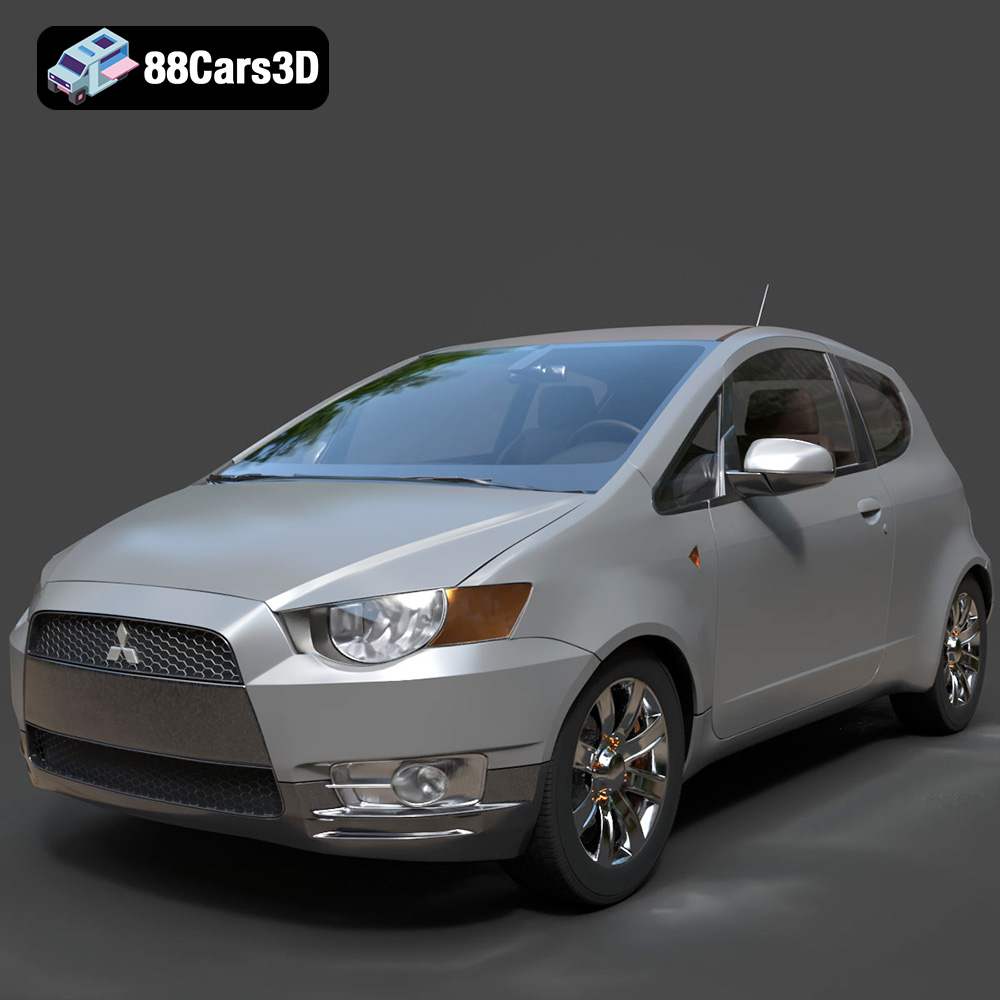
Download the Mitsubishi Colt 3 Door 2008 3D Model featuring clean geometry, realistic detailing, and a fully modeled interior. Includes .blend, .fbx, .obj, .glb, .stl, .ply, .unreal, and .max formats for rendering, simulation, and game development.
Price: $10

**Meta Description:**
Texture: Yes
Material: Yes
Download the Toyota Crown Majesta 2009 3D Model with luxury detailing, clean topology, and a fully modeled interior. Available in .blend, .fbx, .obj, .glb, .stl, .ply, .unreal, and .max formats for rendering, simulation, and game development.
Price: $4.99

**Meta Description:**
Texture: Yes
Material: Yes
Download the Toyota AE86 Levin 1983 1987 3D Model featuring realistic exterior and interior detailing. Includes .blend, .fbx, .obj, .glb, .stl, .ply, .unreal, and .max formats for rendering, simulation, and game development.
Price: $9.99

Texture: Yes
Material: Yes
Download the Toyota Mark 2 2001 3D Model featuring clean geometry, realistic detailing, and a fully modeled interior. Includes .blend, .fbx, .obj, .glb, .stl, .ply, .unreal, and .max formats for rendering, simulation, and game development.
Price: $4.99

Texture: Yes
Material: Yes
Download the Toyota Celica 2000 3D Model featuring clean geometry, realistic detailing, and a fully modeled interior. Includes .blend, .fbx, .obj, .glb, .stl, .ply, .unreal, and .max formats for rendering, simulation, and game development.
Price: $4.99

