⚡ FLASH SALE: Get 60% OFF All Premium 3D & STL Models! ⚡

“`html
There are few subjects in the world of 3D art that are as challenging and rewarding as the automobile. A 3D car model is a convergence of engineering precision and artistic expression, a digital sculpture that must be both technically sound and aesthetically stunning. For artists, designers, and developers, mastering the creation and application of these complex assets is a benchmark of skill. Whether you’re aiming for a jaw-dropping automotive rendering for a marketing campaign, creating a high-octane hero vehicle for a video game, or preparing a detailed scale model for 3D printing, the underlying principles of quality and precision remain the same. This comprehensive guide will take you through the entire lifecycle of a professional 3D car model. We will dissect the fundamental importance of clean topology and edge flow, navigate the intricate process of UV mapping for complex surfaces, build photorealistic PBR materials, and explore advanced workflows for rendering, real-time optimization, and even 3D printing preparation. Prepare to elevate your understanding and skills to the next level.
The creation of any high-quality 3D asset begins with its geometric foundation, and for 3D car models, this is paramount. The topology—the structure and flow of polygons across the model’s surface—dictates everything from how light reflects off a curved fender to how smoothly the model can be subdivided for close-up shots. A model built with poor topology, riddled with triangles, n-gons (polygons with more than four sides), and chaotic edge flow, will inevitably lead to shading artifacts, rendering errors, and immense difficulty in later stages like UV mapping and texturing. Conversely, a model constructed with clean, quad-based topology is a robust and flexible asset, ready for any application. Marketplaces that specialize in high-quality assets, such as 88cars3d.com, prioritize clean topology because it guarantees professional, predictable results across different software and render engines.
A car’s body is a collection of large, smooth, and highly reflective surfaces. Any imperfection in the underlying mesh will be immediately visible. Clean, quad-based topology is the industry standard for several critical reasons. Firstly, quad polygons subdivide cleanly and predictably. When using subdivision surface modifiers (like TurboSmooth in 3ds Max or the Subdivision Surface modifier in Blender), quads are divided into four smaller quads, maintaining the surface’s integrity and smoothness. Triangles and n-gons, however, often terminate edge loops and create poles (vertices with more than four connecting edges), which can cause pinching and visible artifacts upon subdivision. Secondly, clean topology ensures proper shading and reflection flow. Light reflects across a surface following the direction of its polygons. A mesh with organized, flowing polygons will produce smooth, realistic reflections, while a messy mesh will result in distorted, unnatural highlights that break the illusion of a solid, polished surface.
Edge flow refers to the direction and arrangement of edge loops that define the shape of the model. For automotive models, mastering edge flow is an art form. The goal is to have your edge loops follow the natural curvature and feature lines of the vehicle. For instance, the edges should flow smoothly along the wheel arches, wrap around the contours of the hood, and define the sharp character lines running down the side of the car. Holding edges, or support loops, are crucial for controlling the sharpness of creases and panel gaps. By placing edge loops close to a primary edge, you “tighten” the surface during subdivision, creating a crisp line without adding unnecessary geometry across the entire panel. This technique is essential for defining the precise gaps between the doors, hood, and trunk, which are key to a realistic model. Without proper support loops, these features would appear soft and “blobby” after subdivision.
The required polygon count for a 3D car model varies dramatically based on its intended use. A “hero” car for a feature film or a high-resolution marketing render might exceed several million polygons after subdivision. In contrast, a real-time game asset for a PC or console title might have a budget of 100,000 to 250,000 polygons for its highest level of detail (LOD0), while a model for a mobile AR application might need to be under 30,000 polygons. A professional workflow involves modeling a high-resolution, subdivision-ready base mesh first. This “source” model is built entirely with quads and is used to generate all other versions. For rendering, it can be subdivided to the required level of smoothness. For games, this high-poly model is used to bake detailed normal maps onto a lower-polygon, optimized mesh, transferring the visual complexity without the performance cost.
If modeling creates the sculpture, UV mapping draws the map upon which all surface details will be painted. The UV mapping process involves “unwrapping” the 3D mesh into a 2D plane, creating a set of coordinates (U and V) that tell the software how to apply a 2D texture image onto the 3D surface. For an object as complex as a car, with its mix of large, curved panels and intricate mechanical parts, a strategic and clean UV unwrap is essential for achieving professional texturing results. Poor UV mapping can lead to stretched, distorted, or blurry textures, visible seams, and inconsistent resolution across the model, all of which instantly shatter the illusion of realism. A meticulous UV layout is a non-negotiable step in the professional pipeline, ensuring that every decal, paint flake, and leather stitch appears crisp and correctly placed.
The first step in unwrapping is defining the seams where the 3D mesh will be “cut” to lay flat. The placement of these seams is a strategic decision. The primary goal is to hide them in areas where they will be least noticeable. For a 3D car model, ideal locations for seams include:
Avoid placing seams across large, flat, and highly visible areas like the middle of the hood or the roof, as even a perfectly aligned texture can show a faint line or artifact under certain lighting conditions.
Different parts of a car require different unwrapping techniques. Large, relatively flat panels like the roof or hood can often be unwrapped using a simple planar projection, followed by manual relaxation to reduce stretching. More complex, curved surfaces like fenders and bumpers require a more hands-on approach. Tools like Blender’s “Follow Active Quads” or pelt mapping in 3ds Max and Maya are invaluable for unwrapping these organic shapes into clean, grid-like UV islands. For mechanical parts like wheels and brake calipers, it’s often best to break the object down into smaller, simpler components and unwrap each one individually using cylindrical or planar projections. This methodical approach ensures that each part is unwrapped with minimal distortion, preserving the integrity of the textures that will be applied.
Texel density is a measure of how many texture pixels (texels) are used per unit of 3D surface area. Maintaining a consistent texel density across the entire model is crucial for ensuring that texture resolution is uniform. If the door has a much higher texel density than the adjacent fender, one will appear sharp while the other looks blurry. UV packing tools help arrange the unwrapped UV islands efficiently into the 0-1 UV space to maximize texture usage. For hero assets that require extreme detail, a single texture map is often not enough. This is where UDIMs (U-Dimension) come in. The UDIM workflow allows a single model to use multiple texture maps, each occupying a different tile in UV space. For a car, you might have one UDIM tile for the main body, another for the interior, one for the wheels, and another for the chassis. This enables the use of multiple 8K texture maps on a single object, achieving incredible levels of detail suitable for cinematic close-ups and high-end automotive visualization.
Creating believable materials is where a 3D car model truly comes to life. The Physically Based Rendering (PBR) methodology has revolutionized material creation by simulating how light interacts with surfaces in the real world. Instead of faking material properties with artistic tricks, a PBR workflow uses a set of standardized maps—like Base Color, Metallic, Roughness, and Normal—to define the physical attributes of a surface. This approach ensures that materials react realistically and consistently under any lighting condition, which is essential for automotive rendering where reflections and surface finish are everything. From the multi-layered sparkle of metallic car paint to the subtle grain of dashboard leather, a deep understanding of PBR principles and shader networks is key to achieving photorealism.
PBR operates on principles of energy conservation, ensuring that a surface cannot reflect more light than it receives. The most common PBR workflow is the Metallic/Roughness model. In this system, the Base Color map defines the underlying color of the material. The Metallic map, a grayscale texture, determines if a surface is a metal (white) or a dielectric/non-metal (black). The Roughness map, another grayscale texture, controls how rough or smooth the surface is. A very smooth surface (black in the roughness map) will have sharp, mirror-like reflections, while a rough surface (white) will diffuse light, resulting in dull, blurry reflections. A Normal map is used to add fine surface detail, like the pattern of carbon fiber or the grain of plastic, without adding extra polygons to the model. These maps work in concert to describe the physical nature of any material with a high degree of realism.
Automotive paint is one of the most complex materials to replicate digitally because it is composed of multiple layers. A realistic car paint shader typically consists of:
Building this layered material, often within a node-based shader editor, is the secret to achieving the deep, lustrous finish of real-world car paint.
The realism of a 3D car model is often sold by its details. The interior requires a diverse palette of materials, from the soft-touch plastics of the dashboard and the textured leather of the seats to the polished chrome accents and the glass on the instrument cluster. For these elements, high-resolution texture maps (typically 2K to 4K) are essential. Procedural techniques and tileable textures are used for surfaces like carpets and seat fabrics, while unique textures are baked for specific components like the steering wheel or infotainment screen. Ambient Occlusion (AO) maps are particularly important for interiors, adding subtle contact shadows in crevices and corners to create a sense of depth and grounding. For small but crucial details like tire treads, headlight interiors, and brake discs, dedicated texture sets ensure these elements hold up even in close-up shots, completing the photorealistic illusion.
With a meticulously modeled and textured asset, the final step in creating a stunning image is the rendering process. This is where light, shadow, and materials converge to produce a final, photorealistic image. Automotive rendering is a specialized discipline that demands an exacting eye for detail, a deep understanding of light, and technical proficiency with powerful render engines. Whether creating a sleek studio shot that highlights every curve of the car’s design or placing the vehicle in a dynamic, real-world environment, the right combination of lighting, camera settings, and render parameters is what separates a good render from a breathtaking one. The choice of render engine, the lighting setup, and the optimization of render settings all play a critical role in the final output.
Several industry-standard render engines excel at automotive visualization, each with its own strengths.
The choice often comes down to the artist’s preferred 3D software, workflow, and specific project requirements, but all three are capable of producing world-class results.
Lighting is the most critical element in showcasing a 3D car model. For classic studio renders, a three-point lighting setup is a great starting point, consisting of a Key light (the main light source), a Fill light (to soften shadows), and a Rim light (to highlight the car’s silhouette). However, automotive studio lighting often employs large area lights or emissive planes to create long, soft reflections that elegantly trace the car’s body lines. For outdoor scenes, High Dynamic Range Imaging (HDRI) is the go-to technique. An HDRI is a 360-degree panoramic image that contains a vast range of lighting information. When used as an environment map, it provides both realistic ambient lighting and detailed reflections, seamlessly integrating the 3D car into the captured environment. Often, a combination is used: an HDRI for general lighting and reflections, supplemented with direct lights to create sharper shadows and highlights.
Achieving the perfect balance between image quality and render time is a constant challenge. Key settings to manage include render samples and the noise threshold. In path tracing engines like Cycles or V-Ray, the renderer casts rays from the camera to sample the scene. More samples produce a cleaner image but increase render time. Modern denoisers (like NVIDIA’s OptiX or Intel’s Open Image Denoise) are incredibly effective at cleaning up noise, allowing for high-quality results with fewer samples. Other important settings include Global Illumination (GI) bounces, which control how many times light can bounce around the scene (more bounces create more realistic indirect lighting, especially in interiors), and managing caustics (light focused through transparent materials like glass), which can be computationally expensive and are often simplified or faked for efficiency.
Creating a 3D car model for a real-time application like a video game, an augmented reality (AR) experience, or a virtual reality (VR) simulation presents a completely different set of challenges than creating one for pre-rendered cinematics. In real-time rendering, every polygon and every texture pixel impacts performance. The engine must render the scene at a consistent frame rate (typically 30 to 90+ frames per second), which means the assets must be incredibly efficient. This requires a rigorous process of optimization, where the visual fidelity of the high-resolution source model is cleverly and carefully transferred to a low-polygon, game-ready asset. This discipline is a blend of technical constraints and artistic problem-solving, focusing on polygon budgets, Levels of Detail (LODs), and texture efficiency to deliver a smooth and immersive experience.
The foundation of a real-time model is an optimized mesh. This process, known as retopology, involves creating a new, clean, low-polygon mesh that traces the silhouette and key features of the original high-poly model. The goal is to capture the car’s shape with the fewest polygons possible. Every polygon that doesn’t contribute to the model’s silhouette or define a key form is considered redundant. A typical polygon budget for a hero vehicle in a modern PC/console game is around 100,000 to 250,000 triangles, while a car for a mobile game might be limited to 15,000 to 50,000 triangles. During this phase, the high-poly model’s intricate details are not lost; instead, they are “baked” into texture maps, primarily the normal map. The normal map creates the illusion of high-resolution surface detail on the low-poly mesh, a cornerstone of real-time graphics.
In a game environment, a car that is far away from the camera does not need the same level of detail as one right in front of it. This is the principle behind Levels of Detail (LODs). A single vehicle asset will be comprised of several different versions of the mesh, each with a progressively lower polygon count.
Game engines like Unity and Unreal Engine automatically switch between these LODs based on the object’s distance from the camera, dramatically improving performance by reducing the total number of polygons that need to be rendered in any given frame.
In real-time rendering, every time the CPU has to tell the GPU to draw an object with a specific material, it’s called a draw call. Too many draw calls can create a bottleneck and lower the frame rate. One of the most effective ways to reduce draw calls is through texture atlasing. Instead of having separate materials and texture maps for glass, chrome, plastic, and rubber, the UVs for all these parts are arranged onto a single, larger UV layout. This allows them to all share one material and one set of texture maps (a Base Color atlas, a Roughness atlas, etc.). By combining multiple materials into one, the entire car (or at least large portions of it) can be rendered in a single draw call. This technique is fundamental for optimizing complex assets like vehicles, ensuring they perform efficiently even when many are on-screen at once. Sourcing professionally prepared assets from marketplaces like 88cars3d.com can be a huge time-saver, as these models often come pre-optimized with efficient topology and texture layouts ready for game engine integration.
Taking a digital 3D car model from the screen and turning it into a physical object through 3D printing opens up a new world of possibilities for hobbyists, designers, and engineers. However, the process is not as simple as clicking “print.” A model designed for rendering is built for visual appearance, often using disconnected parts, non-solid surfaces, and other tricks that do not translate to the physical world. A model destined for 3D printing must be a single, solid, “watertight” volume. This requires a specific preparation workflow focused on mesh integrity, structural soundness, and an understanding of the physical limitations of the printing process. Transforming a render-ready model into a printable one is a crucial technical step to ensure a successful physical replica.
The most important requirement for a 3D printable model is that it must be manifold, or “watertight.” This means the mesh must represent a continuous, enclosed surface with a clear inside and outside, and no holes. Imagine the mesh as a balloon; if there are any holes, it cannot hold air. A 3D printer’s slicer software needs this continuous surface to calculate the toolpaths for printing each layer. Common issues that break the manifold condition include:
These issues must be resolved before a model can be successfully printed.
Fortunately, most 3D modeling software includes tools to identify and fix these problems. Blender has a built-in 3D-Print Toolbox add-on that can detect and often automatically fix non-manifold geometry and other issues. Similarly, 3ds Max has an STL Check modifier that highlights problematic areas. For more complex repairs, dedicated software like Meshmixer or Netfabb can be used. Another key preparation step, especially for resin printers (SLA/DLP), is hollowing the model. Printing a large, solid object can be time-consuming and use a significant amount of material. By hollowing the model to create a thin shell (e.g., 2-3mm thick), you can drastically reduce print time and material cost. When hollowing, it’s essential to add drainage holes to allow uncured resin to escape from the inside of the print.
Once the model is a clean, watertight mesh, it is exported, typically as an STL or OBJ file, and imported into a slicer software (like Cura, PrusaSlicer, or ChiTuBox). The slicer “slices” the 3D model into hundreds or thousands of thin horizontal layers and generates the G-code instructions for the 3D printer. A critical part of this stage is generating support structures. 3D printers build objects layer by layer from the bottom up. Any part of the model that overhangs at a steep angle (typically more than 45 degrees) with no material beneath it, such as side mirrors, spoilers, or the undercarriage, will fail to print correctly without support. The slicer software can automatically generate these tree-like supports, which are printed along with the model and carefully removed during post-processing. Proper orientation of the model on the print bed can significantly minimize the need for supports and improve the final surface quality.
The journey of a 3D car model from a collection of vertices to a versatile digital asset is a testament to the blend of artistry and technical execution required in modern 3D production. We’ve explored the absolute necessity of a solid foundation built on clean topology and deliberate edge flow, which ensures that every subsequent step is built on stable ground. We’ve demystified the process of UV mapping, turning it from a daunting task into a strategic blueprint for high-fidelity texturing. By diving into the world of PBR materials, we’ve seen how to replicate the complex, layered beauty of automotive finishes with physical accuracy. We’ve illuminated the path to stunning photorealism through advanced rendering and lighting techniques, and we’ve navigated the critical path of optimization, transforming heavyweight models into lean, efficient assets for the demanding worlds of gaming and AR/VR. Finally, we brought our digital creation into the physical realm by preparing it for the precision of 3D printing. Each stage of this intricate workflow is a discipline in its own right, yet they are all interconnected. A mastery of this entire pipeline allows you to create assets that are not only beautiful but also robust, flexible, and ready for any application imaginable. The next time you begin a project, remember these principles. Start with a solid foundation, and you’ll be well on your way to creating truly exceptional work. For those looking to study or build upon professional-grade assets, exploring the models available on platforms like 88cars3d.com can provide an invaluable reference for quality and technique.
“`

Texture: Yes
Material: Yes
Download the Chevrolet Camaro 1970 3D Model featuring clean geometry, realistic detailing, and a fully modeled interior. Includes .blend, .fbx, .obj, .glb, .stl, .ply, .unreal, and .max formats for rendering, simulation, and game development.
Price: $10

Texture: Yes
Material: Yes
Download the Mercedes-AMG GT 2015 3D Model featuring clean geometry, realistic detailing, and a fully modeled interior. Includes .blend, .fbx, .obj, .glb, .stl, .ply, .unreal, and .max formats for rendering, simulation, and game development.
Price: $88.99

Texture: Yes
Material: Yes
Download the Suzuki GSX-R 1000 3D Model featuring clean geometry, realistic detailing, and a fully modeled interior. Includes .blend, .fbx, .obj, .glb, .stl, .ply, .unreal, and .max formats for rendering, simulation, and game development.
Price: $10

Texture: Yes
Material: Yes
Download the Porsche Cayman S 2024 3D Model featuring clean geometry, realistic detailing, and a fully modeled interior. Includes .blend, .fbx, .obj, .glb, .stl, .ply, .unreal, and .max formats for rendering, simulation, and game development.
Price: $10

Texture: Yes
Material: Yes
Download the Holden Commodore Sportwagon 2017 3D Model featuring clean geometry, realistic detailing, and a fully modeled interior. Includes .blend, .fbx, .obj, .glb, .stl, .ply, .unreal, and .max formats for rendering, simulation, and game development.
Price: $10
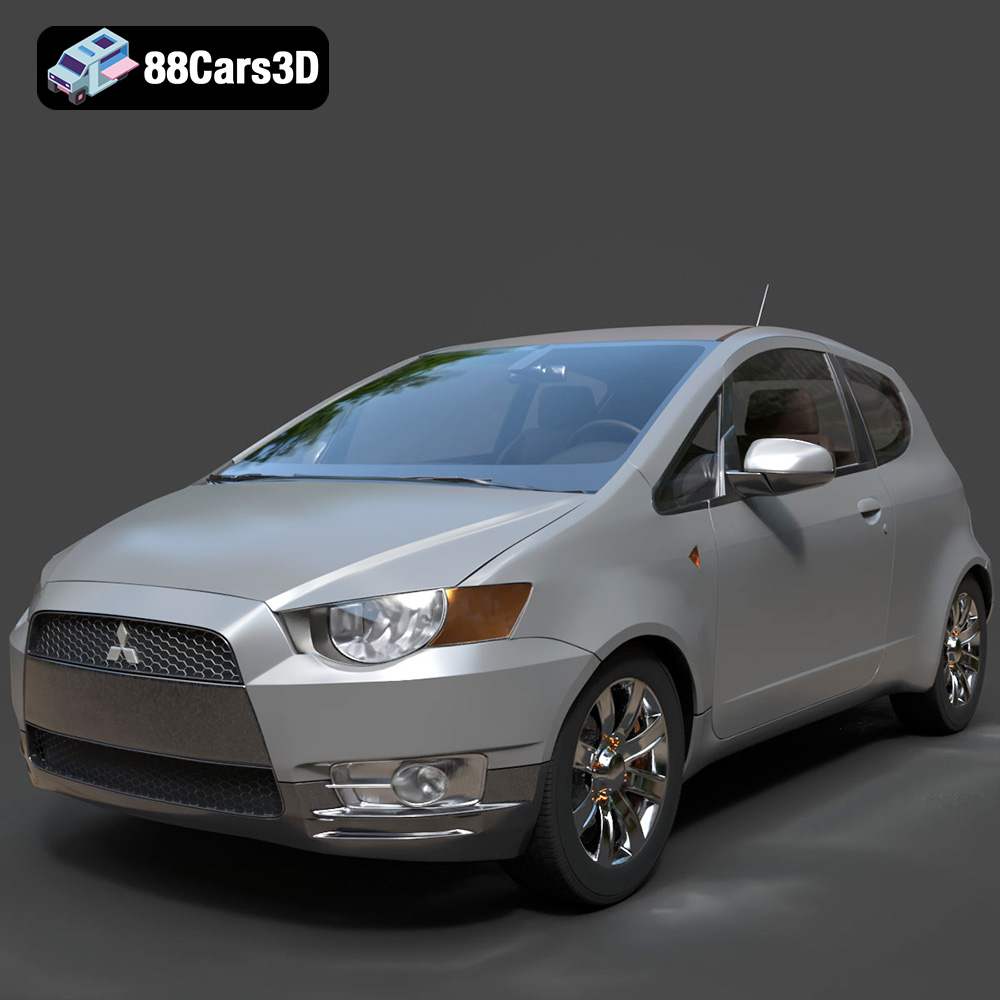
Texture: Yes
Material: Yes
Download the Mitsubishi Colt 3 Door 2008 3D Model featuring clean geometry, realistic detailing, and a fully modeled interior. Includes .blend, .fbx, .obj, .glb, .stl, .ply, .unreal, and .max formats for rendering, simulation, and game development.
Price: $10
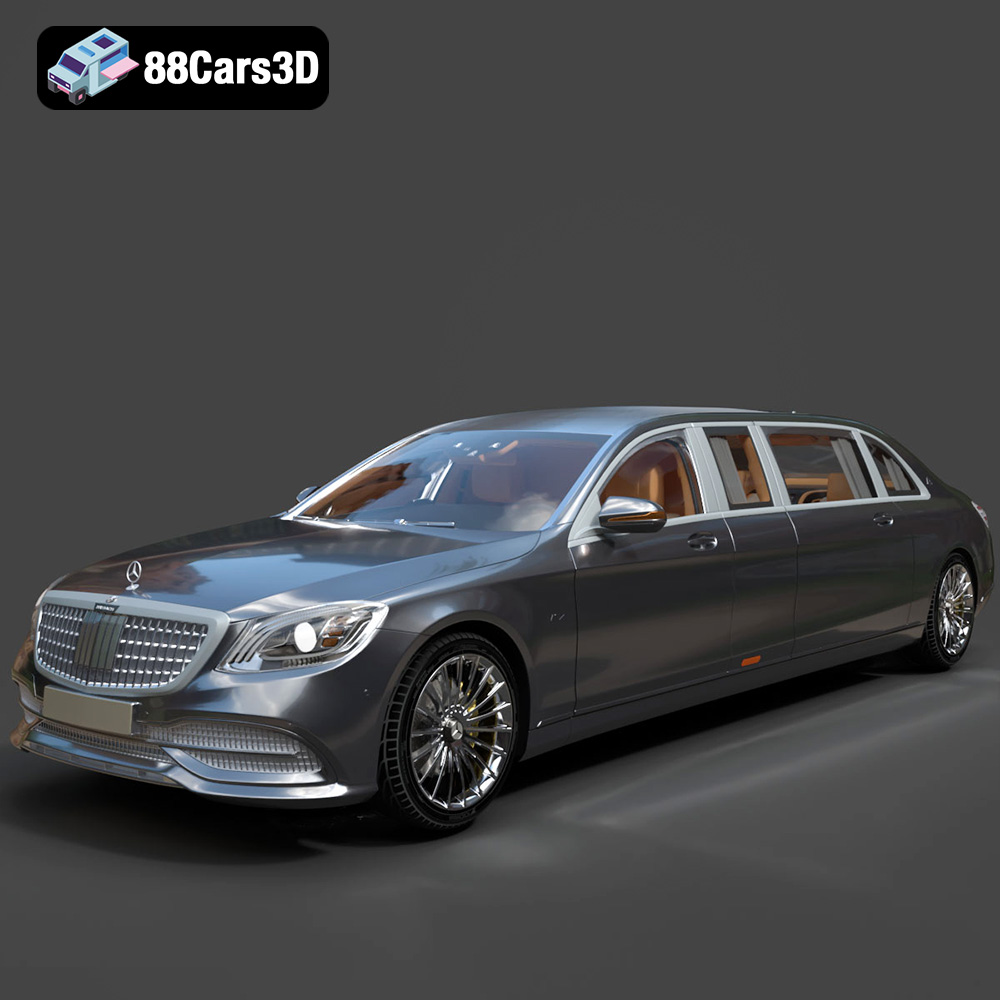
Texture: Yes
Material: Yes
Download the Mercedes-Benz S650 Pullman 3D Model featuring clean geometry, realistic detailing, and a fully modeled interior. Includes .blend, .fbx, .obj, .glb, .stl, .ply, .unreal, and .max formats for rendering, simulation, and game development.
Price: $10
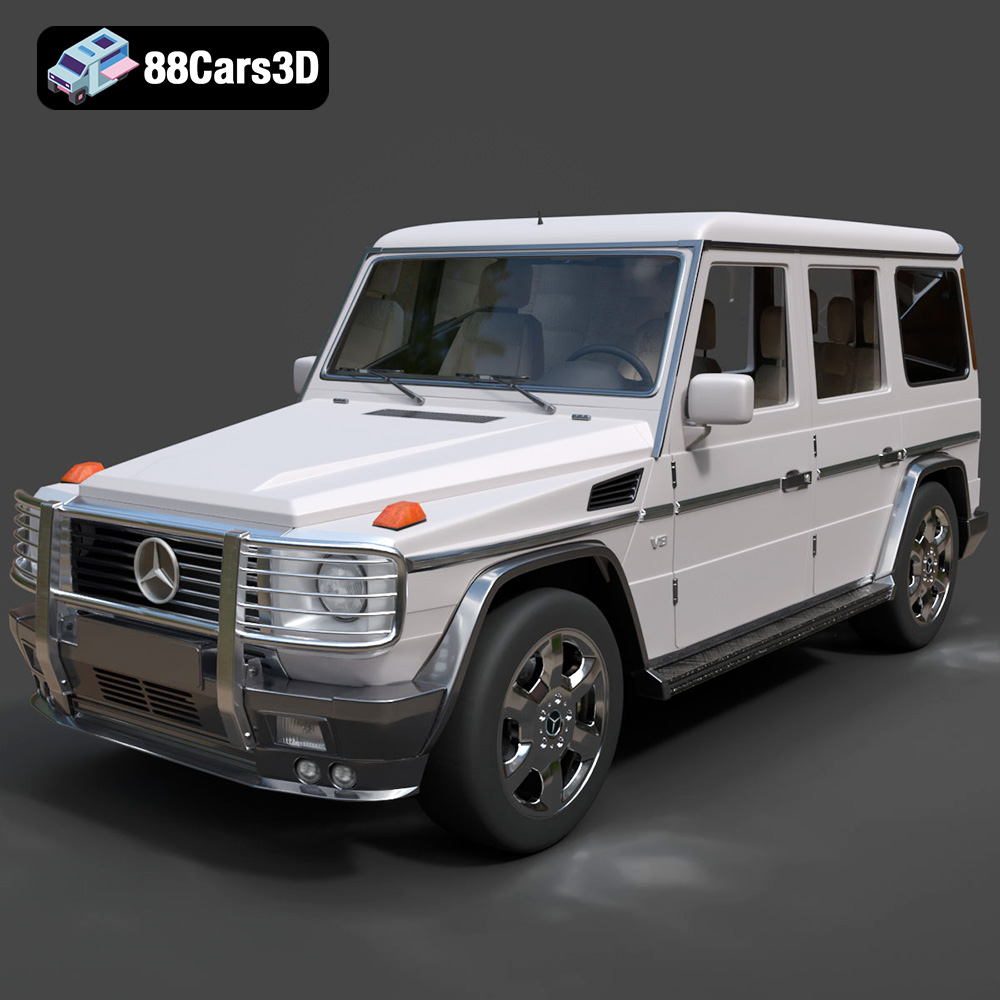
Texture: Yes
Material: Yes
Download the Mercedes G-Class SUV 2024 3D Model featuring clean geometry, realistic detailing, and a fully modeled interior. Includes .blend, .fbx, .obj, .glb, .stl, .ply, .unreal, and .max formats for rendering, simulation, and game development.
Price: $10

Texture: Yes
Material: Yes
Download the Volvo XC90 R-Design 2015 3D Model featuring clean geometry, realistic detailing, and a fully modeled interior. Includes .blend, .fbx, .obj, .glb, .stl, .ply, .unreal, and .max formats for rendering, simulation, and game development.
Price: $10

**Meta Description:**
Texture: Yes
Material: Yes
Download the Toyota Crown Majesta 2009 3D Model with luxury detailing, clean topology, and a fully modeled interior. Available in .blend, .fbx, .obj, .glb, .stl, .ply, .unreal, and .max formats for rendering, simulation, and game development.
Price: $4.99

