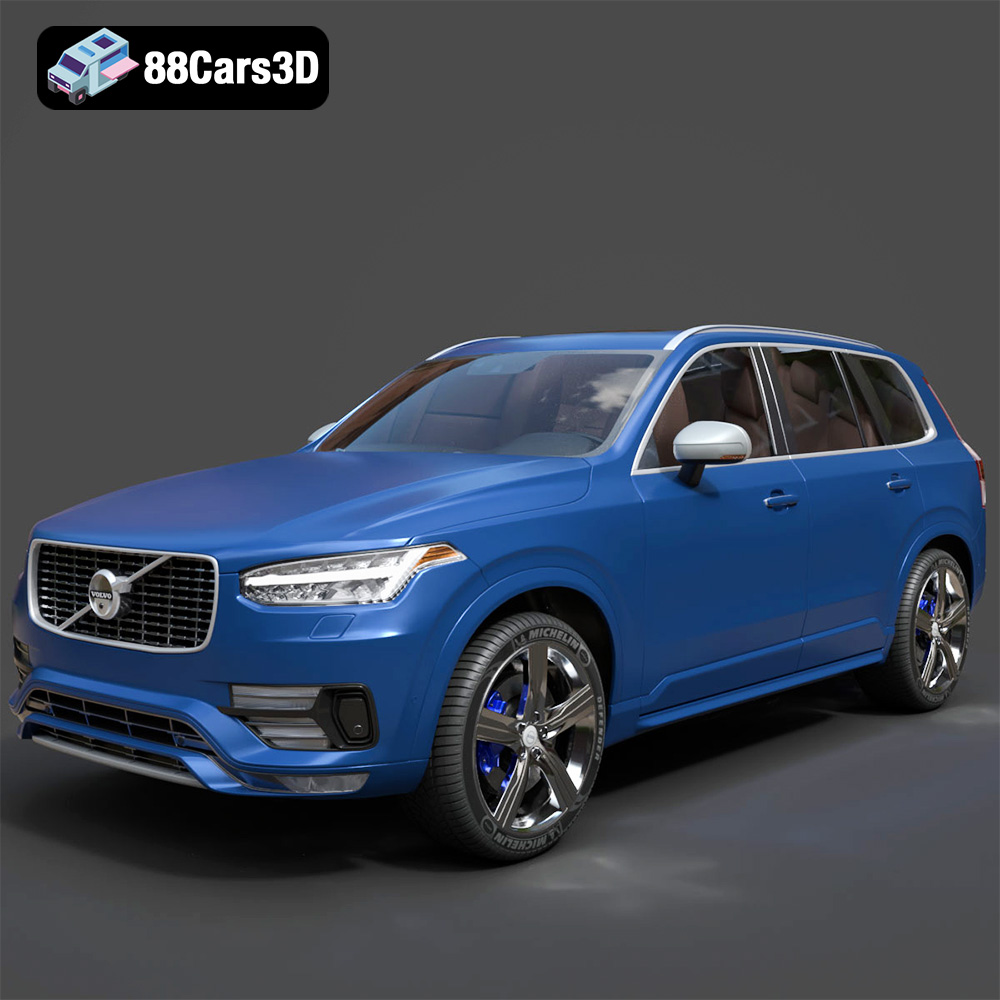
Choosing the Best File Formats for Car 3D Models in Unreal Engine & Unity
Choosing the Best File Formats for Car 3D Models in Unreal Engine & Unity
Bringing a high-fidelity car 3D model into a real-time engine like Unreal Engine or Unity is a crucial step in game development, architectural visualization, or cinematic production. However, selecting the optimal 3D file format can dramatically impact performance, visual quality, and your overall workflow. This comprehensive guide will dissect the leading 3D file formats, compare their strengths and weaknesses specifically for car models, and provide actionable advice for seamless integration into both Unreal Engine and Unity.
Understanding Your Car 3D Model & Project Needs
Before diving into specific formats, it's essential to consider the nature of your car model and your project requirements. A format that excels for a static, low-poly game asset might be entirely inadequate for a high-fidelity, animated automotive configurator.
- Geometry Complexity: Is your car model a low-polygon asset designed for mobile games, a medium-poly model for console/PC, or a high-polygon CAD model intended for photorealistic rendering and virtual production?
- Animation & Rigging: Does the car need complex animations such as dynamic suspension, independently rotating wheels, opening doors, or working steering? Or is it a static prop?
- Materials & Textures: Are you using Physically Based Rendering (PBR) workflows? How complex are your material setups, and how crucial is consistent visual fidelity upon import?
- LODs & Collision: Will you need multiple Levels of Detail (LODs) to optimize performance across different viewing distances? Are custom collision meshes required for accurate physics simulation?
- Metadata & Scene Hierarchy: Does your car model have a complex hierarchy of components (chassis, body panels, engine, interior elements, wheels) that needs to be preserved? Is there specific metadata to transfer?
- Workflow & Collaboration: How many artists or departments are involved? What 3D modeling software are they using? Will there be iterative updates to the model?
Key 3D File Formats for Car Models in Real-Time Engines
Let's explore the most common and effective file formats for importing car models into Unreal Engine and Unity, detailing their specific strengths and weaknesses.
1. FBX (.fbx) - The Industry Standard
Developed by Autodesk, FBX is arguably the most prevalent 3D interchange format in game development and real-time visualization. It's robust, versatile, and supported by virtually all major 3D software (like Maya, Blender, 3ds Max) and game engines.
- Pros:
- Comprehensive Data Support: Handles almost everything—geometry (meshes, NURBS, patches), materials, textures, rigging, skeletal animation, morph targets, cameras, and lights. Crucial for fully animated car models.
- Wide Software Compatibility: Excellent interoperability, allowing artists to seamlessly transfer complex car assets between different DCC (Digital Content Creation) tools and engines.
- Engine Optimization: Both Unreal Engine and Unity have highly optimized FBX importers, often considered their primary import format.
- Hierarchical Structures: Preserves complex scene hierarchies, which is essential for detailed car assemblies where individual components (doors, hood, trunk, wheels) need to remain separate for animation or interaction.
- Cons:
- Proprietary Format: Owned by Autodesk, meaning updates and specifications are controlled, not an open standard.
- Version Compatibility Issues: Older FBX versions might not be fully compatible with newer engine importers, or vice versa. Exporting to a specific FBX version (e.g., 2018 or 2020) is often recommended for stability.
- Material Conversion: While it supports materials, engine-specific PBR materials often need re-setup or tweaking after import, as complex shader networks don't translate directly. Basic PBR values (metallic, roughness) might be transferred, but full shader graphs rarely are.
Best Use Case for Car Models: FBX is the go-to choice for any car model requiring animation (suspension, doors, steering), complex rigging, or a full PBR material setup that will be re-applied and refined within the engine. Ideal for production-ready game assets and high-fidelity cinematic car models.
2. OBJ (.obj) - The Universal Geometry Exchange
The Wavefront OBJ format is one of the oldest and most widely supported 3D formats. It's excellent for geometry but more limited in its ability to carry other types of 3D data.
- Pros:
- Universal Compatibility: Supported by virtually every 3D application, making it a reliable fallback for pure mesh data.
- Simplicity: Easy to parse and understand (being a plain text file for geometry), making it very robust for simple geometry export and import.
- Geometry & UVs: Excellent for transferring mesh data, UV coordinates, and vertex normals accurately.
- Cons:
- Limited Data Support: Does not support rigging, animation, skeletal data, lights, or cameras. Materials are rudimentary, typically relying on a separate .MTL file for basic color, diffuse, and texture references, which are rarely sufficient for PBR.
- File Size: Can be larger than FBX for complex models due to its ASCII (text-based) nature, though binary OBJ exists.
- Single Object Focus: While it can reference multiple objects, it's not ideal for maintaining complex scene hierarchies or object parenting, which is crucial for detailed car models.
Best Use Case for Car Models: Primarily for static car models, props, or individual car parts that don't require animation or complex material translation. Useful for quickly importing a clean mesh into a DCC tool for sculpting, re-topology, or baking, before being packaged into a more comprehensive format.
3. GLTF / GLB (.gltf / .glb) - The Future of 3D Web & Real-time
GLTF (Graphics Language Transmission Format) and its binary counterpart GLB are open standards designed for efficient transmission and loading of 3D scenes and models by engines and applications. It's often called the "JPEG of 3D" due to its focus on efficiency and portability.
- Pros:
- Optimized for Real-time: Specifically designed for fast loading and rendering, making it ideal for web applications, mobile games, and lightweight real-time scenes.
- PBR Material Support: Excellent, standardized support for Physically Based Rendering (PBR) materials, leading to more consistent visual fidelity across different viewers and platforms. This can significantly reduce material setup time in-engine for car models.
- Open Standard: Maintained by the Khronos Group, ensuring broad adoption, continuous development, and future-proofing.
- Single File (GLB): GLB packages all assets (geometry, textures, animations, materials) into one self-contained binary file, simplifying asset management and distribution.
- Animation & Rigging: Supports skeletal animation, morph targets, and basic scene hierarchy, making it viable for animated car models.
- Cons:
- Newer Adoption: While growing rapidly, its integration into major 3D software and game engines isn't as mature or feature-rich as FBX in all aspects, though it's improving quickly.
- Complex Shaders: Custom, highly complex shader networks might still need to be recreated in the engine, as GLTF focuses on a standardized PBR material model.
Best Use Case for Car Models: When targeting web applications (e.g., car configurators), mobile games, or aiming for consistent PBR material translation with minimal manual setup. Becoming a strong contender for general real-time asset exchange, especially for static or simply animated car models.
4. USD (Universal Scene Description) - Apple & Pixar's Vision for Interoperability
Developed by Pixar, USD is a powerful, extensible open-source framework for collaboratively constructing, composing, and interchanging 3D scene data. It's gaining significant traction, particularly with Apple's ARKit, NVIDIA's Omniverse, and Unreal Engine's advanced support.
- Pros:
- Layer-based Composition: Allows non-destructive editing and layering of assets, ideal for complex collaborative pipelines and managing variations of car models (e.g., different trims, colors, accessories).
- Scalability: Designed to handle massive scene graphs and large datasets efficiently, perfect for high-fidelity automotive visualization and virtual production environments.
- Rich Data Support: Supports geometry, materials, animation, rigging, physics, instances, and more. It can reference external assets (e.g., textures, other USD files), creating a lightweight scene description.
- Unreal Engine Integration: Unreal Engine has deep, first-class USD support, making it excellent for high-fidelity visualization, virtual production, and real-time design reviews for car manufacturers.
- Open & Extensible: Highly customizable and scriptable for specific pipeline needs.
- Cons:
- Complexity Curve: Can be more complex to set up and manage compared to simpler formats due to its powerful layering and referencing system.
- Unity Support: Unity's USD support is still evolving and less robust than Unreal Engine's, though it is continually improving.
- Wider Adoption Still Growing: While very strong in film/VFX and certain high-end development pipelines, not yet as universally implemented as FBX for basic game asset exchange.
Best Use Case for Car Models: High-fidelity automotive visualization, virtual production, large-scale collaborative projects, and complex scene assembly within Unreal Engine. Especially powerful for CAD-to-DCC workflows and managing multiple design iterations of a car.
5. Other Formats (and why they might be less ideal for direct import)
- STEP / IGES / SolidWorks (CAD Formats): These are native Computer-Aided Design (CAD) formats. Excellent for engineering design but contain NURBS (Non-Uniform Rational B-Splines) data, not polygon meshes. They must be converted (tessellated) into polygon meshes before entering game engines. For Unreal Engine, Datasmith is the primary tool for this. For Unity, third-party plugins or conversion in a DCC tool is necessary.
- Alembic (.abc): Fantastic for baked mesh deformations and complex simulations (e.g., cloth, fluid, tire deformation), but not typically used for static car models or skeletal animation due to larger file sizes and its focus on vertex caching. Useful if you have a pre-simulated car destruction sequence, for example.
- 3DS (.3ds), DAE (.dae - Collada): Older formats with less robust features or more frequent compatibility issues compared to FBX, GLTF, or USD. Generally not recommended for new projects unless dealing with legacy assets.
Comparison Table: Car 3D Model File Formats for Unreal Engine & Unity
This table provides a quick overview of how the primary file formats stack up for car model import into the leading real-time engines.
| Feature |
FBX |
OBJ |
GLTF/GLB |
USD |
| Geometry Transfer |
Excellent |
Excellent |
Excellent |
Excellent |
| PBR Materials/Textures |
Good (conversion/re-setup often needed) |
Basic (MTL, limited) |
Excellent (standardized) |
Excellent (complex shaders possible) |
| Rigging/Skeletal Animation |
Excellent |
No Support |
Good |
Excellent |
| Scene Hierarchy Preservation |
Excellent |
Limited |
Good |
Excellent (layered) |
| LODs/Collision Meshes |
Good (supports multiple meshes/LODs) |
Manual setup |
Possible (via extensions) |
Excellent (referencing multiple representations) |
| Unreal Engine Native Support |
Primary & Robust |
Good (for static meshes) |
Good (improving) |
Excellent (Datasmith, Virtual Production) |
| Unity Native Support |
Primary & Robust |
Good (for static meshes) |
Requires Plugin (glTFast) |
Developing (via Package Manager) |
| Open Standard |
No (Autodesk proprietary) |
Yes (Wavefront) |
Yes (Khronos Group) |
Yes (Pixar/Open Source) |
Engine-Specific Considerations & Workflow Tips
Unreal Engine
Unreal Engine is highly versatile for automotive visualization, game development, and virtual production, offering robust importers and powerful rendering features like Lumen and Nanite.
- FBX Workflow:
- Ensure your 3D software exports FBX with the correct scene scale. Unreal Engine generally uses 1 Unreal unit = 1 cm. Adjust your export settings accordingly.
- Combine static meshes or use proper parenting for complex car assemblies before export to manage draw calls and maintain hierarchy.
- For materials and textures, embed media in FBX or ensure textures are in a discoverable folder. Expect to recreate PBR materials in UE's Material Editor using your exported texture maps (Albedo/Base Color, Normal, Roughness, Metallic, Ambient Occlusion).
- Unreal's FBX import options allow you to generate collision meshes, import embedded LODs, and merge meshes upon import.
- Datasmith for CAD & High-Fidelity:
- For high-fidelity car models originating from CAD software (e.g., SolidWorks, CATIA, Rhino, Autodesk Inventor, Revit), Unreal Datasmith is invaluable. It directly converts native CAD data (NURBS) into optimized polygonal meshes, preserving metadata, hierarchies, and material assignments.
- Datasmith streamlines the pipeline for automotive configurators, real-time design reviews, and high-quality visualizations, handling intelligent tessellation and simplification.
- It also supports specific DCC formats like 3ds Max and SketchUp, providing a more robust import than standard FBX for certain architectural and design workflows. Export your CAD model to a compatible format (e.g., .STEP, .IGES, or a Datasmith scene file) and import it into Unreal via the Datasmith plugin.
- USD Workflow:
- Unreal Engine's USD importer is powerful, supporting live links to USD stages (allowing artists to work concurrently in DCC tools and see updates in UE) and deep compositing capabilities. This is especially useful for managing complex car variants and collaborative pipelines.
- Ideal for virtual production, film, and high-end automotive visualization where asset layering and iterative design are critical.
Unity
Unity also offers strong asset import capabilities, especially for game development across various platforms (PC, console, mobile, VR).
- FBX Workflow:
- Unity's Project window acts as an asset database. Dragging an FBX file directly into it will automatically import it into your project.
- Adjust import settings in the Inspector for scale (Unity generally uses 1 unit = 1 meter), mesh options (read/write enabled, normals, tangents), materials (extract textures, choose rendering mode), rigging, and animation.
- For LODs, export separate FBX files for each LOD level (e.g.,
car_LOD0.fbx, car_LOD1.fbx) and configure them using Unity's LOD Group component. Alternatively, some DCC tools can embed LODs within a single FBX.
- Collision meshes can be manually created in Unity or imported as separate low-poly FBX meshes.
- GLTF/GLB Workflow:
- Unity requires a third-party plugin for native GLTF/GLB import. Popular options include glTFast (available via the Package Manager) or similar assets from the Asset Store.
- Once installed, GLTF/GLB files can often be dragged and dropped, often maintaining PBR material properties quite well, reducing manual setup compared to FBX. This can be a significant time-saver for car models.
- USD Workflow:
- Unity has a USD package available through the Package Manager. It supports importing USD files, allowing for scene composition and basic material translation.
- Its capabilities are generally more focused on consuming USD data rather than providing the deep pipeline integration found in Unreal Engine, but it is continually improving, making it viable for certain asset pipelines.
Decision Guide: Choosing the Right File Format for Your Car Model
Use this practical framework to guide your decision based on your specific project needs and the characteristics of your car 3D model:
- Do you need animation, rigging, or a complex hierarchy for your car?
- Yes: FBX (Primary Choice), GLTF/GLB, or USD. These formats efficiently transfer skeletal data, blend shapes, and scene structures.
- No (static mesh only): OBJ (simple, reliable) or FBX (still good for robust geometry and texture references). GLTF/GLB also works well for static assets, especially with PBR.
- What is your source data for the car model?
- CAD Software (e.g., SolidWorks, Catia, Rhino): For Unreal Engine, use Datasmith (export as .udatasmith) for the best results. For Unity, you'll likely need to convert to FBX or GLTF/GLB in a DCC tool first, or use a third-party CAD importer for Unity.
- DCC Software (e.g., Maya, Blender, 3ds Max): FBX is the most common and robust option. GLTF/GLB is an excellent alternative, especially for PBR material consistency.
- How important is PBR material consistency across platforms or with minimal in-engine setup?
- Critical (e.g., web configurators, mobile games): GLTF/GLB excels due to its standardized PBR material model. USD also offers strong material representation.
- Moderate (willing to re-setup/tweak in-engine): FBX will require manual adjustment of materials within Unreal or Unity.
- Are you working in a large, collaborative, or virtual production pipeline (especially with Unreal Engine)?
- Yes: USD (for its compositing, layering, and live-link capabilities), or Datasmith (for seamless CAD integration into Unreal).
- No (smaller team/solo developer): FBX or GLTF/GLB will be more straightforward and perfectly adequate.
- Which engine are you primarily targeting?
- Unreal Engine: FBX is the workhorse. Datasmith for CAD. USD for advanced pipelines and virtual production.
- Unity: FBX is the workhorse. GLTF/GLB (with plugin) for PBR consistency. USD support is improving but less mature than Unreal's.
Optimization Tips for Car Models in Game Engines
Regardless of the chosen file format, optimizing your car model is crucial for achieving high performance in real-time environments. A poorly optimized model, even in the "best" format, will lead to frame rate issues.
- Polygon Count: Aggressively reduce unnecessary polygons. Utilize techniques like re-topology (for clean quad meshes) or decimation (for high-poly CAD data) to create game-ready assets.
- LODs (Levels of Detail): Create multiple versions of your car model with decreasing polygon counts and texture resolutions for different viewing distances. Implement LODs within your engine to swap models based on distance.
- Collision Meshes: Use simplified, low-polygon collision meshes (e.g., box colliders, capsule colliders, or convex hulls) instead of the high-poly visual mesh for physics calculations.
- UV Mapping: Ensure clean, non-overlapping UVs across your car model for optimal texture use and lightmap generation. Utilize texture atlases where appropriate to reduce draw calls.
- Materials & Textures: Use efficient PBR texture maps (power-of-2 resolutions like 1024x1024, 2048x2048). Pack textures (e.g., combine Roughness, Metallic, Ambient Occlusion into different channels of a single RGB map) to minimize texture memory and samples. Optimize material complexity by avoiding overly complex shader graphs.
- Batching: Combine static meshes where possible to reduce draw calls. For car models, this means ensuring small, static components are merged if they don't require individual animation or interaction.
Conclusion
While FBX remains the reigning champion for general 3D car model import into both Unreal Engine and Unity due to its comprehensive data support and widespread adoption, emerging formats like GLTF/GLB offer superior PBR material consistency and efficiency, particularly for web and mobile applications. For high-fidelity CAD data or complex virtual production workflows in Unreal Engine, Datasmith and USD provide unmatched capabilities, catering to professional automotive visualization pipelines. Your ultimate choice will hinge on your project's specific requirements, source data, and desired workflow.
No single format is universally "best." The most effective approach often involves understanding each format's strengths and weaknesses and choosing the one that best fits a particular stage of your pipeline or project requirement. Thoughtful preparation of your 3D car models in your DCC software, combined with proper import settings in Unreal Engine or Unity, will always yield the best results.
Ready to Accelerate Your 3D Car Projects?
Now that you understand the intricacies of 3D file formats for car models in Unreal Engine and Unity, it's time to put that knowledge into practice. Experiment with different formats in your preferred engine, optimize your models for peak performance, and bring your automotive visions to life. Share your experiences and any further tips in the comments below!
Need assistance optimizing your car 3D models, converting CAD data, or integrating them seamlessly into Unreal Engine or Unity for your next big project? Contact our expert team today for tailored solutions and a consultation!
Recommended undefined Models