⚡ FLASH SALE: Get 60% OFF All Premium 3D & STL Models! ⚡

“`html
There’s a unique magic in transforming a digital masterpiece into a tangible object you can hold in your hands. For automotive enthusiasts and 3D artists, 3D printing offers the incredible opportunity to bring stunningly detailed 3D car models from the virtual world into physical reality. Imagine a perfect 1:18 scale model of a classic sports car, printed with precision, sitting on your desk. However, the path from a digital file to a flawless physical print is more complex than simply clicking “Print.” A 3D model optimized for photorealistic rendering is not inherently ready for a 3D printer. It requires a specific, technical preparation process to ensure the final object is strong, accurate, and free of frustrating printing errors. This comprehensive guide will walk you through every critical step, from initial mesh analysis to final file export. We will explore the technical requirements of a “printable” model, delve into essential repair and preparation workflows in software like Blender and 3ds Max, and uncover the secrets to achieving a perfect print every time.
The absolute, non-negotiable foundation of any successful 3D print is a watertight, manifold mesh. These terms might sound technical, but the concept is simple. Imagine your 3D car model is a hollow container. To be “watertight,” it must have no holes in its surface. If you were to fill it with water, none should leak out. In 3D modeling terms, this means every edge must be connected to exactly two faces. This creates a continuous, sealed surface. A “manifold” mesh is one where the geometry is unambiguous and represents a solid, physical volume. A 3D printer needs to know what is “inside” and what is “outside” the model to build it layer by layer. Any ambiguity in the mesh will confuse the slicing software and lead to failed prints, gaps, or unexpected structures.
Non-manifold geometry is any configuration that couldn’t exist in the real world. Identifying these errors is the first crucial step in 3D printing preparation. Common examples include:
Most 3D modeling software has built-in tools to find these issues. In 3ds Max, the “STL Check” modifier is a powerful tool. You can apply it to your model and it will highlight problematic areas like open edges, double faces, or spikes. In Blender, you can enter Edit Mode, go to the Select menu, and choose “Select All by Trait > Non-Manifold.” This will instantly highlight any vertices or edges that violate manifold conditions. Fixing these issues often involves manually stitching vertices (Target Weld), deleting interior faces, and recalculating normals (in Blender, select all faces in Edit Mode and press Shift+N). While manual fixing gives you the most control, automated tools, which we’ll cover later, can often speed up this essential process.
Once your mesh is clean and watertight, the next step is to ensure it will print at the correct physical size. A 3D car model designed for rendering might be modeled in generic units or at a 1:1 scale that is far too large for a standard 3D printer. Slicing software interprets the model’s units as millimeters by default. If your model is 1,800 units wide in your 3D software, the slicer will assume it is 1,800 mm (1.8 meters) wide, which will likely not fit on your print bed. Getting the scale wrong is one of the most common and frustrating beginner mistakes, leading to prints that are either microscopic or comically oversized.
Before you even begin to scale your model, it’s crucial to set up your 3D software’s system units correctly. In 3ds Max, go to “Customize > Units Setup” and set the “Display Unit Scale” and “System Unit Scale” to millimeters. In Blender, go to the “Scene Properties” tab and set the “Unit System” to Metric and “Length” to Millimeters. This ensures that when you export your model, the dimensions are written into the file correctly. Starting with a properly configured scene prevents a lot of guesswork later on. For example, a high-quality model sourced from a marketplace like 88cars3d.com will often have accurate proportions, making it easier to scale down uniformly once your scene units are set.
To scale your model accurately, you need a target dimension. Common scales for model cars are 1:18, 1:24, 1:43, or 1:64. First, find the real-world dimensions of the car you are printing. Let’s say a real car is 4,500 mm long.
For a 1:18 scale model, the calculation is: 4500 mm / 18 = 250 mm.
Your goal is to make the longest axis of your 3D model equal to 250 mm. Here’s a typical workflow:
A digital model can have surfaces with zero thickness, but a physical object cannot. Every part of your 3D printed model must have a minimum wall thickness to be printed successfully and to be strong enough to handle. Thin features like side mirrors, spoilers, antennas, and window frames are particularly vulnerable. If the walls are too thin, they may not print at all, or they might be incredibly fragile and break during post-processing. The minimum required thickness depends on your printer type (FDM vs. Resin/SLA) and the material you are using. As a general rule, a minimum wall thickness of 1.0 mm to 1.5 mm is a safe starting point for FDM printers, while resin printers can often handle details as fine as 0.5 mm.
Many 3D car models created for visualization have single-plane surfaces for parts like windows or body panels. These need to be solidified. The most common method is using a “Shell” or “Solidify” modifier.
After applying the modifier, it’s a good practice to visually inspect the model for any strange intersections or overlapping geometry that may have been created, especially in tight corners.
Printing a car model as a completely solid object is often wasteful, time-consuming, and can even cause print failures, especially with resin printing. Hollowing the model—turning it into a thick shell—is a crucial optimization step. This dramatically reduces material consumption and print time. For resin (SLA/DLP) printing, hollowing is essential to prevent issues. A large, solid cross-section can create strong suction forces that pull the print off the build plate. When you hollow a model for resin printing, you absolutely must add drainage holes. These holes allow uncured resin trapped inside the hollow model to escape. Without them, the trapped resin can create immense pressure, causing the print to crack or even explode over time. Place at least two holes (one for resin to drain, one for air to enter) in an inconspicuous area of the model, like the underside of the chassis.
After manually addressing major issues like scale and thickness, it’s time for a final, thorough check using specialized tools. Hunting for every tiny hole or flipped normal on a complex automotive model can be incredibly time-consuming. Fortunately, there are excellent automated tools designed specifically for this purpose. These tools analyze the mesh based on 3D printing constraints and can often fix problems with a single click. For users of all skill levels, these utilities are an indispensable part of the workflow, catching errors that the human eye might miss.
Blender comes equipped with a powerful, albeit often overlooked, addon called the 3D-Print Toolbox. This addon provides a suite of tools specifically for analyzing and preparing a mesh for printing. You can enable it by going to “Edit > Preferences > Add-ons” and searching for “3D-Print.” According to the official Blender 4.4 documentation, which provides in-depth information at https://docs.blender.org/manual/en/4.4/, its key features are consolidated into one convenient panel in the 3D View’s Sidebar (N-Panel). The workflow is straightforward:
Sometimes, a mesh is too damaged for Blender’s tools to fix automatically. In these cases, external software can be a lifesaver.
Autodesk Meshmixer is a free and powerful tool that excels at mesh repair. Its “Inspector” tool is fantastic at finding and patching holes. It provides a visual representation of the errors and allows you to auto-repair all of them or patch them individually.
For Windows users, Microsoft 3D Builder is a surprisingly capable and easy-to-use option. When you import a model, it will often automatically detect that it’s not watertight and offer to repair it with a single click. Its repair algorithm is very robust and can often fix complex issues that other programs struggle with.
With a fully repaired, scaled, and thickened 3D model, you are ready for the final step before printing: slicing. A slicer is a piece of software that takes your 3D model (e.g., an STL file) and “slices” it into hundreds or thousands of thin horizontal layers. It then generates a G-code file, which contains the exact instructions your 3D printer’s nozzle or laser will follow to build your object layer by layer. This stage is where you define critical print parameters and, most importantly, generate support structures.
Popular slicing software includes Ultimaker Cura, PrusaSlicer, and ChiTuBox (for resin printers). These programs give you control over dozens of parameters that affect print quality, speed, and strength. Key settings include:
Almost any 3D car model will have overhangs—parts of the model that are printed in mid-air with nothing below them. A 3D printer can’t print on thin air. Common overhangs on a car include the side mirrors, spoiler, roof, and the underside of the chassis. The slicer’s support generation feature automatically creates removable scaffolding to hold up these areas. However, default supports can sometimes be difficult to remove or can leave marks on the surface. For car models, strategic placement is key:
The final step in your 3D modeling software is to export the prepared model into a format that the slicer can understand. While many formats exist, three have become the industry standard for 3D printing. Choosing the right one depends on the complexity of your model and the information you need to preserve.
STL is the undisputed king of 3D printing file formats. It is the oldest and most widely supported format, compatible with virtually every slicer and 3D printer in existence. An STL file describes the surface geometry of a 3D object using a collection of triangles (a “tessellated mesh”). Its primary strength is its simplicity and universal compatibility. However, this simplicity is also its weakness. An STL file contains only the raw geometry—the vertices and faces. It does not store any information about scale, units, color, materials, or textures. When you export an STL, you should choose a high resolution to ensure smooth curves, but avoid making the file excessively large (a file size of 20-100 MB is typical for a detailed car model).
The OBJ format is another popular choice that offers more capabilities than STL. Originally developed by Wavefront Technologies, an OBJ file can store not only the 3D geometry but also information about color, material, and UV maps (texture coordinates). This makes it a more versatile format, especially if you are planning to do multi-color printing or want to preserve texture data for other applications. While not as universally supported as STL, most modern slicers like PrusaSlicer and Cura can handle OBJ files without any issues. If your 3D car model has multiple parts that you want to print in different colors, exporting as an OBJ is a better choice than STL.
3MF is a modern, open-source file format designed to be the successor to STL. It was created by a consortium of companies (including Microsoft, HP, and Autodesk) to address the limitations of older formats. A 3MF file is essentially a compressed archive (.zip) containing all the information needed for printing in one package: the 3D model, color data, materials, print settings (like support placement), and even a thumbnail. It is designed to be unambiguous and self-contained, reducing the chances of errors. While its adoption is growing, it is not yet as universally supported as STL. However, as printers and slicers become more advanced, 3MF is poised to become the new standard for reliable, feature-rich 3D printing.
Bringing a digital 3D car model into the physical world is a deeply rewarding process, blending digital artistry with hands-on engineering. As we’ve seen, success lies in a methodical and technical preparation workflow. It’s a process that transforms a model from a visual asset into a manufacturable object. By starting with a high-quality base model, such as those available on 88cars3d.com, you already have a head start with clean topology and accurate details. From there, the key is to be diligent. Always remember the core checklist: ensure your model is a watertight, manifold solid; verify and set the correct physical scale; enforce a minimum wall thickness on all surfaces; use analysis tools like Blender’s 3D-Print Toolbox to catch and repair any hidden errors; and finally, orient your model in the slicer to minimize and optimize support structures. By mastering these essential steps, you will eliminate the guesswork and frustration, turning every print into a stunning, high-fidelity replica you can be proud to display.
“`
Texture: Yes
Material: Yes
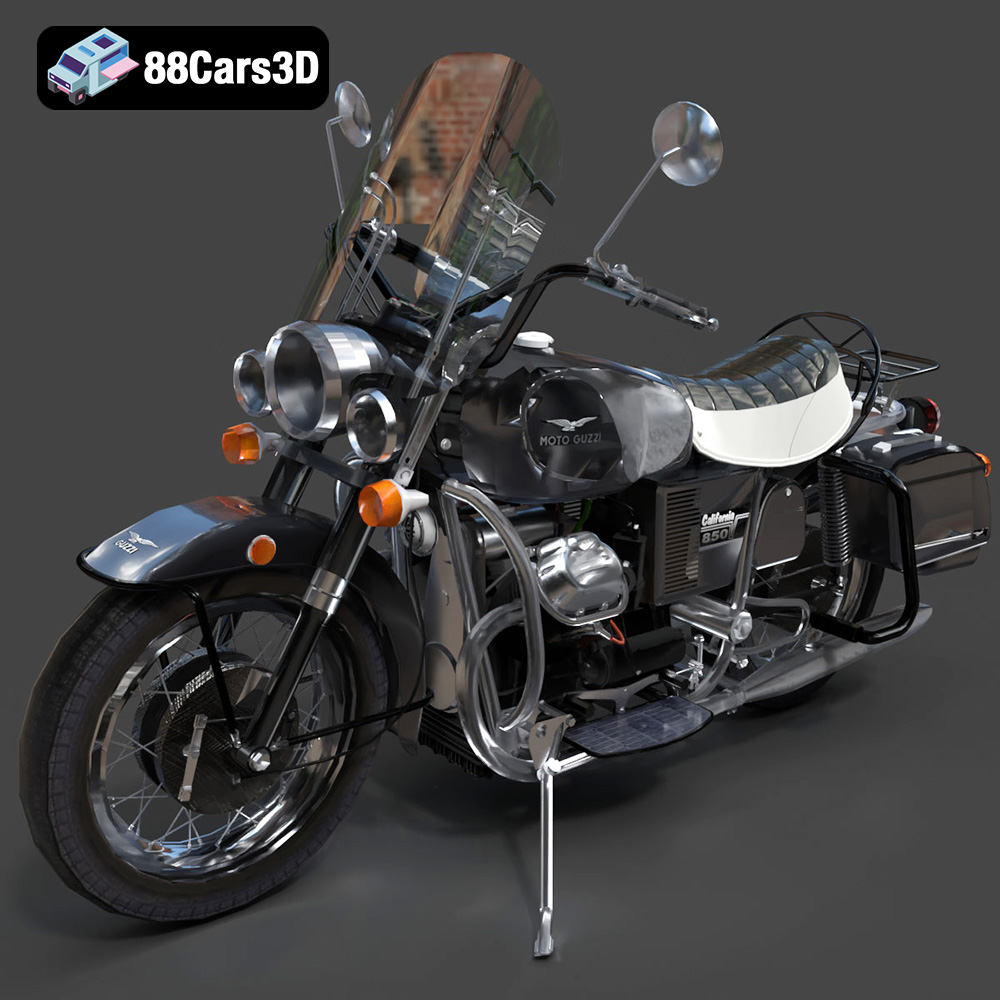
Download the Moto Guzzi Classic Motorcycle 2024 3D Model featuring clean geometry, realistic detailing, and a fully modeled interior. Includes .blend, .fbx, .obj, .glb, .stl, .ply, .unreal, and .max formats for rendering, simulation, and game development.
Price: $10

Texture: Yes
Material: Yes
Download the Mercedes S-Class 2024 3D Model featuring clean geometry, realistic detailing, and a fully modeled interior. Includes .blend, .fbx, .obj, .glb, .stl, .ply, .unreal, and .max formats for rendering, simulation, and game development.
Price: $10

Texture: Yes
Material: Yes
Download the Chevrolet Camaro 1970 3D Model featuring clean geometry, realistic detailing, and a fully modeled interior. Includes .blend, .fbx, .obj, .glb, .stl, .ply, .unreal, and .max formats for rendering, simulation, and game development.
Price: $10

Texture: Yes
Material: Yes
Download the Mercedes-AMG GT 2015 3D Model featuring clean geometry, realistic detailing, and a fully modeled interior. Includes .blend, .fbx, .obj, .glb, .stl, .ply, .unreal, and .max formats for rendering, simulation, and game development.
Price: $88.99

Texture: Yes
Material: Yes
Download the Suzuki GSX-R 1000 3D Model featuring clean geometry, realistic detailing, and a fully modeled interior. Includes .blend, .fbx, .obj, .glb, .stl, .ply, .unreal, and .max formats for rendering, simulation, and game development.
Price: $10

Texture: Yes
Material: Yes
Download the Porsche Cayman S 2024 3D Model featuring clean geometry, realistic detailing, and a fully modeled interior. Includes .blend, .fbx, .obj, .glb, .stl, .ply, .unreal, and .max formats for rendering, simulation, and game development.
Price: $10

Texture: Yes
Material: Yes
Download the Holden Commodore Sportwagon 2017 3D Model featuring clean geometry, realistic detailing, and a fully modeled interior. Includes .blend, .fbx, .obj, .glb, .stl, .ply, .unreal, and .max formats for rendering, simulation, and game development.
Price: $10

Texture: Yes
Material: Yes
Download the Mitsubishi Colt 3 Door 2008 3D Model featuring clean geometry, realistic detailing, and a fully modeled interior. Includes .blend, .fbx, .obj, .glb, .stl, .ply, .unreal, and .max formats for rendering, simulation, and game development.
Price: $10

Texture: Yes
Material: Yes
Download the Mercedes-Benz S650 Pullman 3D Model featuring clean geometry, realistic detailing, and a fully modeled interior. Includes .blend, .fbx, .obj, .glb, .stl, .ply, .unreal, and .max formats for rendering, simulation, and game development.
Price: $95.99

Texture: Yes
Material: Yes
Download the Mercedes G-Class SUV 2024 3D Model featuring clean geometry, realistic detailing, and a fully modeled interior. Includes .blend, .fbx, .obj, .glb, .stl, .ply, .unreal, and .max formats for rendering, simulation, and game development.
Price: $10

