⚡ FLASH SALE: Get 60% OFF All Premium 3D & STL Models! ⚡

“`html
The allure of miniature car models, meticulously crafted with incredible detail, is undeniable. Thanks to 3D printing, enthusiasts can now bring their dream cars to life, right in their own homes. But transforming a digital STL file into a tangible, high-quality model requires a deep understanding of the 3D printing process. This comprehensive guide will delve into every stage, from preparing your STL file to achieving a flawless final product. We’ll cover essential software tools, optimal printer settings, support structure strategies, and post-processing techniques, ensuring your 3D printed car models are the envy of every collector. Whether you’re using FDM or resin printing, this article will equip you with the knowledge to tackle any challenge and achieve professional-grade results. Learn how to optimize slicing parameters, troubleshoot common printing failures, and master the art of creating stunning, realistic car models.
The STL (Stereolithography) file format is the cornerstone of 3D printing. It represents a 3D object as a collection of interconnected triangles, forming a mesh. The quality of this mesh directly impacts the final print. A poorly designed STL file can lead to printing errors, weak points, and a generally unsatisfying result. Platforms like 88cars3d.com prioritize providing models with clean, well-defined meshes, but understanding the underlying principles is crucial for any 3D printing enthusiast.
The density of the triangle mesh determines the level of detail captured in the STL file. Higher density (more triangles) results in smoother curves and finer details, but it also increases file size and processing time. For car models, capturing intricate details like panel lines, vents, and grilles is paramount. However, excessively high density can overwhelm your slicer and printer. A good rule of thumb is to find a balance between detail and performance. Many 3D modeling programs allow you to adjust the mesh density before exporting the STL file. Experiment with different settings to find the optimal level for your specific model and printer.
STL files can often contain errors that will prevent successful printing. Common errors include: non-manifold edges (edges that belong to more than two faces), holes in the mesh, flipped normals (faces pointing inwards), and intersecting triangles. These errors can confuse the slicer and lead to print failures. Fortunately, several software tools are available to automatically detect and repair these issues. Netfabb Basic is a popular choice for its robust repair capabilities. Meshmixer is another excellent option, offering both automated and manual repair tools. Simply import your STL file into the software and run the repair function. The software will typically identify and fix most common errors, ensuring a “watertight” mesh suitable for 3D printing.
Slicing is the process of converting your 3D model into a series of 2D layers that the printer can understand. The slicer software takes your STL file and generates G-code, the language of 3D printers, containing instructions for nozzle movement, temperature control, and material extrusion. The slicing parameters you choose will significantly impact the quality, strength, and printing time of your car model. Mastering these parameters is essential for achieving optimal results.
Layer height is arguably the most important slicing parameter. It determines the thickness of each individual layer of plastic. Lower layer heights result in smoother surfaces and finer details, but they also increase printing time. Higher layer heights print faster but sacrifice detail. For car models, where surface finish is crucial, consider using a lower layer height, typically between 0.1mm and 0.2mm. For larger models, you might opt for a slightly higher layer height (0.25mm – 0.3mm) to save time, but be prepared to spend more time on post-processing to smooth out the layer lines. Remember that halving the layer height roughly doubles the print time. It’s a tradeoff between quality and efficiency.
Infill refers to the internal structure of your 3D printed model. It’s the material that fills the space between the outer walls (shells) of the object. Infill density determines how much material is used inside the model, impacting its strength, weight, and printing time. For car models, the ideal infill density depends on the intended use. If the model is purely for display, a lower infill density (10-15%) is sufficient. If the model needs to withstand some handling or stress, a higher infill density (20-30%) is recommended. As for infill patterns, rectilinear, grid, and honeycomb are common choices. Gyroid infill offers excellent strength in all directions but can be more time-consuming to print. Concentric infill is a good option for models with rounded shapes.
Support structures are temporary scaffolding that is printed to support overhanging features of your 3D model. Without supports, gravity would cause these overhangs to collapse during printing. Generating and removing supports is a critical aspect of 3D printing car models, especially those with complex geometries and intricate details. Proper support placement and settings can be the difference between a successful print and a pile of wasted filament or resin.
Slicer software offers various support types, each with its own advantages and disadvantages. Two common options are tree supports and linear supports. Linear supports are the traditional type, creating a solid wall of support beneath the overhang. They are strong and reliable but can be difficult to remove and may leave noticeable marks on the model. Tree supports, on the other hand, are more efficient and visually appealing. They branch out from the build plate like a tree, minimizing material usage and reducing the contact area with the model. This makes them easier to remove and less likely to damage the surface. For car models with delicate details, tree supports are often the preferred choice. However, for large, heavy overhangs, linear supports may provide more stability.
Several support settings can be adjusted to optimize their performance and ease of removal. These include support density, support overhang angle, support z-distance, and support interface layers. Lowering the support density reduces material usage and makes the supports easier to break away. The support overhang angle determines the maximum angle at which supports are generated. A smaller angle will result in more supports, but it will also provide better support for overhanging features. The support z-distance is the gap between the top of the support and the bottom of the model. A larger z-distance makes the supports easier to remove but can also lead to sagging or drooping of the overhang. Support interface layers are thin layers of material that are printed between the support and the model. They provide a smoother surface for the model to rest on and make the supports easier to remove cleanly.
The material you choose for 3D printing your car model will significantly impact its appearance, strength, and durability. FDM (Fused Deposition Modeling) printers typically use filaments made of plastics like PLA, ABS, and PETG. Resin printers, on the other hand, use liquid resins that are cured by UV light. Each material has its own unique properties and advantages, making it suitable for different applications.
PLA (Polylactic Acid) is a biodegradable thermoplastic derived from renewable resources. It’s easy to print, has low warping, and produces excellent surface finish. However, it’s not as strong or heat-resistant as other materials. ABS (Acrylonitrile Butadiene Styrene) is a stronger and more heat-resistant plastic than PLA. It’s commonly used for functional parts and prototypes. However, it’s more prone to warping and requires a heated bed and enclosure for successful printing. PETG (Polyethylene Terephthalate Glycol-modified) combines the best qualities of PLA and ABS. It’s easy to print, strong, heat-resistant, and has good layer adhesion. It’s a great all-around choice for car models that need to be both visually appealing and durable. For car models intended for display, PLA is a good choice due to its ease of printing and excellent surface finish. If the model needs to withstand some handling or exposure to heat, PETG is a better option. ABS is suitable for functional parts or models that require high strength and heat resistance.
Resin printing offers unparalleled detail and surface finish compared to FDM printing. SLA (Stereolithography), DLP (Digital Light Processing), and LCD (Liquid Crystal Display) are the three main types of resin printing. SLA uses a laser to selectively cure the resin, while DLP uses a projector to cure an entire layer at once. LCD uses an LCD screen to mask the UV light, curing the resin in the desired pattern. All three technologies can produce incredibly detailed car models with smooth surfaces and sharp edges. Resins come in various formulations, each with its own properties. Standard resins are affordable and easy to use. Tough resins are more durable and impact-resistant. Flexible resins are bendable and can be used for tires or other flexible parts. Castable resins are designed for investment casting. For car models, standard resins are a good choice for display models. Tough resins are recommended for models that need to withstand some handling. Flexible resins can be used for tires or other flexible components.
Post-processing is the final stage in the 3D printing process, where you refine and enhance your car model to achieve a professional finish. This typically involves removing support structures, sanding down layer lines, filling gaps, painting, and assembling the various parts. Mastering these techniques is essential for creating truly stunning and realistic car models.
Sanding is used to smooth out layer lines and other imperfections on the surface of your 3D printed car model. Start with coarse grit sandpaper (e.g., 220 grit) to remove large imperfections and then gradually move to finer grits (e.g., 400, 600, 800 grit) to achieve a smooth surface. Wet sanding can help to reduce dust and improve the surface finish. For larger gaps or imperfections, use a filler primer or putty to fill them in. Apply the filler in thin layers and allow it to dry completely before sanding it smooth. When downloading models from marketplaces such as 88cars3d.com, you benefit from well-designed models that often require minimal sanding due to the optimized designs.
Painting is what truly brings your 3D printed car model to life. Start by applying a primer to the entire model to create a uniform surface for the paint to adhere to. Choose a primer that is compatible with the material you used for printing. Apply thin, even coats of paint using an airbrush or spray paint. Multiple thin coats are better than one thick coat, as they are less likely to run or drip. Allow each coat to dry completely before applying the next. For intricate details, use a fine-tipped brush or masking tape to create clean lines. Once the paint is dry, apply a clear coat to protect the paint and add a glossy finish. Decals and other detailing can be added to further enhance the realism of your car model.
Even with careful preparation and optimized settings, 3D printing failures can still occur. Understanding the common causes of these failures and how to troubleshoot them is crucial for a smooth and successful printing experience. From bed adhesion issues to nozzle clogging, we’ll cover the most frequent problems encountered when printing car models and provide practical solutions.
Bed adhesion is the ability of the first layer of your 3D print to stick to the build plate. Poor bed adhesion can lead to warping, lifting, and ultimately, a failed print. Several factors can contribute to bed adhesion problems, including an uneven bed, improper bed temperature, incorrect nozzle height, and insufficient bed preparation. To improve bed adhesion, start by leveling your bed carefully. Ensure that the nozzle is the correct distance from the bed – not too close and not too far. Clean the bed with isopropyl alcohol to remove any grease or residue. Use a bed adhesive, such as glue stick, hairspray, or painter’s tape, to provide extra grip. Increase the bed temperature to improve adhesion. Slow down the printing speed of the first layer to allow it to bond to the bed more effectively. For materials like ABS that are prone to warping, use a heated bed and an enclosure to maintain a consistent temperature around the print.
Nozzle clogging occurs when filament gets stuck inside the nozzle, preventing it from extruding properly. This can be caused by contaminated filament, incorrect printing temperature, or a damaged nozzle. Filament feeding issues occur when the extruder is unable to push the filament through the nozzle. This can be caused by a loose extruder gear, a tangled filament spool, or a blocked filament path. To prevent nozzle clogging, use high-quality filament and store it in a dry place. Set the correct printing temperature for your material. Clean your nozzle regularly using a nozzle cleaning needle or cold pulls. To prevent filament feeding issues, ensure that the extruder gear is tight and properly aligned. Untangle your filament spool and make sure the filament path is clear of any obstructions. If you suspect a blockage, try pushing the filament through manually or using a cleaning filament.
3D printing car models is a rewarding hobby that combines technical skill with artistic expression. By understanding the nuances of STL files, mastering slicing parameters, and applying effective post-processing techniques, you can transform digital designs into stunning, tangible creations. Remember that experimentation is key. Don’t be afraid to try different settings, materials, and techniques to find what works best for your printer and your artistic vision. With dedication and practice, you’ll be crafting museum-quality car models in no time. Take the knowledge gained from this guide and start your journey towards becoming a master 3D modeler. Explore resources like 88cars3d.com for a diverse range of printable car models to further hone your skills. The possibilities are endless, so fire up your printer and let your creativity roar!
“`

Texture: Yes
Material: Yes
Download the Mercedes S-Class 2024 3D Model featuring clean geometry, realistic detailing, and a fully modeled interior. Includes .blend, .fbx, .obj, .glb, .stl, .ply, .unreal, and .max formats for rendering, simulation, and game development.
Price: $10

Texture: Yes
Material: Yes
Download the Chevrolet Camaro 1970 3D Model featuring clean geometry, realistic detailing, and a fully modeled interior. Includes .blend, .fbx, .obj, .glb, .stl, .ply, .unreal, and .max formats for rendering, simulation, and game development.
Price: $10

Texture: Yes
Material: Yes
Download the Mercedes-AMG GT 2015 3D Model featuring clean geometry, realistic detailing, and a fully modeled interior. Includes .blend, .fbx, .obj, .glb, .stl, .ply, .unreal, and .max formats for rendering, simulation, and game development.
Price: $88.99

Texture: Yes
Material: Yes
Download the Suzuki GSX-R 1000 3D Model featuring clean geometry, realistic detailing, and a fully modeled interior. Includes .blend, .fbx, .obj, .glb, .stl, .ply, .unreal, and .max formats for rendering, simulation, and game development.
Price: $10

Texture: Yes
Material: Yes
Download the Porsche Cayman S 2024 3D Model featuring clean geometry, realistic detailing, and a fully modeled interior. Includes .blend, .fbx, .obj, .glb, .stl, .ply, .unreal, and .max formats for rendering, simulation, and game development.
Price: $10

Texture: Yes
Material: Yes
Download the Holden Commodore Sportwagon 2017 3D Model featuring clean geometry, realistic detailing, and a fully modeled interior. Includes .blend, .fbx, .obj, .glb, .stl, .ply, .unreal, and .max formats for rendering, simulation, and game development.
Price: $10

Texture: Yes
Material: Yes
Download the Mitsubishi Colt 3 Door 2008 3D Model featuring clean geometry, realistic detailing, and a fully modeled interior. Includes .blend, .fbx, .obj, .glb, .stl, .ply, .unreal, and .max formats for rendering, simulation, and game development.
Price: $10

Texture: Yes
Material: Yes
Download the Mercedes-Benz S650 Pullman 3D Model featuring clean geometry, realistic detailing, and a fully modeled interior. Includes .blend, .fbx, .obj, .glb, .stl, .ply, .unreal, and .max formats for rendering, simulation, and game development.
Price: $95.99
Texture: Yes
Material: Yes
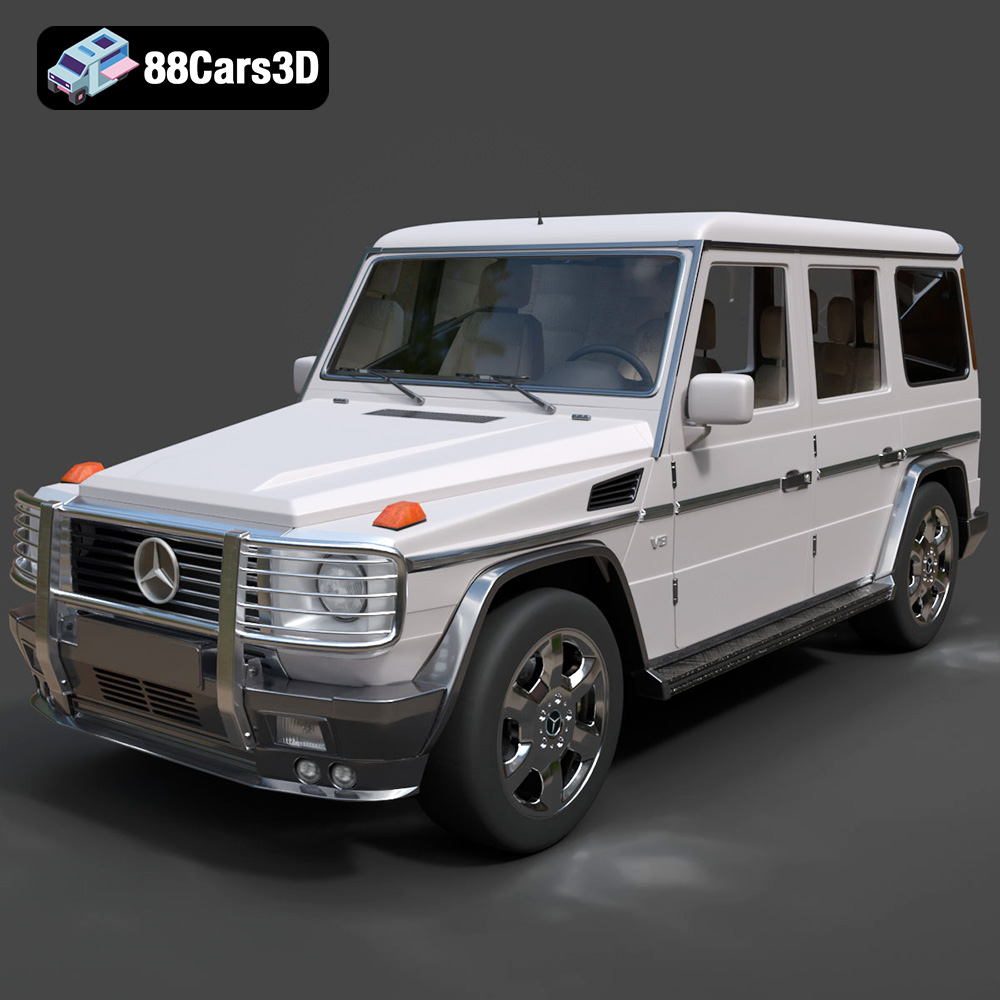
Download the Mercedes G-Class SUV 2024 3D Model featuring clean geometry, realistic detailing, and a fully modeled interior. Includes .blend, .fbx, .obj, .glb, .stl, .ply, .unreal, and .max formats for rendering, simulation, and game development.
Price: $10

Texture: Yes
Material: Yes
Download the Volvo XC90 R-Design 2015 3D Model featuring clean geometry, realistic detailing, and a fully modeled interior. Includes .blend, .fbx, .obj, .glb, .stl, .ply, .unreal, and .max formats for rendering, simulation, and game development.
Price: $10

