⚡ FLASH SALE: Get 60% OFF All Premium 3D & STL Models! ⚡

The world of automotive visualization has undergone a seismic shift. Gone are the days of waiting hours, or even days, for a single photorealistic render. The power of real-time rendering, spearheaded by platforms like Unreal Engine, has democratized the creation of stunning, interactive, and dynamic automotive experiences. From marketing cinematics and virtual showrooms to advanced driving simulators and next-generation car configurators, Unreal Engine provides an unparalleled canvas for bringing digital vehicles to life. However, translating a high-polygon 3D car model into a breathtaking, real-time scene is a process that blends artistic sensibility with deep technical knowledge. It requires a mastery of import pipelines, material science, lighting theory, and performance optimization.
This comprehensive guide will walk you through the entire workflow, from initial project setup to creating interactive experiences. We will explore how to properly import and prepare your automotive assets, delve into the intricacies of crafting photorealistic PBR materials for car paint and chrome, harness the power of Lumen for dynamic global illumination, and optimize performance using cutting-edge features like Nanite. Whether you are an automotive designer, a 3D artist, or a game developer, this article will equip you with the essential skills and industry best practices to transform high-quality 3D car models into world-class automotive visualization projects within Unreal Engine.
Before importing a single polygon, establishing a robust and correctly configured Unreal Engine project is paramount. The initial setup dictates the available tools, rendering features, and overall performance capabilities of your application. Rushing this step can lead to technical debt and workflow headaches down the line. A well-organized project tailored for high-fidelity visualization ensures a smoother, more efficient development process.
Unreal Engine offers several templates to kickstart your project. For automotive visualization, your choice typically boils down to two primary categories:
Once your project is created, navigate to Edit > Plugins and Edit > Project Settings to fine-tune the engine for our specific needs. Here are some critical settings to enable:
A disciplined folder structure is the bedrock of a scalable project. It prevents assets from becoming a tangled mess and makes collaboration far easier. A logical approach for an automotive project might look like this:
/Content
    /Automotive
        /Car_BrandModel
            /Blueprints
            /Materials
            /Meshes
            /Textures
    /Environments
        /Studio
            /HDRI
            /Materials
            /Meshes
    /Core
        /Blueprints
        /Materials_Master
This structure isolates each vehicle and environment, making it easy to manage, update, or migrate assets. Placing master materials in a core folder allows for efficient instancing across the entire project.
The quality of your final render is directly tied to the quality of the data you bring into the engine. The import process is a critical bridge between your modeling software and Unreal Engine. Starting with a high-quality asset is crucial. Models from dedicated marketplaces like 88cars3d.com often come pre-optimized with clean topology and UVs, saving you significant preparation time.
Before exporting, ensure your 3D car model is properly prepared. This includes:
You have two primary format choices: FBX, the industry-standard for game assets, and USD (Universal Scene Description), a powerful format for complex scene interchange, especially in VFX and virtual production. For a single, self-contained car model, FBX is often sufficient and straightforward.
When importing your FBX file, a dialog box with numerous options will appear. Pay close attention to these settings:
This process will create Static Mesh assets and Material assets in your Content Browser, ready for the next stage.
After importing, open the Static Mesh Editor by double-clicking the main car body asset. Use this window to validate the import. Check the number of material slots to ensure they match your expectations. Use the UV visualization tool to inspect your UV channels. Make sure your model has proper, non-overlapping UVs for lightmaps (usually on UV channel 1, while the texture UVs are on channel 0) if you plan to use static lighting, although with a fully dynamic Lumen workflow, this is less critical.
Materials are what give a 3D model its perceived physical properties. In automotive visualization, creating a believable car paint material is often considered a benchmark of quality. Unreal Engine’s node-based Material Editor is an incredibly powerful tool for building complex, physically accurate shaders that react realistically to light.
Physically-Based Rendering (PBR) is a methodology that seeks to simulate the properties of light in the real world. Key inputs for a standard PBR material include:
A convincing car paint shader requires more than the standard PBR inputs. We need to simulate a multi-layered surface. We can achieve this in the Material Editor by changing the Shading Model to Clear Coat.
By creating a master car paint material and then creating Material Instances from it, you can easily generate hundreds of color variations without recompiling a single shader.
Beyond the paint, other materials complete the vehicle. Here are some quick recipes:
Lighting is the single most important element in achieving photorealism. Unreal Engine 5’s Lumen system provides dynamic global illumination and reflections, simulating how light bounces off surfaces in real-time. This eliminates the need for slow light baking and allows for instant feedback as you light your automotive scene.
Lumen works by tracing rays into a simplified representation of the scene, gathering indirect lighting information, and applying it to the final image. This means that light from a bright sky will realistically bounce off the floor and illuminate the underside of your car, and colored surfaces will “bleed” their color onto adjacent objects. For real-time rendering, this is a revolutionary feature that brings offline rendering quality to interactive applications.
A classic automotive studio lighting setup is an excellent way to showcase a 3D car model. This can be easily created in Unreal Engine:
Lumen is powerful but can be performance-intensive. In your Project Settings under Rendering, you can adjust Lumen’s quality. Lumen uses Software Ray Tracing by default, which runs on a wide range of hardware. If you enabled Hardware Ray Tracing, Lumen can use it for more accurate reflections and global illumination, especially on reflective surfaces like car paint and glass. For high-end cinematic outputs, Hardware Ray Tracing is preferred. For interactive applications that need to run on a wider variety of machines, the default Software Ray Tracing provides an excellent balance of quality and performance.
Automotive models used for visualization are often incredibly dense, with polygon counts running into the millions. Getting this level of detail to run smoothly in real-time has historically been a major challenge, requiring painstaking manual optimization. Unreal Engine 5 introduces technologies that dramatically simplify this process.
Nanite is Unreal Engine’s virtualized micropolygon geometry system. In simple terms, it allows you to import and render film-quality assets with millions of polygons directly in the engine without traditional performance constraints like poly count or draw calls. Nanite intelligently streams and renders only the detail you can perceive on screen.
To use it, simply right-click your imported static mesh and select “Enable Nanite”. That’s it. For a high-poly 3D car model used in a cinematic or a high-end configurator, Nanite is a game-changer. It means you no longer have to compromise on the geometric detail of your source model. However, Nanite currently has some limitations: it works best on rigid, opaque meshes and has limited support for translucent materials or complex vertex animations.
For projects where Nanite isn’t suitable (e.g., games targeting lower-end hardware, or for transparent objects like windows), traditional Level of Detail (LOD) meshes are still the best practice. LODs are a series of lower-polygon versions of your model that the engine swaps to as the object gets further from the camera.
Always keep an eye on performance. Unreal provides powerful built-in profiling tools. Use the console command `stat fps` to see your frame rate and `stat gpu` to see a detailed breakdown of what your graphics card is spending time on. The Shader Complexity view mode (Alt+8) is another excellent tool; it visualizes the cost of the materials on screen. For automotive scenes, the clear coat and glass materials will often be more complex, and this view helps identify potential bottlenecks.
The true power of real-time rendering is interactivity. With Unreal Engine’s Blueprint visual scripting system, you can create compelling experiences without writing a single line of code. This allows artists and designers to build fully functional car configurators, interactive demos, and cinematic sequences.
A color switcher is a foundational feature of any car configurator. Here’s a high-level overview of how to build one with Blueprint:
This same logic can be extended to swap wheels, change interior materials, or trigger animations.
Blueprints can also be used to add simple interactions. You can use a Box Trigger to detect when the player is near a door and, on a key press, play a timeline animation that rotates the door mesh on its hinge. You can also script simple logic to turn headlights on and off by changing the parameters of a light component or swapping to an emissive material.
For creating stunning animated shorts and marketing videos, Sequencer is Unreal Engine’s cinematic tool. It’s a non-linear editor that allows you to animate objects, camera properties, materials, and more. You can create sweeping camera shots, animate the car driving along a path, and even trigger Blueprint events directly from the timeline for perfect synchronization. For further learning on these advanced topics, the official Unreal Engine Learning portal at https://dev.epicgames.com/community/unreal-engine/learning offers a wealth of tutorials and documentation.
We’ve journeyed through the complete pipeline of bringing a high-fidelity 3D car model into Unreal Engine, transforming it from a static asset into a photorealistic, interactive, and optimized centerpiece for any automotive visualization project. We’ve seen how a meticulous project setup lays the foundation for success, how a proper import process preserves data integrity, and how the artful creation of PBR materials breathes life into the model. By leveraging the power of Lumen for dynamic lighting and Nanite for unprecedented geometric detail, we can achieve visual quality that was once exclusive to offline rendering, all within a real-time environment.
The fusion of high-quality assets, like those found on marketplaces such as 88cars3d.com, with the powerful toolset of Unreal Engine opens up limitless possibilities. The techniques discussed here—from material creation and lighting to optimization and Blueprint interactivity—are not just theoretical concepts; they are actionable steps you can take today. The next step is to apply this knowledge. Take a detailed car model, build your lighting studio, craft that perfect clear coat shader, and script your first interactive element. The era of real-time automotive visualization is here, and you now have the roadmap to become a master of it.

Texture: Yes
Material: Yes
Download the Mercedes S-Class 2024 3D Model featuring clean geometry, realistic detailing, and a fully modeled interior. Includes .blend, .fbx, .obj, .glb, .stl, .ply, .unreal, and .max formats for rendering, simulation, and game development.
Price: $10

Texture: Yes
Material: Yes
Download the Chevrolet Camaro 1970 3D Model featuring clean geometry, realistic detailing, and a fully modeled interior. Includes .blend, .fbx, .obj, .glb, .stl, .ply, .unreal, and .max formats for rendering, simulation, and game development.
Price: $10

Texture: Yes
Material: Yes
Download the Mercedes-AMG GT 2015 3D Model featuring clean geometry, realistic detailing, and a fully modeled interior. Includes .blend, .fbx, .obj, .glb, .stl, .ply, .unreal, and .max formats for rendering, simulation, and game development.
Price: $88.99

Texture: Yes
Material: Yes
Download the Suzuki GSX-R 1000 3D Model featuring clean geometry, realistic detailing, and a fully modeled interior. Includes .blend, .fbx, .obj, .glb, .stl, .ply, .unreal, and .max formats for rendering, simulation, and game development.
Price: $10

Texture: Yes
Material: Yes
Download the Porsche Cayman S 2024 3D Model featuring clean geometry, realistic detailing, and a fully modeled interior. Includes .blend, .fbx, .obj, .glb, .stl, .ply, .unreal, and .max formats for rendering, simulation, and game development.
Price: $10

Texture: Yes
Material: Yes
Download the Holden Commodore Sportwagon 2017 3D Model featuring clean geometry, realistic detailing, and a fully modeled interior. Includes .blend, .fbx, .obj, .glb, .stl, .ply, .unreal, and .max formats for rendering, simulation, and game development.
Price: $10
Texture: Yes
Material: Yes
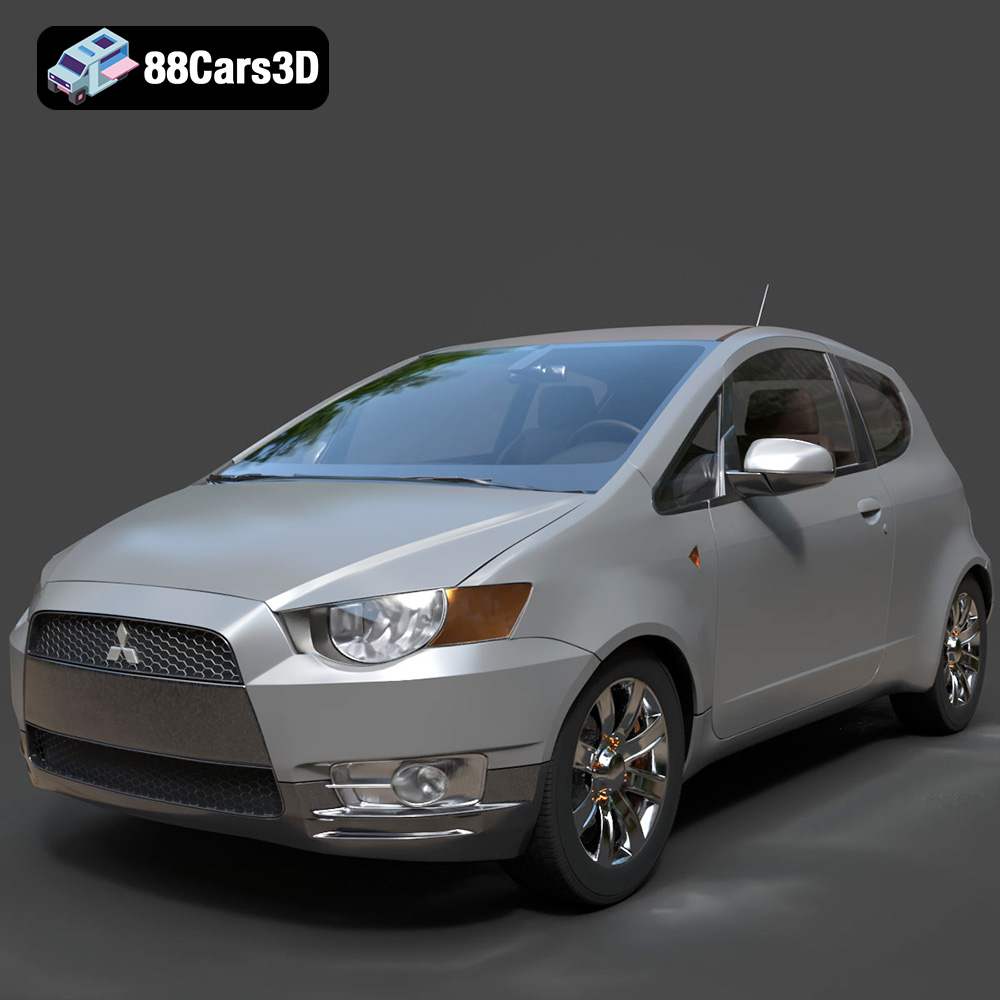
Download the Mitsubishi Colt 3 Door 2008 3D Model featuring clean geometry, realistic detailing, and a fully modeled interior. Includes .blend, .fbx, .obj, .glb, .stl, .ply, .unreal, and .max formats for rendering, simulation, and game development.
Price: $10
Texture: Yes
Material: Yes
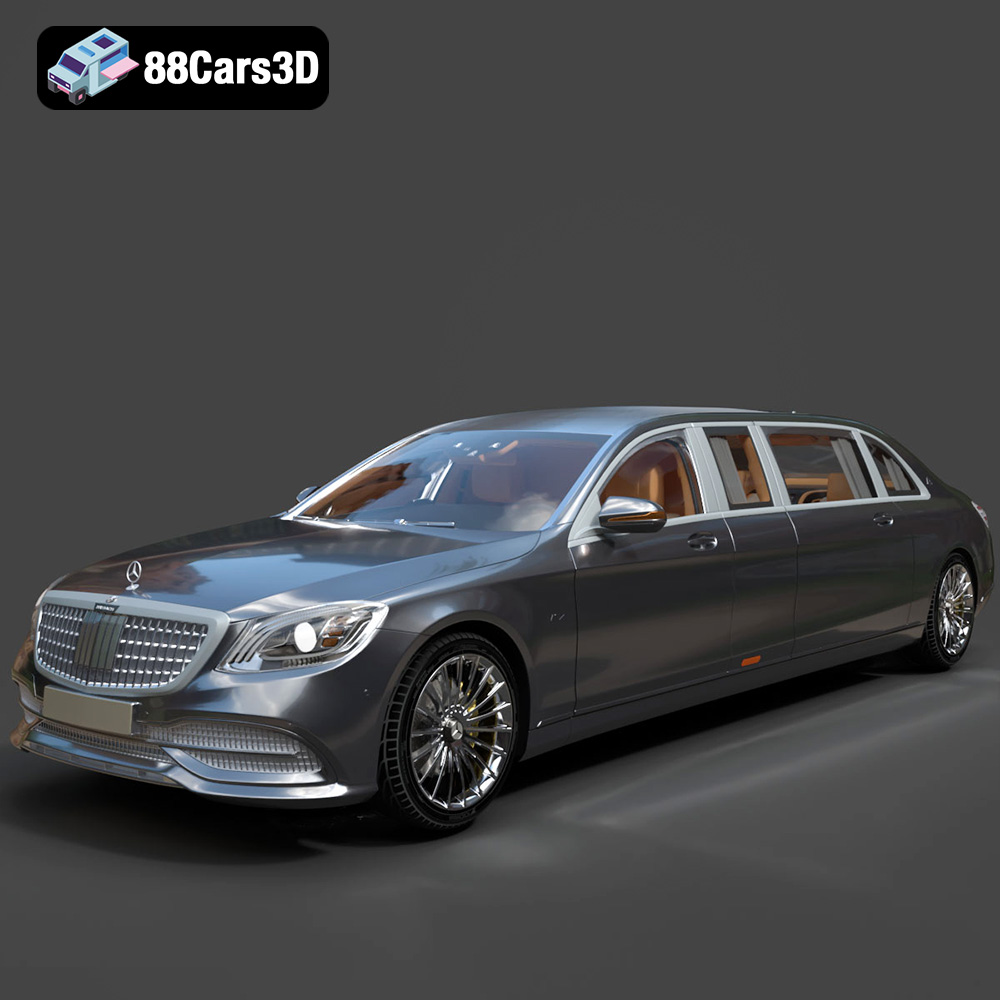
Download the Mercedes-Benz S650 Pullman 3D Model featuring clean geometry, realistic detailing, and a fully modeled interior. Includes .blend, .fbx, .obj, .glb, .stl, .ply, .unreal, and .max formats for rendering, simulation, and game development.
Price: $95.99
Texture: Yes
Material: Yes
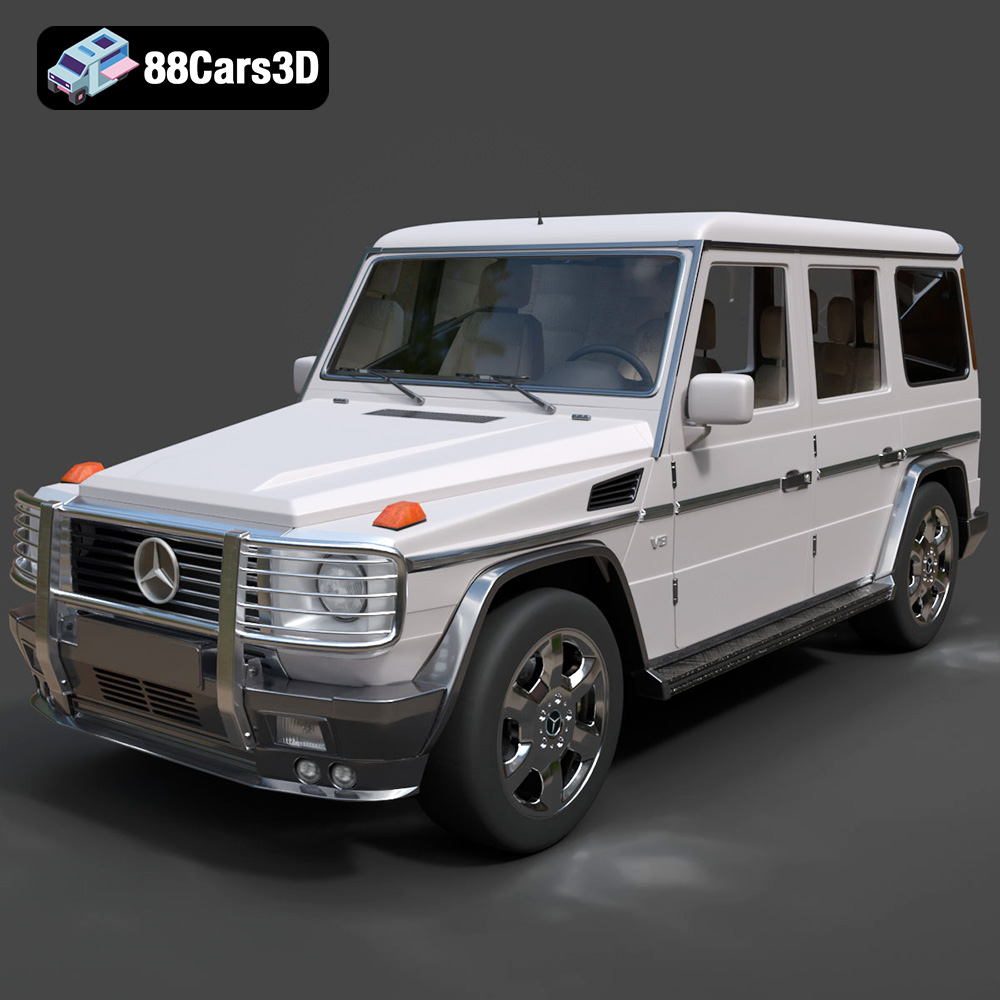
Download the Mercedes G-Class SUV 2024 3D Model featuring clean geometry, realistic detailing, and a fully modeled interior. Includes .blend, .fbx, .obj, .glb, .stl, .ply, .unreal, and .max formats for rendering, simulation, and game development.
Price: $10
Texture: Yes
Material: Yes
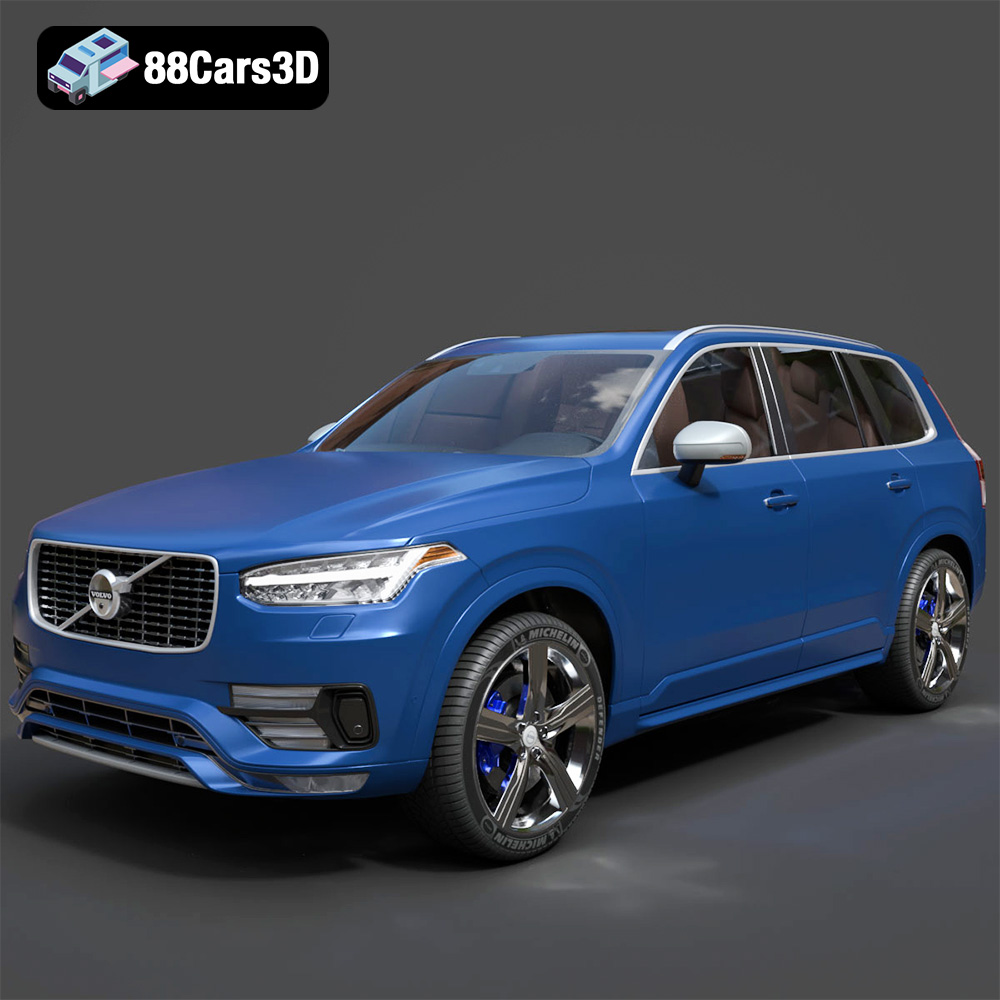
Download the Volvo XC90 R-Design 2015 3D Model featuring clean geometry, realistic detailing, and a fully modeled interior. Includes .blend, .fbx, .obj, .glb, .stl, .ply, .unreal, and .max formats for rendering, simulation, and game development.
Price: $10

