⚡ FLASH SALE: Get 60% OFF All Premium 3D & STL Models! ⚡

“`html
The world of automotive visualization is undergoing a seismic shift. Gone are the days of long-winded offline renders and static imagery. Today, real-time rendering engines are empowering designers, marketers, and developers to create breathtakingly realistic, interactive, and dynamic automotive experiences. At the forefront of this revolution is Unreal Engine 5, a powerhouse of tools that brings cinematic quality and real-time interactivity to the forefront. For professionals leveraging high-quality 3D car models, Unreal Engine is no longer just an option; it’s the new industry standard for creating everything from next-generation car configurators to immersive virtual showrooms and stunning marketing cinematics.
This comprehensive guide is your roadmap to mastering automotive visualization in Unreal Engine 5. We will deconstruct the entire workflow, from initial project setup and model preparation to crafting photorealistic materials, orchestrating dynamic lighting with Lumen, and building interactive experiences with Blueprint. You will learn how to leverage cutting-edge features like Nanite for unprecedented geometric detail and Sequencer for creating polished cinematic content. Whether you’re a 3D artist aiming for photorealism, a game developer building a racing simulator, or a marketing professional creating a virtual launch event, this guide will equip you with the technical knowledge and best practices to bring your automotive visions to life.
A successful automotive visualization project begins with a solid foundation. Properly configuring your Unreal Engine project and preparing your 3D assets are critical first steps that will save you countless hours of troubleshooting down the line. This phase is all about creating an optimized environment for performance and visual fidelity.
Before importing a single model, it’s essential to set up your project for success. When creating a new project, Unreal Engine offers several templates. For automotive work, the Automotive, Film/Video, & Live Events, or a clean Games template are excellent starting points.
Edit > Plugins and ensure the following are enabled:
Edit > Project Settings. Under the Engine > Rendering section, make sure Dynamic Global Illumination Method is set to Lumen and Reflection Method is also set to Lumen. If you have a compatible GPU, enable Support Hardware Ray Tracing for the highest quality reflections and ambient occlusion.The quality of your final render is directly tied to the quality of your source model. Marketplaces like 88cars3d.com offer a significant advantage by providing high-quality, game-ready 3D car models with clean topology, proper UV unwrapping, and realistic PBR textures. These models are designed for real-time rendering, saving you immense preparation time.
When importing your model (typically as an FBX file), the import settings dialog is your first point of optimization:
Once imported, drag the model into your level and perform a quick validation check. First, verify the scale. Use a default UE Mannequin or a simple cube of a known size to ensure the car is at the correct real-world scale (1 Unreal Unit = 1 cm). Check the pivot points of individual components, especially doors and wheels; they should be positioned correctly for realistic rotation. Finally, inspect the World Outliner to confirm that the model’s hierarchy is intact. A properly organized hierarchy will make rigging and animation significantly easier later on.
Materials are what breathe life into your 3D models. Unreal Engine’s node-based Material Editor is an incredibly powerful tool for creating physically-based rendering (PBR) materials that react realistically to light. For automotive visualization, mastering car paint, glass, chrome, and rubber is paramount.
The Material Editor is where you define the surface properties of your objects. The core concept is the **Master Material**, a complex, flexible material that exposes key parameters (like color, roughness, metallic). From this master, you create **Material Instances**, which are lightweight duplicates that allow you to change those exposed parameters without recompiling the shader. This workflow is highly efficient and is standard practice in professional development. For an in-depth understanding of the Material Editor’s capabilities, the official Unreal Engine documentation is an excellent resource for learning.
A convincing car paint shader is arguably the most important material in automotive visualization. It’s a multi-layered material that requires specific settings in the Material Editor.
Vector Parameter node for the Base Color. For metallic paints, connect a Scalar Parameter to the Metallic input (a value of 1.0 for fully metallic).TextureCoordinate node and multiplying it by a scalar parameter.Scalar Parameter nodes to control the Clear Coat (strength, typically 1.0) and Clear Coat Roughness (smoothness, a low value like 0.01-0.1 is best). This layer provides the sharp, glossy reflections you see on a new car.By instancing this material, you can create an entire library of car paints just by changing the Base Color and flake parameters.
Beyond car paint, other materials complete the look:
Lighting is the element that sells the realism of a scene. Unreal Engine 5’s **Lumen** is a revolutionary fully dynamic global illumination and reflections system that provides stunning, real-time results without the need for baking lightmaps, allowing for incredible iteration speed and interactivity.
Lumen simulates the way light bounces off surfaces and indirectly illuminates other objects in the scene (Global Illumination or GI). It also provides high-quality, dynamic reflections. This means if you move a light or change an object’s color, the bounced light and reflections update instantly. This is a massive leap forward from older techniques like static baked lighting or performance-intensive hardware ray tracing for GI. Lumen works best with modern GPUs but has software-based fallbacks for broader compatibility.
A classic studio lighting setup is perfect for showcasing a car model.
While Lumen is the go-to for most high-end visualization, it’s important to know the alternatives. GPU Lightmass is Unreal’s system for pre-calculating and baking lighting information into lightmaps. This can deliver exceptionally high-quality, noise-free results but is completely static. It’s a viable option for projects where performance is the absolute priority and no dynamic lighting changes are needed, such as in certain VR applications or on lower-end hardware. For most automotive configurators, marketing cinematics, and virtual showrooms, Lumen’s flexibility and visual quality are unmatched.
The true power of real-time rendering lies in interactivity. Unreal Engine’s **Blueprint Visual Scripting** system allows artists and designers to create complex interactive logic without writing a single line of code. This is perfect for building automotive configurators, interactive demos, and explorable virtual showrooms.
Blueprints are a node-based system for creating gameplay and interactive elements. You connect nodes that represent functions, events, and variables to build logic. For automotive visualization, you’ll primarily work with Actor Blueprints. You can convert your imported car model into a Blueprint Actor, which encapsulates its meshes, components, and all its interactive logic into a single, reusable object.
Let’s outline the steps for a basic paint color configurator:
Vector Parameter. Create several Material Instances from it, each with a different color (e.g., MI_CarPaint_Red, MI_CarPaint_Blue).Material Instance Object Reference.Set Material node. Connect the “ChangePaintColor” event to this node, and plug the material instance input from the event into the material slot on the node.OnClicked event, get a reference to your car Blueprint in the world and call the “ChangePaintColor” event, passing in the desired Material Instance.This same logic can be extended to swap wheel styles, interior trims, or trigger animations for opening doors and trunks.
Interactivity can go beyond UI buttons. You can use Trigger Volumes (like a Box Trigger) in your scene. For example, place a trigger in front of the car. Using the Level Blueprint, you can detect when the player’s camera overlaps with this volume and use that event to call a function in the car Blueprint that plays an animation to turn on the headlights, complete with lighting effects powered by the Niagara particle system.
For creating pre-rendered marketing videos, commercials, or in-game cinematics, Unreal Engine provides a suite of tools that rival professional offline rendering software. The combination of Nanite for geometry and Sequencer for animation is a recipe for stunning visual storytelling.
Nanite is Unreal Engine 5’s virtualized geometry system. It intelligently streams and renders only the geometric detail you can perceive, effectively eliminating the concepts of polygon budgets and traditional Levels of Detail (LODs). This means you can use incredibly high-poly models—like the film-quality assets available from marketplaces such as 88cars3d.com—directly in the engine without worrying about performance degradation. A car model with 10-20 million polygons can be rendered in real-time as efficiently as a 50,000 polygon model. To use it, simply select your static mesh in the Content Browser, open the editor, and check the “Enable Nanite Support” box. It’s a transformative technology for achieving cinematic quality.
Sequencer is Unreal Engine’s non-linear, cinematic editing tool. It operates much like Adobe Premiere or After Effects but within the 3D environment.
The final 10% of a cinematic look comes from post-processing. Add a Post Process Volume to your scene and enable “Infinite Extent (Unbound)” to make its effects global. Key settings to adjust include:
Even with powerful hardware and technologies like Nanite, optimization is a non-negotiable part of development, especially for interactive applications like configurators or games. A smooth frame rate is essential for a high-quality user experience.
You can’t optimize what you can’t measure. Unreal Engine provides powerful built-in profiling tools.
stat unit: This console command displays the frame time, Game thread time, Draw thread time, and GPU time. Your bottleneck is whichever of these is the highest.stat gpu: This gives a detailed breakdown of what your graphics card is spending time on, such as shadows, Lumen, post-processing, and base pass draw calls.While Nanite handles LODs for static geometry automatically, other elements still need them. Skeletal meshes (for things like animated suspension) and smaller props in the environment should have a series of manually created or automatically generated LODs. A **Draw Call** is a command from the CPU to the GPU to draw an object. Having thousands of individual objects in a scene can overwhelm the CPU. Where possible, merge smaller static meshes into single larger ones to reduce draw calls. This is less of a concern for Nanite meshes, which have a very low draw call footprint.
High-resolution textures consume significant VRAM. Use texture resolutions appropriate for the object’s size and camera distance. A 4K texture is great for the car body, but a small interior button might only need a 256×256 texture. Use proper texture compression settings (e.g., DXT1/BC1 for base color, DXT5/BC3 for masks, BC5 for normal maps). In your materials, avoid overly complex logic with dozens of texture lookups and calculations if a simpler approach achieves a similar result. Every instruction adds to the rendering cost.
Unreal Engine 5 has fundamentally democratized the creation of high-end automotive visualization. We’ve journeyed through the entire production pipeline, from establishing a robust project foundation and importing high-quality 3D car models to the intricate art of PBR material creation and the dynamic science of lighting with Lumen. We’ve seen how Blueprints can unlock limitless interactivity for car configurators and how Nanite and Sequencer combine to produce cinematic content that was once the exclusive domain of offline render farms. Finally, we’ve covered the crucial discipline of optimization, ensuring your stunning creations run smoothly in real-time.
The tools and techniques discussed here provide a powerful framework, but the true potential is unlocked through experimentation and practice. Take these concepts and apply them to your own projects. Start with a high-fidelity asset, perhaps from a specialized marketplace like 88cars3d.com, and challenge yourself to build a complete scene. Dive deeper into the engine’s features, explore advanced material functions, and push the boundaries of real-time rendering. The future of automotive visualization is interactive, immersive, and incredibly exciting—and with Unreal Engine, you are in the driver’s seat.
“`

Texture: Yes
Material: Yes
Download the Mercedes S-Class 2024 3D Model featuring clean geometry, realistic detailing, and a fully modeled interior. Includes .blend, .fbx, .obj, .glb, .stl, .ply, .unreal, and .max formats for rendering, simulation, and game development.
Price: $10

Texture: Yes
Material: Yes
Download the Chevrolet Camaro 1970 3D Model featuring clean geometry, realistic detailing, and a fully modeled interior. Includes .blend, .fbx, .obj, .glb, .stl, .ply, .unreal, and .max formats for rendering, simulation, and game development.
Price: $10

Texture: Yes
Material: Yes
Download the Mercedes-AMG GT 2015 3D Model featuring clean geometry, realistic detailing, and a fully modeled interior. Includes .blend, .fbx, .obj, .glb, .stl, .ply, .unreal, and .max formats for rendering, simulation, and game development.
Price: $88.99

Texture: Yes
Material: Yes
Download the Suzuki GSX-R 1000 3D Model featuring clean geometry, realistic detailing, and a fully modeled interior. Includes .blend, .fbx, .obj, .glb, .stl, .ply, .unreal, and .max formats for rendering, simulation, and game development.
Price: $10

Texture: Yes
Material: Yes
Download the Porsche Cayman S 2024 3D Model featuring clean geometry, realistic detailing, and a fully modeled interior. Includes .blend, .fbx, .obj, .glb, .stl, .ply, .unreal, and .max formats for rendering, simulation, and game development.
Price: $10

Texture: Yes
Material: Yes
Download the Holden Commodore Sportwagon 2017 3D Model featuring clean geometry, realistic detailing, and a fully modeled interior. Includes .blend, .fbx, .obj, .glb, .stl, .ply, .unreal, and .max formats for rendering, simulation, and game development.
Price: $10
Texture: Yes
Material: Yes
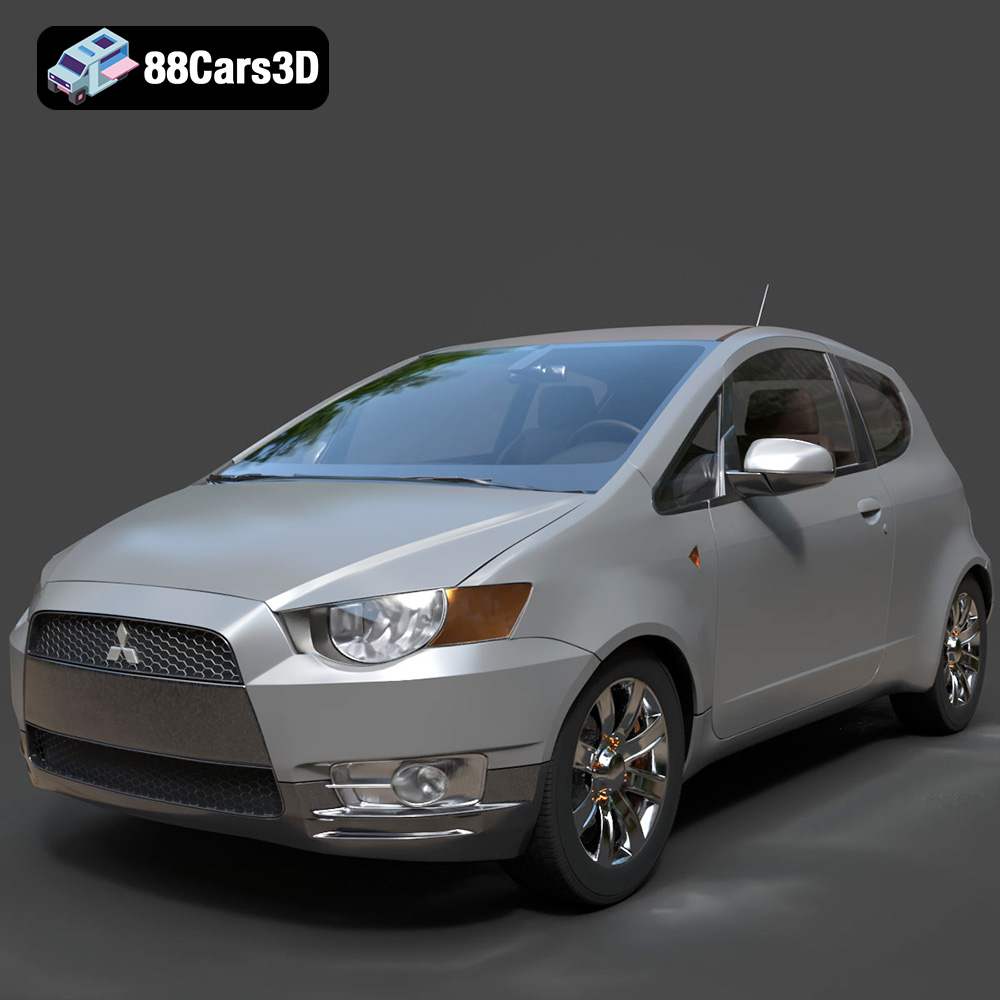
Download the Mitsubishi Colt 3 Door 2008 3D Model featuring clean geometry, realistic detailing, and a fully modeled interior. Includes .blend, .fbx, .obj, .glb, .stl, .ply, .unreal, and .max formats for rendering, simulation, and game development.
Price: $10
Texture: Yes
Material: Yes
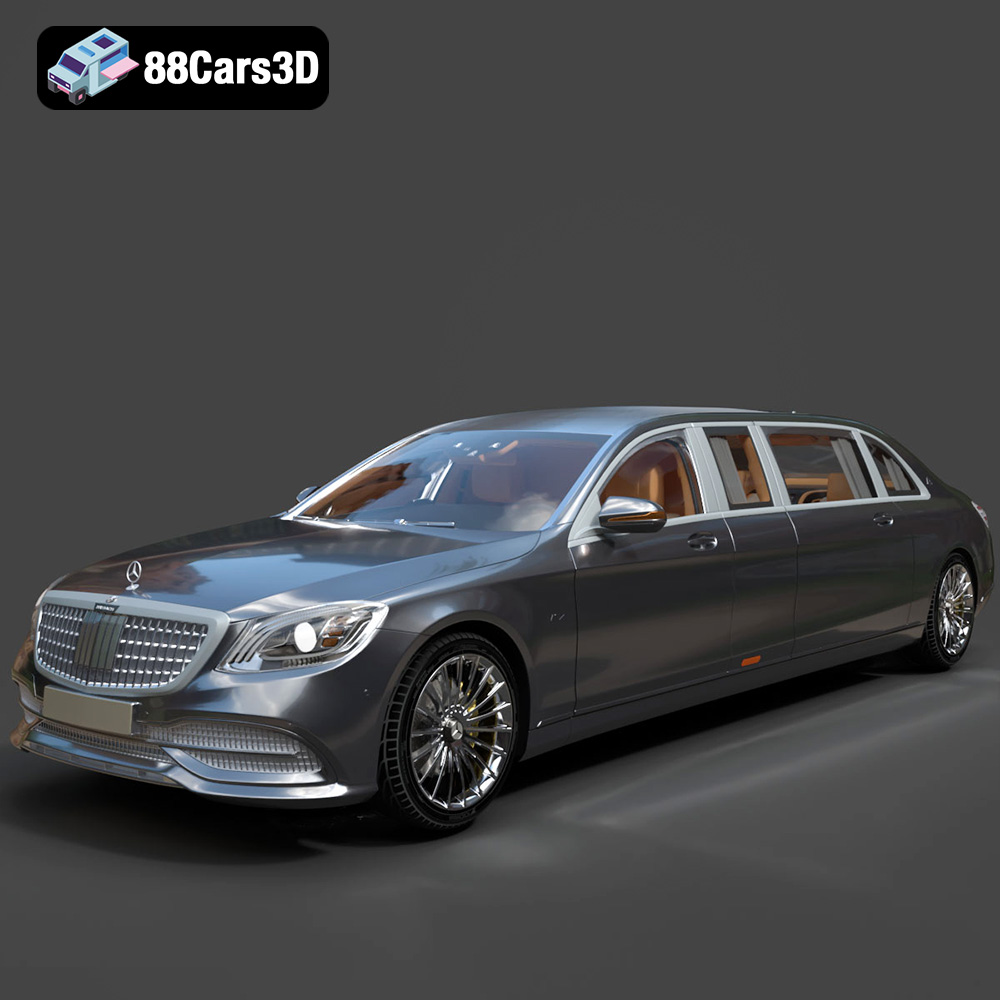
Download the Mercedes-Benz S650 Pullman 3D Model featuring clean geometry, realistic detailing, and a fully modeled interior. Includes .blend, .fbx, .obj, .glb, .stl, .ply, .unreal, and .max formats for rendering, simulation, and game development.
Price: $95.99
Texture: Yes
Material: Yes
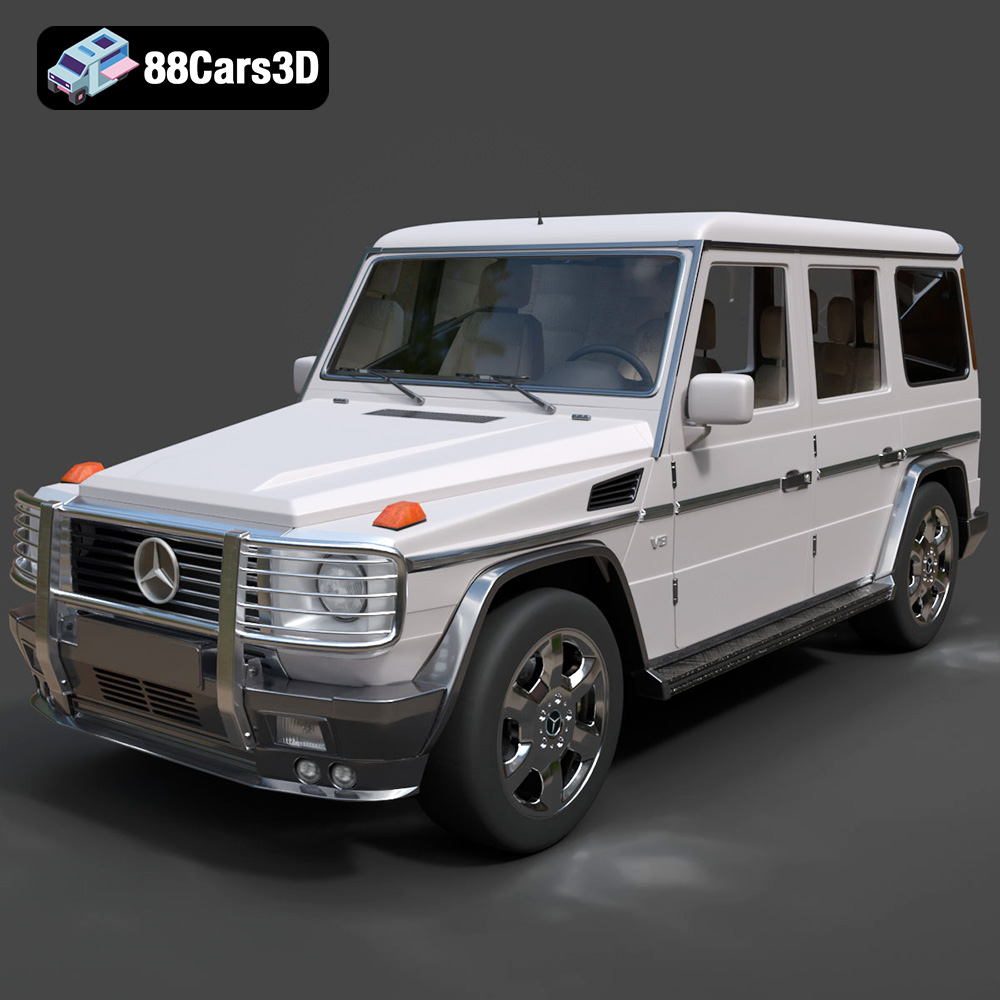
Download the Mercedes G-Class SUV 2024 3D Model featuring clean geometry, realistic detailing, and a fully modeled interior. Includes .blend, .fbx, .obj, .glb, .stl, .ply, .unreal, and .max formats for rendering, simulation, and game development.
Price: $10
Texture: Yes
Material: Yes
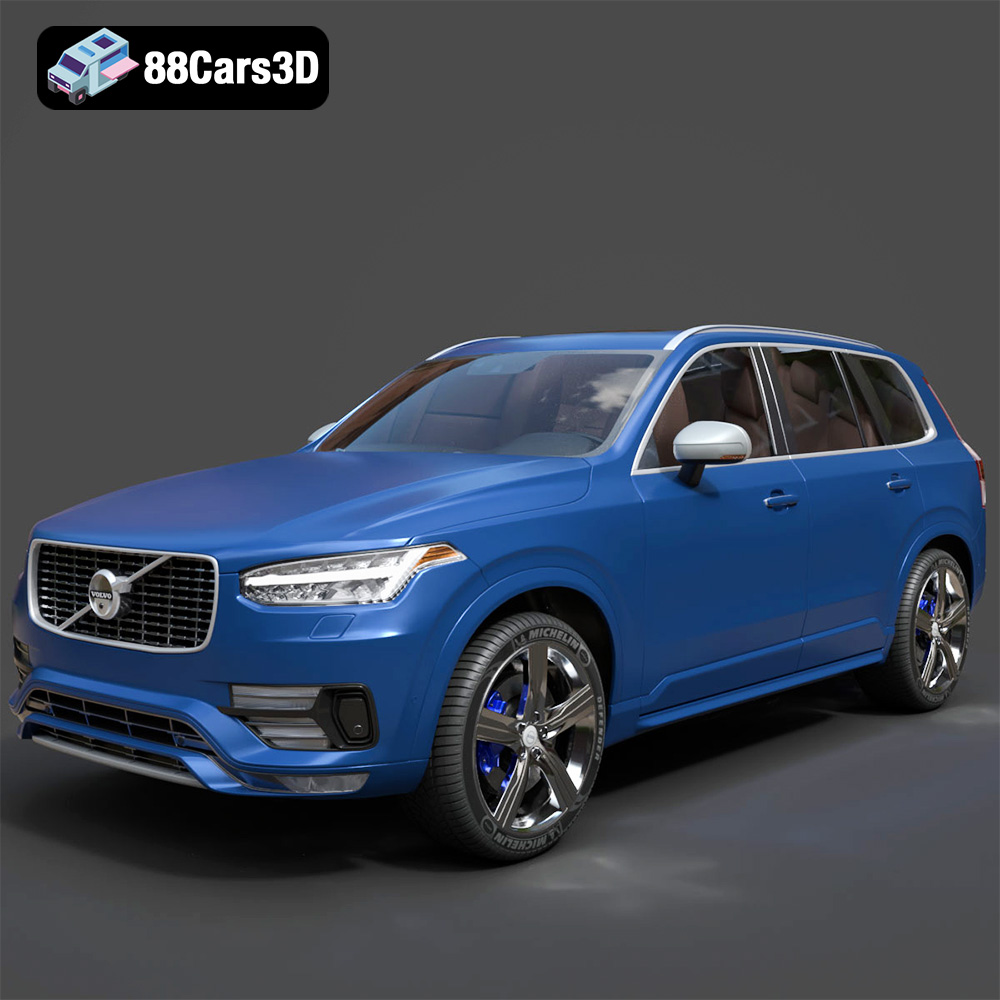
Download the Volvo XC90 R-Design 2015 3D Model featuring clean geometry, realistic detailing, and a fully modeled interior. Includes .blend, .fbx, .obj, .glb, .stl, .ply, .unreal, and .max formats for rendering, simulation, and game development.
Price: $10

