⚡ FLASH SALE: Get 60% OFF All Premium 3D & STL Models! ⚡

“`html
In the world of 3D, the automobile is a pinnacle of artistic and technical achievement. A well-crafted 3D car model is a versatile asset, capable of starring in a hyper-realistic automotive rendering, a high-octane video game, an immersive AR/VR experience, or even becoming a physical object through 3D printing. However, the path from a digital mesh to these diverse applications is paved with technical challenges. A model optimized for a close-up Corona render will cripple a real-time game engine, while a game-ready asset will lack the fidelity for cinematic visualization. This guide is your roadmap to navigating this complex landscape. We will deconstruct the complete workflow for creating a master 3D car model that can be efficiently adapted for any purpose. You will learn the foundational principles of high-polygon modeling, advanced UV mapping strategies, PBR material creation, and the critical optimization techniques required for game assets and AR/VR applications. Whether you’re building from scratch or adapting a high-quality base from a marketplace like 88cars3d.com, this comprehensive technical deep-dive will equip you with the skills to make your automotive models truly universal.
The journey to a versatile 3D car begins with a master, high-fidelity source model. This is your digital “source of truth”—a pristine, highly-detailed mesh from which all other versions will be derived. The key to success is building this foundation with clean, deliberate topology and a subdivision-based workflow. This approach, while polygon-intensive, provides the highest quality for renders and creates the perfect starting point for efficient optimization later. Think of it as sculpting from a perfect block of marble; the cleaner the initial form, the more beautiful the final sculpture, regardless of its final size. This initial investment in quality pays dividends across every subsequent application, from automotive rendering to real-time visualization.
For hard-surface models like cars, topology—the flow and arrangement of polygons—is paramount. The goal is a clean, all-quad mesh that follows the car’s form and accentuates its character lines. Good edge flow is not just about aesthetics; it ensures that subdivided surfaces remain smooth and free of artifacts like pinching or distortion. When modeling, focus on directing edge loops to define panel gaps, wrap around curved surfaces like wheel arches, and reinforce sharp creases on the bodywork. A common professional technique is to use “holding edges” or “support loops”—additional edge loops placed close to a sharp edge—to control the tightness of the surface when a subdivision modifier (like 3ds Max’s TurboSmooth or Blender’s Subdivision Surface) is applied. Aim for evenly distributed quads across broad, flat surfaces like the roof or hood to prevent shading irregularities.
Modeling for subdivision is a non-destructive workflow that allows for incredible detail and smoothness. You work on a simple, low-resolution “cage” mesh, and a modifier algorithmically adds polygon density, smoothing the result. This is the industry standard for creating “hero” assets for film and advertising. The base cage for a car body might only be 30,000-50,000 polygons, but with 2-3 levels of subdivision, it can smoothly become several million polygons for a final render. The primary challenge is avoiding unwanted pinching. This often occurs where multiple edges converge at a single vertex (a “pole”) on a curved surface. While poles are sometimes unavoidable, try to position them on flat areas or hide them where they won’t be noticeable. A five-edged pole is generally acceptable, but avoid poles with six or more connecting edges, as they will almost always cause shading artifacts.
A truly comprehensive master model includes a detailed interior, a basic undercarriage, and even a simplified engine bay. For high-end automotive rendering, these elements are often visible through windows or from low-angle shots. The level of detail should be proportional to its potential visibility. For the interior, model the dashboard, seats, steering wheel, and door panels with the same clean, subdivision-ready topology as the exterior. For elements like stitching on leather seats, you can often use tileable normal map textures instead of modeling every stitch, saving polygons without sacrificing visual fidelity. The undercarriage can be simpler, focusing on major components like the exhaust system, suspension basics, and the engine block shape, as it will mostly be seen in shadow or motion blur.
If the 3D mesh is the sculpture, UV mapping is the process of preparing its canvas for painting. UV unwrapping involves flattening the 3D surface into a 2D map, which tells the render engine how to apply textures. For a complex object like a car, this is one of the most critical and time-consuming stages. A poor UV layout can result in stretched textures, visible seams, and inconsistent resolution, immediately breaking the illusion of realism. A strategic, well-planned approach to UVs is essential for achieving professional-grade PBR materials and ensuring the model is adaptable for different texture resolutions, whether for an 8K cinematic render or a 2K game asset.
The core of UV unwrapping is defining “seams” to break the 3D mesh into manageable 2D pieces called “UV islands.” The art lies in placing these seams where they are least visible. For cars, the best places are along natural panel gaps or on hard edges, such as the underside of a side mirror or the inner edge of a wheel well. A general workflow is as follows:
In Blender, artists can leverage a powerful suite of unwrapping tools. The ‘Mark Seam’ function is used to define cuts, while the ‘Unwrap’ operator (with methods like Conformal or Angle-Based) flattens the mesh. For a detailed guide on these tools, the official Blender 4.4 documentation at https://docs.blender.org/manual/en/4.4/ provides an excellent and thorough resource.
Texel density refers to the number of texture pixels (texels) per unit of 3D surface area. Maintaining a consistent texel density across the entire model is crucial for realism. If the door has a much higher resolution than the fender next to it, the difference will be jarring. You can use tools in software like Maya or various Blender add-ons to visualize and equalize texel density. For hero assets destined for film or high-end visualization, a single UV tile is often insufficient. This is where UDIMs (U-Dimension) come in. The UDIM workflow allows you to spread your UV islands across multiple UV tiles. This means you can assign a full 4K or 8K texture to just the car body, another to the interior, and another to the wheels, achieving incredible detail across the entire asset.
With a pristine model and perfectly laid-out UVs, the next stage is creating the materials that give the car its soul. Physically Based Rendering (PBR) is the industry standard for creating materials that react realistically to light. A PBR workflow aims to simulate the physical properties of real-world surfaces, ensuring your car looks correct in any lighting condition, from a bright studio to a dusky road. This involves creating a set of texture maps that control different surface attributes, which are then fed into a PBR shader in your software of choice, like 3ds Max, Blender, or Maya.
The most common PBR workflow is the Metallic/Roughness model. It relies on a few key texture maps:
Car paint is one of the most complex PBR materials to create because it’s multi-layered. A typical car paint shader in 3ds Max (using Corona or V-Ray) or Blender (using Cycles) consists of three main layers:
Rendering is where your meticulous modeling and texturing work culminates in a final, stunning image. The goal of high-end automotive rendering is photorealism, and achieving it requires a mastery of lighting, camera work, and render engine settings. The choices you make here will define the mood and quality of the final shot, whether it’s a clean, clinical studio render for a brochure or a dramatic, atmospheric shot for an advertisement. This process is an art form in itself, blending technical knowledge with a photographer’s eye.
There are two primary methods for lighting a 3D car model:
Often, professionals use a hybrid approach, using an HDRI for general ambient light and reflections, then adding specific area lights to create carefully crafted highlights along the car’s body lines.
While the principles are similar, each render engine has its nuances for automotive rendering:
No render is truly complete without post-processing. By rendering out separate passes (or “Render Elements” in V-Ray/Corona, “AOVs” in Cycles), you gain enormous control in a compositing application like Photoshop, Fusion, or After Effects. Essential passes for automotive work include: Reflections, Specular, Ambient Occlusion, and an object/material ID pass. In post, you can non-destructively adjust reflection intensity, deepen shadows with the AO pass, add lens flare, perform color grading, and add a subtle vignette to focus the viewer’s eye. This final 10% of work is what separates a good render from a great one.
Taking your multi-million polygon, UDIM-textured master model and making it run smoothly in a game engine like Unity or Unreal Engine is a process of careful, intelligent optimization. The goal is to preserve as much visual fidelity as possible while drastically reducing the performance cost. This is not simply about deleting polygons; it’s a technical workflow of retopology, baking, and texture management. The resulting asset must be lightweight enough to be rendered 60 times per second or more, alongside all other elements in a game world. When sourcing game assets, it’s important to look for models that have already undergone this process. Marketplaces such as 88cars3d.com often provide models specifically optimized for real-time use, which can be a huge time-saver for developers.
The core of real-time optimization is creating a low-polygon mesh that mimics the silhouette of the high-polygon source. This process is called retopology. The target poly count for a hero vehicle in a modern game might range from 100,000 to 200,000 triangles (not quads). The next step is “baking.” This process projects the surface detail from the high-poly model onto the UVs of the low-poly model, storing it in texture maps. The most important baked map is the Normal Map, which fakes the high-poly surface curvature and detail, making the low-poly model appear incredibly detailed. Other common baked maps include Ambient Occlusion and Curvature, which are used to enhance the PBR texturing process.
You don’t need to render a 150,000-triangle car when it’s a tiny speck in the distance. This is where LODs (Level of Detail) come in. A typical vehicle asset will have multiple LODs:
Game engines automatically switch between these LODs based on the object’s distance from the camera, dramatically improving performance.
In a game engine, every unique material applied to an object creates a “draw call”—a request to the GPU to draw something. Too many draw calls can severely impact performance. To solve this, multiple materials are combined into one through texture atlasing. For example, instead of having separate materials for the dashboard, seats, and door panels, you would combine their textures onto a single, larger texture sheet (an atlas). The entire interior can then be rendered with a single material and just one draw call. This requires careful planning of the UV layout during the optimization phase, ensuring all related components share a single UV space.
The versatility of a well-made 3D car model extends beyond renders and games into the exciting realms of Augmented/Virtual Reality and 3D printing. Each of these applications has its own unique set of technical requirements and optimization strategies. For AR/VR, performance is even more critical than in traditional games, as maintaining a high and stable frame rate is essential for user comfort. For 3D printing, the focus shifts from visual appearance to physical viability, requiring a completely different preparation process that prioritizes structural integrity over polygon count or texture quality.
For AR/VR applications, models must be incredibly lightweight. The optimization process is similar to creating game assets but even more aggressive. Target polygon counts are often much lower, typically under 100,000 triangles for a detailed object. Texture efficiency is key; PBR textures are packed into as few files as possible. The two dominant real-time file formats for this space are GLB (for Android/Web) and USDZ (for Apple iOS). The GLB format is particularly efficient as it can bundle the mesh, UVs, and PBR textures into a single, compact file. When preparing a model, you would typically export a game-ready LOD mesh with its PBR textures directly to the GLB or USDZ format using tools in Blender, 3ds Max, or specialized conversion software.
Preparing a model for 3D printing is a completely different challenge. Textures, materials, and UVs are irrelevant. What matters is creating a single, solid, “watertight” mesh. This means the model must have no holes and no non-manifold geometry (e.g., internal faces or edges shared by more than two faces). The high-poly source model is the starting point, but it needs to be processed:
We’ve journeyed through the entire lifecycle of a 3D car model, from the first polygon of a high-fidelity mesh to its final form as a photorealistic render, an optimized game asset, an interactive AR model, or a physical 3D print. The central theme is the power of a “source of truth”—a meticulously crafted, high-polygon master model. By investing time and skill into creating a foundation with clean topology, precise UVs, and high-quality PBR textures, you create an asset of immense value that can be efficiently adapted to any pipeline. This master-to-application workflow is the hallmark of a professional 3D artist, ensuring both quality and efficiency.
Your next steps are to apply these principles to your own projects. Start by focusing on topology; practice creating clean edge flow on complex surfaces. Experiment with PBR texturing in tools like Substance Painter to understand the interplay between roughness and metallic values. For developers and visualization artists on a deadline, starting with a professionally made model can be a massive advantage. Exploring high-quality assets on platforms like 88cars3d.com can not only accelerate your projects but also serve as an invaluable learning tool for understanding production-level topology and material setup. Whether you build, buy, or customize, embracing this versatile approach will elevate the quality of your automotive 3D work across all mediums.
“`
Texture: Yes
Material: Yes
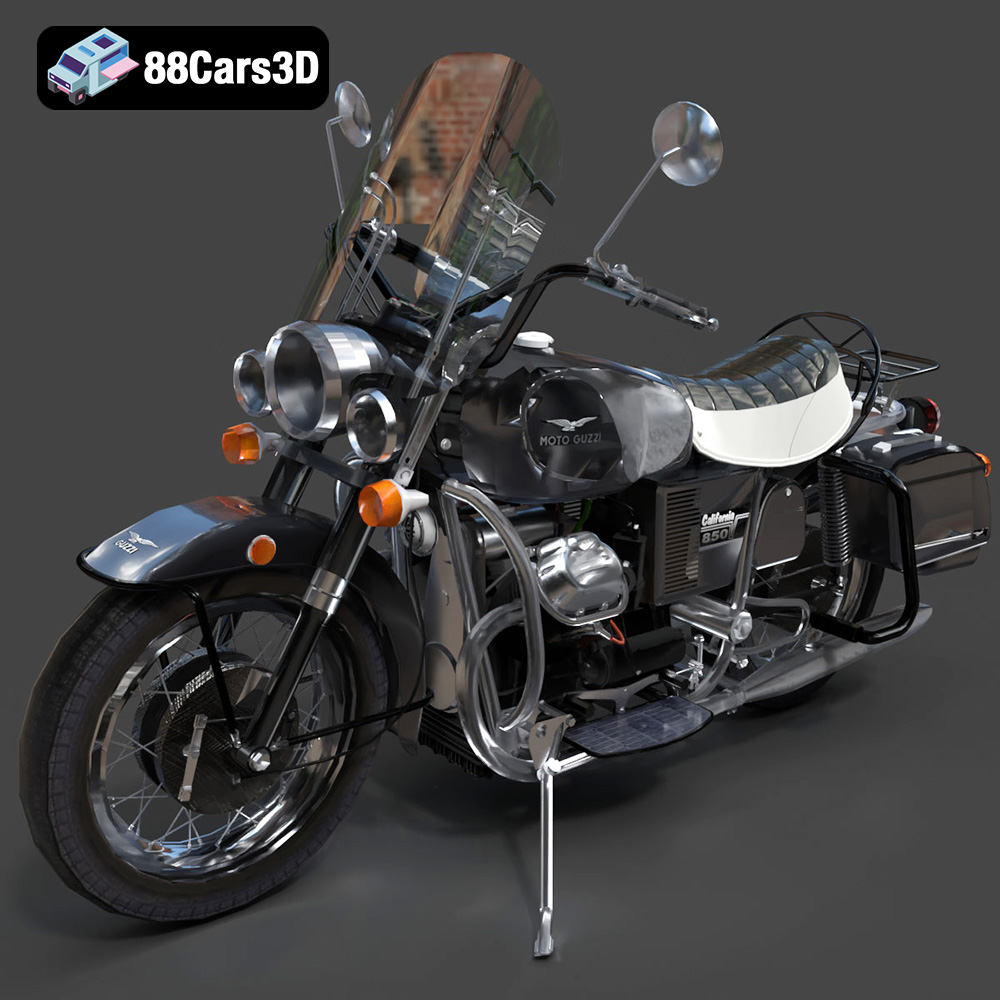
Download the Moto Guzzi Classic Motorcycle 2024 3D Model featuring clean geometry, realistic detailing, and a fully modeled interior. Includes .blend, .fbx, .obj, .glb, .stl, .ply, .unreal, and .max formats for rendering, simulation, and game development.
Price: $10

Texture: Yes
Material: Yes
Download the Mercedes S-Class 2024 3D Model featuring clean geometry, realistic detailing, and a fully modeled interior. Includes .blend, .fbx, .obj, .glb, .stl, .ply, .unreal, and .max formats for rendering, simulation, and game development.
Price: $10

Texture: Yes
Material: Yes
Download the Chevrolet Camaro 1970 3D Model featuring clean geometry, realistic detailing, and a fully modeled interior. Includes .blend, .fbx, .obj, .glb, .stl, .ply, .unreal, and .max formats for rendering, simulation, and game development.
Price: $10

Texture: Yes
Material: Yes
Download the Mercedes-AMG GT 2015 3D Model featuring clean geometry, realistic detailing, and a fully modeled interior. Includes .blend, .fbx, .obj, .glb, .stl, .ply, .unreal, and .max formats for rendering, simulation, and game development.
Price: $88.99

Texture: Yes
Material: Yes
Download the Suzuki GSX-R 1000 3D Model featuring clean geometry, realistic detailing, and a fully modeled interior. Includes .blend, .fbx, .obj, .glb, .stl, .ply, .unreal, and .max formats for rendering, simulation, and game development.
Price: $10

Texture: Yes
Material: Yes
Download the Porsche Cayman S 2024 3D Model featuring clean geometry, realistic detailing, and a fully modeled interior. Includes .blend, .fbx, .obj, .glb, .stl, .ply, .unreal, and .max formats for rendering, simulation, and game development.
Price: $10

Texture: Yes
Material: Yes
Download the Holden Commodore Sportwagon 2017 3D Model featuring clean geometry, realistic detailing, and a fully modeled interior. Includes .blend, .fbx, .obj, .glb, .stl, .ply, .unreal, and .max formats for rendering, simulation, and game development.
Price: $10
Texture: Yes
Material: Yes
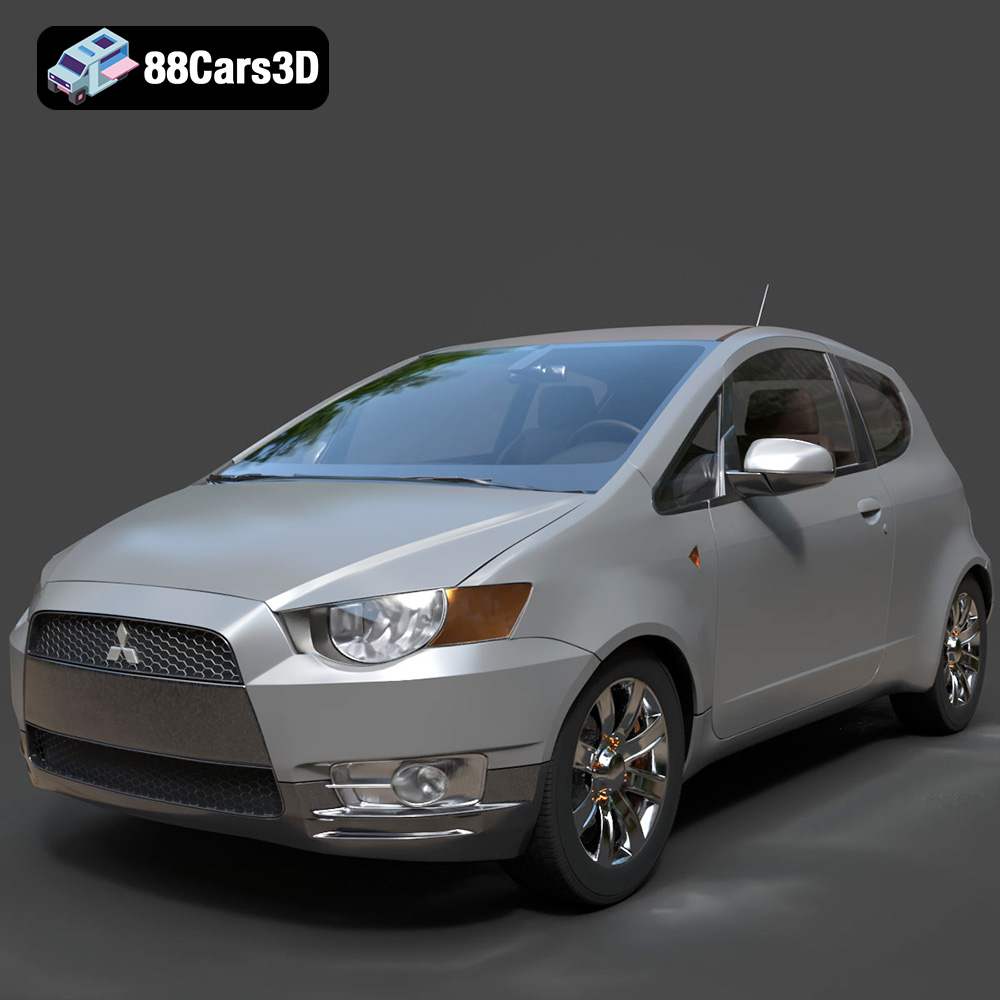
Download the Mitsubishi Colt 3 Door 2008 3D Model featuring clean geometry, realistic detailing, and a fully modeled interior. Includes .blend, .fbx, .obj, .glb, .stl, .ply, .unreal, and .max formats for rendering, simulation, and game development.
Price: $10
Texture: Yes
Material: Yes
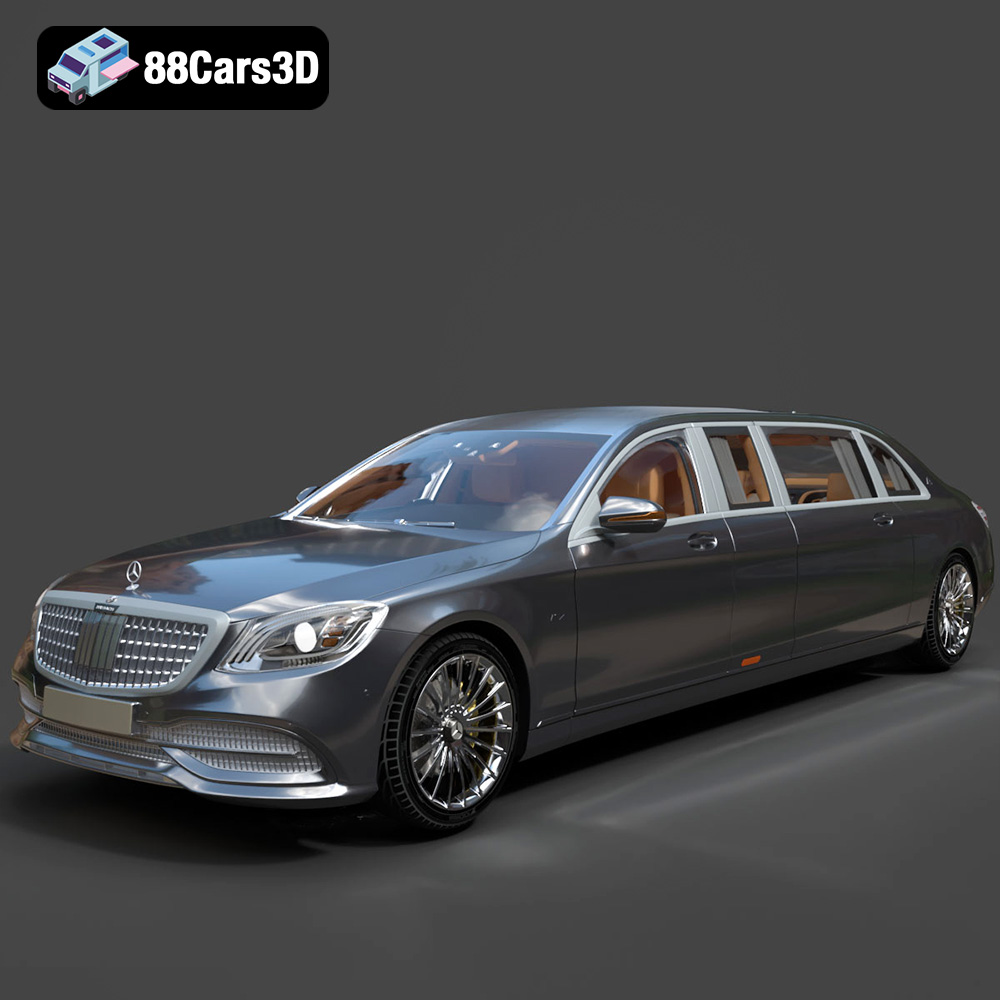
Download the Mercedes-Benz S650 Pullman 3D Model featuring clean geometry, realistic detailing, and a fully modeled interior. Includes .blend, .fbx, .obj, .glb, .stl, .ply, .unreal, and .max formats for rendering, simulation, and game development.
Price: $95.99
Texture: Yes
Material: Yes
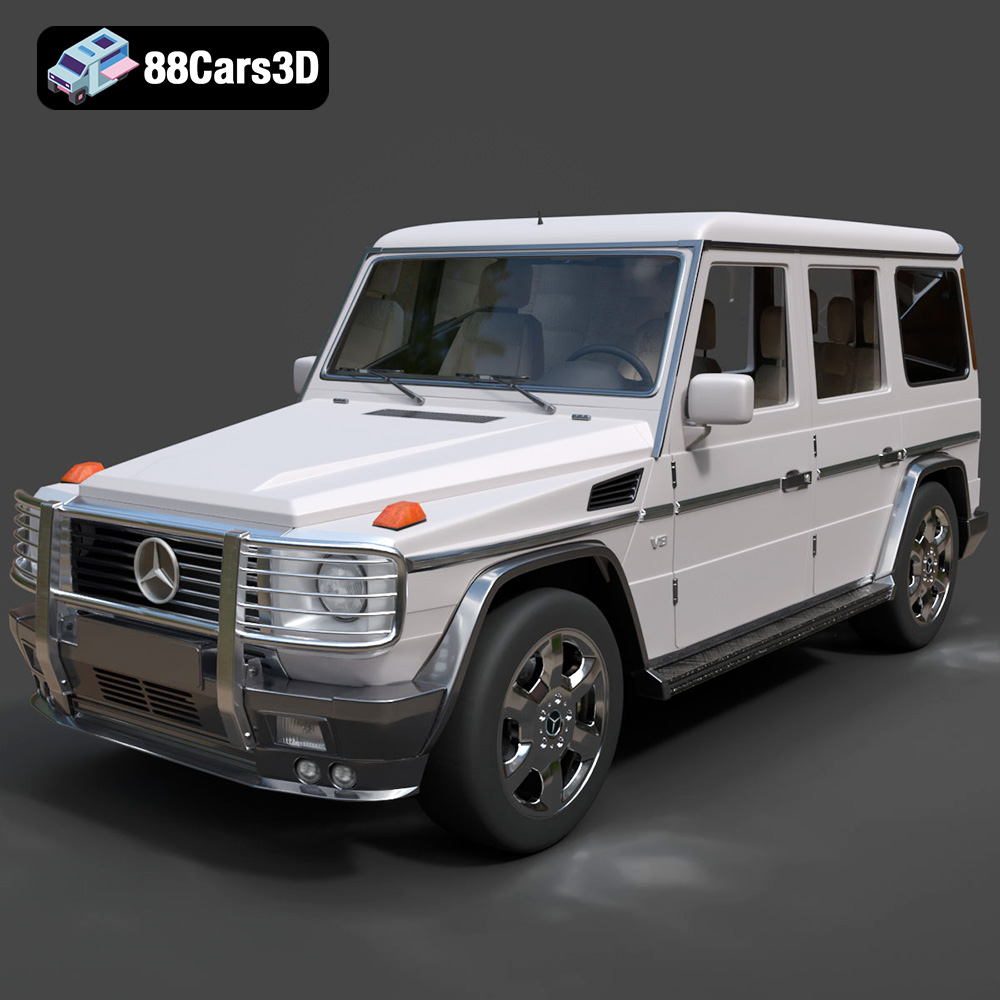
Download the Mercedes G-Class SUV 2024 3D Model featuring clean geometry, realistic detailing, and a fully modeled interior. Includes .blend, .fbx, .obj, .glb, .stl, .ply, .unreal, and .max formats for rendering, simulation, and game development.
Price: $10

