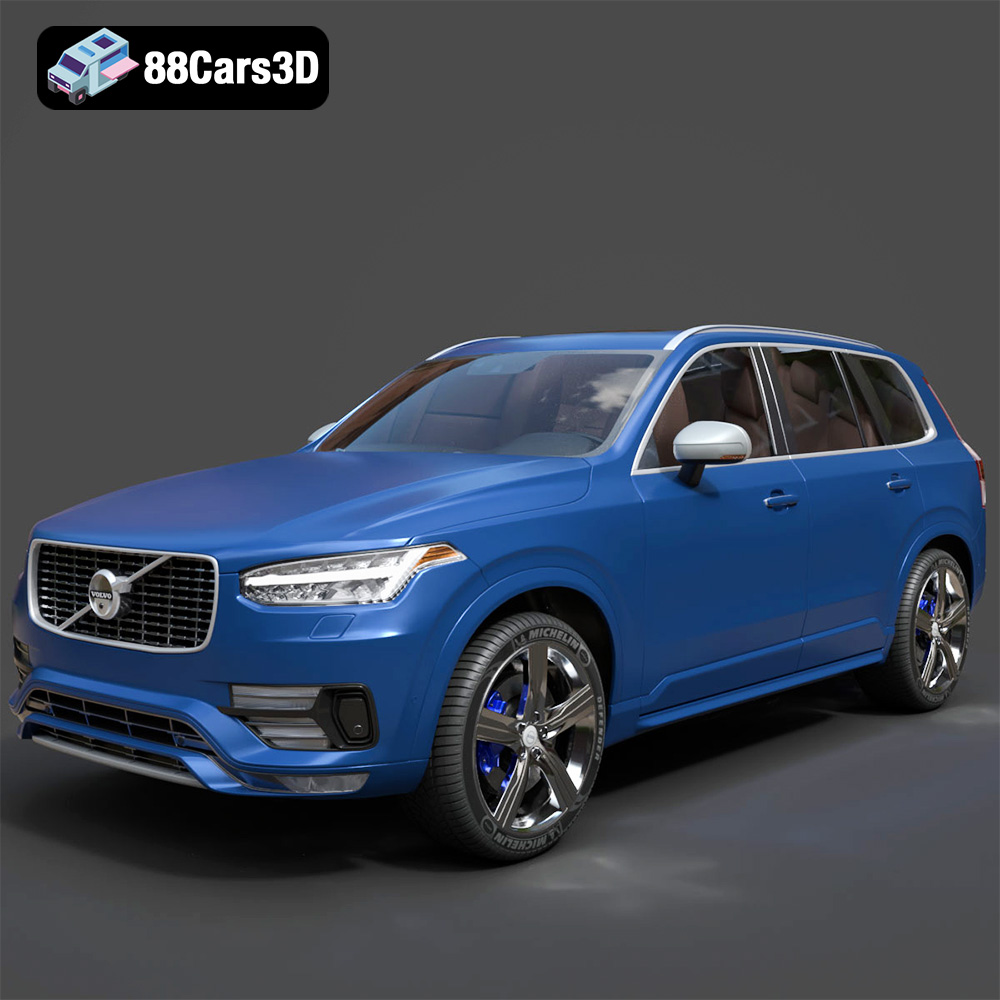
The Ultimate Guide to Using 3D Car Models in Rendering and Game Development
In the digital age, the demand for hyper-realistic automotive content has never been higher. From breathtaking cinematic renders and interactive car configurators to high-octane video games and immersive VR experiences, the digital vehicle is king. But behind every stunning on-screen car is a meticulously crafted 3D model, an intricate digital sculpture of polygons, textures, and data. Understanding the anatomy of these assets and the technical workflows required to deploy them is the key that separates amateur visualizations from professional-grade results.
This comprehensive guide is designed for artists, developers, and designers who work with 3D car models. We will deconstruct these complex assets, explore the critical file formats that define their use, and walk through professional pipelines for both photorealistic automotive rendering and real-time game assets. Whether you’re an architect populating a scene, a game developer building a racing simulator, or a marketing professional creating an AR showcase, this deep dive will equip you with the knowledge to get the most out of your digital garage.
The Anatomy of a High-Quality 3D Car Model
Not all 3D models are created equal. A professional-grade vehicle asset is a symphony of carefully considered components, each contributing to the final quality and performance. Understanding these elements allows you to select the right model for your project and diagnose any issues that may arise during implementation.
Topology and Polygon Count: The Digital Chassis
Topology refers to the flow and structure of polygons (quads and tris) that form the model’s surface. Clean, quad-based topology is the hallmark of a high-quality model. This structure ensures that surfaces deform predictably and, most importantly, catch light and reflections smoothly and realistically, which is paramount for curved automotive surfaces. Poor topology with messy, uneven polygons will result in visual artifacts, pinching, and distorted reflections, especially when subdivided for close-up shots.
Polygon count determines the model’s detail level.
- High-Poly (200,000+ polygons): These models are built for beauty shots and offline rendering where performance is not a primary concern. They feature incredible detail, from panel gaps to interior stitching, making them perfect for cinematic or print advertising.
- Mid-Poly (50,000 – 200,000 polygons): A versatile range suitable for high-end real-time applications like architectural visualizations or automotive configurators where detail is important but frame rate cannot be ignored.
- Low-Poly / Game-Ready (Under 50,000 polygons): These models are heavily optimized for performance in video games. They often use normal maps to fake high-poly surface detail and rely on Levels of Detail (LODs) to reduce complexity as the model moves further from the camera.
Meticulous UV Unwrapping for Flawless Textures
If a 3D model is a sculpture, its UV map is the flattened-out canvas upon which textures are painted. UV unwrapping is the process of projecting the 3D surface onto a 2D plane. A clean, non-overlapping UV map is essential for applying textures like paint, decals, dirt, or carbon fiber without distortion or seams. For ultra-high-resolution work, professionals use UDIMs (U-Dimension), a system that spreads UVs across multiple texture tiles, allowing for incredible detail far beyond what a single texture map could provide.
PBR Materials and Texturing
Physically Based Rendering (PBR) is the modern standard for creating realistic materials. Instead of faking visual properties, a PBR workflow uses a set of texture maps to define how a surface interacts with light based on real-world physics. Key maps for a 3D car model include:
- Albedo/Base Color: The pure color of the surface, stripped of any lighting information (e.g., the red of the paint).
- Metallic: A grayscale map defining which parts are raw metal (white) and which are non-metal/dielectric (black).
- Roughness: Perhaps the most important map, this controls how diffused or sharp reflections are. A smooth, clear-coated paint job has a low roughness value, while a rubber tire has a high roughness value.
- Normal: This map adds fine surface detail (like leather grain or tire treads) without adding extra polygons, which is critical for performance.
Understanding 3D Model File Formats
Choosing the correct file format is one of the most critical decisions in any 3D pipeline. A format is not just a container; it dictates what data is preserved, how it’s compressed, and which software can read it. Using the wrong format can lead to lost materials, broken animations, or a complete inability to even open the file. Professional asset marketplaces like 88cars3d.com provide models in multiple formats precisely because different projects have vastly different technical requirements. Let’s break down the most common formats you’ll encounter.
- .max (3ds Max): This is the native, proprietary project file for Autodesk 3ds Max. It’s the ultimate source file for rendering and animation projects created in this ecosystem. It preserves everything: the original subdivision modifiers, complex shader networks for renderers like V-Ray or Corona, lighting setups, and animation rigs. Use this when: You are a 3ds Max user and need full control to modify the model, re-render from different angles, or integrate it into a larger 3ds Max scene.
- .blend (Blender): Similar to .max, this is the native project file for the open-source software Blender. It contains the complete scene data, including geometry, modifiers, intricate node-based materials for Cycles or Eevee render engines, and rigging. Use this when: You are a Blender user and require the original, fully editable asset to customize materials or set up new renders.
- .fbx (Filmbox): The industry-standard interchange format. FBX is unparalleled for moving assets between different 3D applications, especially into game engines. It reliably transfers mesh data, UV coordinates, PBR material slots, skeletal rigs, and animations. Use this when: You are exporting a model from a creation tool (like Blender or 3ds Max) into a real-time engine like Unreal Engine or Unity, or sending it to another artist who uses different software.
- .obj (Wavefront OBJ): One of the oldest and most widely supported formats. Its strength is its simplicity and near-universal compatibility. It reliably stores geometry and UV information, but its material support is often basic and may require re-linking textures. Use this when: You need maximum compatibility across a wide range of older or more obscure software, or when you only need the raw mesh data without complex material setups.
- .glb / .gltf (GL Transmission Format): The “JPEG of 3D.” This modern format is designed for efficient transmission and loading of 3D scenes and models by applications. It’s the standard for web-based 3D, AR, and VR. The .glb variant is a binary file that packages all data (mesh, textures, etc.) into a single, compact file. Use this when: Your target platform is a web browser (e.g., a 3D viewer on a website), an e-commerce AR preview, or any application where low file size and fast loading are paramount.
- .unreal (Unreal Engine Asset): This isn’t a simple model file but a complete, engine-ready asset package for Unreal Engine. It often includes the mesh, pre-compiled materials (shaders), textures, and sometimes even Blueprints for vehicle physics or interactive elements. Use this when: You are an Unreal Engine developer and want a drag-and-drop solution that requires zero setup, ensuring the car looks exactly as the artist intended within the engine.
- .stl (Stereolithography): A format exclusively for 3D printing. It represents a surface geometry as a collection of triangular facets (a “tessellated” mesh) and contains no information about color, textures, or materials. It is a pure, raw geometry format. Use this when: You are sending the model to a 3D printer or a slicing software to prepare it for physical manufacturing.
- .ply (Polygon File Format): Originally developed for storing data from 3D scanners, this format is excellent for storing precise mesh data, including vertex colors and other custom attributes. It’s often used in academic, engineering, and data analysis contexts. Use this when: You are working with scanned data or need a precise, no-frills mesh representation for analysis or CAD-related workflows.
Workflow Integration: From Model to Masterpiece
Once you have the perfect model and the right file format, the next step is integrating it into your specific software pipeline. The process differs dramatically between creating a photorealistic render and preparing a real-time game asset.
The Automotive Rendering Pipeline (3ds Max + V-Ray)
The goal here is ultimate realism, with no compromises for performance.
- Import and Setup: Start by opening the native .max file or importing a high-quality .fbx. The model is placed into a studio scene, often a simple cyclorama stage.
- Lighting: Lighting is everything. A high-dynamic-range image (HDRI) is used to create realistic, image-based lighting and reflections. This is supplemented with softbox-style area lights to sculpt the car’s form and create beautiful specular highlights on its body lines.
- Material Refinement: Even with PBR textures, materials often need tweaking. The car paint shader is adjusted for flake density and clear coat depth. Glass materials are given slight tints and accurate Index of Refraction (IOR) values. Tire rubber is given a subtle sheen.
- Rendering: Using a renderer like V-Ray or Corona, the final image is produced at high resolution (4K or higher) with many samples to ensure a noise-free result. Post-production in Photoshop or After Effects is used for final color grading and polish.
Preparing 3D Car Models for Real-Time Engines (Unreal Engine)
Here, the goal is a balance between visual quality and real-time performance (maintaining a high frame rate).
- Import and Validation: The game-ready .fbx is imported into Unreal Engine. It’s crucial to check that the scale is correct, materials have imported properly, and the model’s pivot point is set correctly for vehicle physics. Using a pre-packaged .unreal asset can bypass many of these steps.
- LOD Configuration: The model’s Levels of Detail (LODs) are configured. In the engine, you define the screen size at which each lower-poly version of the model should switch in, ensuring that performance is saved when the car is far from the camera.
- Material Instancing: The master materials are used to create “Material Instances.” This is a highly efficient way to create variations (e.g., different paint colors) without duplicating the entire shader network, saving significant memory and processing power.
- Physics and Blueprint Setup: The model is attached to a vehicle Blueprint, where physics properties like mass, suspension, and engine torque are defined. Collision meshes—simplified, invisible versions of the car—are created to handle interactions with the game world accurately and efficiently.
Case Studies: 3D Car Models in Action
Theory is useful, but seeing how these models are applied in the real world provides invaluable context. Here are three common scenarios where high-quality 3D car models are indispensable.
Case Study 1: Architectural Visualization
An architecture firm is creating a marketing render for a new luxury apartment complex with an underground garage. To sell the high-end lifestyle, they need to populate the scene with realistic, recognizable vehicles. They license several high-poly models from a marketplace like 88cars3d.com. Using the .fbx format, they easily import the cars into Lumion or V-Ray for SketchUp. Their focus is purely on visual fidelity. They position the cars to catch the light from the scene’s virtual fixtures, ensuring the reflections on the windshields and body panels accurately represent the garage environment, adding a deep layer of realism to the final architectural render.
Case Study 2: Indie Racing Game Development
A small development team is building a stylized racing game in Unreal Engine. Budgets are tight, and performance on mid-range PCs is a priority. They need game assets that are optimized and ready to go. They acquire a collection of cars that come with multiple LODs and PBR textures packed for efficiency. They use the .unreal assets for a simple drag-and-drop workflow. The pre-configured Blueprints allow them to get a playable prototype running in hours, not weeks. The artists can then easily create material instances to offer players a wide variety of paint jobs, all while the pre-built LODs ensure the game runs smoothly even with 20 cars on screen.
Case Study 3: Web-Based AR Product Configurator
An automotive brand wants to allow customers to view their latest SUV in their own driveway using augmented reality on their smartphones. The key challenges are file size and performance on mobile devices. A 3D artist takes a high-poly source model and begins an optimization process called retopology, creating a much lower-polygon mesh. They “bake” the details from the high-poly model onto the normal map of the low-poly version. All textures are downsized and compressed. The final asset is exported as a single .glb file, which can be loaded quickly in a web browser and is natively supported by AR frameworks on iOS and Android, providing a seamless and impressive customer experience.
Conclusion: The Asset is Just the Beginning
A high-fidelity 3D car model is far more than a simple digital object; it is a sophisticated and versatile tool. We’ve seen that its value is defined not just by its polygon count, but by the quality of its topology, the precision of its UV maps, and the realism of its PBR materials. Understanding the distinct roles of file formats—from the all-encompassing .max project file to the universally compatible .fbx and the web-optimized .glb—is fundamental to a smooth and successful production pipeline.
Whether you are creating a stunning piece of automotive rendering that will grace a magazine cover or developing performant game assets for a virtual racetrack, your success starts with choosing the right foundational model. By investing in professionally crafted assets from dedicated sources, you empower yourself to focus on what truly matters: bringing your creative vision to life. The road from a digital file to a breathtaking final product is complex, but with the right knowledge and the right assets, you’re already in the driver’s seat.
Featured 3D Car Models