⚡ FLASH SALE: Get 60% OFF All Premium 3D & STL Models! ⚡

In the demanding world of 3D visualization, where photorealism is paramount, rendering complex automotive scenes can often become a bottleneck. Whether you’re an automotive designer showcasing a new concept, a game developer creating stunning cutscenes, or an architectural visualizer integrating vehicles into a scene, the agony of waiting hours, or even days, for a single frame to render is a universal pain point. The dream of achieving breathtaking visuals without sacrificing precious production time is not just a fantasy—it’s an achievable goal through strategic optimization.
This comprehensive guide delves deep into the technical strategies and best practices that professionals employ to slash render times for intricate car models. We’ll explore everything from the foundational principles of geometry and topology to advanced material setups, lighting techniques, renderer-specific tweaks, and the power of post-production. By the end of this article, you’ll be equipped with the knowledge to streamline your workflow, significantly reduce render waits, and unlock new levels of efficiency in your automotive rendering projects, allowing you to focus more on creative iteration and less on progress bars.
The journey to faster render times begins not in the render settings, but in the very construction of your 3D car model. A poorly optimized model, regardless of render engine, will always be a performance hog. Understanding and implementing clean topology and efficient geometry management is the cornerstone of any successful and swift rendering pipeline.
Automotive surfaces are characterized by their sleek curves, sharp creases, and reflective properties, which demand incredibly clean geometry to render smoothly without artifacts. The golden rule is to maintain an all-quad topology wherever possible. N-gons (polygons with more than four sides) and triangles should be avoided on deformable or highly reflective surfaces, as they can lead to unpredictable shading, pinching, and triangulation artifacts during subdivision, especially with smooth shading applied. Proper edge flow, where edges follow the natural contours and curvature of the car body, is crucial. This ensures that when subdivision surface modifiers (like Blender’s Subdivision Surface modifier or 3ds Max’s TurboSmooth) are applied, the mesh smooths predictably and maintains crisp lines where needed, such as door seams or character lines. Excessive edge loops or areas of very dense geometry in flat regions are unnecessary and add to polygon count without visual benefit. Conversely, insufficient edge loops on a curve will result in a faceted, unrealistic appearance. A balanced approach is key, adding detail only where it is truly needed to define shape and curvature, allowing subdivision to do the heavy lifting for smoothness.
The raw polygon count of your scene is a direct indicator of its complexity for the render engine. While high-polygon models offer exquisite detail, they demand more memory and processing power. For a hero shot of a single car, a high poly count might be acceptable, but for a scene with multiple vehicles or where a car is viewed from a distance, it becomes a severe performance drain. This is where Levels of Detail (LODs) become indispensable. An LOD system involves creating multiple versions of the same model, each with a progressively lower polygon count. For instance, a detailed car model might have 500,000 polygons for close-ups, a medium LOD might be 150,000 polygons for mid-range shots, and a low LOD might be just 20,000 polygons for distant views. Render engines and game engines can automatically swap between these LODs based on the camera’s distance, ensuring optimal performance without noticeable quality loss. Tools within Blender, such as the Decimate modifier (docs.blender.org/manual/en/4.4/modifiers/generate/decimate.html), can help reduce polygon count while preserving UVs and general shape. Manual retopology, though more time-consuming, offers the highest quality control for creating optimized meshes from high-resolution scans or sculpts. When sourcing models from platforms like 88cars3d.com, look for models that already offer varying LODs or are built with clean topology amenable to such optimization.
Materials and textures are the clothing of your 3D models, defining their visual realism. However, poorly managed materials and oversized textures can significantly bloat memory usage and extend render times. Employing Physically Based Rendering (PBR) workflows correctly and optimizing your texture assets are crucial steps in the render optimization process.
Physically Based Rendering (PBR) has become the industry standard for achieving photorealistic materials due to its predictable and consistent light interaction. PBR materials rely on a set of texture maps (Albedo/Base Color, Metallic, Roughness, Normal, Ambient Occlusion) that accurately describe a surface’s properties. When creating materials for automotive scenes, focus on realism without over-complication. Car paint, for instance, often involves complex clear coat layers, metallic flakes, and subtle imperfections. Rather than creating overly intricate shader networks with dozens of nodes, aim for a clean, modular setup. Many renderers offer specialized car paint shaders or optimized layering systems that are more efficient than building everything from scratch with generic nodes. For glass, ensure proper transmission and refraction settings without excessive depth. Overly complex refractions can be computationally intensive. Using an ‘Architectural Glass’ shader or simplifying glass geometry (e.g., modeling it as a single plane for distant elements) can offer significant speedups. Remember that every node in a shader network adds to the render time, so simplify where possible and bake complex procedural textures to image maps if they don’t need to be dynamic.
Textures are a major consumer of VRAM (Video RAM) and can dramatically impact render times. Using unnecessarily high-resolution textures (e.g., 8K for a small bolt) is a common mistake. For most elements, 2K or 4K textures are sufficient. Critical surfaces like the main body paint or a prominent logo might warrant 4K or 8K, but this should be used judiciously. The general rule is: use the lowest resolution that still provides acceptable detail at the closest camera distance. Beyond individual texture resolutions, texture atlasing is a powerful optimization technique. Instead of having separate texture maps for every small component (e.g., individual nuts, bolts, interior buttons), combine them into a single, larger texture atlas. This reduces the number of material calls (draw calls) the renderer needs to make, improving performance and memory caching. UV mapping must be carefully planned to accommodate atlasing, ensuring that different parts of the model reference their corresponding areas on the atlas. This strategy is particularly effective for game assets but is equally beneficial for reducing render times in offline rendering by streamlining the data the GPU needs to process.
Lighting is paramount for establishing mood and realism, but it is also one of the most computationally expensive aspects of rendering. Optimizing your lighting setup can yield significant render time improvements without compromising visual quality, provided you understand the nuances of different techniques.
Global Illumination (GI) simulates how light bounces off surfaces, creating realistic indirect lighting and color bleed. While essential for photorealism, GI is a primary culprit for long render times. Different renderers employ various GI algorithms, each with its own strengths and weaknesses. For instance, V-Ray offers Irradiance Map (faster for static scenes, good for interiors) and Brute Force (accurate, good for animations, but slower). Corona Renderer primarily uses Path Tracing/Progressive Path Tracing, which is robust but requires sufficient samples. Arnold uses Monte Carlo path tracing. Understanding these allows you to tailor settings. For many scenes, reducing the number of GI bounces (e.g., from 8 to 4 or 6) can dramatically cut render times with minimal visual impact, as higher bounces contribute less to overall illumination. Experiment with lower GI quality settings for initial tests and progressively increase them until noise is acceptable. Techniques like clamping high-intensity pixels in GI calculations can also prevent over-bright spots and stabilize renders. Ensure your environment setup is not overly complex if it’s contributing to GI, simplifying it where possible or using optimized dome lights for HDRIs.
High Dynamic Range Images (HDRIs) are an incredibly efficient way to light automotive scenes, providing realistic environment lighting, reflections, and subtle global illumination with minimal setup. A single HDRI mapped to a dome light can often replace numerous individual physical lights. For quick, realistic results, an HDRI is often the first choice. However, HDRIs alone may not provide the precise control needed for dramatic effects, accent lighting, or specific shadow casting. This is where physical lights come into play. Instead of littering your scene with dozens of point or area lights, use them strategically. For example, if you need a specific rim light, use a single, focused area light. For interior shots, light portals (simple planes that guide light rays into enclosed spaces) can significantly improve rendering efficiency by focusing GI calculations. When using physical lights, carefully manage their samples. Excessive shadow samples can slow down renders dramatically. Many renderers offer adaptive sampling for shadows, which can help. For distant lights, consider converting them to simple directional lights if the precise falloff isn’t critical, as these are less computationally intensive than area or spherical lights. The key is to find a balance, using HDRIs for broad, natural illumination and supplementing with physical lights only where targeted control is essential.
Each rendering engine has its unique architecture and optimization strategies. Understanding the specific settings and workflows for your chosen renderer is paramount to achieving fast and high-quality results.
Blender’s Cycles engine, a powerful physically-based path tracer, offers incredible realism but can be demanding. Optimizing Cycles involves a multi-pronged approach. First, judiciously manage your sample counts. For final renders, while higher samples mean less noise, they also mean longer render times. Utilize adaptive sampling (enabled by default in newer Blender versions) which dynamically adjusts samples based on noise levels in different areas of the image. Denoising is your best friend here. Blender offers powerful denoisers like OpenImageDenoise (OIDN) for CPU and OptiX for NVIDIA GPUs (docs.blender.org/manual/en/4.4/render/cycles/denoising.html). By rendering with fewer samples and relying on denoising, you can often achieve clean results in a fraction of the time. Adjust your Light Paths settings, especially for “Max Bounces” and “Transparent Bounces.” Reducing these to the lowest acceptable values (e.g., 4-6 for diffuse/glossy, 8-12 for transmission/volume) can significantly speed up renders. Also, ensure you are utilizing your GPU for rendering if you have a powerful one, as Cycles performs exceptionally well on CUDA or OptiX compatible cards. For real-time or near real-time visualization of car models, Eevee, Blender’s real-time rasterization engine, is an excellent alternative. While not a ray tracer, Eevee can produce stunning visuals rapidly and is perfect for quick iterations, animatics, or even final renders where absolute ray-traced accuracy isn’t critical. It uses screen-space reflections, ambient occlusion, and volumetric lighting to approximate PBR workflows very effectively. However, for true ray-traced reflections and global illumination, Cycles remains the choice.
For professional studios, V-Ray, Corona Renderer, and Arnold are industry staples, each with sophisticated optimization capabilities. For V-Ray, focus on the “Image sampler” settings. The “Progressive” sampler is good for quick feedback, but the “Bucket” sampler often yields faster final renders with optimized settings, especially for complex scenes. Adjusting the “Min” and “Max subdivs” and the “Noise threshold” in the image sampler determines the quality and render time. Lowering the noise threshold means V-Ray works harder for a cleaner image. Utilizing V-Ray’s “Light Cache” for secondary GI bounces and “Irradiance Map” for primary bounces (for static scenes) can be significantly faster than Brute Force for both. Ensure “Subdivision” settings on materials are not excessively high, and use V-Ray’s “Object Properties” to override mesh subdivisions where appropriate. Corona Renderer, known for its ease of use and realism, benefits from similar principles. It’s a progressive renderer, meaning it refines the image over time. Focus on setting a “Noise Limit” or “Time Limit” rather than sample counts. Optimize your materials to use fewer reflective bounces if not visually crucial, and ensure your “GI vs. AA balance” is appropriate for the scene. Arnold, an unbiased renderer, prioritizes physical accuracy. Optimization here often means carefully managing “Camera (AA) Samples” and individual light/material samples. Arnold’s “Adaptive Sampling” is crucial, dynamically allocating more samples to noisy areas. Reducing “Transmission Depth” and “Volume Depth” for glass and fog, respectively, can offer significant speedups. All three renderers benefit immensely from distributed rendering (e.g., V-Ray Swarm, Corona Distributed Rendering, Arnold Network Rendering), allowing you to leverage multiple machines on a network to render a single frame or animation frames in parallel, drastically reducing overall render times.
The render button isn’t the final stop on the journey to a stunning image. Post-production and compositing are powerful allies that can not only enhance your visuals but also drastically cut down render times by shifting computationally intensive tasks out of the 3D renderer.
One of the most effective strategies for render optimization is to break down your final image into its constituent parts, known as render elements or render passes. Instead of rendering a single “beauty” pass that combines everything, you render separate passes for diffuse color, raw reflections, raw refractions, specular highlights, shadows, ambient occlusion, Z-depth, object IDs, and more. This modular approach offers immense flexibility. If, for instance, you decide the reflections on the car body are too strong, instead of re-rendering the entire scene (which could take hours), you can simply adjust the reflection pass in your compositing software (like Adobe Photoshop, After Effects, or Blackmagic Fusion). This non-destructive workflow saves countless hours. Furthermore, some effects, such as depth of field or motion blur, can be rendered as separate passes (e.g., Z-depth for DOF, velocity pass for motion blur) and accurately applied in post-production. Rendering these effects directly in the 3D renderer often means much longer render times, as the renderer has to calculate these complex optical phenomena for every pixel. By isolating these elements, you gain control, flexibility, and significant time savings.
Once you have your render elements, software like Adobe Photoshop (for stills) or After Effects (for animations) becomes your digital darkroom. Here, you can perform a myriad of tasks that would be prohibitively expensive to render directly in 3D. Color correction, tone mapping, adjusting contrast, adding lens effects (bloom, glare, lens flares), subtle atmospheric haze, and even fine-tuning depth of field or motion blur can all be done rapidly and iteratively in 2D. For example, rendering a scene with a shallow depth of field directly in 3D can increase render times by 20-50% or more, depending on the renderer and settings. By rendering a Z-depth pass, you can create a convincing depth of field effect in Photoshop or After Effects in minutes, without re-rendering. Similarly, adding a subtle bloom to car headlights or a glare effect to a chrome bumper is much faster and more controllable in post. This approach allows your 3D renderer to focus on what it does best – accurate light simulation and geometry calculation – while delegating the stylistic and aesthetic enhancements to the compositing stage, leading to a much faster overall production pipeline. Platforms like 88cars3d.com provide high-quality 3D car models that are perfect candidates for this kind of advanced post-production workflow, as their clean geometry and PBR materials translate well into render elements.
Beyond individual settings, optimizing your overall workflow and leveraging advanced techniques can lead to compounded render time savings, especially in large-scale productions or when dealing with numerous assets.
When you have multiple camera angles, different lighting setups, or an animation sequence, managing renders efficiently becomes critical. Batch rendering allows you to queue up multiple render jobs and process them sequentially without manual intervention. This means you can set up all your shots at the end of the day and let your computer work overnight. For even more significant time savings, distributed rendering, also known as network rendering or render farming, is a game-changer. This technique allows you to harness the power of multiple computers (your local network, a dedicated render farm, or cloud-based services) to render a single frame faster (by splitting the image into tiles, as in V-Ray’s distributed rendering) or to render multiple frames of an animation simultaneously. For example, if you have 10 machines and an animation of 100 frames, each machine can render 10 frames, completing the entire animation in roughly 1/10th the time it would take a single machine. Setting up a small render farm with old workstations can be a cost-effective solution for independent artists and small studios, while cloud render farms offer scalable power for larger projects without significant upfront hardware investment. This strategy fundamentally shifts the paradigm of render management from a bottleneck to a parallel processing powerhouse.
A well-organized 3D scene is not just about aesthetics; it’s about efficiency. Cluttered scenes with invisible or unused objects still contribute to memory load and can slow down viewport performance and rendering. Regularly clean up your scene, deleting unnecessary geometry, lights, or cameras. Utilize scene layers, collections (Blender), or groups to organize your assets logically. One of the most powerful optimization techniques for scenes with repetitive elements is instancing. When you instance an object (e.g., all four wheels of a car, individual nuts, bolts, or interior elements like buttons), the renderer only needs to store the geometry data for that object once in memory, regardless of how many instances exist. Each instance then only stores its transformation data (position, rotation, scale). This can lead to massive memory savings compared to duplicating geometry, where each duplicate stores its own full geometry data. Consequently, less memory usage translates to faster scene loading and significantly reduced render times, especially for complex objects with high polygon counts and intricate materials. Always prefer instancing over duplicating when objects are identical. Additionally, employing view frustum culling, where objects outside the camera’s view are not rendered, and occlusion culling, where objects hidden behind others are not rendered, can further reduce the amount of geometry the renderer has to process, although these are often handled automatically by modern renderers and game engines to some extent, it’s good practice to understand their principles.
Optimizing render times for complex automotive scenes is a multifaceted challenge that requires a holistic approach. There’s no single magic bullet; instead, it’s a combination of meticulous modeling practices, intelligent material and texture management, strategic lighting, an in-depth understanding of your chosen renderer, and smart post-production workflows. By embracing these techniques—from sculpting clean topology and leveraging LODs to mastering PBR materials, refining GI settings, utilizing render elements, and employing distributed rendering—you can dramatically reduce your render waits without compromising on the stunning photorealistic quality that modern automotive visualization demands.
The journey to faster renders is one of continuous learning and experimentation. Each scene presents unique challenges, and the best optimizations often come from analyzing your specific bottlenecks. Apply these principles, experiment with settings, and refine your pipeline. For those seeking a head start, remember that starting with high-quality, pre-optimized 3D car models from marketplaces like 88cars3d.com can significantly jumpstart your projects, providing a solid foundation of clean topology and PBR-ready materials. Armed with these strategies, you are now ready to take control of your render times, accelerate your creative output, and deliver breathtaking automotive visualizations more efficiently than ever before.
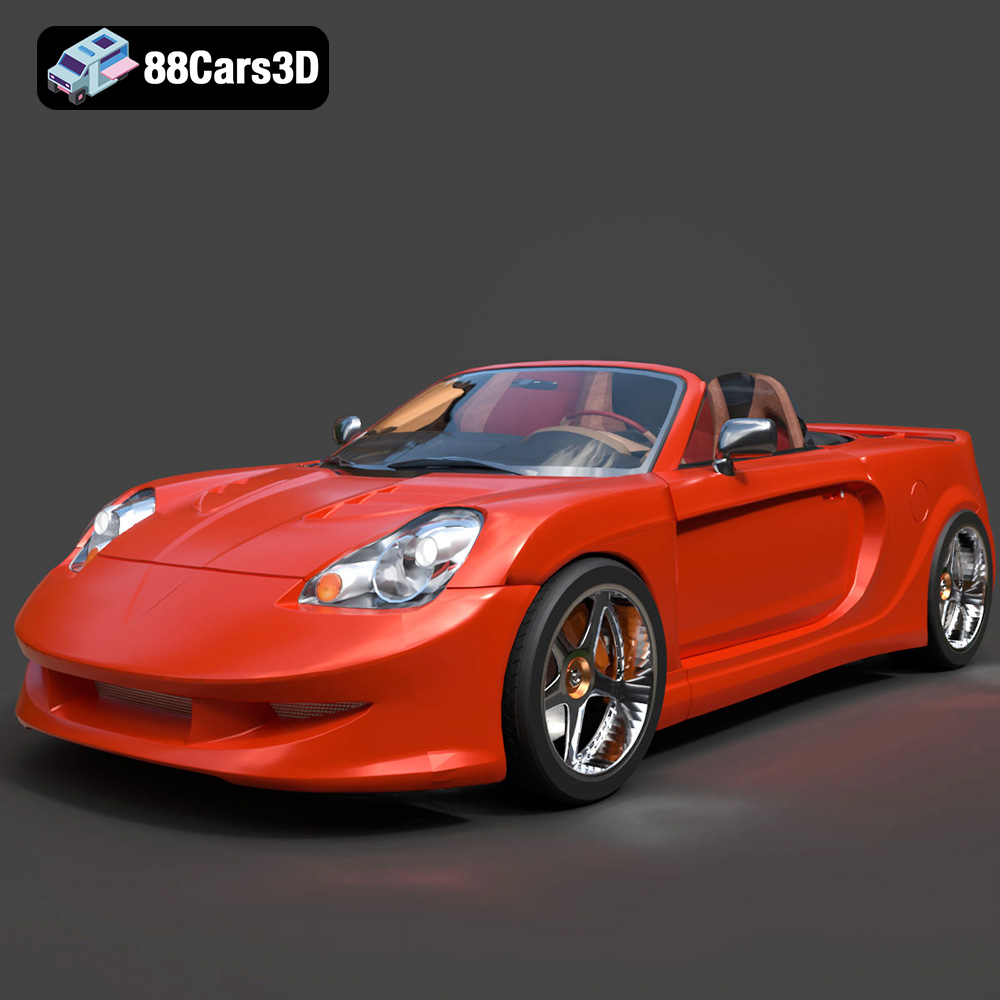
Texture: Yes
Material: Yes
Download the Toyota MRS-007 3D Model featuring clean geometry, realistic detailing, and a fully modeled interior. Includes .blend, .fbx, .obj, .glb, .stl, .ply, .unreal, and .max formats for rendering, simulation, and game development.
Price: $10

Texture: Yes
Material: Yes
Download the Porsche 911 Turbo S 2024 3D Model featuring clean geometry, realistic detailing, and a fully modeled interior. Includes .blend, .fbx, .obj, .glb, .stl, .ply, .unreal, and .max formats for rendering, simulation, and game development.
Price: $20

Texture: Yes
Material: Yes
Download the Pontiac Solstice 2009 3D Model featuring clean geometry, realistic detailing, and a fully modeled interior. Includes .blend, .fbx, .obj, .glb, .stl, .ply, .unreal, and .max formats for rendering, simulation, and game development.
Price: $10

Texture: Yes
Material: Yes
Download the Mini Cooper Countryman 2025 3D Model featuring clean geometry, realistic detailing, and a fully modeled interior. Includes .blend, .fbx, .obj, .glb, .stl, .ply, .unreal, and .max formats for rendering, simulation, and game development.
Price: $29.9
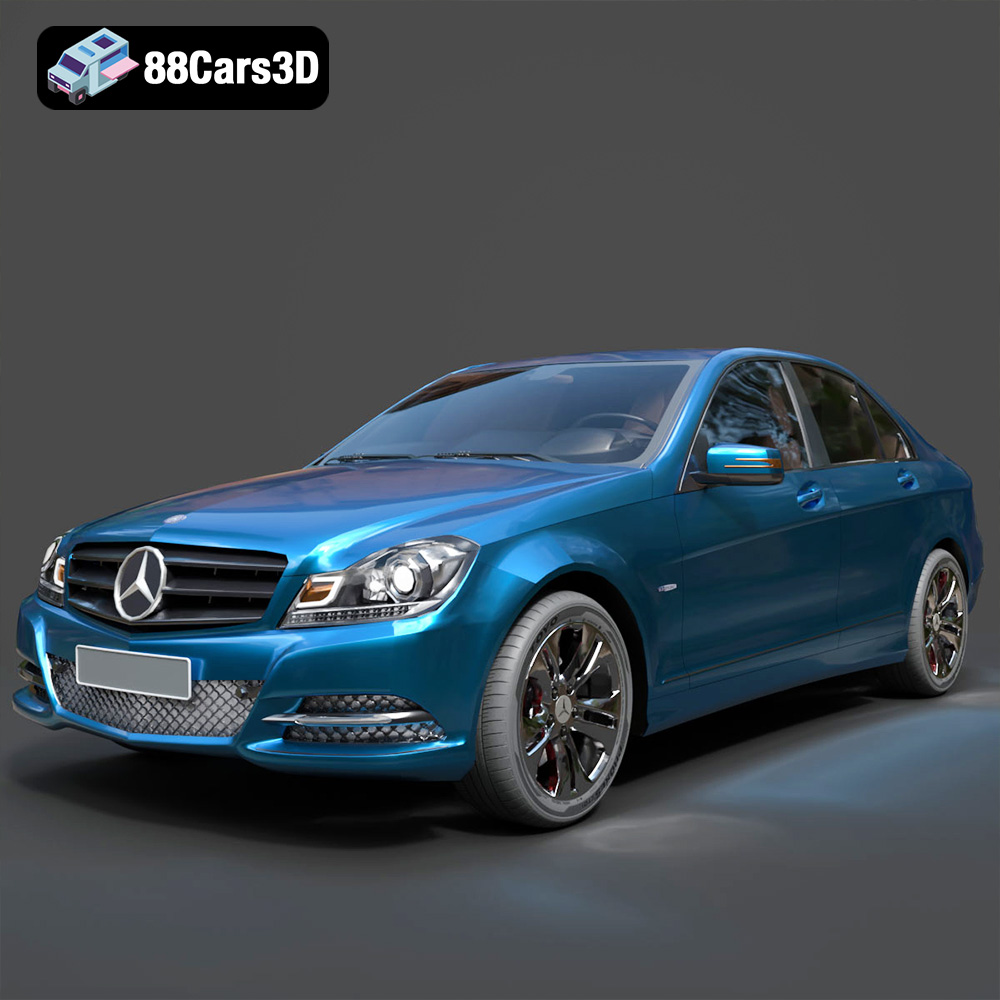
Texture: Yes
Material: Yes
Download the Mercedes C Classe 2012 3D Model featuring clean geometry, realistic detailing, and a fully modeled interior. Includes .blend, .fbx, .obj, .glb, .stl, .ply, .unreal, and .max formats for rendering, simulation, and game development.
Price: $19.9
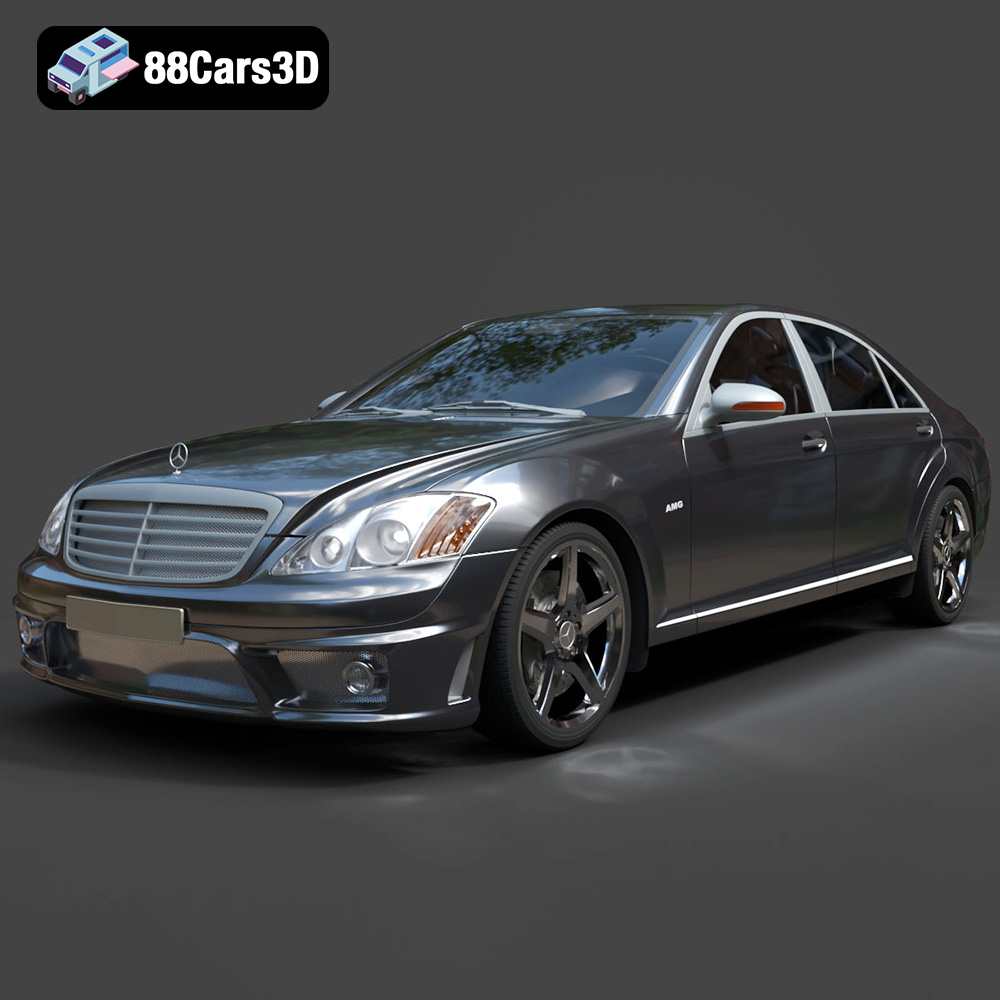
Texture: Yes
Material: Yes
Download the Mercedes-Benz S65 AMG 2018 3D Model featuring clean geometry, realistic detailing, and a fully modeled interior. Includes .blend, .fbx, .obj, .glb, .stl, .ply, .unreal, and .max formats for rendering, simulation, and game development.
Price: $19.9
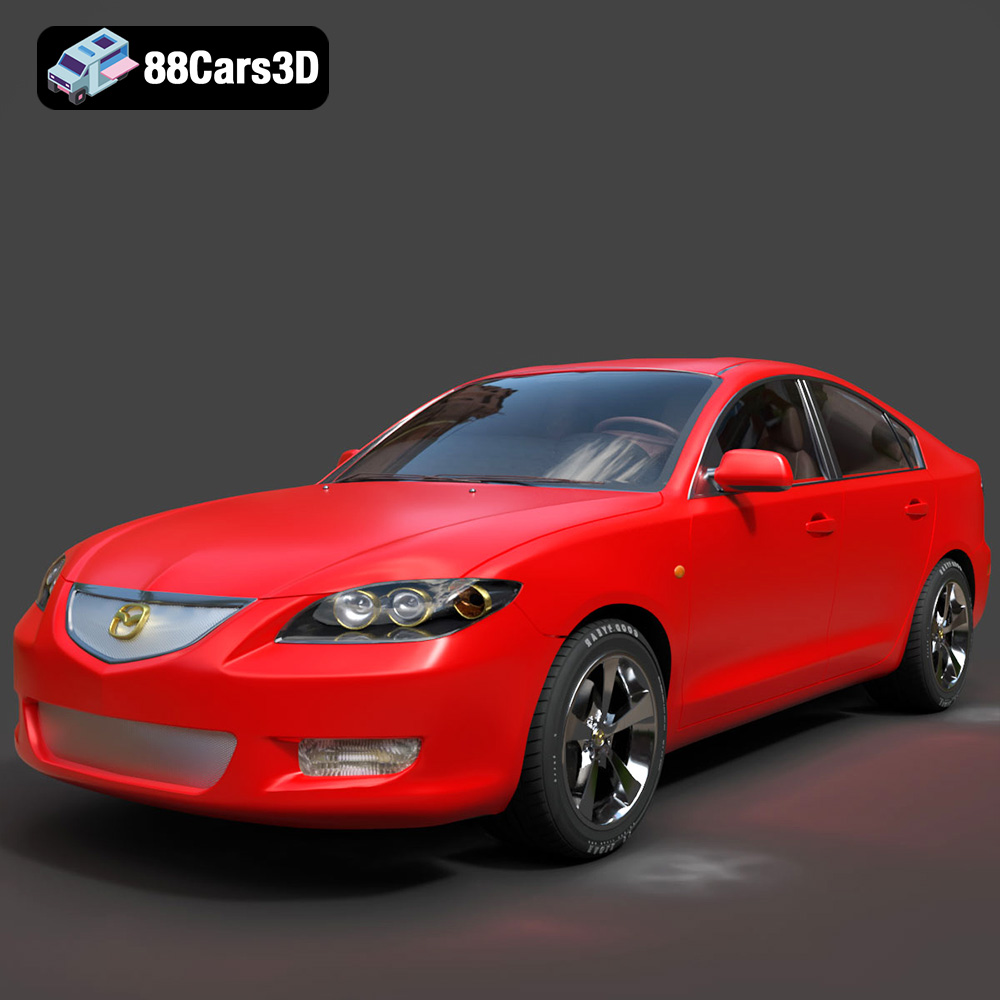
Texture: Yes
Material: Yes
Download the Mazda 3 Sedan 2004 3D Model featuring clean geometry, realistic detailing, and a fully modeled interior. Includes .blend, .fbx, .obj, .glb, .stl, .ply, .unreal, and .max formats for rendering, simulation, and game development.
Price: $10

Texture: Yes
Material: Yes
Download the Martin Rapide 2011 3D Model featuring clean geometry, realistic detailing, and a fully modeled interior. Includes .blend, .fbx, .obj, .glb, .stl, .ply, .unreal, and .max formats for rendering, simulation, and game development.
Price: $20.9
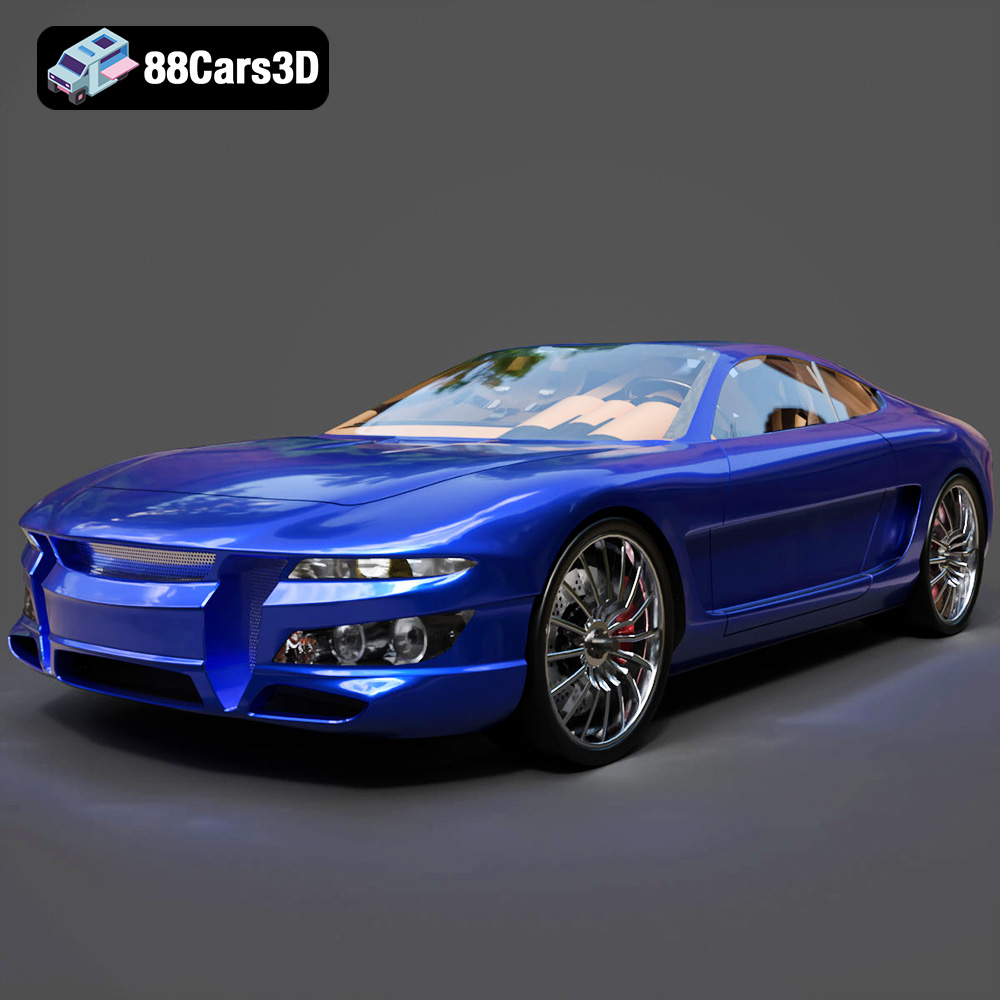
Texture: Yes
Material: Yes
Download the Car Tasergal 005 3D Model featuring clean geometry, realistic detailing, and a fully modeled interior. Includes .blend, .fbx, .obj, .glb, .stl, .ply, .unreal, and .max formats for rendering, simulation, and game development.
Price: $10
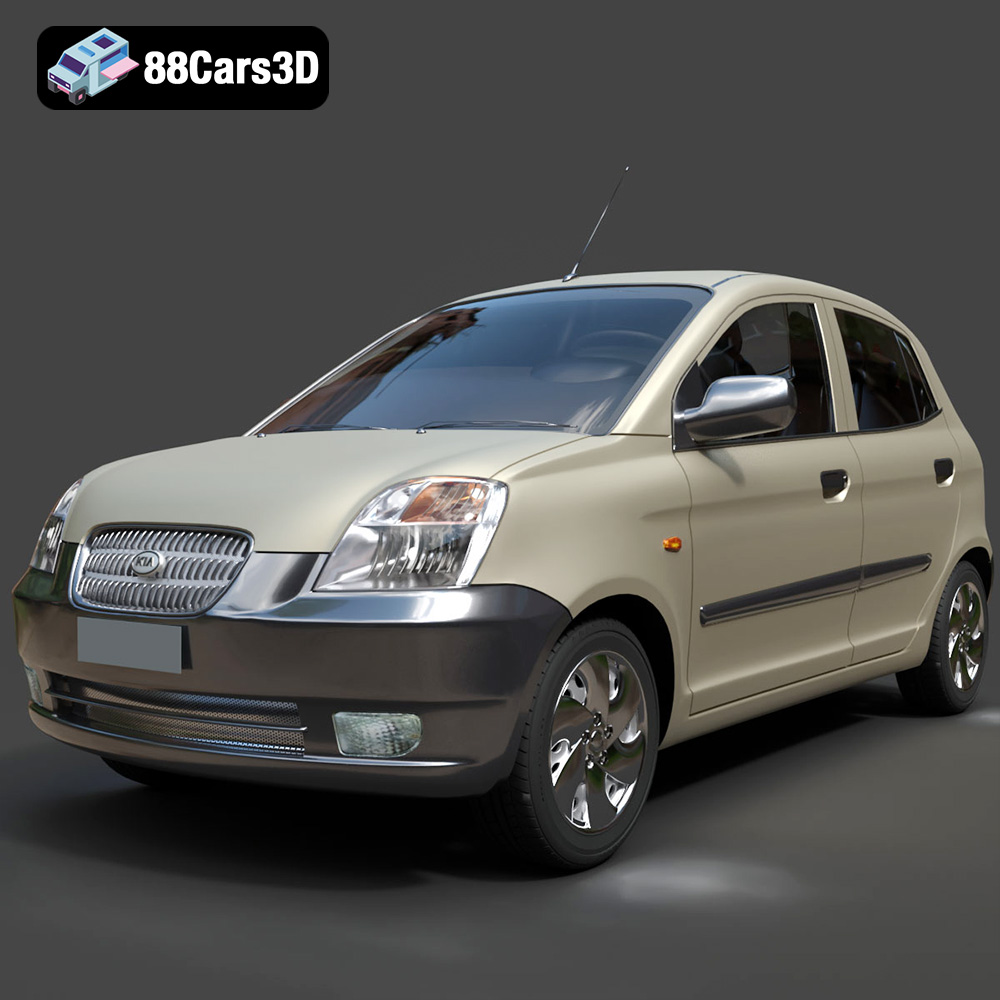
Texture: Yes
Material: Yes
Download the Kia Picanto 2024 3D Model featuring clean geometry, realistic detailing, and a fully modeled interior. Includes .blend, .fbx, .obj, .glb, .stl, .ply, .unreal, and .max formats for rendering, simulation, and game development.
Price: $15.99

