⚡ FLASH SALE: Get 60% OFF All Premium 3D & STL Models! ⚡

In the exhilarating world of mobile gaming, the demand for immersive and visually stunning experiences continues to accelerate. At the heart of many popular racing, simulation, and open-world titles lie intricately designed vehicles that capture the player’s imagination. However, the unique constraints of mobile hardware — limited processing power, memory, and battery life — present a formidable challenge for 3D artists. Crafting high-quality 3D car models that look fantastic while performing flawlessly on a wide array of devices is an art form in itself. This comprehensive guide will take you on a deep dive into the technical intricacies of creating optimized low-polygon car models specifically tailored for mobile games. We’ll explore everything from efficient modeling workflows and intelligent UV mapping to advanced PBR material creation and crucial game engine optimization techniques. Whether you’re a seasoned 3D artist or an aspiring game developer, prepare to unlock the secrets to delivering breathtaking automotive visuals without compromising on performance, ensuring your mobile game assets stand out in a crowded marketplace.
Creating compelling game assets for mobile platforms is a delicate balancing act. While modern smartphones boast impressive capabilities, they still operate within significant limitations compared to PCs or consoles. For automotive rendering in mobile games, this means a rigorous approach to optimization is paramount, starting with the very foundation of your models: their polygon count and topology.
The term “low-poly” is relative, but in the context of mobile gaming, it refers to a dramatically reduced polygon budget designed to minimize computational overhead. For hero vehicles (the player’s car or primary opponents), a typical target might range from 5,000 to 15,000 triangles. For background vehicles or less critical assets, this budget can drop even further, to 1,000 to 3,000 triangles, or even a few hundred. The goal is to maintain a recognizable silhouette and essential details without bogging down the GPU. Exceeding these budgets leads to increased draw calls, higher memory usage, and ultimately, a sluggish framerate, detracting significantly from the player experience. Understanding this hierarchy of detail and performance impact is the first step toward successful mobile game development.
Clean and efficient mesh topology is the cornerstone of any high-quality 3D model, but it’s critically important for mobile assets. When aiming for low-poly counts, every edge and face must serve a purpose. The primary focus shifts from capturing every subtle curve to prioritizing the overall silhouette and hard edges that define the car’s form. Intricate details like panel gaps, vents, or intricate grilles are no longer modeled directly with geometry. Instead, these are faked using advanced texturing techniques, primarily normal maps, which simulate surface detail through light interaction. This approach allows a model with thousands fewer polygons to appear just as detailed as its high-poly counterpart from a distance, or even up close when viewed strategically. The key is to avoid unnecessary edge loops, n-gons (faces with more than four vertices), and overlapping geometry, ensuring a clean, quad-based mesh that deforms predictably and renders efficiently.
The modeling phase is where the foundation for an optimized low-poly car model is laid. A disciplined approach, focusing on efficiency and purpose, will save countless hours in later stages. While high-polygon models often begin with subdivision surface modeling, low-poly mobile assets demand a more direct, often destructive, workflow to achieve the desired polygon budget.
Every successful 3D car model begins with meticulous planning. Collecting comprehensive reference images – blueprints, orthogonal views (front, back, side, top), and real-world photographs – is non-negotiable. In 3D software like Blender, 3ds Max, or Maya, these images are set up as image planes or background references in your orthographic viewports. This provides a precise guide for blocking out the primary shapes of the car. Begin by outlining the main body shell, fenders, roof, and hood using simple primitive shapes or by extruding edges along the blueprint lines. The initial blockout should be very low-poly, focusing solely on capturing the car’s overall proportions and distinct silhouette. Think of it as sculpting with very few strokes, hitting only the most critical points.
Once the basic form is established, the real challenge of polygon reduction begins. Instead of starting high and reducing, a “model-for-low-poly” approach is often more effective. This involves carefully adding geometry only where necessary to define crucial curves and hard edges. For example, a curved fender might only need 4-6 edge loops to suggest its shape, with the rest of the smoothness provided by normal maps. When working in Blender, the Decimate Modifier (specifically its Planar or Collapse modes) can be a useful tool for automating polygon reduction on certain parts, but manual retopology often yields the best results for intricate areas or to ensure optimal edge flow. Manual retopology involves tracing over a high-poly sculpt or reference mesh with new, clean, low-poly geometry. This granular control allows artists to precisely dictate where polygons are placed, ensuring that crucial visual information is retained with the fewest possible faces. The edge flow should follow the natural contours of the car, allowing for efficient UV mapping and proper deformation if the model needs to be rigged for suspension or damage systems.
With the low-poly mesh finalized, the task of adding surface fidelity falls largely to textures. This is where normal maps become indispensable. A normal map, often baked from a high-poly version of the car model, stores directional information about surface normals, allowing a low-poly mesh to simulate the appearance of intricate details like panel lines, bolts, subtle dents, or complex grilles. The process involves creating a high-resolution version of the car (or just the detailed areas), baking its surface normal information onto the low-poly mesh’s UV space, and then applying this map in the game engine. Beyond normal maps, decals are excellent for adding logos, warning labels, or racing stripes without adding any extra geometry. These are typically transparent textures layered over the main body, offering a flexible and performance-friendly way to introduce unique visual elements to your car models.
Effective UV mapping is just as critical as clean geometry for mobile game performance. A poorly laid out UV map can lead to wasted texture space, increased draw calls, and visual artifacts. For 3D car models, where surfaces are often curved and complex, strategic UV unwrapping is paramount.
One of the most powerful optimization techniques for mobile games is the use of texture atlases. Instead of having separate texture maps for the car body, wheels, interior, and windows, an atlas combines multiple textures into a single, larger image. This significantly reduces the number of draw calls the GPU needs to make, leading to substantial performance gains. When creating UV layouts for an atlas, the goal is to pack the UV islands as tightly as possible within the 0-1 UV space, maximizing texture resolution utilization while maintaining adequate padding between islands to prevent bleeding. Aim for a consistent texel density across all parts of the car to ensure that details appear uniform and avoid blurry or overly pixelated areas. Smart unwrapping, minimizing seams in visually prominent areas, and straightening UV islands wherever possible, will contribute to a clean and efficient atlas. For example, the car’s body panels can be unwrapped and flattened, then meticulously arranged alongside UVs for the tires, interior elements, and small details within a single 2048×2048 or 4096×4096 texture map, depending on the game’s fidelity target.
Hard surface models like cars require specific UV mapping considerations. Straightening UV islands, particularly for flat or cylindrical surfaces, is crucial. This ensures that painted lines, stripes, or text applied in texture painting software appear crisp and undistorted. Tools available in Blender’s UV editor, such as “Follow Active Quads” or “Straighten UVs” (add-ons might be needed for advanced straightening), can greatly assist in this process. Avoiding stretching and distortion is paramount; use a checkerboard pattern overlay during unwrapping to visually identify and correct areas where UVs are compressed or stretched. Finally, adequate padding between UV islands is essential. This buffer zone prevents color bleeding and artifacts when mipmaps are generated by the game engine. Mipmaps are lower-resolution versions of your texture that are used when an object is far from the camera. Without sufficient padding, distant objects can show incorrect colors along the edges of their UV islands. A padding of 4-8 pixels is a common recommendation, depending on the texture resolution.
While UDIMs (U-Dimension) are an excellent system for managing high-resolution textures across multiple UV tiles for film or high-end visualization, they are generally not suitable for mobile game development. UDIMs inherently increase the number of materials and texture samples required, which translates directly to more draw calls – precisely what we’re trying to minimize on mobile. For mobile game assets, the traditional 0-1 UV space with a single or very few texture atlases remains the gold standard for performance. When sourcing pre-made 3D car models from platforms like 88cars3d.com, it’s always wise to check their UV setup and texture strategies to ensure they align with mobile optimization principles. If a model comes with UDIMs, be prepared to re-unwrap and re-atlas it for optimal mobile performance.
Physically Based Rendering (PBR) has revolutionized the way 3D assets are shaded, creating incredibly realistic surfaces. Adapting PBR for mobile, however, requires careful consideration and optimization to achieve stunning visuals within performance budgets.
The core principle of PBR is to simulate how light interacts with real-world materials. On mobile, a simplified PBR workflow is often employed, typically favoring the Metallic-Roughness model due to its efficiency. This model primarily uses five texture channels:
While full PBR shaders can be complex, mobile-optimized versions are designed to minimize instruction count and texture fetches. Texture resolutions are also critical; 1024×1024 or 2048×2048 are common for main car body atlases, while smaller details like tire treads might use 512×512 or 256×256. For platforms like 88cars3d.com, many models are already designed with optimized PBR textures in mind, often providing lower-resolution alternatives for mobile deployment.
The process of creating these PBR texture maps typically involves baking. Software like Substance Painter, Marmoset Toolbag, or Blender can bake various maps from a high-poly sculpt onto your low-poly UVs. Essential maps to bake include:
Once baked, these maps are refined in painting software. For mobile, texture compression is vital. Game engines support various mobile-specific formats like ETC2 (Android) and ASTC (iOS/Android), which significantly reduce texture memory footprint without drastic visual degradation. Furthermore, consider using grayscale masks for color variations. Instead of creating entirely new Albedo maps for different car colors, you can use a single grayscale mask and apply a color overlay in the shader, further reducing texture memory and package size.
Both Unity and Unreal Engine provide mobile-optimized shaders. Unity’s Standard Lit (Mobile) shader or Unreal Engine’s various mobile shaders are specifically designed to balance visual quality with performance. These shaders simplify complex lighting calculations and texture sampling compared to their desktop counterparts. When creating custom shaders, the focus should always be on minimizing the number of mathematical operations and texture lookups. Each instruction in a shader contributes to its complexity and execution time on the GPU. Tools within the game engines, such as Unity’s Frame Debugger or Unreal’s Shader Complexity view, are invaluable for profiling and optimizing your material networks to ensure they meet strict mobile performance targets.
The journey of a 3D car model doesn’t end after modeling and texturing; integrating it into a game engine and ensuring optimal performance is a critical final step. This phase often involves technical considerations unique to mobile development.
Before exporting your model, ensure it’s clean and ready for the engine. This includes:
The most common file formats for game assets are FBX (FilmBox) and GLB (Binary GLTF). FBX is a robust format that supports meshes, materials, animations, and rigs, making it a versatile choice. GLB, based on the glTF specification, is increasingly popular due to its efficiency, smaller file sizes, and suitability for web-based 3D and AR/VR applications, as it bundles model and textures into a single file.
Level of Detail (LOD) is a crucial optimization technique for mobile games. It involves creating multiple versions of your 3D car models, each with a progressively lower polygon count and simpler textures. The game engine then automatically switches between these LODs based on the camera’s distance from the object.
While some engines offer automated LOD generation, manual creation or significant manual tweaking often yields superior results, especially for hero assets. Properly setting up culling distances for each LOD ensures smooth transitions and maximizes performance without noticeable visual popping.
Minimizing draw calls is paramount for mobile performance. A draw call is an instruction from the CPU to the GPU to draw a batch of triangles. Fewer draw calls mean less CPU overhead.
By strategically combining meshes, atlasing textures, and leveraging engine-level batching, you can significantly optimize your scene’s performance.
When developing for AR/VR on mobile, the performance demands become even stricter. Not only do you need to maintain a high framerate (often 60 FPS or 90 FPS per eye to prevent motion sickness), but you’re also rendering the scene twice (once for each eye). This effectively halves your available rendering budget. For AR/VR 3D car models, this means:
The immersive nature of AR/VR demands absolute fluidity, making optimization an even higher priority than in traditional mobile games.
Achieving truly exceptional mobile game performance with realistic 3D car models often requires going beyond standard optimization techniques. Advanced strategies and continuous refinement are key to pushing visual boundaries without sacrificing framerate.
Wheels are often a hidden performance bottleneck. They are usually separate meshes, require their own animations (rotation), and often feature complex tire treads and rims. To optimize:
Smart management of these common “problem areas” can yield significant performance improvements.
Realistic lighting and reflections are crucial for believable automotive rendering. On mobile, full real-time global illumination and ray-traced reflections are typically out of reach. Instead, hybrid approaches are used:
The judicious use of baked lighting, light probes, and reflection probes creates a compelling visual experience without crippling mobile performance.
Optimization is not a one-time task; it’s an ongoing process. Regular profiling of your game on target mobile devices is essential. Both Unity (with its Profiler window) and Unreal Engine (with Unreal Insights or the mobile profiler) offer powerful tools to identify performance bottlenecks.
By continually profiling, identifying the weakest links, and iteratively optimizing your assets and scene setup, you can fine-tune your mobile game to achieve smooth framerates and a consistent, high-quality experience across a broad range of devices. This iterative approach is a hallmark of professional game development and ensures your game assets are truly optimized.
The journey of creating optimized 3D car models for mobile games is a testament to the blend of artistic vision and technical prowess required in modern game development. We’ve navigated the critical aspects from establishing efficient low-poly geometry and mastering UV mapping for texture atlases, to implementing performance-friendly PBR materials and leveraging powerful engine optimization techniques like LODs and draw call reduction. The core message remains consistent: every decision, from the first polygon to the final shader instruction, must consider the limitations and capabilities of mobile hardware.
While the challenges are significant, the rewards are equally great – delivering an engaging, visually rich experience that runs smoothly on players’ devices. By embracing strategic polygon reduction, meticulous UV unwrapping, clever texture management, and rigorous in-engine profiling, you can transform complex automotive designs into lean, high-performing game assets. Continue to experiment, learn from profiling results, and never stop refining your workflow. For artists and developers seeking high-quality, pre-optimized assets to kickstart their projects, platforms like 88cars3d.com offer a vast array of professionally crafted 3D car models designed with various applications in mind, including mobile games. Dive in, push the boundaries of what’s possible on mobile, and watch your automotive creations come to life at blistering framerates!
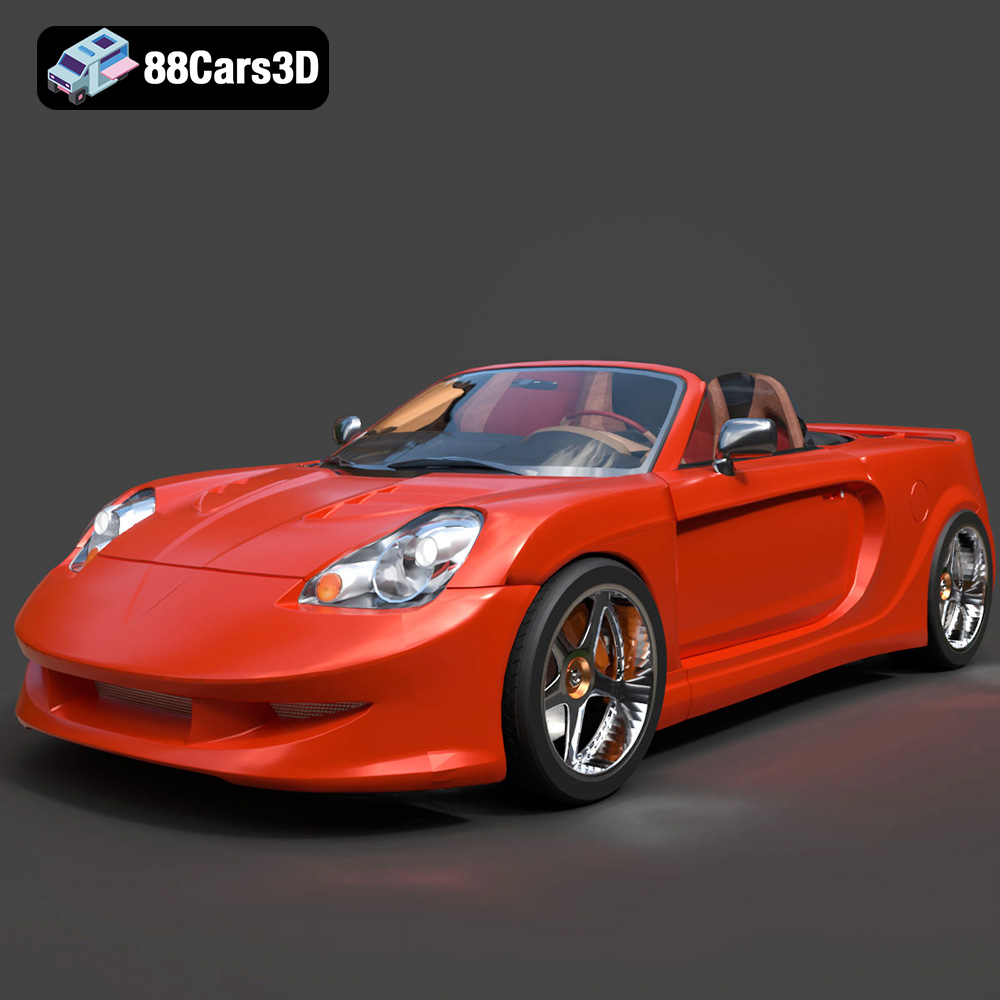
Texture: Yes
Material: Yes
Download the Toyota MRS-007 3D Model featuring clean geometry, realistic detailing, and a fully modeled interior. Includes .blend, .fbx, .obj, .glb, .stl, .ply, .unreal, and .max formats for rendering, simulation, and game development.
Price: $10

Texture: Yes
Material: Yes
Download the Porsche 911 Turbo S 2024 3D Model featuring clean geometry, realistic detailing, and a fully modeled interior. Includes .blend, .fbx, .obj, .glb, .stl, .ply, .unreal, and .max formats for rendering, simulation, and game development.
Price: $20

Texture: Yes
Material: Yes
Download the Pontiac Solstice 2009 3D Model featuring clean geometry, realistic detailing, and a fully modeled interior. Includes .blend, .fbx, .obj, .glb, .stl, .ply, .unreal, and .max formats for rendering, simulation, and game development.
Price: $10

Texture: Yes
Material: Yes
Download the Mini Cooper Countryman 2025 3D Model featuring clean geometry, realistic detailing, and a fully modeled interior. Includes .blend, .fbx, .obj, .glb, .stl, .ply, .unreal, and .max formats for rendering, simulation, and game development.
Price: $29.9
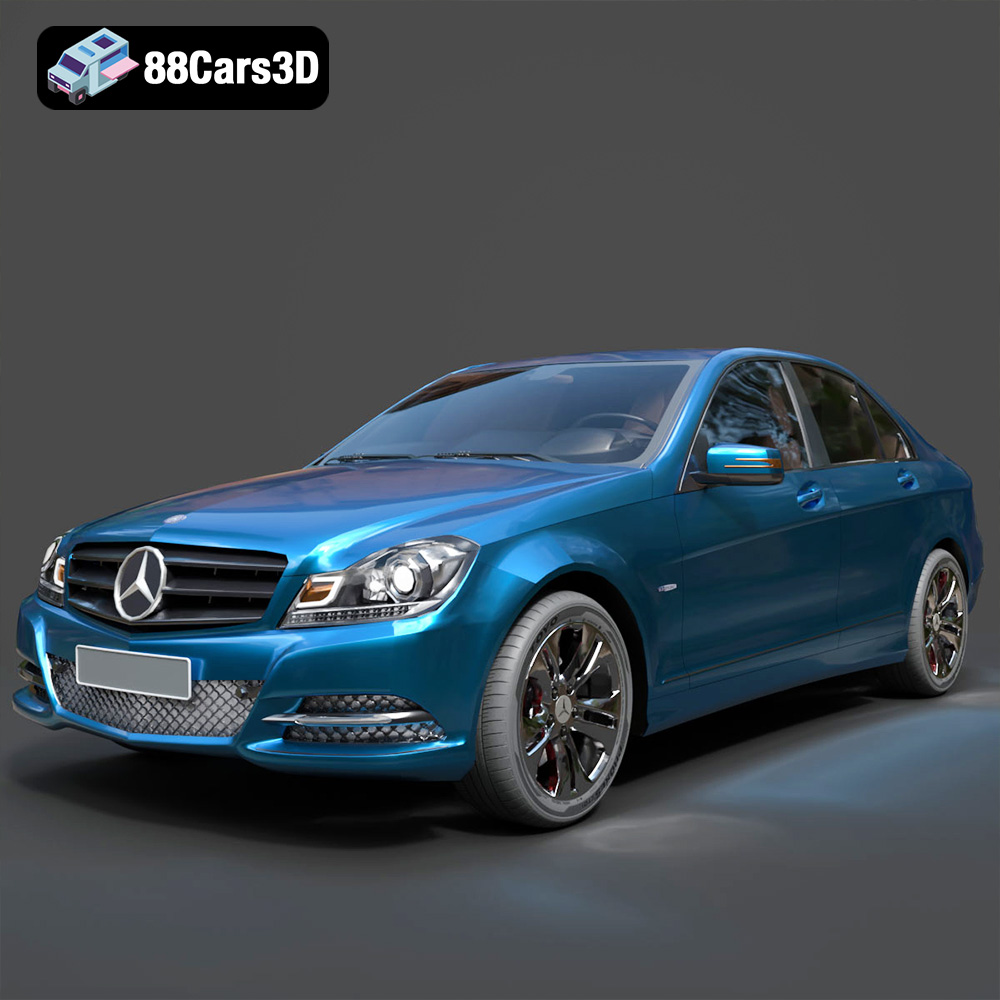
Texture: Yes
Material: Yes
Download the Mercedes C Classe 2012 3D Model featuring clean geometry, realistic detailing, and a fully modeled interior. Includes .blend, .fbx, .obj, .glb, .stl, .ply, .unreal, and .max formats for rendering, simulation, and game development.
Price: $19.9
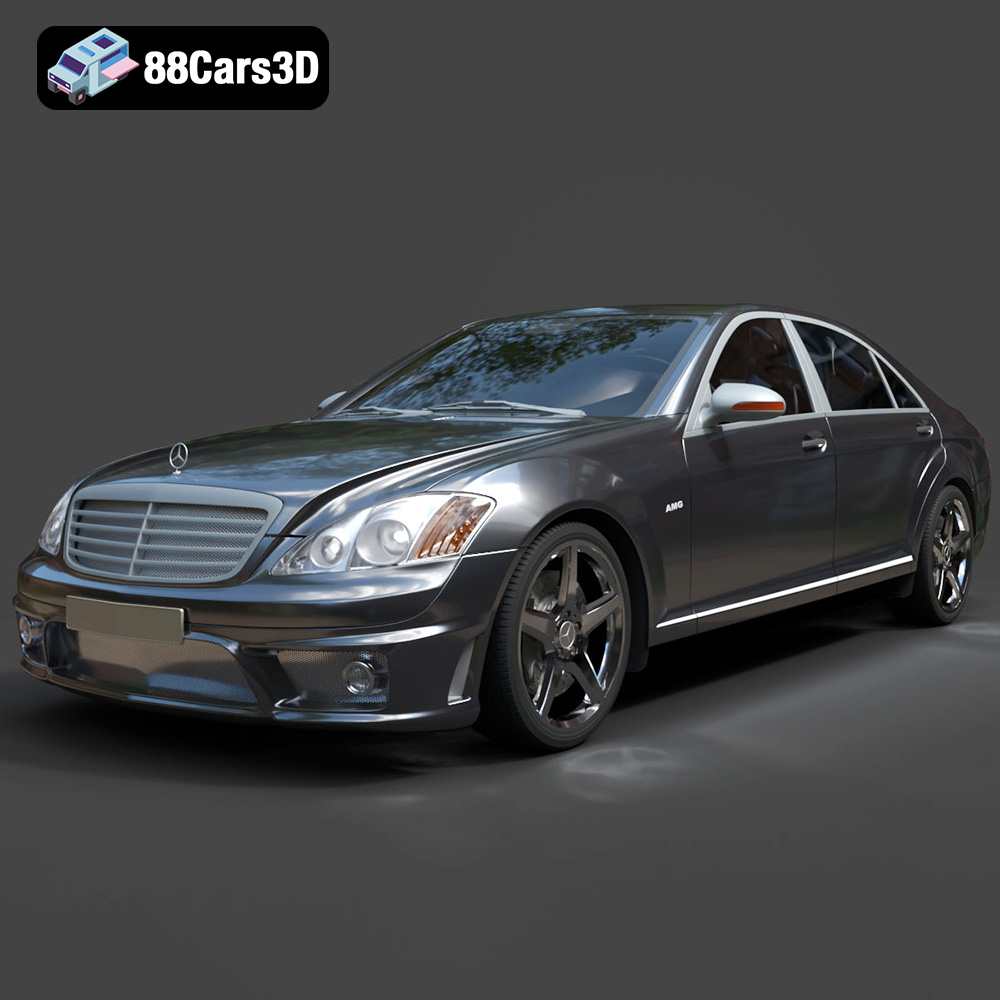
Texture: Yes
Material: Yes
Download the Mercedes-Benz S65 AMG 2018 3D Model featuring clean geometry, realistic detailing, and a fully modeled interior. Includes .blend, .fbx, .obj, .glb, .stl, .ply, .unreal, and .max formats for rendering, simulation, and game development.
Price: $19.9
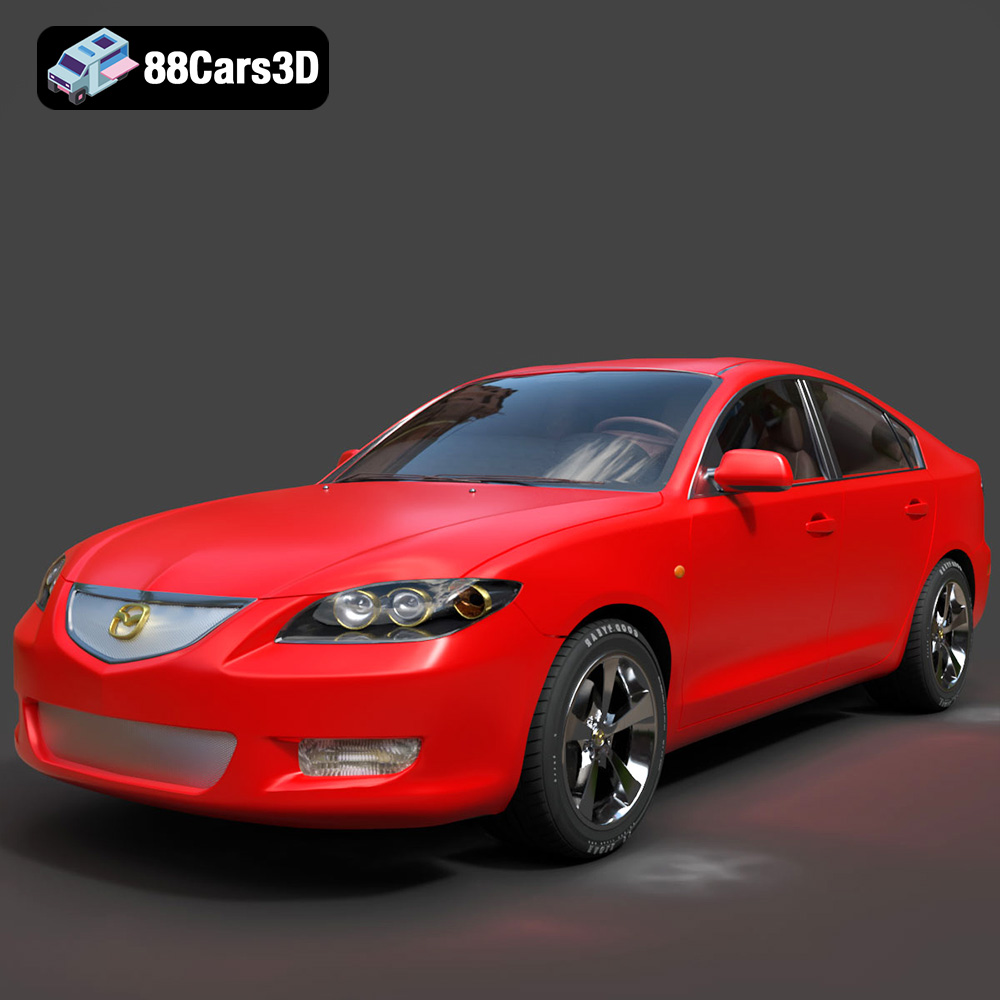
Texture: Yes
Material: Yes
Download the Mazda 3 Sedan 2004 3D Model featuring clean geometry, realistic detailing, and a fully modeled interior. Includes .blend, .fbx, .obj, .glb, .stl, .ply, .unreal, and .max formats for rendering, simulation, and game development.
Price: $10

Texture: Yes
Material: Yes
Download the Martin Rapide 2011 3D Model featuring clean geometry, realistic detailing, and a fully modeled interior. Includes .blend, .fbx, .obj, .glb, .stl, .ply, .unreal, and .max formats for rendering, simulation, and game development.
Price: $20.9
Texture: Yes
Material: Yes
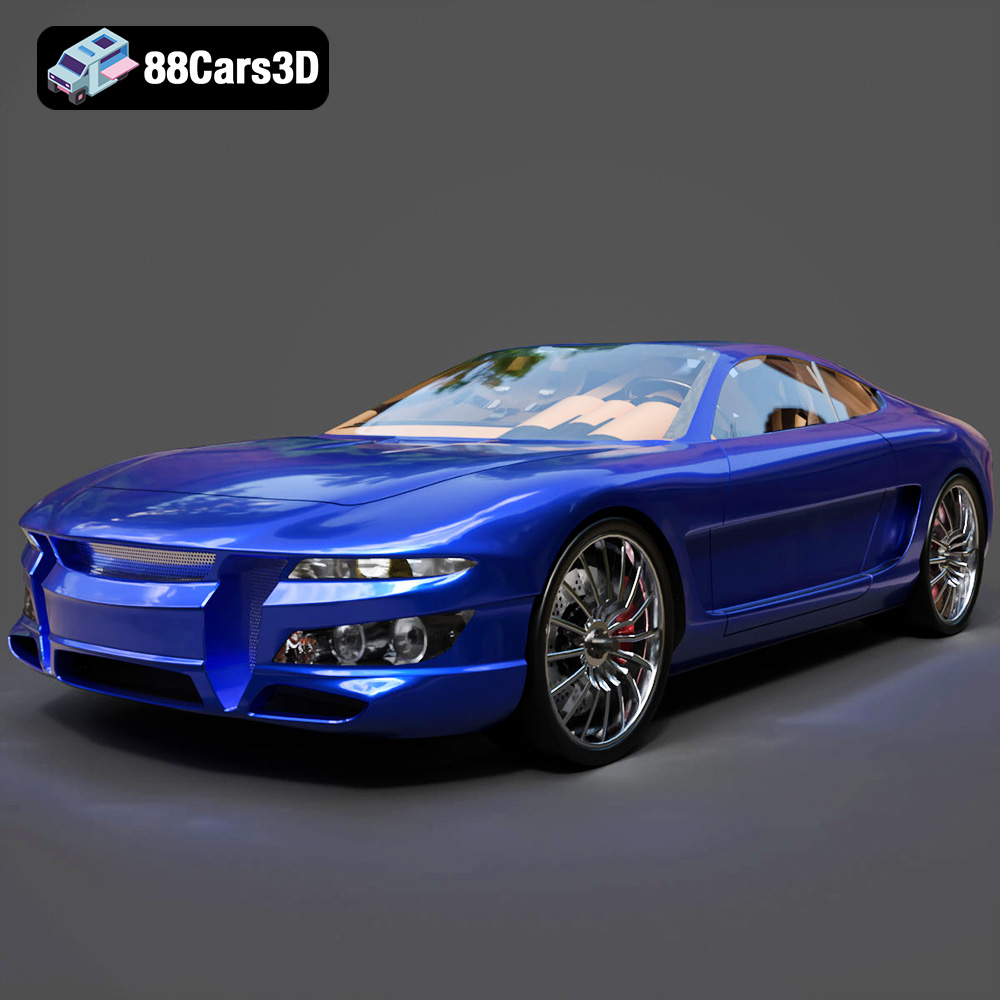
Download the Car Tasergal 005 3D Model featuring clean geometry, realistic detailing, and a fully modeled interior. Includes .blend, .fbx, .obj, .glb, .stl, .ply, .unreal, and .max formats for rendering, simulation, and game development.
Price: $10
Texture: Yes
Material: Yes
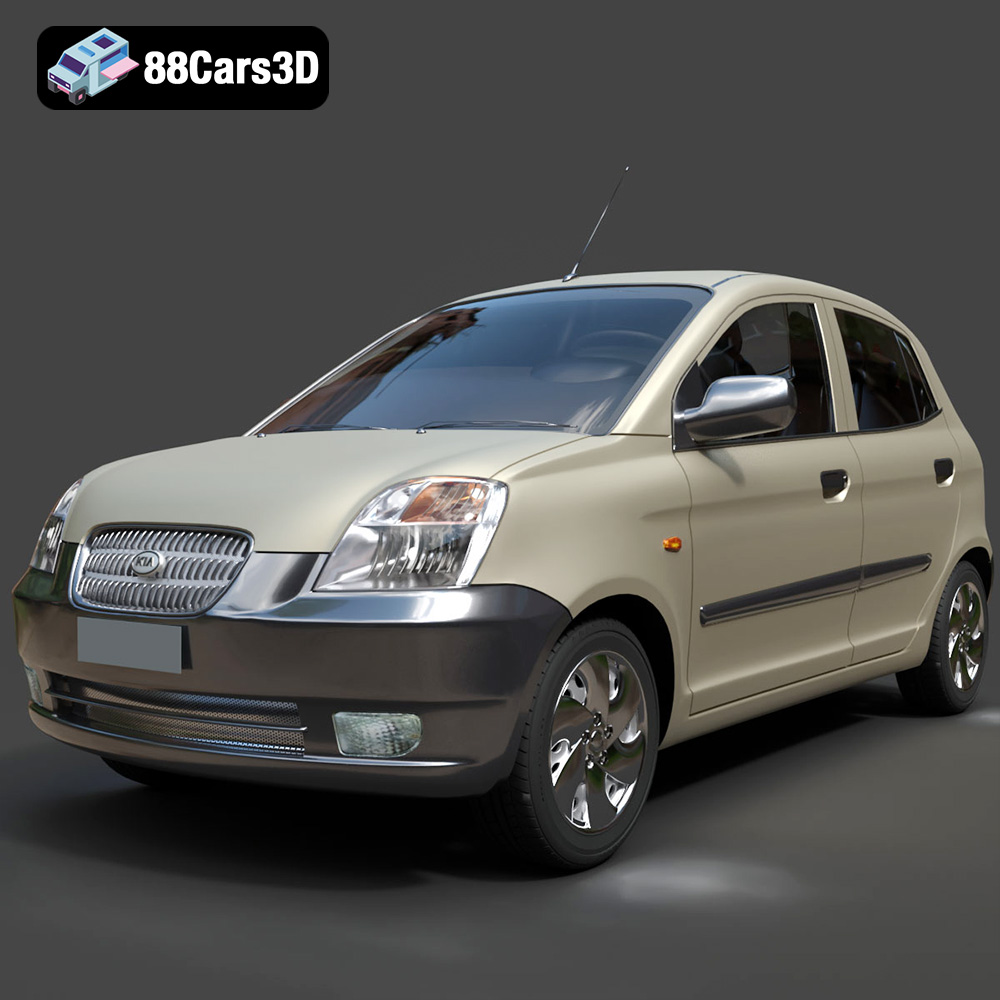
Download the Kia Picanto 2024 3D Model featuring clean geometry, realistic detailing, and a fully modeled interior. Includes .blend, .fbx, .obj, .glb, .stl, .ply, .unreal, and .max formats for rendering, simulation, and game development.
Price: $15.99

