In the dynamic world of 3D visualization, the quest for realism is ceaseless. Nowhere is this more apparent than in automotive rendering, where the subtle nuances of light interaction with sophisticated surfaces define whether a model appears believable or artificial. At the heart of achieving this unparalleled realism lies Physically Based Rendering (PBR) and its meticulously crafted materials. For anyone involved in creating stunning 3D car models for anything from high-fidelity marketing renders to optimized game assets, mastering PBR is not just an advantage—it’s a necessity.
This comprehensive guide delves deep into the best practices for implementing PBR materials specifically for automotive 3D models. We’ll explore everything from foundational topology and UV mapping techniques to advanced shader networks in leading software like 3ds Max, Blender, and Maya, and their application in renderers like Corona, V-Ray, Cycles, and Arnold. Furthermore, we’ll tackle critical aspects of game engine optimization for platforms like Unity and Unreal Engine, AR/VR integration, and even considerations for 3D printing. By the end of this article, you will have a robust understanding of how to craft breathtakingly realistic 3D car models that stand out in any professional context, ensuring your automotive designs possess the visual fidelity demanded by today’s discerning audiences.
Understanding PBR Fundamentals for Automotive Realism
Physically Based Rendering (PBR) represents a paradigm shift in how we approach material creation in 3D graphics. Unlike older, empirically driven shading models, PBR simulates how light interacts with surfaces in the real world, adhering to fundamental physics principles. This approach ensures that materials look consistent and correct under any lighting conditions, drastically improving realism and reducing guesswork for 3D artists. For automotive models, where surfaces are often highly reflective, intricate, and layered, PBR is indispensable.
The core of PBR revolves around a few key texture maps, each dictating a specific physical property of the surface:
- Albedo (or Base Color): This map defines the diffuse color of the surface, essentially what color it is when viewed under white light, without any reflections or shadows. For car paint, this would be the primary color of the paint. It’s crucial that this map contains no lighting or shadowing information, as PBR shaders handle that dynamically.
- Roughness: This grayscale map dictates how rough or smooth a surface is, directly influencing the crispness and intensity of reflections. A low roughness value (darker) indicates a very smooth, reflective surface (like polished chrome or clear coat), while a high roughness value (lighter) suggests a diffuse, matte surface (like a tire).
- Metalness: A binary (black or white, or grayscale for blends) map that separates materials into conductors (metals) and dielectrics (non-metals). White indicates a metallic surface, allowing it to have colored reflections (determined by the albedo), while black signifies a non-metallic surface with achromatic reflections. This distinction is critical for car models, which feature both metallic components (rims, trim) and dielectric ones (paint, glass, plastic).
- Normal Map: This map provides per-pixel surface normal information, allowing the shader to simulate fine surface details and bumps without adding actual geometry. For automotive models, normal maps are vital for subtle panel gaps, intricate textures on interior dashboards, or tire tread patterns, significantly enhancing detail without increasing polygon count.
- Ambient Occlusion (AO): While not strictly a PBR property, an AO map enhances realism by simulating soft shadows in crevices and corners where ambient light struggles to reach. It’s typically multiplied over the diffuse color or used to modulate reflections, adding depth and definition to complex geometries.
The beauty of PBR lies in its adherence to energy conservation, meaning that light reflected from a surface cannot be brighter than the light hitting it. This principle, combined with physically accurate light interaction, allows artists to create materials like car paint, chrome, glass, and rubber with unprecedented realism and consistency across different rendering environments. When sourcing high-quality 3D car models, platforms like 88cars3d.com often specify PBR material compatibility, ensuring artists get assets that are ready for modern rendering pipelines.
Topology and UV Mapping – The Foundation of Flawless PBR
Before diving into the intricacies of PBR textures, it’s crucial to establish a solid foundation with impeccable 3D model topology and efficient UV mapping. These two elements directly impact how well your PBR materials will look and perform, especially on the complex, highly reflective surfaces typical of automotive designs.
Optimal Topology for Automotive Models
Clean topology is paramount for realistic automotive models. It ensures smooth reflections, proper deformation during animation (if applicable), and facilitates clean UV mapping. For car bodies and other large, curved surfaces, the goal is primarily quad-based topology with consistent edge flow. Quads (four-sided polygons) are predictable, subdivide smoothly, and prevent pinching or undesirable artifacts when applying subdivision surfaces (like OpenSubdiv or Blender’s Subdivision Surface modifier).
- Consistent Edge Flow: Edges should follow the natural contours and design lines of the car. This is vital for capturing the intricate reflections on car paint. For instance, the edges around wheel wells, door seams, and body creases should perfectly align with these features. Bad edge flow can lead to “lumpy” reflections and an overall unpolished look.
- Avoiding N-gons and Triangles on Deformable or Reflective Surfaces: While triangles can be acceptable in flat, non-deforming, or hidden areas, they should be minimized or entirely avoided on large, smooth surfaces of the car body. N-gons (polygons with more than four sides) are almost always problematic, causing unpredictable shading and subdivision issues.
- Managing Polygon Count: Balancing detail and performance is a constant challenge. For high-end cinematic renders, polygon counts can be very high, utilizing subdivision surfaces to achieve extreme smoothness. For game assets or real-time AR/VR, lower poly counts are necessary, achieved through careful modeling, strategic use of normal maps, and Level of Detail (LOD) systems. A high-quality vehicle model might range from 50,000 polygons for a game-ready asset (LOD0) to several million for a highly detailed render mesh.
- Supporting Edges: To maintain sharp edges where needed (e.g., around window frames, panel gaps), employ “supporting edges” or “holding loops.” These are extra edge loops placed close to a hard edge to control the sharpness of subdivision surfaces.
UV Mapping Strategies for Complex Car Surfaces
UV mapping is the process of flattening the 3D surface of your model into a 2D space, allowing you to apply 2D textures. For automotive models, effective UV mapping is critical for preventing texture stretching, ensuring consistent texel density, and facilitating efficient texture creation. When acquiring assets from marketplaces like 88cars3d.com, artists expect well-organized and clean UV layouts.
- Seamless UVs: The primary goal is to minimize visible seams and prevent texture stretching. This requires careful unwrapping and strategic placement of seams. For car bodies, projecting from multiple angles (e.g., planar projections for sides, top, front, and back) and then stitching them together in a 2D UV editor is a common approach.
- Breaking Down the Model: Instead of trying to unwrap the entire car as one piece, segment it logically. The car body, interior, wheels, glass, headlights, and badges should each have their own UV islands or even separate material IDs and texture sets. This makes texturing more manageable and allows for different texel densities where needed.
- Texel Density Consistency: Texel density refers to the number of texture pixels per unit of 3D space. Maintaining a consistent texel density across crucial parts of the model (e.g., the visible exterior body panels) is vital for uniform texture resolution and visual quality. Use UV checker patterns to visualize and adjust texel density. Areas that will be viewed closely, like the interior dashboard, might require higher texel density than hidden undercarriage components.
- Multiple UV Sets: Advanced workflows might utilize multiple UV sets. For instance, one UV set for the base PBR textures (albedo, roughness, metalness, normal), and another overlapping UV set for decals, wear-and-tear masks, or specific grunge layers that can be tiled independently. This adds flexibility and efficiency to the texturing process.
Crafting Realistic PBR Materials for Automotive Components
With a solid foundation of clean topology and efficient UVs, the next step is to imbue your automotive models with lifelike PBR materials. Each component of a car – from the gleaming paint to the textured tires – requires a unique approach to PBR material creation to achieve photorealism.
Car Paint – Layers of Complexity
Car paint is arguably one of the most challenging materials to reproduce accurately due to its multi-layered nature. A typical automotive finish consists of a base coat (color), a metallic or pearlescent flake layer, and a clear coat (glossy protective layer).
- Base Color (Albedo): This defines the primary hue of the paint. It should be a flat, desaturated color, as the reflections will provide the vibrancy.
- Clear Coat: The clear coat is a highly reflective, often very smooth (low roughness) dielectric layer that sits on top of the base coat. Modern PBR shaders often include a dedicated clear coat input, allowing for a separate roughness and normal map for this layer. This is crucial for realistic reflections and specular highlights. The clear coat also exhibits Fresnel reflections, meaning reflections become stronger at grazing angles.
- Metallic Flakes / Anisotropy: Many car paints contain tiny metallic flakes that catch the light, creating a sparkling effect. This can be simulated using a subtle normal map for the flakes or, in advanced shaders, by introducing an anisotropic component to the clear coat or base layer. Anisotropy simulates surfaces where reflections stretch along a particular direction, like brushed metal or metallic flakes aligned in a specific way. The direction map for anisotropy can be complex to generate but adds immense realism.
- Roughness Variations and Imperfections: Even the most pristine car paint has subtle imperfections. Incorporate a subtle roughness map to simulate micro-scratches, dust, or fingerprints. These imperfections break up perfectly smooth reflections, adding to the realism.
Metals, Glass, and Rubber
Beyond the paint, countless other materials contribute to an automotive model’s realism.
- Metals (Chrome, Alloys, Trim): These are typically set with a high metalness value (close to 1.0) and a base color that reflects their hue (e.g., desaturated gray for chrome, specific color for painted alloys). Roughness maps are key here to differentiate between polished, brushed, or tarnished metals. Anisotropy is often vital for brushed metals like certain trim pieces.
- Glass: Car glass is a dielectric material. Its PBR setup involves a low roughness value, high transparency (or transmission), and accurate Index of Refraction (IOR) – typically around 1.5-1.6 for standard glass. Tinting is applied via the transmission color. Normal maps can be used for subtle surface imperfections or frost. Ensure the glass material has proper thickness for realistic refraction.
- Tire Rubber: Rubber is a dielectric with a relatively high roughness. Its base color is a dark gray/black. Normal maps are essential for defining the tire tread patterns and sidewall text. A subtle roughness map can introduce variations for worn areas or dirt accumulation.
Interior Materials and Details
The interior of a car requires as much attention to PBR as the exterior to create a cohesive, realistic model.
- Leather, Fabric, Plastics: Each of these is a dielectric material with unique roughness and normal map requirements. Leather needs a subtle normal map for its grain and variations in roughness to show wear. Fabrics require detailed normal and often displacement maps for their weave, along with a slightly higher roughness. Plastics vary widely; glossy plastics will have low roughness, while matte plastics will have higher values.
- Displacement/Normal Maps for Fine Details: For intricate details like stitching on seats, carbon fiber weaves, or texture on dashboard components, displacement maps (if polygon budget allows) or high-resolution normal maps are critical. These add depth and tactile quality without overloading the mesh with geometry.
PBR Workflows in Leading 3D Software and Renderers
The implementation of PBR materials varies slightly across different 3D software and renderers, but the underlying principles remain consistent. Understanding these workflows is essential for creating high-quality automotive models and ensures compatibility when utilizing assets from platforms like 88cars3d.com.
3ds Max, Corona, and V-Ray
3ds Max, a long-standing industry standard, integrates seamlessly with powerful third-party renderers like Corona Renderer and V-Ray, both of which offer robust PBR material systems.
- Corona Physical Mtl: In Corona, the ‘Corona Physical Mtl’ is your go-to PBR shader. It offers a comprehensive set of inputs for Base Color, Metalness, Roughness, IOR, and dedicated clear coat parameters. For car paint, you’d typically use a base color map, a roughness map for the base layer, a metalness map (0 for dielectric car paint), and then leverage the clear coat options for its specific roughness and IOR. HDRI (High Dynamic Range Image) lighting is paramount in Corona for realistic reflections and environment lighting, bringing your PBR materials to life.
- V-Ray PBR Material: V-Ray provides the ‘VRayMtl’ which, in its modern iterations, fully supports PBR workflows. You’ll primarily use the ‘Diffuse’ (Albedo), ‘Reflection Glossiness’ (Roughness), and ‘Metalness’ parameters. V-Ray also offers a ‘Coat’ layer that is perfect for automotive clear coats, allowing you to define its own color, roughness, and IOR. Node-based workflows within 3ds Max’s Material Editor allow for intricate blending of layers (e.g., base paint with a dust overlay) and advanced shader network creation.
Blender, Cycles, and Eevee
Blender has become an incredibly powerful tool for 3D artists, offering a native PBR workflow through its Principled BSDF shader. This shader is designed to be a “universal” PBR shader, compatible with both Cycles (path tracing) and Eevee (real-time).
The Principled BSDF shader in Blender’s node editor simplifies PBR material creation by consolidating numerous parameters into a single, intuitive node. Key inputs include Base Color (Albedo), Metallic, Specular, Roughness, Sheen, Clearcoat (perfect for car paint), and Transmission (for glass). For detailed instructions on utilizing this shader and other material properties, refer to the official Blender documentation on Blender’s Principled BSDF. The documentation provides in-depth explanations of each parameter and how it influences the final material. Artists can leverage Blender’s powerful node editor to create highly complex and realistic automotive materials by blending various textures, procedural maps, and utility nodes. For instance, creating a multi-layered car paint shader can involve mixing different Principled BSDF nodes for the base coat and clear coat, or using masks to blend wear and tear effects.
- Cycles: Blender’s physically accurate path tracer, Cycles, excels at rendering realistic PBR materials, handling complex light interactions like global illumination, reflections, and refractions with precision. It’s ideal for high-quality static renders and animations.
- Eevee: Blender’s real-time renderer, Eevee, also utilizes the Principled BSDF, providing a near-instantaneous preview of PBR materials, making it excellent for quick iterations, animation previews, and game asset development. While not as physically accurate as Cycles, Eevee delivers impressive results in real-time.
Maya, Arnold, and Substance Painter Integration
Maya, another industry powerhouse, paired with the Arnold renderer, offers a robust PBR pipeline. Substance Painter is a go-to for texture creation, seamlessly integrating with various DCCs.
- Arnold Standard Surface Shader: In Maya, the Arnold Standard Surface shader is the primary PBR material. It’s incredibly versatile, offering inputs for Base Color, Metalness, Roughness, Specular, Transmission, and a dedicated ‘Coat’ layer with its own roughness and normal map inputs—perfect for recreating automotive finishes. Its physically accurate light transport ensures realistic results.
- Substance Painter: This industry-standard texturing software is a PBR powerhouse. Artists paint directly on 3D models, generating all necessary PBR texture maps (Albedo, Roughness, Metalness, Normal, AO, etc.) in real-time. Substance Painter excels at creating intricate details, wear, and procedural textures. It features built-in exporters for various DCCs and game engines, ensuring that your PBR textures are correctly configured for your target software, simplifying the transfer of complex automotive materials.
PBR for Game Engines, AR/VR, and Optimization Strategies
While PBR brings unparalleled realism to offline renders, adapting these sophisticated materials for real-time environments like game engines and AR/VR platforms requires careful optimization. The goal is to retain visual fidelity while adhering to strict performance budgets.
Game Engine Integration (Unity, Unreal Engine)
Unity and Unreal Engine are the leading platforms for interactive 3D experiences, both fully supporting PBR workflows. When acquiring game-ready 3D car models, ensuring they are optimized for these engines is crucial.
- Importing PBR Textures and Setting Up Materials: Both engines use a Metallic/Roughness workflow. After importing your mesh (typically FBX) and PBR texture maps (Albedo, Metalness, Roughness, Normal, AO), you’ll create a new material and assign these maps to the corresponding slots. Ensure texture settings are correct (e.g., sRGB for Albedo, Linear for all other maps) to prevent incorrect lighting.
- LODs (Level of Detail): For complex automotive models, LODs are indispensable. These are progressively simpler versions of the mesh that are swapped in as the camera moves further away. This drastically reduces polygon count and draw calls for objects that are far from the viewer, maintaining performance without a noticeable drop in quality. A typical car model might have 3-5 LODs, ranging from high-poly (LOD0) to very low-poly (LOD3-4).
- Draw Call Reduction: Each material and texture applied to a mesh results in a “draw call,” which can be computationally expensive. Consolidating materials where possible (e.g., using a single material for the entire car body, rather than separate materials for each panel) and employing texture atlasing (combining multiple textures into one large texture sheet) can significantly reduce draw calls and improve performance.
- Specific Material Setups for Real-time Lighting: Game engines use real-time global illumination, reflection probes, and static lighting systems (lightmaps) to simulate complex lighting. Properly baking lightmaps for static elements and setting up reflection probes for dynamic objects (like a car) ensures that PBR materials react realistically to the environment. Parallax Occlusion Mapping (POM) can also be used for detailed surfaces like tire treads without adding more geometry.
AR/VR Optimization and File Formats (GLB, USDZ)
AR/VR experiences demand even tighter optimization due to the need for high frame rates (typically 90fps or higher) to prevent motion sickness. PBR materials need to be adapted for these highly constrained environments.
- Balancing Visual Fidelity with Performance: This is a critical balancing act. Often, texture resolutions may need to be lower (e.g., 2K or 1K for an entire car) compared to offline renders. Aggressive LODs and simplified PBR materials (e.g., fewer texture layers, procedural materials converted to baked textures) are common strategies.
- Baked Lighting and Reflection Probes: In many AR/VR applications, dynamic lighting is too expensive. Baking lighting information directly into textures (lightmaps) or vertex colors can simulate complex lighting environments. Reflection probes are essential for faking accurate reflections on metallic and glossy PBR surfaces in real-time.
- Understanding PBR Requirements for GLB and USDZ:
- GLB (glTF Binary): This is the de-facto standard for web-based 3D, AR, and VR. GLB explicitly supports PBR using the Metallic-Roughness workflow. It efficiently embeds models, textures, and animations into a single file, making it ideal for streamlined delivery. Ensure your textures are correctly packed (e.g., Metalness, Roughness, AO often packed into a single RGB texture for efficiency).
- USDZ: Apple’s format for AR applications. USDZ also leverages PBR principles, often aligning with the Metallic-Roughness workflow. It’s optimized for iOS devices and ARKit, focusing on efficient scene description and rendering. When exporting to USDZ, ensure your PBR textures and material settings translate accurately.
3D Printing Preparation and Mesh Repair
While 3D printing does not directly use PBR materials in the same way rendering does, the foundation of a good 3D model with clean topology is still paramount. Often, a highly detailed PBR model can be adapted for 3D printing, but it requires specific preparation.
- Simplifying PBR to Diffuse for Guides: For multi-color 3D printing, PBR textures (especially Albedo) can serve as a guide for painting or material assignment, but the PBR properties themselves are not directly translated into the print.
- Mesh Integrity: Crucially, 3D printing requires watertight meshes—no holes, inverted normals, or self-intersecting geometry. Tools for mesh repair (e.g., Blender’s 3D Print Toolbox addon, MeshMixer, Netfabb) are essential for preparing models.
- Wall Thickness: Ensure all parts of the model have sufficient wall thickness for printing. Thin surfaces that look fine in a render might break or be unprintable in the physical world.
- Decimating and Optimizing: High-poly models from rendering often need significant polygon reduction (decimation) for 3D printing, especially for smaller prints where fine geometric detail won’t be visible.
Advanced PBR Techniques and Common Challenges
Achieving true photorealism with PBR materials for automotive models often involves pushing beyond basic map assignments, delving into advanced techniques, and knowing how to troubleshoot common issues. This level of detail sets professional work apart, whether you’re creating assets for personal projects or for platforms like 88cars3d.com.
Anisotropy and Clear Coat Layers
These two properties are particularly critical for automotive surfaces due to the unique way light interacts with car paint and polished metals.
- Anisotropy: As discussed earlier, anisotropy describes reflections that stretch or deform along a specific direction, rather than appearing as perfect circles. This is evident in brushed metals (like certain aluminum trims or exhaust pipes) and metallic car paints where flakes are aligned. Most advanced PBR shaders (e.g., Arnold Standard Surface, Blender Principled BSDF, Corona Physical Mtl) offer an anisotropy input. You’ll often need an additional texture map (anisotropic direction map) or procedural method to define the direction of this stretching, typically derived from the UV layout or an underlying flow map. Correctly implemented, anisotropy adds a huge level of micro-detail and realism to metallic components.
- Multi-layered Clear Coat Shaders: Modern automotive paint often consists of multiple clear coat layers, sometimes with slightly different roughness values. While many PBR shaders offer a single clear coat input, for ultimate realism, you might need to construct a custom multi-layered shader using blend materials. This involves layering multiple PBR shaders: a base metalness/roughness layer for the actual paint, followed by one or more clear coat layers on top, each with its own reflection properties. This approach can simulate deep, lustrous car paint with remarkable accuracy, accounting for minute scratches on the top coat versus deeper layers.
Troubleshooting PBR Issues
Even with best practices, PBR materials can sometimes look “off.” Knowing how to diagnose and fix these issues is a hallmark of an expert artist.
- Incorrect Texture Maps: The most common issue. Ensure each map is plugged into the correct slot (e.g., roughness into roughness, not specularity). Check that maps are in the correct color space: Albedo/Base Color should generally be sRGB, while Roughness, Metalness, Normal, and AO maps should be Linear (or ‘Non-Color Data’ in Blender). Incorrect color space can lead to overly bright or dark maps, resulting in unrealistic reflections or flat appearance.
- Lighting Artifacts and Unrealistic Reflections:
- Low-resolution HDRI: If your environment map (HDRI) is too low-resolution, reflections will appear pixelated or blurry, especially on glossy surfaces like car paint. Use high-resolution HDRIs (8K or higher) for crucial reflections.
- Insufficient Samples/Bounces: In path tracing renderers (like Cycles or V-Ray), too few samples or light bounces can lead to noisy renders or inaccurate global illumination, affecting how PBR materials react to light.
- Missing Reflection Probes (Game Engines): In real-time engines, if reflection probes are not strategically placed or updated, glossy PBR materials will reflect a generic skybox or nothing at all, breaking realism.
- Pinching or Bad Shading: Often a topology issue, especially with subdivision surfaces. Check for N-gons, triangles on curved surfaces, or incorrect edge flow that causes undesirable shading artifacts (pinching) on highly reflective areas. This makes clear coat reflections look distorted.
- Scale Issues: Ensure your 3D model is at real-world scale. PBR shaders rely on physical units, and incorrect scale can lead to miscalculations in phenomena like subsurface scattering (for materials like leather) or even how light interacts with the clear coat.
Post-Processing and Compositing for Final Polish
While PBR delivers a physically accurate starting point, the final image often benefits immensely from post-processing and compositing techniques, much like professional photography.
- Color Grading: Adjusting the overall color balance, contrast, and saturation of the render can enhance mood and realism, bringing out the richness of your PBR materials.
- Bloom/Glare: Simulating the optical effect of intense light sources bleeding into surrounding areas adds a cinematic quality, especially around headlights or bright reflections on chrome.
- Depth of Field (DOF): A subtle DOF can focus the viewer’s eye on the car, blurring the foreground and background and mimicking camera optics.
- Chromatic Aberration: A slight amount of chromatic aberration can add to the photographic realism, subtly separating color channels at the edges of objects.
- Vignetting: A slight darkening of the image corners can draw attention to the center, emphasizing the automotive model.
By thoughtfully applying these post-processing effects, you can elevate your PBR renders from technically accurate to visually stunning, making your automotive models truly stand out.
Conclusion
Mastering PBR materials is an essential skill for any 3D artist aiming to create photorealistic automotive models. From the foundational principles of physically accurate light interaction to the intricate details of crafting multi-layered car paint and optimizing for real-time engines, every step contributes to the final illusion of reality. We’ve journeyed through critical areas such as maintaining impeccable topology and UV mapping for flawless texture application, meticulously building PBR materials for various car components, navigating the specific workflows of industry-standard software like 3ds Max, Blender, and Maya, and optimizing for demanding platforms like game engines and AR/VR.
The pursuit of realism is an ongoing process, but with PBR, artists have a powerful, consistent framework to achieve breathtaking results. Remember to prioritize clean topology, thoughtful UV layouts, accurate PBR texture maps, and continuous refinement through iteration and troubleshooting. Whether you’re a seasoned professional or just starting, consistently applying these best practices will elevate your automotive 3D models to industry-leading standards. For those looking to jumpstart their projects with high-quality, pre-optimized 3D car models, exploring reputable marketplaces like 88cars3d.com can provide a fantastic foundation, offering models with clean topology and well-prepared PBR materials, ready for your creative touch. Embrace the power of PBR, and transform your 3D automotive visions into stunning realities.
Featured 3D Car Models
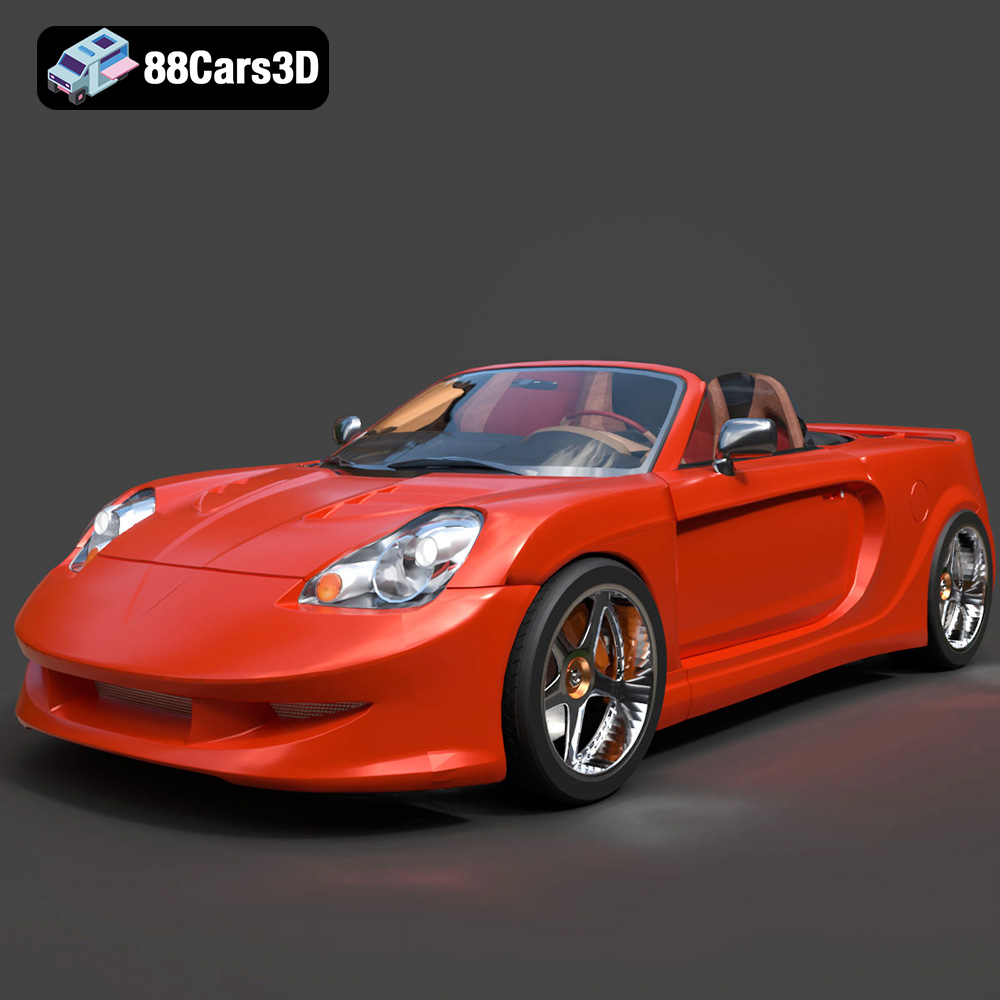
Texture: Yes
Material: Yes
Download the Toyota MRS-007 3D Model featuring clean geometry, realistic detailing, and a fully modeled interior. Includes .blend, .fbx, .obj, .glb, .stl, .ply, .unreal, and .max formats for rendering, simulation, and game development.
Price: $10
View Product

Texture: Yes
Material: Yes
Download the Porsche 911 Turbo S 2024 3D Model featuring clean geometry, realistic detailing, and a fully modeled interior. Includes .blend, .fbx, .obj, .glb, .stl, .ply, .unreal, and .max formats for rendering, simulation, and game development.
Price: $20
View Product

Texture: Yes
Material: Yes
Download the Pontiac Solstice 2009 3D Model featuring clean geometry, realistic detailing, and a fully modeled interior. Includes .blend, .fbx, .obj, .glb, .stl, .ply, .unreal, and .max formats for rendering, simulation, and game development.
Price: $10
View Product

Texture: Yes
Material: Yes
Download the Mini Cooper Countryman 2025 3D Model featuring clean geometry, realistic detailing, and a fully modeled interior. Includes .blend, .fbx, .obj, .glb, .stl, .ply, .unreal, and .max formats for rendering, simulation, and game development.
Price: $29.9
View Product
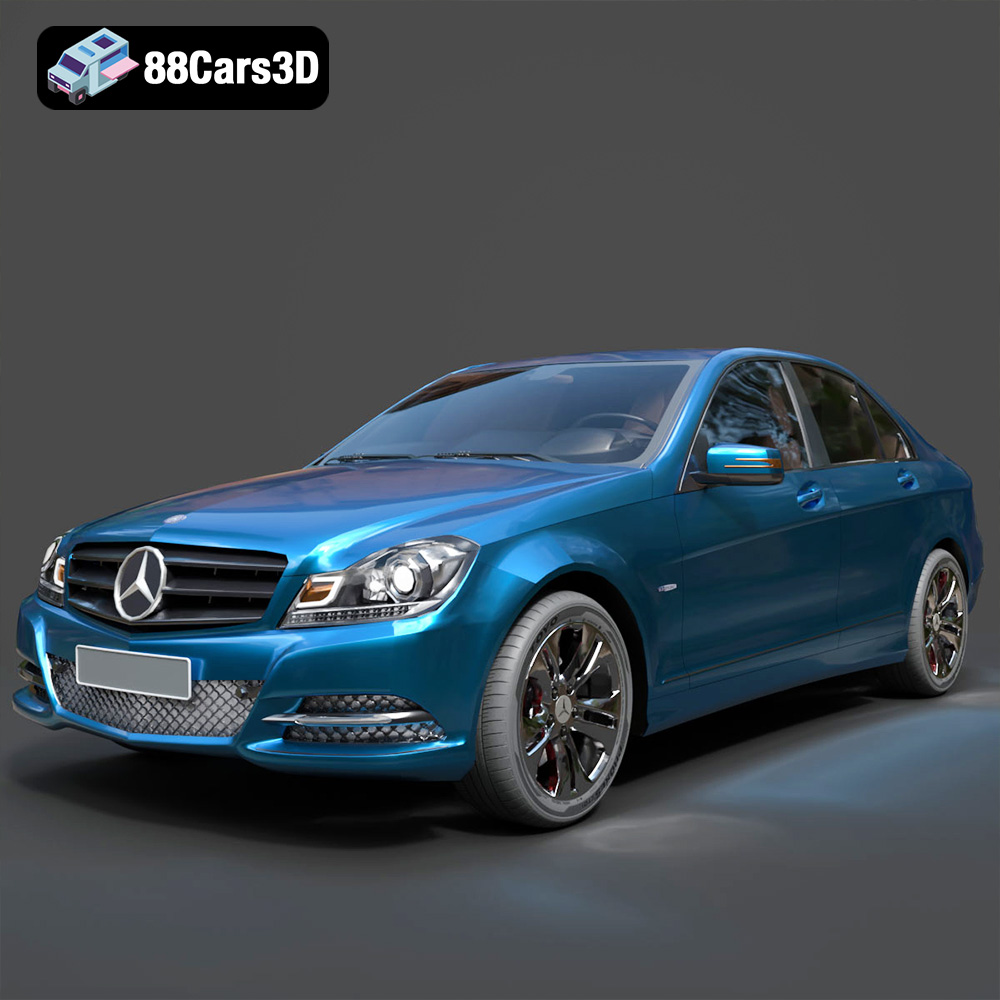
Texture: Yes
Material: Yes
Download the Mercedes C Classe 2012 3D Model featuring clean geometry, realistic detailing, and a fully modeled interior. Includes .blend, .fbx, .obj, .glb, .stl, .ply, .unreal, and .max formats for rendering, simulation, and game development.
Price: $19.9
View Product
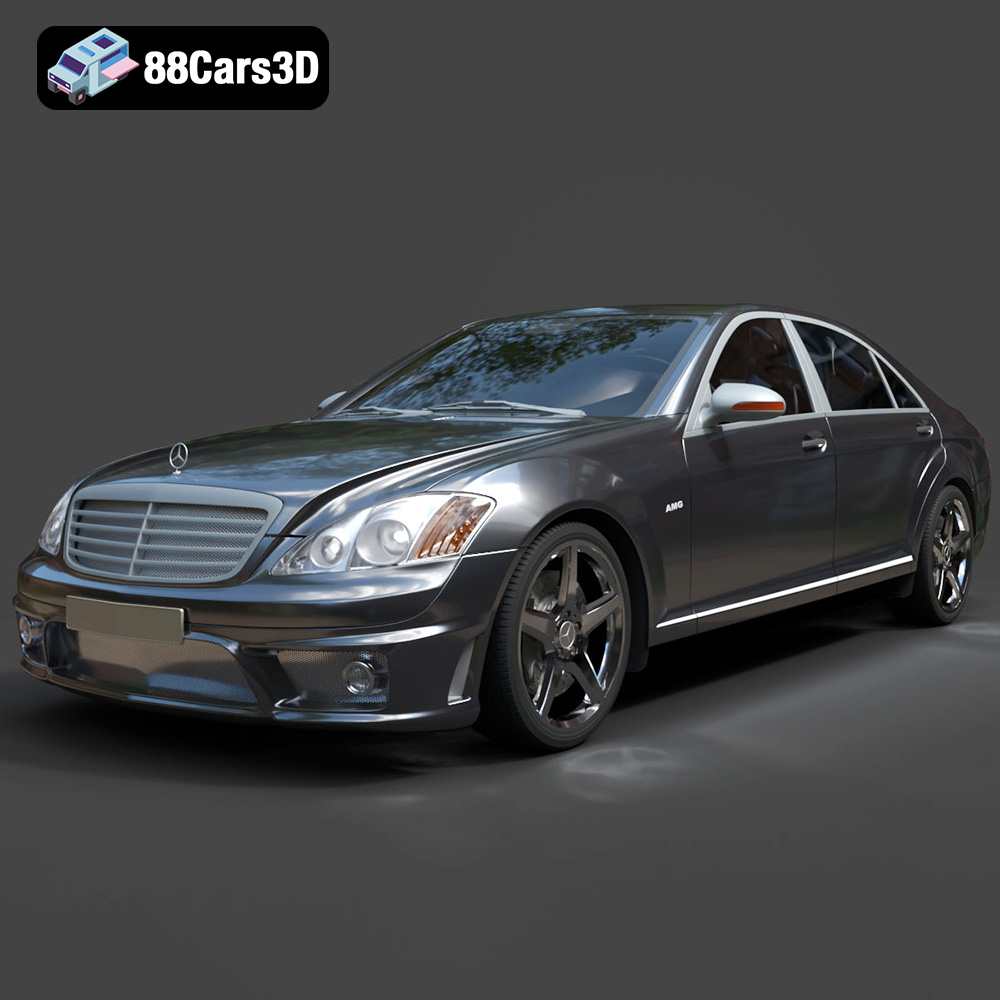
Texture: Yes
Material: Yes
Download the Mercedes-Benz S65 AMG 2018 3D Model featuring clean geometry, realistic detailing, and a fully modeled interior. Includes .blend, .fbx, .obj, .glb, .stl, .ply, .unreal, and .max formats for rendering, simulation, and game development.
Price: $19.9
View Product
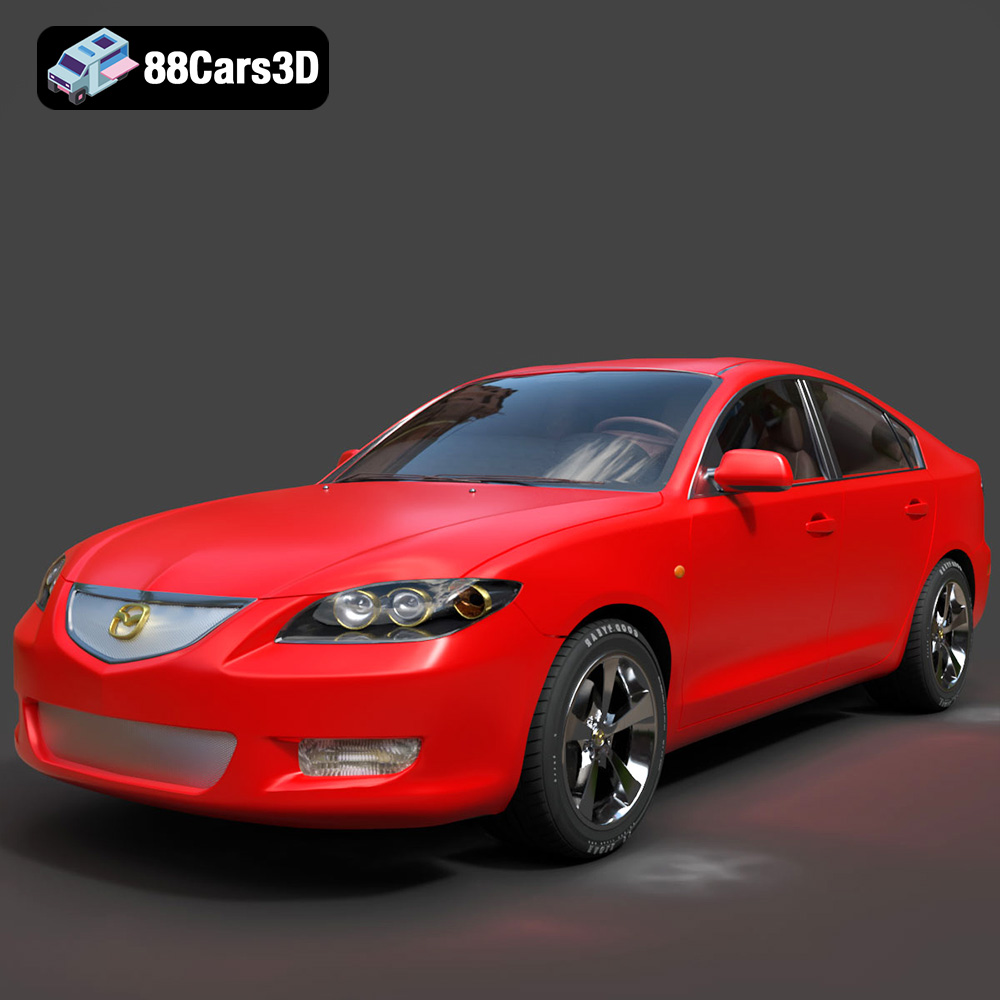
Texture: Yes
Material: Yes
Download the Mazda 3 Sedan 2004 3D Model featuring clean geometry, realistic detailing, and a fully modeled interior. Includes .blend, .fbx, .obj, .glb, .stl, .ply, .unreal, and .max formats for rendering, simulation, and game development.
Price: $10
View Product

Texture: Yes
Material: Yes
Download the Martin Rapide 2011 3D Model featuring clean geometry, realistic detailing, and a fully modeled interior. Includes .blend, .fbx, .obj, .glb, .stl, .ply, .unreal, and .max formats for rendering, simulation, and game development.
Price: $20.9
View Product
Texture: Yes
Material: Yes
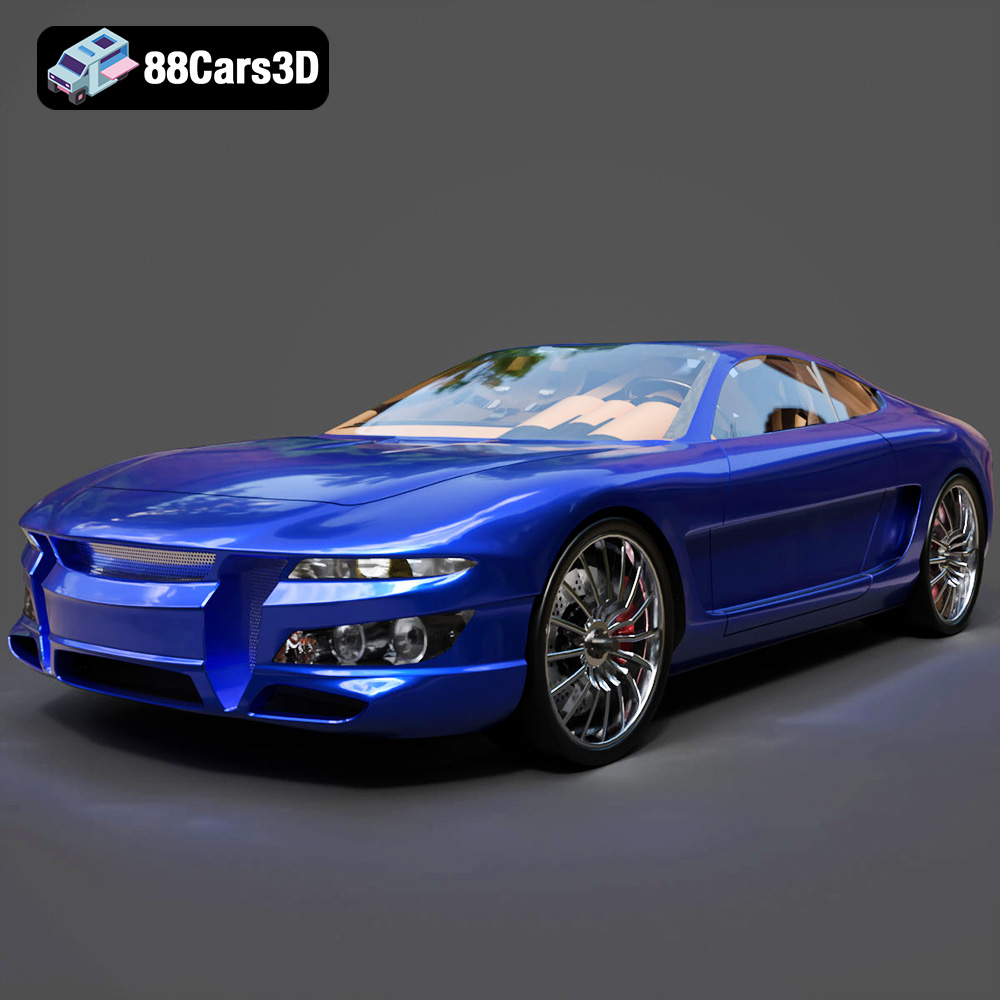
Download the Car Tasergal 005 3D Model featuring clean geometry, realistic detailing, and a fully modeled interior. Includes .blend, .fbx, .obj, .glb, .stl, .ply, .unreal, and .max formats for rendering, simulation, and game development.
Price: $10
View Product
Texture: Yes
Material: Yes
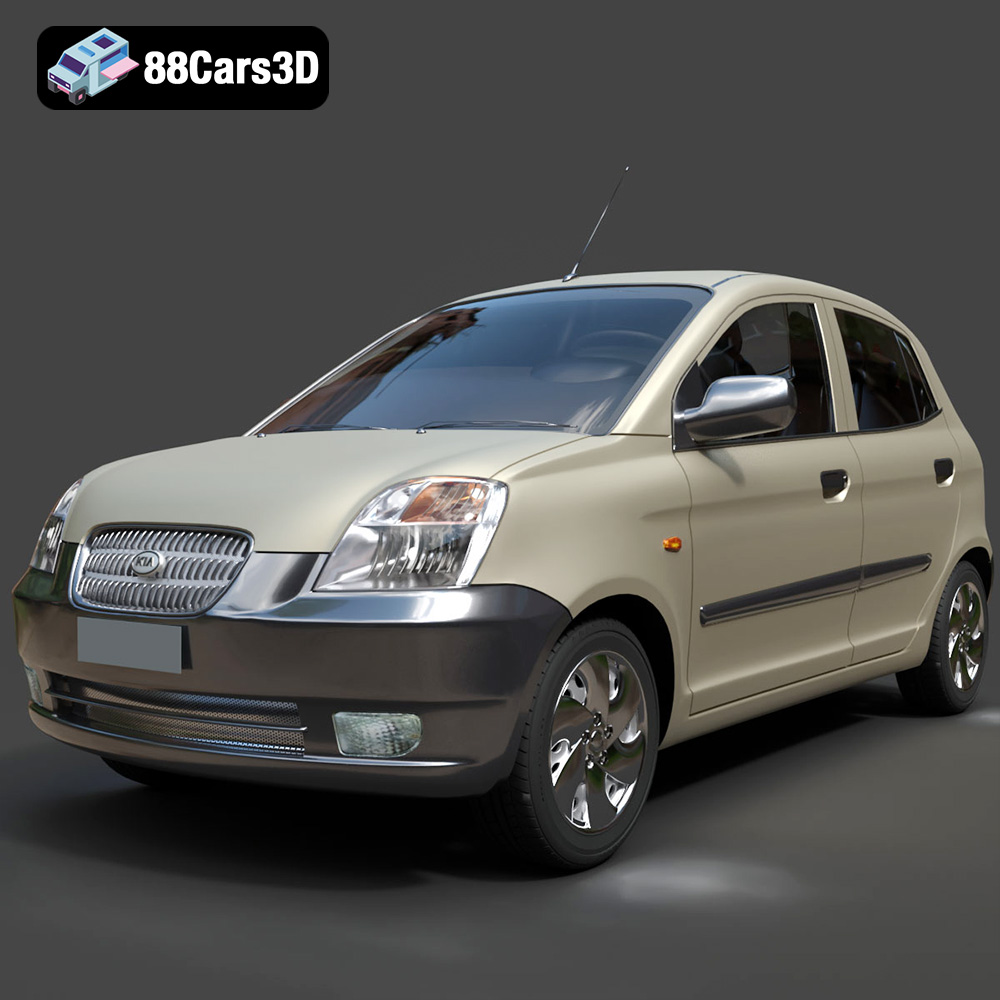
Download the Kia Picanto 2024 3D Model featuring clean geometry, realistic detailing, and a fully modeled interior. Includes .blend, .fbx, .obj, .glb, .stl, .ply, .unreal, and .max formats for rendering, simulation, and game development.
Price: $15.99
View Product


