⚡ FLASH SALE: Get 60% OFF All Premium 3D & STL Models! ⚡

The pursuit of photorealism in real-time rendering has always been a demanding endeavor, pushing the boundaries of what’s technically feasible. For automotive visualization, where the nuances of paint, chrome, glass, and intricate interior materials define the quality of the experience, this pursuit is paramount. Traditional Physically Based Rendering (PBR) workflows have served us well, providing a standardized approach to material definition that delivers consistent results across various lighting conditions. However, PBR also imposes certain limitations, making truly complex and bespoke materials challenging to achieve without resorting to elaborate workarounds or sacrificing realism.
Enter Unreal Engine’s Substrate Material System – a groundbreaking paradigm shift in real-time shading that promises to liberate artists and developers from the constraints of traditional PBR. Substrate isn’t just an update; it’s a complete reimagining of how materials are defined, layered, and rendered. For anyone working with high-fidelity 3D car models in Unreal Engine, whether for cutting-edge games, interactive configurators, virtual production, or high-end architectural visualization, Substrate opens up a world of unprecedented realism and creative freedom. Imagine automotive paints with multiple clear coat layers, intricate metallic flakes, and dynamic thin-film interference, all rendered accurately and efficiently in real-time. This isn’t a distant dream; it’s the reality Substrate is building. In this comprehensive guide, we’ll dive deep into Substrate’s architecture, explore its powerful features, understand how it revolutionizes automotive visualization, and provide practical insights for integrating it into your Unreal Engine projects.
At its core, Substrate is a highly modular and extensible material system designed to overcome the inherent limitations of the fixed PBR model. Traditional PBR operates on a predefined set of inputs (Base Color, Roughness, Metallic, Normal, etc.) that represent a single surface layer. While effective for many common materials, this approach struggles with complex scenarios like layered clear coats, intricate translucent surfaces, or materials exhibiting multiple distinct reflective properties. Substrate addresses this by introducing a node-based, layered architecture that allows artists to stack, blend, and combine different shading models and material properties in a far more flexible and physically accurate manner.
The system is built on a foundation that separates material definition from shading models, enabling highly customized and complex material behaviors. This means instead of being confined to a single PBR shader, you can construct a material out of multiple “sub-materials,” each with its own properties and shading model, then blend or layer them using a flexible graph-based interface. This shift is particularly impactful for automotive visualization, where surfaces often involve multiple layers of paint, primer, clear coat, and sometimes even specialized effects like metallic flakes or pearlescent finishes. Substrate provides the tools to replicate these intricate real-world phenomena with a level of detail and accuracy previously unattainable in real-time, significantly elevating the visual quality of 3D car models sourced from platforms like 88cars3d.com.
The most significant departure from traditional PBR is Substrate’s emphasis on layering. Instead of a single, monolithic PBR shader, Substrate allows you to define materials as a stack of different “Material Expressions.” These expressions can represent various physical phenomena – a diffuse base, a metallic reflection, a clear coat, a volumetric scattering layer, or even thin-film interference. Each layer has its own set of parameters and can be independently controlled, blended, or masked with other layers. For instance, creating a car paint material might involve a metallic base layer, followed by a tinted clear coat layer, and perhaps an additional layer for a dirt or dust accumulation effect, all interacting realistically.
This layering isn’t just a visual trick; it’s deeply integrated into the shading calculations. Substrate intelligently evaluates the interaction between these layers, ensuring physically plausible results for reflections, refractions, and light absorption. This level of granular control is vital for materials like multi-layer car paint, where the subtle interplay of light within and between layers creates its characteristic depth and sheen. Artists can now achieve these effects directly within the Unreal Engine Material Editor, using an intuitive node-based workflow that encourages experimentation and precision. For more technical insights into Substrate’s layered architecture, consult the official Unreal Engine documentation on material systems at dev.epicgames.com/community/unreal-engine/learning.
Substrate materials are constructed using a specialized set of nodes called “Material Expressions” and “Operators.” Material Expressions define the fundamental properties of a layer, such as its base color, metallicness, roughness, and specialized parameters for features like clear coats or subsurface scattering. Operators, on the other hand, define how these expressions are combined. Common operators include:
This nodal approach gives artists immense power to create highly sophisticated materials. For a glossy car body, you might start with a Substrate_Set_Opaque node defining the base metallic paint, then feed that into the base input of a Substrate_Stack node, with the top input being a Substrate_ClearCoat expression. This clear coat layer would have its own roughness, normal, and tint properties, accurately simulating the protective outer layer of automotive paint. The flexibility offered by these operators means that virtually any real-world material can be broken down into its constituent optical properties and reassembled within Substrate, pushing the boundaries of what real-time rendering can achieve.
One of Substrate’s most compelling features is its ability to accurately simulate advanced material properties that were previously difficult or impossible to achieve in real-time without custom shaders or significant compromises. These capabilities are transformative for automotive visualization, where the subtle play of light on complex surfaces defines the perceived quality and realism of a vehicle.
Consider the myriad materials that make up a modern car: multi-layered paints with varying metallic flakes, intricate brushed metals on interior trim, realistic leather and fabric textures, and highly complex glass and headlight lenses. Substrate provides dedicated shading models and parameters for these advanced effects, allowing artists to replicate them with fidelity. This means less faking and more physically accurate representations, which translates directly to more convincing and immersive experiences, whether you’re showcasing a new vehicle design or developing a highly realistic racing game.
For automotive artists, the ability to accurately render multi-layer clear coats is a game-changer. Traditional PBR often struggles with the correct accumulation of reflections and refractions through multiple transparent layers. Substrate introduces dedicated nodes like Substrate_ClearCoat which can be stacked multiple times using the Substrate_Stack operator. This allows you to simulate the distinct reflections from each clear coat layer, as well as the underlying paint, producing a depth and richness that is unmistakably realistic. Imagine capturing the subtle differences between a standard gloss, a ceramic coating, or even a self-healing clear coat with specific optical properties.
Beyond clear coats, Substrate excels in rendering effects like **Anisotropy**, crucial for materials such as brushed aluminum, polished chrome, or carbon fiber. Anisotropic reflections occur when light scatters differently depending on the direction of the surface microstructure, resulting in elongated highlights. Substrate provides explicit controls for anisotropy direction and intensity, allowing artists to precisely dial in these effects. Furthermore, **Thin Film Interference** – the iridescent, rainbow-like sheen seen on soap bubbles, oil slicks, or anti-reflective coatings – is now achievable with dedicated Substrate expressions. This is invaluable for accurately representing the subtle color shifts on headlight lenses, specialized paint finishes, or even digital displays within the vehicle, adding another layer of visual authenticity to your 3D car models.
While the exterior of a car often grabs immediate attention, the interior is where much of the user experience takes place. Substrate significantly elevates the realism of interior materials through advanced capabilities like **Subsurface Scattering (SSS)** and **Volumetric Shading**. SSS is crucial for materials that allow light to penetrate their surface, scatter, and then re-emerge, such as leather, plastic, rubber, and even certain types of fabric. This effect contributes significantly to the softness and organic feel of materials, preventing them from looking “plasticky” or artificial. Substrate offers robust SSS models that can be easily integrated into layered materials, ensuring that light interacts realistically with the internal structure of these components.
For even more intricate interior elements or specialized lighting, Substrate’s volumetric capabilities are highly advantageous. This allows for the definition of materials where light interacts with a volume rather than just a surface, opening possibilities for realistic fog, smoke, or even complex light guides within dashboard elements. Imagine creating truly convincing ambient lighting effects from internal light sources, or accurately representing translucent materials with varying degrees of transparency and light absorption. By leveraging these advanced features, artists can transform the interior of a vehicle from a static model into a rich, tactile, and visually compelling environment, elevating the overall quality of automotive visualizations created with assets from marketplaces like 88cars3d.com.
Adopting a new material system as powerful and complex as Substrate requires a thoughtful approach to your existing workflows. For artists and developers accustomed to traditional PBR, the transition involves understanding new concepts and leveraging different nodes within the Material Editor. However, the benefits in terms of visual fidelity, especially for automotive subjects, far outweigh the learning curve. Integrating Substrate isn’t just about tweaking a few settings; it’s about rethinking how you approach material creation from the ground up to maximize realism.
The process begins with preparing your 3D car models and understanding how Substrate interacts with other key Unreal Engine features like Lumen for global illumination and Nanite for virtualized geometry. A well-planned workflow ensures that you can harness Substrate’s power without compromising performance or introducing unnecessary complexity. This section will guide you through the practical steps, from asset preparation to material construction and finally, to rendering your high-fidelity automotive scenes.
The foundation of any great visualization is a high-quality 3D model. When sourcing automotive assets, platforms like 88cars3d.com provide models with clean topology, proper UV mapping, and often, a robust PBR material setup. While these are excellent starting points, transitioning to Substrate might involve some considerations:
Once your model is ready, creating a Substrate material in the Unreal Engine Material Editor involves a new set of nodes. Instead of a single “PBR” master node, you’ll start with nodes like Substrate_Set_Opaque, Substrate_ClearCoat, or Substrate_Transmittance. You then use operators like Substrate_Stack, Substrate_Mix, and Substrate_Add to combine these layers. For a car paint, you might structure it as:
Substrate_Set_Opaque with metallic properties).Substrate_ClearCoat stacked on top of the base, with its own roughness, normal, and tint).Substrate_Mix operator using a mask to blend in a different material, like a matte, rough Substrate layer).This modular approach offers unparalleled flexibility, allowing you to iterate and refine each aspect of your material independently, yielding a level of detail previously only seen in offline renderers.
Substrate isn’t designed to operate in a vacuum; it’s built to integrate seamlessly with Unreal Engine’s other cutting-edge rendering technologies, particularly Lumen and Nanite. This synergy is crucial for creating truly next-generation automotive visualizations.
When setting up your Unreal Engine project for automotive visualization, ensure Lumen is enabled for global illumination and reflections, and that your high-poly car models are converted to Nanite meshes. This powerful trio – Nanite for geometry, Substrate for materials, and Lumen for lighting – forms the backbone of a truly next-generation real-time rendering pipeline, allowing artists to achieve cinematic quality in interactive environments.
While Substrate unlocks incredible visual fidelity, it’s essential to approach its implementation with performance in mind. The power of layering and advanced shading models comes with a potential cost, and understanding how to optimize your Substrate materials is crucial for maintaining real-time frame rates, especially for interactive experiences, games, or AR/VR applications. Balancing visual quality with performance is an ongoing challenge in real-time rendering, and Substrate provides tools and considerations to help artists strike that balance effectively.
Adopting best practices early in your material creation process will save significant time in the long run. This involves thoughtful material design, efficient use of textures, and diligent profiling to identify and address bottlenecks. For any serious Unreal Engine developer or 3D artist, mastering these optimization techniques is just as important as understanding the artistic capabilities of Substrate itself.
Each additional layer or complex shading model within a Substrate material contributes to its computational cost. While Unreal Engine is highly optimized, stacking many advanced features without consideration can quickly impact performance. The key is to be judicious in your material design:
Substrate’s complexity is its strength, but with great power comes great responsibility. A well-designed Substrate material is not just visually stunning but also performant. Regularly profiling your scenes is key to understanding where the computational costs lie.
One of the most effective optimization strategies with Substrate is the heavy utilization of Material Instancing. Just like with traditional Unreal Engine materials, Substrate materials can be parented, and then child instances can be created. These instances allow you to modify parameters (like color, roughness, texture scales, or even enable/disable certain layers) without recompiling the entire base material. This is crucial for automotive configurators where users can customize vehicle colors, trim, and finishes in real-time without hitching.
Furthermore, Substrate is designed to identify and share common sub-graphs within your material network. This means that if you have multiple parts of your material graph that perform similar calculations, Substrate’s backend compiler can potentially optimize and reuse those calculations, leading to a more efficient final shader. By designing your materials modularly and leveraging material instances, you can maintain high visual fidelity across numerous assets while keeping your project optimized for real-time performance.
The advent of Substrate is not just an incremental improvement; it’s a foundational shift that will redefine the possibilities for automotive visualization and interaction within Unreal Engine. From interactive configurators that offer unprecedented realism to cinematic virtual productions that blur the lines between reality and CG, Substrate is poised to be a cornerstone technology. Its ability to accurately simulate complex material interactions fundamentally elevates the visual quality of vehicles, making them more compelling, believable, and immersive.
The applications extend across various industries, from design review and marketing to game development and AR/VR experiences. For companies relying on high-fidelity visual representations of their products, Substrate provides a powerful tool to showcase designs with an unmatched level of detail and authenticity. This ultimately translates to more engaging user experiences and a clearer understanding of a vehicle’s aesthetic and material properties.
Substrate is a game-changer for **Interactive Automotive Configurators**. Imagine a customer being able to customize a car’s paint, interior trim, and wheel finishes in real-time, seeing the exact, physically accurate reflections, clear coat depth, and intricate material details on their chosen configuration. With Substrate, designers can create master materials for various car paints (metallic, pearlescent, matte, etc.), leathers, plastics, and metals. Then, using Material Instances and Blueprint scripting, they can allow users to dynamically swap out colors, textures, and even material properties (e.g., gloss levels, flake sizes) without a visual hitch or recompilation. This level of fidelity and interactivity transforms the configurator experience from a functional tool into an emotional, high-impact product showcase.
For **Virtual Production and Cinematic Rendering**, Substrate unlocks new creative possibilities. When rendering automotive commercials, film sequences, or high-fidelity promotional videos in Unreal Engine, Substrate ensures that the vehicles appear stunningly real. The accurate clear coats, intricate metallic flakes, and realistic glass interactions make CG vehicles indistinguishable from their real-world counterparts. Combined with Sequencer for cinematic camera work, Lumen for global illumination, and Niagara for visual effects (like dust or water spray), Substrate ensures that automotive assets sourced from platforms like 88cars3d.com can be integrated into high-end virtual production pipelines with the highest possible visual integrity, displayed on large LED walls or rendered for final output.
Bringing high-fidelity automotive experiences to **Augmented Reality (AR) and Virtual Reality (VR)** environments has always been a tightrope walk between visual quality and performance. AR/VR demands extremely high frame rates (typically 90 FPS or higher) to prevent motion sickness, which often necessitates significant compromises in material complexity and polygon count. However, Substrate, when combined with smart optimization strategies, begins to bridge this gap.
By carefully balancing Substrate’s power with aggressive optimization techniques, it becomes possible to deliver visually rich automotive models in AR/VR. This means architects can conduct design reviews of vehicles in a shared virtual space, customers can experience a car in their driveway via AR, or players can immerse themselves in racing games with unprecedented material realism, all thanks to the advanced capabilities enabled by Substrate.
The Unreal Engine Substrate Material System represents a monumental leap forward in real-time material definition, effectively shattering the glass ceiling imposed by traditional PBR. For the discerning world of automotive visualization, this innovation is nothing short of revolutionary. We’ve explored how Substrate’s flexible, layered architecture empowers artists to simulate the most intricate real-world material phenomena – from multi-layered clear coat paints with dynamic thin-film interference to anisotropic metals and realistic subsurface scattering on interior fabrics. This capability transforms 3D car models into vibrant, tactile, and truly believable digital assets.
By understanding Substrate’s core concepts, leveraging its powerful operators, and integrating it seamlessly with Unreal Engine’s other cutting-edge features like Nanite and Lumen, you can unlock unparalleled visual fidelity for your projects. Whether you’re building next-generation automotive configurators, crafting cinematic virtual productions, or developing immersive AR/VR experiences, Substrate provides the toolkit to push the boundaries of realism. As you embark on this exciting journey, remember that platforms like 88cars3d.com offer high-quality, game-ready 3D car models that serve as excellent foundations for your Substrate experiments.
Embrace the challenge, experiment with its capabilities, and witness your automotive visualizations transcend mere realism to achieve genuine immersion. The future of real-time rendering is here, and it’s built on the flexible, powerful foundation of Substrate.

Meta Description:
Texture: Yes
Material: Yes
Download the Cadillac CTS-V Coupe 3D Model featuring detailed exterior styling and realistic interior structure. Includes .blend, .fbx, .obj, .glb, .stl, .ply, .unreal, and .max formats for rendering, simulation, AR VR, and game development.
Price: $13.9

Texture: Yes
Material: Yes
Download the Cadillac DTS-005 3D Model featuring its iconic luxury design, detailed interior, and realistic exterior. Includes .blend, .fbx, .obj, .glb, .stl, .ply, .unreal, and .max formats for rendering, simulation, and game development.
Price: $10.79

Texture: Yes
Material: Yes
Download the Buick LeSabre 1998 3D Model featuring a classic American full-size sedan design. Includes .blend, .fbx, .obj, .glb, .stl, .ply, .unreal, and .max formats for rendering, simulation, and game development.
Price: $10.79
Texture: Yes
Material: Yes
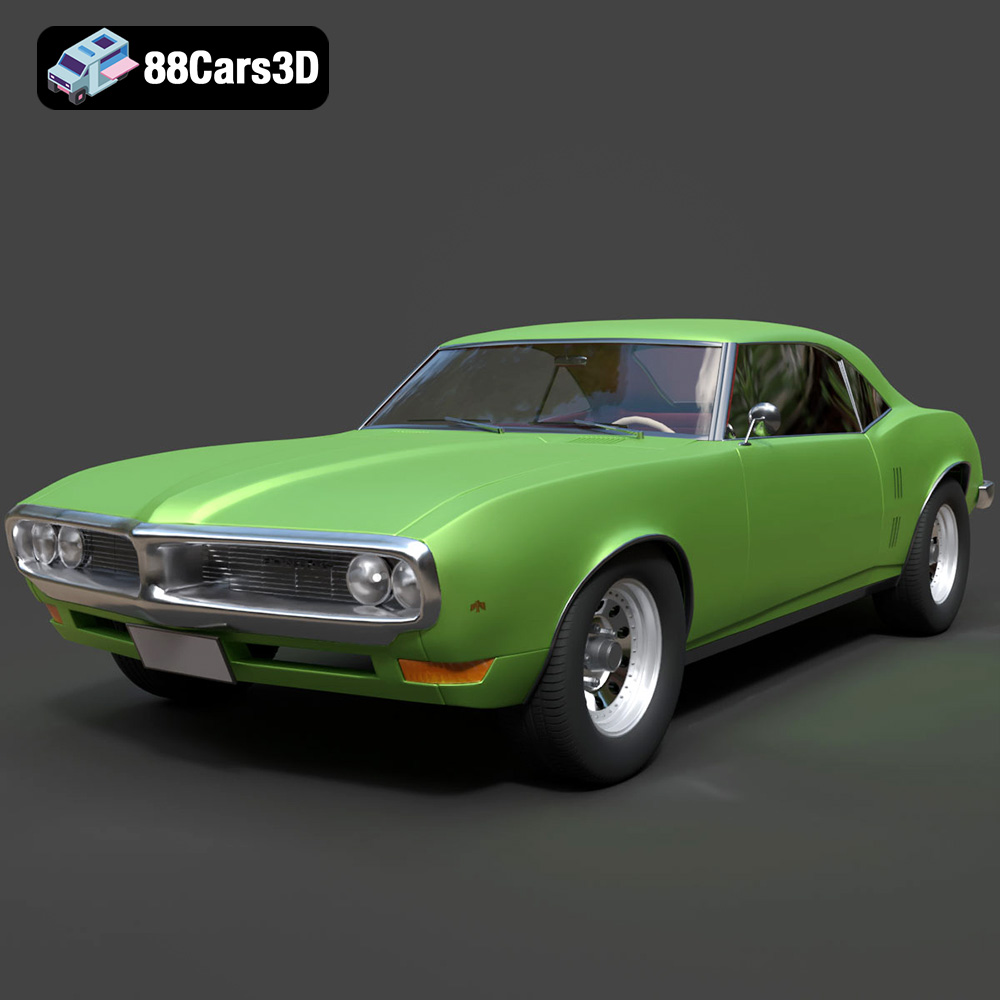
Download the Pontiac Firebird 1998 3D Model featuring clean geometry, realistic detailing, and a fully modeled interior. Includes .blend, .fbx, .obj, .glb, .stl, .ply, .unreal, and .max formats for rendering, simulation, and game development.
Price: $10

Texture: Yes
Material: Yes
Download the Opel Astra 2008 3D Model featuring clean geometry, realistic detailing, and a fully modeled interior. Includes .blend, .fbx, .obj, .glb, .stl, .ply, .unreal, and .max formats for rendering, simulation, and game development.
Price: $10

Texture: Yes
Material: Yes
Download the Mercedes Benz Joaquin-007 3D Model featuring clean geometry, realistic detailing, and a fully modeled interior. Includes .blend, .fbx, .obj, .glb, .stl, .ply, .unreal, and .max formats for rendering, simulation, and game development.
Price: $19.99
Texture: Yes
Material: Yes
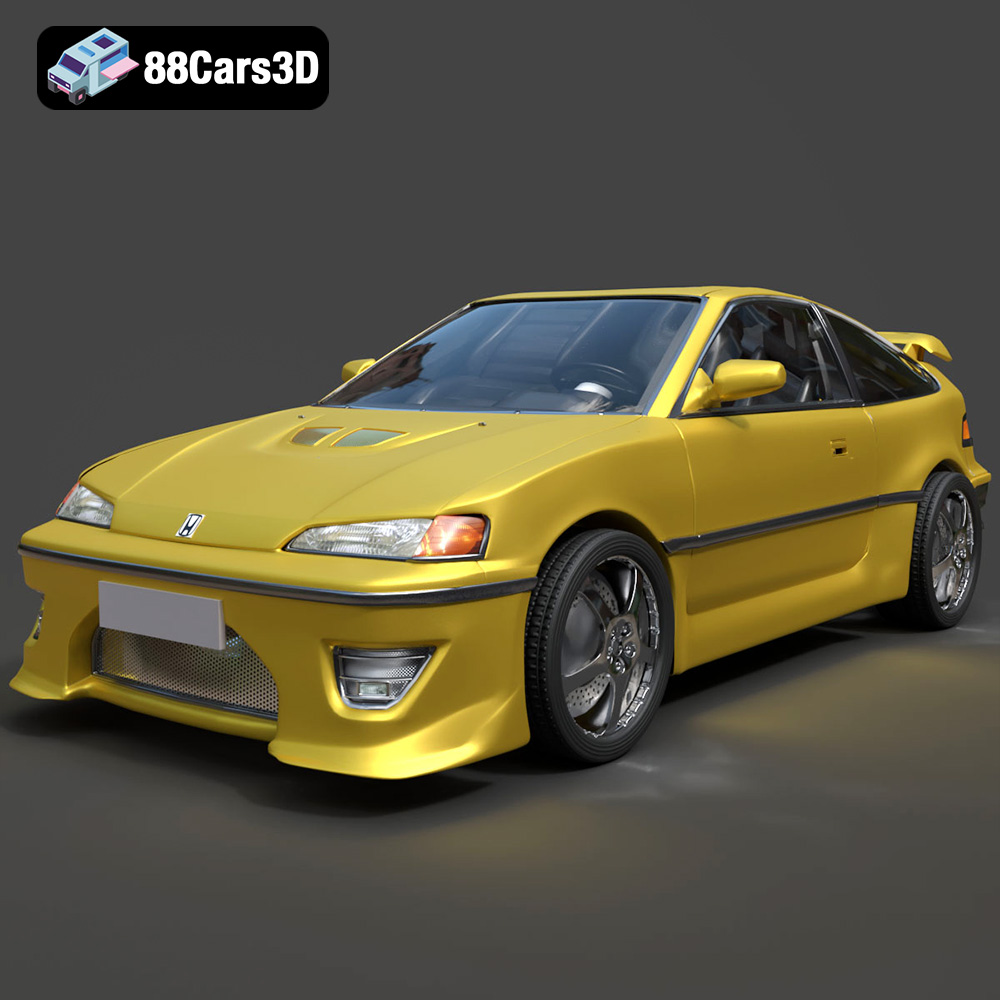
Download the Honda CRX 1980 3D Model featuring clean geometry, realistic detailing, and a fully modeled interior. Includes .blend, .fbx, .obj, .glb, .stl, .ply, .unreal, and .max formats for rendering, simulation, and game development.
Price: $11.99
Texture: Yes
Material: Yes
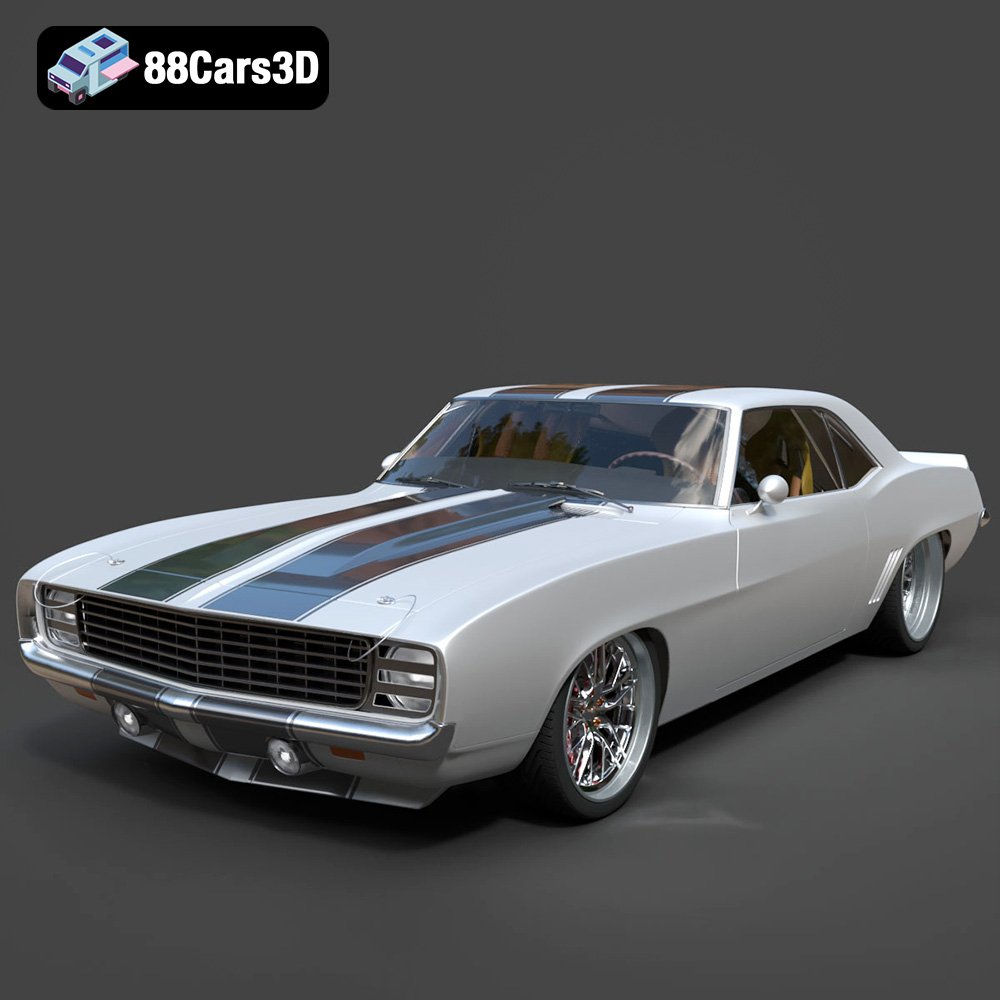
Download the Chevrolet Camaro 69 Pro-007 3D Model featuring classic muscle car design and custom performance aesthetics. Includes .blend, .fbx, .obj, .glb, .stl, .ply, .unreal, and .max formats for rendering, simulation, and game development.
Price: $20.79

Texture: Yes
Material: Yes
Download the Honda Fit 2008 3D Model featuring a compact, versatile design with detailed exterior and interior components. Includes .blend, .fbx, .obj, .glb, .stl, .ply, .unreal, and .max formats for rendering, simulation, and game development.
Price: $10.79
Texture: Yes
Material: Yes
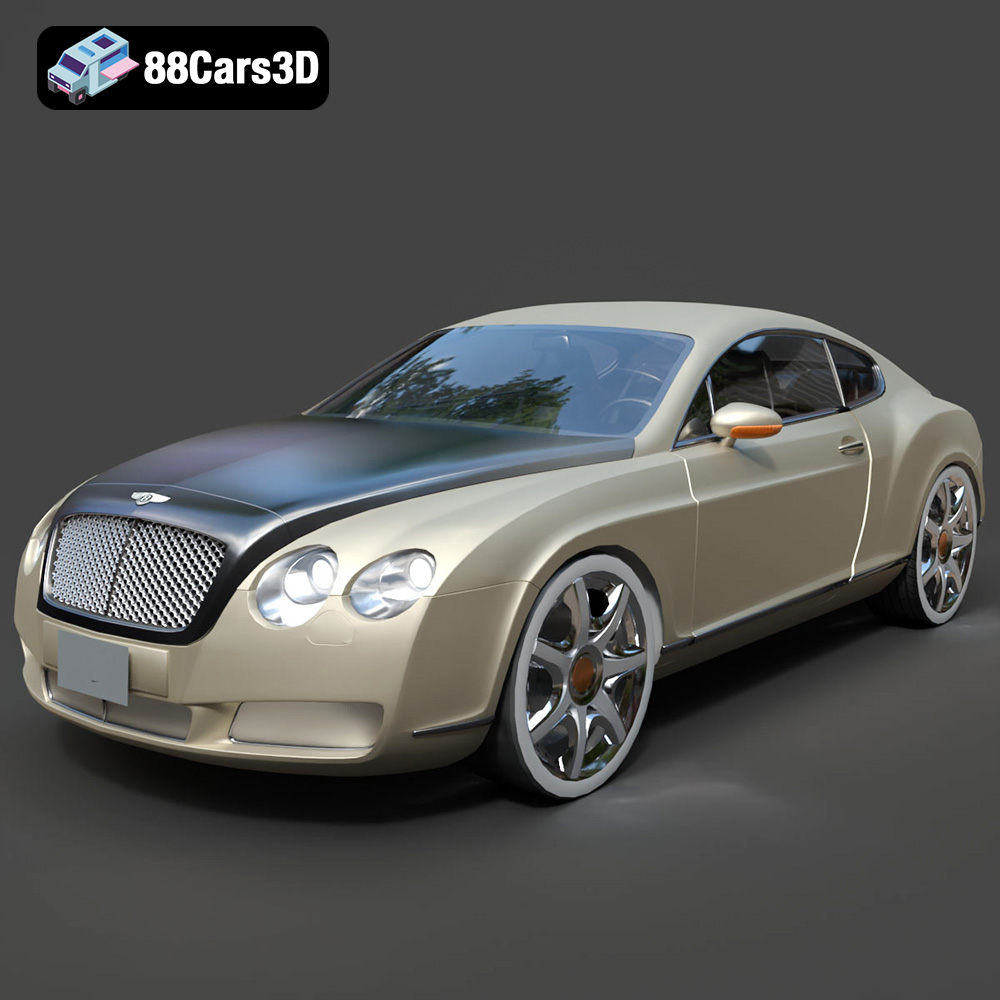
Download the Bentley Continental GT-002 3D Model featuring a luxurious grand touring design and high-quality details. Includes .blend, .fbx, .obj, .glb, .stl, .ply, .unreal, and .max formats for rendering, simulation, and game development.
Price: $20.79

