⚡ FLASH SALE: Get 60% OFF All Premium 3D & STL Models! ⚡

In the dynamic world of real-time rendering, interactive experiences, and high-fidelity visualization, Unreal Engine stands as an undisputed powerhouse. For automotive designers, 3D artists, and game developers, the engine offers unparalleled capabilities, from stunning cinematic quality to immersive virtual reality experiences. However, the mention of “coding” can often be a barrier for many creatives who are more comfortable with visual tools and design principles than lines of C++.
Enter Unreal Engine Blueprint Visual Scripting – a game-changer that empowers artists and designers to build complex logic, create interactive systems, and breathe life into their 3D car models without writing a single line of traditional code. Blueprint is not just a simplified scripting tool; it’s a robust, feature-rich visual language that can handle everything from intricate automotive configurators to responsive gameplay mechanics. It democratizes development, allowing visionaries to directly implement their ideas, accelerating prototyping and fostering a more collaborative workflow.
This comprehensive guide is tailored for non-programmers eager to harness the full potential of Unreal Engine for automotive visualization and interactive projects. We’ll demystify Blueprint, walk through practical applications with 3D car models, explore advanced interactivity, delve into cinematic workflows, and discuss crucial optimization strategies. By the end of this journey, you’ll understand how to leverage Blueprint to transform static car models into dynamic, interactive experiences, pushing the boundaries of what you can create in real-time.
At its core, Blueprint Visual Scripting is Unreal Engine’s answer to empowering creators of all technical backgrounds. Instead of typing text-based code, you construct logic by connecting nodes in a graphical interface. Each node represents a specific action, event, or data point, and by drawing ‘wires’ between them, you define the flow of execution and data within your project. This intuitive, visual approach makes complex programming concepts accessible and understandable, allowing artists to focus on design and interaction without getting bogged down in syntax errors or compiler woes.
Blueprint is incredibly powerful because it exposes virtually the entire Unreal Engine API visually. This means you can access and manipulate almost any aspect of your project – from rendering and physics to UI and animation – directly through the visual editor. For automotive visualization, this translates into the ability to create interactive showrooms, dynamic material customizations, and intricate vehicle behaviors with unprecedented ease. It bridges the gap between artistic vision and technical implementation, fostering rapid iteration and experimentation.
Think of nodes as individual instructions or questions. An “Event BeginPlay” node, for instance, triggers its connected actions as soon as the game or simulation starts. A “Print String” node displays text on the screen. Data nodes might hold variables like a car’s speed or current paint color. Wires are the pathways: white wires dictate the execution flow (which action happens next), while colored wires pass data (e.g., a number from one node to another). Mastering these connections is fundamental to Blueprint. For example, to open a car door, you might link a “User Input” event to a “Timeline” node for smooth animation, which then feeds into a “Set Relative Rotation” node targeting the door mesh. This clear, visual representation dramatically simplifies debugging and understanding complex systems.
Unreal Engine offers several types of Blueprints, each serving a distinct purpose. An Actor Blueprint is the most common, used to define the behavior and properties of any object (Actor) that can be placed in your world. Your 3D car model would typically be wrapped in an Actor Blueprint to give it interactive capabilities. The Level Blueprint is unique to a specific level and is ideal for level-specific events, like triggering a cinematic when the player enters a certain area or controlling environment lighting based on time of day. Finally, Widget Blueprints are dedicated to creating user interfaces (UI) – buttons, sliders, text displays – essential for interactive configurators or in-game menus. Understanding when to use each type is crucial for structuring your project efficiently and maintaining organization. For comprehensive details on Blueprint, always refer to the official Unreal Engine documentation at https://dev.epicgames.com/community/unreal-engine/learning.
Embarking on an automotive visualization project in Unreal Engine begins with proper setup. When creating a new project, selecting a template like “Blank” or “Automotive” can provide a good starting point, though a Blank project offers the most flexibility. Once your project is ready, the next critical step is bringing in your high-quality 3D car models. The success of any visualization heavily relies on the foundation of excellent assets, and this is where platforms like 88cars3d.com shine, offering meticulously crafted 3D car models optimized for Unreal Engine.
Importing models typically involves using the FBX format, which supports meshes, materials, and animations. When importing, pay close attention to settings like “Combine Meshes” (often unchecked if you want individual control over parts), “Static Mesh Settings” (enabling Nanite for high-poly models is often a good idea), and “Material Import Method.” Proper import ensures your model is ready for further manipulation and interaction within Unreal Engine.
The quality of your source 3D car models directly impacts the final visual fidelity and performance of your Unreal Engine project. Look for models with clean topology, efficient polygon counts (even with Nanite, a well-constructed mesh is better), proper UV mapping for texture application, and realistic PBR (Physically Based Rendering) textures. These attributes are foundational for creating convincing automotive visualizations. Marketplaces such as 88cars3d.com specialize in providing professionally prepared assets that meet these high standards, often including multiple file formats and optimized meshes, making them ideal for a seamless integration into Unreal Engine workflows. Investing in quality assets upfront saves significant time and effort in the long run, ensuring your project starts on a strong technical footing.
Once imported, your 3D car model needs to be prepared for Blueprint interaction. This typically involves several steps: first, consider whether your car model should be a single Static Mesh or composed of multiple components. For interactivity (e.g., opening doors, turning wheels), individual mesh components for each interactive part are essential. You might need to break down the model into separate parts in your 3D modeling software before export. Second, ensure that the pivot points for these components are correctly placed (e.g., a door’s pivot at its hinge axis). In Unreal Engine, you can create a new Actor Blueprint and drag your car’s Static Mesh components into it, arranging them hierarchically. This allows you to easily reference and manipulate individual parts using Blueprint, assigning unique names to each component for clarity (e.g., “Door_DriverSide,” “Wheel_FrontLeft”). This preparation is crucial for enabling smooth, realistic interactions later on.
With your 3D car model imported and organized within an Actor Blueprint, you’re ready to dive into the exciting world of basic interactivity. This is where Blueprint truly shines for non-programmers, allowing you to quickly add fundamental behaviors that transform a static model into a dynamic experience. The core principle involves getting references to specific components of your car (like doors or lights) and then using Blueprint nodes to modify their properties or trigger events based on user input.
Imagine being able to click on a car door to open it, or press a key to switch on the headlights – these are the foundational interactions we’ll explore. The process generally involves defining an event (e.g., a mouse click or key press), identifying the component you want to affect, and then using nodes to apply a transformation (like rotation or location change) or modify a property (like material or light intensity). Smooth transitions are often achieved using “Timelines,” which allow you to define animation curves directly within Blueprint without needing external animation software.
To implement an interactive door, you’ll first need to ensure your door mesh is a separate component within your car’s Actor Blueprint and that its pivot point is correctly placed at the hinge. In the Blueprint Event Graph, you can use an “OnComponentHit” event or a custom “Click” event (triggered via a Widget Blueprint or a line trace) on the door mesh. When this event fires, you’ll typically use a “Flip Flop” node to alternate between two states (open/closed). Each state will trigger a “Timeline” node. The Timeline will output a value over time, which you can then connect to a “Set Relative Rotation” node targeting the door component. By animating the Z-axis rotation (for a typical car door), you can achieve a realistic opening and closing motion. For added realism, you could play a “Sound Cue” node after the door is fully open or closed, enhancing the user experience.
Manipulating lights and materials is another fundamental interaction for automotive visualization. For headlights or taillights, you would typically have a “Point Light Component” or “Spot Light Component” attached to the car’s Blueprint. To turn them on or off, you can use a “Toggle Visibility” node or “Set Intensity” node (for adjustable brightness) targeting the light component, triggered by a key press or UI button. For material changes, such as switching between different car paint finishes, you’ll leverage “Dynamic Material Instances” (DMIs). You would first create a DMI from your car’s base material in the Blueprint’s “Construction Script” or “Event BeginPlay.” Then, to change a color or texture, you use nodes like “Set Vector Parameter Value” (for colors) or “Set Texture Parameter Value” on that DMI, driven by user input. This allows for instant, real-time customization of your vehicle’s appearance.
Moving beyond basic interactions, Blueprint truly unleashes its potential in creating sophisticated automotive configurators and highly interactive demos. These systems allow users to customize virtually every aspect of a vehicle in real-time – changing paint colors, swapping out rims, selecting interior trims, and even viewing different body kits. The complexity grows, but Blueprint’s visual nature keeps it manageable, enabling artists and designers to build powerful tools without extensive coding knowledge. This level of interactivity is crucial for sales configurators, design reviews, and immersive marketing experiences, providing a dynamic preview of customization options.
The key to advanced configurators lies in combining several Blueprint concepts: dynamic material instances for cosmetic changes, mesh swapping for structural modifications, and robust user interface (UI) design using Widget Blueprints to present choices to the user. Data management also becomes important, often employing “Data Tables” to store options and their associated properties efficiently, making it easier to expand your configurator with new selections without modifying extensive Blueprint logic.
A dynamic paint customizer is a cornerstone of any automotive configurator. To build one, you start by creating a Master Material for your car’s paint, exposing parameters like “Base Color,” “Roughness,” “Metallic,” and “Clear Coat Normal” (if using a layered material) as “Material Parameters.” In your car’s Actor Blueprint, on “Event BeginPlay,” you create a “Dynamic Material Instance” from this Master Material and apply it to your car body’s mesh component. Then, in a Widget Blueprint (your UI), you create buttons or color pickers. When a button is clicked, it calls a custom event in your car’s Blueprint. This event uses a “Set Vector Parameter Value” node on the DMI to change the “Base Color” parameter to the selected color. You can expand this with sliders for roughness or metallic values, providing granular control over the paint’s appearance. Managing a library of predefined colors can be done efficiently with an “Array” of colors and an index to select from it.
For swapping parts like wheels, spoilers, or bumpers, a modular car configurator leverages Blueprint’s ability to manipulate mesh components. Each interchangeable part (e.g., different wheel types) should be a separate Static Mesh asset. In your car’s Actor Blueprint, you’d have a “Static Mesh Component” for each modular slot (e.g., “Wheel_FrontLeft_Slot”). When a user selects a new wheel in the UI (a Widget Blueprint), the UI sends an event to the car’s Blueprint. This event then uses a “Set Static Mesh” node, targeting the “Wheel_FrontLeft_Slot” component, and assigns the newly selected wheel mesh. To manage a large number of parts and their metadata (names, prices, associated textures), “Data Tables” are invaluable. You can create a Data Table containing entries for each wheel, storing references to their Static Meshes and any other relevant information. Blueprint can then query this Data Table to populate UI options and retrieve the correct assets for swapping, making the system highly scalable and organized.
Unreal Engine isn’t just for games and interactive experiences; it’s a powerful tool for cinematic content creation and virtual production. Blueprint extends its utility into these realms by providing intuitive control over cameras, animations, lighting, and event triggers, all without requiring a dedicated coder on set. For automotive marketing, product reveals, or even creating stunning portfolio pieces, Blueprint allows artists to choreograph complex sequences, enhancing narrative and visual impact. Imagine triggering a dramatic car reveal sequence, complete with dynamic camera moves, specialized lighting, and environmental effects, all controlled by simple Blueprint events.
One of Blueprint’s strongest allies in this domain is Sequencer, Unreal Engine’s multi-track cinematic editor. Blueprint can initiate Sequencer playback, control its parameters, and respond to events generated within Sequencer. This synergy enables a level of interactivity and real-time adjustment in cinematic workflows that traditional linear animation pipelines struggle to match. From virtual camera operations to real-time asset adjustments on an LED wall, Blueprint serves as the central nervous system for dynamic virtual production environments.
To create a compelling car reveal, you’d typically start by setting up a basic cinematic sequence in Sequencer. This sequence might include camera movements, a car driving into view, and perhaps some light animations. Blueprint can then be used to add interactive elements or trigger the sequence itself. For example, using a “Level Blueprint,” you could set up an “Event BeginPlay” to automatically play the Sequencer track. For more interactivity, you could define a “Box Trigger” volume in your level. When the player (or camera) enters this volume, an “OnComponentBeginOverlap” event in the Level Blueprint can trigger the Sequencer to play. Within the Sequencer itself, you can add “Event Tracks” that trigger custom Blueprint events at specific points in time. For instance, an event track could trigger a Blueprint function that turns on the car’s headlights as it pulls into its final position, or another that changes the environment’s mood lighting via Blueprint’s “Set Light Intensity” nodes. This integration creates a seamless, interactive cinematic experience.
In virtual production, where real-time rendering is crucial for LED wall stages or live broadcast, Blueprint plays a pivotal role in enabling flexibility and control. Filmmakers can use Blueprint to rapidly adjust virtual sets, environmental conditions, or character behaviors in real-time, responding to creative changes on the fly. For automotive virtual production, this could involve swapping out car models, changing vehicle colors, or even adjusting the time of day and weather effects via a custom UI built with Widget Blueprints – all controllable by a technical artist or director during a live shoot. Blueprint can also facilitate data integration from external sources, such as camera tracking systems or DMX lighting controllers, allowing the virtual environment to synchronize perfectly with physical equipment. This ability to instantly prototype and modify interactive elements significantly streamlines the virtual production pipeline, saving countless hours and fostering greater creative freedom on set.
While Blueprint offers incredible ease of use, it’s essential to understand that poor Blueprint practices can lead to performance bottlenecks, especially in demanding real-time applications like automotive visualization, high-fidelity games, or AR/VR experiences. Optimization is not just about making your project run faster; it’s about ensuring a smooth, responsive user experience, crucial for convincing and immersive interactions. For projects utilizing high-quality 3D car models, such as those from 88cars3d.com, maintaining optimal performance means users can fully appreciate the visual fidelity without lag or stutter.
The visual nature of Blueprint sometimes tempts developers to create overly complex or inefficient graphs. Common pitfalls include heavy logic running on “Event Tick” (which executes every frame), excessive use of “Get All Actors Of Class” nodes, or creating unnecessary references. Good optimization habits involve thinking about when and how often your logic needs to run, using efficient data structures, and performing necessary checks to prevent errors and wasted computations. Blueprint profiling tools within Unreal Engine are invaluable for identifying and addressing performance issues.
The “Event Tick” node is often a culprit in performance issues because it executes every single frame. While necessary for continuous updates (like smooth camera following or dynamic vehicle physics), placing heavy or unnecessary logic here can quickly degrade performance. As a best practice, minimize the complexity of any logic connected directly to “Event Tick.” Instead, consider alternative approaches: if an event only needs to happen at specific intervals, use “Set Timer by Event” or “Set Timer by Function Name” with a defined loop duration. If an event only needs to happen once after a specific condition, use “DoOnce” nodes. For instance, instead of constantly checking if a car door is open on Tick, trigger the check only when a user interacts with the door, or when an animation finishes. This event-driven approach is far more efficient than constant polling and significantly reduces CPU overhead, crucial for maintaining high frame rates in automotive visualization projects.
Unreal Engine’s Nanite virtualized geometry system is a game-changer for handling incredibly high-polygon models, like the detailed 3D car models you might source from 88cars3d.com. Nanite allows you to import cinema-quality assets with millions of polygons without a significant performance hit, as it intelligently streams and renders only the necessary detail. While Nanite handles the heavy lifting, Blueprint can still play a role in managing visibility, dynamically enabling/disabling Nanite on certain meshes (if specific needs arise, though generally Nanite is “fire and forget”), or even swapping between Nanite and non-Nanite meshes for specific use cases (e.g., if a mesh needs to interact with complex physics that are not yet fully supported by Nanite). For objects that are not Nanite-enabled or for platforms that don’t support it (like some AR/VR environments), Blueprint can be used to manage Level of Detail (LODs). You can dynamically set the minimum LOD or force a specific LOD level for meshes based on distance, performance budgets, or specific gameplay conditions, ensuring that your automotive models always render efficiently without sacrificing perceived quality when it matters most. For more on Nanite and other performance optimization techniques, consult the official Unreal Engine documentation at https://dev.epicgames.com/community/unreal-engine/learning.
Unreal Engine is constantly evolving, and Blueprint’s adaptability ensures that your projects remain future-proof, ready to embrace new technologies and expand into exciting new frontiers. From immersive Augmented Reality (AR) and Virtual Reality (VR) experiences to advanced physics simulations and sophisticated data integration, Blueprint provides the flexibility to build cutting-edge automotive applications. As real-time rendering continues to push boundaries, the ability to rapidly prototype and integrate new functionalities via Blueprint becomes an invaluable asset for designers, engineers, and marketers alike.
For automotive applications, this means Blueprint can drive everything from interactive AR car showrooms on a mobile device to fully simulated virtual test drives in VR. It enables the creation of robust systems that can consume external data, connect to web services, or even interact with IoT devices, paving the way for truly connected and intelligent automotive experiences. By understanding how Blueprint interfaces with these emerging technologies, you can position your projects at the forefront of innovation.
Developing for AR/VR presents unique challenges, primarily around performance and user comfort. Blueprint is instrumental in tailoring automotive experiences for these immersive platforms. For AR, Blueprint can handle plane detection, spatial mapping, and placing your 3D car model accurately in the real world. For VR, it manages player locomotion, gaze-based interactions, and teleportation systems. Optimization through Blueprint is paramount: you can use “IsValid” checks to prevent null references, ensure efficient material updates, and manage draw calls by strategically hiding complex meshes that are out of view. Furthermore, Blueprint can be used to create specific AR/VR UI elements, ensuring interactions are intuitive and comfortable within an immersive environment. For example, a Blueprint might dynamically swap out high-resolution textures for lower-resolution ones on distant objects in VR to maintain a high frame rate, crucial for avoiding motion sickness.
Beyond static interactions, Blueprint can be used to create compelling vehicle dynamics, bringing your 3D car models to life with realistic movement. While complex vehicle physics often leverage Unreal Engine’s Chaos Vehicles plugin (which is C++ based), Blueprint provides the necessary interface to control and customize these systems without coding. You can use Blueprint to apply inputs (throttle, steering, braking) from a gamepad, keyboard, or even custom UI sliders to the vehicle’s physics components. You can then retrieve physics data (speed, RPM, suspension travel) and use it to drive visual effects, such as animating the wheels, simulating suspension compression, or triggering particle systems for smoke and dust. For instance, a Blueprint could track the car’s speed to dynamically adjust the intensity of a wind sound, or detect a collision event to activate a damage shader. This level of control allows artists to craft believable and engaging driving experiences for simulations, games, or even educational tools, enriching the overall automotive visualization.
Unreal Engine Blueprint Visual Scripting stands as a monumental achievement in democratizing real-time development. For 3D artists, automotive designers, and visualization professionals, it represents a powerful liberation from traditional coding, allowing creative ideas to be translated directly into interactive experiences. Throughout this guide, we’ve explored Blueprint’s capabilities, from simple door interactions and dynamic material customizations to advanced configurators, cinematic storytelling, and crucial performance optimizations. We’ve seen how integrating high-quality assets – like those from 88cars3d.com – with intelligent Blueprint logic can elevate your projects to professional standards, whether for games, AR/VR, or high-fidelity automotive visualization.
Embracing Blueprint empowers you to create immersive product showcases, build engaging interactive demos, and craft stunning cinematic sequences with unprecedented speed and flexibility. It fosters an environment where experimentation is encouraged, and complex systems become visually manageable. The journey from a static 3D model to a fully interactive, real-time experience is not only achievable but also incredibly rewarding, even for those without a programming background. The future of automotive visualization is interactive, dynamic, and visually stunning, and Blueprint is your indispensable tool for shaping that future.
We encourage you to dive in, experiment, and continue learning. The official Unreal Engine documentation at https://dev.epicgames.com/community/unreal-engine/learning is an invaluable resource for deepening your understanding and mastering the intricacies of this powerful visual scripting language. Start building your interactive automotive visions today, and unlock the true potential of Unreal Engine.

Meta Description:
Texture: Yes
Material: Yes
Download the Cadillac CTS-V Coupe 3D Model featuring detailed exterior styling and realistic interior structure. Includes .blend, .fbx, .obj, .glb, .stl, .ply, .unreal, and .max formats for rendering, simulation, AR VR, and game development.
Price: $13.9
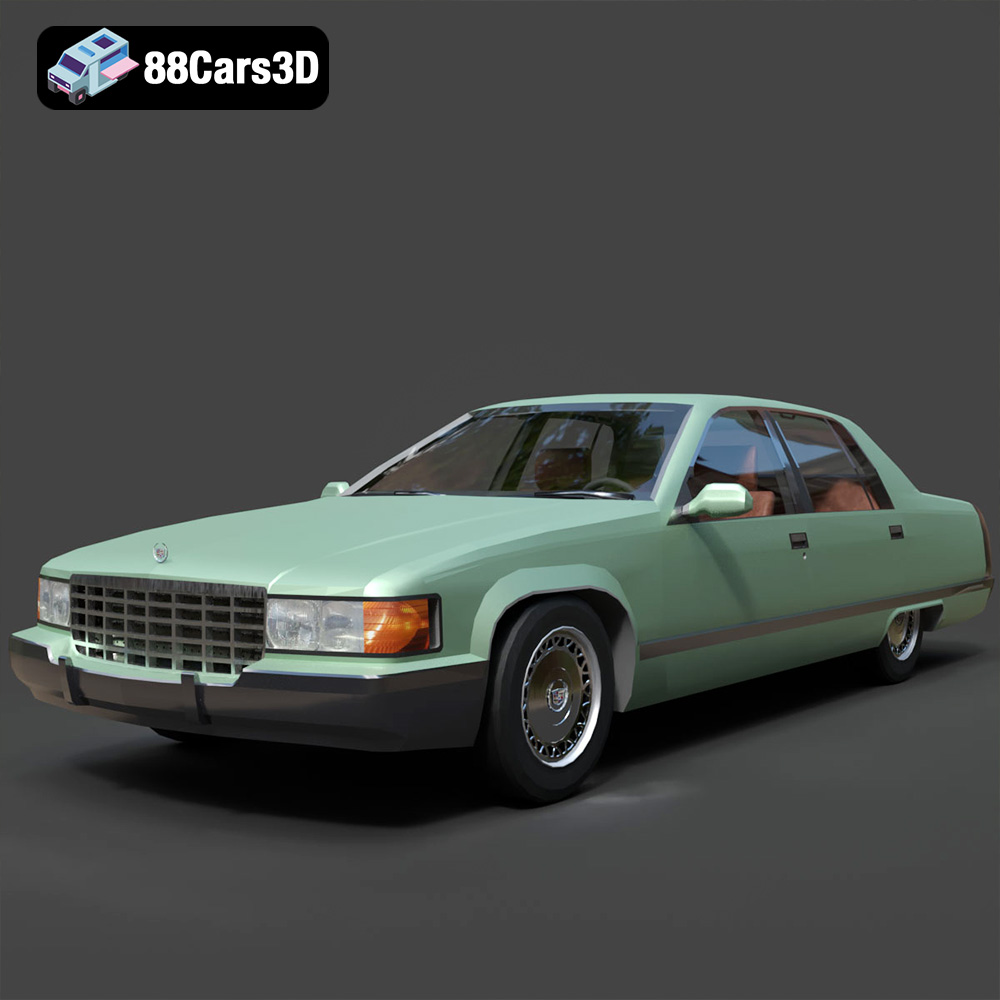
Texture: Yes
Material: Yes
Download the Cadillac Fleetwood Brougham 3D Model featuring its iconic classic luxury design and detailed exterior and interior. Includes .blend, .fbx, .obj, .glb, .stl, .ply, .unreal, and .max formats for rendering, simulation, and game development.
Price: $10.79
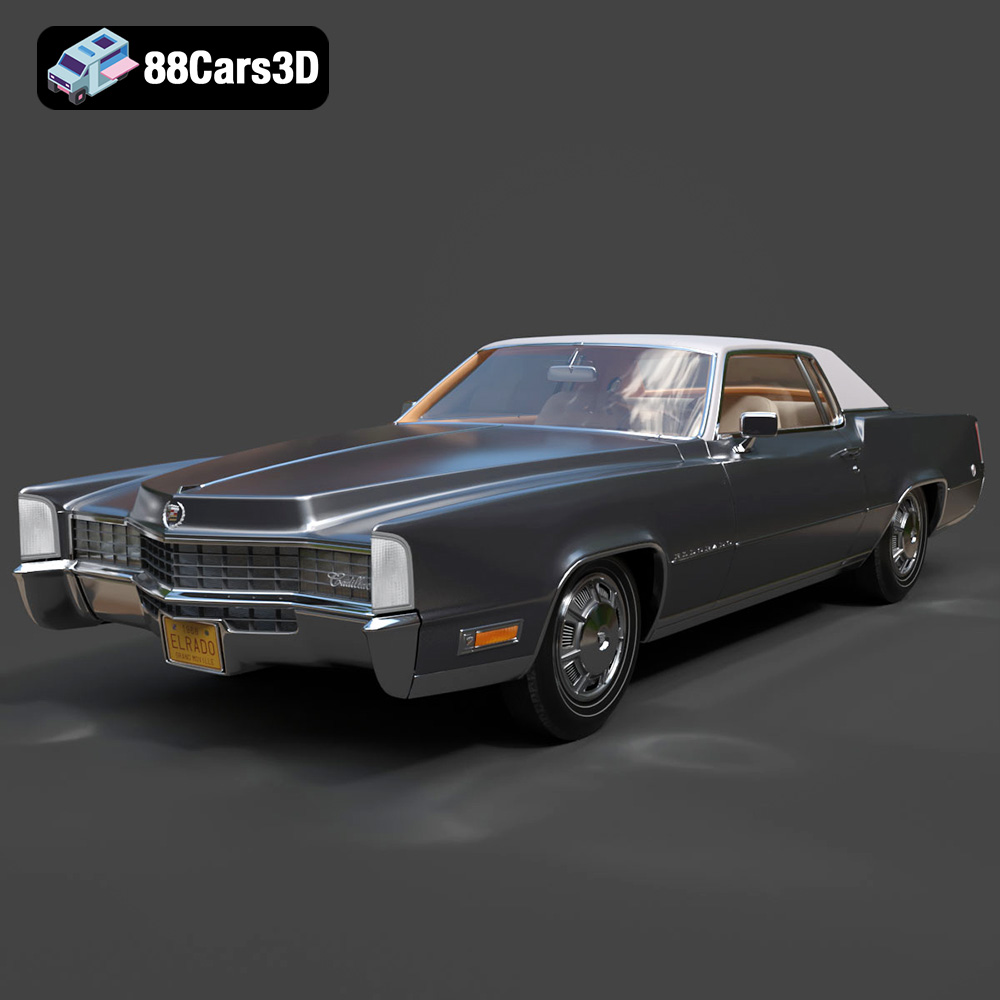
Texture: Yes
Material: Yes
Download the Cadillac Eldorado 1968 3D Model featuring its iconic elongated body, distinctive chrome accents, and luxurious interior. Includes .blend, .fbx, .obj, .glb, .stl, .ply, .unreal, and .max formats for rendering, simulation, and game development.
Price: $20.79

Texture: Yes
Material: Yes
Download the Cadillac CTS SW 2010 3D Model featuring a detailed exterior, functional interior elements, and realistic materials. Includes .blend, .fbx, .obj, .glb, .stl, .ply, .unreal, and .max formats for rendering, simulation, and game development.
Price: $10.79
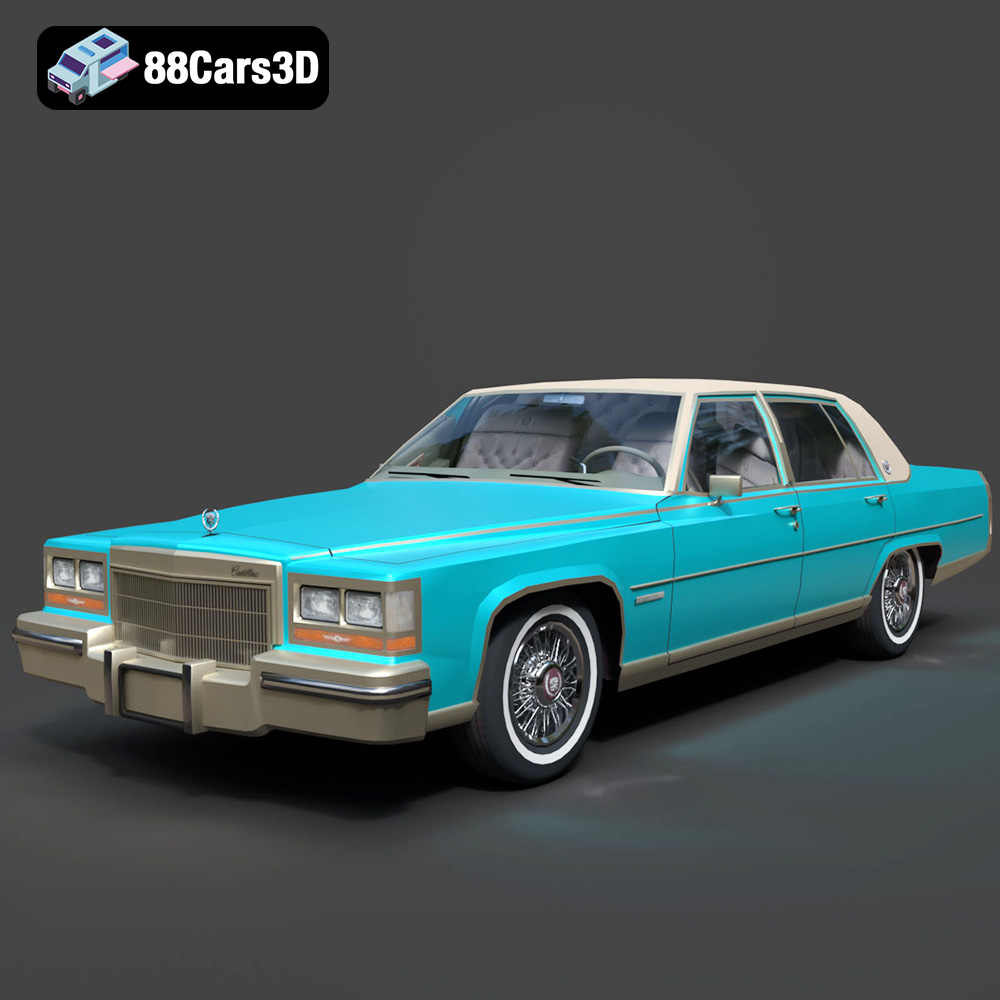
Texture: Yes
Material: Yes
Download the Cadillac Fleetwood Brougham 1985 3D Model featuring its iconic classic luxury design and detailed craftsmanship. Includes .blend, .fbx, .obj, .glb, .stl, .ply, .unreal, and .max formats for rendering, simulation, and game development.
Price: $10.79
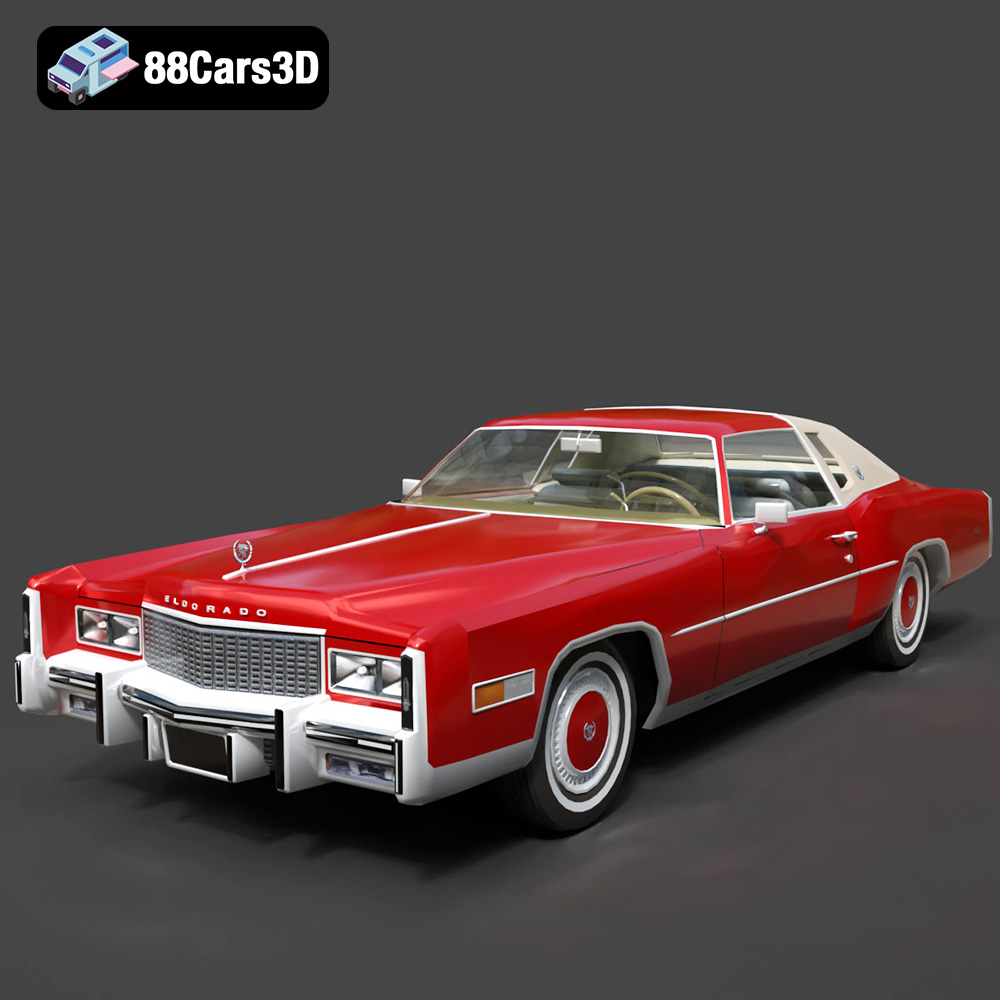
Texture: Yes
Material: Yes
Download the Cadillac Eldorado 1978 3D Model featuring accurately modeled exterior, detailed interior, and period-correct aesthetics. Includes .blend, .fbx, .obj, .glb, .stl, .ply, .unreal, and .max formats for rendering, simulation, and game development.
Price: $10.79
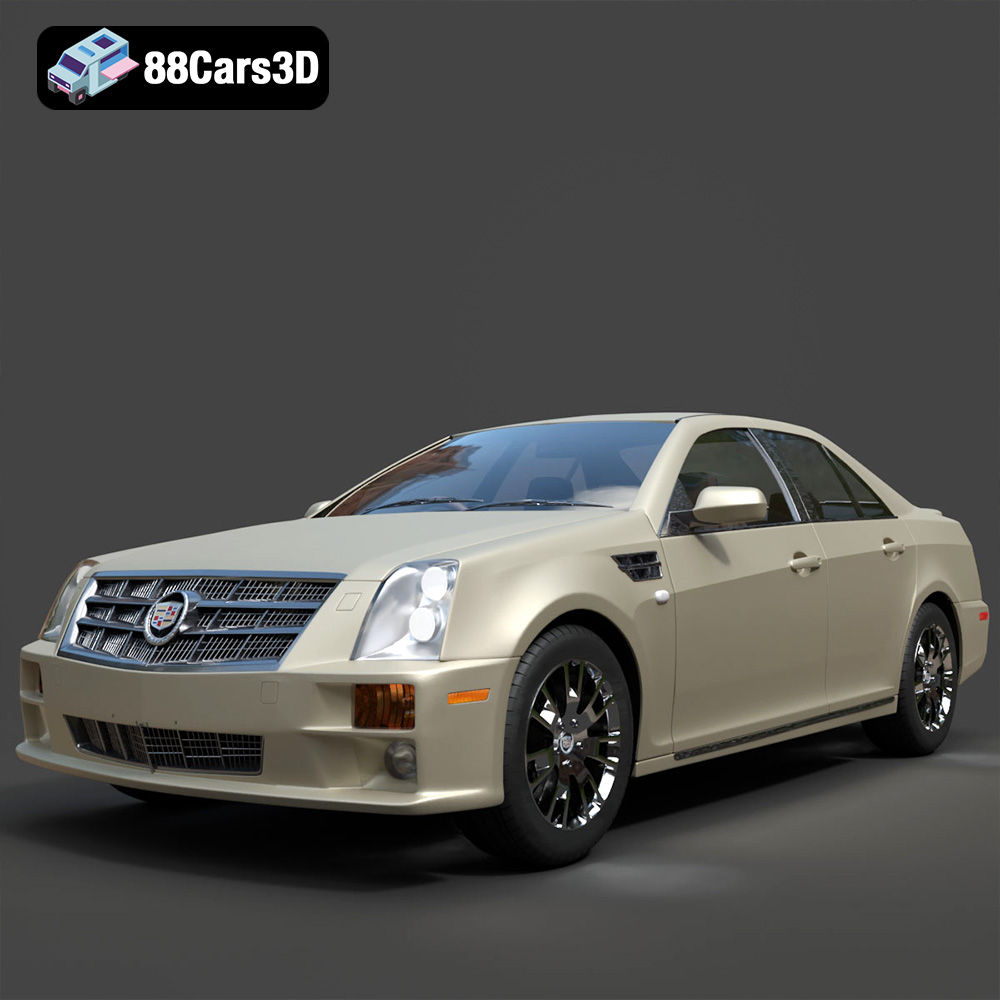
Texture: Yes
Material: Yes
Download the Cadillac STS-005 3D Model featuring a detailed exterior and interior. Includes .blend, .fbx, .obj, .glb, .stl, .ply, .unreal, and .max formats for rendering, simulation, and game development.
Price: $22.79
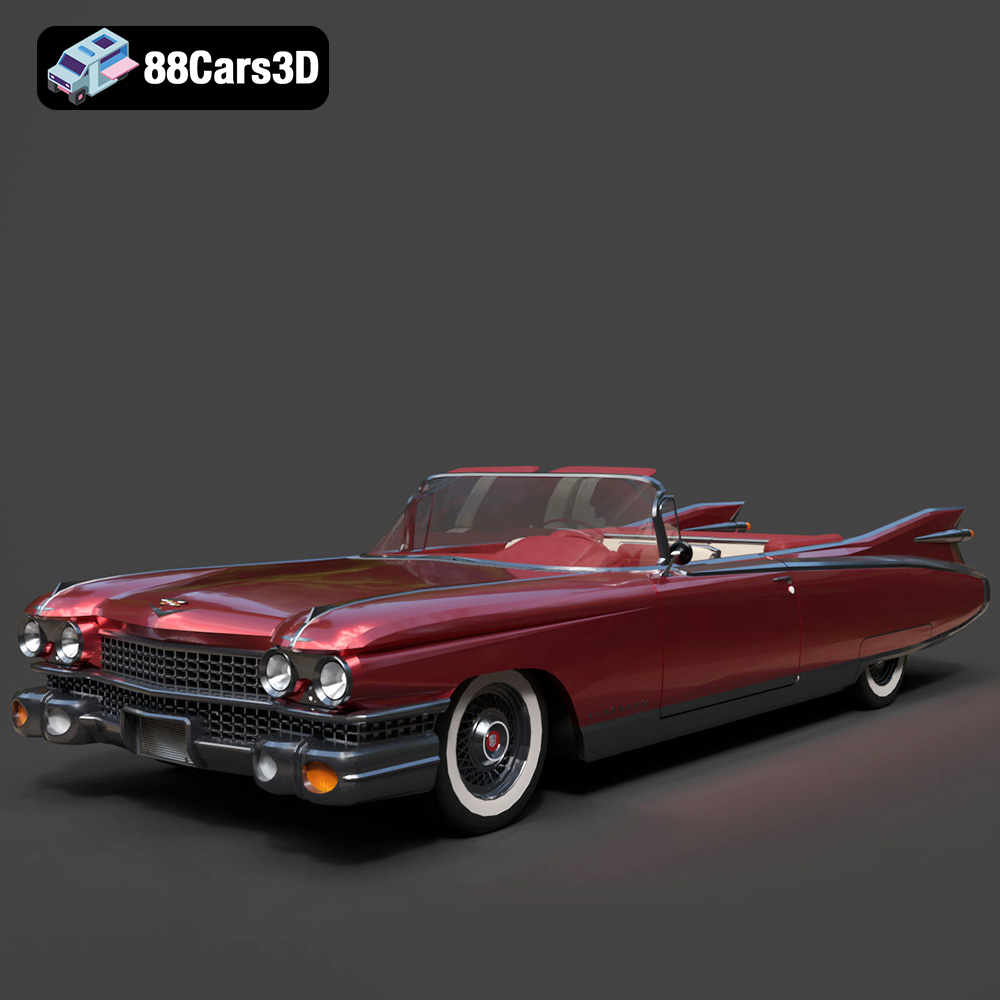
Texture: Yes
Material: Yes
Download the Cadillac Eldorado Convertible (1959) 3D Model featuring iconic fins, luxurious chrome details, and a classic vintage design. Includes .blend, .fbx, .obj, .glb, .stl, .ply, .unreal, and .max formats for rendering, simulation, and game development.
Price: $20.79

Texture: Yes
Material: Yes
Download the Cadillac DTS-005 3D Model featuring its iconic luxury design, detailed interior, and realistic exterior. Includes .blend, .fbx, .obj, .glb, .stl, .ply, .unreal, and .max formats for rendering, simulation, and game development.
Price: $10.79

Texture: Yes
Material: Yes
Download the Buick LeSabre 1998 3D Model featuring a classic American full-size sedan design. Includes .blend, .fbx, .obj, .glb, .stl, .ply, .unreal, and .max formats for rendering, simulation, and game development.
Price: $10.79

