⚡ FLASH SALE: Get 60% OFF All Premium 3D & STL Models! ⚡

The mobile gaming landscape continues to evolve at an unprecedented pace, with players demanding ever-increasing visual fidelity and immersive experiences. For game developers, this presents a unique challenge: how to deliver stunning visuals – especially for complex assets like vehicles – while adhering to the stringent performance budgets of mobile devices. The answer lies in the art and science of creating meticulously optimized low-poly car models. It’s a delicate balance between artistic vision and technical precision, ensuring that every polygon contributes meaningfully to the final aesthetic without bogging down precious framerates.
This comprehensive guide will take you on a technical journey, from the foundational principles of low-poly automotive modeling to advanced optimization techniques for popular game engines. We’ll explore strategies for efficient topology, smart UV mapping, mobile-friendly PBR material creation, and seamless integration into Unity and Unreal Engine. Whether you’re a seasoned 3D artist, a budding game developer, or an automotive designer looking to bring your creations to the mobile realm, this article will equip you with the knowledge and actionable steps to elevate your mobile car assets to the next level. Prepare to unlock the secrets of creating visually compelling and performant 3D car models that drive success in the competitive world of mobile gaming.
At the heart of any successful mobile game asset is intelligent 3D modeling. For car models, this means understanding how to simplify complex geometries while preserving crucial details and maintaining the vehicle’s recognizable silhouette. The goal is not just to reduce polygon count, but to create a clean, efficient mesh that performs well and is easy to texture and animate. Every decision in the modeling phase has a cascading effect on performance and visual quality down the pipeline.
One of the first and most critical steps is defining a polygon budget for your car model. For mobile games, this can range significantly depending on the target platform (iOS vs. Android, high-end vs. low-end devices), the number of cars on screen simultaneously, and the camera’s proximity. A highly detailed hero car might aim for 15,000-25,000 triangles, while background vehicles or cars for less demanding genres could be as low as 3,000-8,000 triangles. The key is to allocate polygons strategically. Areas that are rarely seen by the player, such as the underside of the car or hidden engine components, should be aggressively simplified or removed entirely. Conversely, areas like the wheels, headlights, and front grille often require more detail to maintain visual appeal.
When modeling, prioritize quads for clean topology, even if the final game engine triangulates everything. This makes unwrapping and baking easier. Employ techniques like chamfering edges with minimal segments to simulate sharper details, rather than adding excessive supporting loops. For curved surfaces, use just enough edge loops to define the curve smoothly without introducing unnecessary geometry. Consider using normal maps to bake in high-frequency details from a high-poly sculpt onto your low-poly mesh, giving the illusion of complexity without the polygon cost. This non-destructive workflow is fundamental for achieving detailed results within strict budgets.
A low-poly car model must instantly be recognizable. This means retaining the distinctive shape, proportions, and iconic features of the vehicle, even with a significantly reduced polygon count. The silhouette is paramount. Focus on creating strong, clean outlines for the body, fenders, roofline, and spoiler. Use strategic edge loops to define major changes in curvature and sharp creases that are characteristic of the car’s design. For instance, the transition from the fender to the door panel, or the distinctive curve of a car’s roof, must be clearly articulated with a minimal number of polygons.
Avoid overly simplified forms that make the car look blocky or generic. While aggressive polygon reduction is necessary, it shouldn’t come at the cost of identity. Pay close attention to how light interacts with the major surfaces; a well-defined silhouette will catch highlights and shadows in a way that emphasizes the car’s form. This stage often involves iterative refinement, where you model, review in a real-time renderer, and then adjust the mesh to achieve the perfect balance between fidelity and performance. Platforms like 88cars3d.com often provide models with excellent foundational topology that can serve as a great starting point for further optimization or as a benchmark for your own creations.
Once your low-poly car model’s geometry is finalized, the next crucial step is UV mapping. Efficient UV layouts are vital for mobile game assets because they directly impact texture memory usage, rendering performance, and the visual quality of your materials. A poorly unwrapped model can lead to distorted textures, visible seams, and wasted texture space, all of which are detrimental in a mobile environment.
The goal of efficient UV mapping is to maximize the utilization of your texture space while minimizing distortion and seams. For mobile car models, a common strategy is to use a single UV atlas for the entire vehicle, combining all car parts (body, interior, wheels, windows) onto one or a few texture sheets. This reduces the number of draw calls in the game engine, a critical performance metric for mobile devices. When unwrapping, prioritize flattening parts with minimal stretching. You can mark seams along natural breaks in the geometry, such as panel lines, edges where different materials meet, or hidden areas like the underside of a door sill.
In Blender, tools like “Mark Seam” and “Unwrap” (followed by “Pack Islands” in the UV Editor) are indispensable. For very complex, organic shapes, “Smart UV Project” can be a good starting point, though it often requires manual refinement to optimize island placement and minimize seams. Remember to align UV islands where possible (e.g., repeating patterns on wheels or mirrored parts) to save texture space. For more in-depth guidance on Blender’s UV editing tools and workflows, you can consult the official Blender 4.4 documentation at https://docs.blender.org/manual/en/4.4/, which provides comprehensive details on features like seam marking, pinning, and various unwrapping methods.
Texel density refers to the number of pixels per unit of 3D space. Maintaining a consistent texel density across your model ensures that no part looks blurry or overly pixelated compared to others. For mobile car models, achieving the right balance between visual quality and memory footprint is key. Common texture resolutions for mobile cars range from 1024×1024 to 2048×2048 for main body textures, with smaller resolutions (e.g., 512×512 or 256×256) for less prominent details or very small parts. Higher resolutions like 4096×4096 should generally be avoided unless absolutely necessary for a hero asset on high-end devices, as they consume significant memory.
When packing UV islands, consider the visual importance of each part. Areas like the car’s body panels and headlights typically require more texture space and higher texel density than internal components or the undersides of bumpers. Tools within your 3D software can help visualize texel density, allowing you to scale UV islands to achieve consistency. The goal is to make every pixel count, ensuring that precious texture memory is allocated where it provides the most visual impact without unnecessary waste.
Physically Based Rendering (PBR) has become the industry standard for achieving realistic materials, even in mobile games. While the principles remain the same, implementing PBR for mobile car models requires a focus on efficiency to avoid performance bottlenecks. The key is to simplify shader complexity and optimize texture maps without sacrificing the convincing interplay of light and surface properties.
For mobile PBR materials, a concise yet effective set of texture maps is crucial. The essential maps typically include:
To further optimize for mobile, it’s common practice to pack multiple grayscale maps into a single texture’s RGB channels. For example, the Metallic, Roughness, and Ambient Occlusion maps can often be combined into a single texture (e.g., Red for Metallic, Green for AO, Blue for Roughness). This “MR/AO” packing significantly reduces texture fetches and memory usage, a critical consideration for mobile GPUs. When creating normal maps, always bake from a high-poly source onto your low-poly mesh to capture fine details like panel lines, vents, or brand emblems, giving your low-poly model a much higher fidelity appearance.
The complexity of your material shaders directly impacts rendering performance on mobile devices. Every instruction in a shader contributes to its cost. Therefore, choosing or authoring optimized mobile shaders is paramount. Game engines like Unity (especially with the Universal Render Pipeline – URP) and Unreal Engine offer specialized mobile shaders designed for efficiency. For instance, Unity’s URP includes simplified versions of the standard PBR workflow that are tailored for performance on a wide range of mobile hardware. These shaders often make compromises, such as using fewer lighting passes or simpler reflection models, to ensure smooth framerates.
When working with shader graphs or material editors, be mindful of the number of texture samples, mathematical operations, and conditional branches. Avoid complex node networks that might be suitable for high-end desktop rendering but are too demanding for mobile. Parameters like translucency, parallax occlusion mapping, or extensive subsurface scattering should be used sparingly or completely avoided for car body materials on mobile. Instead, leverage techniques like carefully crafted normal maps and efficient reflection probes to achieve convincing PBR results within the mobile performance envelope. Understanding the rendering capabilities of your target mobile devices and choosing appropriate shader complexity is a core skill for mobile game developers.
Bringing your low-poly car model into a game engine is where all the prior optimization efforts culminate. Proper integration and further engine-specific optimizations are critical to ensure that your car not only looks great but also performs flawlessly in a real-time mobile environment. This involves leveraging engine features designed to manage asset complexity and rendering overhead.
Level of Detail (LOD) is an indispensable optimization technique for any game, especially on mobile. It involves creating multiple versions of a 3D model, each with a progressively lower polygon count and simplified materials. The game engine then dynamically switches between these LODs based on the camera’s distance to the object. For a car model, you might have:
Setting up LOD groups in Unity or Unreal Engine is straightforward. You typically import all LOD meshes, assign them to the LOD group component, and define the screen percentage thresholds at which each LOD switches. This ensures that the engine only renders the necessary level of detail, significantly reducing vertex processing and draw calls, thereby improving framerate. This is one of the most impactful optimizations for vehicles in mobile games.
Beyond visual meshes, car models also require collision geometry for physics interactions. For mobile, it’s crucial that these collision meshes are as simple as possible. Instead of using the high-detail visual mesh for collisions, create a separate, heavily simplified mesh. Often, a combination of primitive colliders (box, sphere, capsule) or a simplified convex hull is sufficient. This dramatically reduces the computational load on the physics engine, which can be a significant bottleneck on mobile devices.
Another critical aspect is draw call reduction. Each time the CPU tells the GPU to render something, it incurs a “draw call” overhead. Many draw calls can quickly cripple performance. To minimize this, consider:
Careful planning of your asset’s structure and material assignments in your 3D software can preemptively solve many draw call issues in the engine.
The choice of file format for your 3D car models is more important than often assumed, particularly for mobile game development and broader visualization contexts. The industry standard for game assets has long been FBX due to its robust support for meshes, materials, animations, and skeletal data across various DCC tools and game engines. FBX offers excellent compatibility with Unity, Unreal Engine, and most 3D software. However, in recent years, glTF (GL Transmission Format), particularly its binary version GLB, has gained significant traction. GLB is an open-standard, royalty-free format designed for efficient transmission and loading of 3D scenes and models by engines and applications.
GLB’s advantages for mobile include:
While FBX remains a solid choice, considering GLB/glTF for your mobile car models can offer additional performance and compatibility benefits, especially if your game also targets web or AR/VR experiences. When sourcing high-quality 3D car models for your projects, reputable platforms such as 88cars3d.com often provide assets in multiple optimized formats like FBX, OBJ, GLB, and USDZ (for Apple’s AR ecosystem), allowing you to choose the best fit for your specific development pipeline and target platforms.
Beyond the core modeling and texturing, several advanced techniques can further refine your mobile car models, optimizing their performance and enhancing their visual presence within the game world. These methods often involve leveraging specific engine features and rethinking rendering strategies for the mobile environment.
If your mobile game also incorporates Augmented Reality (AR) or Virtual Reality (VR) elements, the optimization requirements become even more stringent. AR/VR experiences demand extremely high and stable framerates (e.g., 60-90 FPS per eye) to prevent motion sickness and ensure immersion. This effectively means you have two cameras rendering simultaneously, doubling the rendering workload. For AR/VR car models, every optimization discussed previously is amplified. Considerations include:
For AR car models, consistent real-world scale and accurate shadow casting are also crucial for believable integration. Using GLB or USDZ formats (especially for iOS AR Quick Look) is highly recommended for AR applications due to their optimized PBR support and efficiency.
Realistic lighting is vital for making car models pop, but real-time dynamic lighting on mobile can be very expensive. To achieve visually appealing results efficiently, developers often rely on a hybrid approach:
This combination provides a convincing lighting setup with minimal runtime cost, essential for mobile framerates.
For large-scale mobile game projects or when managing extensive libraries of 3D car models, automating repetitive tasks can significantly streamline your workflow. Scripting capabilities within 3D software packages (e.g., Python in Blender or Maya) allow you to:
Developing a robust asset pipeline with automation can save countless hours, reduce human error, and ensure consistency across your entire fleet of vehicles. Furthermore, when starting a new project or expanding your asset library, leveraging high-quality, pre-optimized 3D car models from specialized marketplaces like 88cars3d.com can dramatically accelerate your development timeline. These platforms offer a range of models, often already prepared with clean topology, PBR materials, and multiple LODs, providing a professional foundation that can be further refined to meet your specific mobile game requirements.
Creating compelling low-poly car models for mobile games is a multifaceted discipline that demands a blend of artistic skill and technical acumen. From the initial stages of defining a strict polygon budget and meticulously crafting efficient topology, to implementing smart UV layouts and optimizing PBR materials, every step in the pipeline contributes to the final performance and visual quality of your game asset. The judicious use of LODs, simplified collision meshes, and efficient texture packing are not merely optional enhancements but fundamental requirements for delivering a smooth, immersive experience on mobile devices.
Remember that optimization is an iterative process. It often involves testing your assets in the target game engine, profiling performance, and making adjustments until the ideal balance between visual fidelity and framerate is achieved. By embracing mobile-specific rendering techniques, thoughtful lighting strategies, and leveraging automation in your workflow, you can overcome the challenges of mobile game development and create a fleet of stunning, high-performance vehicles. As the mobile gaming industry continues its rapid ascent, mastering these techniques will empower you to stay ahead of the curve and deliver truly exceptional automotive experiences to players worldwide. Now, take these insights and drive your mobile game development forward!

Meta Description:
Texture: Yes
Material: Yes
Download the Cadillac CTS-V Coupe 3D Model featuring detailed exterior styling and realistic interior structure. Includes .blend, .fbx, .obj, .glb, .stl, .ply, .unreal, and .max formats for rendering, simulation, AR VR, and game development.
Price: $13.9

Texture: Yes
Material: Yes
Download the Cadillac DTS-005 3D Model featuring its iconic luxury design, detailed interior, and realistic exterior. Includes .blend, .fbx, .obj, .glb, .stl, .ply, .unreal, and .max formats for rendering, simulation, and game development.
Price: $10.79

Texture: Yes
Material: Yes
Download the Buick LeSabre 1998 3D Model featuring a classic American full-size sedan design. Includes .blend, .fbx, .obj, .glb, .stl, .ply, .unreal, and .max formats for rendering, simulation, and game development.
Price: $10.79
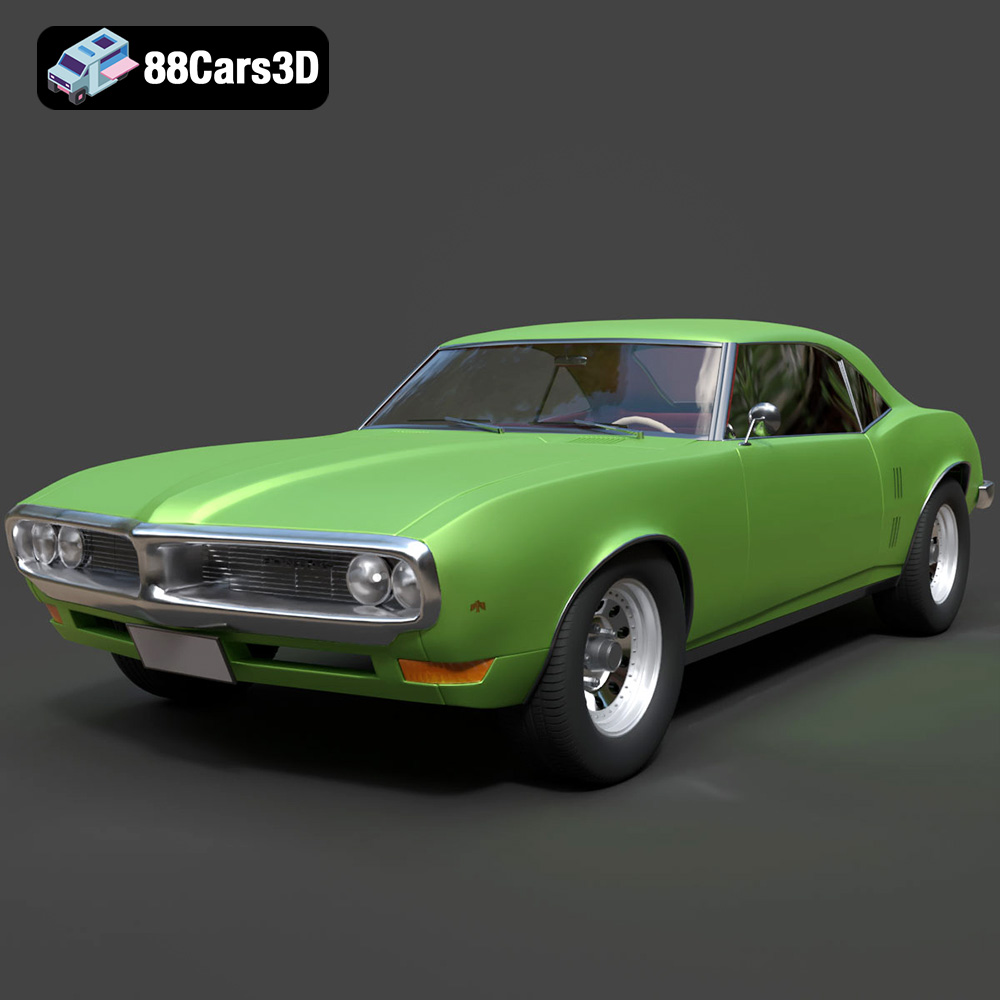
Texture: Yes
Material: Yes
Download the Pontiac Firebird 1998 3D Model featuring clean geometry, realistic detailing, and a fully modeled interior. Includes .blend, .fbx, .obj, .glb, .stl, .ply, .unreal, and .max formats for rendering, simulation, and game development.
Price: $10

Texture: Yes
Material: Yes
Download the Opel Astra 2008 3D Model featuring clean geometry, realistic detailing, and a fully modeled interior. Includes .blend, .fbx, .obj, .glb, .stl, .ply, .unreal, and .max formats for rendering, simulation, and game development.
Price: $10

Texture: Yes
Material: Yes
Download the Mercedes Benz Joaquin-007 3D Model featuring clean geometry, realistic detailing, and a fully modeled interior. Includes .blend, .fbx, .obj, .glb, .stl, .ply, .unreal, and .max formats for rendering, simulation, and game development.
Price: $19.99
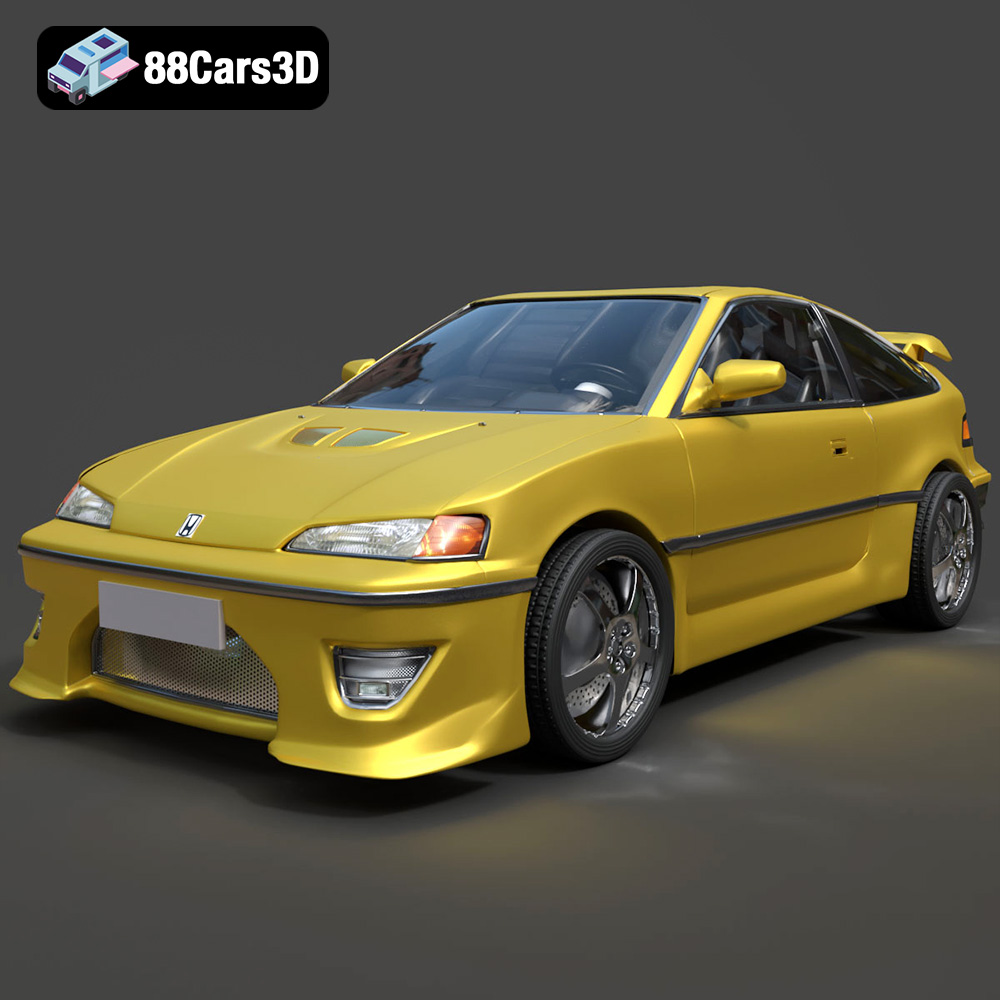
Texture: Yes
Material: Yes
Download the Honda CRX 1980 3D Model featuring clean geometry, realistic detailing, and a fully modeled interior. Includes .blend, .fbx, .obj, .glb, .stl, .ply, .unreal, and .max formats for rendering, simulation, and game development.
Price: $11.99
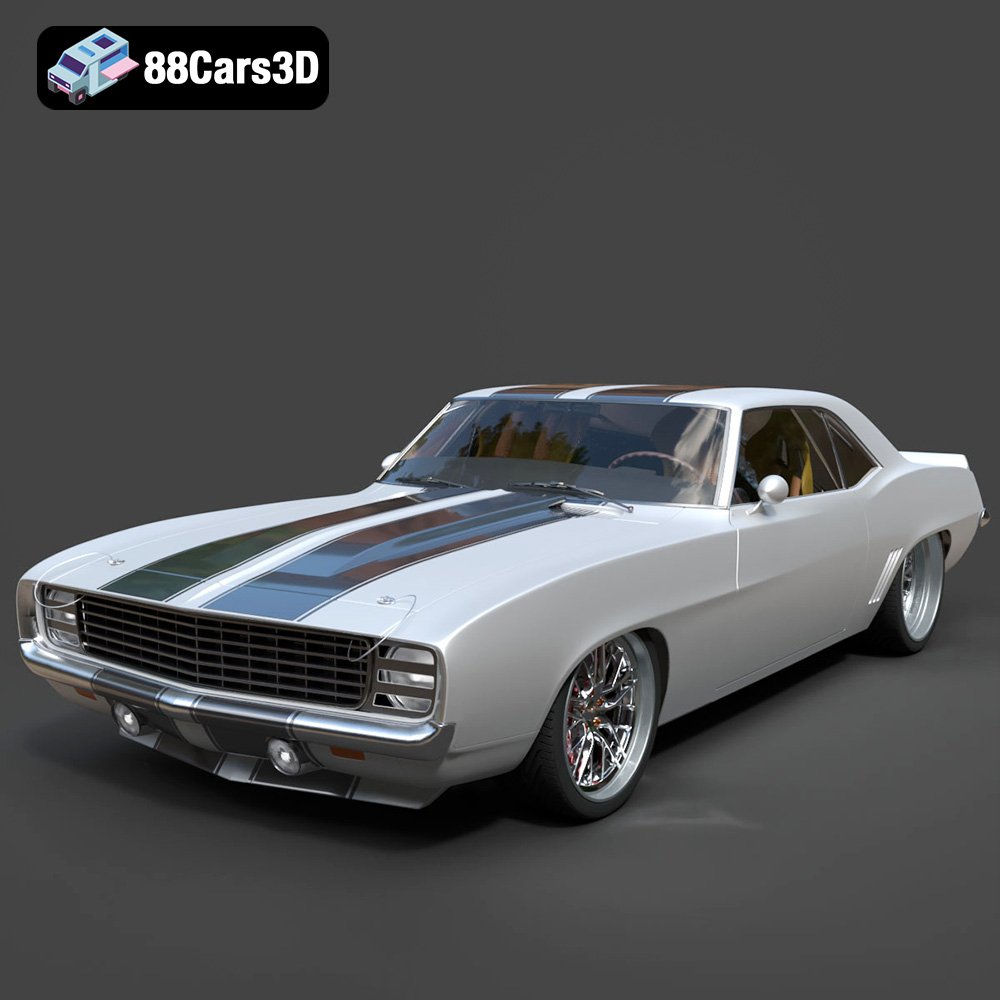
Texture: Yes
Material: Yes
Download the Chevrolet Camaro 69 Pro-007 3D Model featuring classic muscle car design and custom performance aesthetics. Includes .blend, .fbx, .obj, .glb, .stl, .ply, .unreal, and .max formats for rendering, simulation, and game development.
Price: $20.79

Texture: Yes
Material: Yes
Download the Honda Fit 2008 3D Model featuring a compact, versatile design with detailed exterior and interior components. Includes .blend, .fbx, .obj, .glb, .stl, .ply, .unreal, and .max formats for rendering, simulation, and game development.
Price: $10.79
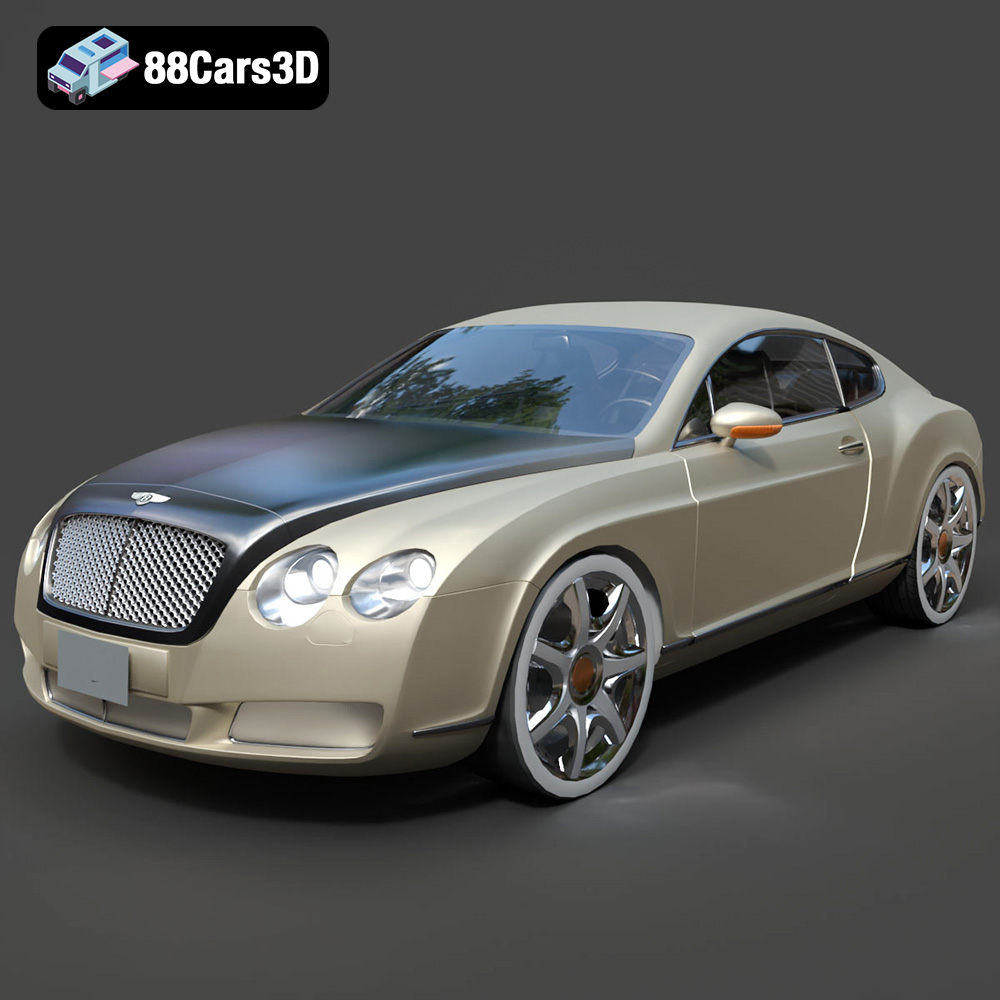
Texture: Yes
Material: Yes
Download the Bentley Continental GT-002 3D Model featuring a luxurious grand touring design and high-quality details. Includes .blend, .fbx, .obj, .glb, .stl, .ply, .unreal, and .max formats for rendering, simulation, and game development.
Price: $20.79

